
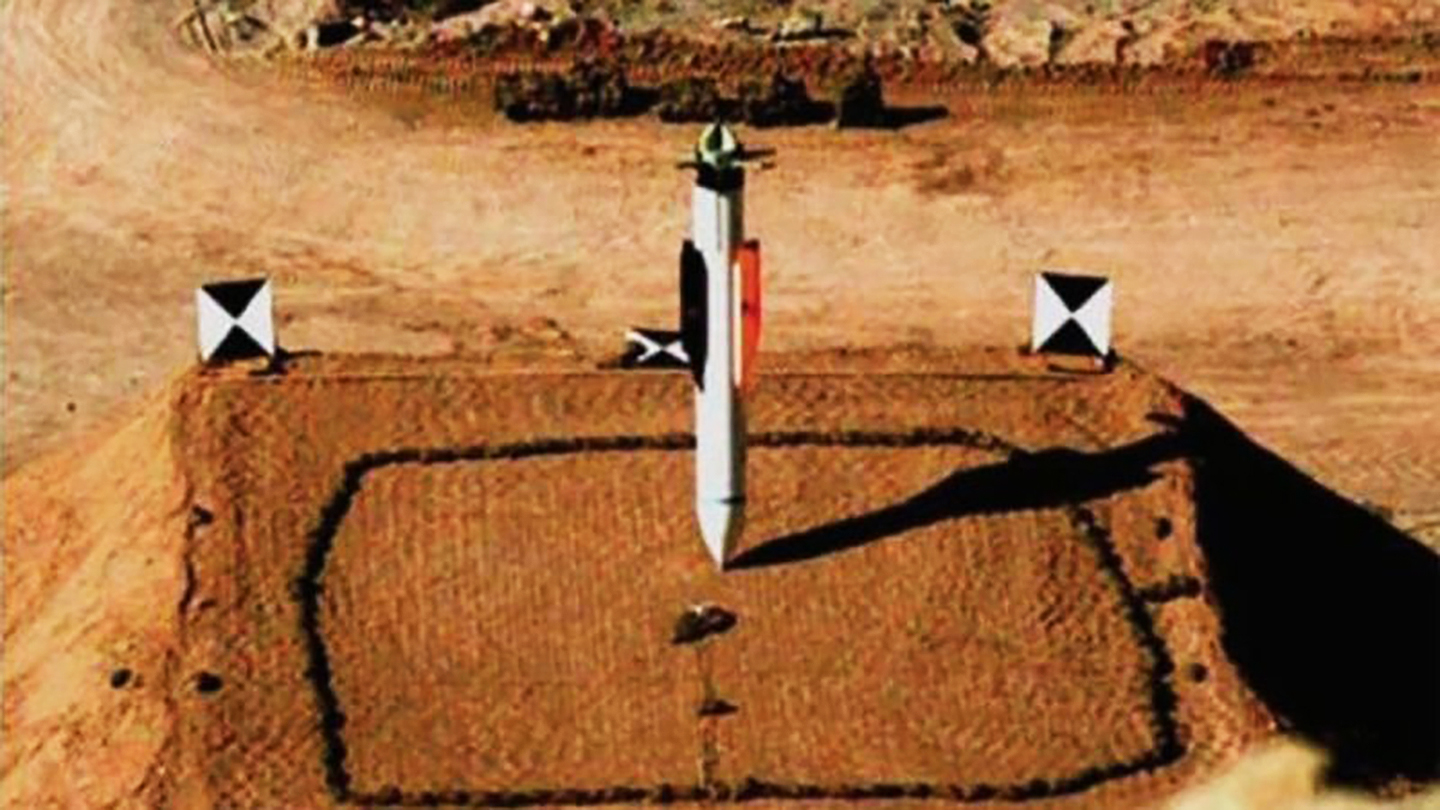
The Pentagon office that helped create the GBU-57 Massive Ordnance Penetrator (MOP) bunker-busting bomb is waiting for comprehensive battle damage assessments (BDA) from last month’s strikes on Iranian nuclear facilities to determine how well they worked. The Defense Threat Reduction Agency (DTRA) will then use that data to learn how to improve the 30,000-pound weapons and better design follow-on very deep penetrating bunker busters.
A total of 14 MOPs were dropped by B-2 stealth bombers during the Operation Midnight Hammer raid, 12 on Fordow — six down two holes — and two on Natanz. U.S. Defense Secretary Pete Hegseth claims the operation “obliterated” Iran’s nuclear ambitions. You can read more about the development of the MOP in our deep dive here and our follow-up here.
Speaking to reporters Thursday afternoon, including from The War Zone, a senior defense official (SDO) and a senior military official (SMO) from DTRA offered new details on how the results from Operation Midnight Hammer could change its future and the testing that led to its creation.
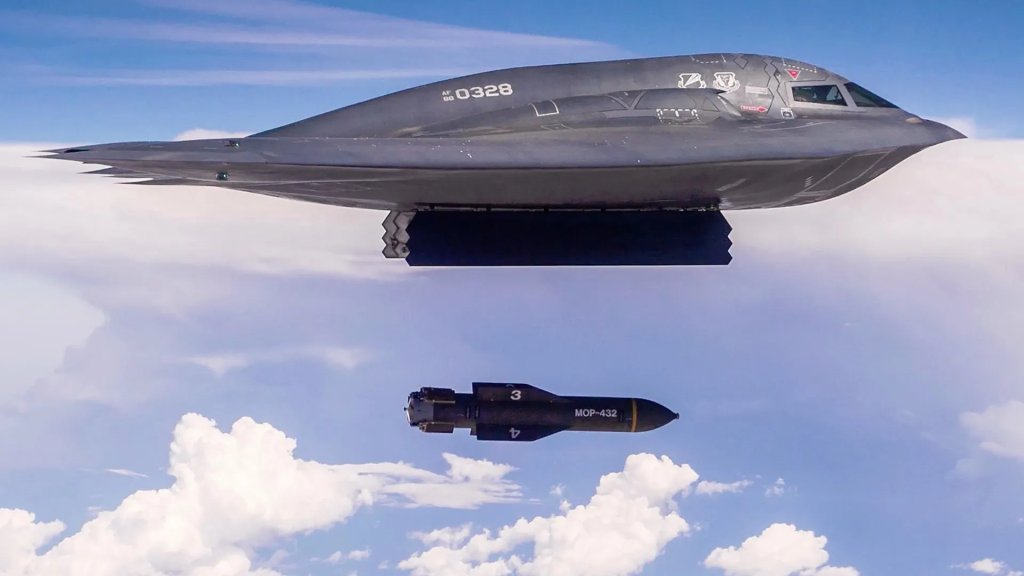
Officials from the agency declined to comment on the MOP’s effect on the Iranian nuclear program. They said that so far, only initial BDAs have been performed and it will be “quite some time” before a more detailed and conclusive analysis is available.
“We deeply anticipate the intelligence community completing BDA on this so that we can assess the models vice what actually happened according to their analysis,” said the SDO, speaking on condition of anonymity to discuss these details.
The next step, said the official, would be to “take a look at how accurate the projections were, so we can use information there to improve our modeling output and our targeting decision support packages that we put together. “
In addition, the data will also allow DTRA “to assess whether or not the weapon performed as planned, according to the BDA,” the SDO added.
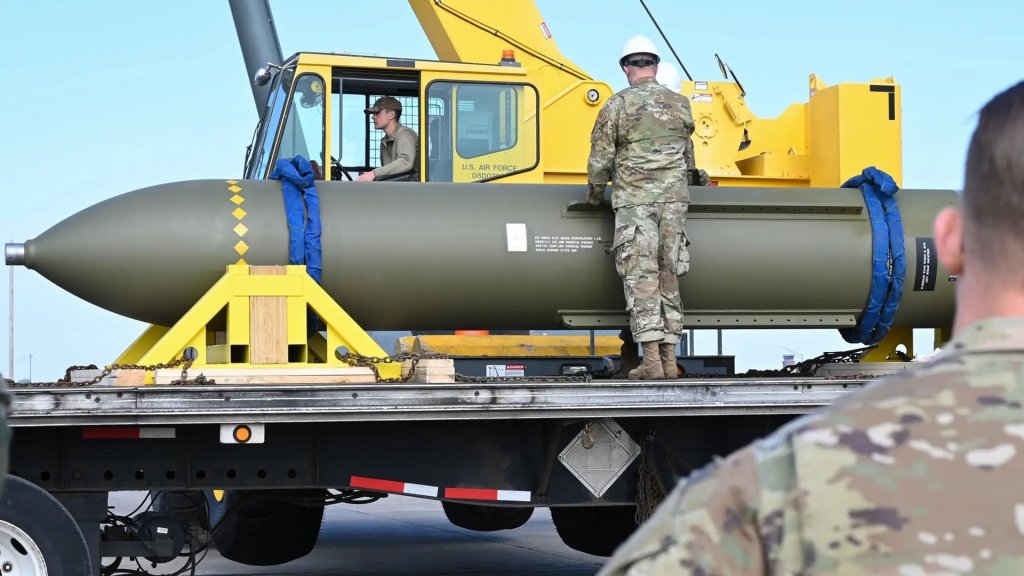
Beyond how the MOPs performed, information from the BDA results “may go into future iterations of the technology… We’re constantly evolving and trying to leverage new technology as we do, so we will take this information and determine; ‘did things work the way that we wanted them to?’ In which case, how can we continue to improve upon it, or did things not work exactly as planned? And how can we fix that so that in the future, our next generation capabilities work that much better? We don’t have that information yet, but we look forward to receiving it so that it can inform our next investments in this arena.”
As we previously reported, there was already intense U.S. military interest in a new Next Generation Penetrator (NGP) when the MOP first began entering service in the early 2010s. The most recent publicly stated requirements for the NGP come from a contracting notice the Air Force put out in February 2024. It called for a warhead weighing 22,000 pounds or less that would be “capable of blast / frag[mentation] / and penetration effects,” but did not specify a desired gross weight for the entire munition. No prospective dimensions were provided, either.

Asked whether the MOP can penetrate other critical facilities including those built by China — including even ones deeper than Fordow — or if the MOP team was looking at other targets, the official brushed off providing specifics.
“I think that we are constantly analyzing the ability of the GBU-57 to operate in relevant environments, but we do not speak to the specifics of its capabilities beyond what’s already been made public,” the SDO stated. While MOP was designed with Fordow as its primary driver, the weapon is known to also be capable of taking out other targets in adversary countries.
In addition to talking about how lessons learned from Operation Midnight Hammer could be applied, the officials also discussed the challenges of building a new fuze for the weapons.
Recently, we explained how the U.S. Air Force is exploring new options to help with the development of improved MOP fuzes. The service is also interested in additional sources for the production of other key GBU-57/B components, as well as assistance in sustaining its current stocks of the bombs. The MOP has been upgraded multiple times already since the munition first began entering service in the early 2010s, particularly with regard to its fuzing. This is an especially important aspect of the bunker buster’s design, as TWZ has noted in the past. You can read more about the fuze development process in our story here.
Designing the new fuzes has been challenging, especially because of issues finding the proper place to test them, the officials said.
“We’ve had some struggles with construction,” the SDO explained. “The things that we want to build are complex and it is difficult to find the expertise we need … to build some of these large test sites. Building test facilities for any type of threat-representative environment is resource-intensive from both dollars, but then also personnel and time. It’s a big challenge, and we have great people who help us do those things. And it’s always a lengthy process.”
The official did not offer a timeline, nor did the SDO comment on what kind of so-called smart fuze, that can adjust for various conditions like depth, hardness of material being punched through, including detonating on a specific floor in a structure, and other factors, was used.
The video shows imagery from various past MOP tests:

The officials shed some new light on how the weapon was tested, adding a few additional insights to the very detailed briefing provided last month by Air Force Gen. Dan Caine, Chairman of the Joint Chiefs of Staff.
During that press briefing, attended by The War Zone, Caine explained how for “more than 15 years” a DTRA officer and his teammate “lived and breathed this single target, Fordow, a critical element of Iran’s covert nuclear weapons program. He studied the geology. He watched the Iranians dig it out. He watched the construction, the weather, the discard material, the geology, the construction materials, where the materials came from. He looked at the vent shaft, the exhaust shaft, the electrical systems, the environmental control systems, every nook, every crater, every piece of equipment going in and every piece of equipment going out.”
The SDO on Thursday added some additional context.
“Obviously, we did not build Fordow in the United States and test it,” the SDO pointed out. “What we do try to do is test in what we call a threat-representative environment, and in this case, we built a test site to test the munitions against in collaboration with the Air Force and DTRA test organization to try to ascertain the effects that the MOP would have in certain environments. We’ve continued to do tests over time to then determine what those effects are, and then we use that information to support our modeling and simulation programs.”
Those models include “the weapons’ effects that we saw during all of the testing events, and include a number of other factors that our experts have brought to bear,” the SDO proffered. “That model is also part of that targeting and weaponeering support that we talked about. So in addition to the threat-representative testing that we did, we were able to see how does the MOP act in certain situations and certain geographies and architectures, if you will. We also then use that information to support our further modeling and simulation to lead to our best targeting analysis to support those decision makers.”
The senior defense official declined to say if the testing specifically mirrored the conditions at Fordow.
“I can’t speak to the actual equivalency, and don’t want to misstate anything here, but I will say that the reason the GBU-57 is in the arsenal is because it achieved its goals in testing,” the SDO suggested. “So all of the threat-relevant test environments that we built and tested it against, it achieved its goals, so it was successful in achieving the test objectives.”
We know that at least some of the MOP’s testing occurred at the White Sands Missile Range in New Mexico over the years.
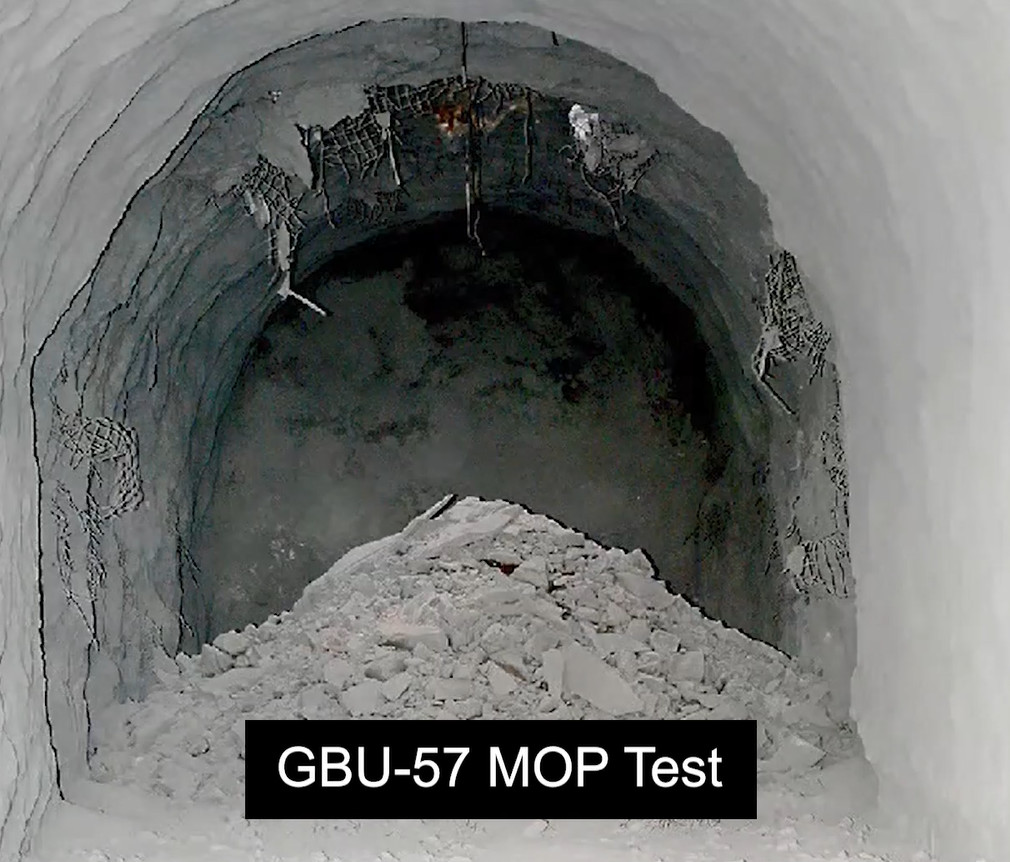
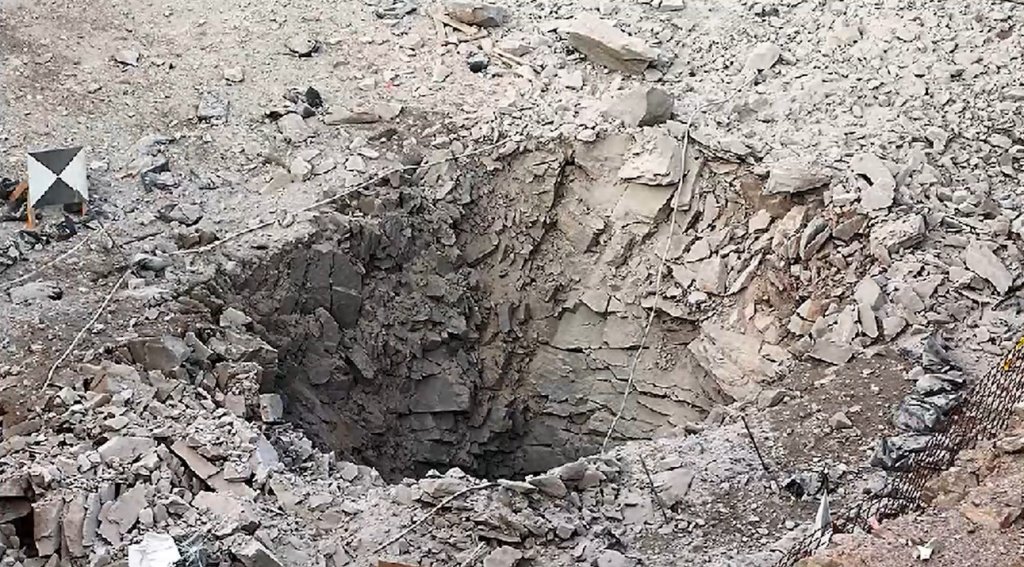
While DTRA is awaiting more comprehensive BDA to inform how it proceeds, it should be noted that the intelligence community will be relying heavily on what can be seen from satellite imagery, as well as human and signal/communications intelligence, to make those decisions.
Weeks after the strikes, there is more information trickling out as to the potential results of it. Israeli intelligence shows that Iran’s stockpile of enriched uranium was not removed from the three nuclear sites at Fordow, Natanz, and Isfahan before they hit, and has not been moved since, a senior Israeli official told Reuters. The stockpile of some 400 kg of uranium enriched to 60 percent stayed there, and was not removed, the unnamed official told the outlet.
Satellite imagery obtained by The War Zone shows Iranians working at Fordow on July 1, after the attack. The imagery showed “a new road up the mountain where the Fordow nuclear facility is located, along with a number of vehicles, including what analysts have identified as an excavator and a mobile crane,” The Wall Street Journal noted. “An analysis of the images by the Institute for Science and International Security, a think tank studying the Iranian nuclear program, said the excavator was likely preparing a staging area to send cameras or personnel down the holes to inspect the damage done to the underground facility.”

You can read more about what goes into these assessments in our interview with a Los Alamos scientist who worked on deep penetrating weapons here.
Still, even while they wait for more information, the DTRA officials were confident they had achieved their goals.
“We were able to strike the facilities as planned and strike where intended.”
Contact the author: howard@thewarzone.com
Loading comments…
Comments couldn’t be loaded. Please refresh the page.