
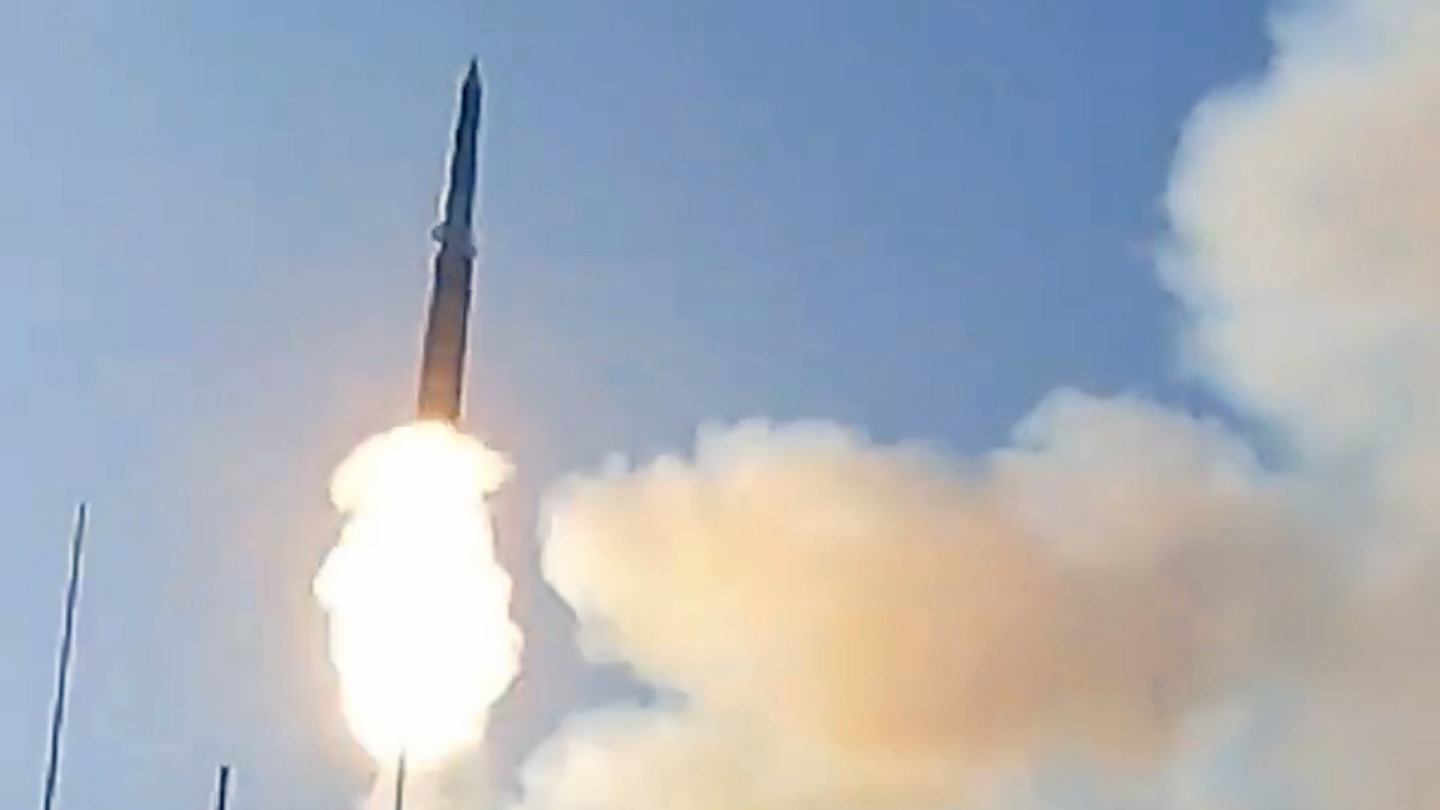
The Chinese military has published a video showing what it says is the launch of a YJ-20 hypersonic anti-ship missile from one of its Type 055 ‘super destroyers,’ a class of warship you can read more about here. The People’s Liberation Army Navy (PLAN) has described the footage as showing a “finalization test,” which would point to the missile being on the verge of being fielded as an operational capability. Whatever its status, however, it signals, once again, the considerable efforts that China is making in the long-range maritime strike domain.
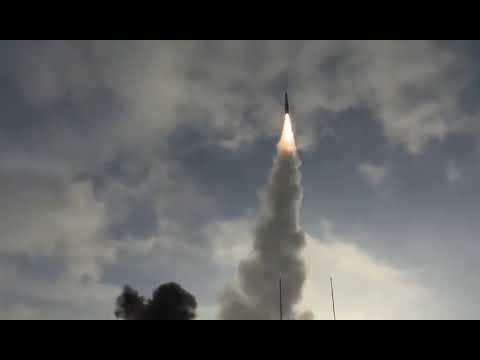
The footage in question was broadcast through official People’s Liberation Army media channels and shows, from multiple angles, the Type 055 destroyer Wuxi firing a YJ-20 from its aft ‘cold-launch’ vertical launch system (VLS). After ejection, the missile’s solid-fuel motor is seen igniting, before it rapidly accelerates away, apparently bound for a maritime target.
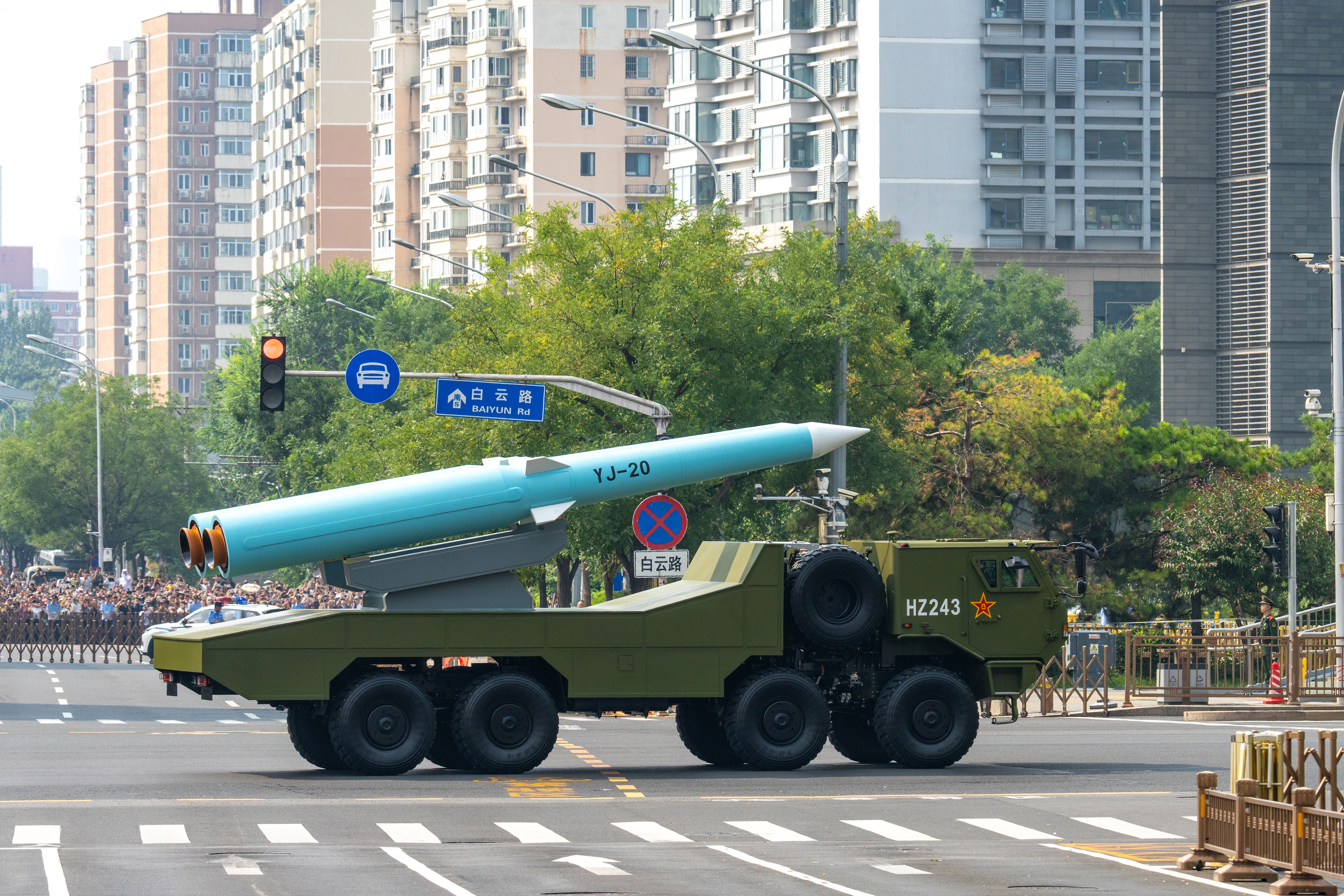
The YJ-20 is part of a slew of missiles that were publicly unveiled during and in the run-up to the huge military parade marking the 80th anniversary of China’s victory over Japan in World War II, in September of this year. Of course, it remains possible that the newly released footage is actually older, with Wuxi having been commissioned as long ago as 2022. Regardless, provided the “finalization test” has been accomplished, this would indicate that the missile has successfully passed through its research and development phase.
When it made its official public appearance, it was noted that the YJ-20 was similar to a mysterious missile seen being fired from what was said to be a Type 055 destroyer in a video that appeared online in 2022. That weapon has also been referred to as the YJ-21 in the intervening years, though it now appears to have been the YJ-20, or a developmental version of it.
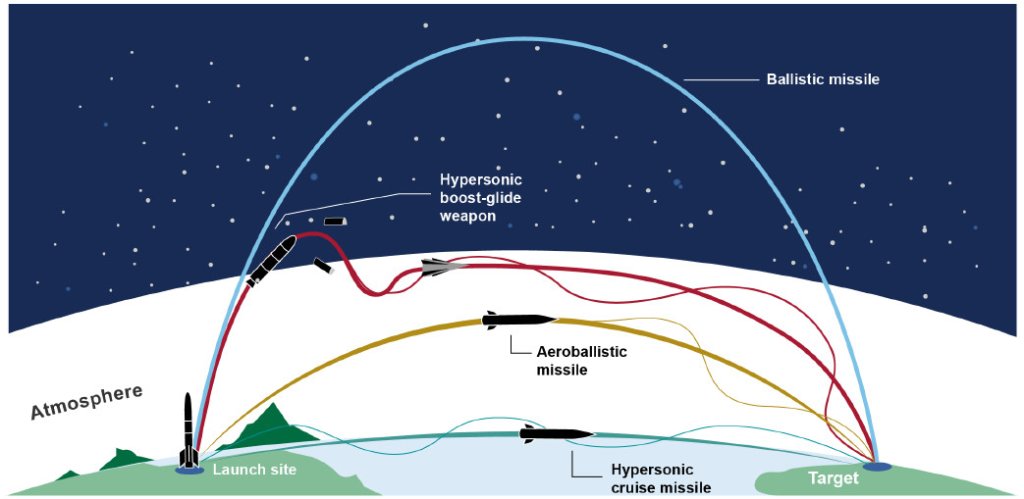
The YJ-20 is understood to be a hypersonic aero-ballistic missile, with a primary anti-ship mission. Hypersonic speed is generally defined as anything above Mach 5. Unlike a traditional ballistic missile, an aero-ballistic missile can fly on a quasi-ballistic (rather than a parabolic) trajectory, performing unpredictable, high-speed maneuvers that make it a more challenging target for missile defense systems. Such maneuvers include a “porpoising” or “skip-glide” trajectory that involves the warhead abruptly pulling up at least once as it begins the terminal stage of its flight.

However, it should be noted that Chinese state media have also described the YJ-20 as carrying a conical boost-glide vehicle (BGV), which remains a possibility. Unpowered BGVs, in general, use some means to get to an optimal speed and altitude via a rocket booster before soaring back down to their target, typically gliding more shallowly through the atmosphere while making more sustained maneuvers.
Whatever the case, the missile is clearly optimized for very high-speed terminal performance as well as making erratic movements along the way to its target in order to defeat defenses.
In addition to presenting complications for defending forces, hypersonic missiles simply offer a way to close a kill chain faster, making them especially well-suited for use against time-sensitive targets.
In terms of specific target sets, the PLAN would be expected to use the YJ-20 against high-value surface vessels, including aircraft carriers, amphibious assault ships, and cruisers, as part of the country’s expanding anti-access and area-denial (A2/AD) doctrine. The missile likely has a secondary land-attack capability against fixed targets of known coordinates, too.
The performance attributes of the YJ-20 remain unknown, but informed estimates suggest a cruising speed of above Mach 6 and terminal velocity potentially in the region of Mach 9. At the same time, it is thought to have a maximum range of at least 620 miles.
The YJ-20 is thought to use a combination of satellite navigation and mid-course updates for most of its flight profile, before switching to active radar and/or an infrared seeker for the terminal phase.
Traveling at such great speeds, the YJ-20 is a notably powerful anti-ship weapon, since its warhead is combined with the effects of kinetic energy, which can punch through a vessel.
As for the Type 055, this is, by now, a much better-known element of the PLAN’s force structure.
With the Western reporting name Renhai class, the Type 055 destroyer displaces around 13,000 tons when fully loaded. At least eight of these vessels are now active, with another four under construction.
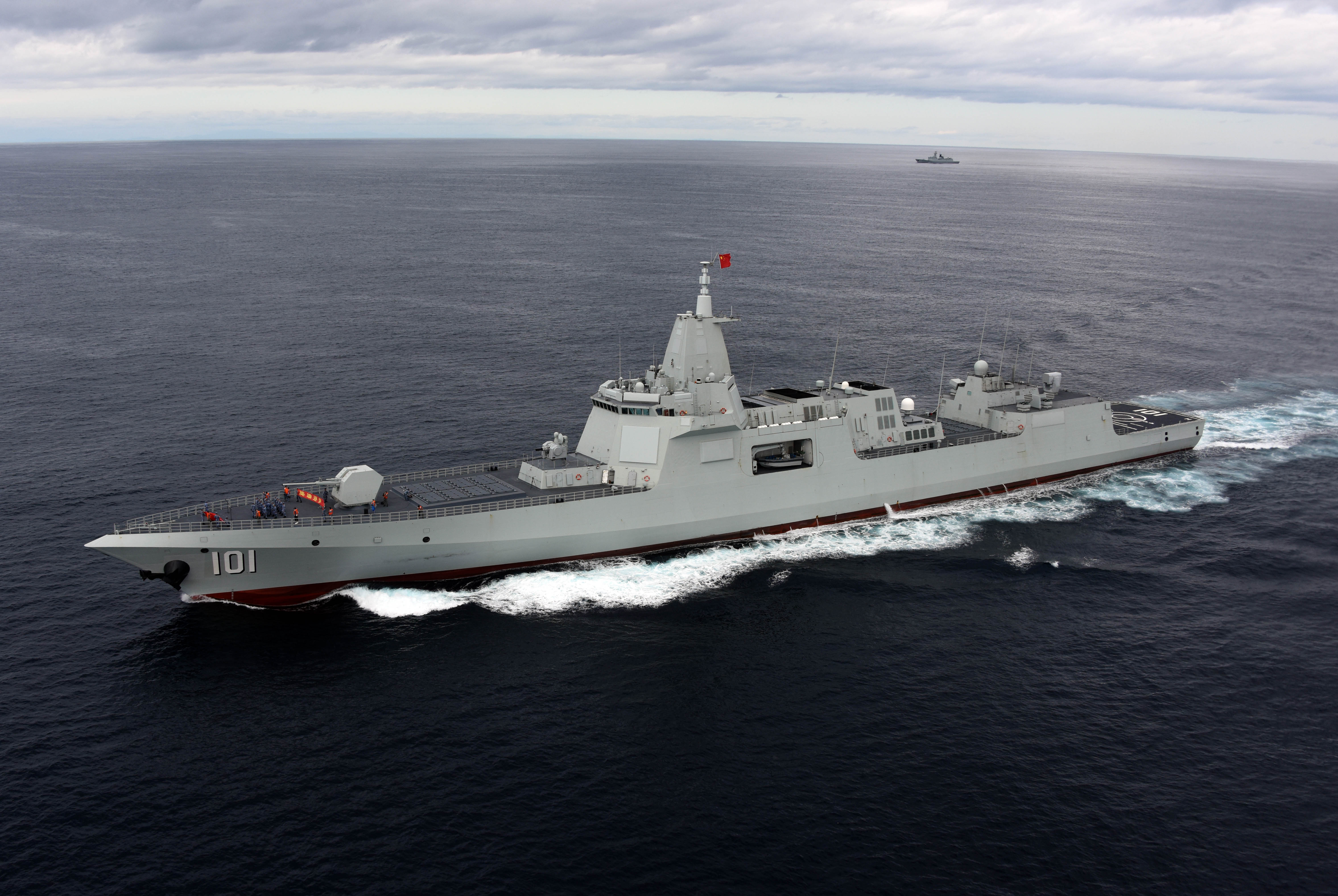
The centerpiece of the Type 055’s extensive weapons capability is the array of 112 VLS cells that can be loaded with long-range surface-to-air missiles, anti-ship cruise missiles, land-attack cruise missiles, and anti-submarine weapons. Adding the YJ-20 to this mix would provide even more versatility in terms of long-range strike capabilities.
China’s expanding repertoire of long-range anti-ship weapons, increasingly including hypersonic ones, is part of its well-publicized A2/AD effort, which includes pushing further out the range at which it can threaten U.S. Navy and allied warships in the western Pacific.
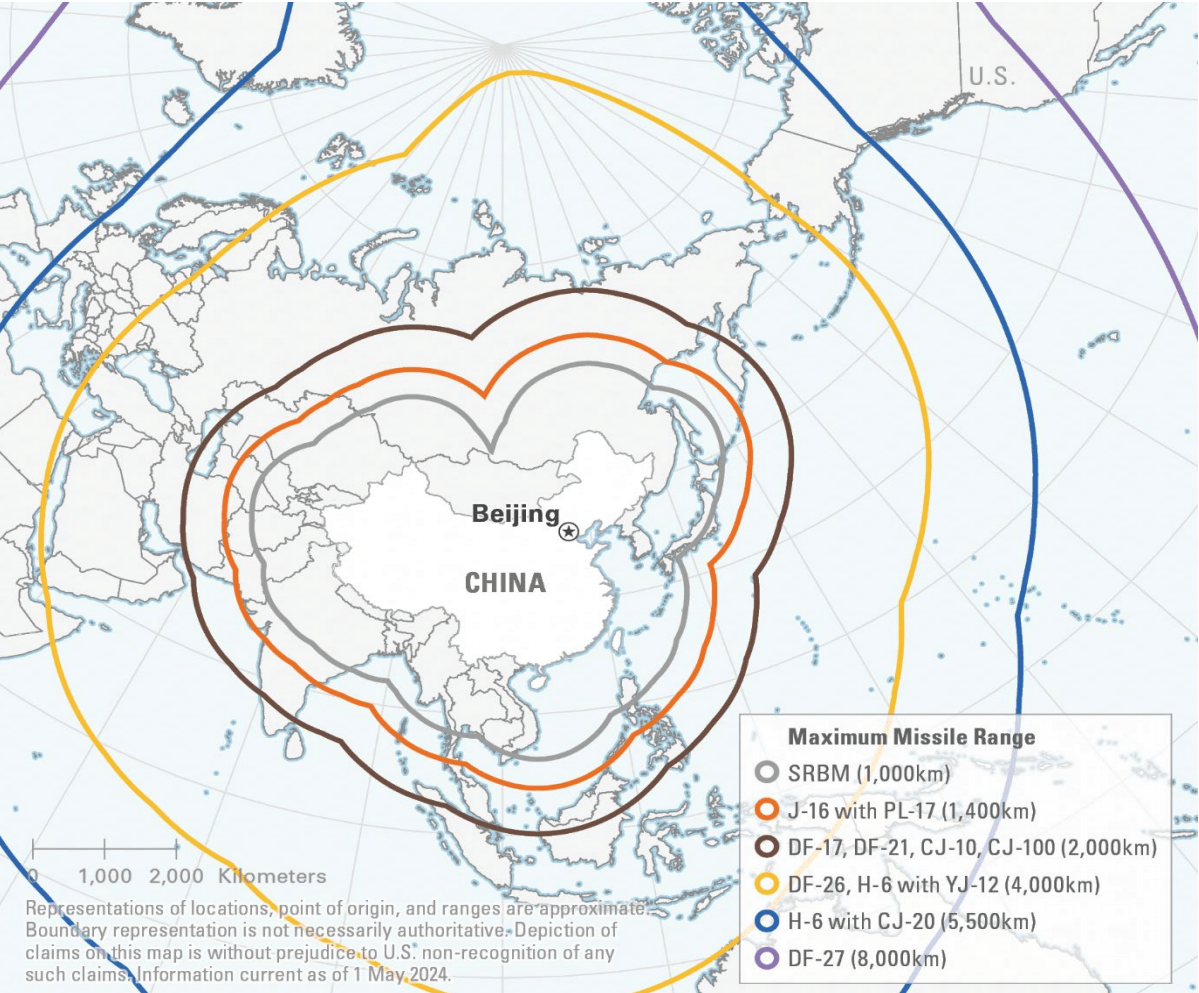
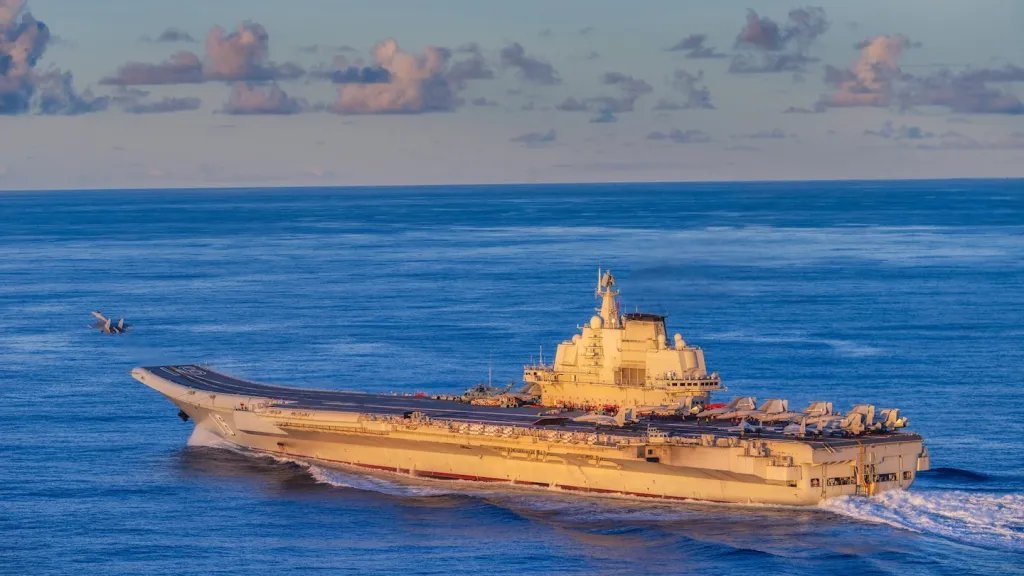
The PLAN has a growing arsenal of weapons with which to extend the A2/AD bubble well beyond the so-called First Island Chain, a boundary defined by archipelagos opposite mainland East Asia, extending from the southern end of the Japanese home islands all the way to the South China Sea. Earlier this year, for the first time, the PLAN released photos showing two of its aircraft carriers operating simultaneously for the first time beyond the First Island Chain.
Closer to the mainland, the combination of the Type 055 and the YJ-20 would complicate any U.S. Navy effort to defend Taiwan, were the island to come under attack from the mainland. China’s growing ability to threaten U.S. carriers and other high-value surface combatants would force these to operate at much greater standoff distances, were they to be involved in any kind of Taiwan contingency.
At this stage, it’s worth recalling that we don’t know for sure to what degree the YJ-20 is an operational capability for the PLAN, and whether there are plans to field it on platforms beyond the Type 055.
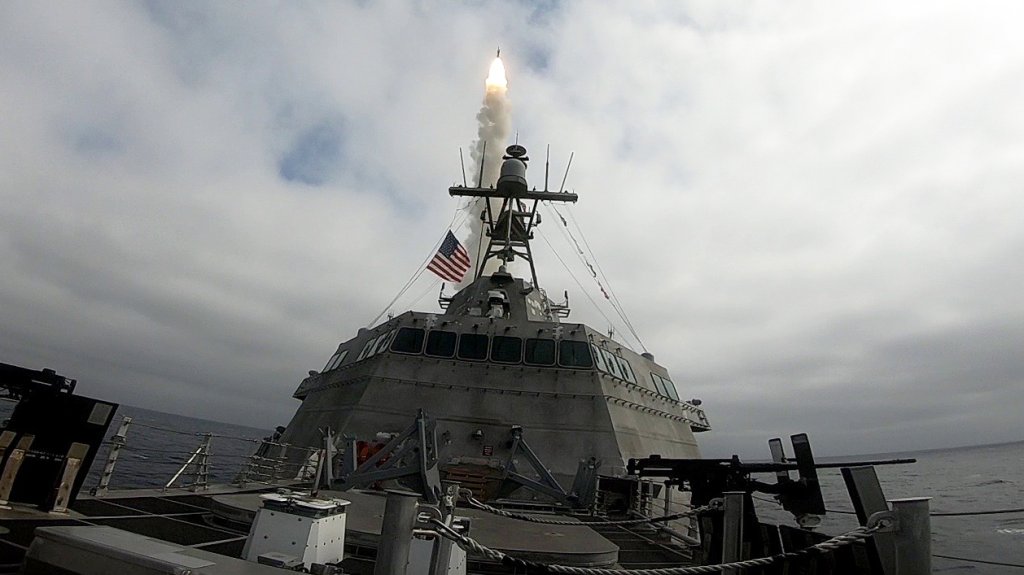
Clearly, however, the missile is something that Beijing wants to show off. Its signaling value is manifold, pointing to China’s fast pace of technological development, as well as deterrence messaging at a time of increased tensions surrounding the Taiwan Strait. That the PLAN is close to fielding an operational ship-launched hypersonic missile in this class, if it hasn’t already, while the U.S. Navy continues to struggle in this area, is a fact that also won’t have been lost on China. The U.S. Navy does have access to the SM-6, which can be used in an anti-ship role and which has hypersonic or near-hypersonic capability; however, it was developed as an air-defense weapon.
The annual Pentagon report to Congress on China’s military, released earlier this month, stated that “China has the world’s leading hypersonic missile arsenal and continued to advance the development of conventional and nuclear-armed hypersonic missile technologies during the past year,” although the YJ-20 was not specifically highlighted.
While we await confirmation about the status of the YJ-20 with the People’s Liberation Army Navy, there’s meanwhile no doubt that the service is investing considerably in extending both the reach and the lethality of its long-range maritime strike capabilities as part of a broader, multi-domain A2/AD doctrine.
Contact the author: thomas@thewarzone.com
Loading comments…
Comments couldn’t be loaded. Please refresh the page.