
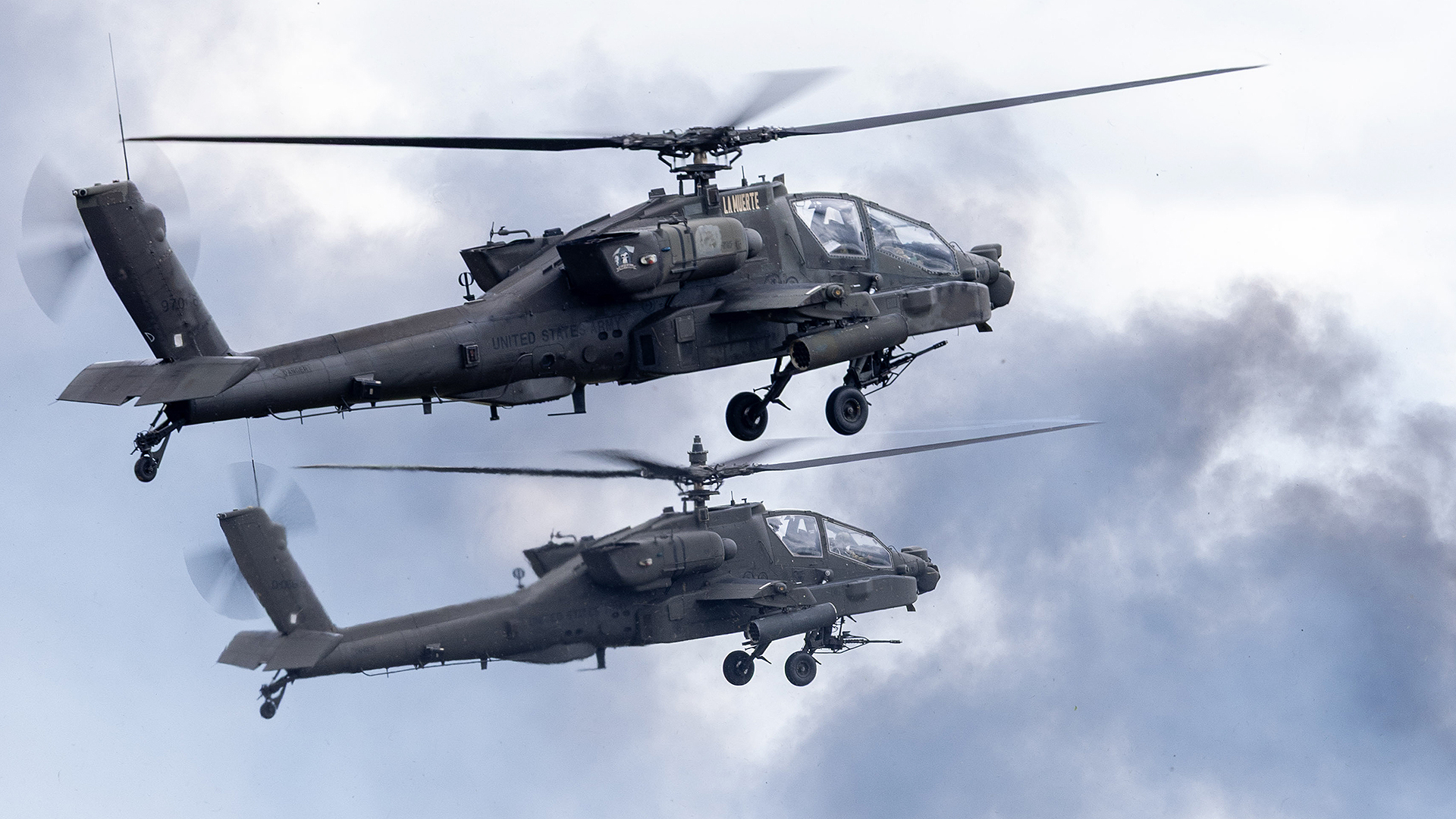
The U.S. Army’s AH-64 Apache attack helicopter is continuing to develop its ability to detect and destroy enemy aerial drones. In a recent live-fire test, AH-64E versions of the helicopter used the latest Version 6 (V6) software package that further enhances the Apache’s qualifications as a drone-hunter, something that has previously been proven in exercises in the Middle East, as you can read about here.
The recent live-fire maneuvers, Operation Flyswatter, were carried out at Marine Corps Air Station New River, North Carolina, and involved AH-64Es in the current-production V6 configuration deployed from the South Carolina Army National Guard (SCARNG). Other Army, National Guard, Marine Corps, Navy, and industry partners participated under an effort that was managed by the Apache Project Management Office (PM Apache).
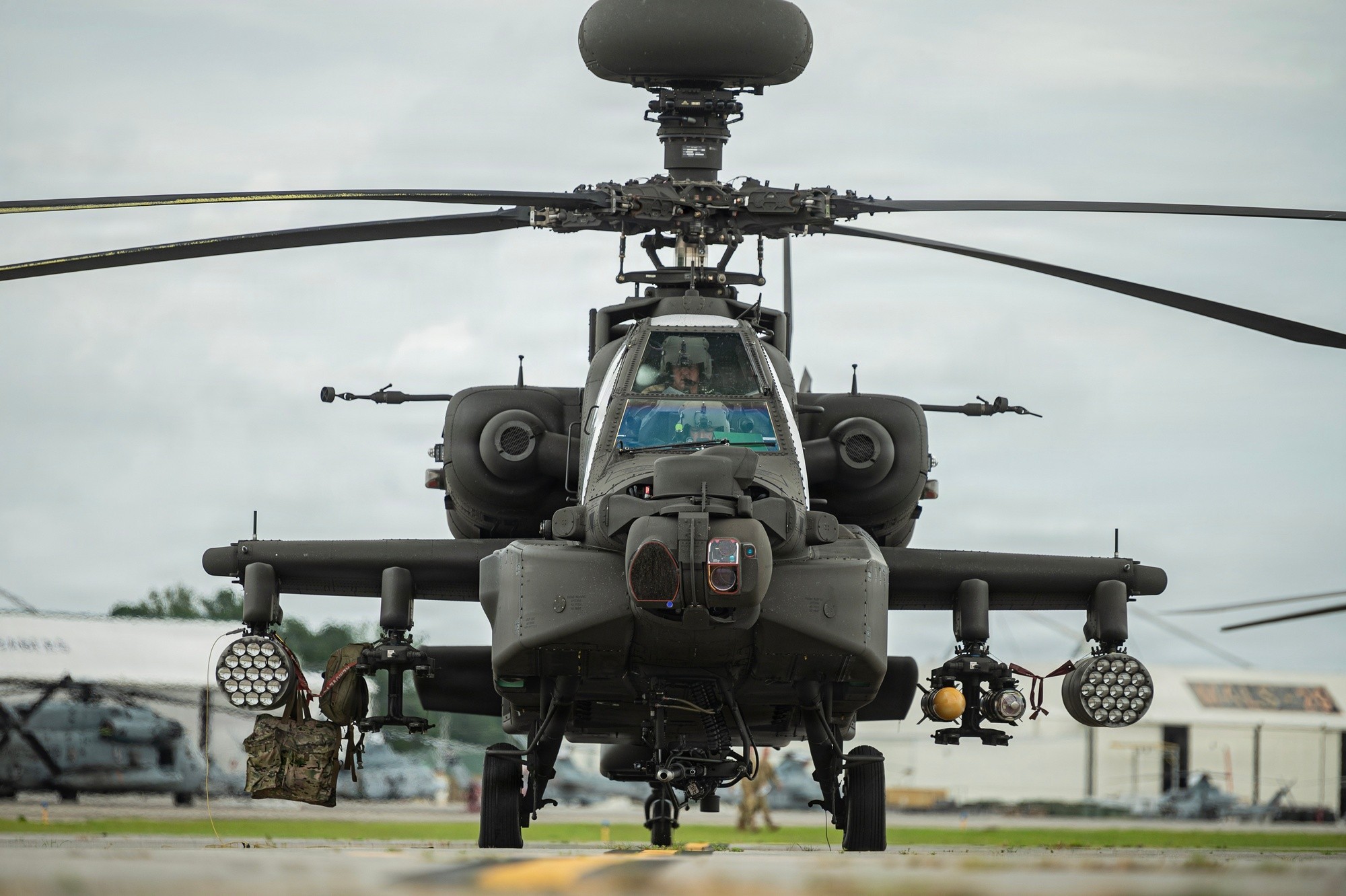
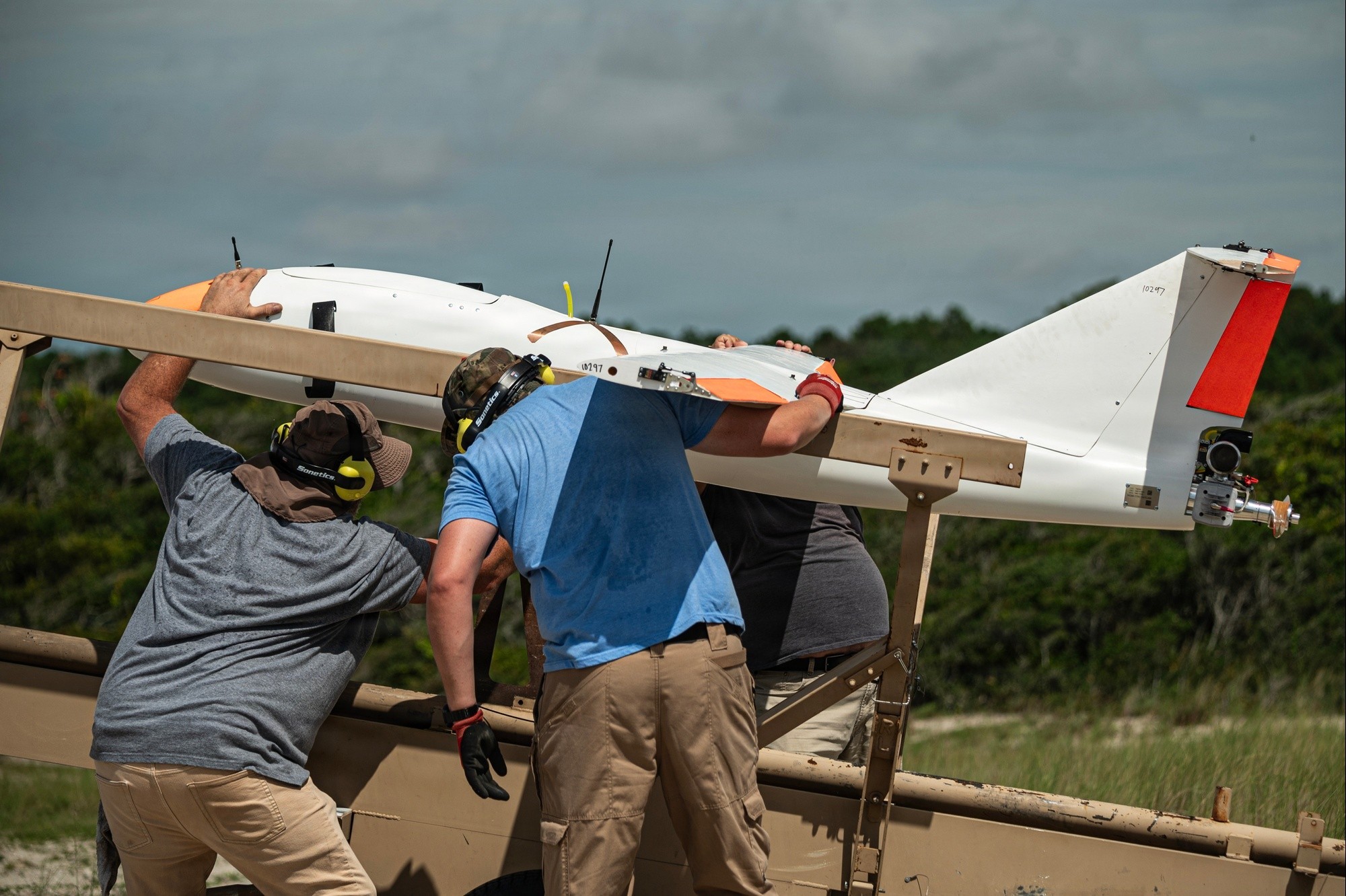
During Operation Flyswatter, the AH-64Es were tasked with detecting and tracking uncrewed aircraft systems (UAS), before defeating them with a combination of laser-guided missiles, laser-guided rockets, and the Apache’s 30mm cannon.
In the process, the drills demonstrated the utility of the V6 software and the weapons package against drone threats. Missions were flown exclusively by SCARNG aircrews, with various different detection and engagement scenarios being played out.
“We successfully achieved 13 kills out of 14 engagements, proving the Apache — using its current software and systems — is a lethal and adaptable solution to the drone threat,” explained CW5 Daniel York, PM Apache New Equipment Training Team Manager.
“The Apache can engage both small and larger drones with a wide range of munitions, underscoring its operational flexibility and combat relevance,” York added.
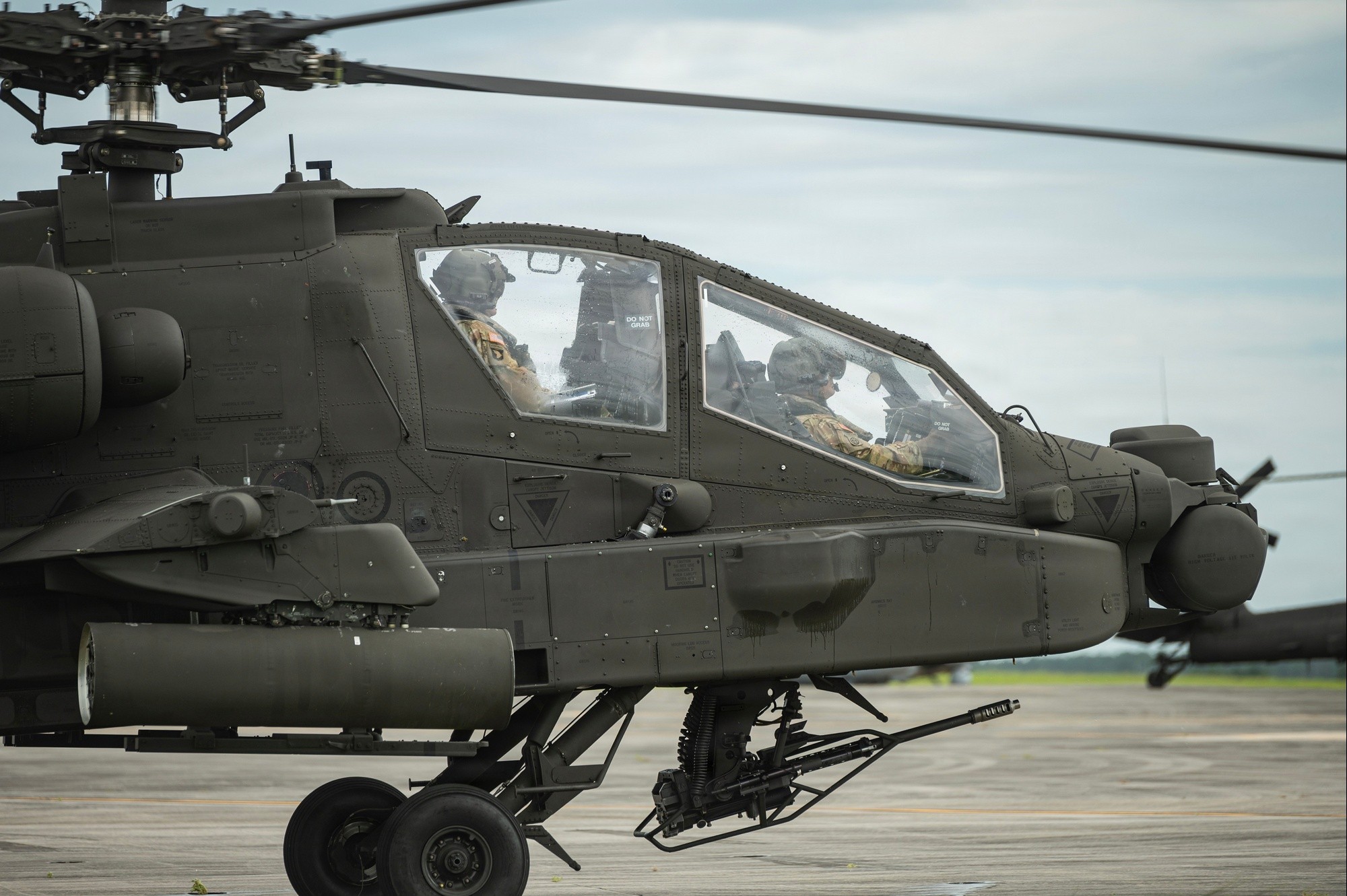
The live demonstration showcased how the Apache’s existing sensors and weapons come together to make a formidable counter-UAS platform, something that’s very timely given the current proliferation of the drone threat — especially from one-way attack munitions or ‘kamikaze drones.’
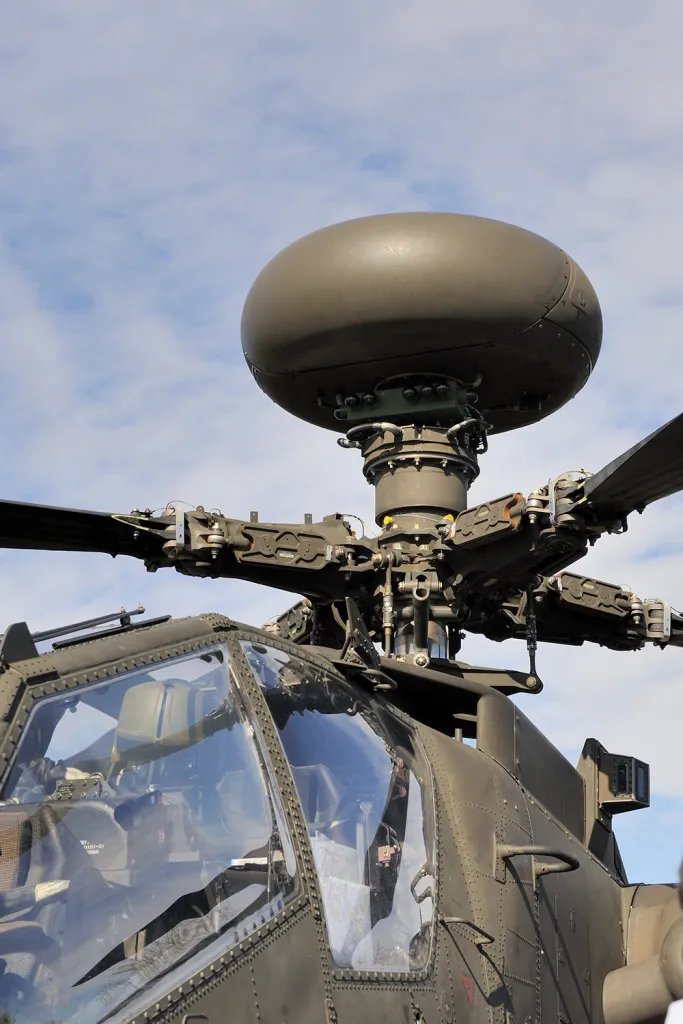
The AH-64E made use of its standard electro-optical/infrared sensors and AN/APG-78 Longbow mast-mounted radar system to detect the drones, CW5 Joel Gooch, State Standardization Pilot, explained.
“With Link 16 integration, it demonstrated it can operate as a true mobile air defense platform, filling a gap that ground systems alone can’t cover,” Gooch said. By using the Link 16 system, the sensor-to-shooter timeline can be reduced, with target data being shared with the Apache aircrew and then used for radar cueing. Within an individual formation, targeting information can also be shared between AH-64s, so even if just one Apache has it, its data can be exploited by the flight. Overall, the highly networked nature of the Apache allows for greater situational awareness and connectivity with command nodes and other platforms in the battlespace, all of which are very useful in the drone defense mission.
Once the target drones were located, the Apache gunships prosecuted them using much of the full range of weaponry available to them.
In terms of missiles, these comprised the AGM-179 Joint-Air-to-Ground-Missile (JAGM) guided by the fire-control radar, as well as AGM-114 Hellfire missiles in both radio-frequency and semi-active versions, using radar and laser designation, respectively.
Rockets used comprised the Hydra-70 fitted with the Advanced Precision Kill Weapon Systems (APKWS) guidance kit. APKWS joins a laser-guided control section to a standard 70mm Hydra rocket. The counter-drone variant includes a proximity fuze system appropriate warhead. The Army confirmed that three of four UAS were struck with the laser-guided APKWS rockets, with “buddy-lase tactics proving especially effective.” This is also the case for fighter jet APKWS drone engagements.
We have repeatedly looked at the potential of the APKWS as a counter-UAS weapon, and in the context of the Apache’s armory, where its cost of around $25,000-30,000 per round compared to around $215,000 for an AGM-114 makes it especially compelling; the radar-guided AGM-114L models cost even more. For the time being, only one drone can be engaged at a time by the APKWS, due to its laser guidance, but there are plans to add a new dual-mode guidance package. An infrared seeker would offer something like a fire-and-forget capability, as you can read about here. This would speed up the engagement times, which could be critically important during volume intercepts.
Meanwhile, the U.S. Air Force fighters have repeatedly used APKWS rockets to deal with Iranian drone and missile attacks in the Middle East. In particular, the rocket-armed fighters were very actively involved in defending Israel from Iranian drones and missiles when the country came under attack earlier this year.
Finally, Apache’s 30mm cannon was used to employ M789 high-explosive dual-purpose rounds, which were used for kills at a distance of under 328 yards. As we have explained in the past, getting close enough and precisely targeting a drone with AH-64’s gun can be challenging and even quite dangerous, both in terms of the aerial dynamics at play and the fact that the drone likely carries a powerful blast fragmentation warhead.

As well as sensors and weapons, Operation Flyswatter validated the Apache’s ability to fight in poor weather and at low altitudes. This would have been aided by the Longbow radar, which is capable of detecting and tracking certain aerial targets, including lower-flying drones, regardless of weather.
Gooch continued: “The lessons from this exercise will drive new TTPs [tactics, techniques, and procedures] across Army Aviation. New training tasks are being developed and will soon be incorporated into requirements, ensuring counter-UAS remains a lasting and vital mission set for the Apache community.”
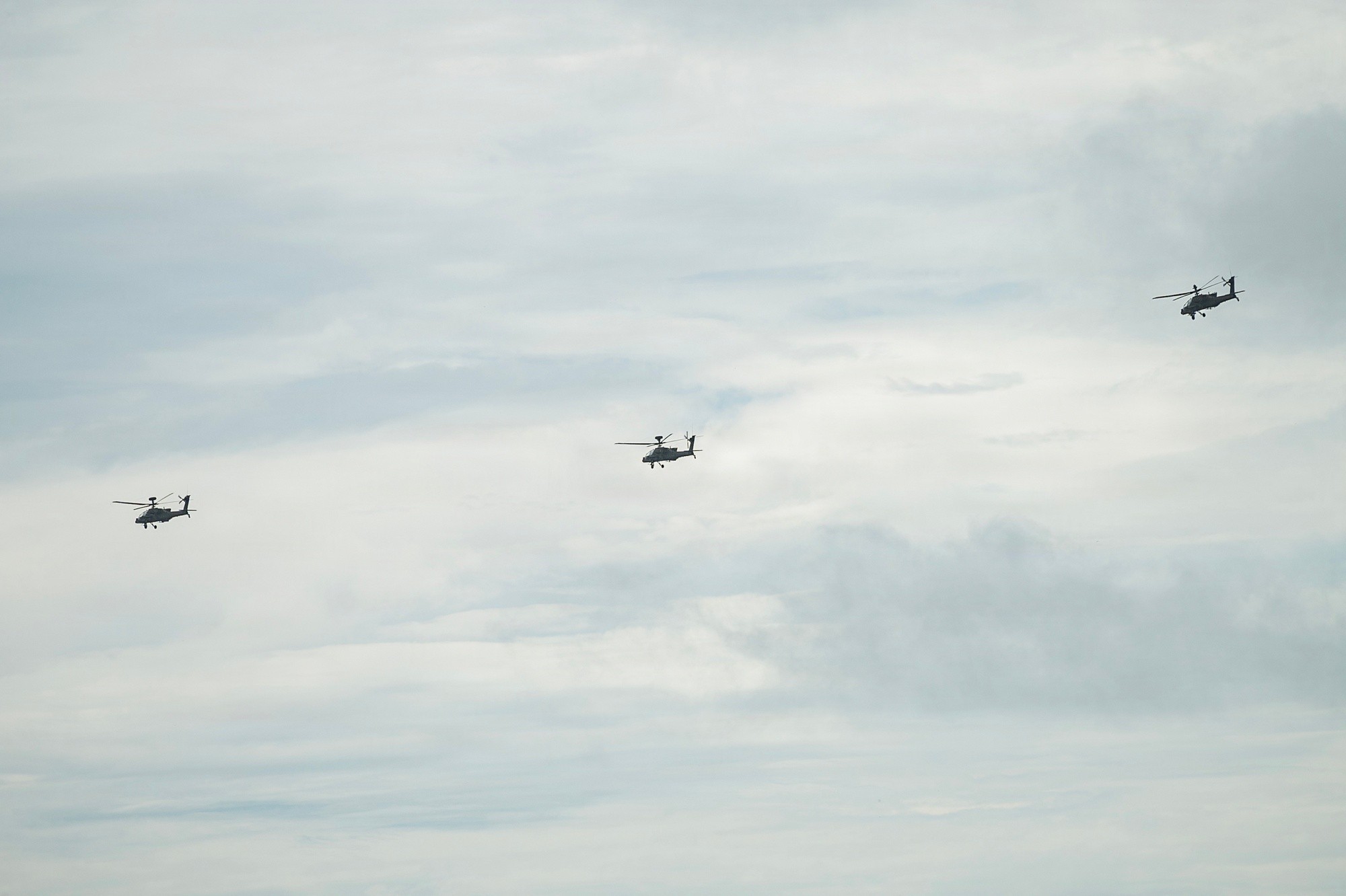
Furthermore, as a result of the apparent success of Operation Flyswatter, PM Apache has recommended that Apache battalion training be expanded with a Counter-UAS Mission Essential Task and the AH-64 Aircrew Training Manual be updated to include aerial counter-UAS tactics.
Operation Flyswatter is the latest effort to further the Apache’s proven capability to act in an air defense role against drones.
Earlier this year, TWZ reported on Exercise Red Sands in Saudi Arabia, a joint Saudi-CENTCOM-sponsored exercise that included a focus on counter-UAS capabilities. On that occasion, AH-64Ds targeted drones with Hellfire missiles, apparently a variant of the AGM-114L, which features a millimeter-wave radar seeker that is initially cued by the Longbow radar.
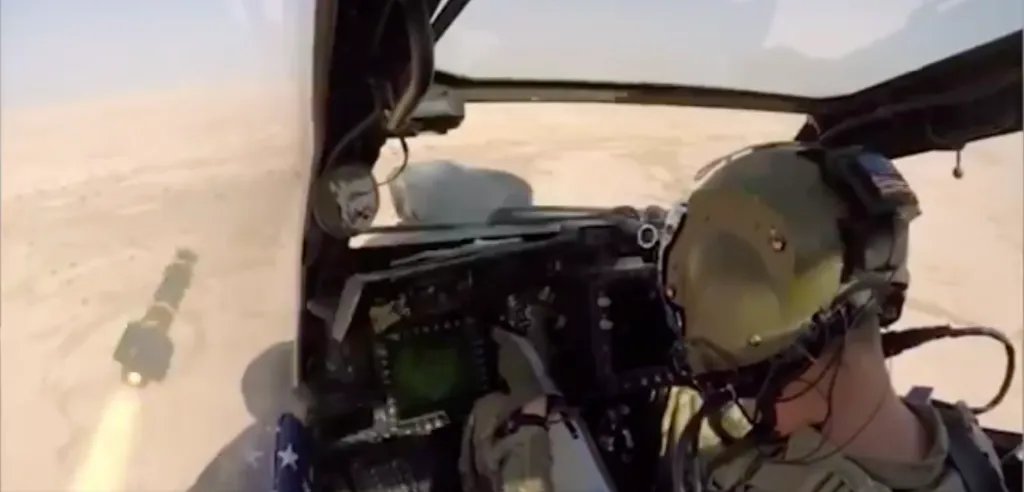
While the U.S. Army using AH-64s to swat down lower-end long-endurance drones might be relatively new, it’s worth noting that Israel has been using the Apache in an air defense role for this purpose for many years. Israeli counter-UAS use of the AH-64 includes one well-known shootdown of a Hezbollah drone near the Syrian border.
Aside from Israel, other nations, too, are increasingly using helicopters to bring down hostile aerial drones. Incidents include a French Navy helicopter using machine gun fire to shoot down a Houthi drone over the Red Sea last year.
Meanwhile, in Ukraine, Mi-8 Hip helicopters have become a key tool in the campaign to down Russian drones, primarily the Shahed-type long-range one-way attack drones.
In general, helicopters offer key advantages over ground-based air defenses, when it comes to the counter-UAS mission. They can be rapidly repositioned to wherever it is most advantageous within their combat radius and, once there, they can set up an anti-drone screen. They can also position forward, including moving with advancing ground forces, and rapidly take to the air to respond to incoming threats. Escorting ground forces and providing overwatch while also offering drone defense capacity is another possibility, reflecting their versatility. Meanwhile, there is even the option of protecting other airborne helicopters from enemy drones, a potential application that will likely become more important as the drone threat evolves.
When it comes to the Longbow-equipped version of the attack helicopter, the Apache becomes an even more compelling candidate for counter-UAS. As a networked and elevated sensor and weapons platform, the Longbow Apache is very well-suited to detecting hard-to-spot, low and slow-flying targets among the ground clutter, although not over long distances. The Apache’s radar can detect and track numerous targets simultaneously, making it better able to undertake rapid engagements against swarms of incoming enemy drones in what might well be a very limited timeframe.
Meanwhile, the continuous evolution of the AH-64E means it will only become more capable at taking on aerial drones. Developments include the ability to team the Apache with its own drone wingmen, which opens the possibility of significantly expanding the area of defensive coverage, as well as bringing new distributed sensors to the fight.
On the other hand, the Apache continues to be constrained by the various limitations inherent to any helicopter. Most obviously, there are speed and endurance capabilities. The former is of particular note as it will limit how many drones a single Apache can engage during a large scale drone onslaught. However, as part of a broader menu of counter-UAS measures, helicopters, and the Apache in particular, very clearly have a place.
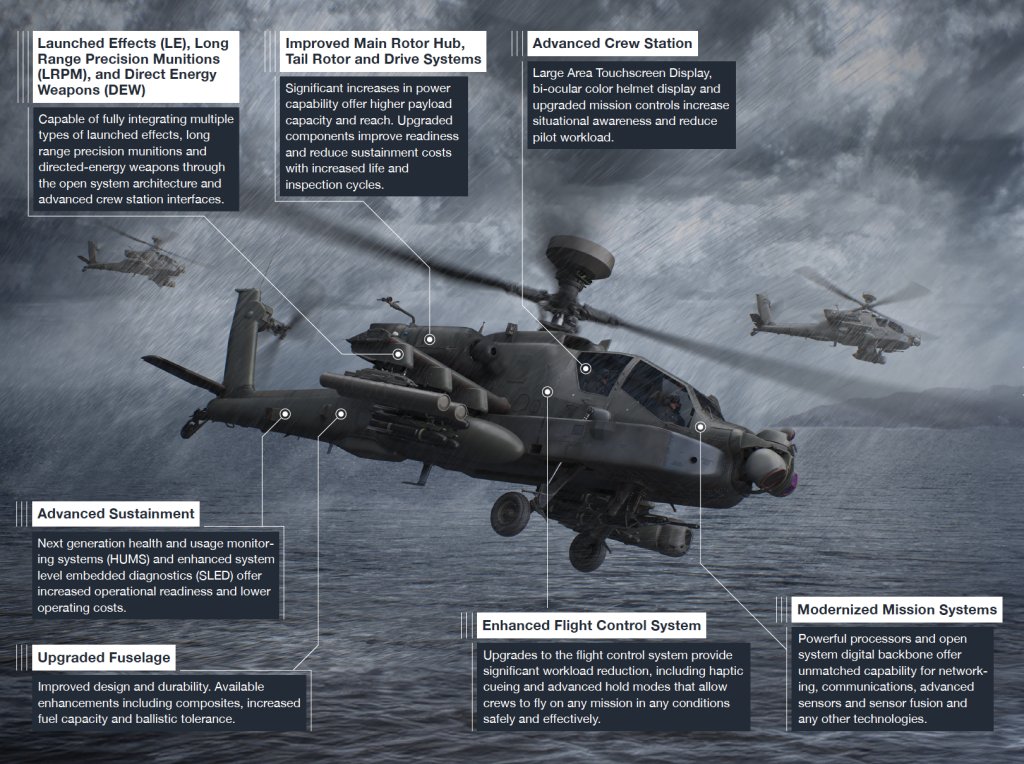
“This demonstration reinforces the Apache’s continued role as a vital combat asset,” York concluded after Operation Flyswatter. “As UAS threats proliferate, Apache crews are proving they can meet the challenge and remain at the forefront of Army aviation.”
Contact the author: thomas@thewarzone.com
Loading comments…
Comments couldn’t be loaded. Please refresh the page.