
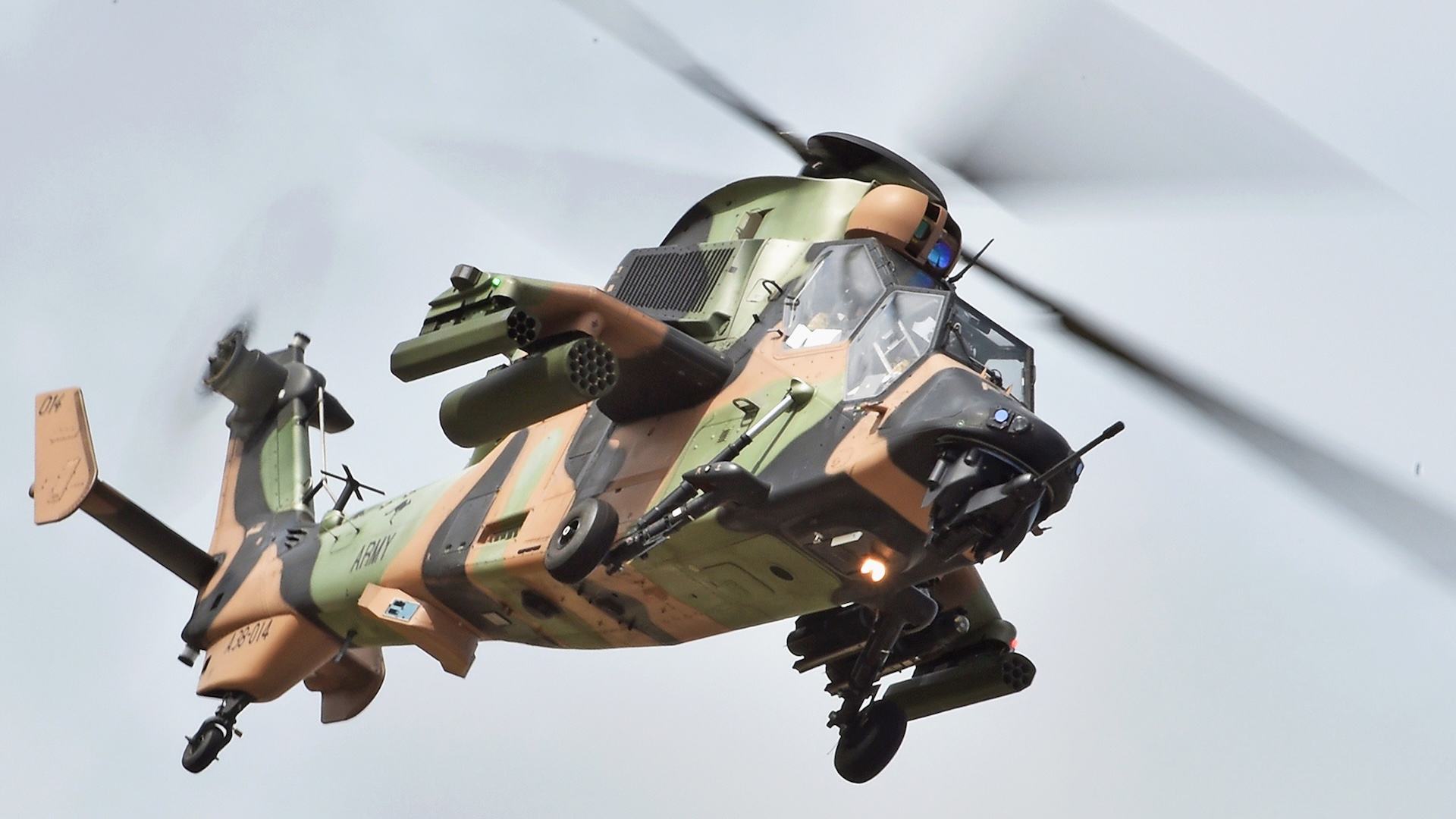
Australia and Ukraine are in talks regarding the transfer of the Australian Army’s Tiger attack helicopters, according to reports. The process of replacing the Tigers with new AH-64E Apache Guardians is already underway, and Ukraine has been looking for additional combat rotocraft for some time now.
Articles published in the Australian media today say that the government in Canberra is considering whether to hand over the 22 Tigers, manufactured by Airbus Helicopters, to Kyiv. The Australian government is currently preparing its next package of military aid for Ukraine, which is likely to include a significant increase in spending, although the attack helicopters would reportedly be supplied separately.

The last major items of military hardware provided to Ukraine by Australia were 49 M1A1 Abrams tanks, which Canberra announced it would donate in October 2024. You can read about that process here.
Australia ordered 22 Tigers in the Armed Reconnaissance Helicopter (ARH) configuration in 2001, and these entered service in 2004, although final operational capability was not declared until 2016, at which point there were still 76 capability deficiencies needing to be rectified.
The Tiger ARH consistently struggled with higher-than-expected sustainment costs and lower-than-expected availability.
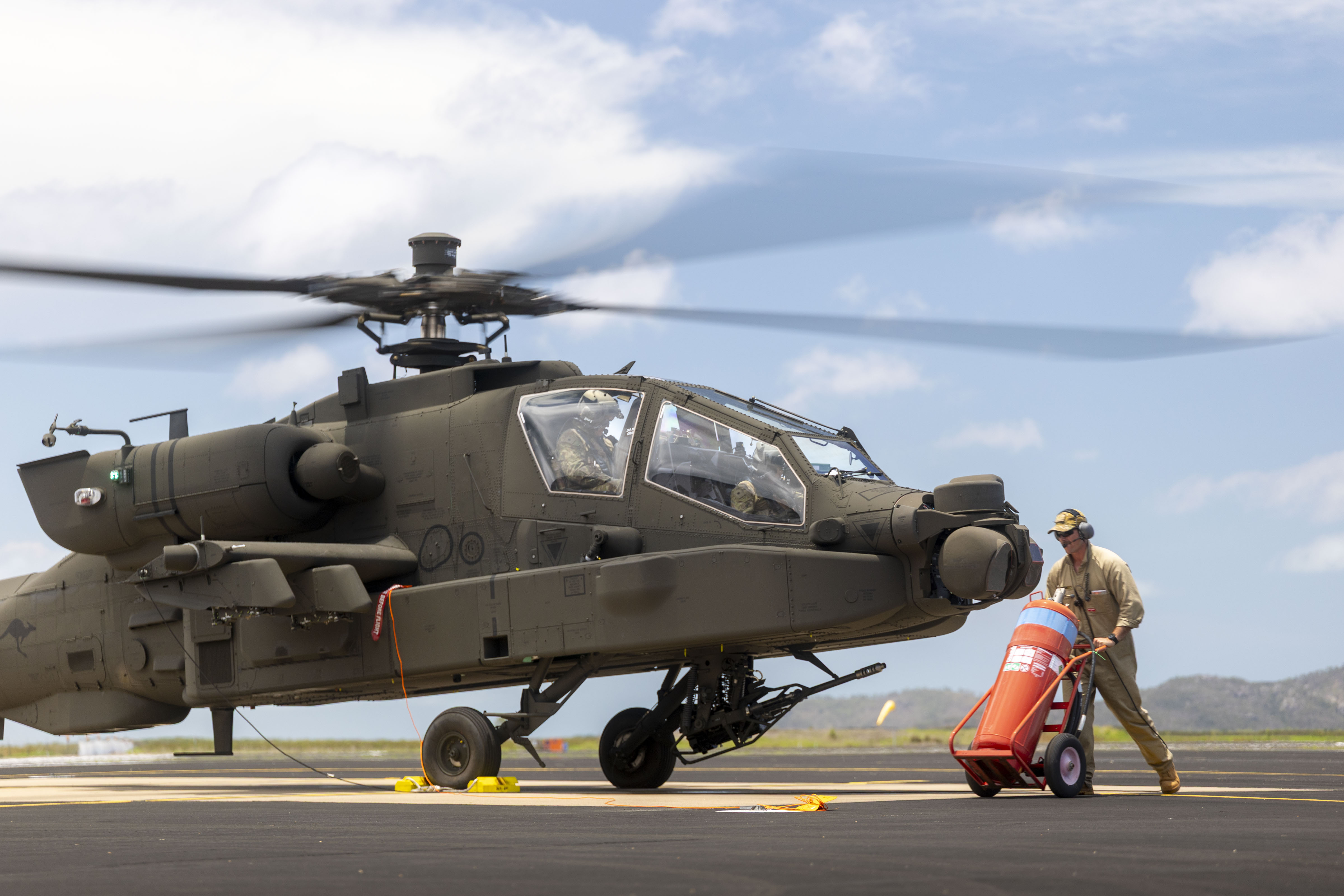
In January 2021, the Australian Ministry of Defense confirmed that the country would be ordering the AH-64E to replace the Tiger ARH from 2025. It fought off competition from the Bell AH-1Z Viper and the Airbus Helicopters Tiger Mk III, an upgrade of the existing ARH.
Linda Reynolds, at that time the Australian minister of defense, described the AH-64E as “the most lethal, most survivable, and lowest risk option, meeting all […] capability, through-life support, security, and certification requirements.”
In June 2021, Washington approved the Foreign Military Sale of 29 AH-64Es to Australia at an estimated cost of $3.5 billion. The package also included 16 AN/APG-78 Longbow fire-control radars and various weapons, including AGM-114R Hellfire missiles and Advanced Precision Kill Weapon System (APKWS) laser-guided rockets.
Since then, the Australian Defense Force has laid out its plan to retire the Tiger ARH.
The Australian Army has confirmed that it will continue operating the Tiger ARH in some capacity until 2027, while it transitions to the AH-64E. In the process, it has admitted that it might need to cannibalize some of the airframes for spare parts to keep the remainder flying.
The first two Australian AH-64Es started flying operations at their Townsville base only last week. Meanwhile, Australian defense officials have reportedly indicated that the timetable for withdrawing the Tigers could be brought forward.
As for Ukraine, there has already been official interest expressed in obtaining the unwanted Tiger ARH.
Last year, Vasyl Myroshnychenko, Ukraine’s ambassador to Australia, told Defence Connect that the country would be “thankful” for the Tigers. “We’d be interested in having that conversation and about something that will help,” he added.
Myroshnychenko also reflected that a previous request for former Australian Army MRH90 Taipan battlefield utility helicopters was rejected by Canberra.
Australia’s sorry saga with the MRH90 is something that TWZ has reported on extensively in the past.
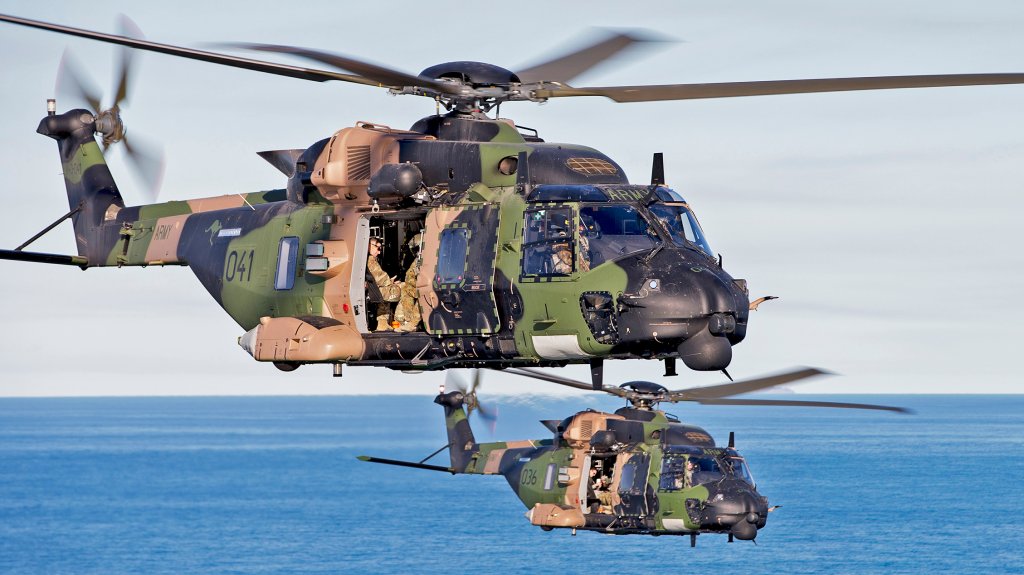
Citing difficulties with maintenance and availability, Australia announced in December 2021 that it was ditching its fleet of MRH90s and replacing them with U.S.-built UH-60 Black Hawks. The NH90 had entered Australian service in 2008, and the fleet of 46 Taipans was retired a decade ahead of schedule.
In the event, the surviving aircraft were unceremoniously scrapped and literally buried.
Should the Tiger ARH fleet, or a portion of it, be donated to Ukraine, the helicopters may well need some modifications to ensure that they perform as required. A further upgrade of the Tiger was offered to Australia by Airbus but was ultimately rejected in favor of new AH-64Es.

Regardless, introducing the Tiger to Ukrainian service would be a long process, requiring training of aircrews and maintainers. A Franco-German training hub for the Tiger exists in France but is scheduled to cease operations in 2028.
The Tigers would also require infrastructure, spare parts, and weapons. The Tiger ARH’s primary armament was the AGM-114 Hellfire anti-armor missile, a weapon that so far has only been transferred to Ukraine in the form of the coastal defense version, donated by Sweden.
While it remains to be confirmed whether Ukraine will get the Tiger ARH, it is interesting that there is continued Ukrainian interest in acquiring new attack helicopters of some kind, to supplement its Soviet-era Mi-24 Hind fleet, which has been bolstered by deliveries from the Czech Republic and Poland.
Since Russia launched its full-scale invasion of Ukraine, heavy and sometimes very visible losses of attack helicopters in that conflict have led to repeated assertions about the inherent vulnerability of these assets when faced by more advanced air defenses and loitering munitions/drones.
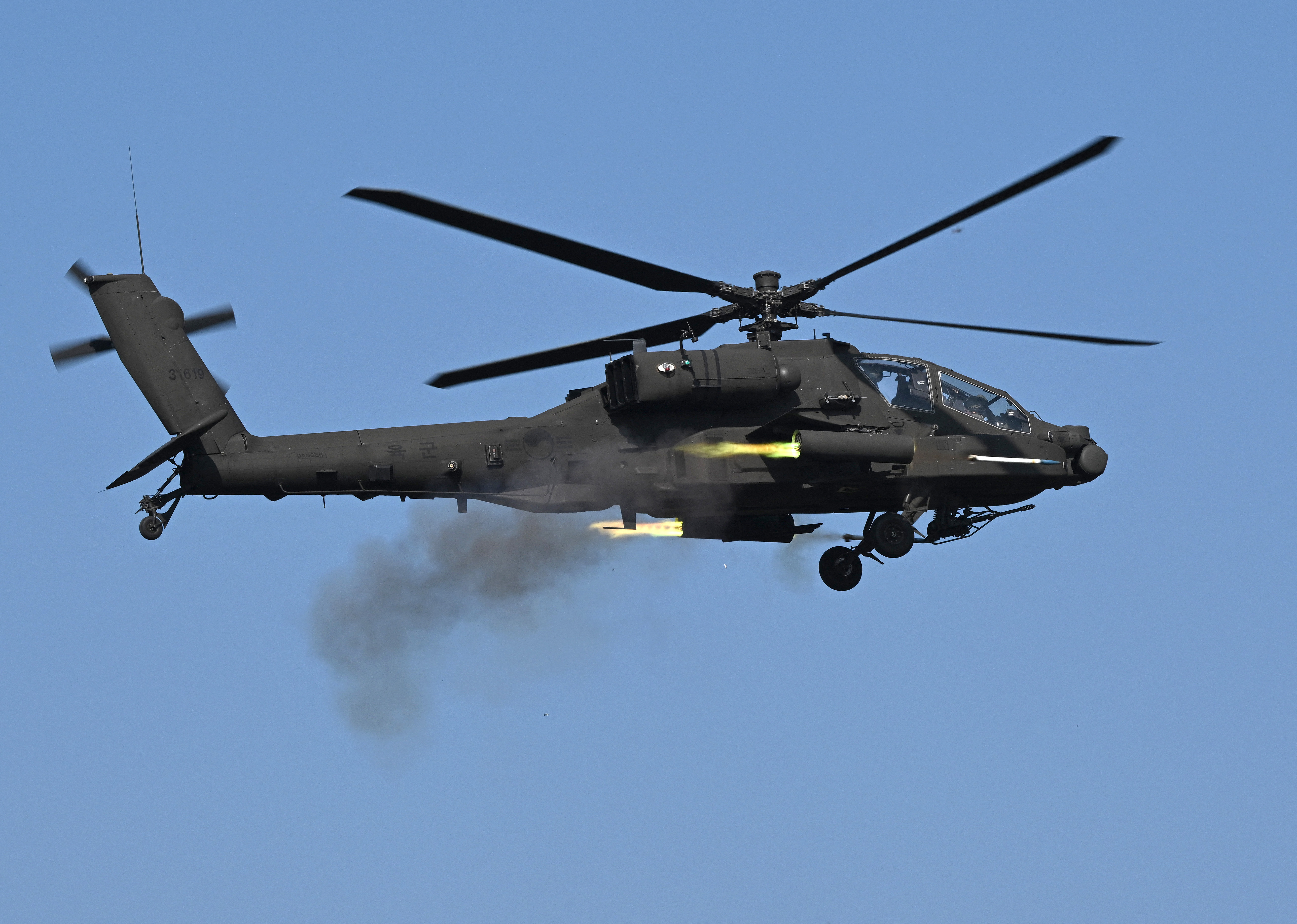
South Korea’s decision to abandon plans for a follow-on buy of 36 AH-64Es was attributed by many to Seoul having learned lessons from Ukraine; it is a discussion that we looked at in more detail at the time.
“Drones and smart systems are redefining modern battlefields,” explained Yu Yong-weon, a member of South Korea’s National Assembly belonging to the People Power Party. “Rather than clinging to expensive legacy platforms, we must invest in capabilities that reflect the future of warfare.”
As TWZ has previously noted:
“Well before Russia’s all-out invasion of Ukraine, the attack helicopter’s utility has been questioned. This doesn’t mean it’s irrelevant; it means the rationale behind how many resources are poured into this class of aircraft has to be reevaluated based on the glaring realities of today’s battlespace, let alone what we can predict for that of tomorrow.”
The biggest concern, of course, is survivability. Traditionally, an attack helicopter works low and slow, in close proximity to its objective, which can put it at very high levels of risk. Undoubtedly, pop-up threats such as man-portable air defense systems (MANPADS), road-mobile surface-to-air missile systems, and anti-aircraft artillery make the modern battlefield both unpredictable and lethal.
There are, however, tactics and combined-arms concepts that can at least mitigate these threats, which have actually existed for most of the history of the modern attack helicopter.
That’s not to say that these kinds of threats have not only proliferated in more recent years, but also gotten more dangerous.
Examples include the proliferation of look-down radar capabilities and advanced long-range air defense systems that pose huge threats to attack helicopters. The sensor fidelity and advanced networking capabilities of ground-based air defense systems are improving and are being complemented by a range of counter-air missile technology. In the past, attack helicopter crews might have been able to exploit the radar horizon and terrain masking, but these developments mean this has become harder to do.
There are novel threats, too, such as cheap loitering munitions that can take down helicopters as targets of opportunity or be launched and chase them down on demand. These weapons pose a growing and highly dynamic threat, too.
At the same time, attack helicopters are pushing back with advances of their own.
These include new, longer-range weapons, including missiles and air-launched effects (ALEs). The latter is an especially interesting category, including stores that can attack, decoy, and jam air defenses, further enhancing survivability against certain threats. Modern attack helicopter crews increasingly benefit from enhanced situational awareness and integrated electronic warfare systems, too.
When it comes to the limitations imposed by range and speed, which have seen the utility of attack helicopters in future Indo-Pacific contingencies being questioned, that is less of an issue in Ukraine. After all, both Russia and Ukraine have been making extensive use of attack helicopters, including as flying artillery, very close to the forward line of own troops (FLOT). Both operators have appeared generally willing to take the risks that this entails to ensure close air support where it is needed.
Meanwhile, Ukraine also recently signed a letter of intent (LOI) with Bell Textron Inc. “to identify and evaluate areas for cooperation with Ukraine.”
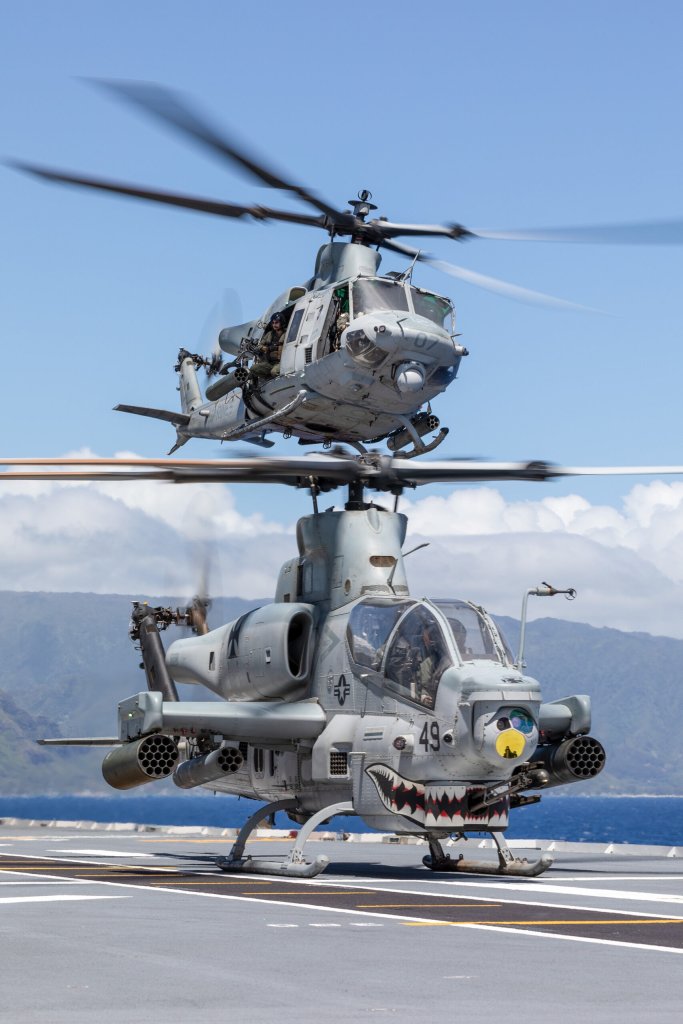
This includes planning for the potential procurement of AH-1Z and UH-1Y Venom helicopters under a Foreign Military Sale (FMS) program. At this stage, the LOI is not a purchase deal, but simply signals mutual interest in getting these helicopters into Ukrainian hands at some point in the future.
If it could be achieved, the induction of a modern attack helicopter would be a huge boost for Ukraine. Both the AH-1Z and the Tiger are faster, more agile, and better equipped with self-protection equipment than the Mi-8s and Mi-24s currently flying close air support missions for the Ukrainian Army. Both types also have modern precision-guided missiles, which are not available to the Soviet-era rotorcraft, although laser-guided rockets have been supplied. More advanced attack helicopters would also be ideal platforms for the counter-drone role, especially against barrages of Russian Shahed-type drones.
Once again, it is by no means certain that the Australian Army’s Tiger ARH fleet will get a second career chance in Ukraine. However, the fact that Australia is procuring the AH-64E to replace its Tiger fleet, and with Ukraine seeking more battlefield rotorcraft, the attack helicopter in general, despite predictions to the contrary, is far from dead.
Contact the author: thomas@thewarzone.com
Loading comments…
Comments couldn’t be loaded. Please refresh the page.