
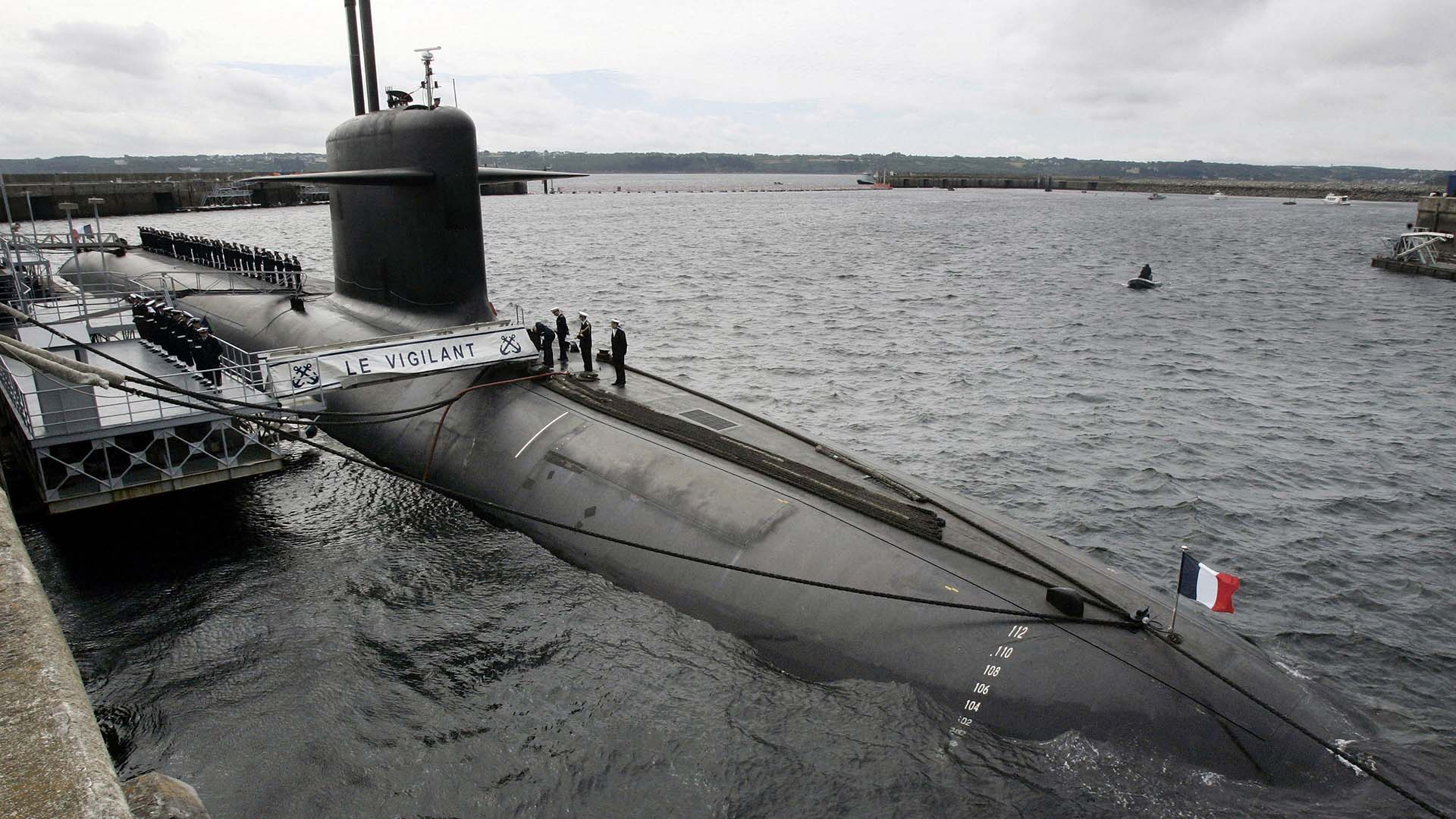
French authorities reportedly took defensive measures against five drones flying over an extremely sensitive base that is home to the nuclear submarines that make up the nation’s second-strike deterrent force. The incident is the latest in a string of incursions seen over military installations and other sensitive areas in Europe that some have linked to Russia.
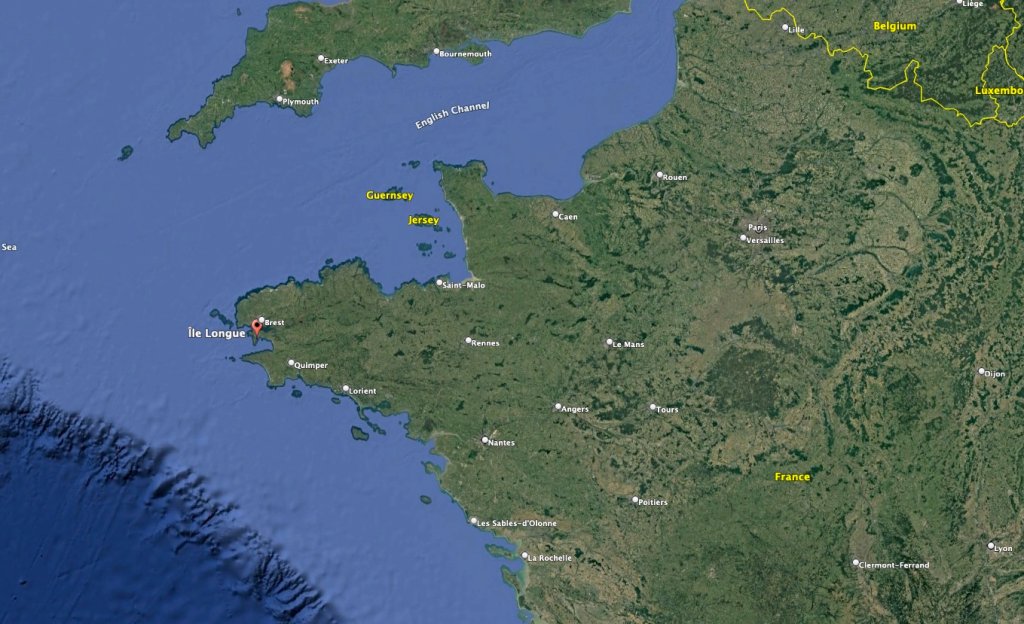
The drones were reported over the Île Longue submarine base at about 7:30 PM local time Thursday, according to AFP. The base is located on the Crozon Peninsula in the westernmost part of France. The facility is the homeport for the French Navy’s four nuclear ballistic missile submarines (SSBNs): Le Triomphant, Le Téméraire, Le Vigilant, and Le Terrible.
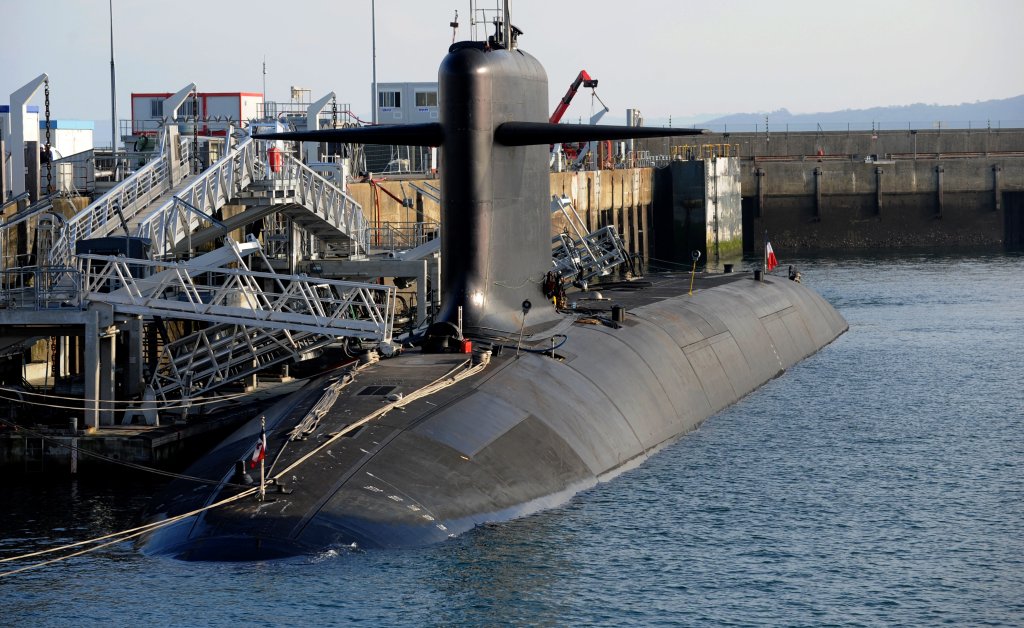
After the drones were spotted, a “counter-drone and search operation was launched,” AFP reported, citing the gendarmerie. “The marine rifle battalion, which is responsible for protecting the base, carried out several anti-drone strikes.”
The marines “used a jammer, not a firearm,” against the drones, Public Prosecutor Frédéric Teillet said.
A French official confirmed to TWZ that there was an overflight on the Crozon Peninsula and that military personnel at the base “reacted promptly and appropriately in full accordance with protocol.”
That protocol, according to the official, holds that when there is a case of doubt about what is flying over a military base, “personnel are mobilized to detect and jam it.”
Despite efforts to stop the drones, none were brought down, and no operators were identified, the Rennes prosecutor’s office told AFP.
“Therefore, no link to foreign interference has been established,” added Teillet, the Public Prosecutor. His office has “jurisdiction over military matters,” and opened up an investigation into the incident, AFP noted.

Investigators “must, in particular, identify and interview the individuals who reported the sightings in order to confirm or deny that they were indeed drones” and determine “the type and number of devices,” the prosecutor explained.
“It is too early to characterize” the origin of the drones, Commander Guillaume Le Rasle, spokesperson for the maritime prefecture, told AFP. He did, however, believe that these flights over the Île Longue submarine base were “intended to alarm the population.”
Still, “[s]ensitive infrastructure was not threatened by the overflight,” Le Rasle explained.
Thursday was not the first time drones have flown over the restricted area on the Crozon Peninsula. There was an overflight reported “during the night of Nov. 17-18,” AFP stated.
The first reported incursion near the facility took place a decade ago, according to the French Le Telegramme news outlet.
“The detection of a drone flying near the highly secretive base for nuclear-powered ballistic missile submarines (SSBNs) triggered an impressive deployment of forces on Tuesday morning on the Crozon peninsula, south of Brest,” the publication reported in January 2015. “The overflight occurred at a critical moment: just as an SSBN was about to move.”
The reported incursion over the French submarine base comes amid a rash of such sightings across Europe that have sparked military responses and closed civilian airports.
Earlier this week, there was a reported incursion in Ireland as Ukrainian President Volodymyr Zelensky was arriving.
“Four unidentified military style drones breached a no-fly zone and flew towards the flight path of Ukrainian president Volodymyr Zelenskyy’s plane at sea near Dublin Airport late on Monday night,” The Journal, an Irish publication, reported. “The plane landed, slightly ahead of schedule, just moments before the incident happened at about 11 p.m. The drones reached the location where Zelensky’s plane was expected to be at the exact moment it had been due to pass.”
On Friday, CBS News confirmed that “[u]nidentified drones breached Ireland’s airspace this week” during Zelensky’s visit.
As we have frequently reported, Europe has experienced dozens of drone sightings that have temporarily closed airports and buzzed military facilities. In many instances, the armed forces of those countries have had to intervene. In one such example, the Dutch military last month “opened fire at drones over Volkel Air Base in the east of the country, but no wreckage was recovered,” the Ministry of Defense said.
“Security staff at the base reported the drones between 7 p.m. and 9 p.m…prompting the air force to fire ground-based weapons to take them down,” the ministry said in a statement, according to ABC News.
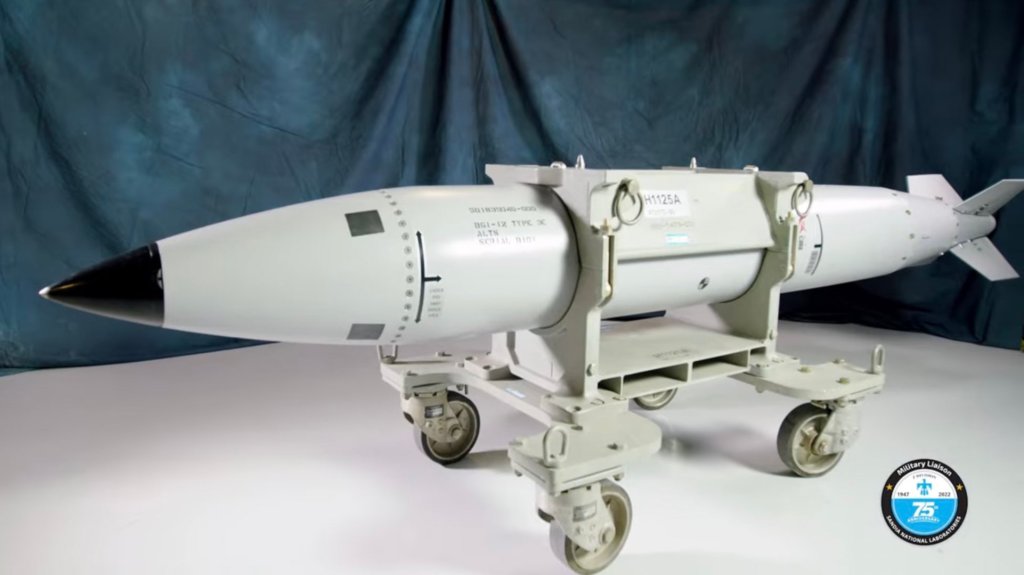
Volkel is one of several bases in Europe where the U.S. military keeps B61-12 nuclear gravity bombs, which could be released to select NATO members for use on their aircraft as part of the alliance’s nuclear weapon sharing agreements.
European leaders have suggested Moscow might be behind at least some of these drone overflights.
Denmark has called drones of unknown origin flying over its airspace part of a “hybrid attack.” While some officials there have stopped short of saying definitively who is responsible, Prime Minister Mette Frederiksen suggested it could be Moscow, calling Russia the primary “country that poses a threat to European security.”
“It’s possible,” that there is a Russian connection to the drone incursions, “but there are currently no concrete indications,” Belgian Defense Minister Theo Francken said earlier this year. “That needs to be investigated. Personally, I think these drones are very often an example of a hybrid threat. This is a way to sow unrest. That has been Russia’s pattern for many years.”
Still, little proof has emerged of such a connection, which the Kremlin denies.
In an earlier story about incursions over Germany, we noted that: “it is quite possible that many, if not most of these sightings are mistaken identity. It is a pattern that emerged last year when thousands of people claimed to see drones in the New Jersey region of the U.S. The overwhelming majority of those sightings were airplanes, planets and other benign objects in the sky.”
“… just like in the New Jersey case, we do know that a significant number of the sightings over military bases were confirmed by the government. The reality is that these drone incursions over critical facilities in Europe have been happening for years, but just how much it has exploded in recent weeks is blurred by media reports and sightings not supported by independent analysis or corroborated by sensor data.”
However, the U.S., as we have frequently reported, has seen numerous drone incursions over military facilities like those over Langley Air Force Base in 2023, as well as Wright-Patterson Air Force Base, Picatinny Arsenal, and others late last year that we were the first to report. There were numerous incursions over bases in Europe as well, which we were also the first to report. To date, the operators of the drones spotted over U.S. or NATO ally bases have not been definitively identified.
Overall, security challenges posed by the uncrewed aerial systems only continue to grow, as now underscored by the newly reported intrusion over Ile Longue.
Contact the author: howard@thewarzone.com
Loading comments…
Comments couldn’t be loaded. Please refresh the page.