
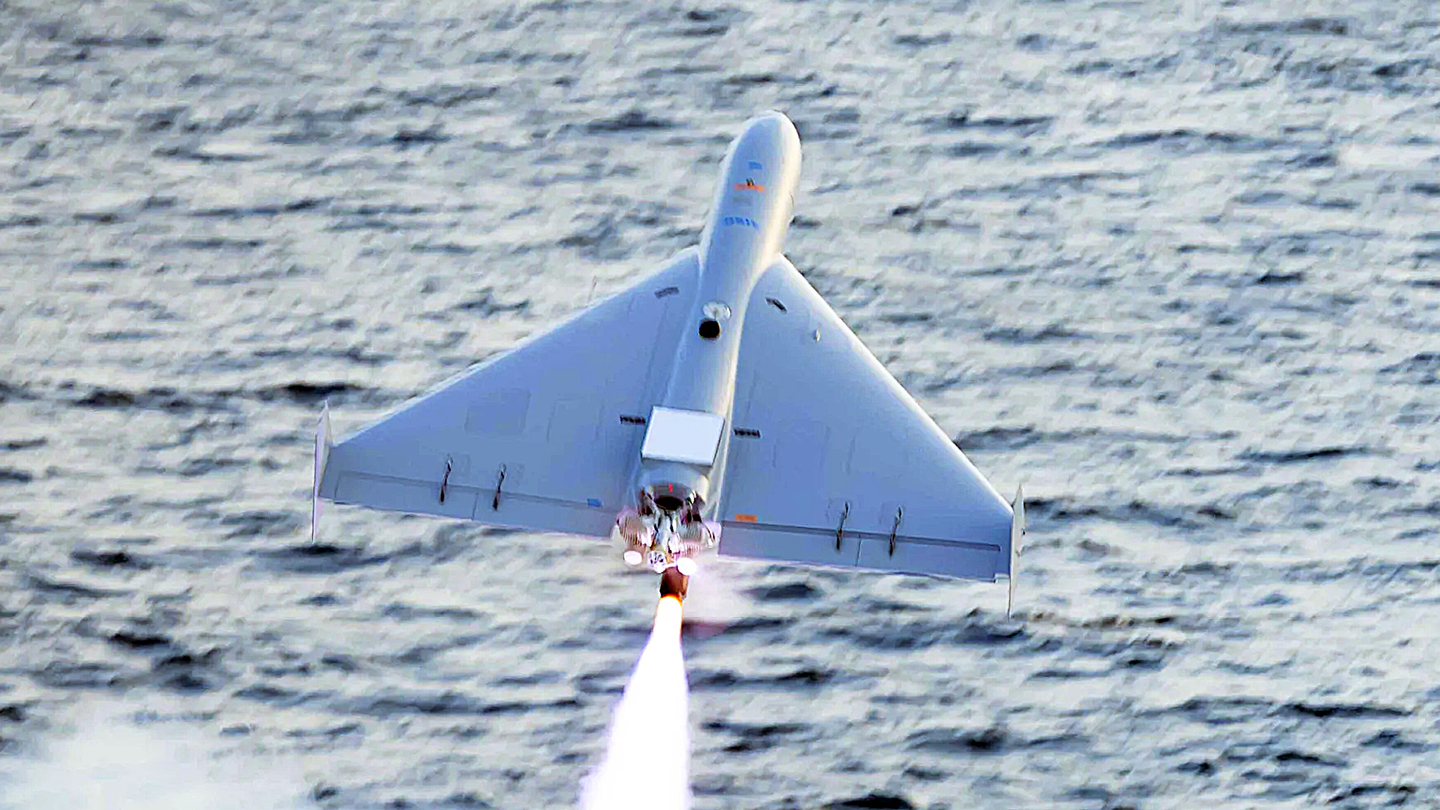
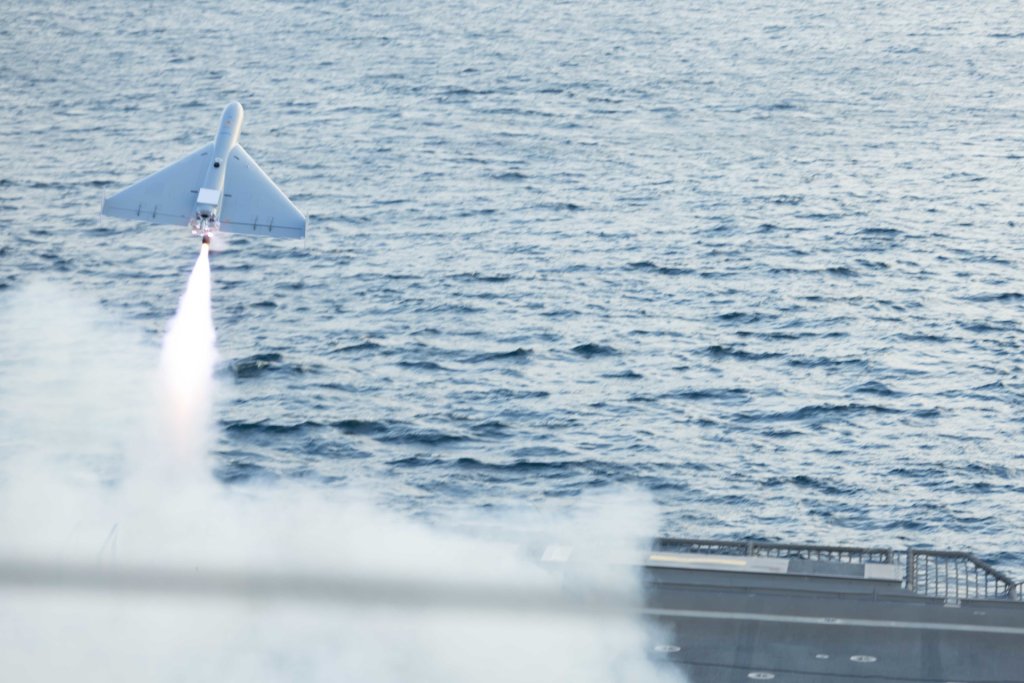
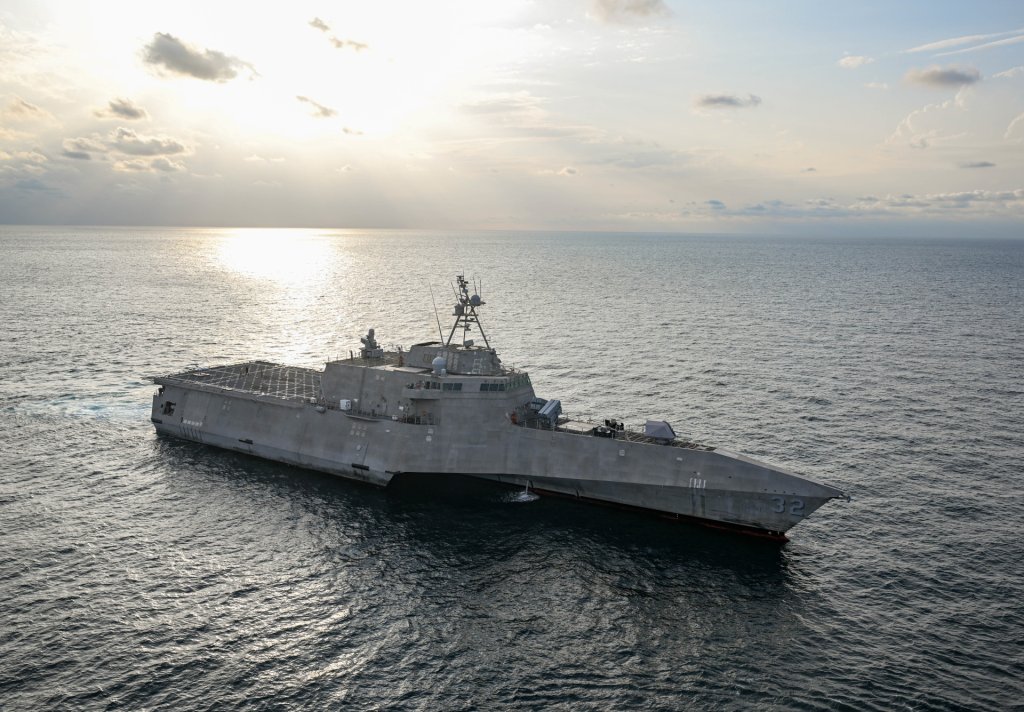
The U.S. Navy personnel in the Middle East have test-launched a Low-Cost Uncrewed Combat Attack System (LUCAS) long-range kamikaze drone from the Independence class Littoral Combat Ship (LCS) USS Santa Barbara. Described as a first-of-its-kind achievement, this comes two weeks after the U.S. military announced it had established Task Force Scorpion Strike (TFSS) in the region, armed with the LUCAS drones from SpektreWorks. Being able to employ the one-way attack drones from the sea, as well as from sites on land, opens the door to new operational possibilities on top of what was already a major new addition to the U.S. military’s long-range strike arsenal.
TWZ has previously explored in great depth the arguments for arming Navy ships with various types of uncrewed aerial systems to provide additional layers of defense, as well as enhanced strike, electronic warfare, intelligence-gathering, and networking capabilities, which you can find here. Just earlier this year, we also laid out a detailed case for why America’s armed forces should be heavily investing in rapidly-producible long-range kamikaze drones — Shahed-136 clones primarily — just like LUCAS, as you can read here.
Personnel from U.S. Naval Forces Central Command’s (NAVCENT) Task Force 59 conducted the rocket-assisted launch of the LUCAS drone from the stern flight deck of the USS Santa Barbara on December 16, according to an official release. The ship was operating in the Arabian Gulf, more commonly known as the Persian Gulf, at the time. Established in 2021, Task Force 59 has been leading efforts to expand the Navy’s operational use of uncrewed platforms, as well as new artificial intelligence (AI) capabilities, in the Middle East. The LUCAS drone itself had been provided by TFSS, which falls under the auspices of U.S. Special Operations Command Central (SOCCENT), the regional headquarters for special operations activities under U.S. Central Command (CENTCOM).
The official release from NAVCENT does not provide specific details about capabilities demonstrated during the test, such as how far the LUCAS drone flew, how it was controlled or directed, and whether it hit a mock target of some kind at sea or on land at the end of its flight.
TWZ reached out to CENTCOM, which declined to provide more granular information. We have also reached out to NAVCENT and SpektreWorks.
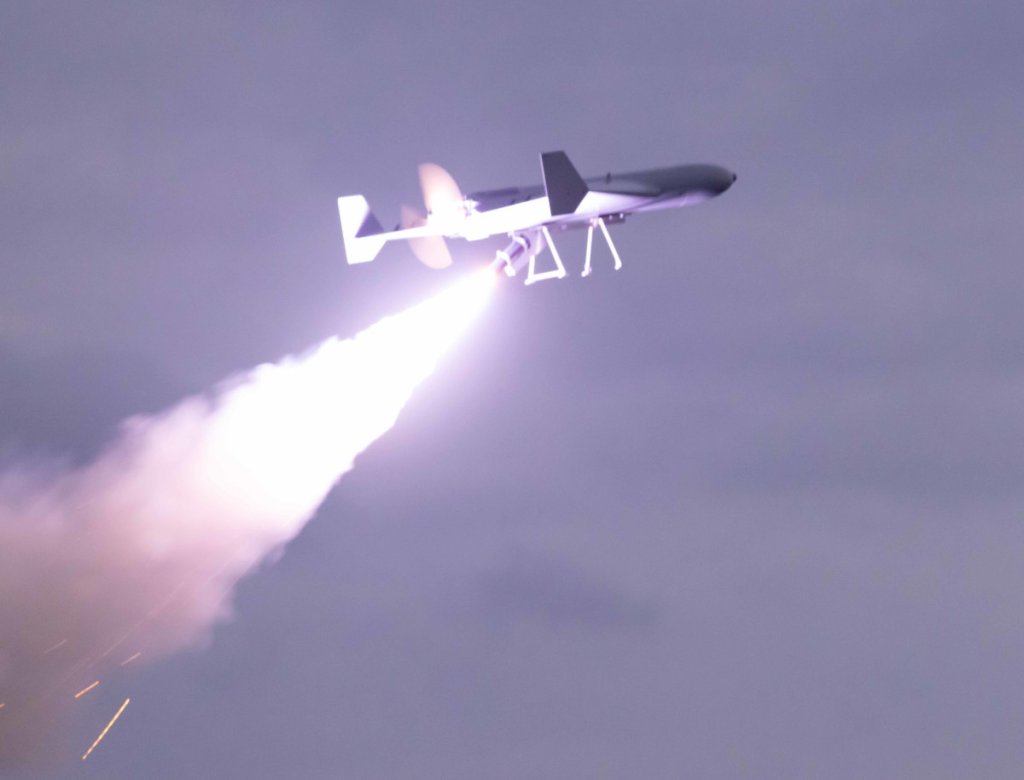
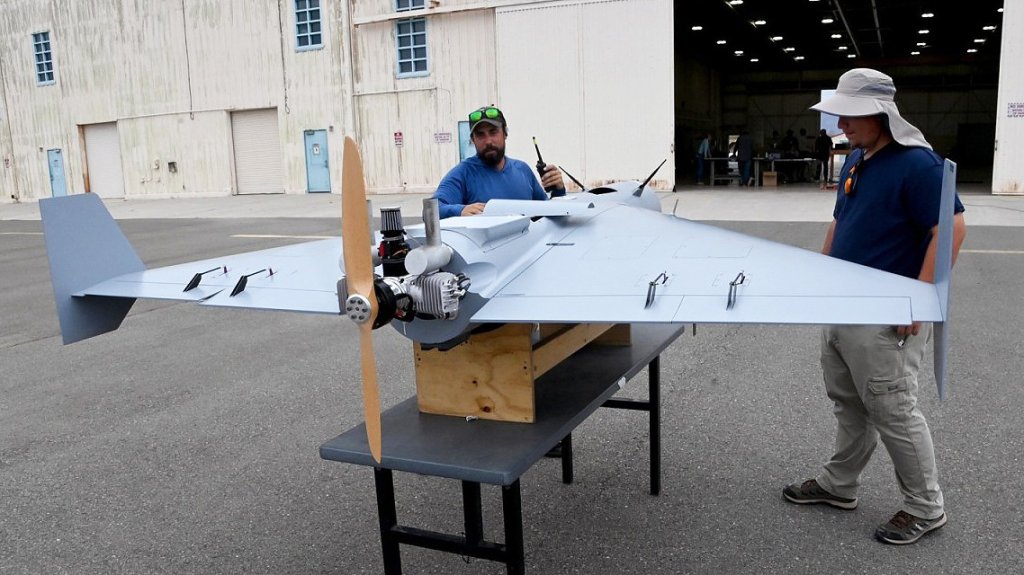
General details about the LUCAS drones the U.S. military now has deployed in the Middle East remain limited. It is known that SpektreWorks directly reverse-engineered the design from Iran’s Shahed-136, and initially with an eye toward its use as a threat-representative target for training and test purposes. At some 10 feet long and with a wingspan of around eight feet, LUCAS is slightly smaller than the Iranian drone. SpektreWorks has also publicly provided specifications for the related target drone, called the FLM 136, which has roughly half the range and payload capacity as the Shahed-136. However, it is unclear whether this reflects the capabilities found on operationalized configurations. LUCAS is also said to have a unit cost of around $35,000.
Iran and its regional proxies have employed a growing number of variants and derivatives of the Shahed-136 design in recent years, including in attacks on targets in Israel and on ships sailing in and around the Red Sea. Russia also now produces its own still-expanding array of Shahed-136-based drones domestically, which it regularly employs in attacks on Ukrainian cities, as well as forces around the front lines.
The video below includes a montage of clips from Iranian state media showing Shahed-136s being employed during an exercise.

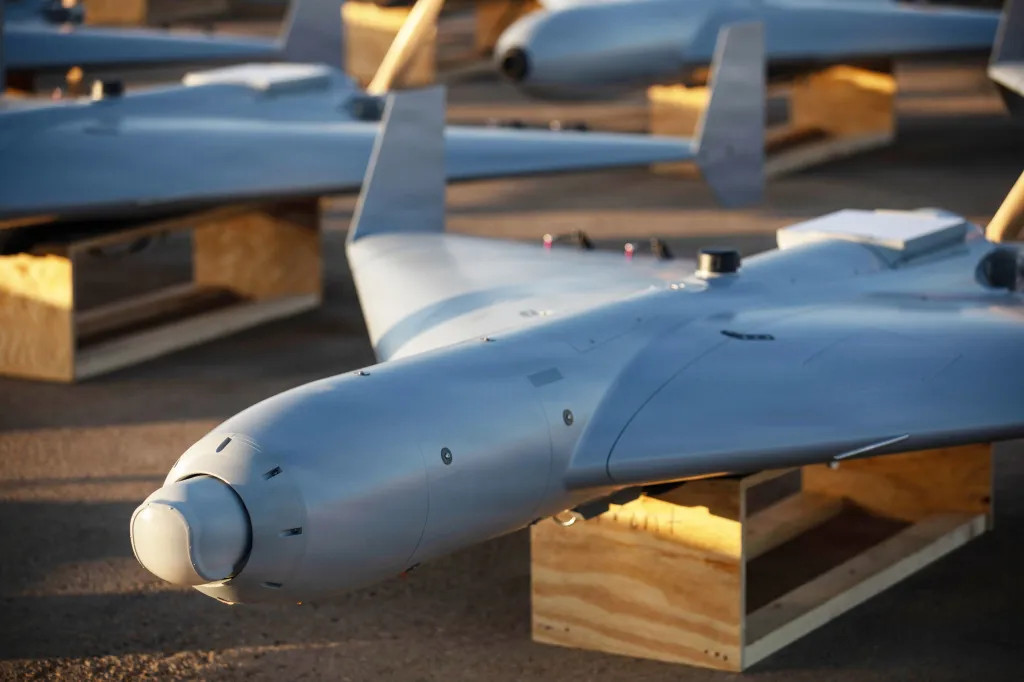
Pictures of the LUCAS drones the U.S. military has released so far show a modular, reconnaissance design that could also be used for surveillance and reconnaissance missions, as well as in the decoy role. As TWZ has previously written:
“We see two variants of LUCAS. One is not of particular note, it seems geared to strike the static targets we have become accustomed to for this type of weapon. The other features two very interesting details. It has what appears to be a gimbaled camera system mounted on its nose and, most importantly, a miniature beyond-line-of-sight satellite datalink mounted on its spine. This is a major development that would allow these weapons to not only be controlled dynamically after launch at great distances, but also to hit moving targets and targets of opportunity.”
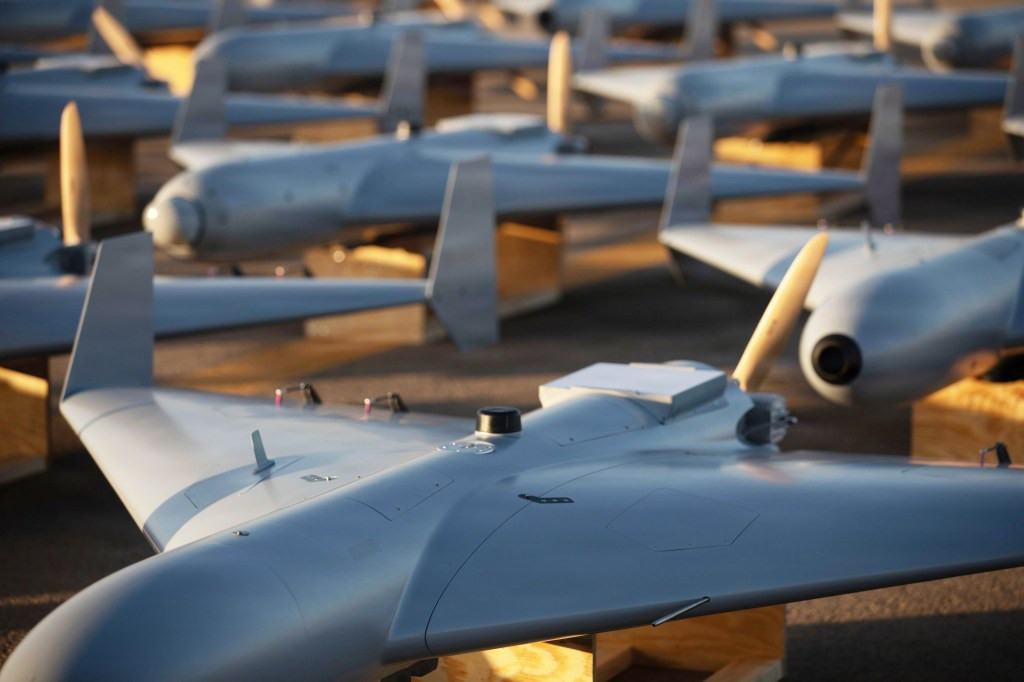
“In addition, this capability would help enable swarm tactics, where the drones work to attack targets cooperatively with their progress monitored and altered in real-time by human operators, regardless of whether they have the satellite terminal or not. This is made possible by providing simpler, lighter line-of-sight datalinks on the drones equipped with warheads only, which then connect line-of-sight to the drone carrying the satellite communications terminal, acting as a force-multiplying networking hub. This also means you can have many simple drones paired with a much smaller number of more costly ones equipped with cameras and networking equipment, but achieve the same overall effect as if they all had the more advanced capabilities. This modularity which is ‘greater than the sum of its parts’ is a central tenet of emerging drone warfare TWZ highlighted a decade ago.“
…
“Seeing as swarms can be tailored to various objectives, with mixing and matching BLOS networking enabled units with strikers, and placing them in real time to minimize risk and maximize effect, America’s Shaheds should be significantly more survivable and effective. The ability to work together, reacting to their environment, and leverage real-time intelligence gathered by the full gamut of U.S. and allied assets, are even larger advantages. This is in addition to pairing them with combined arms tactics, from electronic warfare to kinetic strikes, to ensure they get to their target areas. Even if some die to air defenses, that can be viewed as a win, depending on what engages them. Consuming costly and finite effectors is a feature, not a bug, for these relatively cheap weapons, as you can read all about in our larger feature.“
All of this is further magnified by the ability to employ LUCAS drones from any ship with sufficient deck space, as well as launchers on land, which could be semi-fixed or mobile. This is something TWZ highlighted explicitly in our past feature on the prospect of integrating drone swarms onto Navy ships.
Observations for years now of how Iran and its proxies, as well as Russia, have been employing variants and derivatives of the Shahed-136 have underscored their ability to be sent along often circuitous routes to attack targets from unexpected vectors. Even without the addition of more dynamic targeting and fully networked swarming capabilities, this creates immense challenges for defenders. This is only further compounded by the breadth of areas targeted simultaneously and the sheer volume of drones that can be launched in mass barrages, owing in large part to their relatively low cost.
Iran has also notably fielded a number of one-off sea base-like ships with aviation and other capabilities, including the ability to launch long-range kamikaze drones, as well as cruise and ballistic missiles. Iranian forces have also made use of commercial vessels modified as covert motherships to coordinate attacks, including by regional proxies, and to gather intelligence.
U.S. officials have themselves been quick to highlight the new operational capabilities LUCAS offers, especially in light of the newly announced test launch from the USS Santa Barbara.
“A cutting-edge, low-cost attack drone asset, launched from a naval vessel that can sail and operate wherever international law allows, is a tremendous new capability to employ in the region,” Navy Capt. Timothy Hawkins, CENTCOM’s top spokesperson, told TWZ.
“U.S. Navy forces in the Middle East are advancing warfighting capability in new ways, bringing more striking power from the sea and setting conditions for using innovation as a deterrent,” Navy Adm. Brad Cooper, commander of CENTCOM, also said in a statement.
“This first successful launch of LUCAS from a naval vessel marks a significant milestone in rapidly delivering affordable and effective unmanned capabilities to the warfighter,” Vice Adm. Curt Renshaw, commander of NAVCENT and U.S. Fifth Fleet, added in his own statement accompanying the official release. “This achievement demonstrates the power of innovation and joint collaboration in this critical region.”
“This platform will undoubtedly enhance regional maritime security and deterrence,” Renshaw added.
Conducting the test in the Arabian Gulf also underscores previous statements from CENTCOM about how the deployment of LUCAS in the Middle East specifically offers a new way to challenge Iran.
“We are now at a point where not only are we building them in mass, but we have already based them in [the] Middle East for the first time,” a U.S. official told TWZ earlier this month when the establishment of TFSS was announced. “In essence, we are able to flip the script on Iran.”
As we mentioned at the time, the benefits that kamikaze drones like LUCAS offer to U.S. forces also extend well beyond the Middle East. Separate U.S. Marine Corps testing of LUCAS drones at the U.S. Army’s Yuma Proving Ground (YPG) in Arizona points to plans to field long-range kamikaze drones more broadly across America’s armed forces.
As an aside, using an Independence class LCS for the recent maritime LUCAS test launch highlights another potential mission for these ships, as well as the Navy’s Freedom class LCSs. Both types of LCS have chronically underdelivered for the Navy, and the service has spent considerable energy searching for ways to get more operational utility out of the vessels. Last year, then-Navy Secretary Carlos Del Toro announced plans to arm “many” Independence and Freedom class LCSs with new containerized missile launchers as a new way to boost their firepower, as you can read more about here. Giving these ships the ability to launch waves of low-cost, long-range kamikaze drones would be another way to approach this goal.
In general, the market space for Shahed-136-like long-range one-way attack drones is already growing in the United States, with Griffon Aerospace having also been pitching its own design called the MQM-172 Arrowhead to America’s armed forces. This is a trend that has also been emerging elsewhere globally, especially in China, where multiple Shahed-esque designs have appeared in recent years. Russia is also said to be helping North Korea set up its own domestic capacity to produce Shahed-136s, or derivatives thereof, in exchange for Pyongyang’s help in fighting Ukraine.
Whatever plans the rest of the U.S. military may have now for drones like LUCAS, the recent at-sea test launch from the USS Santa Barbara shows that American forces in the Middle East are already working to expand their ability to employ this already important new capability at least in that region.
Contact the author: joe@twz.com
Loading comments…
Comments couldn’t be loaded. Please refresh the page.