

Congress has taken a new step toward blocking the Pentagon from axing the acquisition of new E-7 Wedgetail airborne early warning and control aircraft. The latest draft of the annual defense policy bill also includes language that would compel the U.S. Air Force to keep all 16 of its remaining E-3 Sentry Airborne Warning and Control System (AWACS) jets in service until a sufficient number of Wedgetails are delivered or other conditions are met. Earlier this year, the Pentagon had laid out a plan to purchase more of the Navy’s E-2D Hawkeyes instead of E-7s to fill interim capability gaps left by the retirement of the E-3 until the Air Force can push most, if not all, airborne target warning sensor layer tasks into space.
The House Armed Services Committee released a new draft of the defense policy bill, or National Defense Authorization Act (NDAA), for the 2026 Fiscal Year late yesterday. The draft NDAA is described as a “compromise” bill that follows significant negotiations between the House and the Senate to bring their respective versions of the legislation into alignment.

“None of the funds authorized to be appropriated by this Act or otherwise made available for fiscal year 2026 for the Department of Defense may be obligated or expended— (1) to terminate the mid-tier acquisition rapid prototype contract for the E-7A aircraft; or (2) to terminate the operations of, or to prepare to terminate the operations of, a production line for the E-7A aircraft,” according to one provision within the draft legislation.
The draft NDAA also includes a separate provision that says “none of the funds authorized to be appropriated by this Act or otherwise made available for fiscal year 2026 for the Air Force may be obligated or expended to retire, prepare to retire, or place in storage or in backup aircraft inventory any E-3 aircraft if such actions would reduce the total aircraft inventory for such aircraft below 16.”
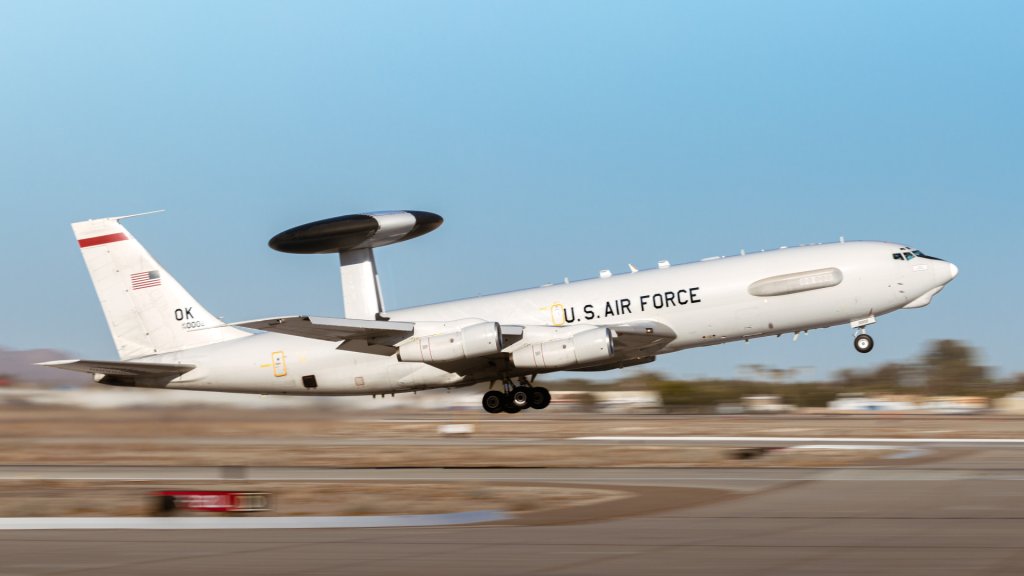
As noted, the Air Force only has 16 E-3s still in inventory in total, according to documents accompanying the service’s most recent budget request, which was released earlier in the year. This means the latest draft NDAA would effectively prohibit the retirement of any of the jets, at least through the end of the current fiscal year.
However, “if the Secretary of the Air Force submits to the congressional defense committees a plan for maintaining readiness and ensuring there is no lapse in mission capabilities the prohibition … shall not apply to actions taken to reduce the total aircraft inventory for E–3 aircraft to below 16, beginning 30 days after the date on which the plan is so submitted,” per this same section of the proposed legislation. In addition, “if the Secretary of the Air Force procures enough E–7 Wedgetail aircraft to accomplish the required mission load, the prohibition … shall not apply to actions taken to reduce the total aircraft inventory for E–3 aircraft to below 16 after the date on which such E–7 Wedgetail aircraft are delivered.”
Along with these two provisions, the new draft NDAA includes the approval of $647 million in additional funding for “continued development and procurement” of the E-7. This is in addition to nearly $200 million for Wedgetail that Congress already included in a bill that was passed last month to reopen the federal government following a protracted shutdown. Additional funding from the 2025 Fiscal Year originally intended for the procurement of aircraft was previously reallocated to ongoing research, development, test, and evaluation activities, as well.
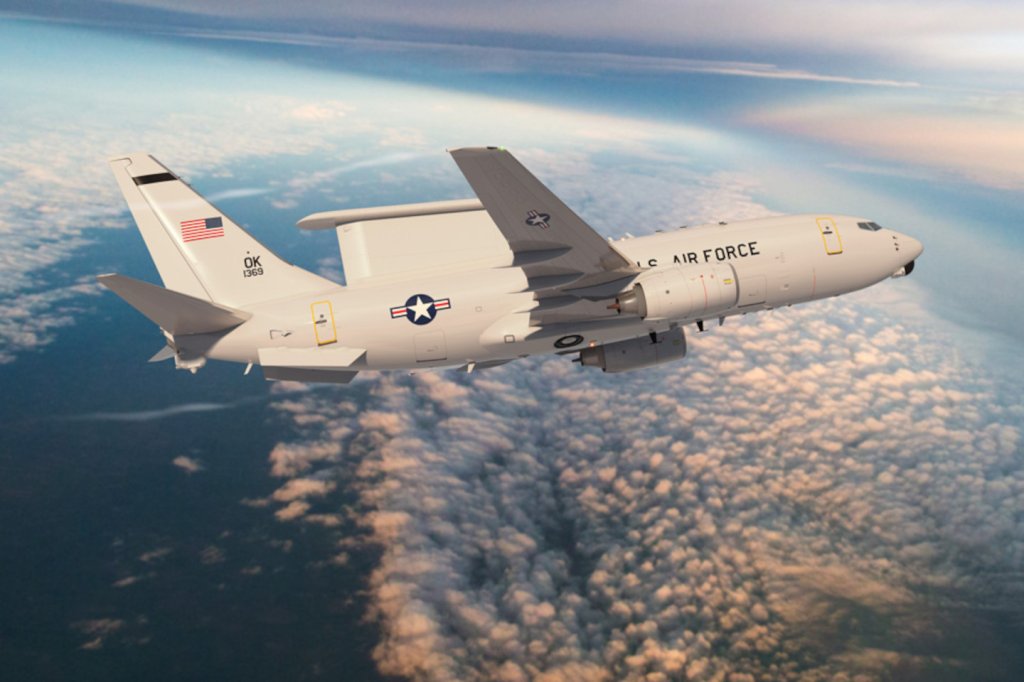
The Air Force had formally decided to buy E-7s as replacements for at least a portion of its E-3 fleet in 2022, and had moved first to acquire two production representative prototypes. Those aircraft were to be used for test and evaluation purposes, and as a lead-in to the production of Wedgetails in a service-specific production configuration. The goal had been for production E-7s for the Air Force to begin entering service in 2027.
However, delays and cost growth had marred the Air Force’s E-7 program, factors the Pentagon cited in announcing its intention to cancel the program earlier this year. Concerns about the survivability of the Boeing 737 airliner-based aircraft, especially in future high-end fights, such as one against China in the Pacific, were also raised. It is worth noting here that versions of the Wedgetail are currently in service in Australia, South Korea, and Turkey. The United Kingdom is also working to acquire E-7s now. In November, NATO canceled its plans to purchase Wedgetails to replace a fleet of E-3s that the alliance operates collectively after the U.S. military separately withdrew from that effort.
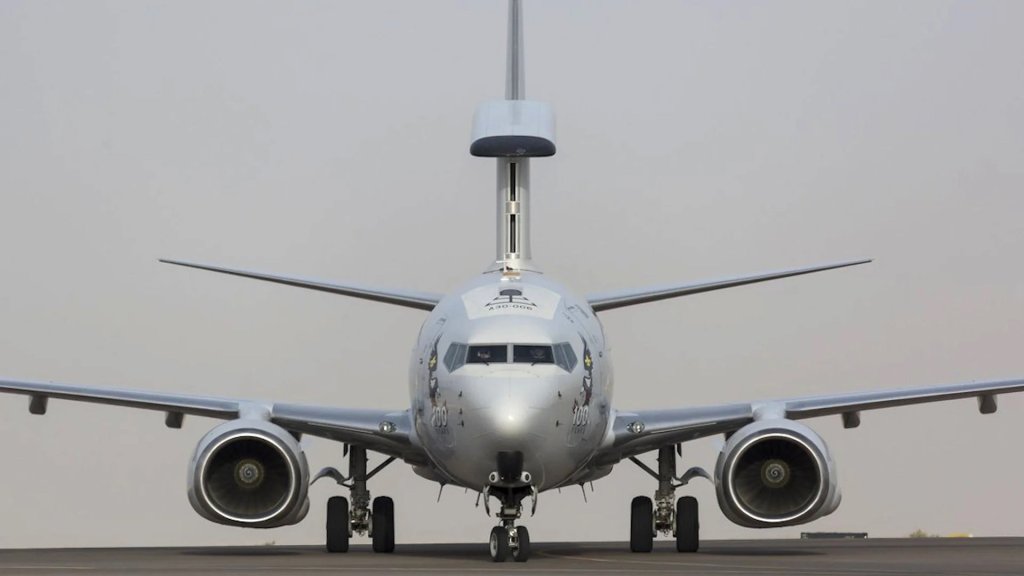
As mentioned, the Air Force’s longer-term vision has been and remains to eventually have space-based assets provide the bulk of its airborne target warning sensor layer. From the outset, the service had described the E-7 acquisition effort as a ‘bridge’ to future capabilities in orbit.
For months now, members of Congress and other advocates of the Wedgetail program have been openly questioning the viability of using E-2s as an interim substitute, as well as the timeline for a realignment around space-based capabilities. Though the U.S. Navy and other E-2 operators have employed those aircraft from bases on land, the Hawkeye was designed around the unique requirements and constraints of carrier-based operations. Compared to the E-7, the E-2 is a lower and slower flying aircraft that would have to operate even closer to threat areas in order to provide similar surveillance capacity. The E-7 is also larger and more adaptable to expanded operations, especially when it comes to critical battle management and networking node capabilities, than the Hawkeye, as well. Previously stated survivability concerns would apply to any crewed airborne early warning aircraft in a future near-peer conflict.
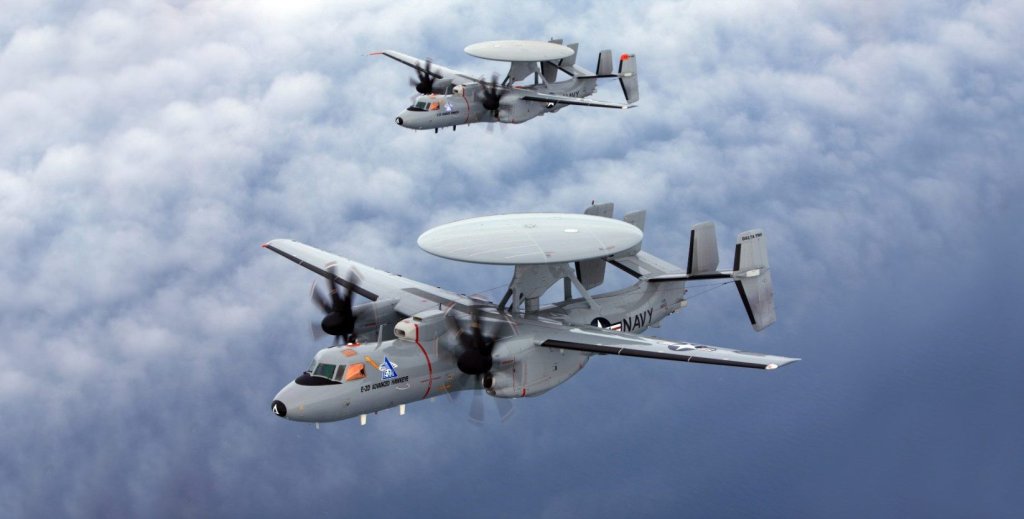
The Air Force has also said it does not expect to have an operational ability to persistently track air or ground targets from orbit until the early 2030s at the earliest. Even then, the service expects traditional airborne early warning and control aircraft to remain part of the equation for years afterward.
In the meantime, the aging E-3s are already increasingly struggling to meet existing operational requirements, and the fleet would only be strained even more if a major sustained conflict were to erupt.
“I have been concerned. We have E-3 capability up north, of course, but we were all counting on the E-7 Wedgetail coming our way. We’re kind of limping along up north right now, which is unfortunate. And the budget proposes terminating the program,” Sen. Lisa Murkowski, a Republican from Alaska, had said at a Senate Appropriations Committee hearing in June, where the E-7 cancellation plans first emerged publicly. “Again, the E-3 fleet [is] barely operational now, and I understand the intent to shift towards the space-based – you call it the ‘air moving target indicators’ – but my concern is that you’ve got a situation where you’re not going to be able to use more duct tape to hold things together until you put this system in place. And, so, how we maintain that level of operational readiness and coverage, I’m not sure how you make it.”
The House and the Senate do still have to pass a final version of the NDAA for the 2026 Fiscal Year, and President Donald Trump then has to sign it, before any of its provisions can become law. What timeline the Air Force might now be looking at for actually fielding operational E-7s remains to be seen.
Regardless, Congress looks increasingly set to halt the Pentagon’s plans to cancel the E-7 program, at least for another year or so.
Contact the author: joe@twz.com
Loading comments…
Comments couldn’t be loaded. Please refresh the page.