
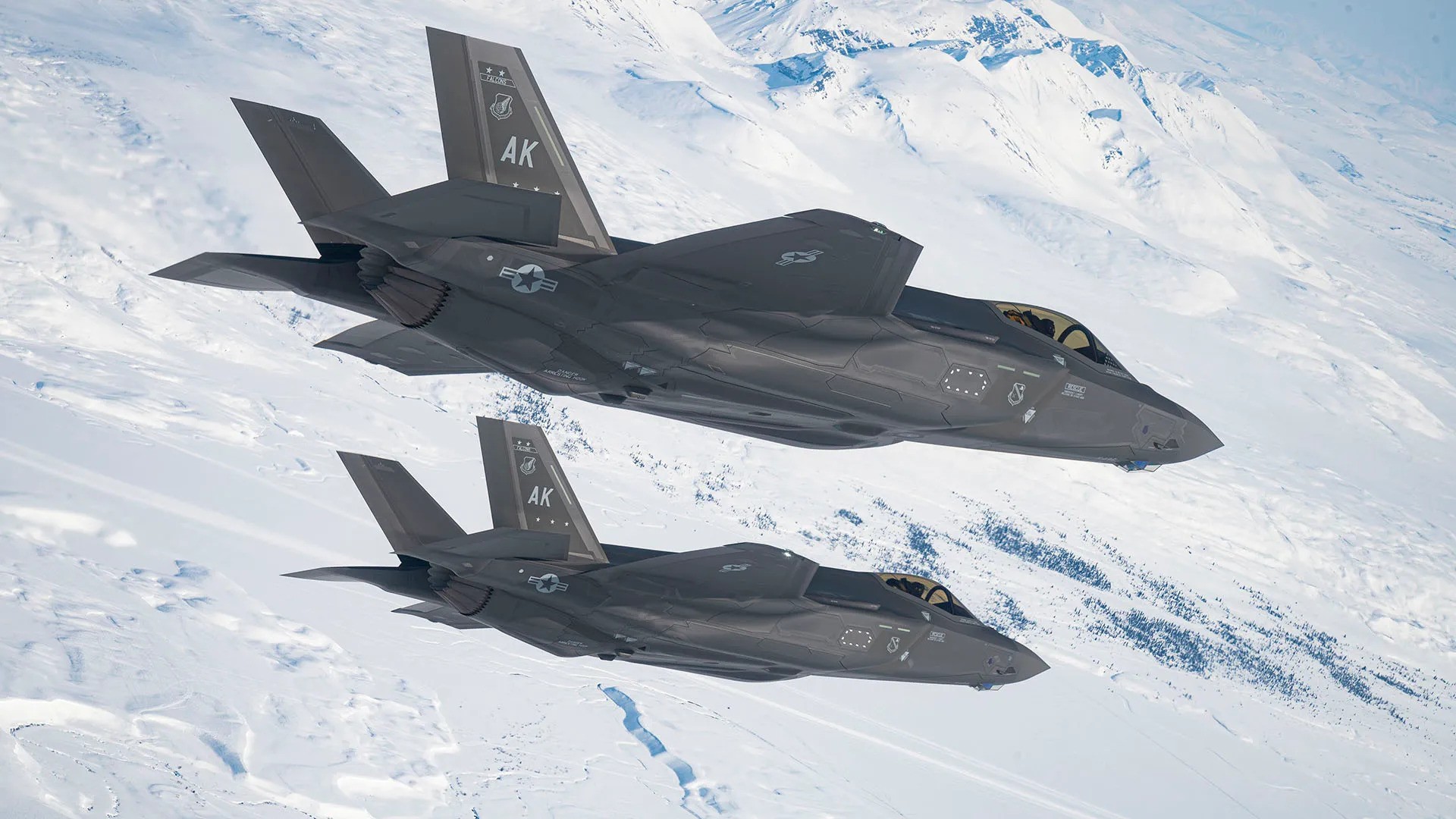
Royal Canadian Air Force (RCAF) Maj. Gen. Chris McKenna knows more than just about anyone how F-35A Joint Strike Fighters will integrate into both the RCAF and the North American Aerospace Defense Command (NORAD). He is the commander of 1 Canadian Air Division, operational commander for the Canadian NORAD Region (CANR) and the Canadian Joint Forces Air Component Commander. As such, it’s his job to figure out what to do with these fifth-generation fighters and how to provide the infrastructure they require.
Though a $30 billion deal to buy 88 of these stealth aircraft is being reviewed by Canadian officials after U.S. President Donald Trump initiated what has become a spiraling trade war, McKenna does not have time to wait for a final decision. There are too many moving parts to put in place not to be ready for their arrival.
But McKenna, who piloted a variety of rotary-wing aircraft in his flying days, also has a host of other responsibilities, ensuring that Canadian and U.S. air and maritime domains are protected from adversaries.
On Tuesday, McKenna sat down with us for an exclusive hour-long interview, talking about F-35s and other aircraft, new radars and other sensors, space-based platforms, Golden Dome and even how he had to ruin a golf course to ensure that RCAF planes can receive fuel at one of its main operating bases.
In the first of a multi-part series of stories from that interview, McKenna talks about the challenges and ramifications of adding scores of fifth-generation fighters that will eventually replace the RCAF’s fleet of aging CF-18 Hornets
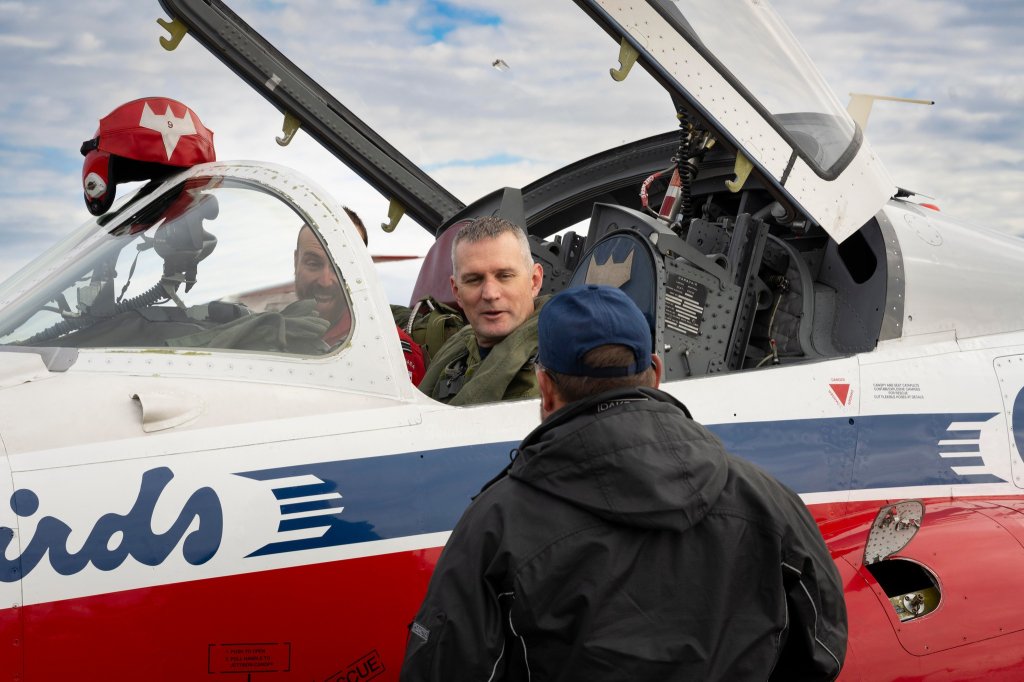
Q: Talk about the investments Canada has made in F-35 A stealth fighters and other aircraft.
A: We’ve made a lot of big decisions in terms of investments. We’re in the midst of the largest recap of our Air Force since World War II. F-35s are on order, but still contentious, as you know, with the review ongoing. There’s been an 800% increase in our tanker procurement. So we’re getting nine multi-role tankers, eight of which are tankered. One is going to be a dedicated VIP aircraft. MQ-9 [Reaper drones] are showing up in 2027. P-8 [Poseidon maritime patrol aircraft] are on order, 14 to 16 of those showing up in 2027, so a large recap on all of the things you need to sense and effect in the Arctic, which I think is very good news.
Q: With the growing threat in the Arctic, will the F-35 be able to achieve what you need out of it for the NORAD mission? What input is NORAD giving on Canada’s future fighter program? What about alternatives, such as the Gripen E?

A: I have a fifth-generation threat that I need to defeat. And so that’s the challenge right now. I need to be able to defeat the adversary, and I need to have overmatch. So whatever fighter ends up being procured for Canada, potentially in addition to the F-35. So to be clear, Canada has committed to 16 F-35s. We paid for them. The government placed the program under review, so we’re under review now. The government is considering that review. So it’s entirely a government of Canada decision. It’s outside the hands of the Air Force. We’ve made our advice. I will say, I need my pilots to have overmatch against high-end threats with their adversaries. And I think we can both agree that the threats are accruing by the day, it’s getting worse and worse by the day.
Q: What about the ongoing Canadian government review of the F-35 deal?
A: It’s a sovereign decision for Canada to make on its fighter, and so all this stuff in the news you’re seeing, I would say our government’s going to make its own decision. My advice is, I need an aircraft that has overmatch over the adversaries.
Q: Do you think that the F-35 will achieve what you need out of it for the NORAD mission?
A: I have very high confidence that it’ll be able to achieve the NORAD mission set. Absolutely.
Q: Why?
A: Well, it has a great sensor package on it, and it has all the armaments you would need, obviously, to defeat a high-end threat. And it’s interoperable with our closest ally. So those things are important, I think, in the way that you look at force development in the military.
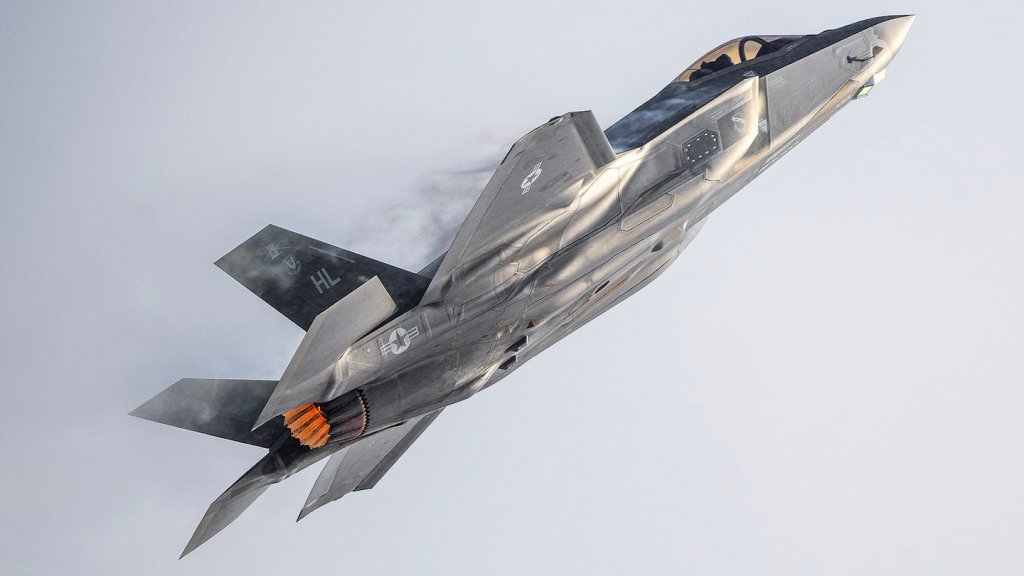
Q: What about alternatives like the Swedish-made Gripen E?
A: So again, the competition is complete, right? We made an acquisition decision in 2023, and there’s a review ongoing. I’ll just leave it at that the government’s going to decide if they would decide if they wish for us to pursue.
Q: Will you need to open up additional Forward Operating Locations (FOLs) with the threat changing in the Far North? And can the F-35 operate out of those sites as efficiently as a Royal Canadian Air Force CF-18 Hornet?
A: Yeah, I think very close. There is one issue, runway land. We have four Forward Operating Locations (FOLs) in the Arctic. One in Inuvik up by the Alaskan border. One in Yellowknife, kind of in the middle of the Canadian Arctic. One on Baffin Island. It’s called Iqaluit, and I’ve got a deployed operating base with a much larger footprint in Goose Bay, Labrador, which is north of Quebec, on the landmass. So those four sites are where I would disperse my aircraft to, just to shorten my response times.
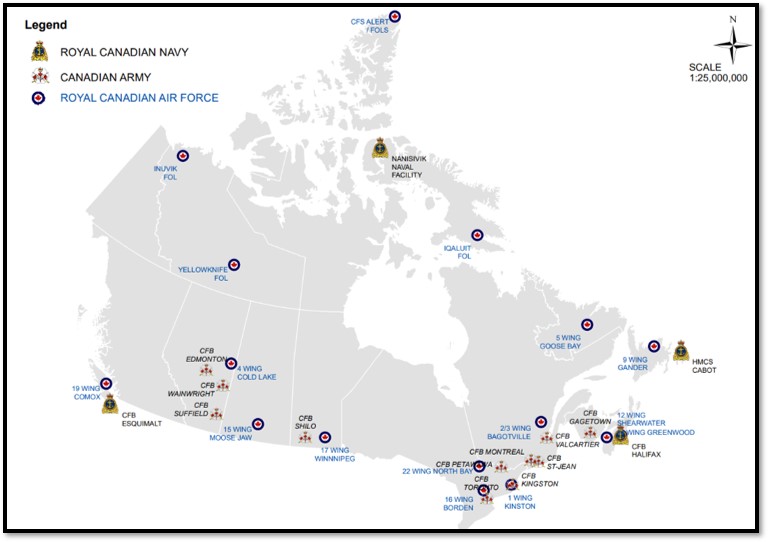
Inuvik has a shorter runway. It’s a 6,000-foot runway. We have cables on it. Can always take a cable with an F-18 to kind of treat it like a carrier over the years, right? Our version of the F-35 is like Norway’s; it has a drogue chute on it, and it’s got a hook if you need it to, but we do want a longer runway. So we’ve been in the process of lengthening that runway for a number of years. It is very difficult permafrost, kind of like building on top of a bog.
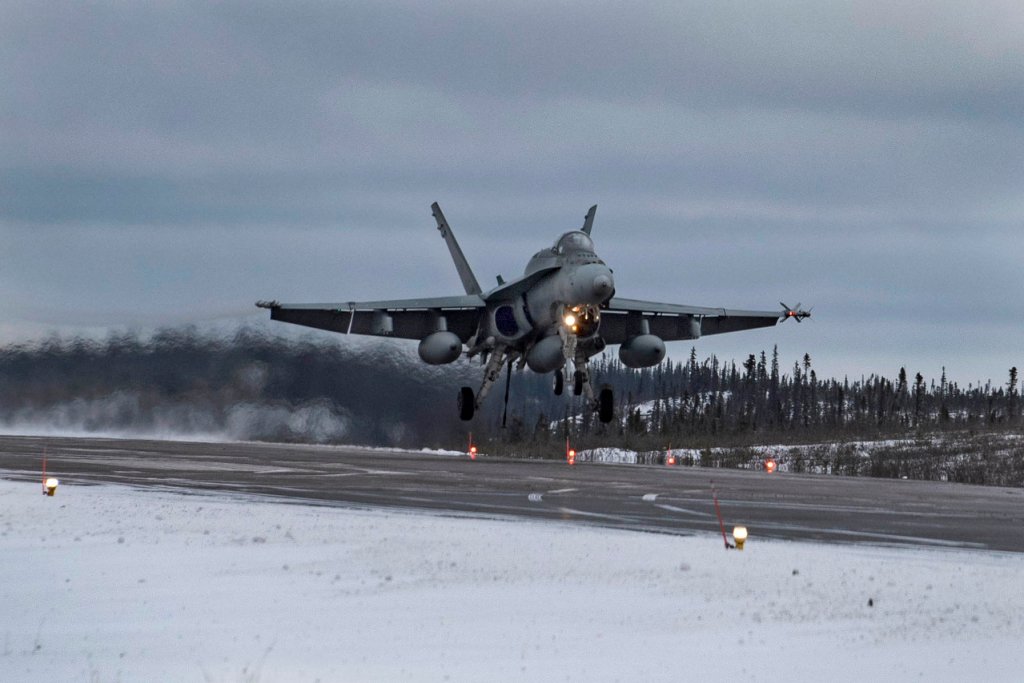
So I think by about 2028 or 2029, we’ll see the 9,000 feet, we’ll see about 7,500 feet by around 2027, 2028. We’re seeing Inuvik as a place we can park our tanker as well. So the actual lengthening is based on both fighters and tankers. We’re making sure that the turns can accommodate the [Airbus A330 Multi-Role Tanker Transports] and then making sure that you have the remaining things. You need a host of stuff, like accommodations, weapons storage, fuel storage, and operational spaces, which you can plan. So a big chunk of the money, actually, is going to NORAD modernization that was announced. A big chunk of that money, almost $30 billion of it in aggregate…will go to the infrastructure in the Arctic, infrastructure for my two fighter wings and infrastructure in the south. So maybe not obvious, but I can disperse F-18s and F-35s in southern Canada as well. I have bases in Comox, in Winnipeg, in Trenton, Ontario, near Toronto, and in Greenwood near Halifax, where I can put fighter aircraft now, and we’re recapitalizing all those bases to be able to host the F-35s.
Q: Do you anticipate opening up any more forward operating locations in response to the changing threats?
A: I don’t believe I need to right now. I will say I do rely quite a bit on Greenland. I go to the Pituffik Space Force Base. I leverage that quite a bit, and if we have to go into alert, we often resupply at Pituffik with both wet lift, that is to say fuel, and dry lift in terms of goods, etc, food. So we do rely on that piece quite a bit. That’s a very interesting piece of infrastructure there.
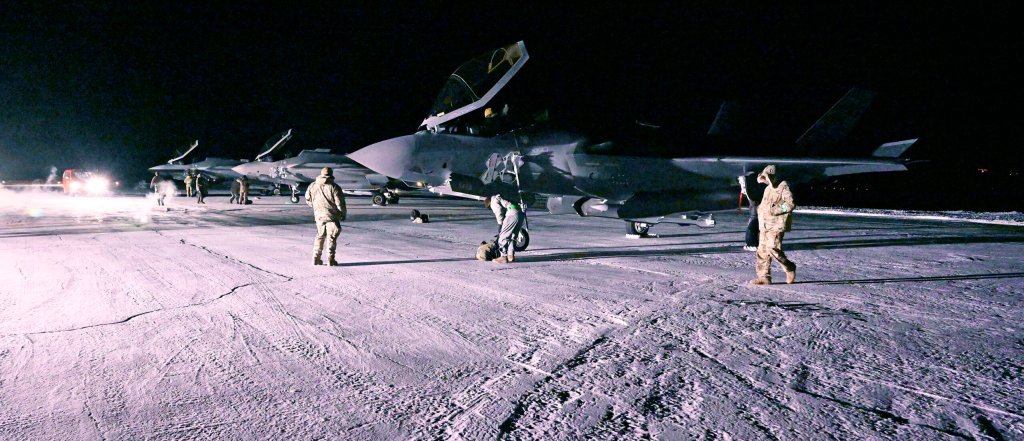
Q: Do you need much additional infrastructure to accommodate the F-35s?
A: Yeah. It’s a full recap in the sense that the two fighter wings are there. We’ve knocked down the old stuff…and we’re building up brand new infrastructure that has been going on ever since the contract award in 2023, so we’re two years into a pretty significant build on both Cold Lake, Alberta and Bagotville, Quebec.
Q: What’s your timeline on that?
A: I believe the occupancy dates on the fighter infrastructure is around 2030, 2031, something like that. Our first F-35s get delivered into Canadian hands at Luke Air Force Base in 2026. So this time next year, we would take possession of the first four to eight aircraft at Luke. Our first 10 pilots go down this summer into Arizona, and then the intent is to bring the first aircraft forward to Canada by late 2028. They will be in [temporary housing] that we’re also building concurrently to this, while the main facility gets finished.

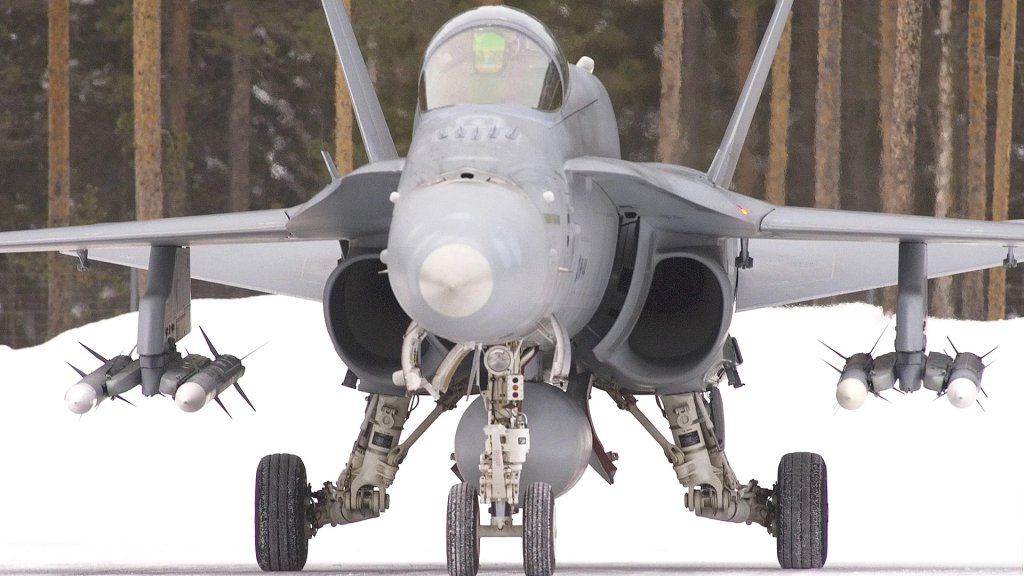
Q: Will the Canadian Air Force be getting Advanced Precision Kill Weapon System (APKWS) rockets for the counter-drone role, and will the F-35 when it comes online?
A: So F-35s, I don’t know yet. Certainly, there is a lot of discussion right now looking at APKWS. The Hornet is going to serve until 2032. That’s its planned retirement date, then we stand down the aircraft. We’ve done a pretty significant upgrade of the Hornet in the last three years, though it’s not sort of well known. We put the Super Horner radar in it, and so it has an AN/APG-79(v)4 radar in it. It was a project that Canada and the U.S. Marine Corps worked on together. So we share software, and we shared the developmental costs to get this done.
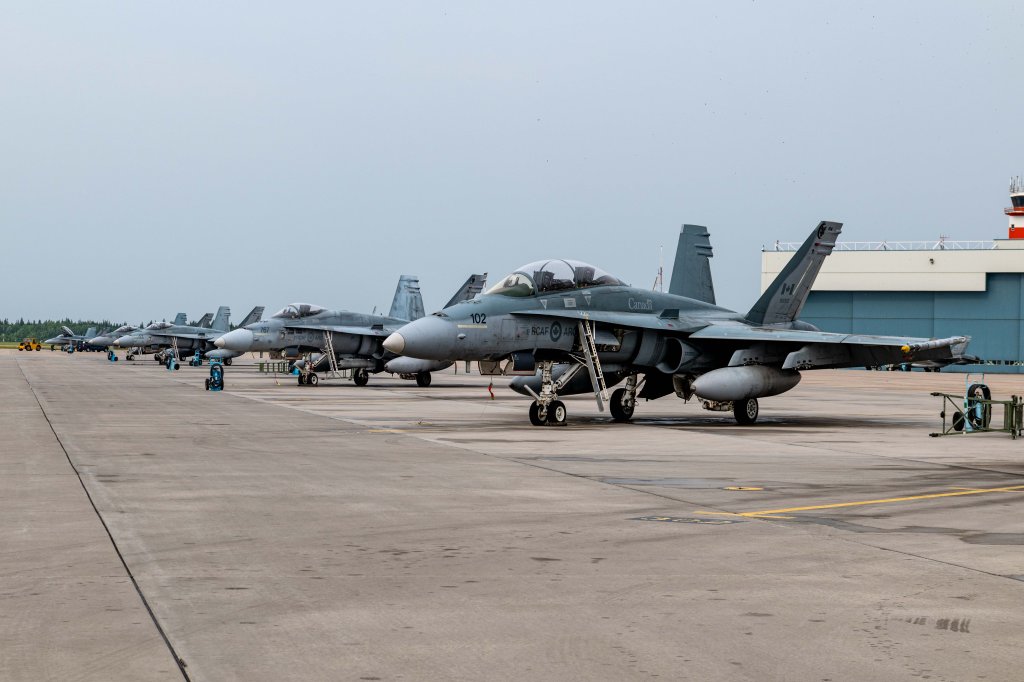
We’ve got a number of jets modified, I think a total number of 36 are going to be modified. And we’ve onboarded new weapons, that is to say, the AIM-9X [Sidewinder] and the AIM 120D3s [Advanced Medium-Range Air-to-Air Missile (AMRAAM)]. We’re flying live now with the 9x on the Hornet, with the new radar, and we’ll be flying live with the D3s pretty soon. Testing is sort of ongoing. So those aircraft have been upgraded for a cruise missile defense type role, for…very small targets. The AESA radar is very, very good and we are earning a ton, to be honest, with that radar. I do think there’s options for some additional upgrades, but that’s obviously for the government to decide and has to propose.
Q: So are you working on getting the APKWS? What’s the status of that?
A: We are looking at what you could put on the aircraft relatively quickly that would keep you below a certain cost curve, if you were forced into a counter-UAS scenario with the aircraft. So it’s a lot of discussion. We’ve not contracted for it. We’ve not gone to the government with advice.
Q: Can the F-35 deal with high-volume aerial threats alone, such as waves of cruise missiles, or will ground-based air defenses also be needed in the High North?
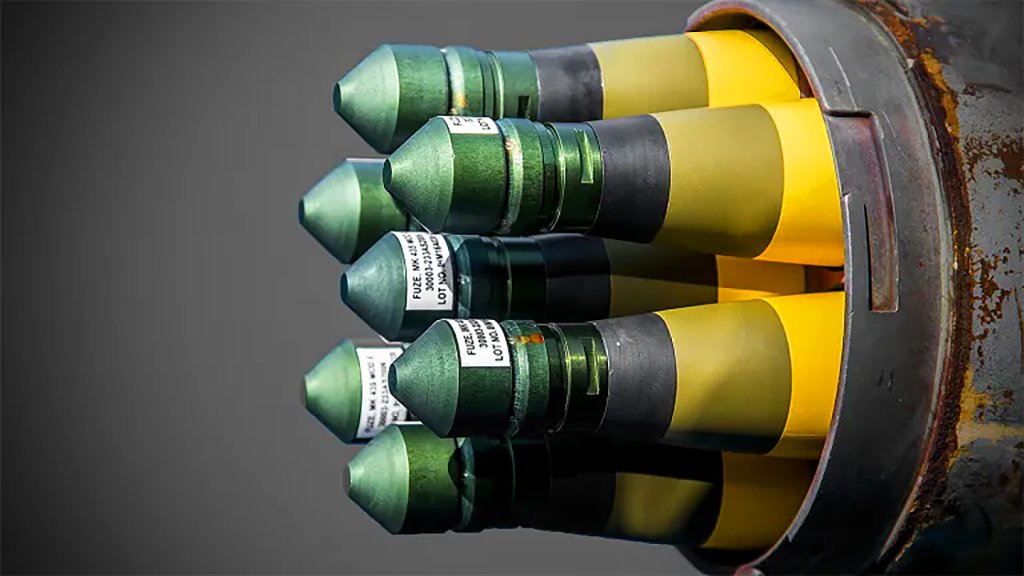
A: I think that’s a great question. If you have 16 to 20 cruise missiles coming off a platform, coming out of a submarine, you think about what your weapons load is. On the F-35 or an F-18, you have less than 10 weapons on that aircraft, depending on the configuration. And so that could be a challenge just from a volume point of view. So I think you have to approach integrated air missile defense from a layers point of view.
Yes, your fighter should be the thing that’s out front, accepting the most risk, that is trying to get the arrows or the archer at its point of launch, and then as you work backwards towards your protected asset. You have to be thinking about what other layers you would have. And ground-based air defenses [GBADS] are what we announced to procure. Our army has sort of retooled its plan. It is now looking at something a bit more robust in terms of point defense. I don’t know what their decision timelines are for GBADSs. I’m sure you’re gonna ask me.
We’re making sure that what they buy is going to be integratable into us. It’s sort of a new space for the Army. They kind of got out of the air defense game for about seven or eight years. We’ve bought a SAAB system, the RBS 70 [short-range surface-to-air missile system], for our troops in Latvia. We’ve got 3,000 Canadians forward deployed in an enhanced force presence brigade in Latvia under NATO command, and they have now been equipped with RBS 70. And it’s a consideration of what the next bound is. And would not just be for NATO deployed. It would also be for the homeland of Canada.

Q: What are the options for ground-based air defenses that you’re considering?
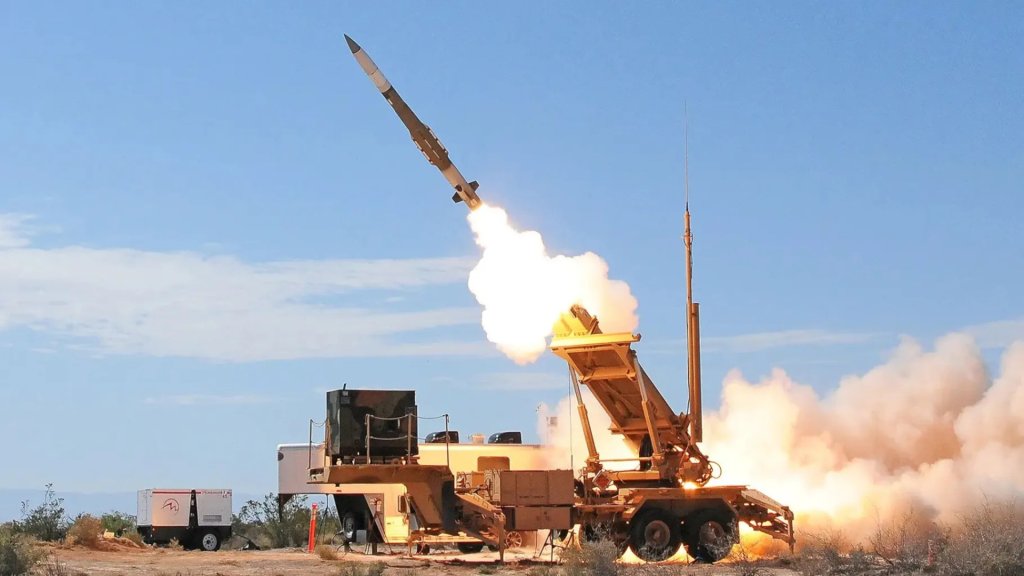
A: I think you would go from Patriot, IRIS-T, and SAMP/T. There’s a lot of different optionality, and I just think we have to figure out what the options analysis looks like for that. And it’s not the Air Force doing it. It’s actually our Army that’s conducting that. We have posted a number of Air Force officers into the Army to help them with that, to make sure that what they procure will be integratable into the NORAD mission set, from a defensive design point of view. And then, vice versa, they have posted some folks from the Army into the Air Force this past summer to get the dialogue going for integrated air missile defense. That has to be sort of Army and Air Force shaking hands.
Q: But it has to be an integrated air defense system.
A: It’s layers, or, as [NORAD commander] Gen. [Gregory M.] Guilot would say, a series of ‘domes.’ So I think you have to have a layered defense. You can’t rely on a single effector or a single sensor. You have to have layers in every one of those aspects, from domain awareness to actually be able to do something about it with an effector.
Q: Does Canada have enough fighter aircraft today to adequately defend its skies? If the F-35 orders come to fruition, even with a larger, more capable force, do you see the fighter force being large enough for Canada’s needs, especially considering the F-35’s historically low availability rates?
A: So the number [of F-35s to be procured] was arrived at through a whole bunch of operational research was 88, and it was predicated on what we owe NORAD in sort of the worst case scenario, in addition to being able to do force generation of the capability, make sure you’re staying ready, in addition to a NATO demand. So that’s what the basket looks like. Has that changed? The world has changed quite a bit in the last couple of years, but at this time, there’s no intent to procure beyond 88.
Q: So, do you feel comfortable that you have enough aircraft to protect Canadian skies?
A: I do…for the today threat. Does it change as the threat metastasizes in the future? I think that’s the open question. I think this is something you need to reassess almost on a six-month basis, and so I wouldn’t want to stay frozen to an analysis. I think it’s one of these things you need to keep looking at and determining whether you have the right force mix.
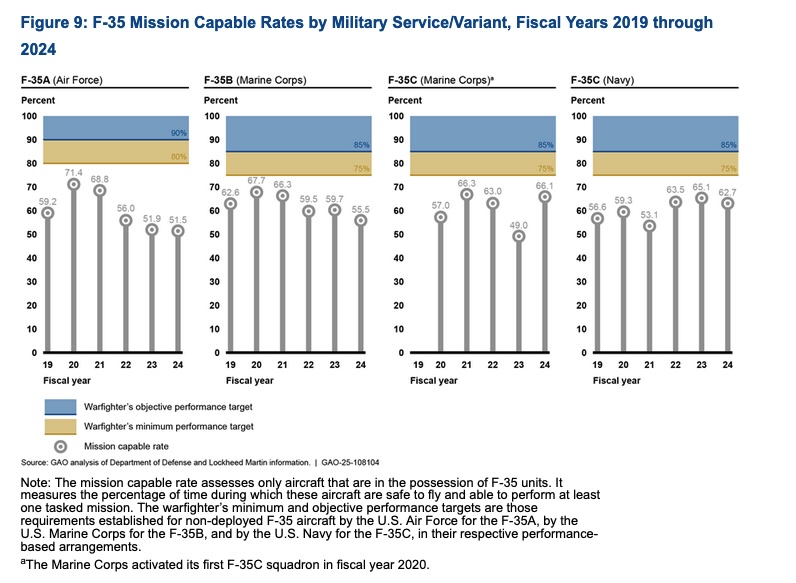
Q: How concerned are you about the F-35’s historically low availability rates? And what are the additional challenges of operating in the harsh Arctic environment?
A: I’ve conducted some site visits in the US. I was up in Eielson Air Force Base [Alaska] about six months ago. We had a good discussion about the Arctic [standard operating procedures] SOPs, Wisconsin’s just come up on the Arctic, on the sort of NORAD mission set with their F-35s. They’ve learned some of the northern US is cold, but not all-the-way Canada cold. But Wisconsin is still a very, very Canada- representative environment in terms of its climate. I think they’ve got some great SOPs now that get [jets] available. And certainly, I did not hear or see availability challenges with our colleagues in Alaska when I visited last year. I know what the GAO reports say, and I understand within the media space, but from my interactions at the operational level is extremely positive.
Q: The most recent GAO report shows that the F-35A had a mission-capable rate of about 51%. Is that something that concerns you at all? And how do you get after that?
A: I think you get after it by making sure that your maintenance team is right-sized. Your maintenance team has the right training. They have to be multi-qual to be able to get after it, and that your defense industrial base that you site inside of your country is purpose-built to be able to support the demand signal from having that fighter capability.
Q: Tell us more about the tanker procurement.
A: So we bought the Multi-Role Tanker Transport, the MRTT, from Airbus, the A-330 aircraft. Actually, the strategy was interesting. We bought five used ones and four new, and the five used ones were very lightly used. They were actually parked during the pandemic. So we picked them up during the pandemic. We missionized them with some secure comms and some basic mods, but we operate them essentially as airliners now moving troops in and out of Europe, etc, or the Indo-Pacific. And we’ve got our front-end and back-end crews qualified on that aircraft using a partner in the U.K. – the same training enterprise that trains the RAF. So I’ve got, I think, six – growing to about 10 – crews on that right now. And so the first two aircraft are coming off the line in mid-2027.
The first coming off the line is a tactical tanker. It will have both drogue and boom refueling with about 60 tons of offload. And the second aircraft will be the VIP aircraft. We call it the Government of Canada aircraft, moving the dignitaries around, etc. And then after that, every two or three months, I get another tanker. And the ultimate idea is five lines of tasks.
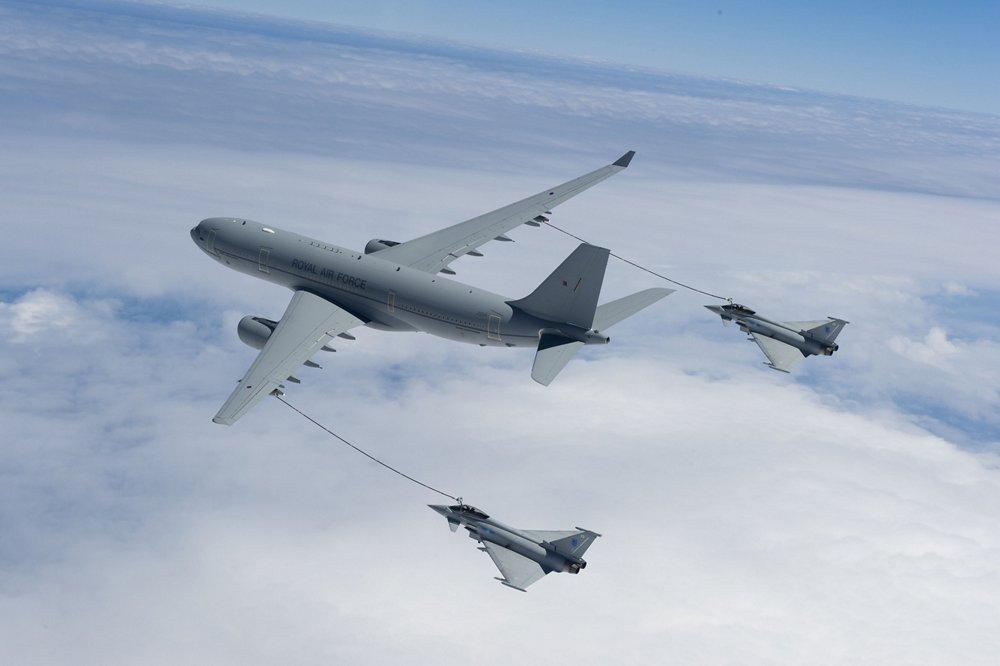
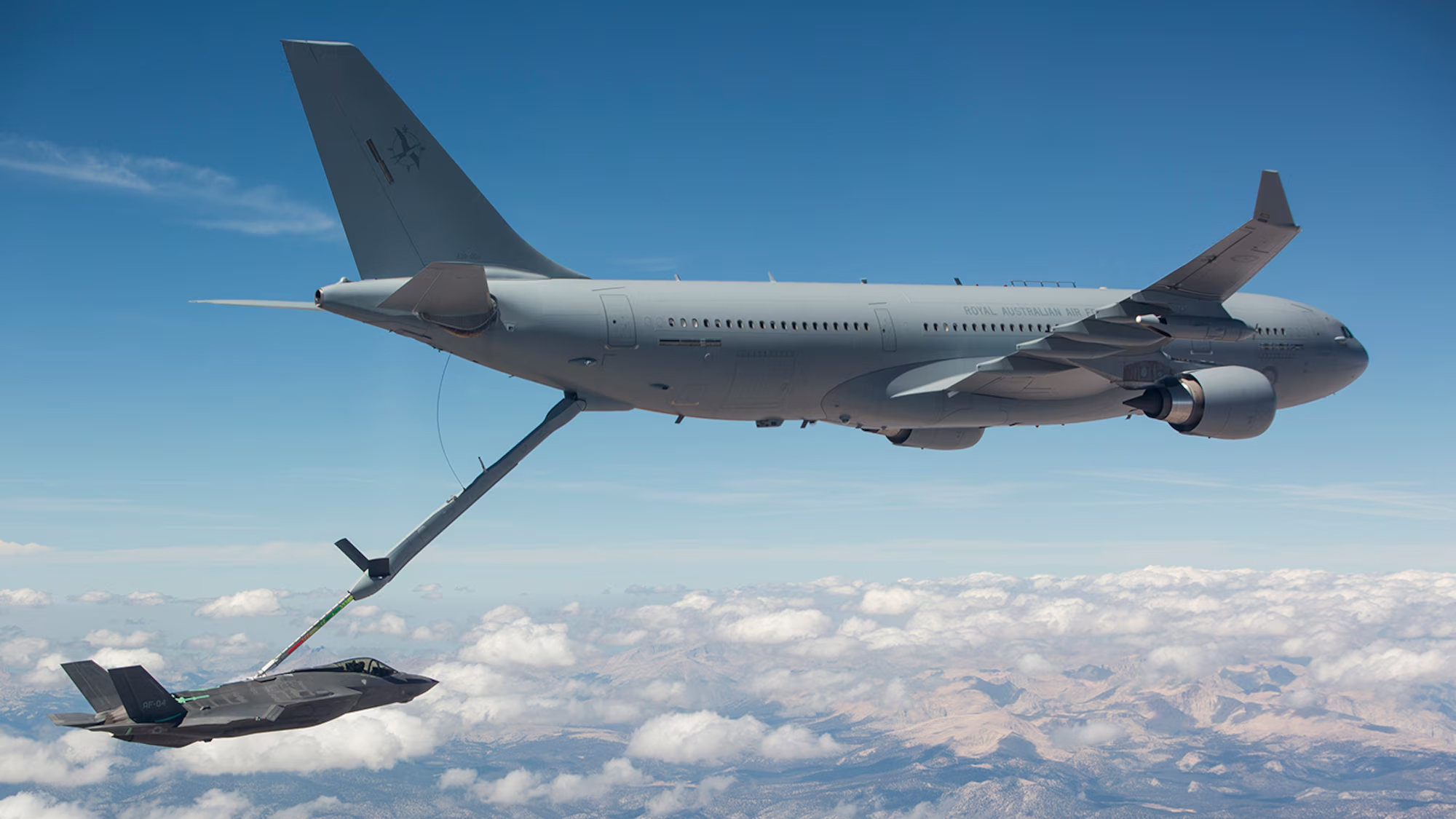
Right now, we operate a single line of tanking tasks with my 310s. I have a couple of 310s left that tank, and they’re probe and drogue only. So they are good for like an F-18, a Typhoon, or a Rafale. They’re not good for a thing like an F-35A, and so we need a boom. We need to be able to give gas to the United States Air Force, and we’ve never been able to do that in Canada. So the NORAD mission set was always problematic. So this is, this is gonna be game-changing for us. One, we have a tanker with double capacity, and two, we’re gonna have four times the number of tankers. That’s why I say 800%.
Q: When will you be able to refuel F-35s?
A: In 2027, we get the tankers delivered. We will conduct probably six to eight months of [Operational Test & Evaluation]. We are leveraging…data from the Australians and the Brits who’ve gotten this done. The Aussies did a lot of work on this tanker over the years. They were kind of the lead customer. One thing, it’s heavy, and so you have to upgrade some of their main operating bases. So on one of my wings right now, you probably see somebody repaving a runway. Got a fair bit of infrastructure work on the horizontal surfaces to accommodate the tankers. And we’re opening up a western main operating base. And the key to me is the fact that going from one line of task to five lines of task means that I can repatriate to Canada, the North, the NORAD tanking enterprise, because right now, the U.S. provides that from Fairchild [Air Force Base] and Bangor. For Canada, that switches in about 2031 when we flip over, and we can subsume those lines of task and free that back up.
Q: Do you have to bolster your runways, shelters, and other infrastructure to operate these aircraft?
A: We do, and that, you know, absolutely so. Part of the project is a large infrastructure building and two main operating bases. We’re going to put the first, the main operating base, in the east. We call it Mob East in Trenton, Ontario, which is where the home of Air Mobility is in Canada. All my Hercules aircraft are based there. My current tankers and VIP aircraft are based there. So that runway is getting a large refresh in terms of its compression for concrete, its ability to handle the 330s. It’s a 512,000-pound aircraft, right? So it’s not, like the turnarounds, like the taxiway turns have to be widened. So we’re doing that work as well there.
Then we’re building a western Main Operating Base. We haven’t had a western tanker base ever. So we will have an eastern and western base, and they will have response posture shelters because of the weather here. It’s typically awful this time of year. You need to have the aircraft cocked and in the shelter so you can tow it out and launch on very short notice to move to support the NORAD mission set. So we’re building- I believe – it’s a three-bay hangar in Trenton and a two-bay hangar in Edmonton. And the big, big change in Trenton is, I’m really unpopular in that we’ve closed the golf course to create a rail spur. We have to get a rail spur to get fuel into the northern ramp there, to make sure we have the quantity and density of fuel to be able to feed the tankers.
As we noted earlier in this story, planning for the arrival of F-35As is just one of the many tasks McKenna has to accomplish. In our next installment of this interview, McKenna talks about his efforts to help NORAD and Canada meet growing challenges from China and Russia in the High North.
Contact the author: howard@thewarzone.com
Loading comments…
Comments couldn’t be loaded. Please refresh the page.