
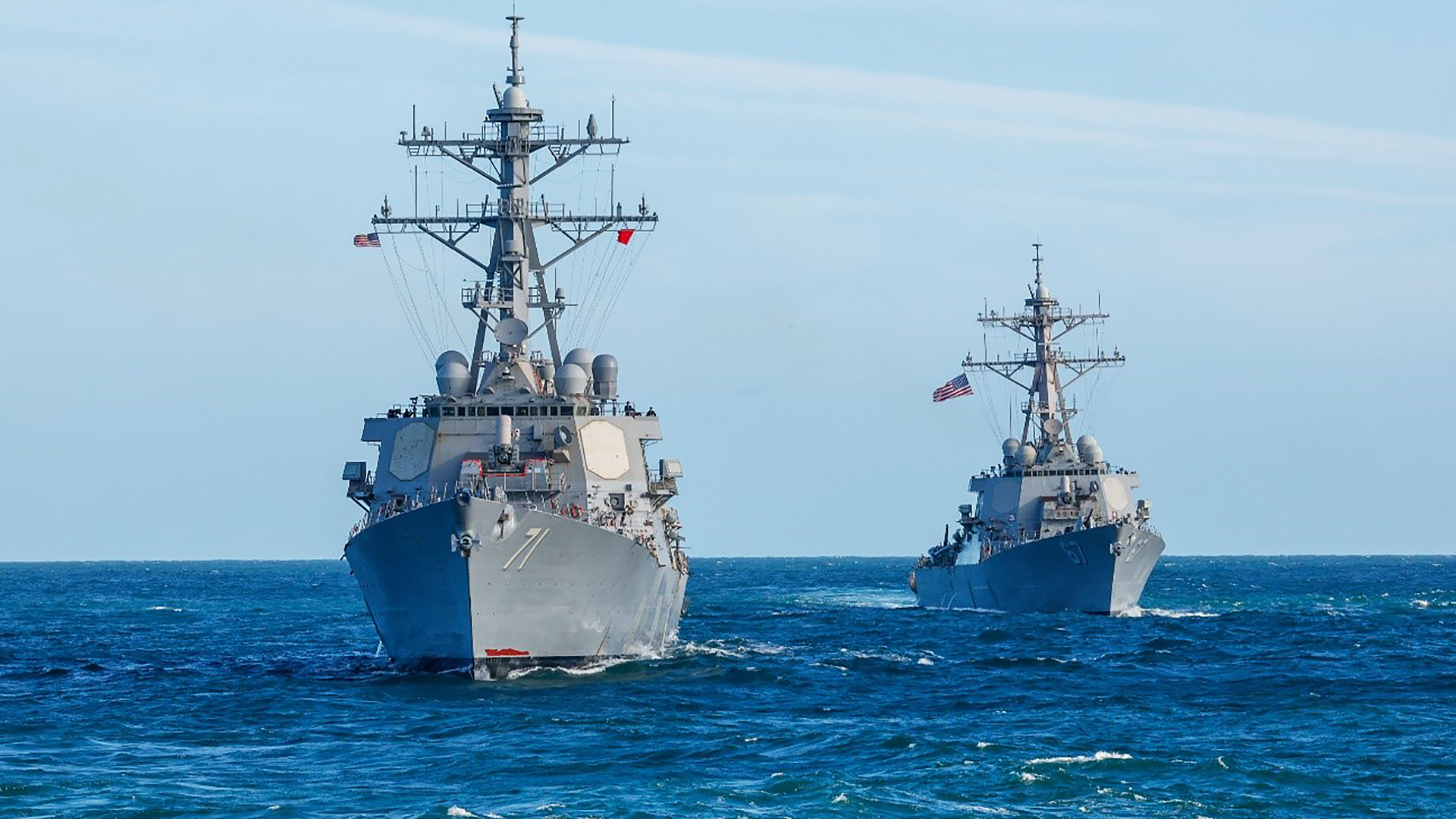
A day into the U.S.-imposed military blockade of the Strait of Hormuz, several ships have apparently transited the narrow waterway, including at least two that reportedly had previously stopped at Iranian ports. However, U.S. Central Command (CENTCOM) is pushing back against claims that vessels ran the blockade. As we noted yesterday, CENTCOM said the maritime exclusion operation would be “enforced impartially against vessels of all nations entering or departing Iranian ports and coastal areas, including all Iranian ports on the Arabian Gulf and Gulf of Oman.”
Meanwhile, there are indications that the U.S. and Iran may continue seeking a diplomatic offramp to the crisis, which began Feb. 28 when America and Israel began bombarding the Islamic Republic. We will discuss that in greater detail later in this story.
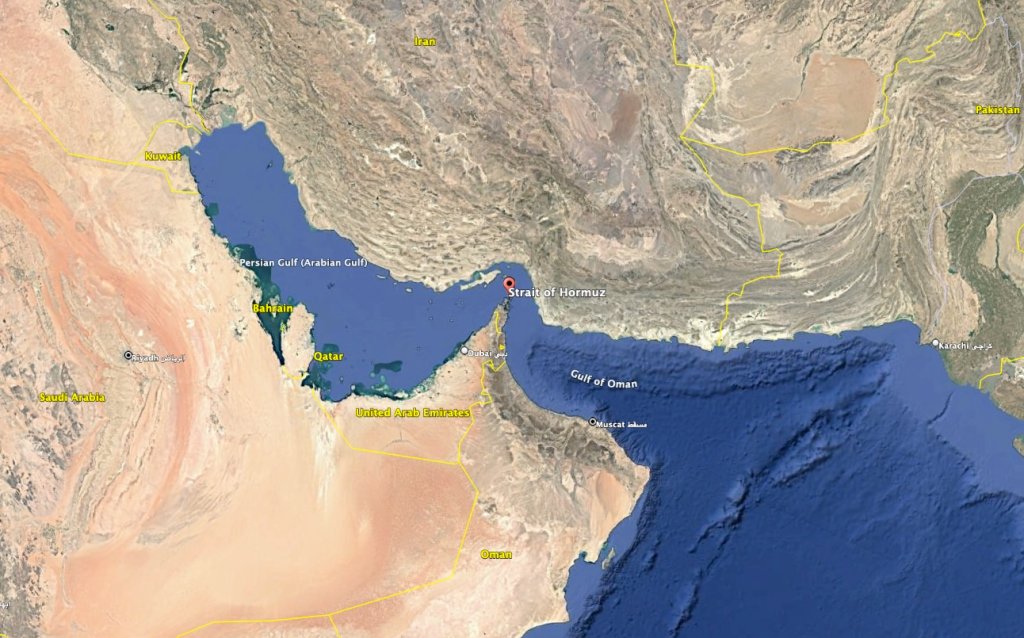
Christianna, a Liberia-flagged cargo ship, “exited the Persian Gulf through the strait on Monday night, after leaving the Iranian port city of Bandar Imam Khomeini,” The New York Times reported, citing the global trade intelligence firm Kpler. It said the ship was not carrying any cargo.
In addition, Elpis, a methanol carrier, “traversed the strait roughly around the time that the U.S. blockade began, according to ship-tracking data,” the newspaper added, “Kpler said that the vessel had been at the Iranian port of Bushehr. The United States had placed sanctions on the ship last year under an earlier name, Chamtang, over its connections to the Iranian oil trade.”
It is unclear if these two ships fell within CENTCOM’s “grace period” around the deadline, had gained permission to pass or had somehow bypassed the blockade, the Times noted. We have reached out to CENTCOM and the White House for more details.
CENTCOM stated on X that during “the first 24 hours, no ships made it past the U.S. blockade and 6 merchant vessels complied with direction from U.S. forces to turn around to re-enter an Iranian port on the Gulf of Oman.”
“The blockade is being enforced impartially against vessels of all nations entering or departing Iranian ports and coastal areas, including all Iranian ports on the Arabian Gulf and Gulf of Oman,” the command reiterated. “U.S. forces are supporting freedom of navigation for vessels transiting the Strait of Hormuz to and from non-Iranian ports.”
All told, more than “10,000 U.S. Sailors, Marines, and Airmen along with over a dozen warships and dozens of aircraft are executing the mission to blockade ships entering and departing Iranian ports,” CENTCOM explained.
Several other Iranian-linked ships also exited the Strait, however, there was no indication they stopped at any Iranian port and thus would not have been subject to the blockade.
The Rich Starry, “sanctioned by the US for Iran-related trade, sailed east from Sharjah in the UAE through the strait overnight, data shows,” according to BBC. “The tanker Murlikishan, which is also under US sanctions for Iran-related trade, sailed from Lanshan in China and headed west through the strait overnight.”
Overall, shipping in the region has largely remained at a standstill. There are concerns this could exacerbate economic woes across the globe sparked by Iran’s near total closure of the Strait in the wake of U.S. and Israeli attacks. At the moment though, Brent Crude, a petroleum benchmark, was trading at just over $95 a barrel as of Tuesday at 11 a.m. EDT. That’s down from a high of nearly $110 a barrel on April 6, according to OilPrice.com.
“Little traffic is entering and leaving Iranian ports in the Persian Gulf and the Gulf of Oman on the first full day of the US-declared blockade,” CNN reported, citing ship-tracking data. “Shipping through the Strait of Hormuz also remains severely curtailed, with just a handful of tankers and bulk carriers transiting the waterway in the last day.”
“Maritime activity in the Strait of Hormuz is entering its first full day under active U.S. enforcement, with early vessel behavior indicating a fragmented response to the blockade,” according to the latest report from Windward Maritime Intelligence.
Initial movements “show a mix of continued transit, route deviation, and potential blockade evasion,” Windward explained. “Sanctioned and falsely flagged vessels remain active, with some proceeding through the Strait while others delay, reverse, or shift routing patterns.”
At the same time, “Iranian oil flows continue to rely on indirect distribution networks, with significant volumes accumulating offshore rather than moving directly through the Strait,” the company continued. “Taken together, the operating environment is shifting from uncertainty to active enforcement dynamics, where compliance, evasion, and selective movement are all occurring simultaneously.”
Amid all this, Iran “is considering a short-term pause to shipments through the Strait of Hormuz to avoid testing a US blockade and scuppering a fresh round of peace talks,” Bloomberg reported, citing a person familiar with Tehran’s deliberations.
“The potential pause reflects a desire to avoid immediate escalation at a sensitive diplomatic juncture as Washington and Tehran sort logistics for another face-to-face meeting, the person said.”
China’s Foreign Ministry strongly condemned the blockade on Tuesday.
“The US’s targeted blockade and its increased military deployment are dangerous and irresponsible,” said ministry spokesperson Guo Jiakun. “At a time when the parties concerned have reached a temporary ceasefire arrangement, the blockade will only aggravate tensions, further destabilize the situation, undermine the already fragile ceasefire, and further jeopardize navigational security in the Strait of Hormuz.”
As the blockade continues, several countries have called for the Strait and by implication surrounding waterways to be reopened. Several hundred miles of Iran’s coastline sits along the Gulf of Oman, which is also included in the CENTCOM blockade.
“We have been clear from the outset that the security of the Strait of Hormuz must not be harmed by any escalatory moves,” said Majed Al-Ansari, a spokesman for the Qatari Foreign Ministry. “We reject any attempt to politicize the Strait and call for the immediate resumption of maritime activity without pre-imposed conditions, given its importance to the global economy. We are engaging with regional and international partners toward a solution. Regarding the talks in Islamabad, we remain in contact with Pakistan and support their mediation efforts, while focusing on strengthening regional coordination around this process.”
French President Emmanuel Macron called for the Strait to “be reopened unconditionally, without restrictions or tolls, as soon as possible. Under these conditions, negotiations should be able to resume quickly, with the support of the key parties concerned.”
He added that “France and the United Kingdom will also host a conference in Paris this Friday, bringing together by videoconference non-belligerent countries ready to contribute, alongside us, to a multilateral and purely defensive mission aimed at restoring freedom of navigation in the strait when security conditions allow.”
UPDATES
We have concluded our coverage for the day.
UPDATE: 5:26 PM EDT –
To execute the blockade, American naval assets are not lingering near Iranian ports or in the Strait of Hormuz itself, The Washington Post noted.
“Iranian forces mined the strait, one of several flash points in negotiations, soon after hostilities began more than six weeks ago,” the newspaper reported. “The narrow, shallow corridor also leaves any vessels there vulnerable to attack.”
“Our net is the Gulf of Oman,” said one of the officials, who explained that the U.S. warships involved wait for an opportune moment — after observing vessels leave Iranian facilities and clear the strait — before intercepting the merchant ships and forcing them to turn around.
“There’s one way in and one way out,” the official said. “We’ve got the whole thing on lockdown.”
UPDATE: 4:52 PM EDT –
There have been no indications yet reported during the CENTCOM blockade, but more than 20 commercial ships have passed through the Strait of Hormuz recently, The Wall Street Journal reported. The publication added that it marks “an improvement in the flow of vessels through a critical chokepoint.”
UPDATE: 4:08 PM EDT –
Following today’s trilateral meeting with Israel’s Ambassador to the U.S., Yechiel Leiter, said his country won’t allow Hezbollah to fire missiles into Israel.
UPDATE: 3:58 PM EDT –
UN Secretary-General Antonio Guterres stated that it’s “highly probable” talks to end the war will resume. He spoke after meeting with the Deputy Prime Minister of Pakistan.
UPDATE: 3:35 PM EDT –
CENTCOM offered some additional details about its blockade of Iran.
“An F-35B stealth fighter jet is prepared for flight aboard USS Tripoli (LHA 7) as the amphibious assault ship sails in the Arabian Sea,” CENTCOM stated on X. “Tripoli and its 3,500 Sailors and embarked Marines are executing the mission to blockade ships entering and departing Iranian ports. The blockade is being enforced impartially against vessels of all nations.”
UPDATE: 3:09 PM EDT –
The U.S. State Department provided some details of the trilateral meeting between the U.S., Israel and Lebanon. This meeting “marked the first major high-level engagement between the governments of Israel and Lebanon since 1993. The participants held productive discussions on steps toward launching direct negotiations between Israel and Lebanon,” the department stated.
“The United States congratulated the two countries on this historic milestone and expressed its support for further talks, and for the Government of Lebanon’s plans to restore the monopoly of force and to end Iran’s overbearing influence,” the State Department said in an email. “The United States expressed its hope that talks can exceed the scope of the 2024 agreement and bring about a comprehensive peace deal. The United States expressed its support for Israel’s right to defend itself from Hizballah’s continued attacks. The United States affirmed that any agreement to cease hostilities must be reached between the two governments, brokered by the United States, and not through any separate track. The United States underscored that these negotiations have the potential to unlock significant reconstruction assistance and economic recovery for Lebanon and expand investment opportunities for both countries.”
The State of Israel “expressed its support for disarming all non-state terror groups and dismantling all terror infrastructure in Lebanon and expressed its commitment to working with the Government of Lebanon to achieve that goal to ensure security for the people of both countries,” the message added. “Israel expressed its commitment to engage in direct negotiations to resolve all outstanding issues and achieve a durable peace that will strengthen security, stability and prosperity in the region.“
UPDATE: 3:01 PM EDT –
Stepping up the pressure on Tehran in what it calls Economic Fury, the Treasury Department said the short-term authorization permitting the sale of Iranian oil already stranded at sea is set to expire in a few days and will not be renewed.
UPDATE: 2:41 PM EDT –
The New York Post said Trump informed them during a phone interview that additional US-Iran peace talks “could be happening over next two days” in Pakistan’s capital.
Trump initially claimed that discussions were “happening, but, you know, a little bit slow” before indicating that a second round of direct negotiations to end the seven-week war would likely happen somewhere in Europe, the newspaper added.
About half an hour later, Trump called back with an update.
“You should stay there, really, because something could be happening over the next two days, and we’re more inclined to go there,” he said of Islamabad. “It’s more likely, you know why? Because the field marshal is doing a great job.”
Trump was referring to Pakistan Field Marshal Gen. Asim Munir.
Days after in-person peace talks between the U.S. and Iran ended with no agreement, the two sides are still talking. There are also reports that there may be another round of meetings later this week.
“The United States and Iran have traded proposals for a suspension of Iranian nuclear activities but remain far apart on the length of any agreement,” The New York Times reported, citing Iranian and U.S. officials.
During the negotiations in Islamabad, “the United States asked Iran for a 20-year suspension of uranium enrichment,” the newspaper added. “The Iranians, in a formal response sent on Monday, said they would agree to up to five years, according to two senior Iranian officials and one U.S. official. Mr. Trump rejected Iran’s offer, according to a U.S. official.”
Still, despite the impasse and the U.S. imposed blockade on Iranian ports, “U.S. officials are discussing details for a potential second in-person meeting with the Iranians,” CNN noted.
Meanwhile, as the fighting continues in Lebanon between Israel and Hezbollah, Jerusalem and Beirut are scheduled to hold talks in Washington today. The first direct diplomatic discussion between the two nations in more than 30 years is aimed at preparing negotiations to end the conflict. However, there is little hope of any quick resolution.
Lebanon’s pre-condition is a full ceasefire, something Israel is refusing to do, CBC noted. Hezbollah’s chief Naim Qassem has called the discussions “pointless” and said just talking to Israel is akin to surrendering.
Hezbollah is a separate entity from the Lebanese government and is fighting Israel, not that nation. However, Beirut called for the meeting to discuss “the announcement of a ceasefire” between the warring parties “and the date for starting negotiations between Lebanon and Israel under American sponsorship,” The Washington Post explained.
The State Department said the talks will focus on “how to ensure the long-term security of Israel’s northern border and to support the Government of Lebanon’s determination to reclaim full sovereignty over its territory and political life,” the publication added.
On the battlefield, the Israeli Defense Forces (IDF) and Hezbollah continue to attack each other.
The IDF claimed that “three soldiers were severely injured, and an additional soldier was moderately injured in a close-quarters encounter in southern Lebanon.”
It also said it struck more than 150 Hezbollah targets across southern Lebanon.
Hezbollah said it struck the Yiftah military barracks in northern Israel.
Mossad operated “in the heart of Tehran” during the recent US-Israeli campaign against Iran, the Israeli intelligence agency’s Director David Barnea said at a Holocaust Remembrance Day ceremony.
“We brought precise intelligence to the Air Force, and we hit missiles that threatened Israel,” he explained.
“But our mission has yet to be completed,” the spy chief added. “We didn’t think that this mission would be completed immediately with the end of the battles. But we planned intensively for our campaign to continue and achieve results even in the period after the strikes in Tehran.”
Chinese President Xi Jinping weighed in on the tense situation in the Middle East, issuing “four propositions on safeguarding and promoting peace and stability” in the region, according to Mao Ning, spokesperson for the Chinese Foreign Affairs ministry.
Xi is calling for commitments to preserving “peaceful coexistence…the principle of national sovereignty…the rule of law” and “a balanced approach to development and security.”
The Chinese MFA took a much harsher stance in response to Trump’s threat to impose a 50% tariff on Chinese imports if it provides arms to Iran. Trump issued that warning in an interview on Sunday with Fox News. He was reacting to reports that U.S. intelligence determined Beijing was providing military support to Tehran.
“China always acts prudently and responsibly on the export of military products, and exercises strict control in accordance with China’s laws and regulations and due international obligations,” the MFA proclaimed on X. “Media reports accusing China of providing military support to Iran are purely fabricated. If the U.S. goes ahead with the tariff hikes on China on the basis of these accusations, China will respond with countermeasures.”
The MFA did not specify what those countermeasures might be.
Author’s Note: We have adjusted the headline to better reflect the story.
Contact the author: howard@thewarzone.com
Loading comments…
Comments couldn’t be loaded. Please refresh the page.