
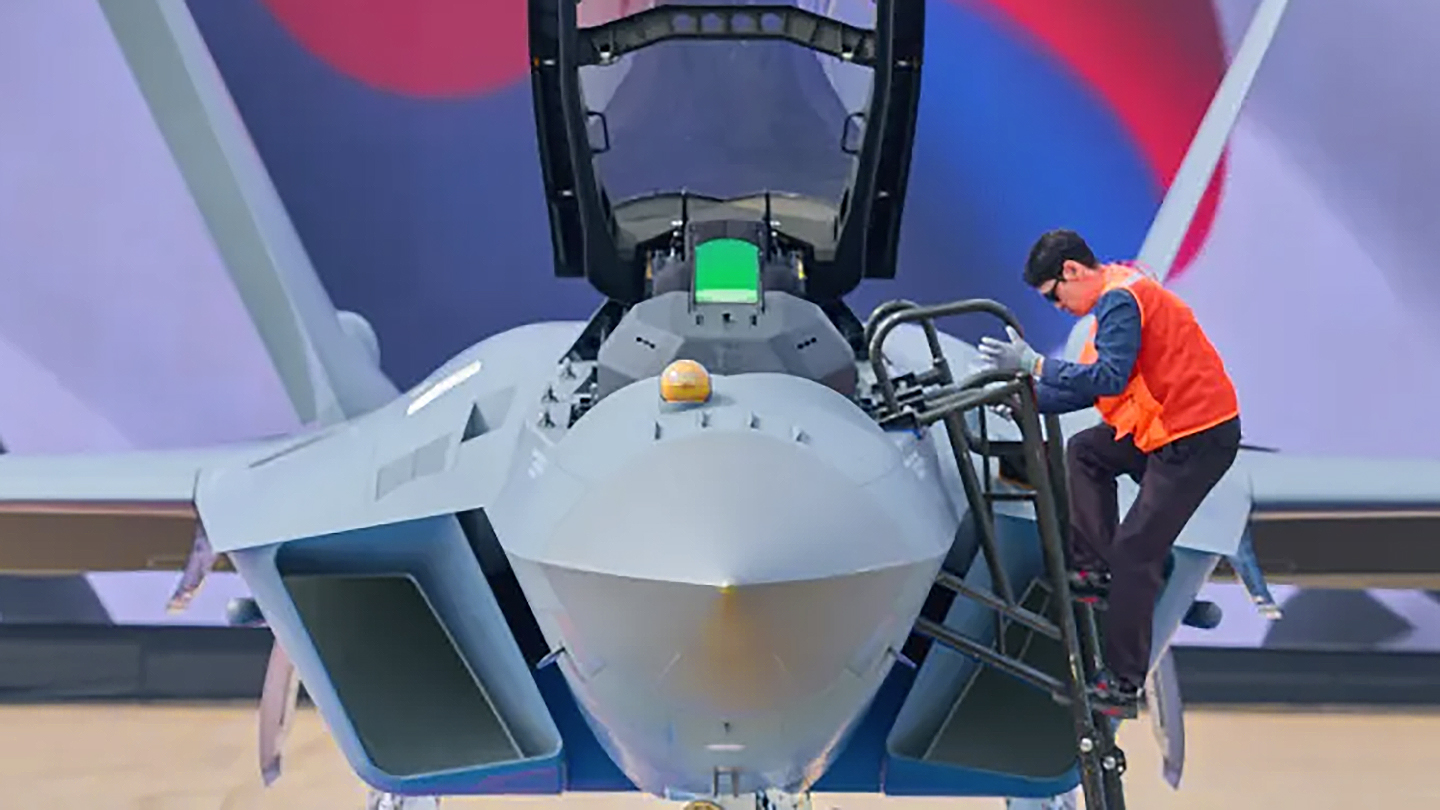
South Korea today rolled out the first series-produced example of its homegrown KF-21 fighter. This major milestone in the program also underscores just how quickly it has progressed, with the rollout coming a little over five years since the first prototype of the fighter was unveiled. The development schedule is especially impressive when compared with other new-generation fighter programs, although Seoul has taken some notable shortcuts to meet this aggressive timeline.
An official Republic of Korea Air Force video commemorates the rollout of the first series-produced KF-21:

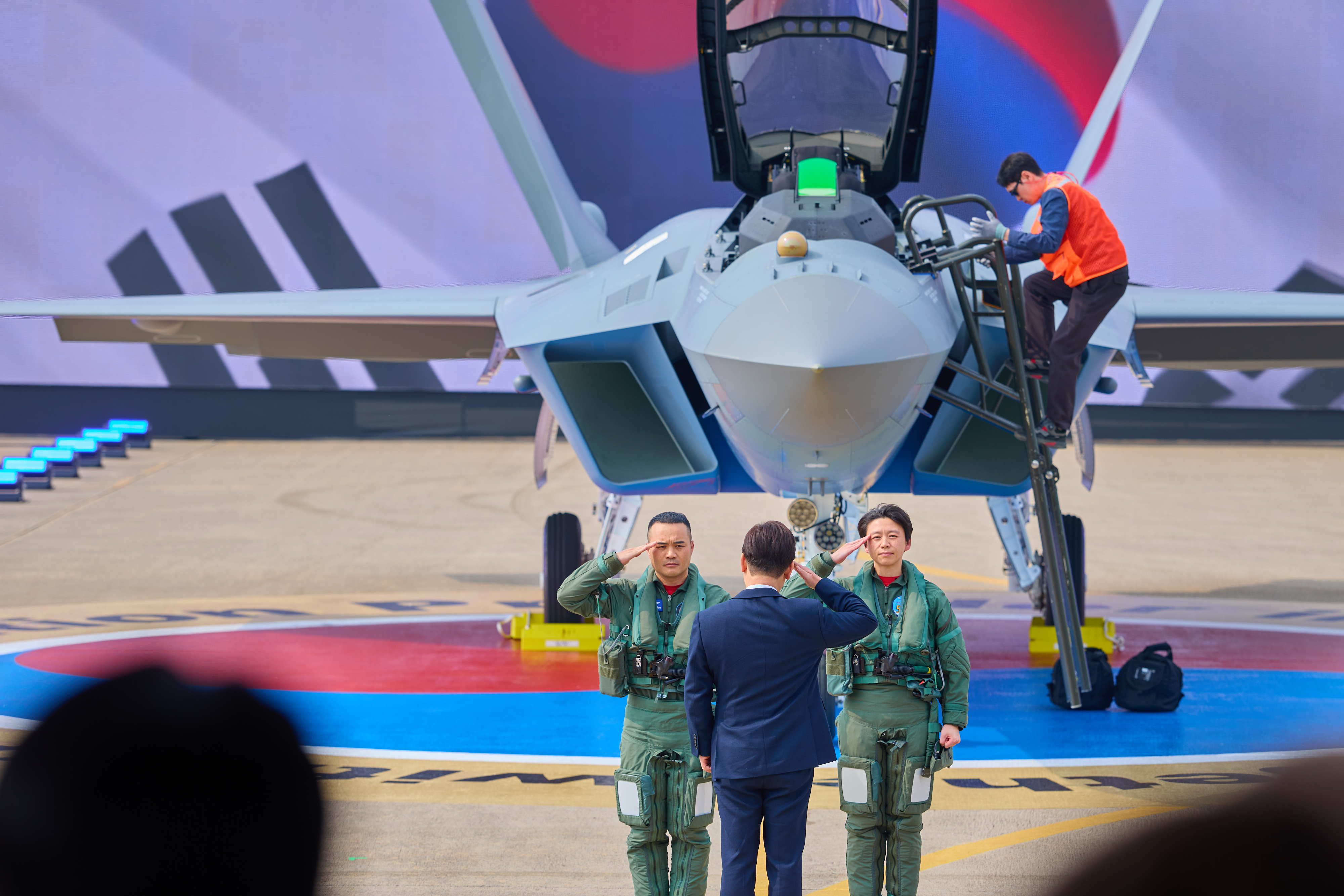
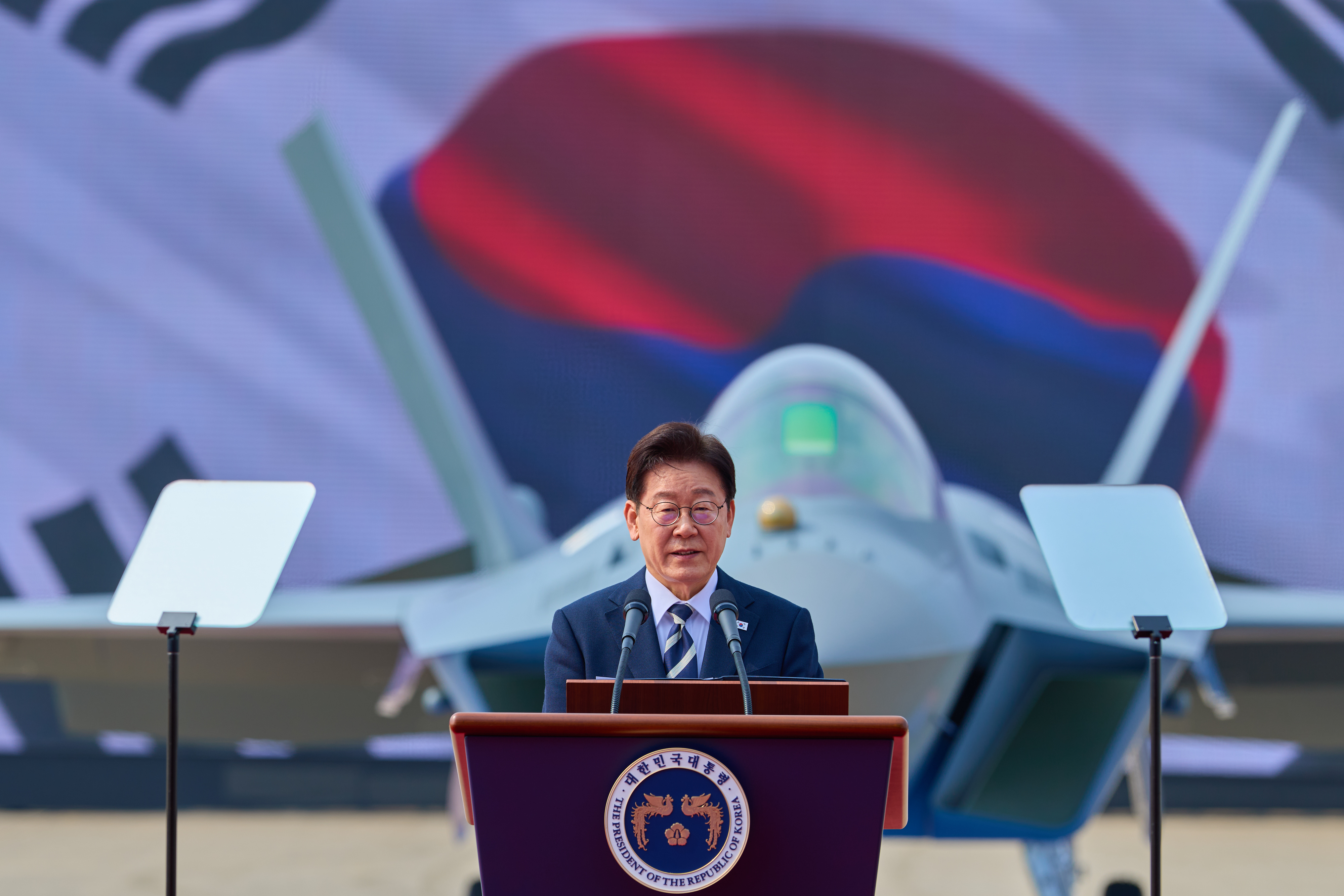
The first series-production KF-21 — also known as the Boramae, meaning hawk in Korean — is a two-seater, unveiled in a ceremony today at the Korea Aerospace Industries (KAI) headquarters in Sacheon, southeast of Seoul.
President Lee Jae Myung told guests that the fighter symbolized South Korea’s “aspirations for self-reliant defense,” and said he was committed to establishing the country as one of the world’s top four defense powers.
“South Korea has finally secured weapons to protect peace with its own technology, not only on land and sea but also in the air,” Lee added.
There is no doubt that South Korea is fast emerging as a major player when it comes to defense manufacturing, and, increasingly, this is reflected in high-profile exports, too.
As well as the KF-21, Lee also took time to mention the country’s K9 self-propelled howitzer and Cheongung surface-to-air missile system, both of which have secured lucrative foreign sales. In the military aircraft sector, KAI’s T-50/FA-50 advanced jet trainer/light combat aircraft has also proven a force to be reckoned with in terms of global sales.
Returning to the KF-21, the jet was developed to replace South Korea’s now-retired F-4E Phantom II and still-active F-5E/F Tiger II fighters.
The program was formally launched in 2016, followed by the roll-out of the first prototype in April 2021, and the first flight of a prototype in July 2022. In May 2023, the KF-21 was provisionally judged “fit for combat.”

A total of six prototypes have been built and flown, two of these being completed in the two-seat version of the jet.
Previously announced plans call for the Republic of Korea Air Force (ROKAF) to receive 40 KF-21s by 2028 and have a full fleet of 120 aircraft deployed by 2032.
As to how South Korea got to this stage so fast, it has adopted a notably different approach from other next-generation fighter programs.
The KF-21 has never been billed as a fifth-generation fighter with all of the advanced features and capabilities that this entails. Instead, Seoul refers to it as a “4.5-generation fighter jet,” using nomenclature that’s more commonly used to define the new or significantly modernized fighters that appeared from the 1990s onward.
Unlike a ‘true’ fifth-generation fighter, the airframe design of the KF-21 is not primarily driven by stealth, and its level of sensor fusion is at a notably less advanced level than found in the F-35, for example.
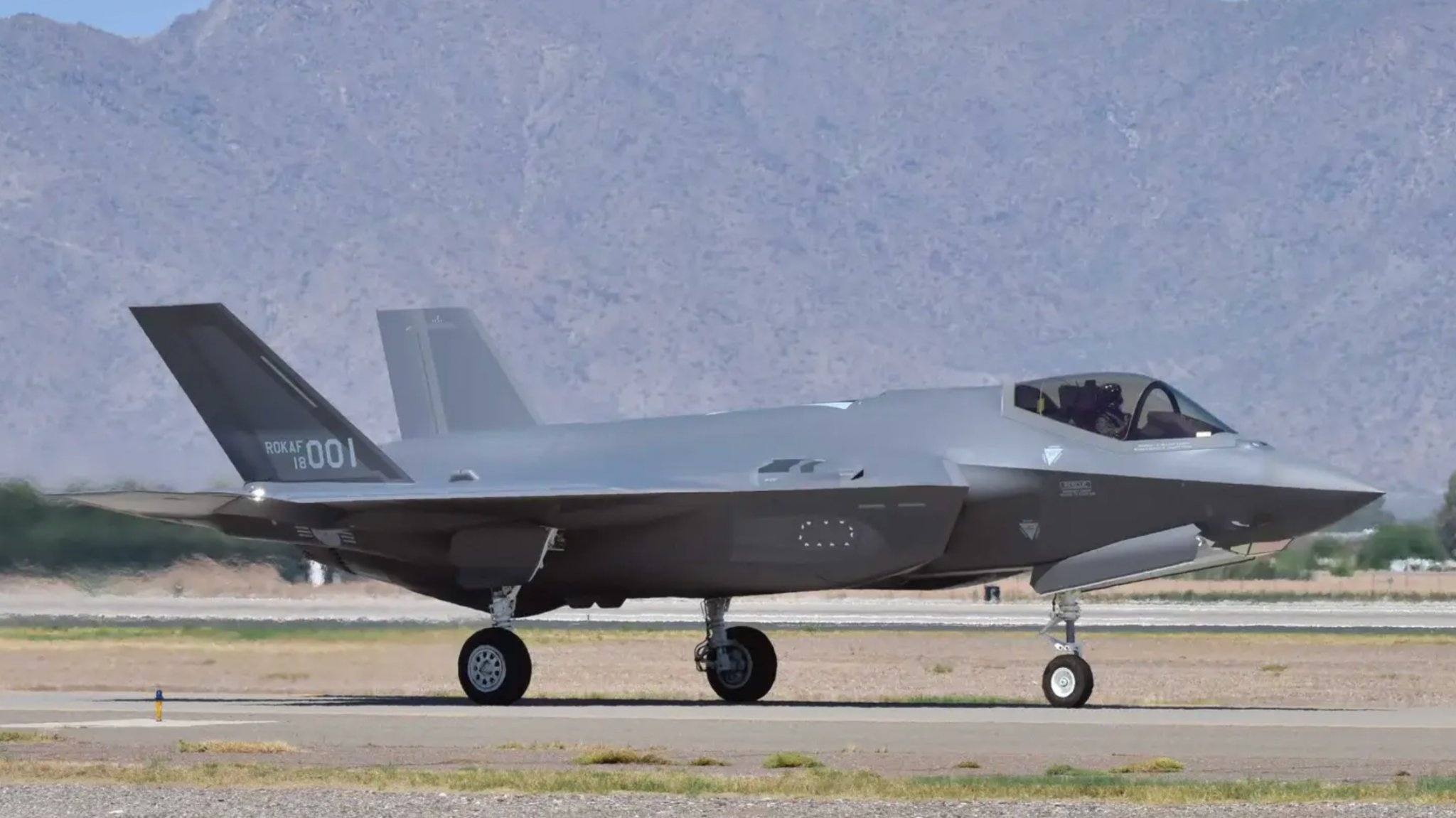
For the ROKAF, a more austere fighter is less of an issue, since it is already receiving the U.S.-supplied F-35A.
At the same time, the KF-21 will bring a host of advanced features that wouldn’t be out of place on a more ambitious design.
These include an active electronically scanned array (AESA) radar and infrared search and track (IRST). Its armament will also include beyond-visual-range MBDA Meteor air-to-air missiles with ramjet propulsion and, reportedly, locally produced long-range cruise missiles, too.
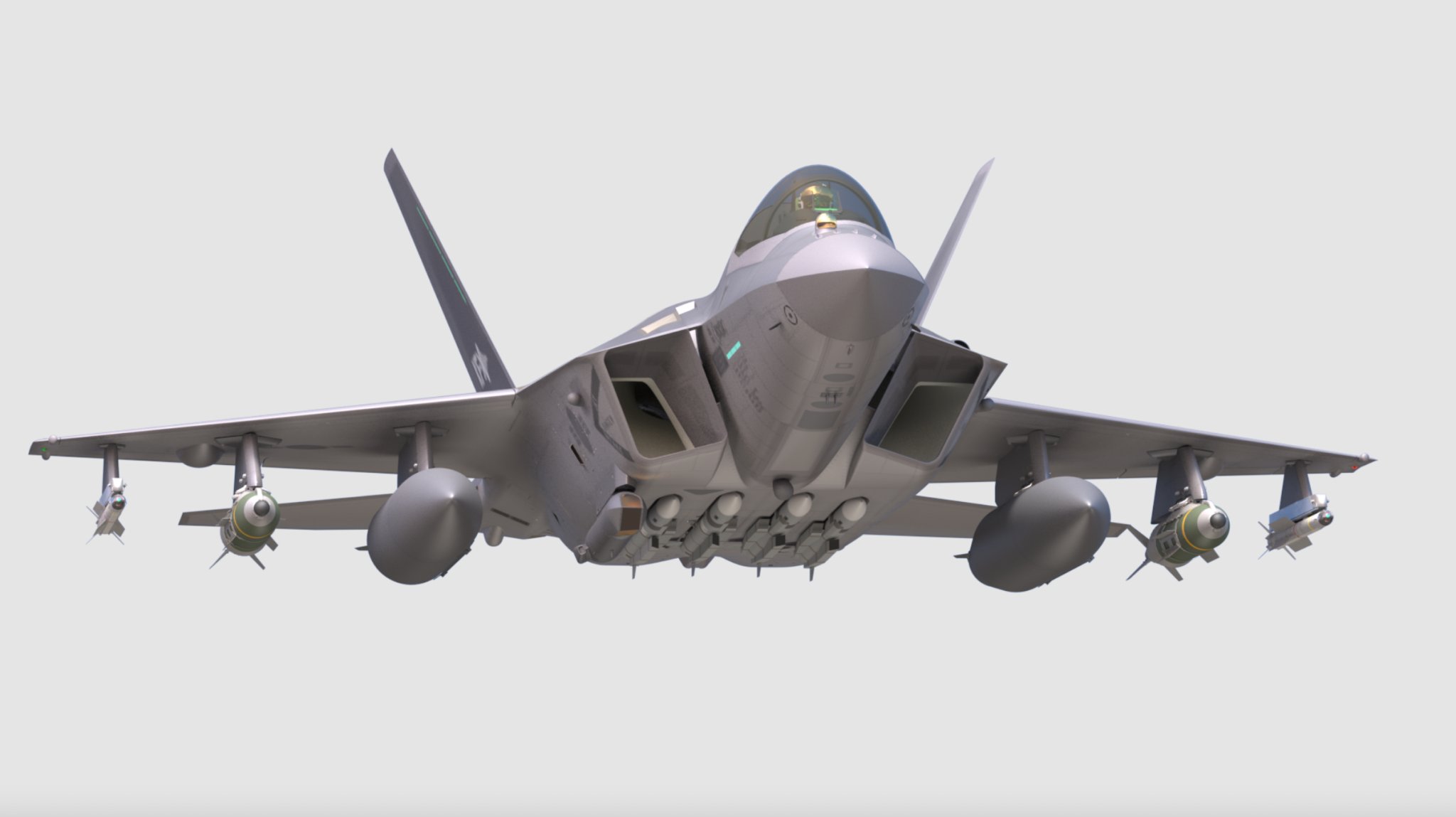
There is also scope for further improvements, which would bring the KF-21 up to a standard much closer to a fifth-generation jet.
In its initial form, the KF-21 carries its weapons externally or semi-conformally, although the future Block 3 version of the jet is planned to feature internal weapons bays.
Other advanced versions of the jet are also being considered, including an escort jamming platform, a concept that was revealed at the rollout ceremony today.
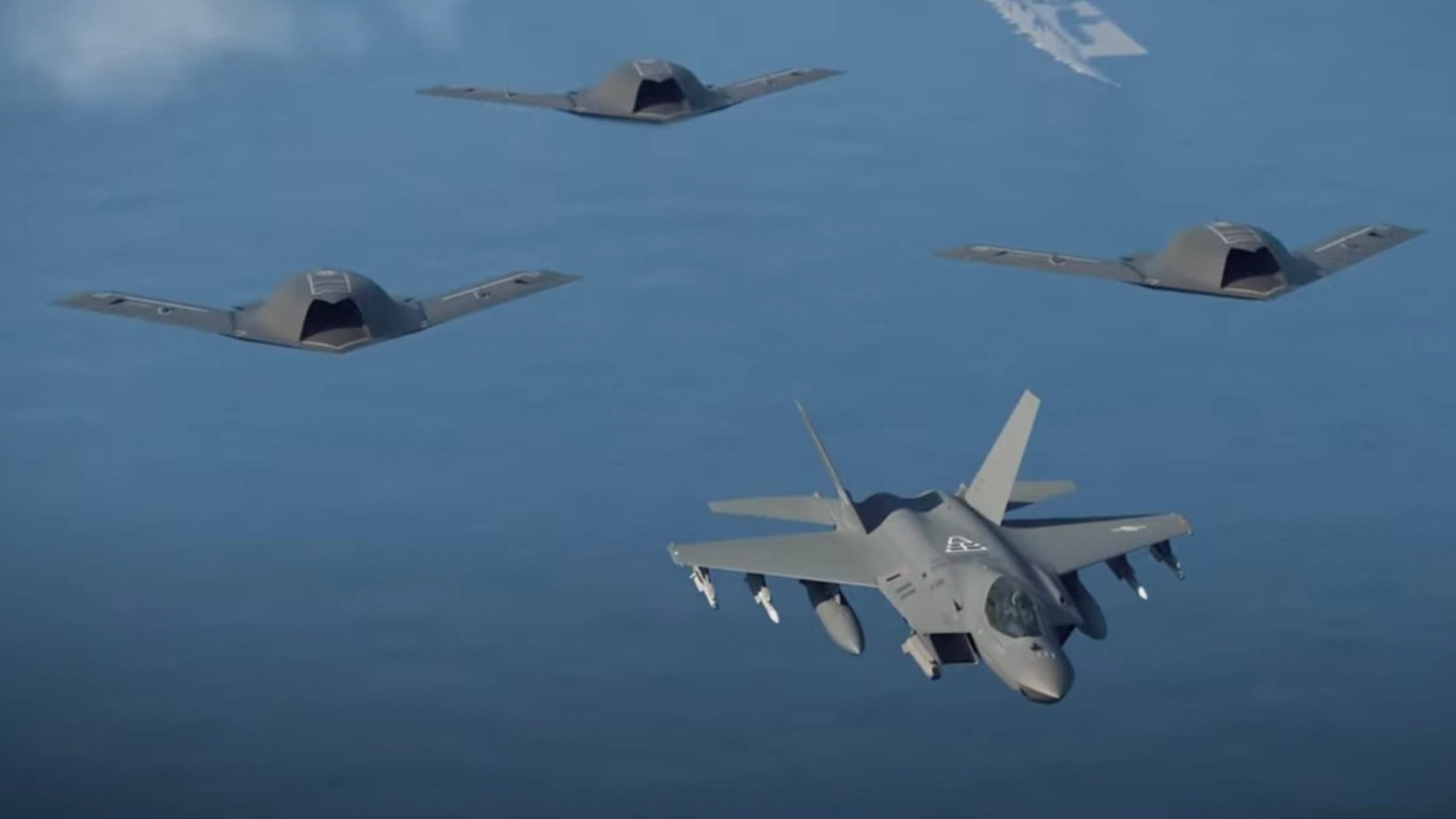
South Korea is also embracing the concept of crewed/uncrewed teaming to further enhance the capabilities of the KF-21.
Seoul expects to have its KF-21s working closely with homegrown stealth drones, as a means of boosting the potential of the crewed fighter as well as maximizing “combat mass.” In this regard, the existence of a two-seat version should have particular benefits, with the rear cockpit accommodating a dedicated drone controller. You can read more about the concept here.
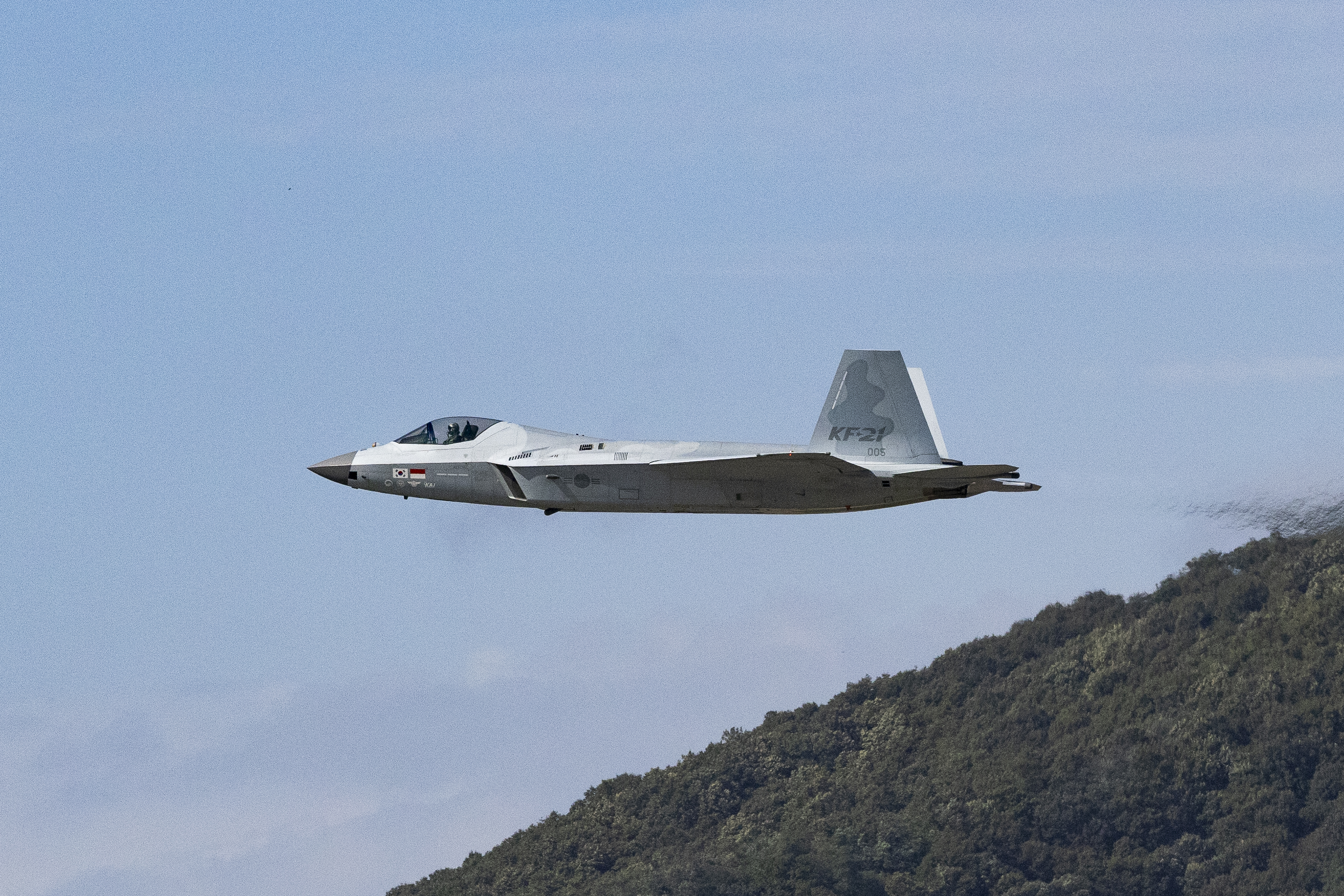
In terms of raw performance, the KF-21 is no slouch, either, with claims of better kinematic performance than an F-16C.
By avoiding some of the aspects of fighter development that traditionally consume exorbitant time and funds, KAI has managed to leapfrog many other potential rivals. At the same time, a gap of five years between the rollout of the prototype and the first series-produced example compares to roughly 11 years between the first flight of the prototype X-35 Joint Strike Fighter and the first flight of the first full-production airframe, F-35A AF-6.
For Russia, too, there was a full 10 years between the first flight of the prototype T-50 in 2010 and the first flight of the first full-production Su-57 Felon airframe in 2020.
That’s not to say that the KF-21 hasn’t faced any problems. In particular, there has been a tricky relationship with Indonesia, which joined the program as a junior partner before becoming locked in disputes over costs and workshares.
According to the latest reports, Seoul plans to sign a deal to export 16 KF-21s to Indonesia. Today, President Lee also said that South Korea would seek other partner nations to further strengthen the competitiveness of its defense industry, perhaps also including the KF-21.
Increasingly, South Korea is developing a wide range of locally made air-launched weapons, avoiding reliance on arms imports and, at the same time, allowing Seoul to offer these for export itself without facing potential restrictions like the U.S. government’s International Traffic in Arms Regulations (ITAR).
With South Korea’s growing pedigree as a supplier of higher-end arms, the KF-21 could well become a very attractive export prospect. In the meantime, however, the rollout of the series-produced jet brings the first delivery to the ROKAF a step closer and, with it, underscores the continued modernization of the air arm.
Contact the author: thomas@thewarzone.com
Loading comments…
Comments couldn’t be loaded. Please refresh the page.