
The Army’s revamped system for getting gear and weapons to the fight faster has already been put to work in support of the war the U.S. is waging on Iran, a service leader said Tuesday.
Speaking at the Association of the United States Army’s Global Force Symposium in Huntsville, Ala., Brig. Gen. David Phillips, deputy portfolio acquisition executive for Maneuver Air, revealed the Army was trying to innovate in real time as the conflict approaches the end of its first month.
“As I look back on the past 30 days in Operation Epic Fury, we had some immediate requests from the field in the first week,” Phillips said. “Those immediate requests in the field returned on a requirements document with the [Army Future Capabilities Directorate] and [Army Transformation and Training Command] in about 48 hours, who turned on a contract in about 72 hours. And I can say that we’ve had soldiers out training and testing the capabilities they’re going to deploy with in real time in the past 10 days. So we’ve got industry fully engaged.”
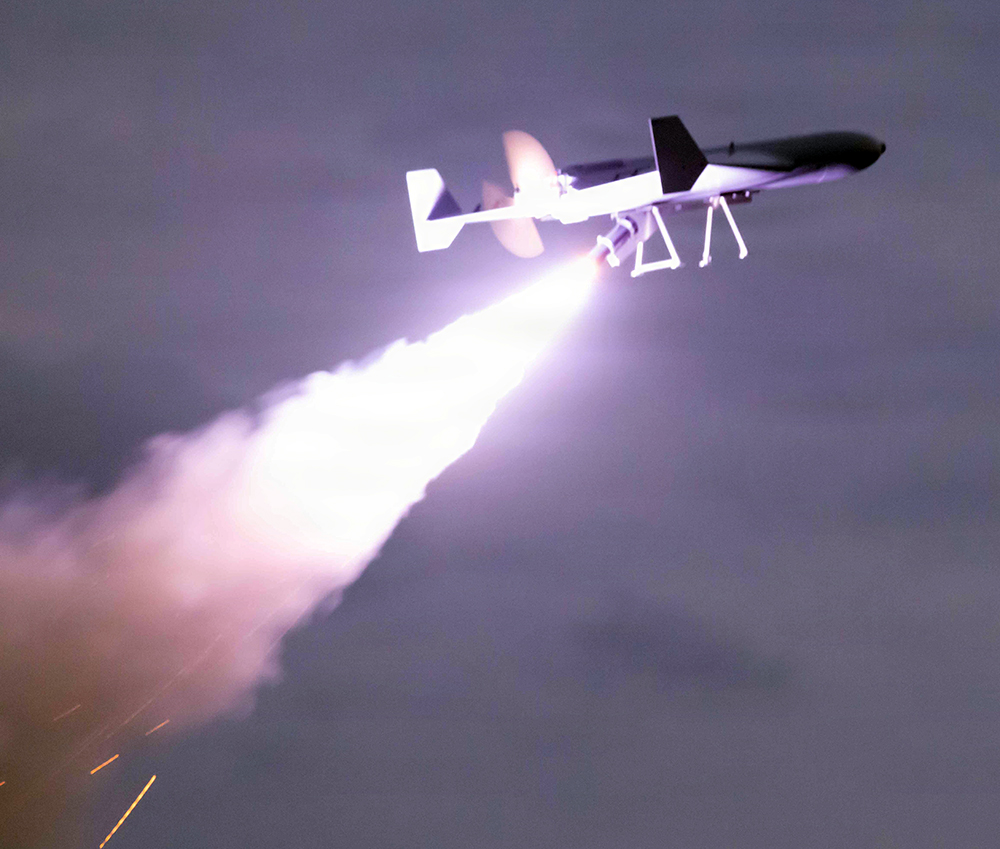
Phillips did not go into detail on what capabilities were sourced or needs identified in that short timeframe. Notably, the Pentagon has shown willingness to deploy new tech to the fight from day one, debuting the Low Cost Uncrewed Combat Attack System (LUCAS), a reverse-engineered American version of the Iranian Shahed-136 kamikaze drone, in the initial barrages.
On Tuesday, the Army formally announced the creation of an “Unmanned Aircraft Systems Marketplace” in partnership with Amazon Web Services and the Army Enterprise Cloud Management Agency that purports to be a “digital one-stop shop” for procuring drones fast for Army units and their allies.
Phillips urged defense industry members, as well as academics and units currently in the field, to tell leaders what was working in the fight and what needed to change.
“We want your engagements. We want your feedback at PAE Expanded Maneuver Air, and we want to have you as a part of our team. Because we know we don’t bend the metal, we don’t really go out and talk to the sub-tier suppliers as much as you all do, but we need this to be a team sport,” Phillips said.
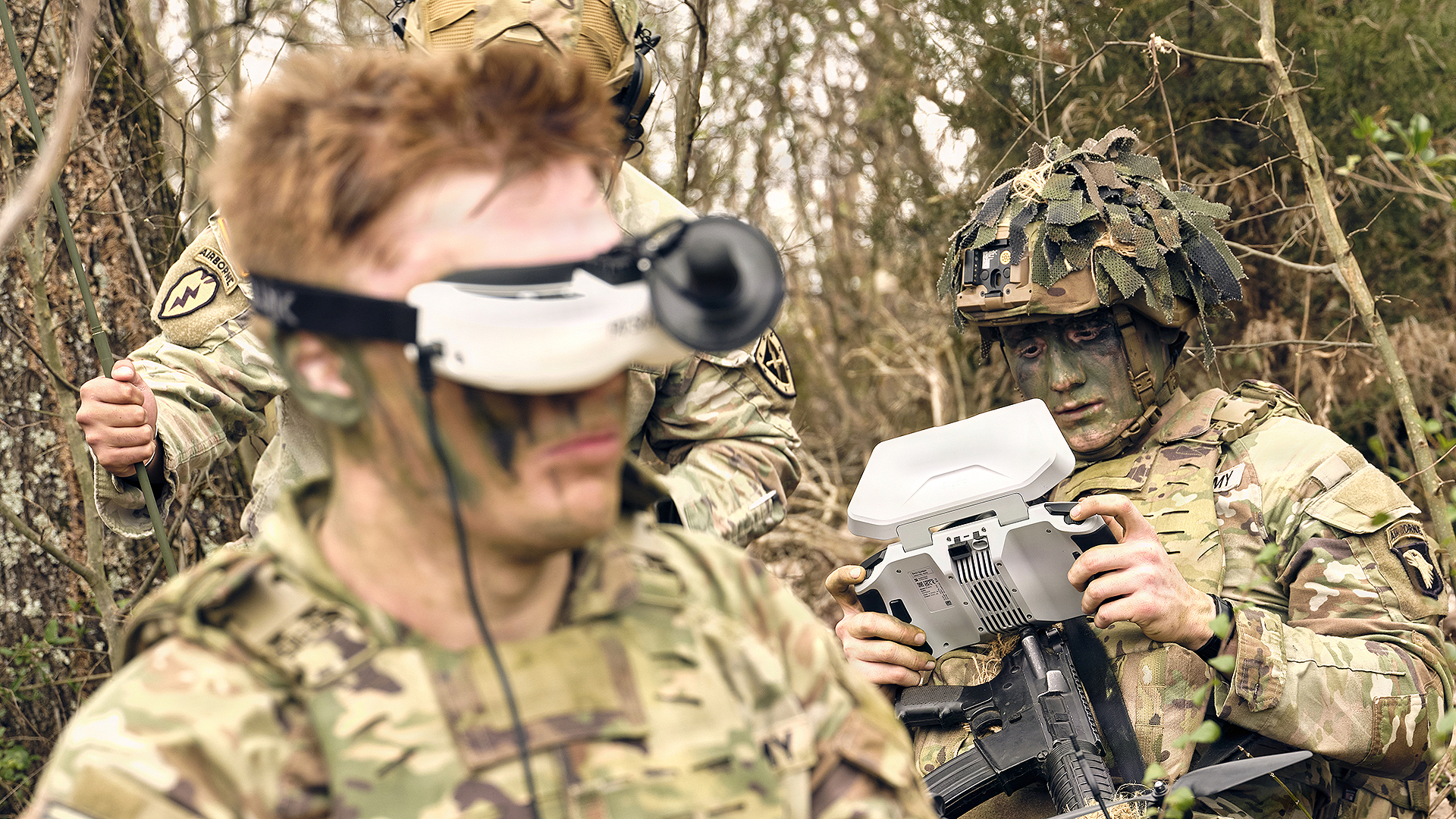
In a panel discussion helmed by Phillips, Army leaders who have worked with Ukraine and with mobile brigade combat teams within the 101st Airborne Division did exactly that, discussing needs and vulnerabilities with rare candor.
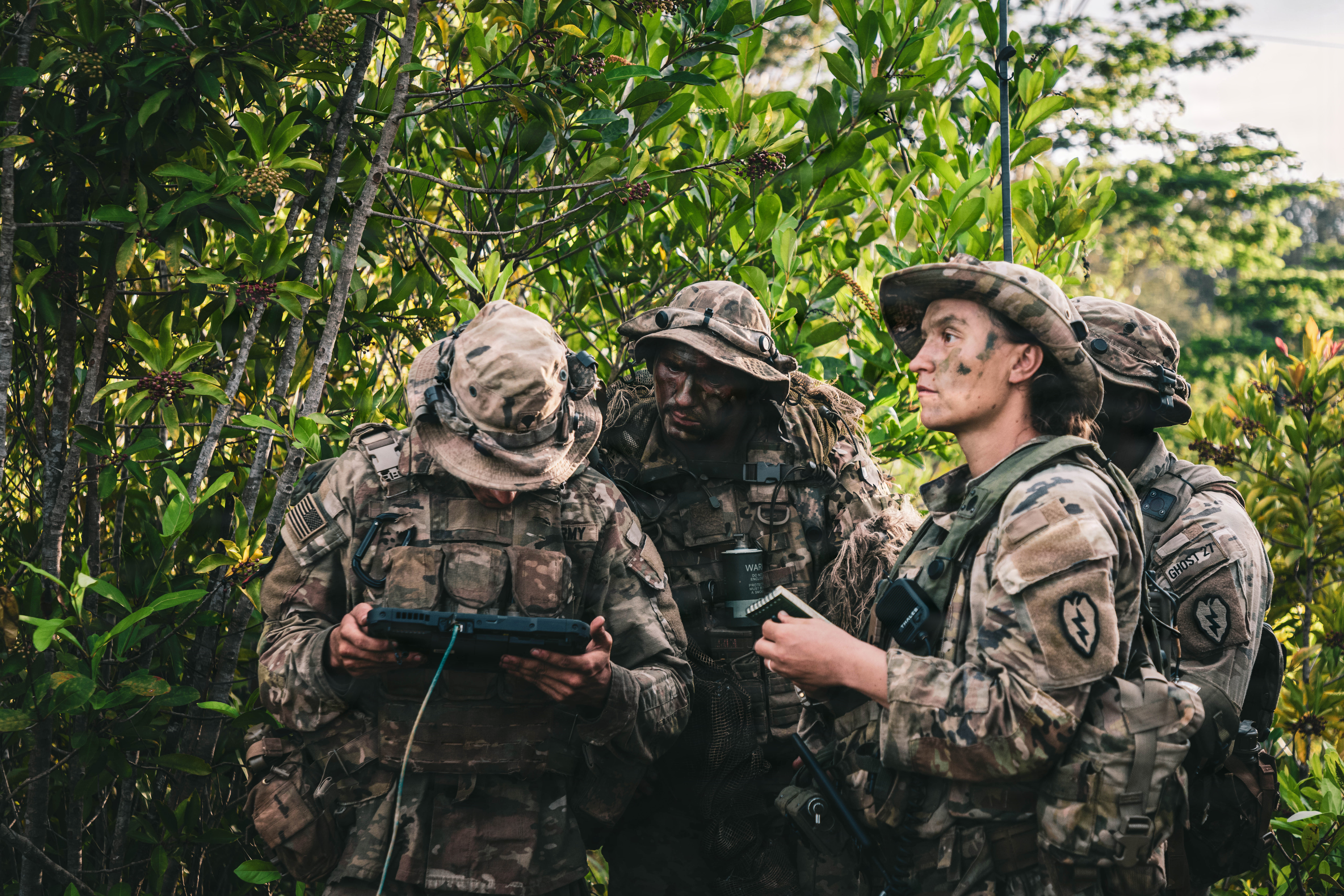
Col. Burr Miller, a former innovation advisor with the Army-led Security Assistance Group-Ukraine, warned that U.S. systems were sometimes not strong enough to sustain attacks on position, navigation and timing (PNT) capabilities. These are technologies that aid in navigation, like GPS, that are absolutely essential to modern warfighting.
“The PNT environment is incredibly corrosive,” Miller said, adding that he had observed many U.S. systems that “did not survive first contact” with a Russian adversary. “… In the same kind of tenor, we do not test a representative environment in the United States; nowhere can we test what the representative environment is … That’s not only a government responsibility, vendors; that’s your responsibility.”
What Miller did find effective, but said he hadn’t seen much Army action on, was fiber-optic drones, which were largely impervious to electronic warfare defenses and, when moving fast to a target, were hard to bring down with a kinetic kill shot.
“The Russians and the Ukrainians use mass,” he said. “We have forgotten how to fight mass.”
Leaders with the 101st Airborne added concrete numbers to the picture. For a company to attack and defeat an enemy platoon, it had to be able to take down 20 attack drones per day; accordingly, a brigade needed to be able to take out 200, or 1,000 per week, said Col. Ryan Bell, commander of the 101st’s 3rd Mobile Brigade Combat Team. For that reason, he added, the Army was beginning to issue roughly 30 reusable drones to each company training at the Joint Readiness Training Center at Fort Polk, La., allowing them to simulate the mass they’d need to be competitive in a fight.
“We need drones that are good enough to work, but not exquisite,” Bell said. “We have to get them fast. They have to be cheap enough that they compete with artillery and economies of scale; that’s the challenge. I’m shooting 1,000 of these a day. I am looking at these munitions like they are artillery racks, and I have to resupply them like artillery racks, and that is a change in how we’ve been treating them.”
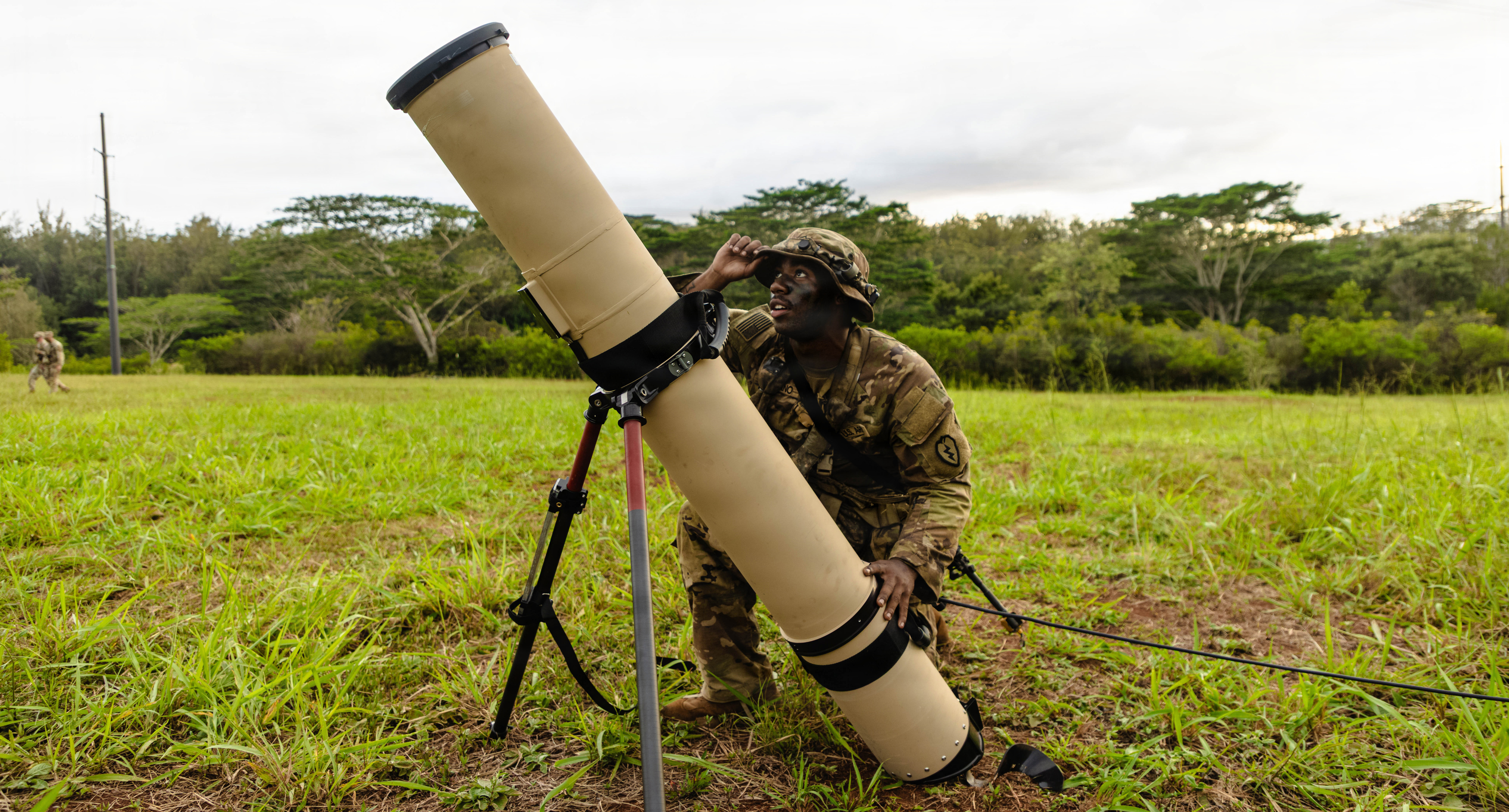
Bell said his units are also working to combine effects – for example, using Starlink-connected ground intelligence, surveillance and reconnaissance robots for all-weather sensing to determine when best to employ AeroVironment Switchblade loitering munitions.
A company commander, he said, might have his unit modify Skydio reconnaissance quadcopter drones to execute a breach before sending in ground robots.
“And he can also protect his rifleman, if he has to modify the [drone] to deliver a breaching charge, an aerial breaching charge,” Bell said. “And then using two ground robots as a tertiary mechanism with 28 pounds of C4 to open up the breach before that first rifle squad makes contact.”
Col. Duke Reim, commander of the 101st’s 2nd Mobile Brigade Combat Team, also described innovating in training by pairing the Army’s small medium-range reconnaissance (MRR) drones with loitering munitions in operations to shrink down the time lag between scouting a target and raining steel down on it.
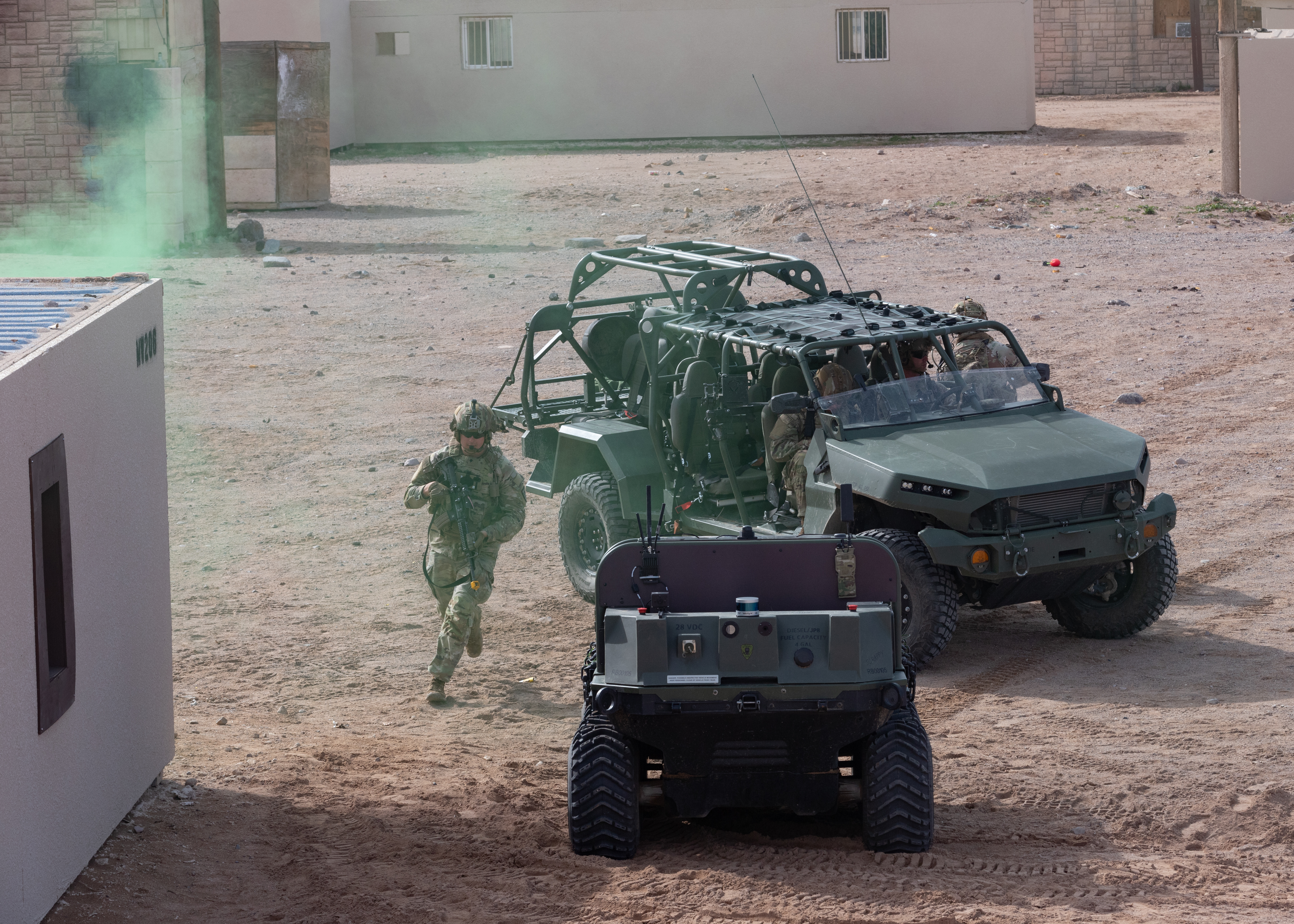
“The battlefield today doesn’t have time for eventually, and what we’re doing now by pairing these systems is quickening the pace at a rate that we’ve never seen before,” he said. “Our enemy is adapting. They can move quicker, they can hide and, heaven forbid, they can shoot just as fast as we can. So we’ve got to be able to take this initiative and continue to evolutionize it.”
Contact the editor: Tyler@twz.com
Loading comments…
Comments couldn’t be loaded. Please refresh the page.