
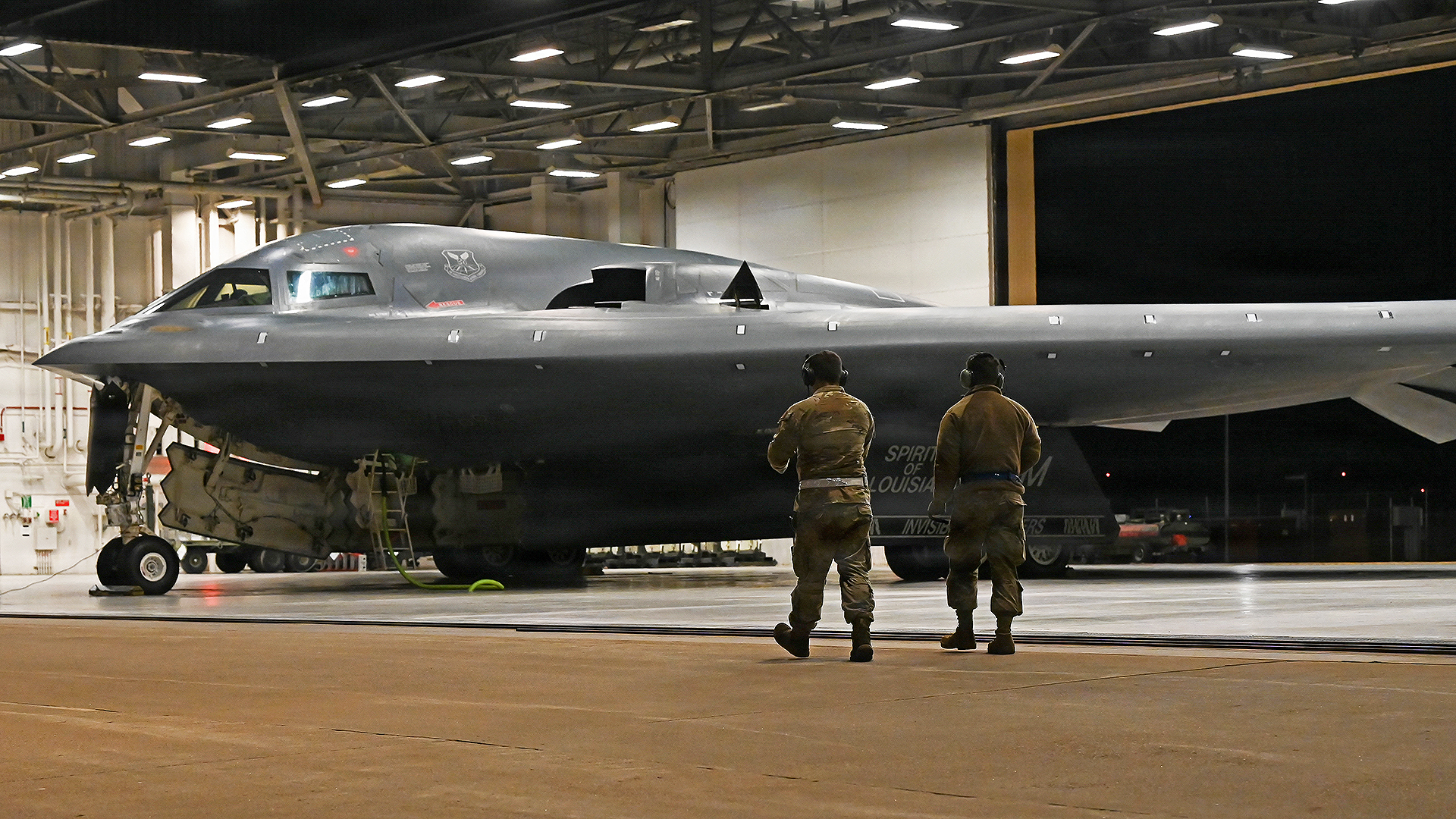
The B-2 Spirit has done what no other asset can do during the war with Iran — flying into dangerous airspace to release heavy weapons capable of penetrating even the most hardened targets. While B-1Bs and B-52Hs have forward deployed to the United Kingdom for their missions over and near Iran, the B-2s have flown smaller numbers of missions from their home at Whiteman Air Force Base in Missouri. At this time, there is no evidence that B-2s are operating out of Diego Garcia or anywhere else for the war effort. Still, they are delivering punishing blows, as represented in art on at least one of their gear doors. Beyond mission markings, some new features that just appeared along the aircraft’s huge leading edges are puzzling to say the least.
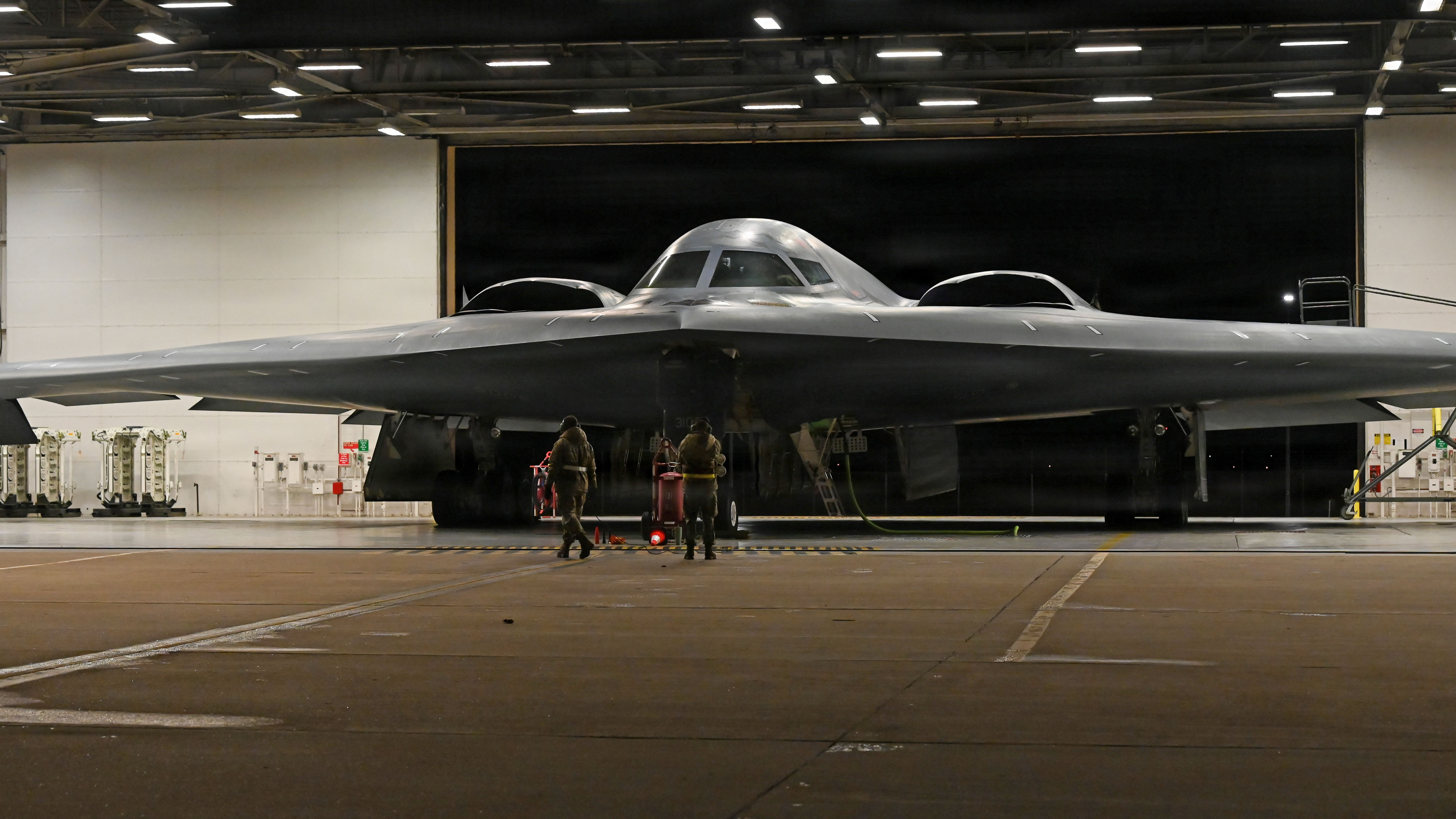
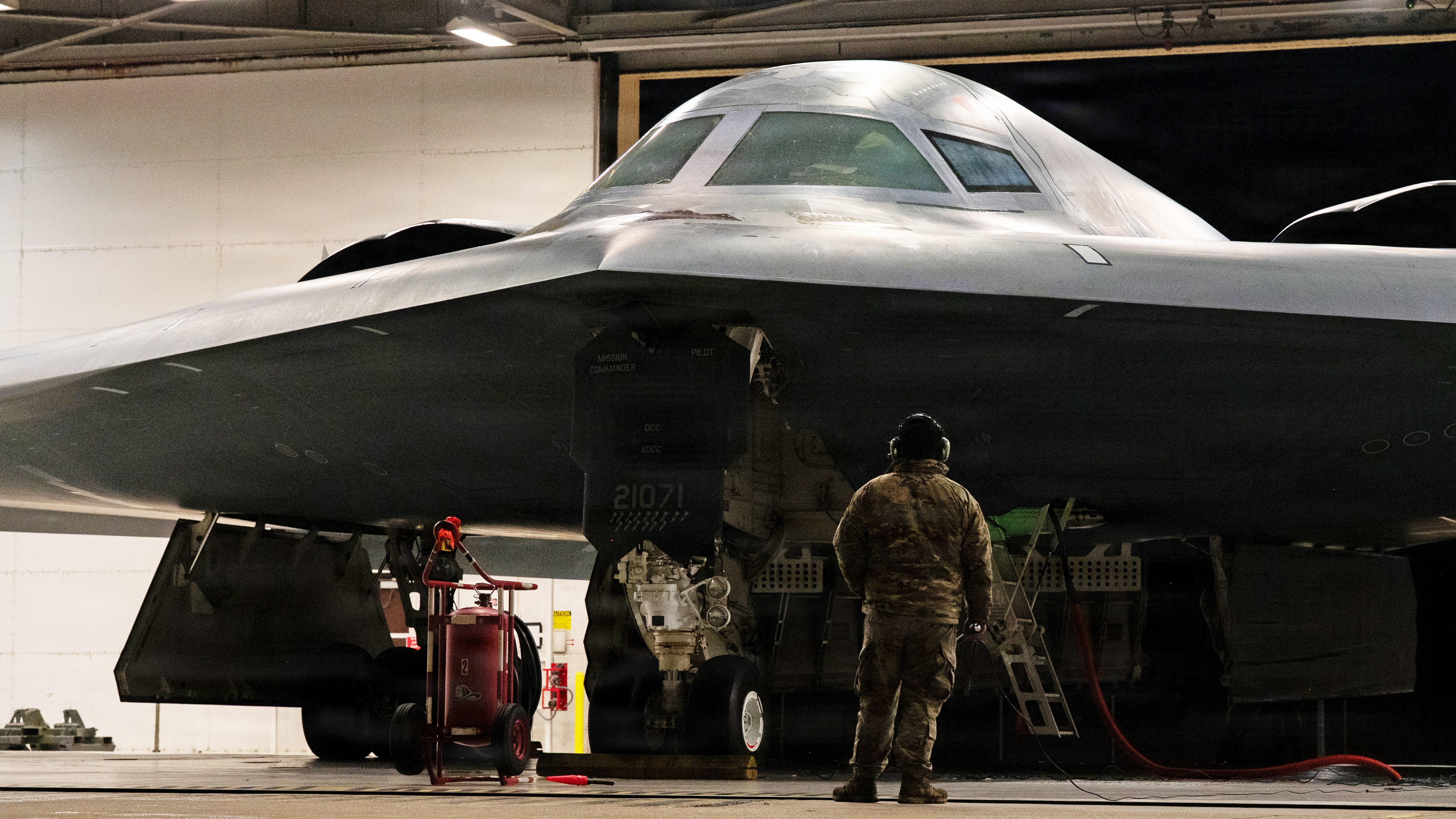
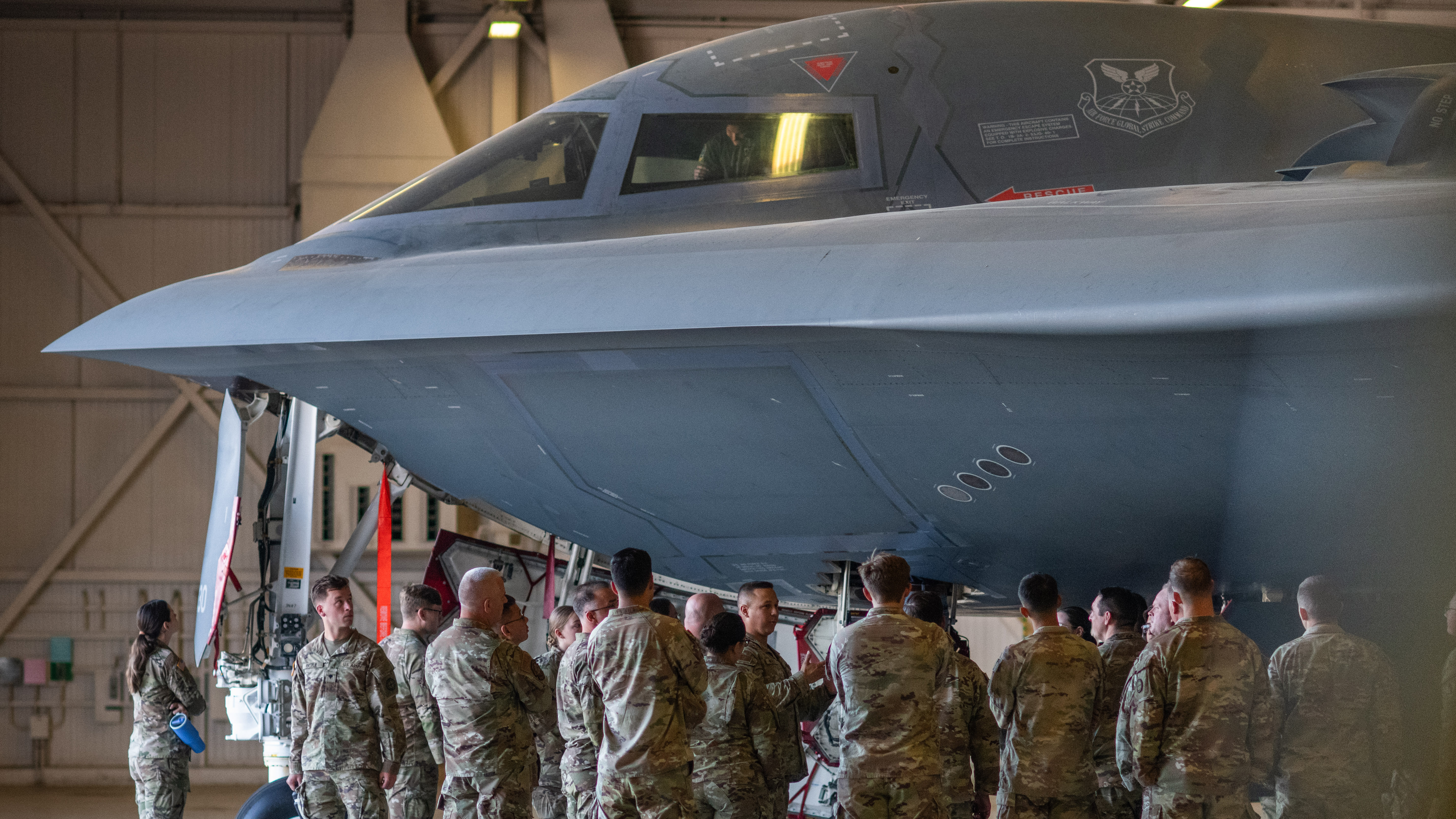
We spotted these white rectangles with black borders that are sealed onto the B-2’s leading edges in images released today by U.S. Central Command (CENTCOM), showing a pair of the stealth bombers about to launch from Whiteman on another global airpower mission to Iran on March 17, 2026. The rectangles mirror themselves near the upper and lower leading edges and appear to use the typical tape method of sealing to keep the jet’s radar cross-section as low as possible.
The white squares are very loosely reminiscent of test marks the B-2 has worn at different times during its first decade of flying, when it was deep in trials. Why anything like that would be present on a combat mission, and on two separate aircraft, is puzzling. The possibility that they augment and mask the B-2’s radar signature is also worth bringing up, but the aircraft has other ways of doing that and why would B-2s fly missions without their stealth benefit, especially all the way from the United States, when other platforms are forward deployed for those applications? Delivering the Massive Ordnance Penetrator in permissive airspace is one potential reason, but again, why go through all the trouble when the aircraft can just hit its targets in standard configurations? The threat of losing signature data to threat systems is always a possibility, but whether it would drive such a modification is unclear.
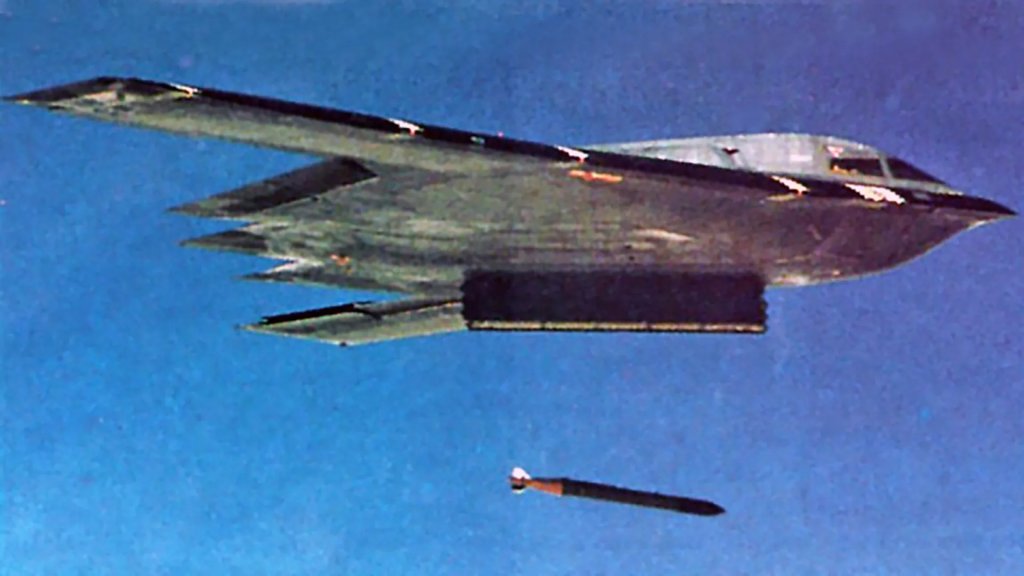
It’s also possible that this is some kind of new sensor or electronic warfare installation, and that these are small apertures for whatever lies beneath. Enhancing the B-2’s ability to sense threats in its combat environment and react in real time to them, including by avoiding, attacking or jamming them, would be very important to its survivability over future battlefields. Also, making the Spirit more capable of communicating with assets even while keeping as stealthy as possible would be key. All these kinds of upgrades are important to making sure the B-2 remains relevant for the rest of its service life.
The byproducts of a new coatings upgrade for the Spirit are another possibility. The B-2’s radar-absorbent material (RAM) coatings are absolutely critical to its success, but are also one of the major drivers of its immense operating costs. Improvements to the coating’s materials and processes of applying them have been constant throughout its life as the USAF seeks to increase its availability rate and lower its cost per flight hour. This has changed the appearance of the B-2 over the decades. New technologies from the B-21 Raider program, for instance, are being applied to the B-2 in order to help address these issues.
So, we just don’t know what these new features are for, or if they will remain a staple on B-2s that receive them going forward.
Also of interest is the aforementioned mission markings on one of the B-2’s nose gear doors. It shows 15 bombs. While we cannot say for certain what exactly this represents, it’s more likely that it denotes combat missions rather than individual weapons dropped. That still seems like way too many long-range strike flights from this operation for this aircraft, especially considering the image was taken a week ago, but it probably includes combat missions from last year, as well.
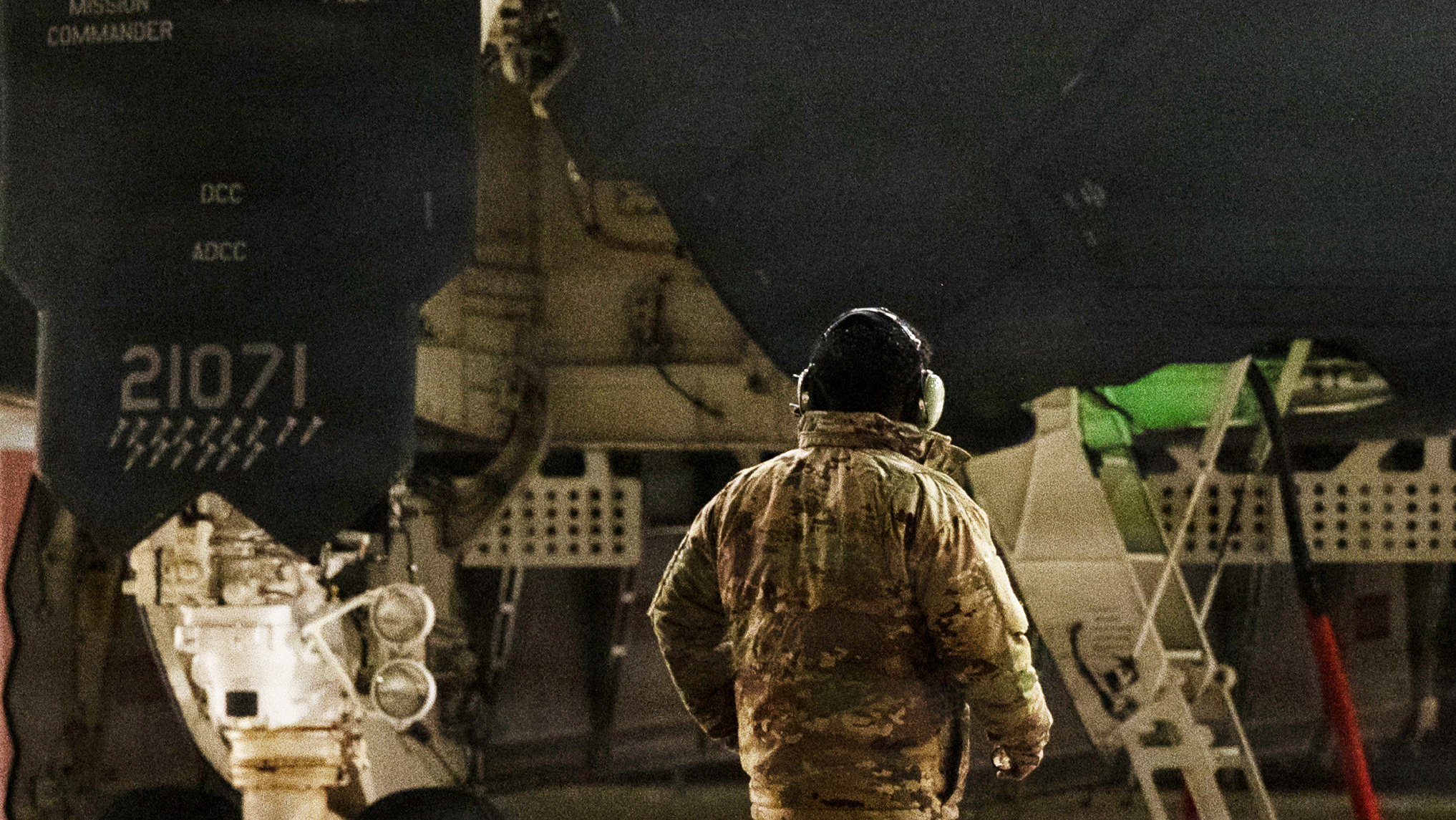
Another possibility some may raise is that it could denote how many GBU-57/B Massive Ordnance Penetrators (MOP) this B-2 has dropped, but again, this number seems like far too many. In fact, it is not even clear if any MOPs have been employed in this campaign, and 15 would equal more than the total dropped by all the B-2s involved during Operation Midnight Hammer last June.
Like so many things Spirit, we just don’t know what we are looking at. The aircraft is an American icon and has now entered the backend of its operational career, with its successor and legacy, the B-21 Raider, waiting in the wings. At the same time, much about the B-2 remains a secret and likely will for years after it finally flies its last operational sortie.
This is also something of an abstract indicator of just how far ahead of their time Northrop’s engineers were when they gave birth to the world’s first stealth bomber, an aircraft that is more prized now as a national asset than anytime in its three-decades-long career.
Contact the author: Tyler@twz.com
Loading comments…
Comments couldn’t be loaded. Please refresh the page.