
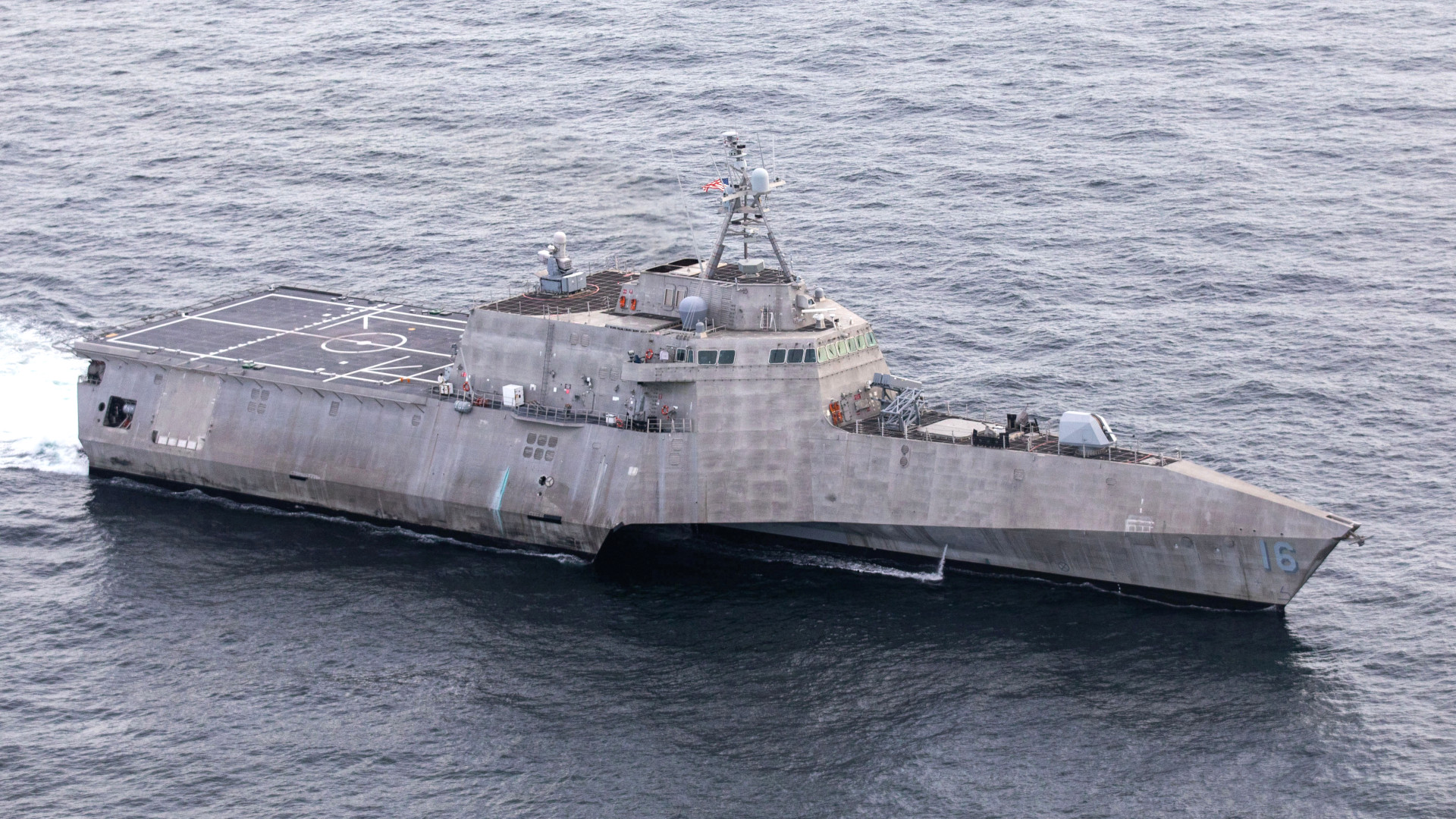
In a follow-up to our recent story about a pair of U.S. Navy Independence class Littoral Combat Ships (LCS) configured for minesweeping appearing in the Pacific, those vessels have now moved further east from Malaysia to Singapore. USS Tulsa and USS Santa Barbara remain thousands of miles away from their primary assigned operating area in the Middle East, where the conflict with Iran grinds on. The highly strategic Strait of Hormuz notably remains closed to normal maritime commerce due to Iranian attacks. Though the regime in Tehran does not yet appear to have employed naval mines to a large degree in the Strait, this remains a major threat that will factor into any plans to reopen the critical waterway.
As to why the Navy sent two of its three mine hunters in the Middle East not just out of the line of fire, but literally across the globe at a time when the U.S. and its allies could be facing the mining of one of the world’s most critical waterways remains a mystery.
U.S. Naval Forces Central Command (NAVCENT) has confirmed to TWZ that USS Tulsa and USS Santa Barbara are in Singapore. Last year, the Navy sent Tulsa and Santa Barbara, as well as a third Independence class LCS, the USS Canberra, to Manama in Bahrain in the Persian Gulf. Canberra‘s current location remains unclear. All three ships were explicitly sent to the Middle East to fill capability and capacity gaps left by the decommissioning of four Avenger class mine-hunters that had been deployed in the region for decades beforehand.
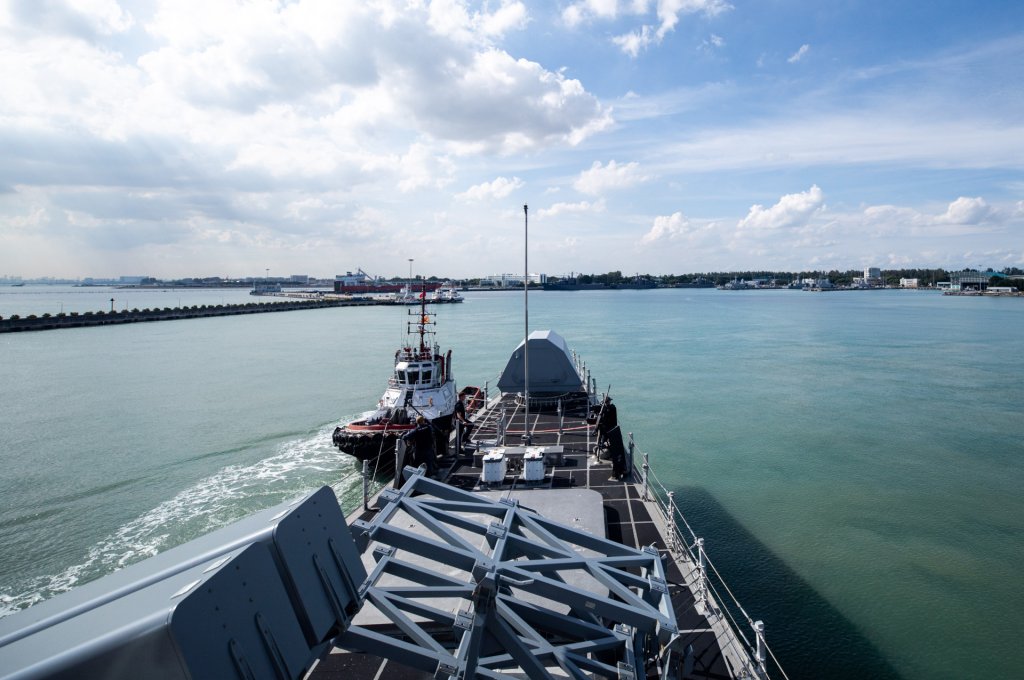
Local spotters had already caught the two LCSs arriving in Singapore earlier today. Authorities in Malaysia had previously confirmed that the LCSs had left the Port of Penang in that country on March 16. Singapore is a city-state that lies roughly 370 miles southeast of Penang.
“Tulsa and Santa Barbara are conducting scheduled maintenance and logistics stop in Singapore. The U.S. and Singapore navies have an excellent and longstanding defense relationship,” a NAVCENT spokesperson told TWZ. “A testament to this relationship is the agreement to allow littoral combat ships to operate primarily from Singapore as a logistics and maintenance hub, as well as supporting regular port visits and logistics stops for other U.S. ships.”
NAVCENT had given TWZ an almost identical statement when asked previously about the arrival of the LCSs in Malaysia:
“Tulsa and Santa Barbara are conducting brief logistical stops in Malaysia. U.S. forces routinely make port calls in Malaysia as part of our operations, reflecting the close and enduring military cooperation between the United States and Malaysia.”
“These stops allow for logistical arrangements such as replenishments,” Malaysian Defence Minister Datuk Seri Mohamed Khaled Nordin separately told the New Strait Times newspaper yesterday. “Any foreign naval vessel must submit a request through its country to the Royal Malaysian Navy, which forwards it to the Foreign Ministry for approval.”
When Tulsa and Santa Barbara left the Middle East, to begin with, is unclear. There is no evidence of any U.S. warships having been in port in Bahrain since at least February 23, five days before joint U.S. and Israeli strikes on Iran began. Manama was almost immediately subjected to retaliatory attacks, making clear that sending American vessels elsewhere was, broadly speaking, a prudent security measure.
How long Tulsa and Santa Barbara will remain in Singapore, and where they might head to next, remains to be seen. As NAVCENT’s statement noted, Singapore’s Changi Naval Base has been a hub for forward-deployed LCSs in the Indo-Pacific region. U.S. naval vessels, in general, regularly make port calls there, including for maintenance.
As an aside, online ship tracking data indicates that the America class amphibious assault ship USS Tripoli and the San Antonio class amphibious warfare ship USS New Orleans are also now sailing through the same general area. The Tripoli Amphibious Ready Group (ARG) is reportedly on its way to the Middle East, loaded with Marines, as you can read more about here.
Regardless of where they might head next, Tulsa and Santa Barbara have now moved even further away from their assigned station in the Middle East. This, in turn, means that two of three mine countermeasures ships that are supposed to be forward-deployed in that region, at least, are currently in an entirely different part of the world. Whether any other LCS or other ships configured for the mine countermeasures mission have been deployed closer to the Middle East, or are now on their way, is unknown. There are only four other Avenger class ships still in Navy service, all of which are in Japan and have been slated for decommissioning in the coming years.
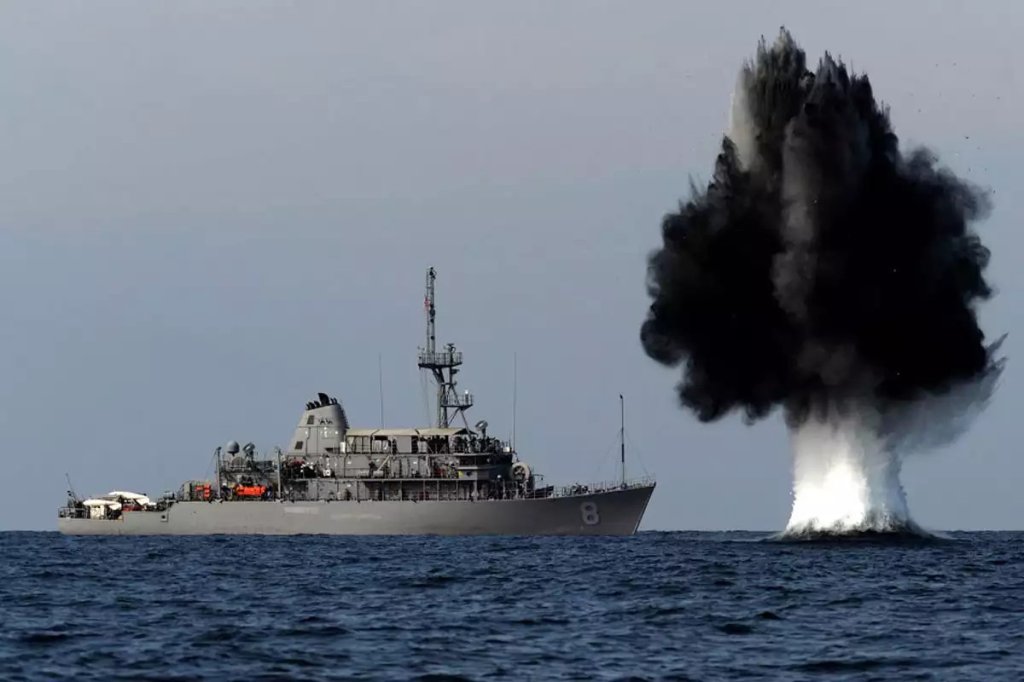
Generally speaking, the Independence class LCS is a far more advanced ship, overall, than the Avenger class mine hunter. When suitably equipped, the LCSs also offer new standoff mine countermeasures capabilities, including uncrewed mine-sweeping drone boats and helicopter-borne systems. It should be noted that the Navy had originally planned for both Independence and Freedom class LCSs to be readily configured and reconfigured for different operational needs using an array of different mission packages, or ‘modules.’ The service now deploys LCSs in static configurations.
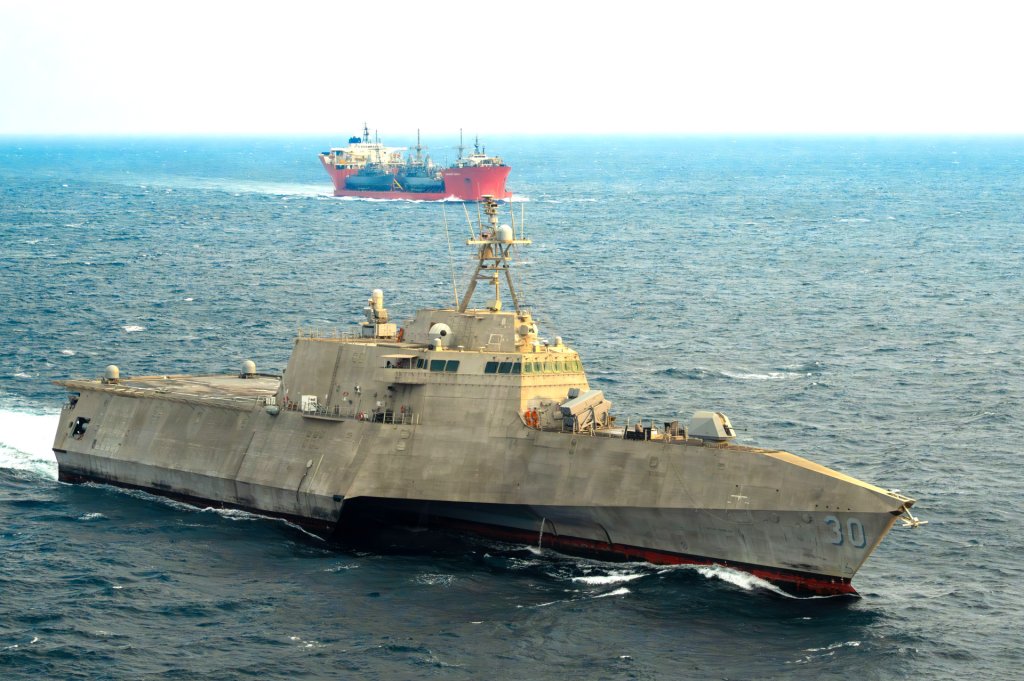
Still, questions continue to be raised whether LCSs fitted out for the mine countermeasures role are adequate replacements for ships purpose-built for this mission set, as you can read about in much more detail in our past reporting. Mine-clearing operations are complex and slow-going affairs that carry significant risks even in optimal conditions in benign environments.
As noted, Iranian naval mines have yet to make a major appearance in the current conflict. U.S. officials have largely downplayed the mine threat, especially when compared to the active ongoing attacks Iran has been launching on commercial ships in and around the Strait of Hormuz using drones, missiles, and uncrewed boats.
That being said, “we defend all these countries and then, ‘do you have any minesweepers?’ And they say, ‘Well, would it be possible for us not to get involved?'” U.S. President Donald Trump said earlier this week in response to a question from a reporter about the current conflict with Iran. This suggested that American officials had at least asked allies and partners about the possibility of them providing additional naval mine countermeasures capabilities to the region. If so, this is somewhat puzzling, coming as the Navy had sent the two LCSs to another hemisphere.
Trump had previously appealed publicly for assistance, in general, in reopening the Strait of Hormuz, but had been soundly rejected by a number of countries. The President then said yesterday that any help was no longer required.
“I wonder what would happen if we ‘finished off’ what’s left of the Iranian Terror State, and let the Countries that use it, we don’t, be responsible for the so called ‘Straight?’ [sic],” Trump then wrote just earlier today in a post on his Truth Social site. “That would get some of our non-responsive ‘Allies’ in gear, and fast!!!”
In an interview last Thursday with CNBC, U.S. Energy Secretary Chris Wright had said the prospect of U.S. Navy warships escorting commercial vessels through the Strait of Hormuz was still weeks away, at best. TWZ previously explored how risky such an operation would be, given Iran’s ability to turn the waterway into a super weapons engagement zone where mines would be just one of many concerns.
The fact that USS Tulsa and USS Santa Barbara have moved even further from the Middle East only underscores questions about what the U.S. government’s line of thinking might be now about how to get maritime commerce flowing again in and out of the Persian Gulf.
Contact the author: joe@twz.com
Loading comments…
Comments couldn’t be loaded. Please refresh the page.