
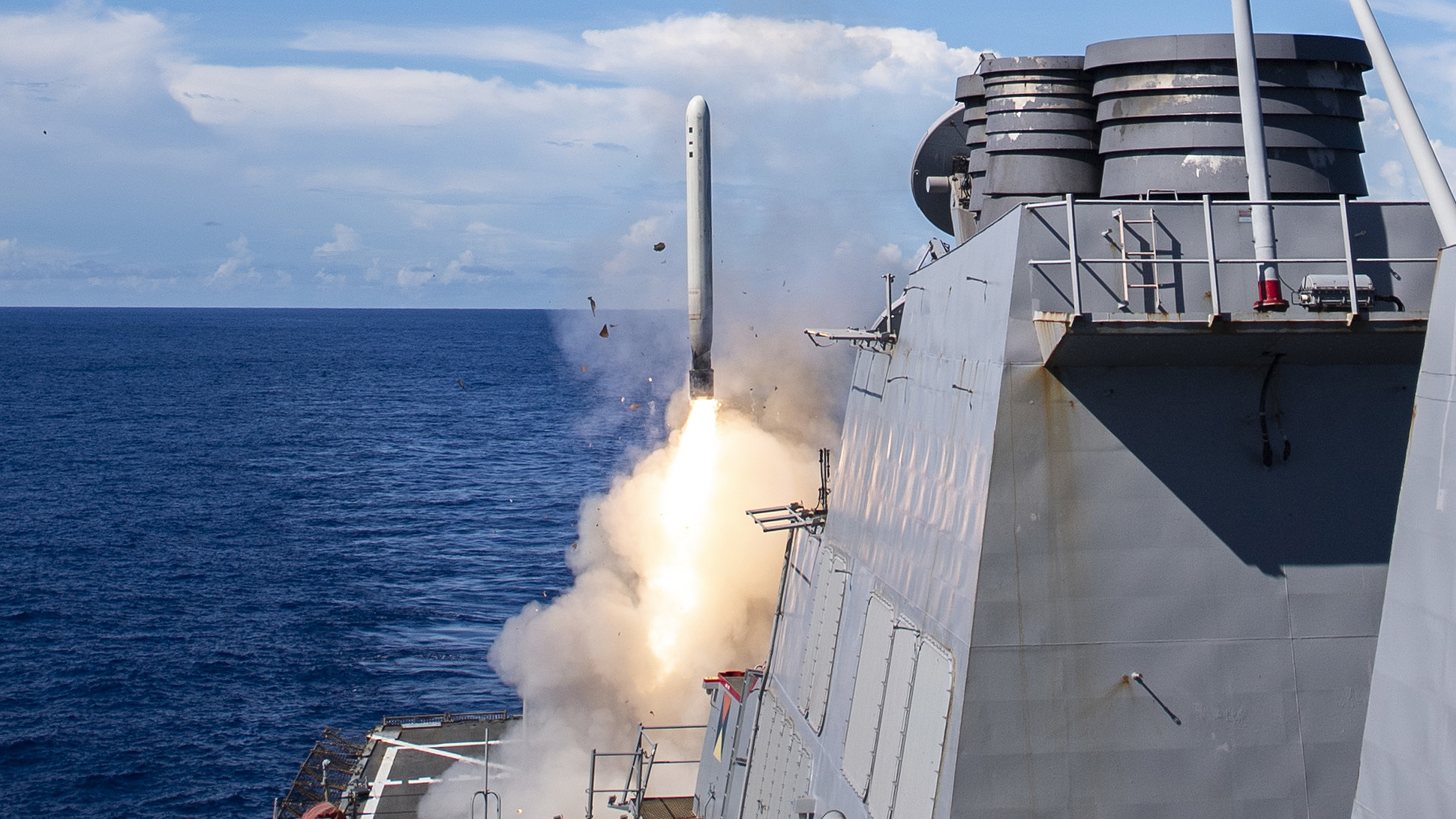
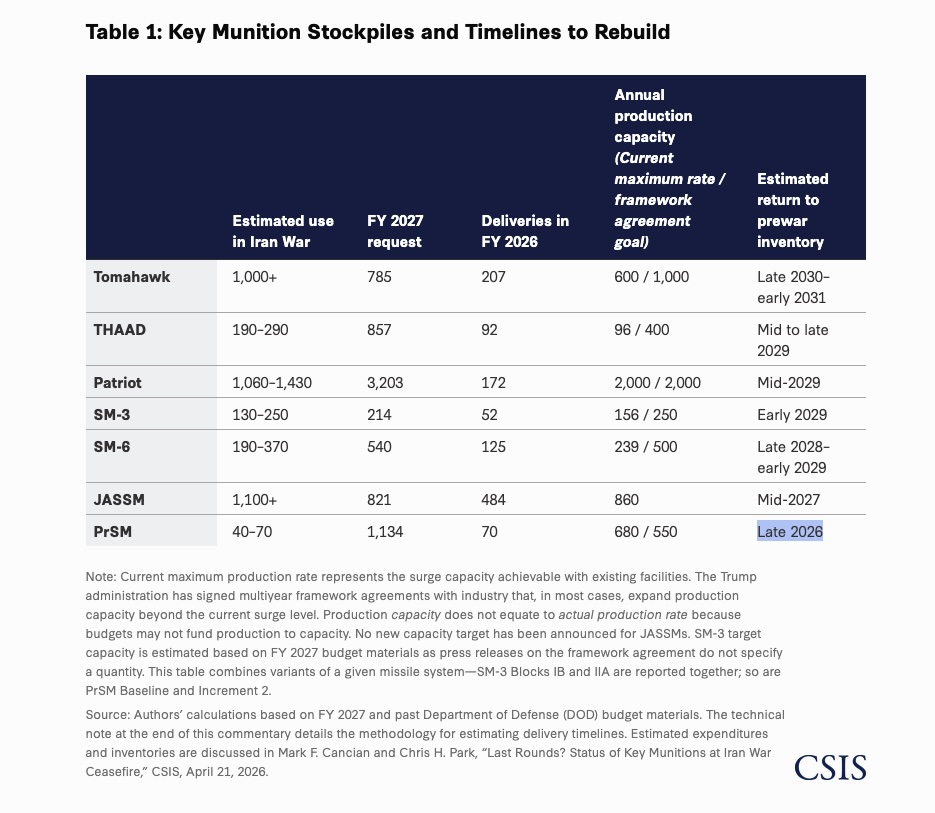
During the 39-day war with Iran, the U.S. used so many key offensive and defensive weapons that it will take three or more years to rebuild some of these stocks to pre-war levels, according to a new report from the Center for Strategic and International Studies (CSIS). The report, compiled by Mark F. Cancian and Chris H. Park, highlights concerns we raised long before and during Operation Epic Fury about the rapid expenditure of critical munitions and how that could affect a potential future fight against China. U.S. military leaders have suggested that the People’s Liberation Army (PLA) could be in a position where it would feel confident in launching an invasion of Taiwan by 2027.
The warning light on America’s magazine depth was blinking red long before Epic Fury. The stockpiles, especially of Standard Missile-3s (SM-3) and Terminal High Altitude Area Defense (THAAD) interceptors, were degraded by more than a year of combat in the Red Sea region with the Iranian-backed Houthi rebels and several efforts to defend Israel. U.S. support for Ukraine, meanwhile, drained off supplies of Patriot air defense interceptors. We will address these issues in more detail later in this story. The weapon expenditure figures in the CSIS report only address Epic Fury, not previous U.S. engagements in the Middle East.
The most drastic setback to U.S. inventories involved the use of Tomahawk Land Attack Cruise Missiles (TLAMs) and THAAD and Patriot interceptors, according to CSIS. The think tank derived its expenditure figures from an internal analysis, which TWZ cannot independently verify.
Tomahawks
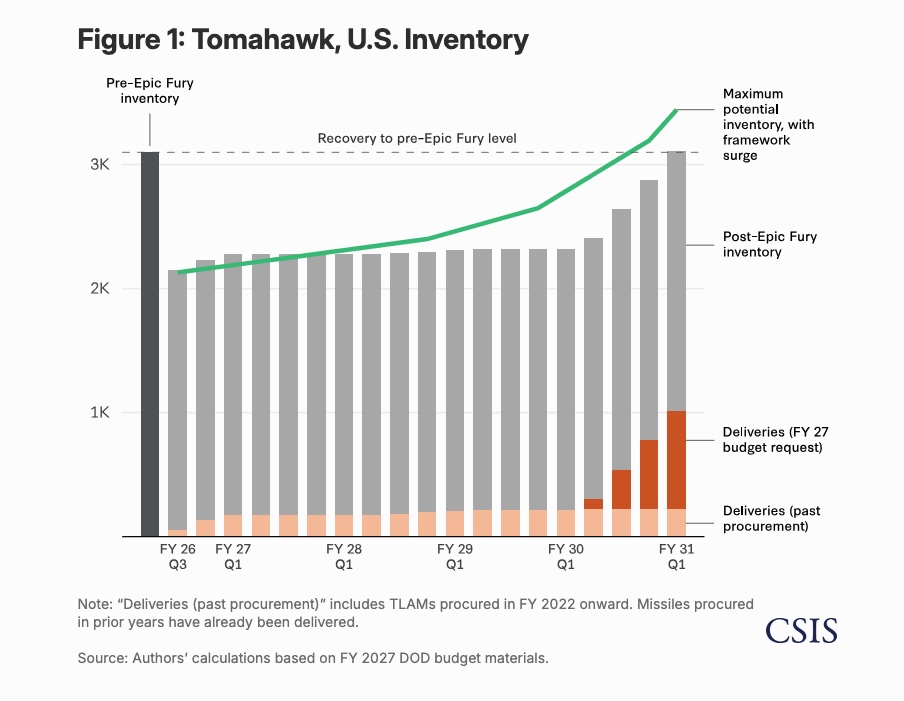
The exact amount of Tomahawks on hand is secret, however, researchers at CSIS calculated that prior to the Feb. 28 launch of Epic Fury, the U.S. had about 3,100 TLAMs. CSIS said it based its estimates on Fiscal Year 2027 Pentagon budget documents.
CSIS estimated that U.S. forces lobbed more than 1,000 TLAMs at Iran during the conflict, or about a third of the entire inventory as assessed by the think tank.
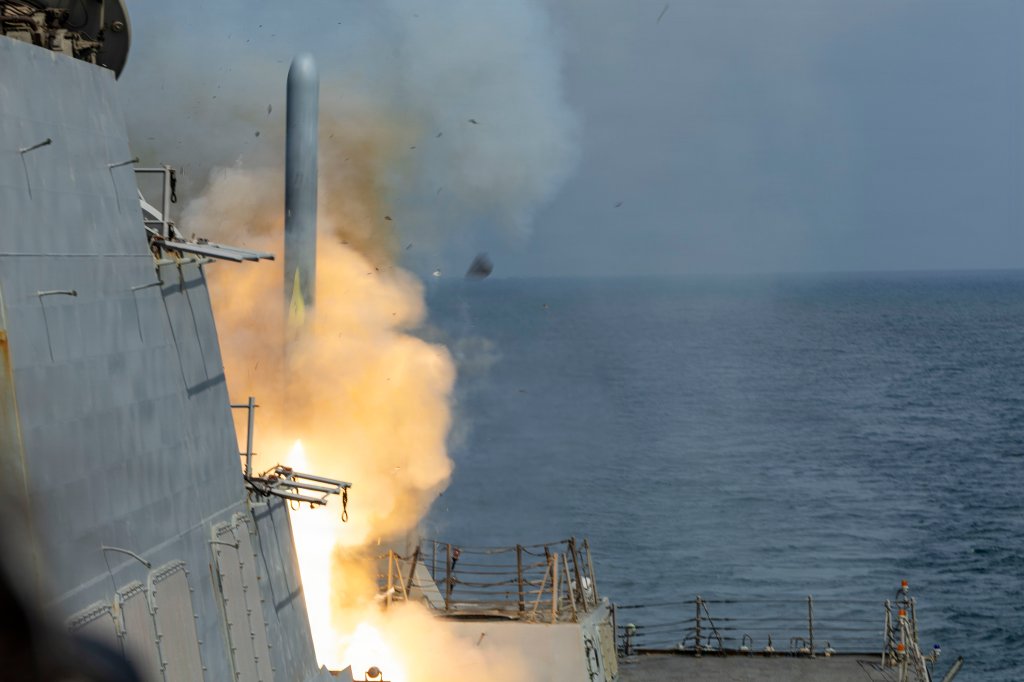
Making up that supply will take some time. Tomahawk procurement “averaged 86 missiles in the past 10 fiscal years (FY 15–FY 26), with most orders coming from the Navy,” CSIS noted.
While Raytheon, which makes the missiles, has a goal of increasing capacity to produce more than 1,000 Tomahawks per year, “the recent annual production rate is less than 200 because of small past orders,” according to the think tank. “Existing orders will begin replacing the 1,000+ Tomahawks expended during the Iran War, but will not be enough to fully restore inventories to pre-war levels.”
Another factor to consider are foreign military sales, with nearly 800 due to Japan, Australia and the Netherlands.
THAAD
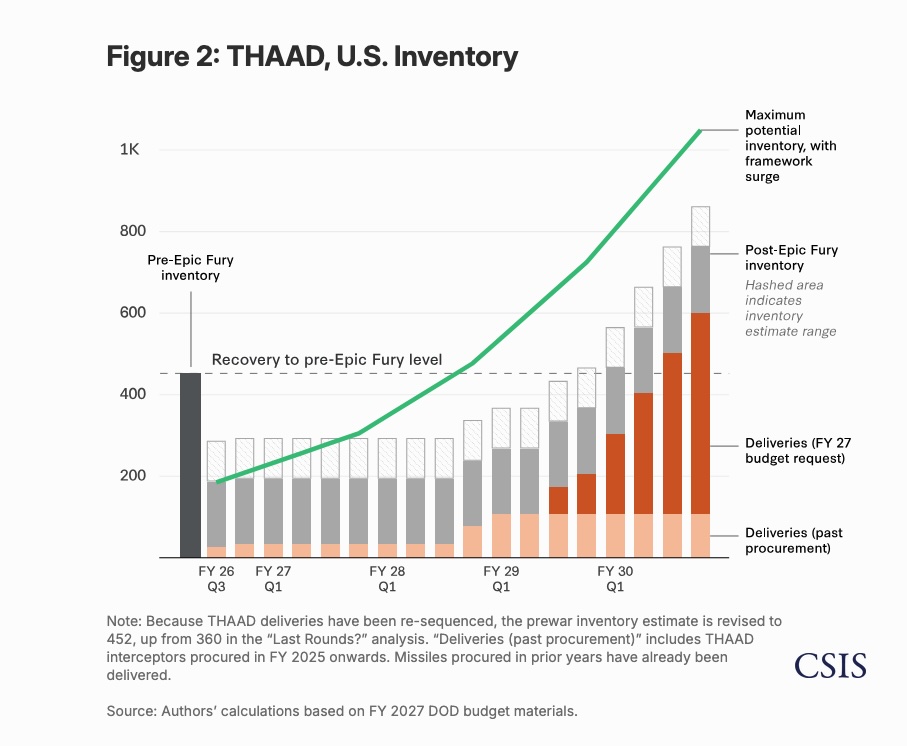
CSIS estimated that before the war began, the U.S. had about 400 THAAD interceptors and used between 190 and 290 during the war to protect American and allied interests. According to The Washington Post, about 200 were deployed defending Israel in particular.
The Army “has requested 857 THAAD interceptors in FY 2027,” CSIS explained. “Their deliveries, projected to start in mid-2029, will complete the replacement of Iran War usage by the end of calendar year 2029.”
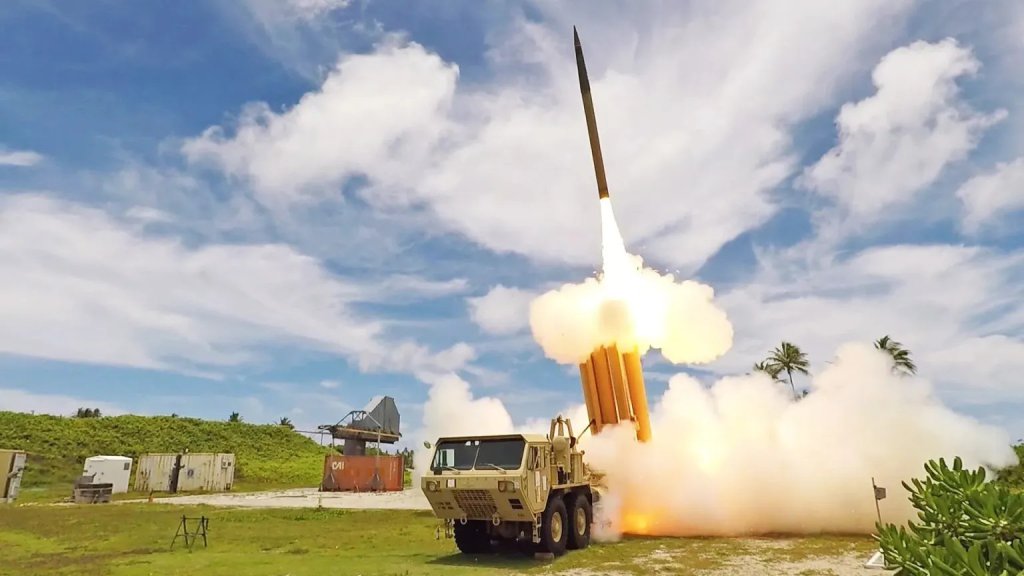
The delivery timelines in the budget documents “imply that THAAD production is at the current surge rate of 96 interceptors a year,” the report states. “With additional facilities and tooling, Lockheed Martin plans to expand production capacity to 400 a year, a needed increase to fulfill large U.S. procurement orders and those of allies.”
The strain on the reservoir of THAAD interceptors is something we brought up last year during the 12-Day-War between Israel and Iran, when reports suggested that the U.S. Army fired off about 150 to protect Israel.
PATRIOT
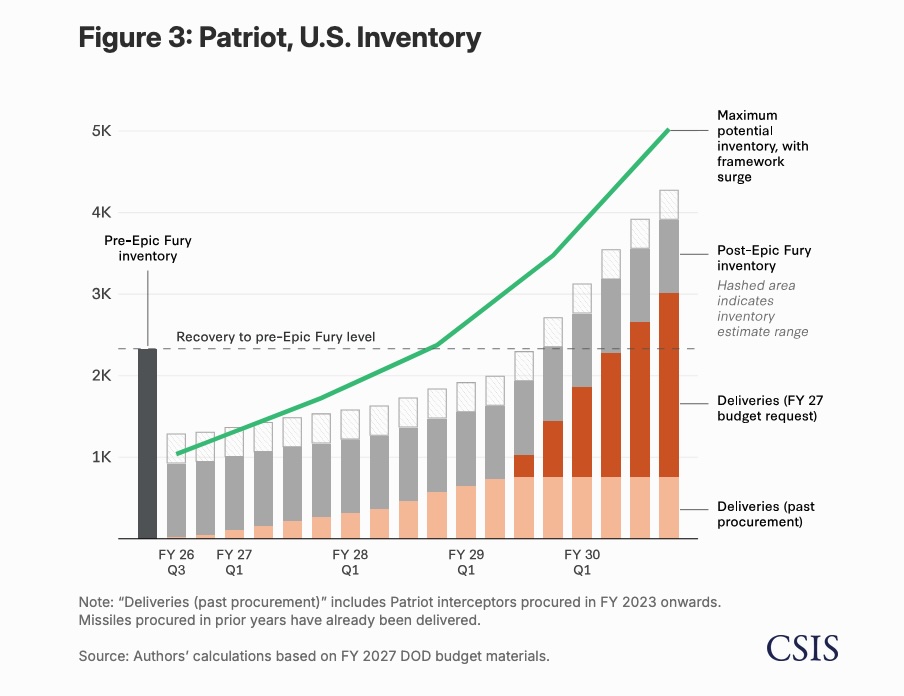
At the start of the war, there were about 2,500 Patriot interceptors in the U.S. inventory, according to CSIS, though its accompanying chart does not specify which variant. During the course of the conflict, between 1,060 and 1,430 Patriots were fired. We don’t know what that tally includes, but we do know that PAC-2 and PAC-3 series interceptors have been employed in the latest conflict with Iran.
Current production PAC-3 MSE “is around the baseline rate of 650 interceptors per year, with half the deliveries going to the United States and the rest to allies and partners,” CSIS postulated.
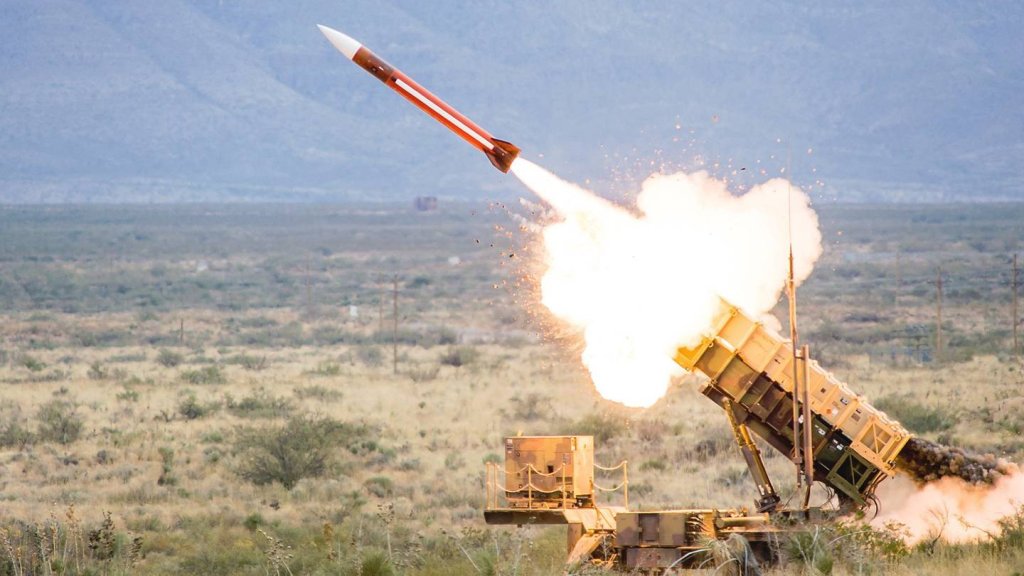
Under a contract with the Pentagon inked in January, Lockheed is committed to boosting Patriot annual production to 2,000.
“Because U.S. procurement in the last decade has averaged 225 missiles per year, deliveries from prior years will not be enough to fully replace expenditures,” CSIS cautioned. “For that, the United States will need to wait for the 3,203 Patriot missiles requested in the Army’s FY 2027 budget. These are projected to start delivery in May 2029.”
As we have previously noted, between U.S. usage and commitments to Ukraine and nearly 20 other nations, there have long been concerns about the supply of Patriot interceptors. Still, the Pentagon has maintained that it has sufficient supplies.
SM-3 and SM-6
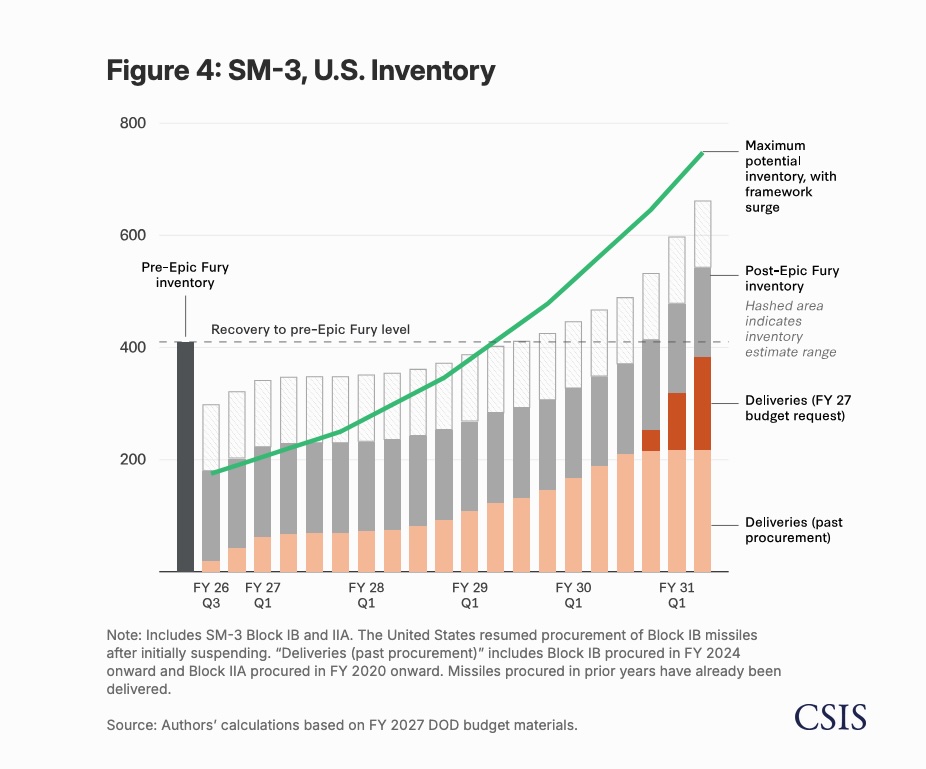
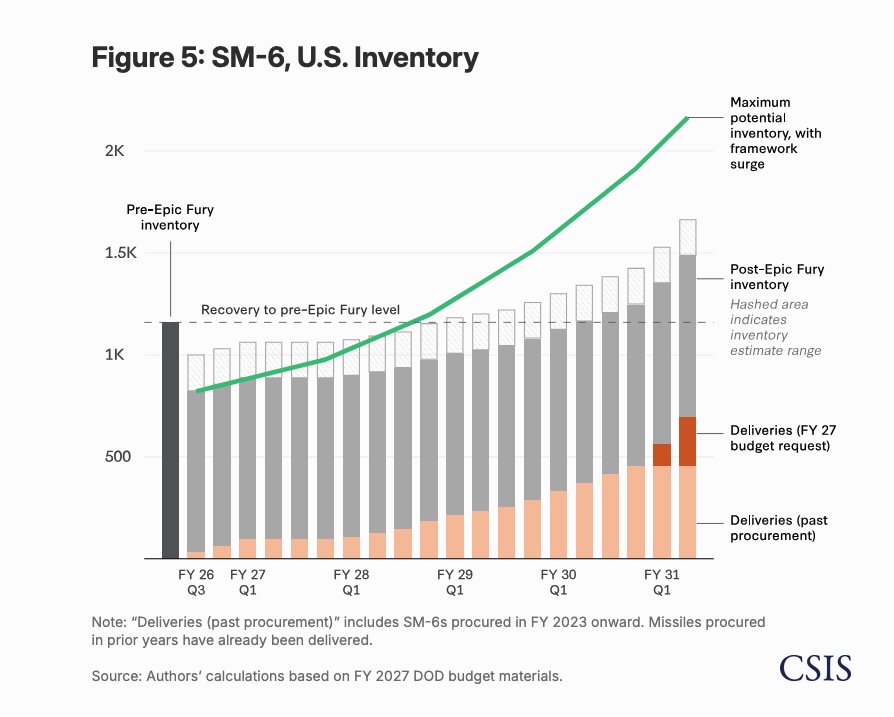
Before Epic Fury, the U.S. Navy had about 400 SM-3s, capable of intercepting ballistic missiles in space, and used upwards of about 250, according to CSIS. There were about 1,250 Standard Missile-6s (SM-6), which can intercept air-breathing and ballistic missile targets, as well as attack targets on land and at sea, in the arsenal and between 190 and 370 were launched.
These munitions will take about two years to replenish to pre-war levels, CSIS estimated.
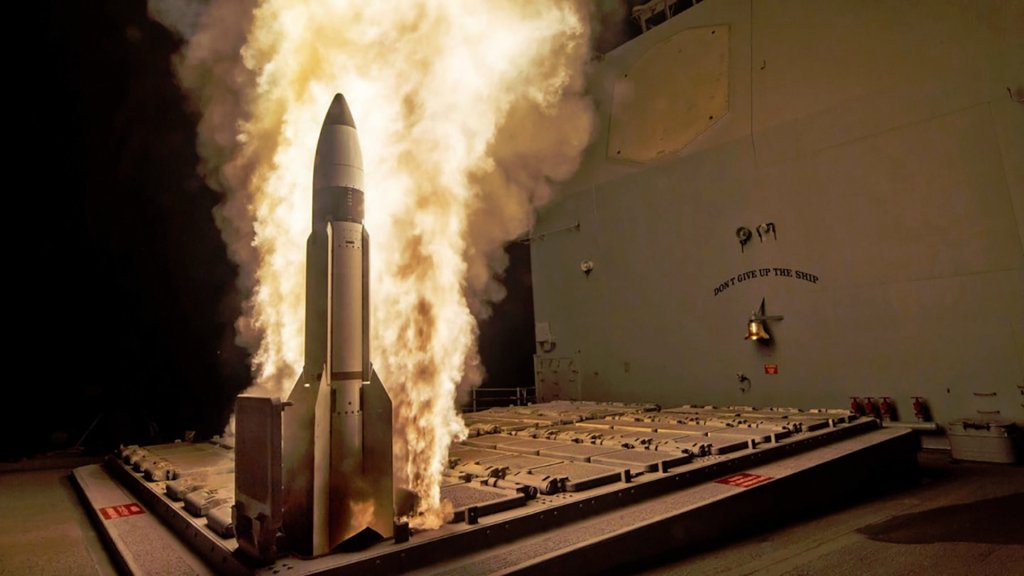
“Both missiles have lengthy production lead times,” the think tank explained. “The Missile Defense Agency and the Navy requested large quantities in the FY 2027 budget: 78 SM-3 Block IBs, 136 SM-3 Block IIAs, and 540 SM-6s. These orders will take between 36 and 39 months to begin deliveries once Congress provides appropriations.”
“Because of the small size of past orders, inventories will not return to pre-war levels until early 2029 despite the relatively low usage in the campaign,” CSIS pointed out.
Our prior reporting pointed out that concern over the magazine depth of these missiles, especially the SM-3, became acute after that munition was used for the first time during the massive April 2024 Iranian missile and drone barrage against Israel. The SM-3s proved so successful that the Navy’s top official in May 2024 called for more to be made after production had been curtailed on some variants. At the time, the Pentagon’s Missile Defense Agency (MDA) wanted to end procurement of SM-3 Block IB variants by the end of 2024 and limit its buy of the follow-on Block IIAs to just 12 per year through Fiscal Year 2029.
The fight against the Houthi rebels of Yemen from October 2023 to early 2025 exacerbated these magazine depth issues for both of these Navy missiles. The aforementioned 12-Day War saw another 80 SM-6s used to defend Israel, further depleting supplies.
JASSMs
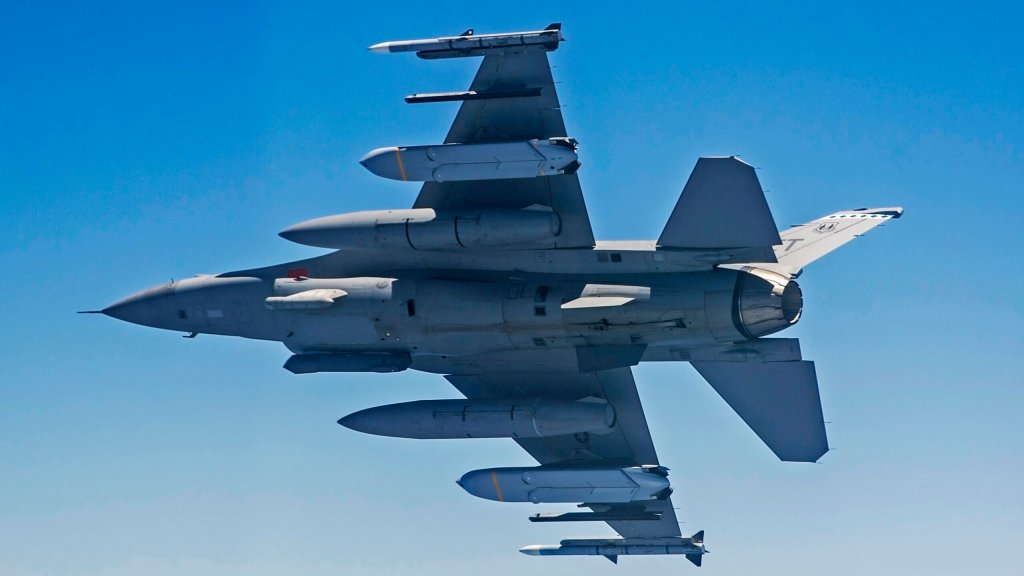
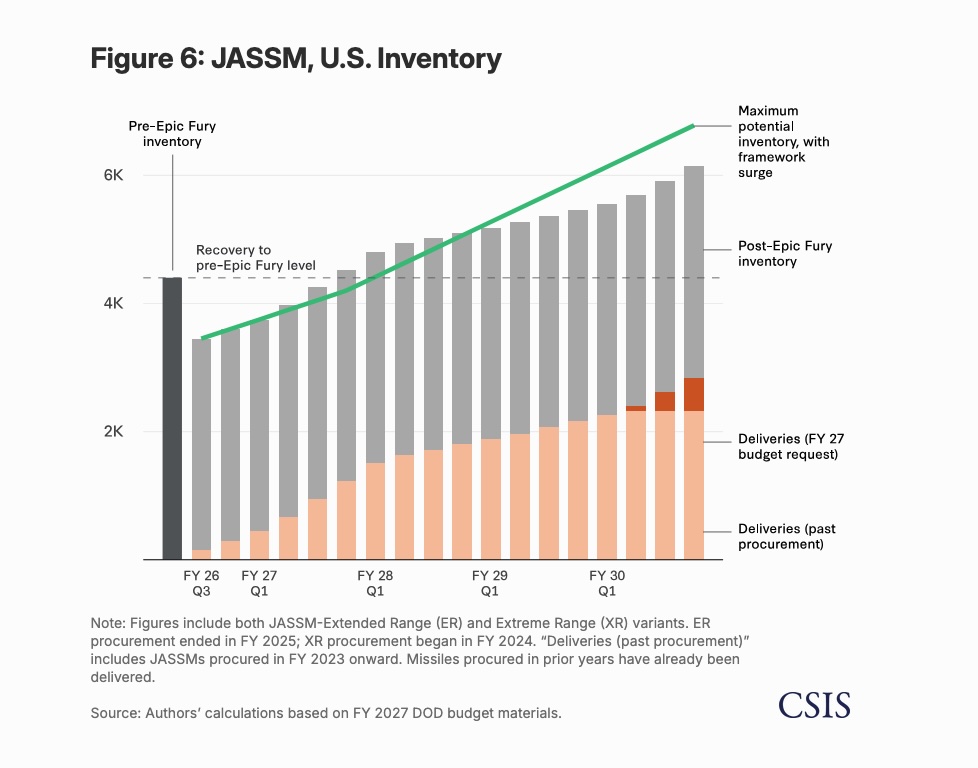
There were more than an estimated 4,000 stealthy air-launched Joint Air-to-Surface Standoff Missiles (JASSM) in the U.S. arsenal before the war and U.S. aircraft fired off more than 1,100 of them. However, though heavily used, there will be “large deliveries from recent procurements.”
“U.S. forces began this campaign with a sizable JASSM inventory,” according to CSIS. “The Air Force has procured large quantities of these long-range cruise missiles since the 2000s—on average, nearly 500 a year for the past decade. To deliver these orders, current production appears to be already at the surge rate unlike the other munitions discussed in this article. Further, the missile was not used in operations until 2018. Thus, while over 1,100 JASSMs were expended, U.S. inventories will recover fairly quickly as past orders are delivered.”
PrSMs
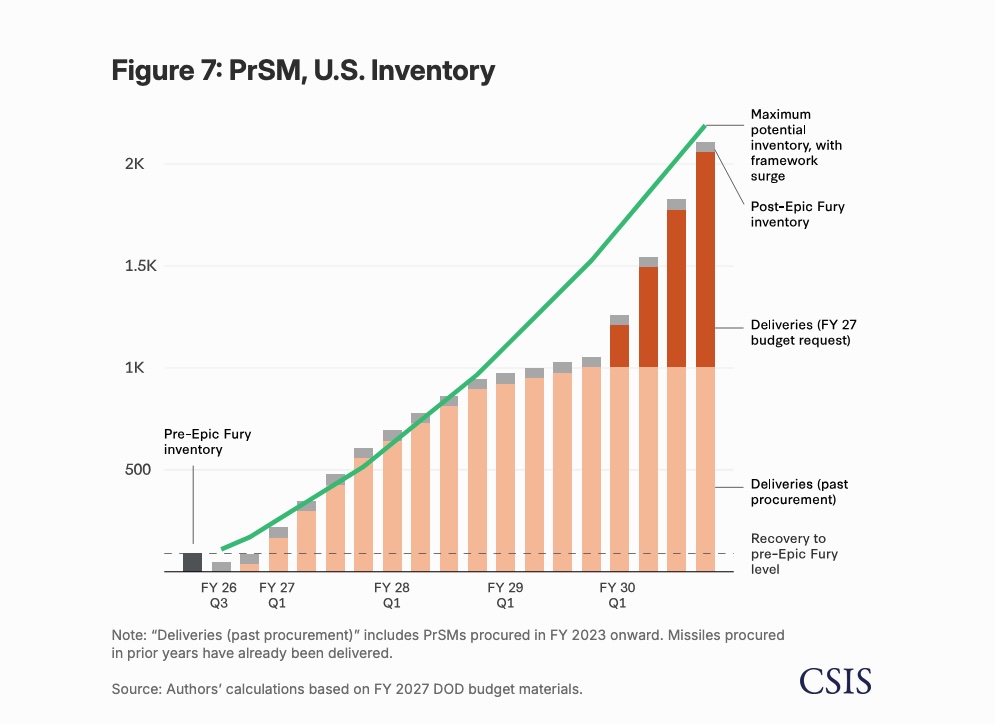
The ground-launched Precision Strike Missile (PrSM) is the longer-ranged tactical ballistic missile successor to the Army Tactical Missile System (ATACMS). It was used for the first time during Epic Fury.
The inventory of these missiles, however, “is limited as it is a relatively new system with deliveries beginning in 2023,” CSIS highlighted, estimating that there were fewer than 100 prior to the war. During the conflict, between 40 and 70 were used, the think tank posited.
“Lockheed Martin has been scaling up PrSM production, setting an annual target of 400 units last year and announcing further increases under the framework agreement with the Trump administration.
Asked about the CSIS report, the Pentagon did not express concerns.
“America’s military is the most powerful in the world and has everything it needs to execute at the time and place of the president’s choosing,” Pentagon spokesman Sean Parnell said in a statement to TWZ. “We have executed multiple successful operations across combatant commands while ensuring the U.S. military possesses a deep arsenal of capabilities to protect our people and our interests.”
Despite Parnell’s statement, the expenditure of weapons in Epic Fury is having a cascading effect on supplies. Last week, for instance, Acting Navy Secretary Hung Cao testified before the Senate that the U.S. is pausing arms sales to Taiwan because of the war with Iran.
“Right now we’re doing a pause in order to make sure we have the munitions we need for Epic Fury,” Cao told Sen. Mitch McConnell.
America’s reputation as an arms provider had already taken a hit when it cut off supplies of Patriots and other weapons to Ukraine last year over concerns about the U.S. stores. Deferred or slowed deliveries are common among other allied customers as well now.
The president’s $1.5 trillion FY 2027 defense budget “reflects these magazine depth concerns,” CSIS suggested. “A war supplemental for additional munitions funds is expected as the DOD seeks to replace what was expended in Operation Epic Fury and then build inventories above the pre-war levels. The administration has also signed a series of framework agreements with industry to expand munitions production capacity, which could expedite future deliveries.”
Tensions around the world bring into question whether even expedited timelines for production of these weapons is adequate to meet near-term future needs. As we mentioned earlier in this story, there are concerns that China could move on Taiwan over the next few years, a conflict that could draw in the U.S. There are other flashpoints in the Pacific that could touch off a China fight.
Beyond that, there are always concerns about threats from North Korea, which continues to build up its military. Russia, meanwhile, is fighting a war in Ukraine that Europe is worried could spill across the continent. Any of these potentials, plus those we don’t even know about yet, would further draw down U.S. supplies should it get into a shooting war.
Meanwhile, there is a non-zero chance that even more of these weapons could be expended should the U.S. and Iran resume hostilities. Just last night, a U.S. official told us that CENTCOM swatted down four Iranian drones and fired on a ground control station in Bandar Abbas about to launch a fifth.
CENTCOM said Kuwaiti forces intercepted a ballistic missile Iran launched in response.
With the shaky ceasefire marred by these intermittent kinetic exchanges and the peace negotiations sputtering on, a new drain on U.S. weapons stockpiles remains a real possibility.
Contact the author: howard@twz.com
Loading comments…
Comments couldn’t be loaded. Please refresh the page.