
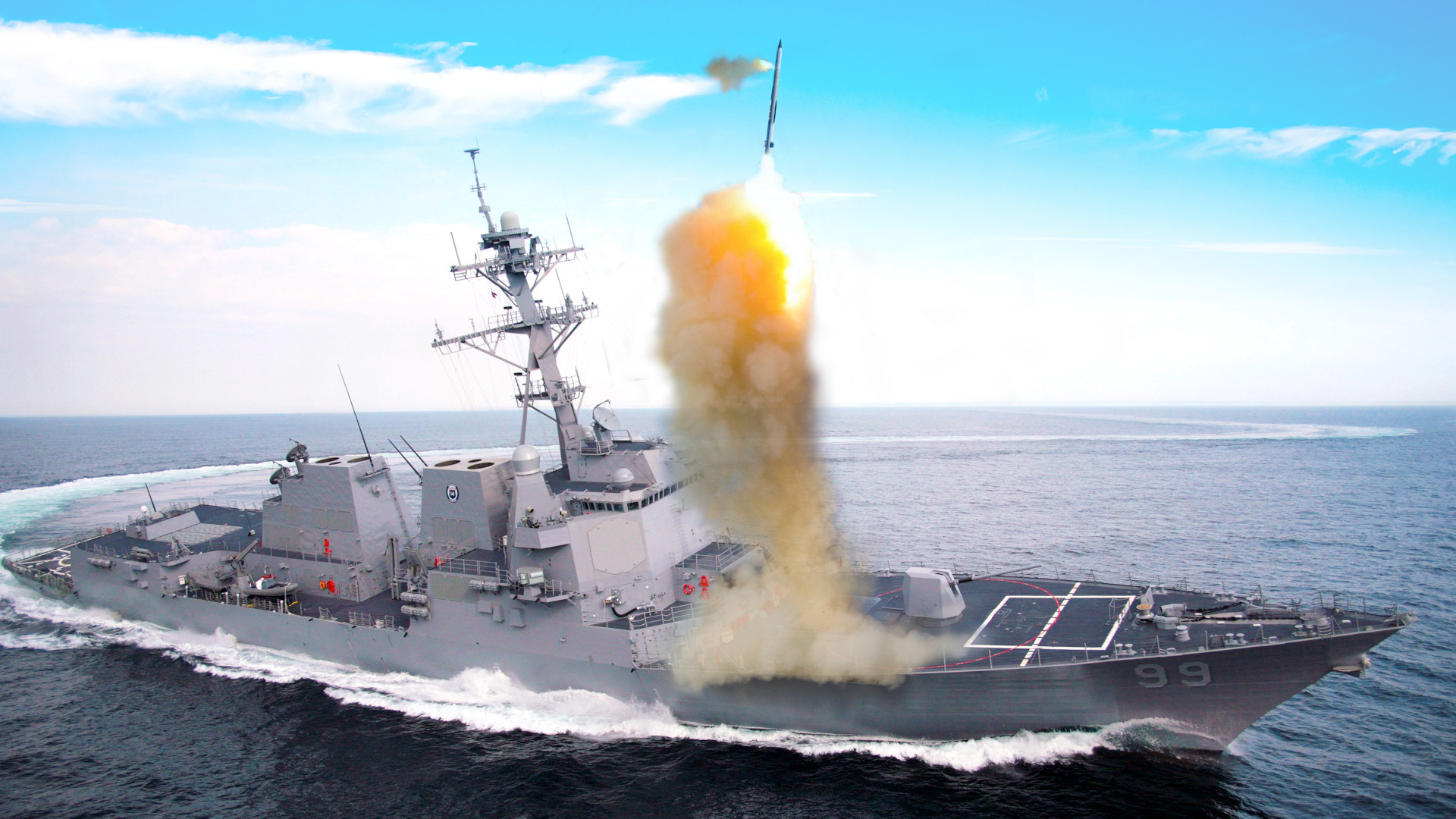
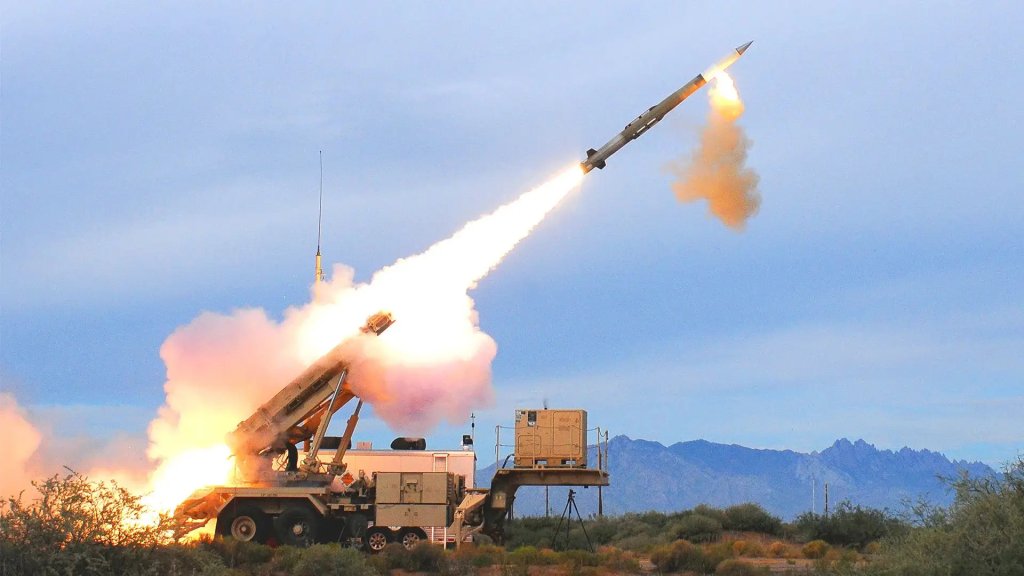
The U.S. Navy has handed Lockheed Martin a formal contract to integrate the Patriot PAC-3 Missile Segment Enhancement (MSE) surface-to-air missile with the Aegis Combat System. The Navy’s main Aegis-equipped ships today are its Arleigh Burke class destroyers. The service is also seeking just over $1.73 billion to order its first-ever tranche of PAC-3 MSEs, 405 in total, as part of its proposed budget for the 2027 Fiscal Year.
The idea of combining PAC-3 MSE and Aegis, as well as the Mk 41 Vertical Launch System (VLS), first emerged in 2023. Since then, TWZ has highlighted how this offers the Navy a valuable alternative source of anti-air interceptors, and maybe even eventually a replacement for the venerable Standard Missile-2 (SM-2).
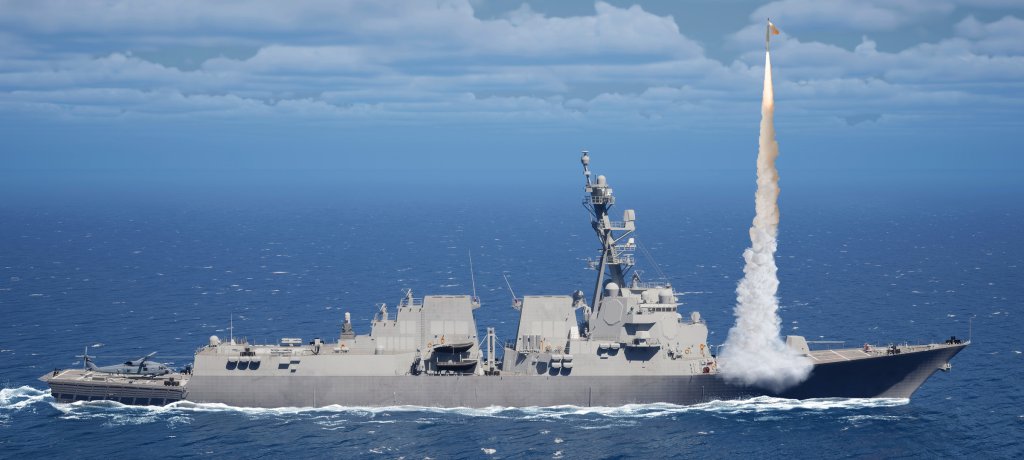
Lockheed Martin announced it had received the PAC-3 MSE/Aegis integration contract, said to be a multi-million dollar deal, earlier today, around the Navy League’s annual Sea Air Space exposition, at which TWZ is in attendance. The Navy has separately shared more details about its PAC-3 MSE acquisition plans as part of the full rollout of the Pentagon’s budget request for Fiscal Year 2027, which also occurred today.
Per the Navy’s Fiscal Year 2027 budget request, the service sees PAC-3 MSE integration with Aegis as providing an additional means of intercepting “a wide range of threats, including tactical ballistic missiles, air-breathing threats, cruise missiles, and unmanned aerial systems.” As mentioned, Arleigh Burke class destroyers make up the vast majority of American warships equipped with the Aegis Combat System today. There are also a steadily shrinking number of Ticonderoga class cruisers with this combat system.
PAC-3 MSE has been in full-scale production since 2018. Pairing it with Aegis “has been in the works, I probably think, close to 10 years,” Chandra Marshall, Vice President and General Manager of the Multi-Domain Combat Solutions business unit within Lockheed Martin’s Rotary and Mission Systems division, told our Jamie Hunter on the floor of Sea Air Space. She added that the goal now is for the Navy to achieve initial operational capability (IOC) with this combination in approximately 18 months, or by the end of 2027 if the clock starts now.
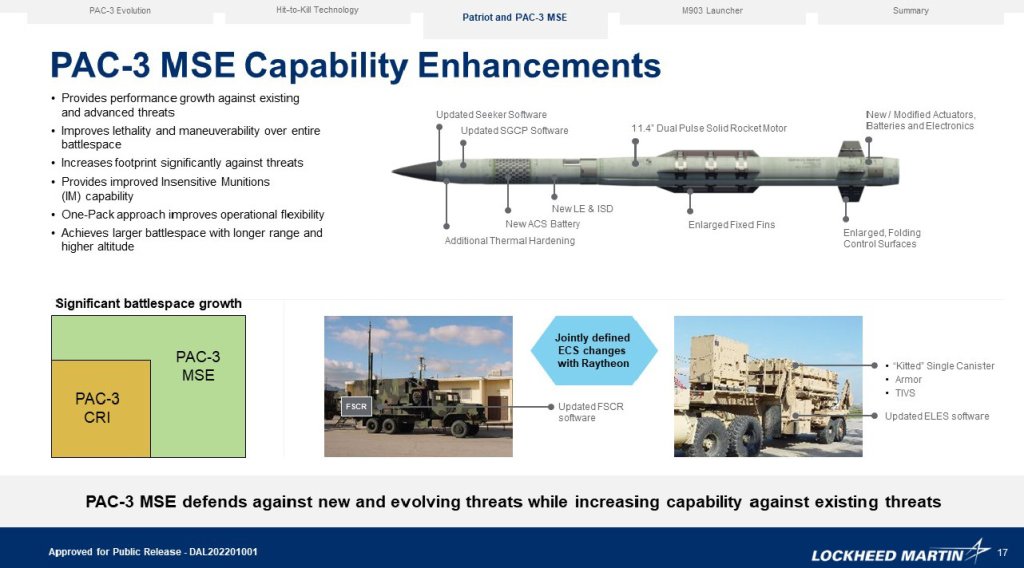
“So, there’s two pieces of it. So the PAC-3 missile, there’s a small update to it to be able to communicate with S-band radar. So, currently it communicates with X-band [radars]. So, now with this update, it will be able to communicate both with S and X-band,” Marshall explained. “And then we have to integrate PAC-3 as a missile type with the Aegis Combat System.”
“We have a very open architecture [with Aegis], so the way that we componentize everything, we feel like it’s a very short putt for the Aegis integration of the PAC-3 missile,” she added. “So, it’ll just be another missile in the inventory for the Navy to be able to diversify based on the threat.”
You can read more about the Aegis Combat System and how it has evolved to adopt a modular, open architecture approach, specifically to make it easier to add new capabilities and functionality, in this previous TWZ feature. Lockheed Martin has already demonstrated the ability of a modular and scalable version of the system, called the Virtualized Aegis Weapon System, to fire a PAC-3 MSE from a containerized Mk 41-based launcher on land.
No changes to the Mk 41 VLS – another Lockheed Martin product – are planned or required as part of the PAC-3 MSE integration. Work has been ongoing on adapting the interceptors into launch canisters, allowing them to slot right into existing Mk 41 cells. At just over 17 feet long, PAC-3 MSE should fit in shorter so-called tactical length versions of the Mk 41, as well as one with longer strike-length cells.
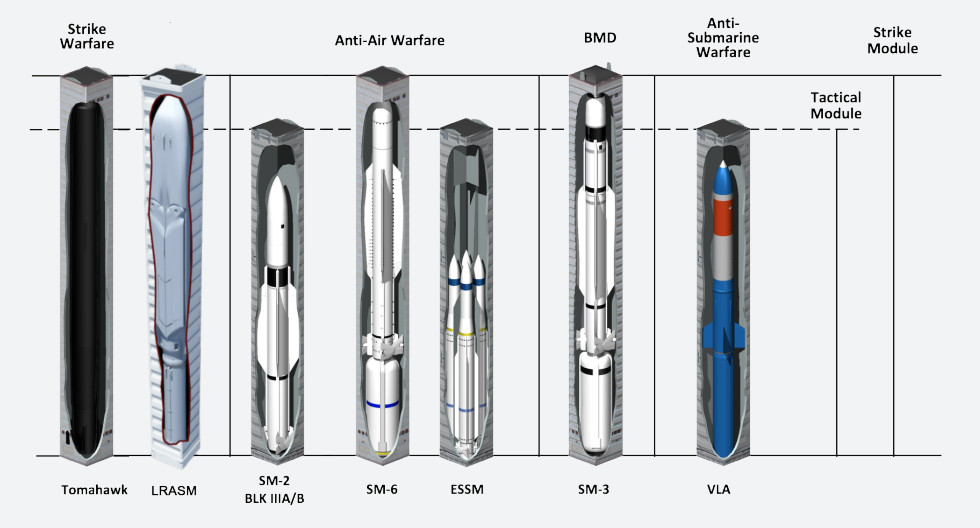
Lockheed Martin has said in the past that each canister will contain a single PAC-3 MSE missile. At around 11 inches wide, the PAC-3 MSE is just over half the maximum diameter available in a Mk 41 cell. This raises the question of whether future canisters could be designed to hold multiple interceptors, which would give ships valuable additional magazine depth.
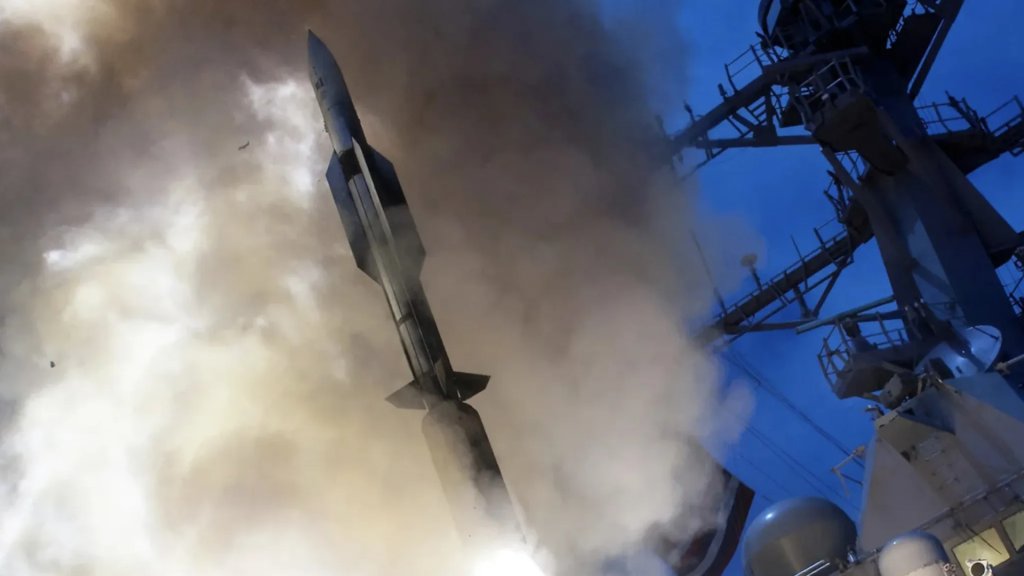
From a capability standpoint, PAC-3 MSE is generally discussed in comparison to SM-2 surface-to-air missiles in the Navy’s arsenal today. In terms of missiles that can be fired via the Mk 41, SM-2 is a middle-tier anti-air capability that sits between shorter-range RIM-162 Evolved Sea Sparrow Missiles (ESSM; which can also be quad-packed into a single cell) and upper-tier SM-6s and SM-3s. The SM-6 is a multi-purpose weapon that can also be employed against targets on land and at sea. SM-3s, of which there are multiple variants in service today, are specifically designed as anti-ballistic missile interceptors.
“A lot of places the Navy has said ‘I got red or yellow challenges that I can’t deal with.’ This missile does a really good job at that. When you marry them all together, it is very complimentary to SM-6,” Chris Mang, Vice President of Strategy & Business Development at Lockheed Martin’s Missiles and Fire Control, told TWZ at last year’s Sea Air Space conference. “You’d always want a layered defense, right? I’ll pick the longest shot I can get, but then at a certain point, MSE really starts to outperform in certain envelopes.”
For the Navy, PAC-3 MSE also presents important logistics, cost, and supply chain benefits. The latest conflict with Iran has only underscored now long-standing concerns about U.S. munition expenditure rates, especially when it comes to anti-air interceptors. A large-scale, high-end fight with a near-peer adversary like China would put much more pressure on munition stockpiles and the U.S. industrial base working to restock them. As such, it would be a boon for the Navy to have an additional stream of interceptors to arm its warships.
As noted, the Navy is already moving to buy hundreds of what documents currently refer to as the “PAC-3 MSE / Navy” missile, as well as launch canisters. The service’s Fiscal Year 2027 budget request puts the unit cost for each missile at $4.05 million. The canister adds another $200,000 to the price tag. The Army’s Fiscal Year 2027 proposed budget says the unit cost for standard PAC-3 MSEs has risen now to $5.3 million. The exact reasons for the cost discrepancy between the Army and Navy versions are unclear.
“Both quantities and unit cost are estimates based on U.S. Army contract pricing. Both quantities and unit cost will adjust based on award of DoN CLINs [Department of Navy Contract Line Item Numbers] on ARMY contract in execution and final cost of the Navy components (radio, canister, etc),” per the Navy’s latest budget request.
At $4.05 million, the Navy’s PAC-3 MSEs will be slightly cheaper per missile than the Block IA version of the SM-6. The service’s latest budget request puts the unit cost of the latter missiles at $4.348 million. The cost of a current-generation Block IIICU variant of the SM-2 is unclear, given that they have often been procured as upgrades of existing Block IIICs rather than new-production missiles. Historically, the average price point for an SM-3 Block IIIC has been around $3.6 million.
“By leveraging the high-volume Army PAC-3 MSE production contract, the Navy achieves significant cost avoidance through economies of scale, as unit price decreases with larger quantities,” the Navy’s latest budget documents also note.
Lockheed Martin announced in January that it had reached an agreement with the U.S. government to ramp up annual PAC-3 MSE production, for domestic and foreign customers, from 600 to 2,000 missiles. Last week, the company received a contract to help further accelerate production of these missiles. This could all help drive down the unit cost of the missiles going forward, as well as speed up their delivery.

It is worth pointing out here that PAC-3 MSE’s performance in the Middle East, as well as in Ukraine in recent years, has also prompted a significant increase in demand from the U.S. Army, as well as foreign Patriot operators. The overall Patriot user base is also expanding.
Adding the Navy to the mix will add to that demand, even with the production ramp-up, and could add to already growing concerns about production backlogs now. Integrating PAC-3 with Aegis and the Mk 41 VLS could also spur additional interest from other navies globally that have ships with that combat system and/or launchers.
Reuters reported just last week that U.S. officials had informed allies and partners in Europe that deliveries of unspecified munitions could now be delayed due to American needs in relation to the war with Iran. When it comes to PAC-3 MSE, the budget documents the Army released today, at least, do not appear to show any changes to the delivery schedule for foreign customers.
Regardless of any of these issues, the Navy is now pushing full steam ahead on integrating PAC-3 MSE with Aegis and the Mk 41 VLS.
Jamie Hunter contributed to this story.
Contact the author: joe@twz.com
Loading comments…
Comments couldn’t be loaded. Please refresh the page.