
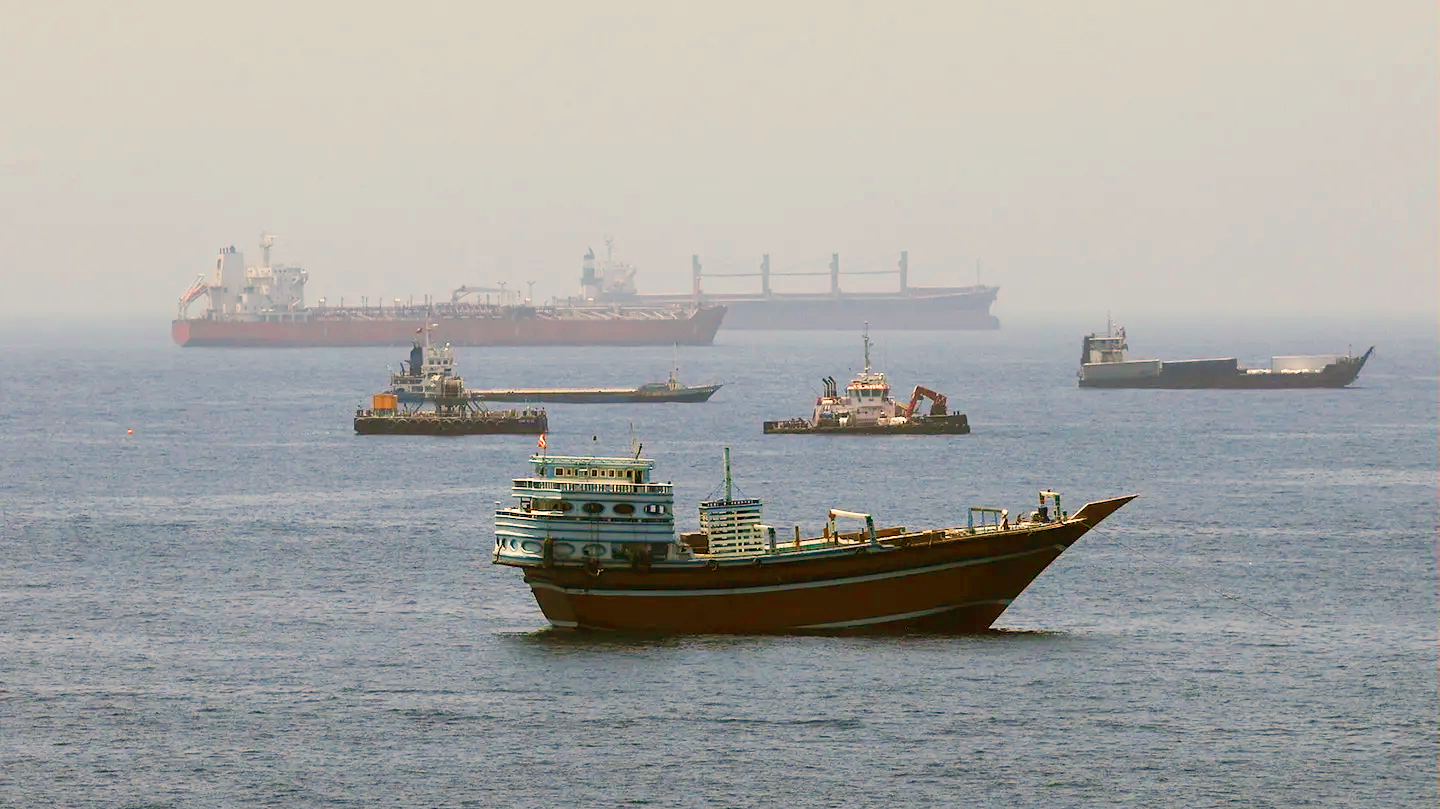
Oman and the U.N. International Maritime Organization (IMO) are sharpening up their plan to evacuate hundreds of ships still stuck in the Persian Gulf since Iran closed the Strait of Hormuz after being attacked by the U.S. and Israel on Feb. 28. The move comes as shipping traffic in this strategic chokepoint is increasing amid tense ongoing peace negotiations between the U.S. and Iran. However, there is still a very long way to go and many challenges, including the possible presence of mines, to overcome before transits reach pre-war levels.
“The Sultanate of Oman based on its responsibilities toward the Strait of Hormuz, and its importance to the global economy, and in accordance to its continued commitment to the international law and the law of the sea to ensure freedom of navigation in the strait without imposing any tolls, in line with the outcomes and efforts reached by the United States and Islamic Republic of Iran…has worked in coordination with the International Maritime Organization (IMO) to provide vessels with the option of a temporary maritime corridor defined by the coordinates announced by IMO and Omani authorities. Ships willing to transit must coordinate with IMO,” Oman’s Maritime Security Center stated Wednesday on X.
“This large-scale operation will be carried out in close cooperation with Iran, Oman, all other coastal States in the region, the United States and the maritime industry,” according to the IMO.
IMO on Wednesday issued additional guidance to what it is calling an “evacuation” plan and noted that there are two routes for ships transiting the Strait. The northern route, close to the Iranian shoreline, is controlled by the Islamic Republic of Iran while the southern route, along the Oman coastline, is coordinated with U.S. authorities.
The southern route is clear of mines and is the preferred route, according to the Joint Maritime Information Center.
Regardless of which route ships prefer, IMO is cautioning them to “remain in their current position and await further instructions.”
Vessels have to wait to “allow safe sequencing, avoid congestion, and mitigate risks related to mines and degraded navigation conditions,” IMO added. “Movements will only begin once vessels are contacted through the coordinated mechanism involving IMO, UKMTO, and MICA Center, followed by coastal State coordination.”
As for current mine clearance operations, CENTCOM would not offer details about how they are being carried out.
“I won’t go into specifics for operational security reasons,” Navy Capt. Tim Hawkins, CENTCOM’s spokesman, told us Wednesday morning. “We’ve been at this for a number of weeks and we’re making progress, as demonstrated by the safe passage currently available to commercial vessels and enabling traffic flow to pick up.”
All this comes after tensions surrounding the Strait erupted again last week, with the Islamic Revolutionary Guard Corps saying it was being closed again after Israeli attacks on Lebanon and CENTCOM maintaining it was open.
Trump on Wednesday took to Truth Social to dispel what he claims are inaccurate media accounts about the Strait.
“Iran has informed the U.S. that, despite troublemaking Fake News reporting to the contrary, there are ‘NO TOLLS, NO INSURANCE COSTS, & NO OTHER CHARGES OF ANY KIND BEING SOUGHT OR RECEIVED BY IRAN ON SHIPS TRAVELING THE STRAIT OF HORMUZ,’” Trump proclaimed. “If this is false information, negotiations would end, immediately!”
TWZ cannot independently confirm any of these statements; however, ship tracking organizations on Wednesday say commercial vessels have been transiting the Strait at increasing rates, though far from what they were before the war.
“Vessel activity through the Strait of Hormuz has rebounded sharply across two consecutive weekends, pointing to a clear shift in traffic patterns through one of the world’s most critical maritime chokepoints,” the MarineTraffic website stated on X Wednesday. “According to #MarineTraffic data and Kpler data, confirmed crossings rose from 32 vessels between 12–14 June to 93 vessels between 19–21 June, an increase of 61 crossings week-on-week.”
The biggest change came on Saturday, MarineTraffic noted, “when crossings jumped from 3 to 42 compared with the previous weekend. The recovery has been supported by recent diplomatic developments and a temporary OFAC general license, which has helped ease immediate compliance uncertainty around approved Hormuz transits until 21 August.”
When it comes to oil, at least 20 tankers carrying 35 million barrels have exited the Persian Gulf through the Strait of Hormuz since the U.S. and Iran agreed to open the sea lane, according to data provided by Kpler.
Still, two major shipping companies we spoke with remain cautious about transiting the Strait.
Maersk referred us to a statement they gave TWZ last week saying that the announcement about the U.S.-Iran Memorandum of Understanding “is a welcome and positive development, but publicly available details are still limited, and it is too early to assess how it will impact logistics and maritime operations in the Middle East. At this stage, there are no changes to our operations in the region.”
On Wednesday, a company spokesman told us Maersk still has five ships stuck in the Persian Gulf.
Hapag-Lloyd is also taking a wait-and-see attitude.
“Our vessels are ready for a transit, but we will only sail through the Strait of Hormuz when it is safe to do so,” a company spokesperson told us, declining to say how many ships it still has in the Gulf.
Meanwhile, the Royal Navy’s RFA Lyme Bay and two German warships have transited the Red Sea in case they are needed to help remove mines from the Strait of Hormuz. The Lyme Bay, “now configured as an Afloat Forward Support Base for mine countermeasures, transited the Suez Canal on 19th June and then passed south through the Red Sea,” the Royal Navy (RN) noted.
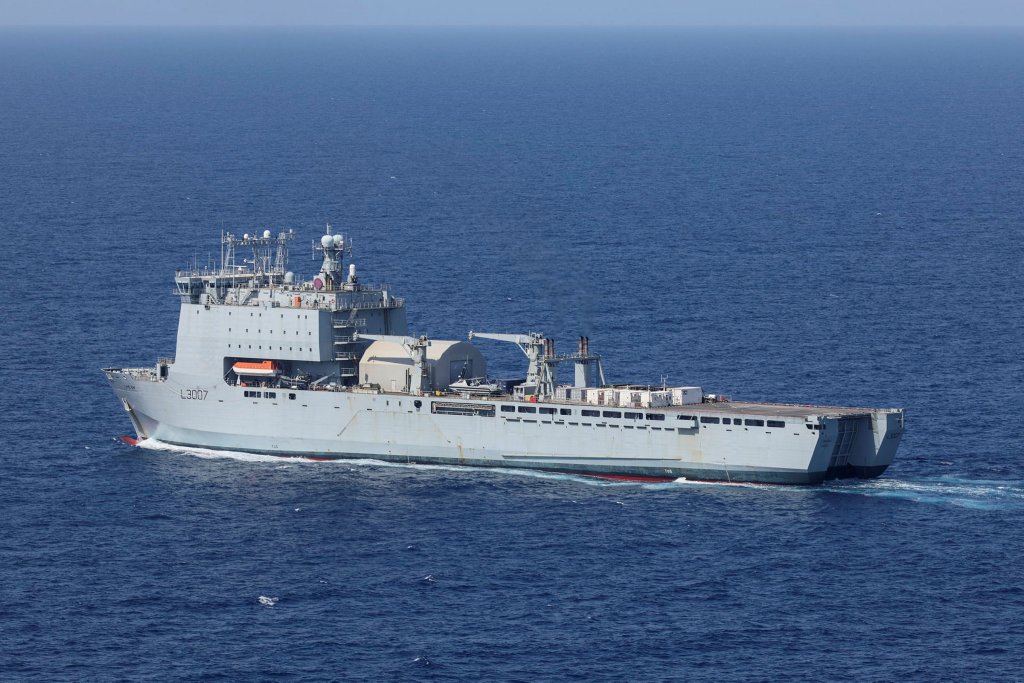
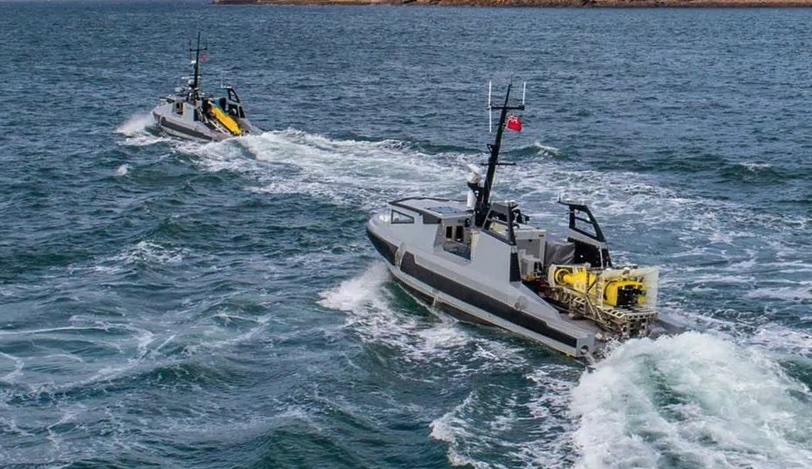
The ship carries uncrewed surface vessels (USVs) with towed sonar arrays and AI automatic target recognition that can “filter and refine vast amounts of data allowing operators to speed up the process of classifying and neutralizing mines,” according to the RN.
Lyme Bay also has “Video Ray Defender-Viper portable mine disposal submersibles, capable of locating, identifying and destroying mines.”
There are also mine warfare, diving and explosive ordnance disposal specialists on board to assist the mine clearance mission.
Lyme Bay was accompanied by the German command and support ship FGS Mosel and minehunter FGS Fulda.
However, those vessels “detached from the task group on 23 June to head for Djibouti for resupply and further preparation,” according to Navy Lookout, an independent publication focusing on the Royal Navy. “They currently operate under the European Union mission Operation Aspides, which has the sole aim of defending merchant shipping against Houthi attacks in the Red Sea.”
We have reached out to the German Bundeswehr and Aspides for additional insights.
Amid the renewed flow of traffic through the Strait, oil prices have plummeted in recent days. As of Wednesday morning, Brent Crude was trading at just under $74 a barrel, according to OilPrice.com. That’s down from a high of more than $114 per barrel at the height of U.S.-Iran tensions in early May.
How long oil prices continue to fall is an open question as the U.S. and Iran continue to express disagreements over the terms of a final Iran-U.S. peace deal following the MoU signed last week.
In addition to the aforementioned confusion over the status of the Strait, there is ongoing discord over whether Iran has agreed to allow inspection of its nuclear facilities. Trump and the International Atomic Energy Agency (IAEA) both say Iran has agreed to let inspectors in while the Iranians say that isn’t the case.
Meanwhile, both sides have issued bellicose threats against the other as the often acrimonious negotiations for what is essentially an extension of the ceasefire continue.
As we have noted in the past, there is tremendous global and domestic pressure on Trump not to resume the war. The world economy is only beginning to recover from rising oil prices while Trump’s Republican party faces a midterm election in November made challenging by the unpopularity of this conflict. In addition, forces have now been deployed for many months and will have to be rotated out in the coming weeks.
Regardless, while getting vessels finally out of the Persian Gulf is still a priority, when robust two-way transits will return is still unclear, which will be critical to stabilizing the situation economically and geopolitically.
Contact the author: howard@twz.com
Loading comments…
Comments couldn’t be loaded. Please refresh the page.