
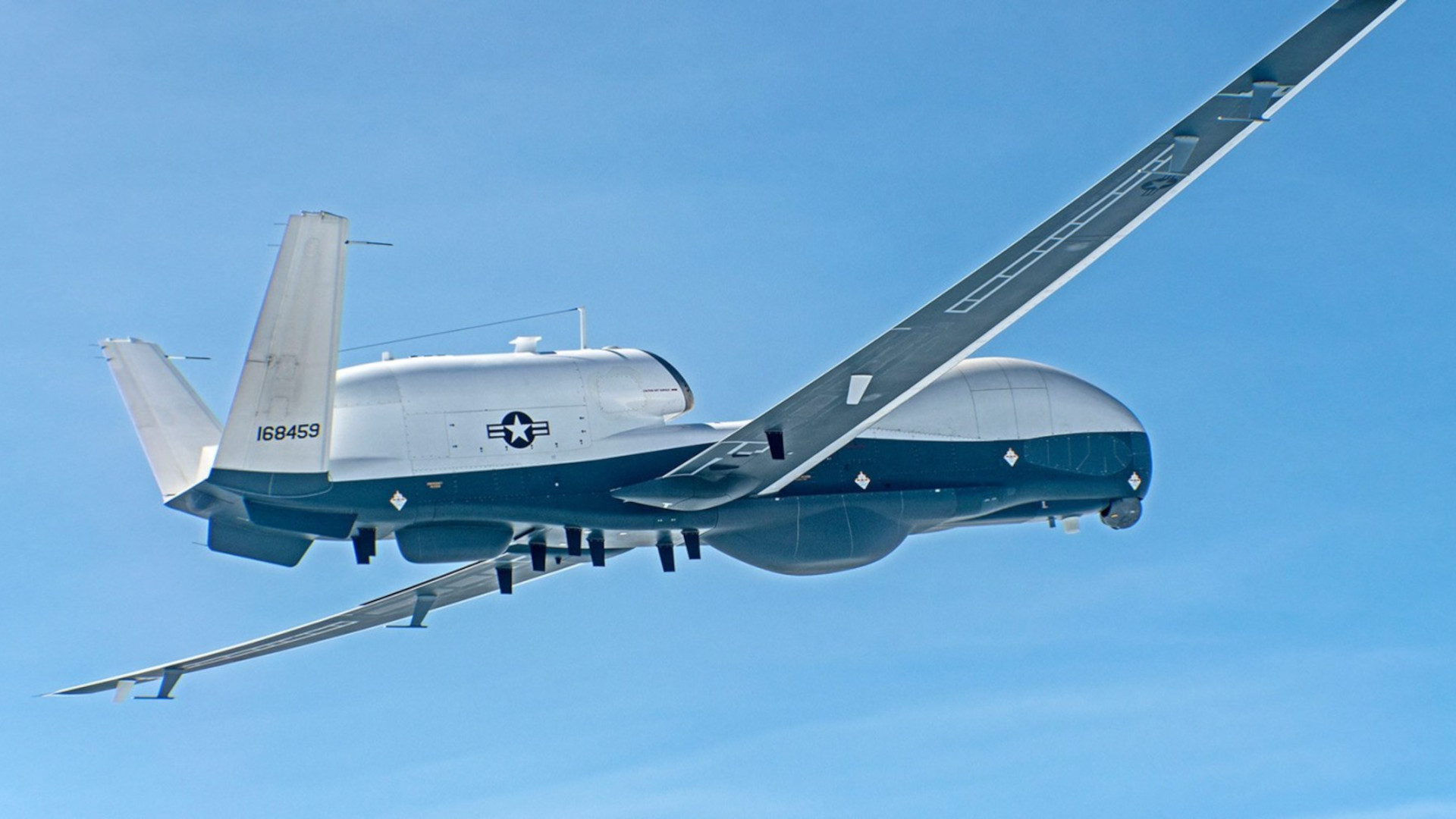
A U.S. Navy MQ-4C Triton surveillance drone disappeared abruptly and unexpectedly from online flight tracking sites after declaring an in-flight emergency while flying over the Persian Gulf today. The uncrewed aircraft was also tracked rapidly losing altitude right beforehand, prompting widespread questions about its fate. This comes just two days after the United States and Iran agreed to a still very fragile ceasefire, which is heavily contingent on the reopening of the highly strategic Strait of Hormuz.
Online flight tracking data shows the MQ-4C had just completed a roughly three-hour-long flight over the Persian Gulf and the Strait of Hormuz and appeared to be returning to base at Naval Air Station Sigonella in Italy. The online tracking shows the Triton had just crossed into Saudi Arabian airspace before making a sudden turn to the northeast in the direction of Iran. Available data also shows the drone rapidly descended from a typical cruising altitude of around 50,000 feet down to below 10,000 feet.
The MQ-4C’s transponder was broadcasting (or “squawking”) the code 7700, which is a general declaration of an in-flight emergency, at the time. The code, by itself, does not offer any indication of what that the emergency might be or how serious the situation is. There are also unconfirmed reports that the Triton initially sent out another code, 7400, which is used to declare a loss of connectivity between a drone and its controllers on the ground.
The MQ-4C had otherwise been publicly visible online from the moment it left Naval Air Station Sigonella in Italy. Tritons have been flying sorties over the Middle East, as well as other locales, from Sigonella regularly since 2024.
As of 2025, the Navy had 20 of these drones in service in total, with plans to acquire seven more. The service received funding to purchase the final pair of drones in Fiscal Year 2024, at which time the estimated unit cost for each one was pegged at just over $238 million.
When reached for more information by TWZ, the office of the Chief of Information (CHINFO), the U.S. Navy’s main public affairs office, declined to comment. We have also reached out to the U.S. Navy’s regional commands in the Middle East and Europe, as well as U.S. Central Command (CENTCOM).
At the time of writing, there does not appear to be any official comment about the MQ-4C from Iranian authorities.
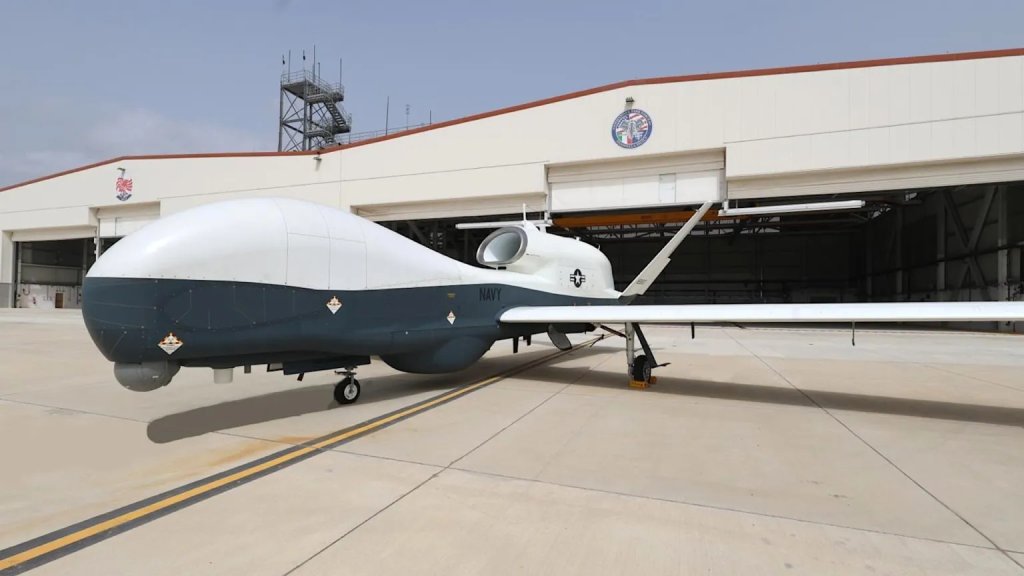
The MQ-4C is a derivative of the RQ-4 Global Hawk surveillance drone optimized for long-duration overwater missions. The Navy actually operated a small number of RQ-4A drones in a service-specific configuration called the Broad Area Maritime Surveillance-Demonstrator (BAMS-D). When the program started in 2003, BAMS-D’s main task was to help pave the way for Triton’s arrival. However, the Navy ended up flying the drones operationally in the Middle East and out into the Indian Ocean for 13 years. Iran notably shot down a BAMS-D drone as it flew over the Gulf of Oman in 2019.
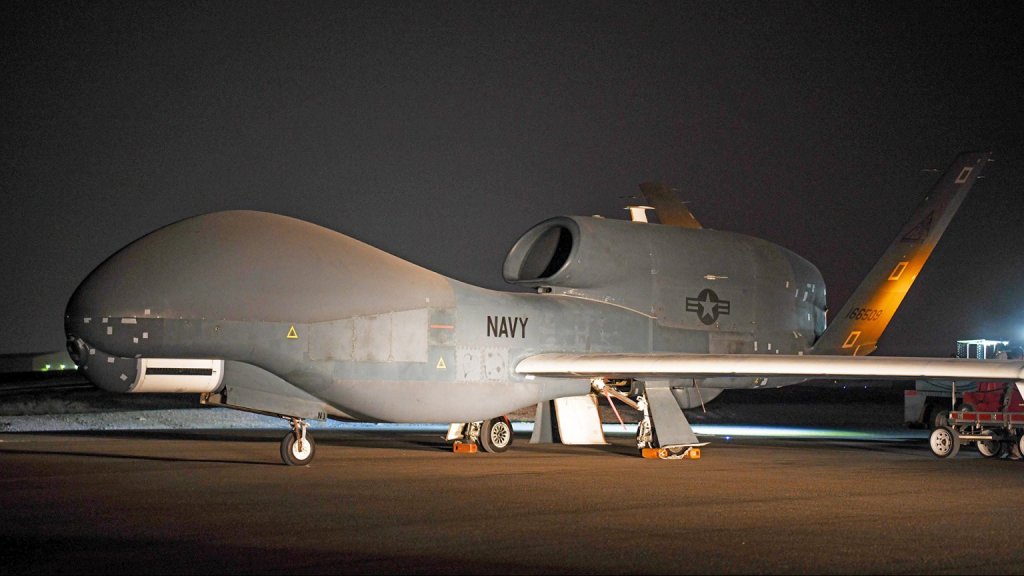
The Triton’s original sensor package was centered on an active electronically scanned array (AESA) radar with surface search and synthetic aperture modes. A synthetic aperture radar (SAR) capability allows for the capturing of satellite-like images, day or night, in virtually any atmospheric conditions, which is not possible with optical sensors. The drones do also have electro-optical and infrared video cameras in a turret under the nose, as well as electronic support measures systems for collecting electronic intelligence passively.
More recently, the Navy has been working with prime contractor Northrop Grumman to expand the MQ-4C’s electronic and signals intelligence (ELINT/SIGINT) capabilities.
The drones can work in concert with P-8A Poseidon crewed maritime patrol planes, which have their own extensive sensors and networking suites, and carrier strike groups down below.
Tritons are likely to play an especially important role in monitoring activity in and around the Persian Gulf amid the current ceasefire with Iran. As noted, the safe transit of commercial ships in and out of the Gulf through the Strait of Hormuz is a central factor in the continued stability of that arrangement. It is also expected to be a major topic of discussion in future diplomatic negotiations between the United States and Iran. So far, Iran is still severely throttling maritime traffic through this critical waterway.
As mentioned, MQ-4Cs have already been flying regular surveillance patrols in the region for years now. There were separate rumors of a Triton going down in the Gulf of Oman back on February 22. That also followed the disappearance of one of the drones from online flight tracking sites after squawking 7700. However, no rapid loss of altitude was recorded in that case.
A U.S. official subsequently told TWZ that reports of an MQ-4C loss on or about February 22 were “not true.” Open-source flight-tracking site Flightradar24 also posted a pointed statement on X on February 27 saying that they had tracked the Triton returning to a base in the United Arab Emirates (UAE). The very next day, U.S. and Israeli forces launched their combined operation against Iran.
Flightradar24’s post on February 27 also highlighted general gaps in tracking coverage in the region. Deliberate GPS jamming and other types of electronic interference are also common in the region, and even more so in the context of the latest conflict with Iran.
As noted, Iran has demonstrated an ability to target higher-flying U.S. drones in the past with the shootdown of the BAMS-D. That incident prompted significant questions about the survivability of Global Hawk and its derivatives, though these drones were never designed for missions into contested territory.

After some five weeks of U.S. and Israeli strikes, Iran’s air defense capabilities have been substantially degraded, but they do still present real threats, at least in certain envelopes. That being said, to be clear, there are no hard indications whatsoever that hostile fire was in any way a factor in whatever happened to the MQ-4C flying over the Persian Gulf today. The status of that drone, in general, remains unknown.
Still, incidents like this are likely to continue to draw immense attention, at least for the immediate future, amid the shaky ceasefire between the United States and Iran. That arrangement is currently set to remain in place for two weeks, and there is great uncertainty about what may happen afterward. Negotiations about a more lasting end to the recent hostilities are set to begin in Pakistan this weekend.
We will continue to provide more details about the fate of the MQ-4C if and when they become available.
Contact the author: joe@twz.com
Loading comments…
Comments couldn’t be loaded. Please refresh the page.