
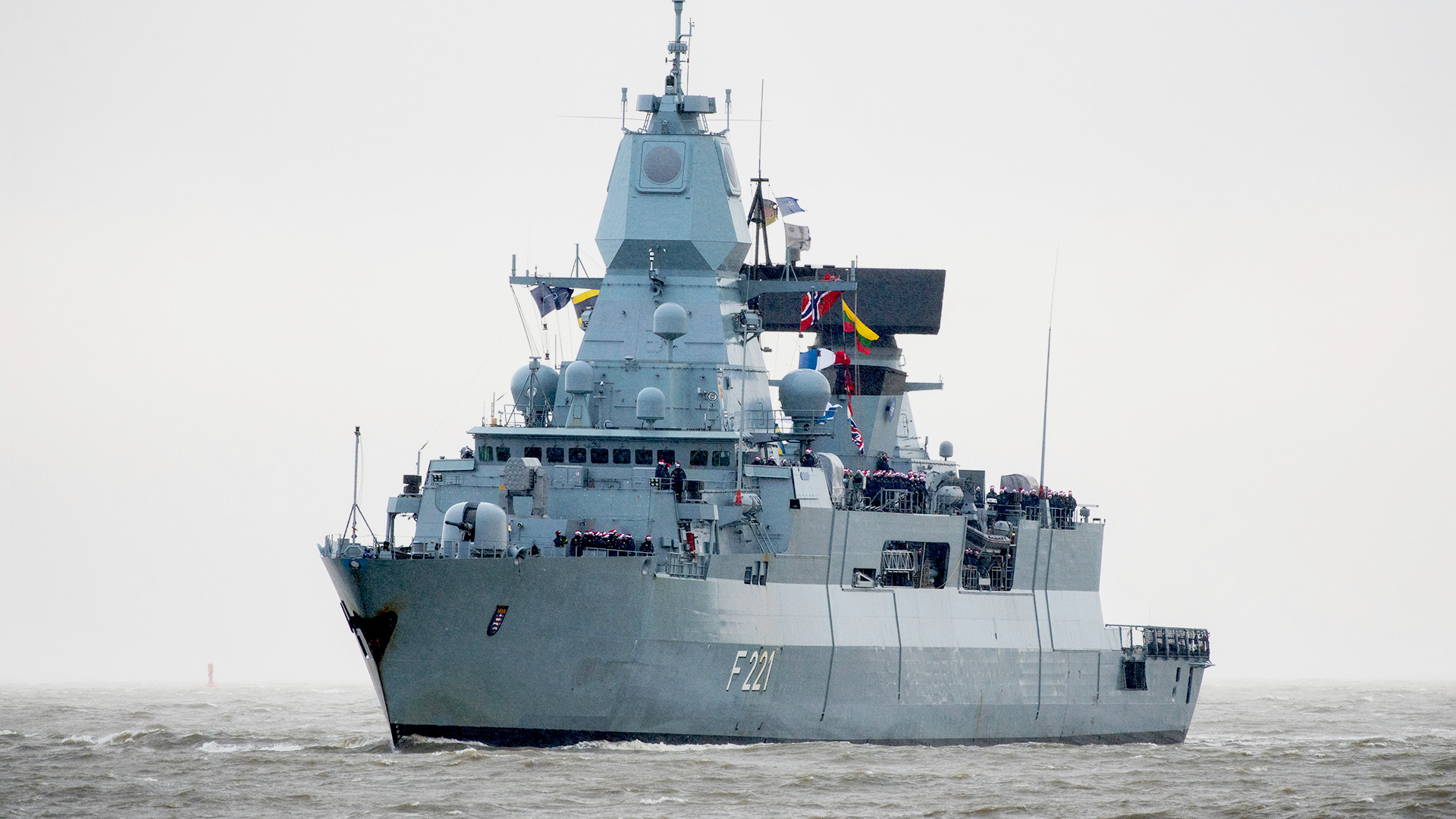
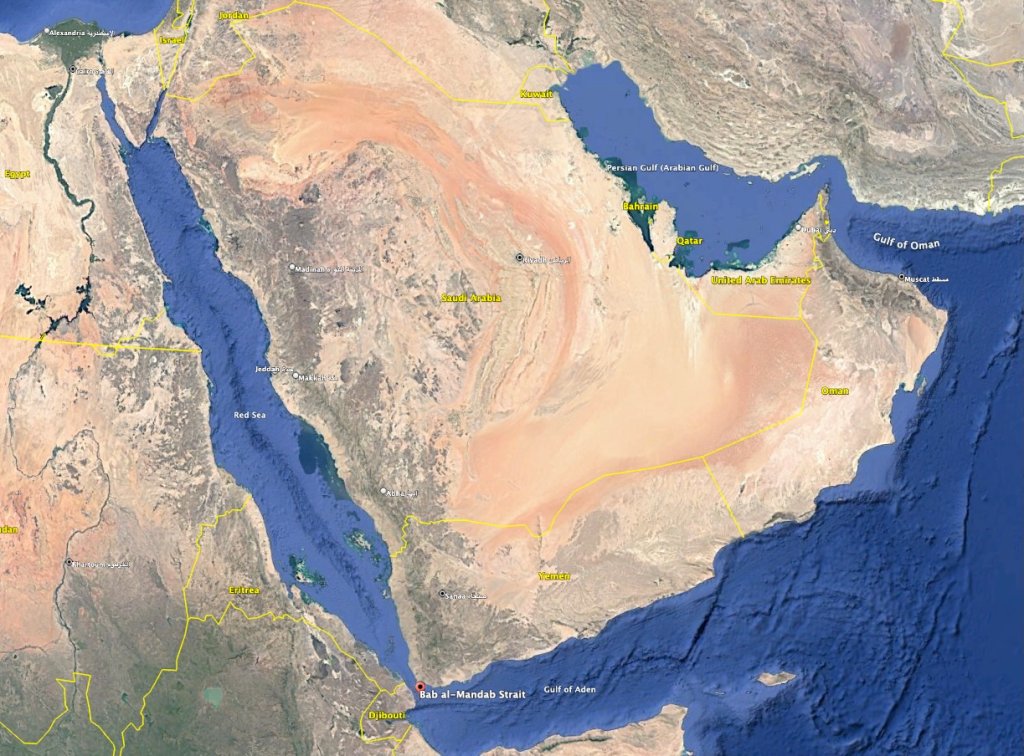
Europe’s Red Sea naval task force tells us it is prepared for the resumption of Houthi attacks on shipping in the region. The Iranian proxy group has already launched several ballistic missile strikes against Israel since joining the ongoing war in the Middle East over the weekend. Now there is growing concern that the Houthis could effectively shut down the Bab el-Mandeb (BAM) strait, a narrow stretch of water between Yemen and Djibouti. Doing so would choke off a flow of oil exports from Saudi Arabia, especially to east, exacerbating a huge spike in oil prices after Iran closed off the Strait of Hormuz to most shipping. Having both straits closed at once is something of a ‘sum of all fears’ scenario for the global energy marketplace.
A new Houthi offensive would be a major cudgel for Iran, because it would open a new front in the war and draw in military resources at a time when they are heavily involved in Epic Fury. A potential activation of the Houthis is arguably Tehran’s biggest military card left to play, but just how much control Tehran retains over the Houthis is unclear.
Operation Aspides “maintains a high level of situational awareness and conducts daily assessments of potential risks to freedom of navigation, making necessary operational adjustments where required,” an Aspides official told The War Zone. “In the event of a resumption of Houthi attacks to merchant vessels – which remains a possibility – we are present and ready to implement our mandate.”
“At the moment the missile launches from Houthi against Israel mark the first step,” the official added. “Their statement is not as clear and not a direct threat to merchant vessels passing through the Red Sea. Of course as we’ve already mentioned, a resumption of Houthi attacks to merchant vessels still remains a possibility.”
Aspides was created in February 2024 during the Houthi’s 15-month campaign against warships and commercial vessels. It is a defensive operation to provide protection for ships transiting the Red Sea region and situational awareness about Houthi threats.
Operation Prosperity Guardian, a similar effort created months earlier by the U.S. Navy that we were the first to write about, was disbanded a year ago after the Houthis agreed to a ceasefire. Its responsibilities were subsumed by Destroyer Squadron (DESRON) 50, the surface warfare task force under U.S. Naval Forces Central Command (NAVCENT). U.S. Central Command (CENTCOM) on Wednesday declined to comment about what, if any, preparations DESRON 50 is making for the possible resumption of Houthi aggression in the Red Sea.
So far, the Houthis’ intentions for the Red Sea region remain publicly unknown. On Wednesday, the group’s spokesman, Yahya Saree, announced they struck southern Israel with ballistic missiles in coordination with Iran and Hezbollah. No mention was made about the Red Sea.
“The Yemeni Armed Forces, with Allah’s help and reliance upon Allah, carried out the third military operation in the ‘Holy Jihad Battle,’ targeting sensitive Israeli enemy targets…” Saree stated.
However, as we noted yesterday, Iran is pushing the rebels “to prepare for a renewed campaign against Red Sea shipping, contingent upon any further escalation by the US in its war on the Islamic Republic,” Bloomberg News reported, citing European officials familiar with the matter.
Houthi leaders “are weighing options for more aggressive action after launching ballistic missiles at Israel,” Bloomberg added. During their previous campaign launched in late 2023, the Houthis attacked so many vessels with missiles and aerial and surface drones that shipping companies avoided the waterway, creating a spike in the price of some goods because alternative routes were much longer, resulting in increased cost of fuel, insurance and wages for crews.
At issue now are the increasing amount of oil exports flowing through the BAM in the wake of Iran’s Strait closure.
“Over the first 28 days of March, the amount of crude oil transiting the Bab-el-Mandeb Strait jumped by 21% compared with February,” CNN noted, citing the Vortexa shipping data firm.
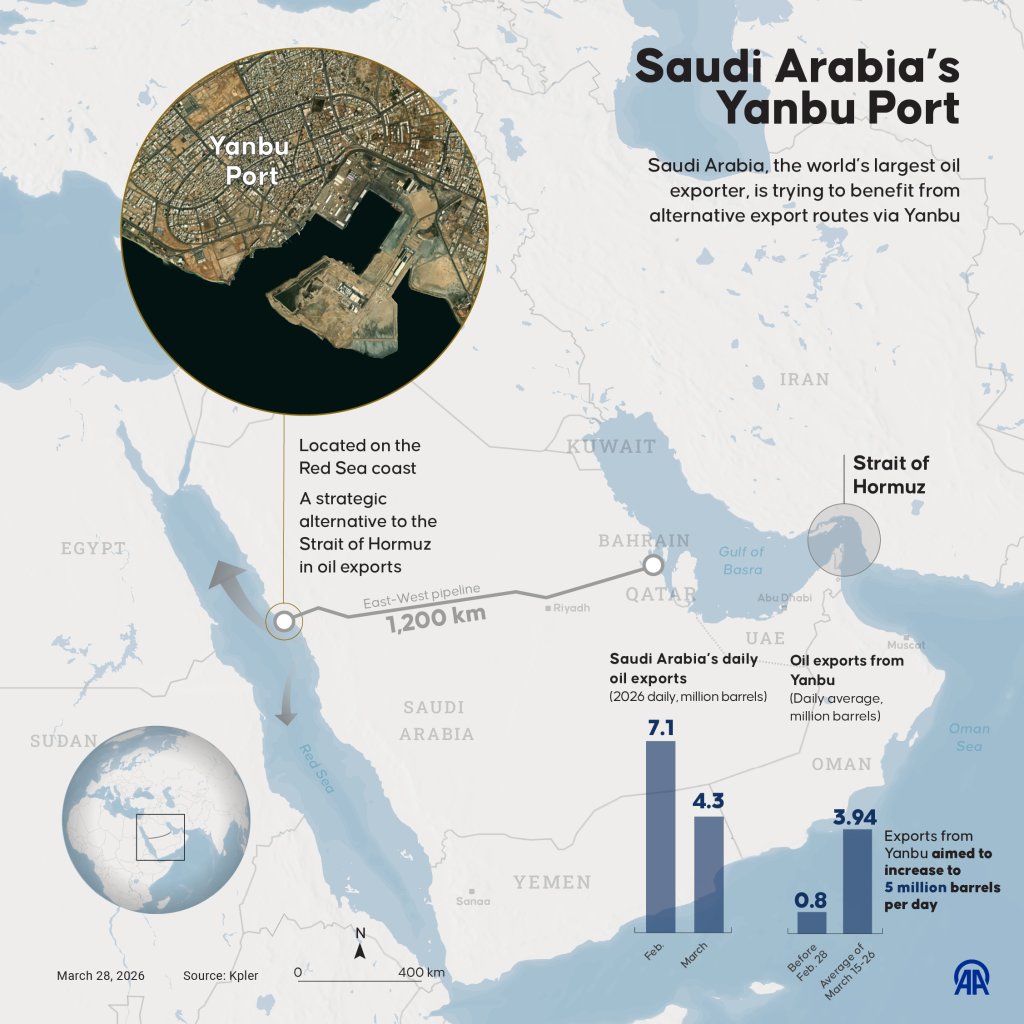
In the past two weeks, Saudi Arabia has diverted nearly five million barrels a day of crude oil to the Red Sea port of Yanbu, the network added. While just a fraction of the 15 million barrels a day that have been cut off by the Strait closure, the Yanbu exports have helped reduce oil shortages and blunt price increases. Brent Crude, the global oil benchmark, reached a high of more than $107 per barrel on March 30 but fell to just over $101 per barrel as of Wednesday morning Eastern Standard Time, according to the latest figures from OilPrices.com.
A disruption of Saudi Arabia’s Red Sea transit option could cause oil prices to rise much higher and very quickly, creating a cascading wave of financial impacts across the globe. Even if the Strait of Hormuz were opened today, it will still take a while for the global economy to recover from the shock. Meanwhile, for Saudi Arabia, the simultaneous closure of both straits is a long-standing nightmare, a financial double-whammy that would also send energy prices around the globe skyrocketing.
Beyond the purely economic impact that a resumption of Houthi attacks would bring, defending against them could require military assets at a time when the U.S. is still building up its already heavy commitment for Operation Epic Fury. During the previous Houthi Red Sea campaign that stretched into early 2025, the U.S. and allies deployed many warships, including the Eisenhower and Truman Carrier Strike Groups (CGS) to both defend against Houthi attacks and strike targets in Yemen. These operations resulted in a large expenditure of air defense munitions already under tremendous strain as Iran rains down missiles and drones across the Middle East.
You can see video from some of those encounters below.

At the moment, the U.S. has only the Lincoln CSG in the Middle East after the departure of the USS Gerald R. Ford for repairs from a fire. While the USS George H.W. Bush is reportedly on the way to replace the Ford, that journey will take a while. Meanwhile, the Trump administration has pushed thousands of Marines and a contingent of the 82nd Airborne to the region in advance of what could be an attack on Iran’s Kharg Island, which would greatly escalate Epic Fury.
The future of the U.S. fight against Iran remains unclear. Monday morning, U.S. President Donald Trump claimed that Iran wanted a ceasefire, which he would only consider after they reopened the Strait of Hormuz. Iran pushed back against that, which you can read more about in our story here. We might learn more tonight during Trump’s scheduled 9 p.m. speech about the war.
What role the Houthis may play in this conflict is not fully clear. They are the most independent of Iran’s proxy groups and often act on their own accord. A weakened Iran could further imperil any obedience they have to the regime in Tehran, though there is also the question of what would happen to Houthi weapon stocks should the Islamic Republic, a key supplier, fall. There is also a long history of fighting with Saudi Arabia to consider, as that could be rekindled.
Regardless, if the conflict continues, the Houthis opening a second front in the Red Sea would have wide-ranging military and economic effects and we will continue to closely monitor the situation.
Contact the author: howard@thewarzone.com
Loading comments…
Comments couldn’t be loaded. Please refresh the page.