
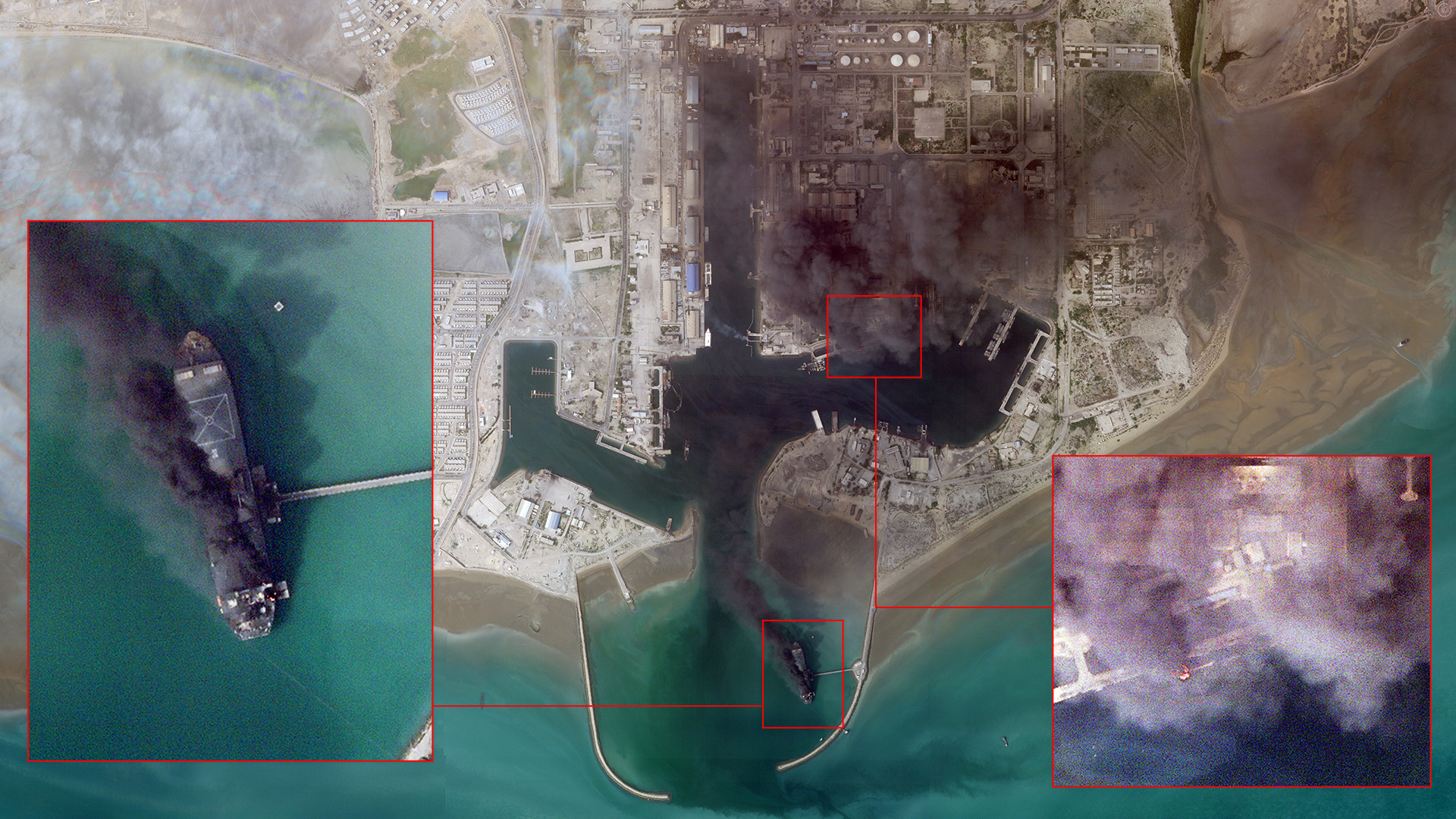
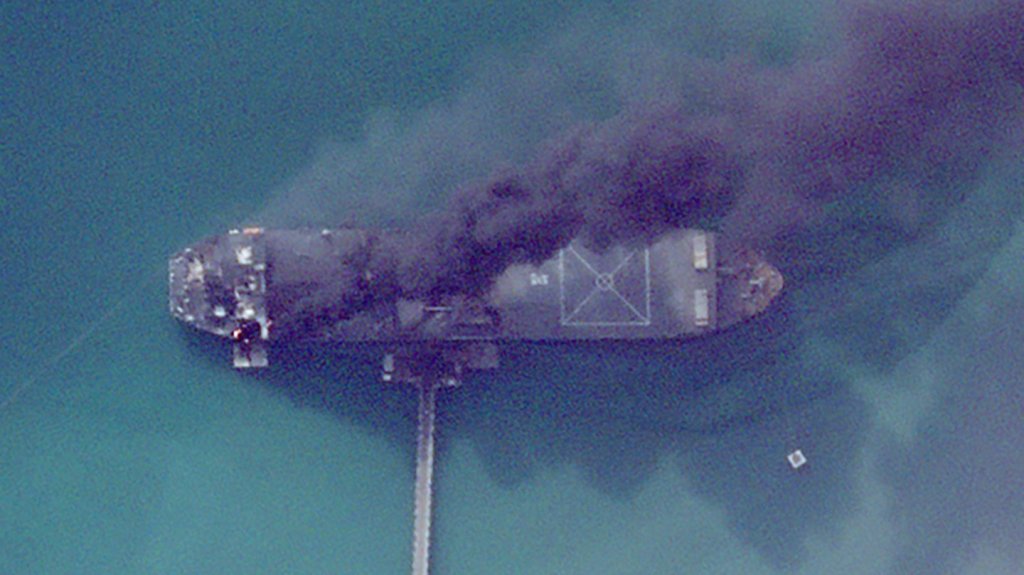
Satellite imagery shows extensive damage to Iran’s naval base at Bandar Abbas, including depicting the IRINS Makran sea base-type ship on fire, following strikes as part of the ongoing U.S.-Israeli campaign. In addition to being the main headquarters for the Iranian Navy, Bandar Abbas is a key installation when it comes to Iran’s aims at controlling the Strait of Hormuz. U.S. President Donald Trump has said “annihilating” Iran’s naval forces is a core objective of what American authorities have dubbed Operation Epic Fury, and that 10 Iranian ships have been “knocked out” so far.
TWZ obtained the imagery of Bandar Abbas, taken overnight, from Planet Labs. The base hosts the Iranian Navy’s main headquarters, and many of its most capable ships and submarines.
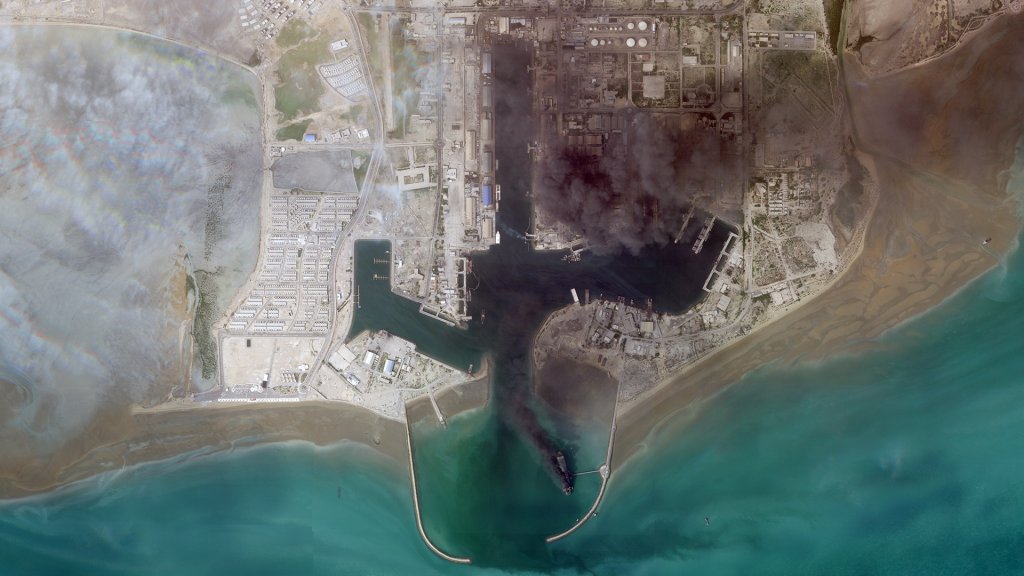
Thick black smoke is seen over much of the central portion of the facility. A smaller plume of smoke is also seen rising from an impact point on a pier. Other areas of the facility look less impacted, at least from what is visible in the image.
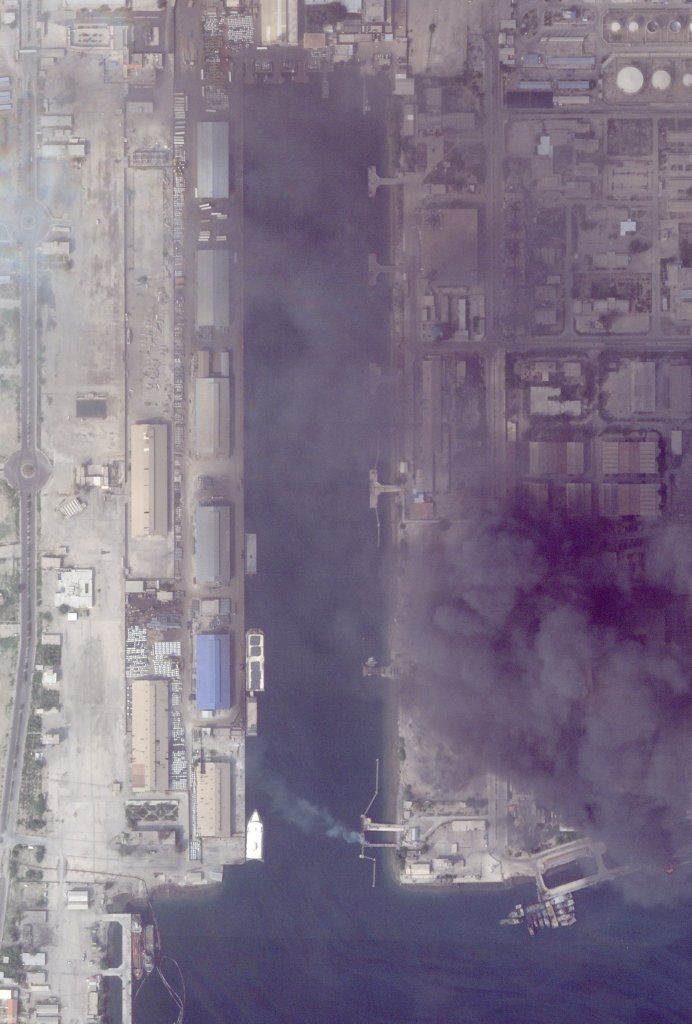
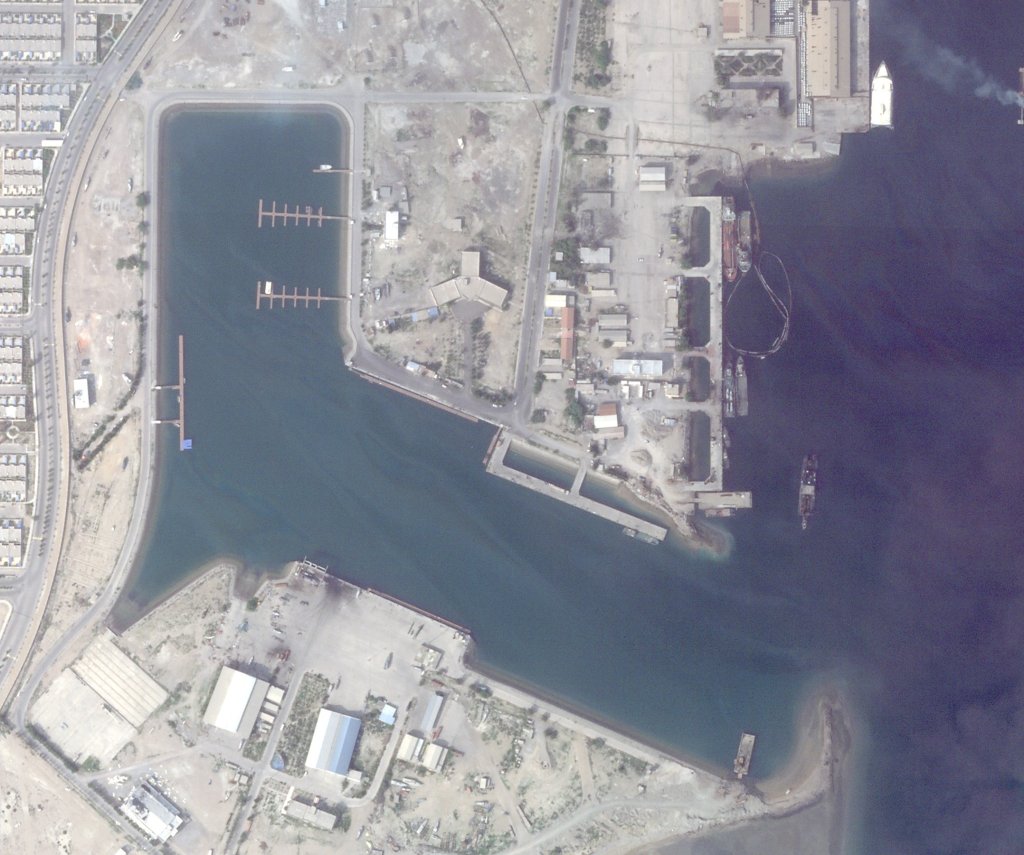
As noted, what appears to be the sea base IRINS Makran, has clearly been struck, at a berth at the southern end of the base. This ship is an oil tanker converted into what Iranian authorities have called a “forward base ship,” with a large open flight deck at the bow and other features, as you can read more about here. Makran has made several voyages overseas since its commissioning in 2021. It is one of a number of sea base-like ships Iran has put into service in recent years.
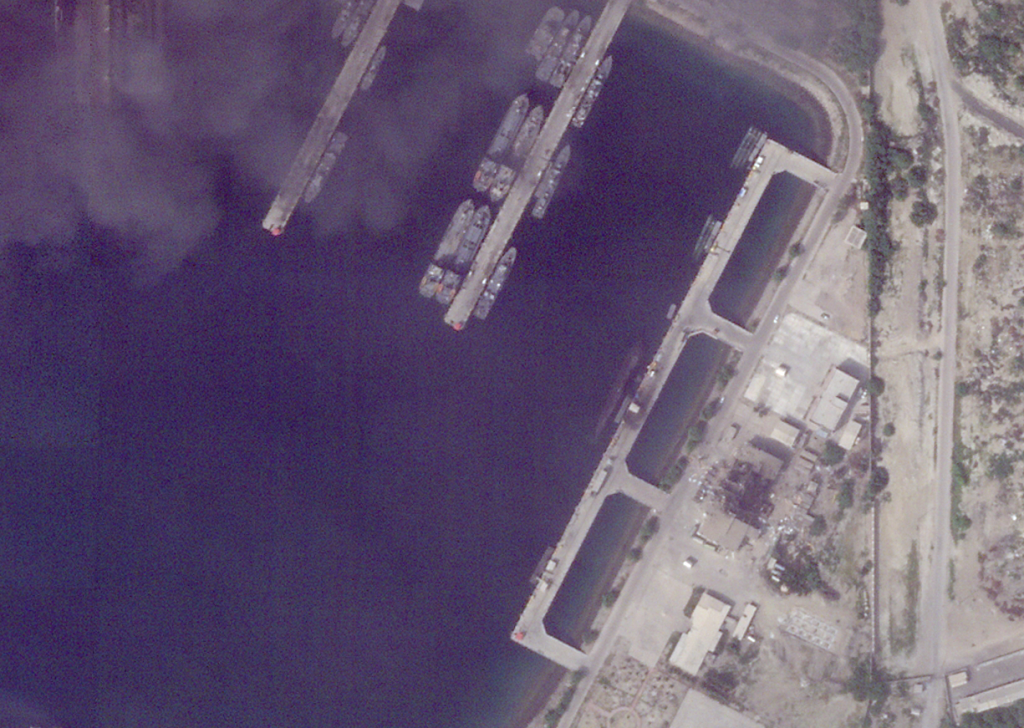
One and possibly two frigate-sized warships also look to have been struck based on a comparison of the March 2nd image and what is visible in earlier shots. These clearly would have been among the highest value targets at the port. The one Kilo class submarine and midget submarines that remain in port appear untouched.
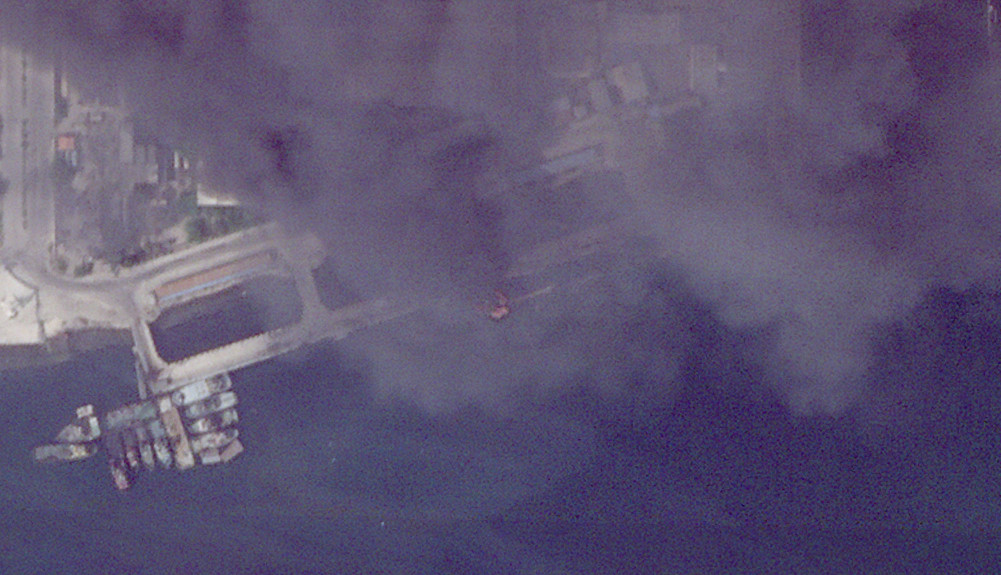
Other Iranian naval vessels may have been damaged and/or destroyed based on what had been previously seen berthed at various spots at Bandar Abbas in past satellite imagery.
However, the smoke in the image of Bandar Abbas makes it otherwise difficult to assess the extent of damage to Iranian naval vessels in port. In comparing the March 2nd image with one taken on February 26th, it’s clear that many of the small boats and some larger vessels have been moved outside of the port. This likely occurred just after the strikes on Iran began. It’s also possible that some have sunk, but we see no indications of that. Still, many ships remain, and a number of warships in drydock are obscured.
Iranian naval assets have been struck outside of Bandar Abbas, as well. TWZ previously reported on strikes on the port in Konarak, near the southeastern tip of Iran. Other satellite imagery shows that multiple warships were destroyed and/or damaged at that facility, including what was initially assessed to be an Alvand class frigate. U.S. Central Command (CENTCOM) later identified that ship as a Moudge class warship, also sometimes referred to as Jamaran class, which is derived from the Alvand class.
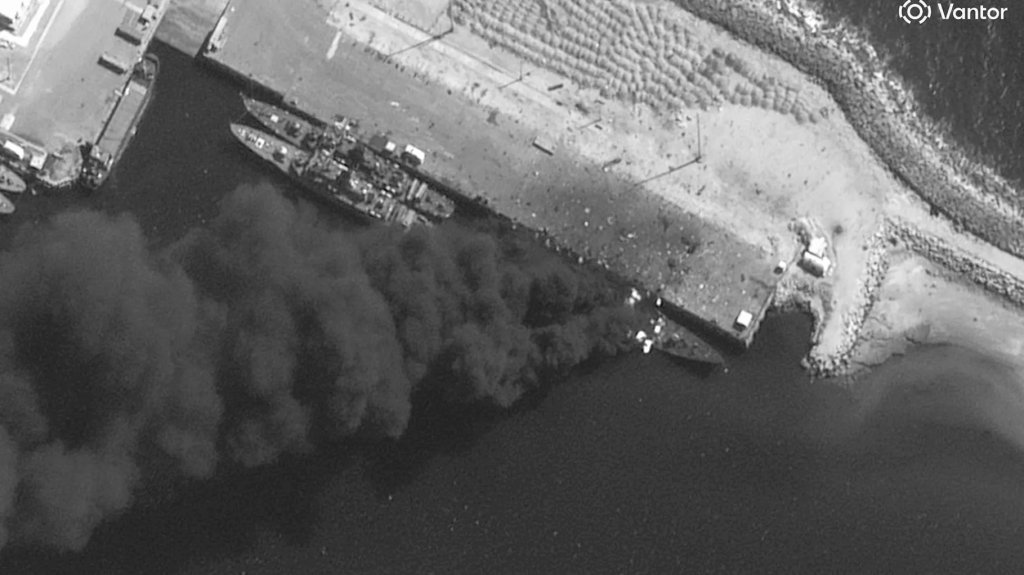
Subsequent satellite imagery showed all three frigates and a number of other corvettes and smaller naval vessels were badly damaged or destroyed at Konarak.
CENTCOM has also said that it targeted Iran’s Shahid Bagheri, but did not say where, specifically. The Shahid Bagheri is a highly unusual ship often described as a “drone carrier” with an angled flight deck, which you can read more about here.
“We’re annihilating their [Iran’s] navy. We’ve knocked out already 10 ships. They’re at the bottom of the sea,” President Trump said earlier today at the start of a ceremony marking the awarding of three Medals of Honor unrelated to the current conflict.
“This operation [Epic Fury] is a clear, devastating, decisive mission,” Secretary Pete Hegseth also said at a briefing at the Pentagon earlier this morning. “Destroy the missile threat, destroy the Navy, no nukes.”
Chairman of the Joint Chiefs of Staff U.S. Air Force Gen. Dan “Razin” Caine also said at that briefing that Iranian naval assets were struck in the opening salvo of the operation, but did not elaborate.
Targeting Bandar Abbas, specifically, is otherwise important given its highly strategic position in the Strait of Hormuz. It is somewhat interesting that the facility does not appear to have been struck earlier in the conflict.
The Strait is a critical chokepoint that connects the Persian Gulf and the Gulf of Oman, through which a substantial portion of the world’s oil supplies (as well as other maritime commerce) flows. For decades, Iranian authorities have repeatedly threatened to shut down this key waterway should the country come under major threat. Bandar Abbas would be the hub of Iranian efforts to swarm the Strait with small boats and mine it. A number of commercial ships have now suffered attacks since the outbreak of the current conflict.
With the destruction of Iran’s navy now said to be a chief focus of Operation Epic Fury, more details about what vessels have been damaged and/or destroyed are likely to emerge.
Contact the author: joe@twz.com
Loading comments…
Comments couldn’t be loaded. Please refresh the page.