

A picture has emerged that looks to show Iran’s Mohajer-6 drone has entered service, at least on a limited level, with the Venezuelan military. The Mohajer-6 can perform surveillance and reconnaissance missions and be armed with small guided munitions. The appearance of the image followed the announcement of new U.S. sanctions on Iran and Venezuela, directly related, in part, to the local assembly of Mohajer-6s in the latter country.
The image in question, seen below, began circulating on social media late yesterday, and is said to have been taken at the Venezuelan Air Force’s El Libertador Air Base (Base Aerea El Libertador in Spanish and often abbreviated as BAEL) in the context of an exercise. TWZ has not been immediately able to independently confirm where or when the picture was taken. El Libertador is situated relatively close to Venezuela’s Caribbean coastline, as well as the capital, Caracas. It is also notably home to the country’s remaining fleet of U.S.-made F-16 fighters, which you can read more about here.

However, as mentioned, the U.S. government offered a separate confirmation of at least the presence of Mohajer-6s in Venezuela in its sanctions announcement yesterday.
“Venezuela-based Empresa Aeronautica Nacional SA (EANSA) maintains and oversees the assembly of QAI’s [Iran’s Qods Aviation Industries] Mohajer-series UAVs in Venezuela and has directly negotiated with QAI, contributing to QAI’s sale of millions of dollars’ worth of Mohajer-6 UAVs to Venezuela,” according to a press release from the U.S. Treasury Department. “The Mohajer-6, a combat UAV with intelligence, surveillance, and reconnaissance capabilities, is manufactured by QAI. EANSA was also involved in the assembly of aircraft that QAI sold to Venezuela.”
It is also well documented that Venezuela has been working to acquire Mohajer-6s since at least 2020, though there has not previously been any evidence of the drones actually being in the country. Venezuelan authorities have shown models of Mohajer-6s at official events in the past, including at EANSA’s facilities. Iran has also exported Mohajer-6s to several other countries, including Russia, which has employed them in the ongoing conflict in Ukraine.
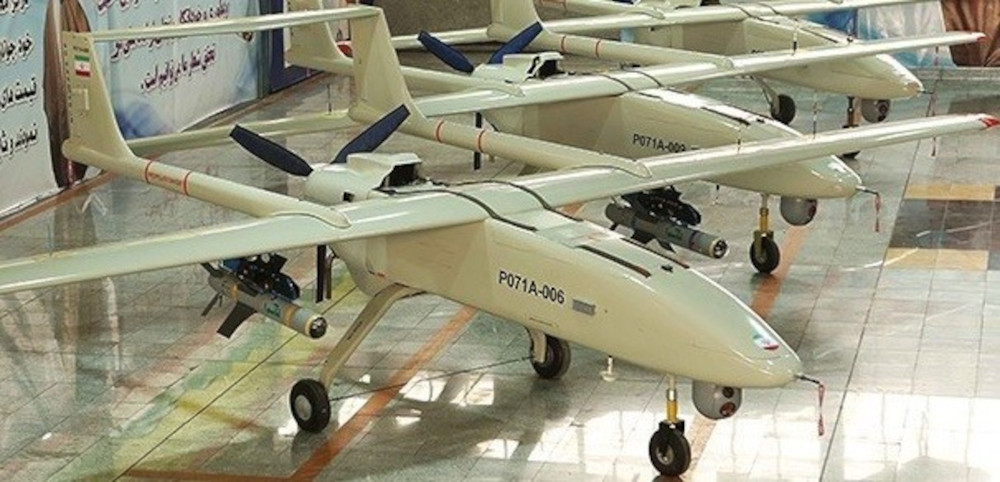
Iran first unveiled the Mohajer-6 in 2016, and serial production is said to have begun in 2018. The drone has a high-mounted main wing, with a span of nearly 33 feet (10 meters), and a twin-boom tail configuration. The drone is just over 18 and a half feet (5.67 meters) long overall and is powered by a small internal combustion engine driving a single pusher propeller. It has fixed tricycle landing gear and takes off and lands like a traditional aircraft. It has a maximum takeoff weight of around 1,320 pounds (600 kilograms) and an endurance of 12 hours, according to the U.S. Army’s Operational Environment Data Integration Network (ODIN) training portal.
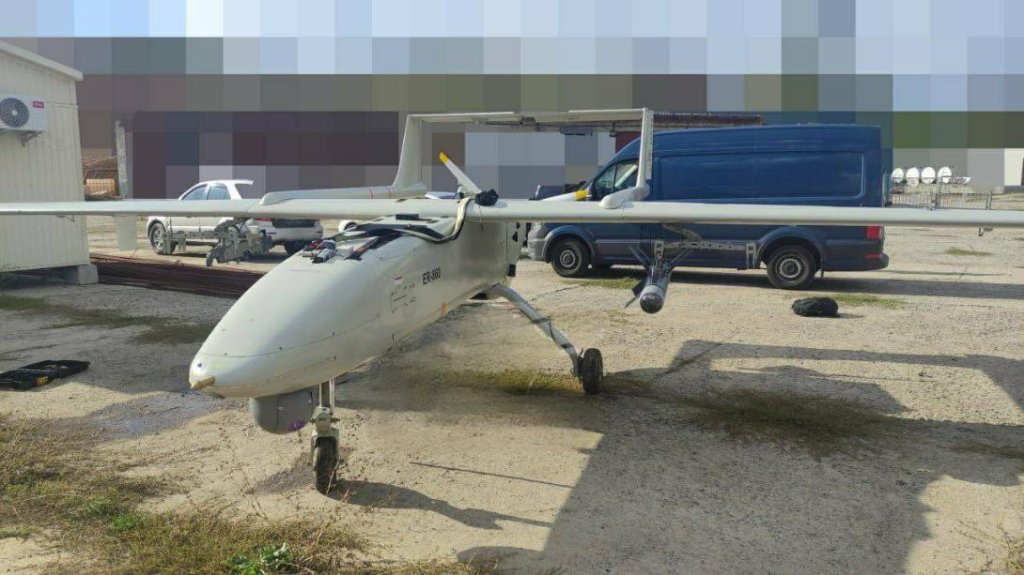
Mohajer-6s can be controlled by operators on the ground via line-of-sight links or fly along a preset route using a built-in autopilot. The drones are understood to carry a mix of electro-optical and infrared cameras to perform their surveillance and reconnaissance and strike missions, as well as to help with basic navigation. Small guided munitions can be carried on up to four pylons under each wing. Iranian media reports have also raised the possibility of the drones being capable of carrying electronic warfare packages.
Exactly how Venezuela’s Mohajer-6 might be configured is unknown. However, circa 2022, pictures also emerged that were said to show Iranian Qaem munitions, which are small guided glide bombs, on display in Venezuela. Qaem is one of the munitions that Iran has integrated onto the Mohajer-6.
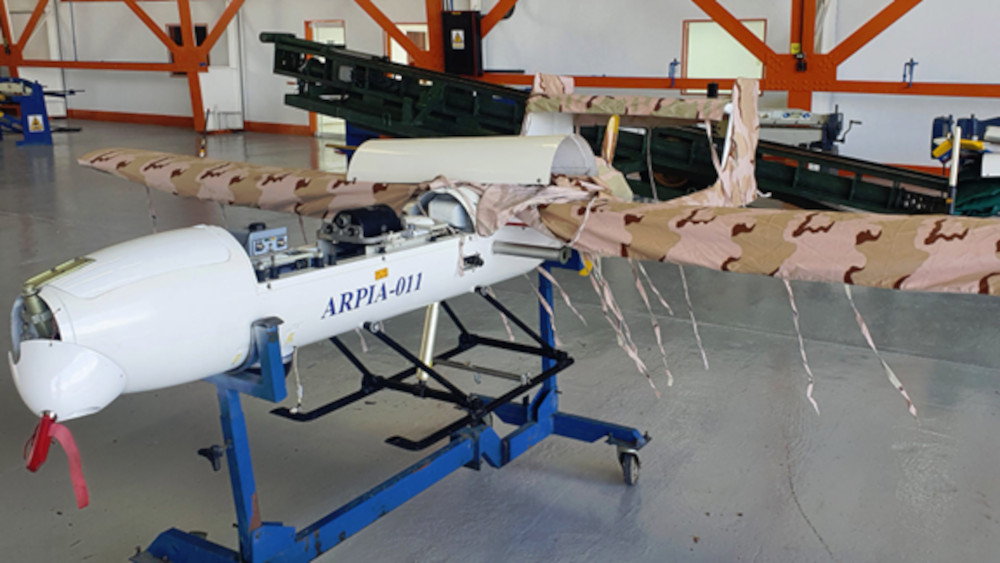
Venezuela’s pursuit of the Mohajer-6 is also just one part of a larger push on the country’s part to bolster its drone arsenal, which traces back to the early 2010s and has been carried out with significant assistance from Iran. The Venezuelan armed forces have previously shown examples of another drone, referred to variously as the Arpia or ANSU-100, which was also referenced in the U.S. government’s newly announced sanctions yesterday. This design is a locally-produced derivative of the smaller Iranian Mohajer-2, which is primarily intended for surveillance and reconnaissance missions. Venezuelan authorities have shown examples with underwing munitions, or mockups thereof, but whether this reflects a real capability is unclear. Venezuela has also acquired other weapon systems from Iran, including anti-ship cruise missiles and fast attack boats.
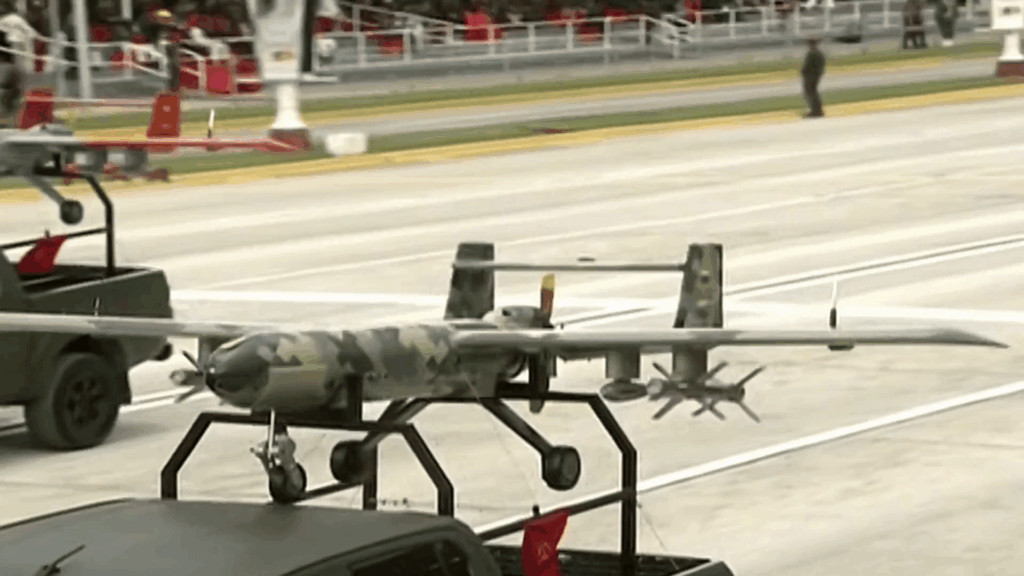
In general, the Mohajer-6 offers the Venezuelan military a new means for conducting aerial surveillance and reconnaissance, and likely armed attacks, with an appreciable endurance. The drones could help patrol the country’s Caribbean coast and inland borders, and potentially offer a way to immediately strike targets of opportunity. In an actual conflict, they could also help bolster the country’s limited traditional tactical aviation capabilities.
“Between 2009-16, Venezuelan drones were used mainly for surveillance and patrol. Since 2022, with the development of the ANSU-100, the focus has shifted: the drones not only observe, they can attack,” according to a detailed report earlier this year from the Miami Herald on Venezuelan drone developments, in general. “Analysts describe this as an ‘Iranization’ of Venezuela’s military doctrine, seeking to compensate for conventional shortcomings through armed drones and what are called ‘loitering’ munitions, or suicide drones. These are expendable unmanned aerial weapons with a built-in warhead that can hover over a target area before crashing and exploding on a target.”
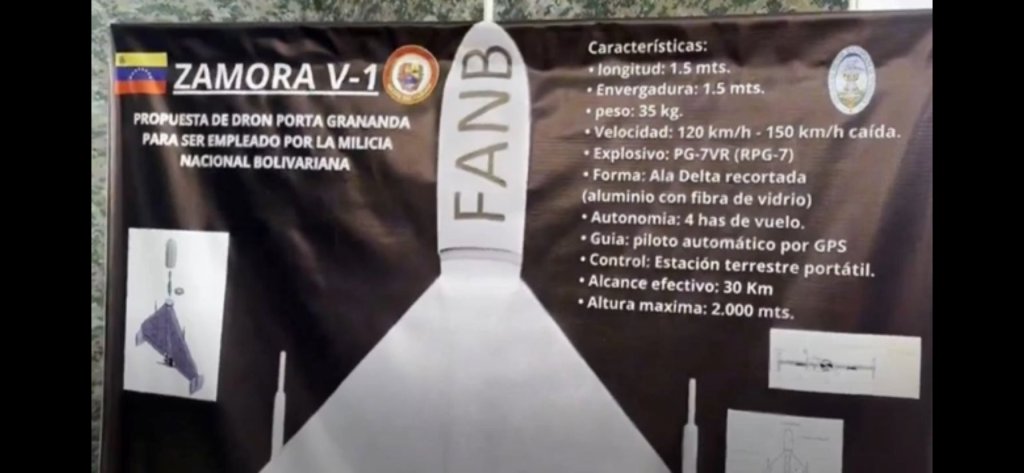
It is possible Mohajer-6s, as well as ANSU-100s, could be employed as longer-range kamikaze drones, and in significant volumes where they could be particularly effective in overwhelming defenders. At the same time, doing so on any real level would require a steady pipeline of new drones, and come at a commensurate cost. Venezuela is also known to be pursuing a purpose-built long-range kamikaze drone, the Zamora V-1. The V-1’s design is at least heavily inspired by Iran’s delta-winged Shahed series, if it is not just a direct clone or derivative. This reflects a global trend in the fielding of Shahed-type drones, with and without Iranian assistance, including now in the United States. Shahed has become something of a household name, in no small part because of Russia’s extensive use of a growing number of variants and derivatives of them in the conflict in Ukraine.
When it comes to Mohajer-6s, how many Venezuela currently has is unknown, and the capability of that force to perform any mission set at present is unclear.
In general, the Venezuelan government is certainly in a position now where having any kind of increased aerial surveillance coverage, both internally and offshore, and more flexibility to respond to threats kinetically, would be a major boon. Last Friday, U.S. President Donald Trump disclosed a first-of-its-kind covert attack on a target inside Venezuela, which was later reported to have been carried out somewhere along that country’s coast by a CIA drone, as you can read more about here.
There also continues to be the prospect of more overt U.S. military action against Venezuela amid a massive ongoing buildup in the region, ostensibly tied to expanded counter-drug operations, which TWZ has been tracking very closely. Especially with their ability to operate across longer distances via autopilot, armed Venezuelan Mohajer-6s (or ones turned into kamikaze drones) would present a potential threat to American forces in and around the Caribbean. Even if the danger they pose is very limited, it is still one that U.S. commanders would have to take into account, along with other threats that TWZ has highlighted previously.
The Venezuelan military’s efforts to acquire Mohajer-6s also underscore its general interest in expanding its drone capabilities, which could further grow into a more complex deterrent as time goes on. The delivery of large numbers of Shahed-type drones, in particular, would create major complications for American forces at sea and on land. The Shahed-136’s range is at least around 1,000 miles, more than enough to get to Puerto Rico, as well as other U.S. operating locations around the Caribbean. Iran has also claimed that the drones can fly out to 1,500 miles, which would put areas of southern Florida in reach. Large numbers of U.S. aircraft and other assets are currently sitting largely out in the open in sites in the region. For years now, TWZ has been highlighting the risks that kind of posture creates, especially to drone attacks. Uncrewed aerial systems also present very real and still growing threats to ships.
The video below includes a montage of clips from Iranian state media showing Shahed-136s being employed during an exercise.

Otherwise, American authorities make no secret of the fact that they are engaged in a steadily escalating pressure campaign targeting the country’s dictatorial President Nicolas Maduro and his regime. Earlier this month, this effort expanded to include a maritime blockade targeting the Venezuelan oil sector, which has included seizing oil tankers.
All of this may well have provided new impetus in Venezuela to get even a limited number of Mohajer-6s in actual service. With the appearance of the picture said to show one of the drones at El Libertador, more details may now begin to emerge.
Contact the author: joe@twz.com
Loading comments…
Comments couldn’t be loaded. Please refresh the page.