
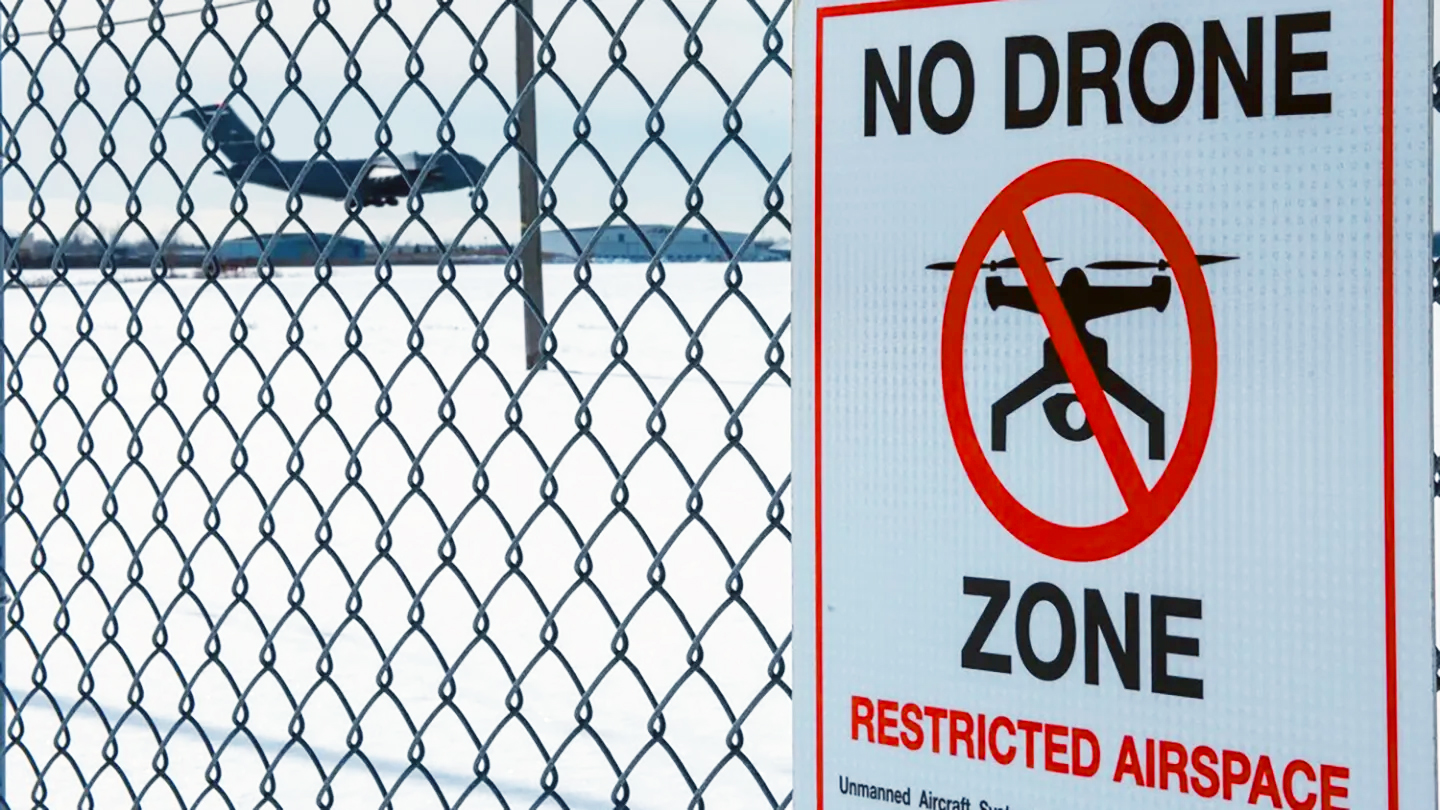
Last November, drones of an unknown origin appeared over Picatinny Arsenal in New Jersey, which The War Zone was first to report. In the following weeks, waves of drones were reported all over the state, and there were incursions over military bases in the U.S. and overseas. The sightings closed airspace, forced increased security patrols and spurred Congressional queries. These all followed another incident that we were the first to report, the December 2023 extremely troubling drone incursions over Langley Air Force Base in Virginia.
Despite all the evidence that we have brought up over the years that points to foreign actors using drones to collect intelligence about U.S. military capabilities, installations, and tactics, the U.S. military has in the past denied any organized or unorganized foreign nexus. While that view is changing, one government insider we spoke with has little doubt that our adversaries are spying on us with drones.
Brett Feddersen was a high-ranking official at the Federal Aviation Administration, the White House’s National Security Council, the Pentagon’s Joint Chiefs of Staff, and the Defense Intelligence Agency. He now serves as vice president of strategy and governmental affairs for D-Fend Solutions, which supplies counter-drone equipment to the U.S. military, Department of Homeland Security, Department of Justice and other clients. The systems rely on a variety of sensors for detection and hijacking command signals to bring them down. He is also chairman of the Security Industry Association‘s Counter-UAS Working Group.

We spoke with Feddersen on Thursday in a wide-ranging discussion about drone threats, mitigation efforts and of course the so-called Jersey drone scare. In the first of our two-part interview, we discuss the role of foreign governments in incursions over military and other sensitive installations, how those nefarious actors could be doing it, as well as concerns about drones being used to attack targets in America.
Some questions and answers have been lightly edited for clarity.
Q: Last year, there were several drone incursions over installations like Wright-Patterson Air Force Base in Ohio and Lakenheath Air Base in England and several others. Were there foreign connections to any of the many such instances?
A: I highly doubt that there weren’t, in that big mix of drones, some foreign adversary was taking advantage and trying to find information or video. We see probing regularly from foreign adversaries over sensitive sites like bases. We also see them over sensitive sites like critical infrastructure, constantly taking pictures, doing surveillance or just trying to get any type of pattern of life they can out of these views. So there was a true mixture of all that.
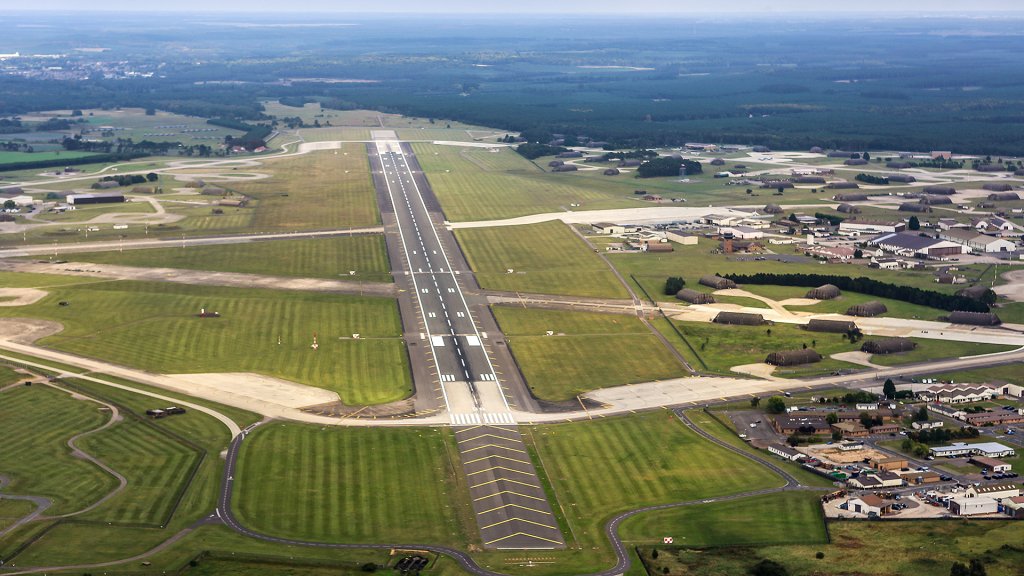
Q: You said that adversaries have been probing bases with drones. Where, when and how often?
A: Even by the military’s own admission, this past year, they said that they had 350 violations last year over military bases. And as everybody knows, or everybody should know, those military bases have sensitive assets and equipment, even if it’s an open base that has just aircraft on the ramp. Those are taxpayer dollars that are going to those types of assets, and those assets need to be protected. So even with the most casual observer wanting to take pictures of a base, you have a different set of violations. Surveillance of the military. You have the issue with those drones taking pictures or flying where they’re not supposed to be in close proximity to other aircraft. And then you also have those [situations] where we know that our adversaries are taking photographs of our aircraft in planes, much like satellite imagery does. But you can gather good intelligence just from taking photos. Photographs and monitoring and watching what’s happening at different bases.
Q: Do you know which of these incidents involved foreign adversaries?
A: We know the one at Vandenberg was a foreign national, because they were arrested on the aircraft before they were leaving the country. The government doesn’t get into the specifics as to parse out which bases are necessarily the more vulnerable ones in an unclassified setting. So we do know, though, that there are a number of those types of activities occurring with foreign adversaries – like Vandenberg – happened.

Q: Vandenberg was not the only instance of foreign involvement in drone incursions that appear in open sources. Can you tell us about any we don’t know?
A: None that I can get particularly into. Nothing that’s been released to the public that I can talk about. But it’s safe to assume that critical infrastructure and our bases are being probed by the adversaries using drones.
Q: Which adversaries?
A: China would be the biggest one. We also know Russia is very actively involved in espionage here in the United States, you know, to a lesser degree, Iran and North Korea. But China predominantly uses quite a bit of this technology and tools to gather information here in the U.S.
Q: So would all those countries have flown drones over U.S. military installations and sensitive areas?
A: Yes, but that’s not to say that the individuals who are flying them are actually Chinese nationals or Russian nationals … We do know that there are unwitting individuals who are feeding that information back, but we also know that they have individuals that they are paying to do this type of activity.
Q: How does somebody do this unwittingly?
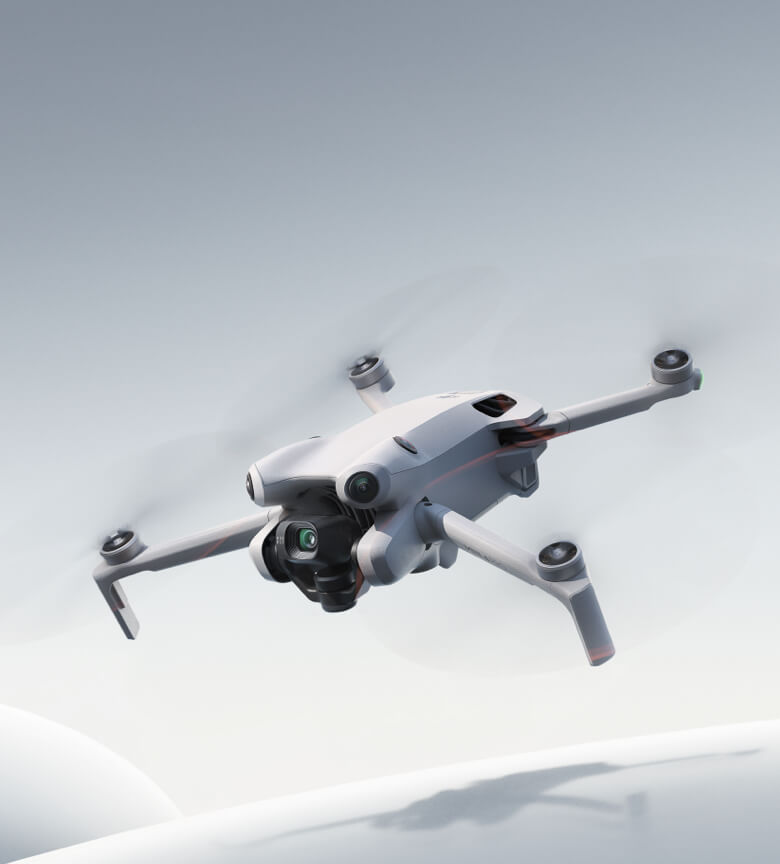
A: If you had a drone and you were out flying around and that drone was, let’s say, the common Chinese manufacturer, DJI, or Autel. You’re flying that around, taking video of what’s going on, that video is saved onto the drone device itself, or into the controller. And when you want to update that, all that stuff becomes accessible by the software update that is coming from China. So that information, plus the fact that you know it’s also being sent through social media, different views, different things that are going on, so unwittingly, those individuals are creating this problem.
Q: So the Chinese and the Russians and North Koreans and Iranians are paying people here in the country to fly drones on their behalf over these military installations and sensitive areas?
A: Yes, there’s compensation. [The people operating these drones] are mainly U.S. nationals who just don’t know any better. They’re breaking the law because they’re flying too close to airfields without calling the tower first, or they’re flying in restricted airspace because they’re not savvy enough to pay attention to the fact that there’s airspace restrictions around stadiums and in bases and things like that. But we do know that there are individuals in the U.S. who are being compensated for activities that foreign nationals want. So we also know that some of their techniques are to elicit other individuals with drones to provide information. Those pictures, whether it’s a direct upload, a social media upload, or they’re paying individuals to purposely go and take videos and send back that information.
Q: From over U.S. military installations and sensitive areas?
A: Yes, because our sensitive areas are everything from airports to nuclear facilities, to stadiums, where we’re trying to protect people for large events, all those things that critical infrastructure has 16 sectors that are identified in it, but they’re very important to our national security. You talk about water reservoirs and different things like that. There was an incident [last year] where a New Jersey man was dropping dye packs into swimming pools. And so that, in itself, highlights the risk that we have to our own water reservoirs, water treatment plants that are left unprotected, although they’re part of the critical infrastructure program.

Q: Did you observe any of this when you were in government?
A: These types of tactics aren’t new. Drones have been around for quite a while. We started seeing them really impacting the airspace issues back in 2014 and 2015 when they had breached the perimeter of the White House and crashed on the White House lawn, or landed on the White House lawn. We also saw it with other non-traditional aircraft threats, like the gyrocopter guy who flew and landed on the Capitol lawn.
Q: What can you tell me about the Langley Air Force Base drone incursion in December 2023? Do you know anything specific about that? Who’s behind that?
A: Yeah, I’m not going to be able to talk about Langley, other than the fact that there were obviously a series of drones, and there were some complications in being able to detect and deal with those drones in that incident. But that is a good example of the type of activity we’re talking about across various U.S. bases here in the homeland.
Q: What were those complications?
A: There were some systems that didn’t pick up certain drones. There are other systems that just weren’t operating at full functionality. The technology is there. While the technology seems to be complex, it often isn’t. It’s just a matter of the type of technology that’s employed, especially in some type of layered solution where you can guarantee – guarantee is probably not the right word – where you’re mitigating the risk of not being able to see or identify or respond to these drones. You know, down to the lowest level, that layered approach of different sensors is really kind of the big benefit there. And when you don’t have that, there are times with certain drones that you’re blind to their flight over the sensitive areas.
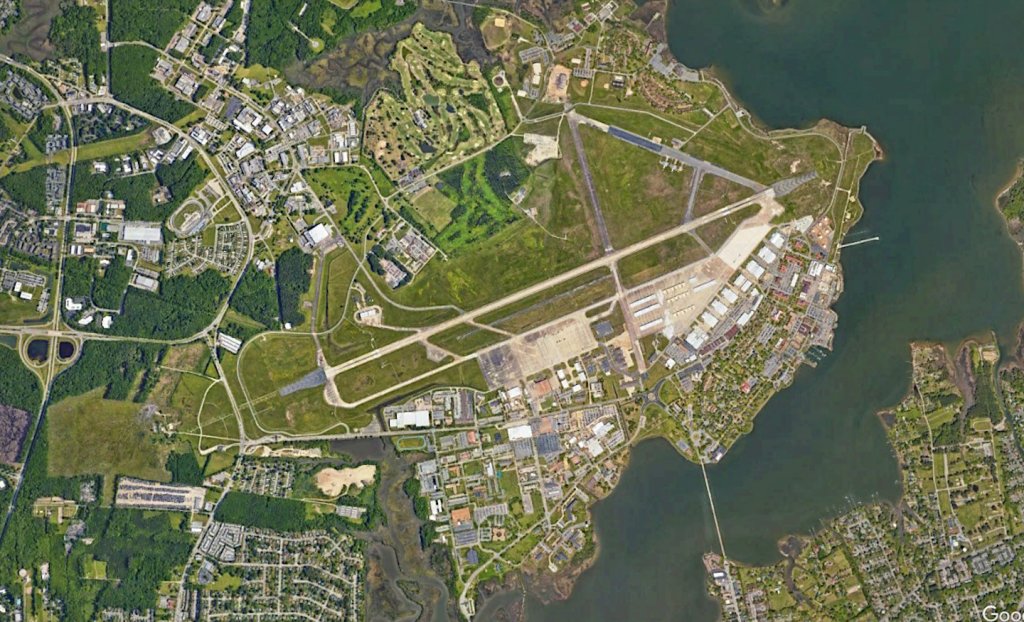
Q: Was there a foreign nexus to the Langley drone incursions?
A: I believe there was. I don’t have any of the deeper background to get into to prove that. But we find that when some of these complex things, when there’s more than one drone being used, that foreign adversaries have their fingerprint on it somewhere in the process.
Q: Top officials said there were car-sized drones spotted over Langley. What could those have been?
A: There are commercially available drones that are quite big. When they say car size, in my mind, it’s Prius size, right? So it’s not like a full sedan or a pickup truck, but there are drones that are out there that are the size of a Prius. They’re used for agriculture. They’re meant to carry a heavy payload of chemicals or water for specific things or precision seeding in our agriculture. Drones have changed the way we farm in the U.S. quite a bit. There are heavy payloads that are going back and forth, let’s say to a work site or drill site that needs tools or heavier things. There are drones that are big that are able to do it. These are the same drones that were used on October 7 [2023] by Hamas to drop RPGs. So the same ones that we see on the battlefields of different conflict areas. These aren’t totally different drones. They’re all capable of carrying a payload, and they all have some legitimate use. Those drones, though, wouldn’t have a legitimate use if they were in a stadium area or some type of massive venue or national security event.
Q: Those larger drones are harder to operate and more expensive to purchase. Does this increase the likelihood that there was a foreign connection to the Langley incursions?
A: The larger drones are very expensive. They’re as much as a car. So when they’re buying them and they’re using them, they’re making sure they’re taken care of. If it’s an adversary that’s using the drone, they’re also proficient on the drone. It just takes practice to get used to.
Q: But given that price, what is the likelihood that foreign adversaries are paying for these drones?
A: If they’re receiving compensation and buying it, I guess that that connection could be made, but there’s no hard evidence of that connection. We just know that those drones are being used and that the adversaries are very active in trying to figure out what’s going on inside the U.S.
Q: Do you have any information about the incursions over the bases in England and Germany that took place last year?
A: Our allies are facing the same issues that we’re facing here in the U.S. Even our U.S. bases overseas are vulnerable to that type of – exactly what we’re talking about – the overflights, the gathering of information. So it’s not unusual that this happened. They are being coordinated because they’re in allied countries.
Q: Did those incursions have a foreign nexus?
A: I do not know, but I believe so.
Q: Why?
A: We did have the drone incident in Japan where one of the naval vessels was overflown by a drone. I believe that we were able to ascertain that was definitely a foreign nexus, you know, taking photographs of these things. We’ve seen these for years. Usually, they’ve come in the form of individuals driving by taking pictures, or spotters, or people pretending to be tourists. These activities are not unique to the U.S.
Q: What is the U.S. doing about the incursions with a foreign nexus? What is the U.S. doing to detect, mitigate and prosecute any kind of response?
A: Fortunately, DOD has taken a proactive posture in developing and deploying some of these systems to some of the bases. The threat really inside the U.S. is coming from commercial off-the-shelf drones, or do-it-yourself drones. They’re not state actor drones being shipped to the U.S., then flown around. So the approach here to protect our bases and our critical infrastructure has to be one that is able to detect and mitigate commercial off-the-shelf drones, or do-it-yourself drones that are flying around. What the DOD and what the government writ large is doing is taking the systems that they’re already using and kind of building on those, or creating more of a layered approach to it, and starting to put those out to the bases that need it. There are bases that have equipment in place, but like I said, there’s a lot of complexity to layering those systems together that can create gaps, which we’ve discovered through some of the incidents like Langley.
Q: Is the U.S. conducting these activities in adversary countries?
A: You mean surveillance?
Q: Yes.
A: Using commercial drones inside civilian airspace? That activity is just completely unsafe and the U.S. and its allies are relying on transparency in what’s going on and what’s operating.
Q: How concerned are you that the U.S. may suffer something like Ukraine’s Operation Spider Web or Israel’s Operation Rising Lion – where drones were pre-placed in trucks and other locations to carry out remote attacks launched from afar?
A: It’s a very good probability and possibility that it could happen here. So the concern is real. The technology they used and the way they employed it is not new technology. They just used it in a different fashion, kind of a proof of concept. So, yes, that could happen here in the U.S. The distance that they covered means that they can launch the attack from outside the U.S. to pretty much any point inside the U.S., and that’s going to make it a little bit more difficult with investigations. It’s why you need to have good detection and mitigation sensors in place in order to do this. Now, the Operation Spider Web, the way they did it. You know, we’re a passive RF sensor. For example, we would have been able to identify those drones and mitigate those drones because they were still receiving and transmitting RF signals, even in and out of autonomous linking, they still had control of the drone so that they could fly it. That is where a majority of that RF spectrum detection mitigation takes place. Other things, like in autonomous mode and other things, you have to integrate radars. You have to integrate other sensors like optics or acoustics.
Q: How worried are you about Mexican cartels using drones to kinetically strike targets in America, like they do south of the border?
A: Very. We know they’re being used for surveillance. We know they’re being used in operations to help guide people across the border, and not necessarily illegal immigrants, but their own people across the border. We know that they’re carrying contraband, weapons and drugs constantly using the drones. And as we secure the border, especially at the crossing points, drones and small aircraft have always been a better way to get across the border than trying to do it via land. So it’s definitely an important thing that the government is taking responsibility and building security, both on the ground and in the air, for our borders. But you know, it goes beyond that. The drugs that are inside the United States, there are criminal organizations that have cartel influence, which are constantly smuggling contraband into our prisons today, and our prisons are left defenseless, unable to stop it. These are drugs, these are other types of weapons. These are cell phones. All these things that enable the prisons to be unsafe are not being protected because, again, prisons don’t have the authority.
In our next installment, Feddersen talks about how the Jersey drone craze got out of hand, how that could have been stopped and what people were actually seeing.
Contact the author: howard@thewarzone.com
Loading comments…
Comments couldn’t be loaded. Please refresh the page.