
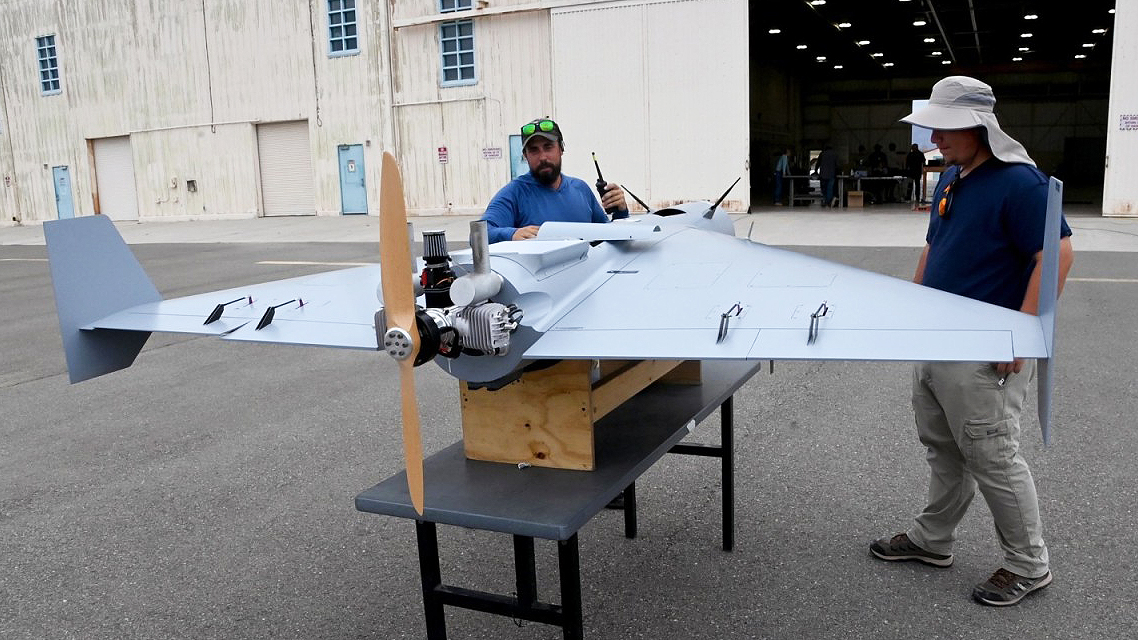
The U.S. Marine Corps is testing the Low-Cost Uncrewed Combat Attack System (LUCAS) as a long-range one-way strike drone. Based on a design reverse-engineered from the Iranian-designed Shahed-136, these drones have already been deployed by U.S. Central Command (CENTCOM) to the Middle East, which you can read more about in our deep dive here.
The Marines are sponsoring a test of the LUCAS drones at the U.S. Army’s Yuma Proving Ground (YPG), the Army stated. The move comes as the Corps is working to increase its own one-way attack drone capabilities and the Pentagon is pushing for more drone use across the military in the wake of their ubiquity in the Ukraine war. The Pentagon is hoping that the LUCAS drones can be quickly and cheaply built and delivered at scale.
“Harkening back to the Liberty Ship production model that rapidly produced thousands of cargo ships during World War II, testers hope that the LUCAS will eventually serve a similar function in the new era of warfare,” Col. Nicholas Law, Director of Experimentation in the Office of the Under Secretary of War for Research & Engineering, said in a release. “It’s not a single manufacturer: it’s designed to go to multiple manufacturers to be built in mass quantities.”
We laid out this exact concept months ago, along with our in-depth case for rushing mass production of American Shahed-136 copies, that you can read in full here.
Law envisions these drones as ultimately able to be used on dynamic targets, such as vehicles on the move or targets of interest that the drones find themselves with a degree of autonomy.
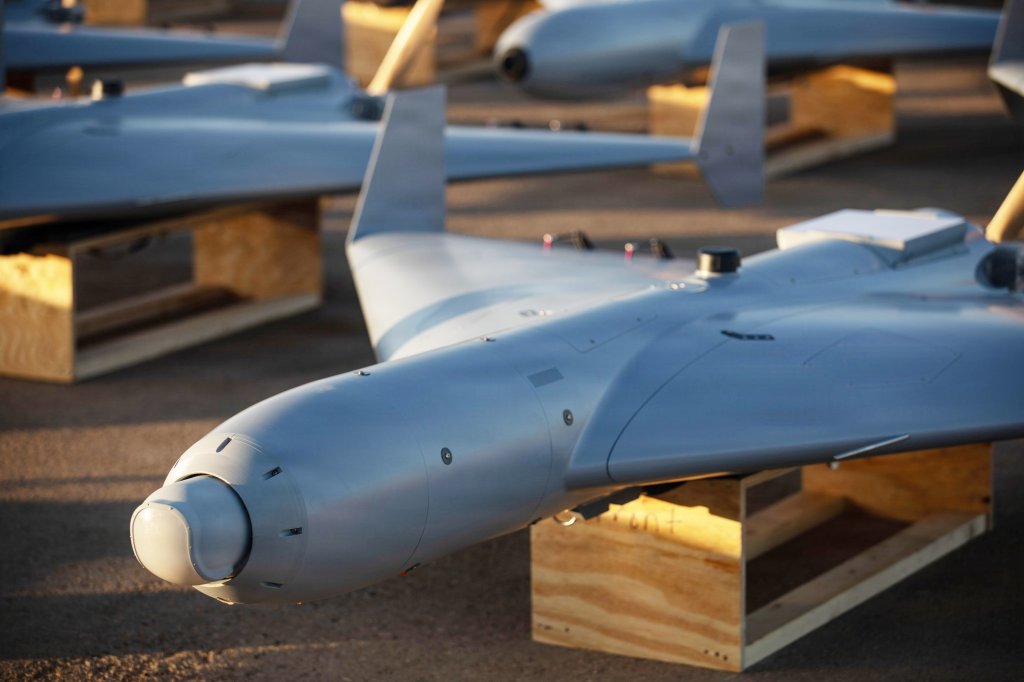
“Once we start weaponization and automated target recognition, we can have a target that is a representation of a real target,” he explained. Law didn’t provide any specifics, and we have reached out to the Army and Marines for more information.
You can read our deep dive on how artificial intelligence will revolutionize lower-end drones like LUCAS in exactly this way in our special feature linked here. But the fact that LUCAS can be equipped with a satellite datalink means that it could hunt for and find targets of interest over great distances all on its own, while still allowing a human operator to approve a strike.
In addition to strikes, LUCAS drones equipped with nose-mounted gimbal cameras can also be deployed to provide intelligence, surveillance and reconnaissance (ISR). With an estimated price tag for the platform itself of about $35,000, these LUCAS variants could provide an affordable, attritable platform for ISR. The LUCAS drones we have seen also have swarming capabilities — the ability to work cooperatively as a team — which can make them especially effective at attack operations and acting as decoys to confuse enemy air defenses.
The one detail Law provided about the drones being tested at YPG is that they are not yet equipped with warheads.
“The warhead that will eventually be integrated into LUCAS isn’t constructed yet, but it will also be low-cost and mass produced by multiple manufacturers,” Law posited. “Evaluators are currently testing LUCAS with inert payloads.”
CENTCOM declined comment on whether its LUCAS drones currently deployed have kinetic payloads and referred us to statements previously made that they have been deployed as one-way attack drones. It’s possible that they feature more improvised, less powerful warheads at this time. They can also just fly into their targets to damage them — especially fragile ones like radar arrays.
As we noted in our original piece on the topic, CENTCOM stood up Task Force Scorpion Strike (TFSS), the military’s first one-way attack drone squadron, to operate the LUCAS drones. Roughly 10 feet long with a wingspan of eight feet, was developed by Arizona-based SpektreWorks in cooperation with the U.S. military primarily as a target drone to emulate a Shahed-136-like threat, but also as a weapon in its own right.
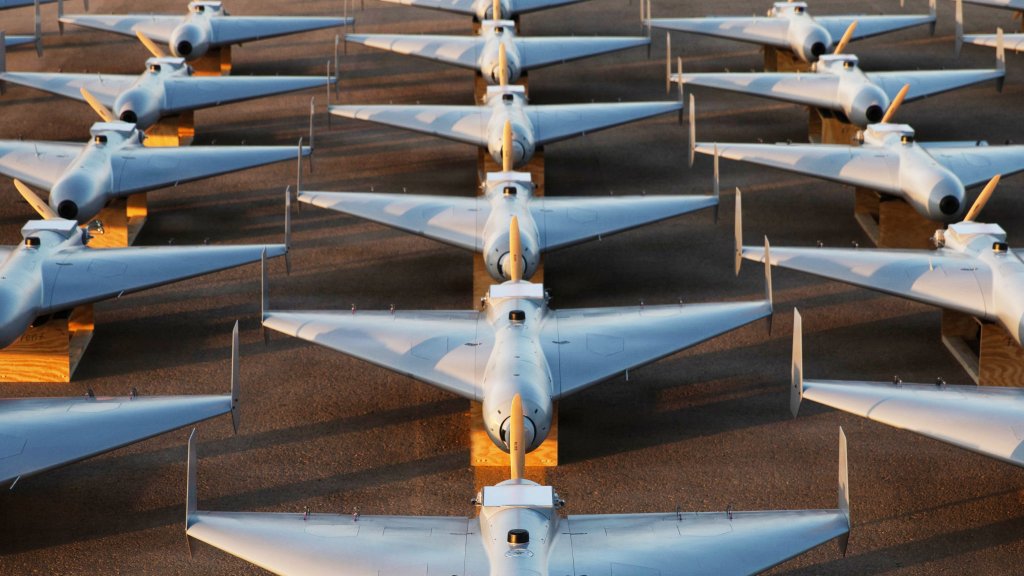
There are, however, other companies involved in providing LUCAS variants. For instance, Griffon Aerospace has been pitching a Shahed-like drone called the MQM-172 Arrowhead to America’s armed forces.
The company, which is building the air frames, has already provided them to the Pentagon for use as both strike weapons and targets, Griffon spokesman Dan Beck told us Wednesday. However, it is unclear whether they have been fitted with kinetic payloads or how widespread their testing and use is across the military. We have reached out to the Pentagon to learn more.
Beck said Kraken Kinetics is providing the payload for these LUCAS variants. We’ve reached out to them as well.
While Beck declined to provide many details of his company’s work with the Pentagon, he did offer us some insights about the Arrowhead’s specifications.
Considered a long-range LUCAS version, the Arrowhead can carry a payload of up to 100 pounds as far as 1,500 nautical miles, Beck told us. That’s akin to the Shahed-136 drones produced by Iran and modified by Russia for its use against Ukraine. The current LUCAS models deployed to the Middle East are smaller and have significantly less endurance and about half the payload capacity.
While the general concept has existed for decades, similar delta-winged one-way attack munitions are steadily emerging globally among allies and potential foes alike, including in China. Russia is also said to be assisting North Korea in establishing its own domestic capacity to produce Shahed-136s, or derivatives thereof, as part of an exchange for Pyongyang’s help in fighting Ukraine.
Beck also told us that Griffon has been “flying these airplanes very frequently” and have been launched pneumatically and from trucks. There are plans to use rocket-assisted takeoff (RATO), but that hasn’t been tested yet, he added. Asked about whether these have been tested with kinetic payloads, Beck declined comment.
Though these types of weapons have a long development history, Iranian officials mocked the U.S. for copying their design.
“There is no greater source of pride and honor than seeing the self-proclaimed technological superpowers kneel before the Iranian drone and clone it,” Brig. Gen. Abolfazl Shekarchi boasted to reporters on Tuesday.
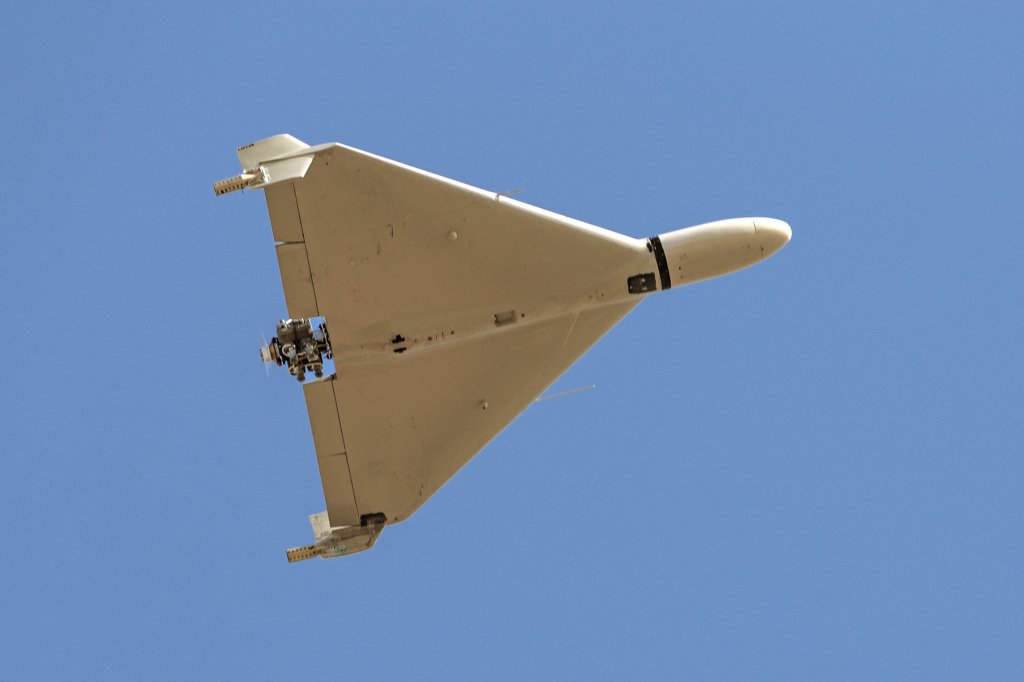
The reality is that Iran didn’t really come up with this configuration, it dates back decades to a western design and Israel largely pioneered the operational use of the long-range one-way attack munition.

With LUCAS’s sudden deployment to the Middle East as a kinetic weapon and now the Marines testing the concept to see if it fits their needs, the future of America’s Shahed-136 knock-off looks remarkably bright. And we could be seeing just the budding of what will become a mass produced staple weapon that will be deployed en-masse across Europe and the Pacific.
Contact the author: howard@thewarzone.com
Loading comments…
Comments couldn’t be loaded. Please refresh the page.