
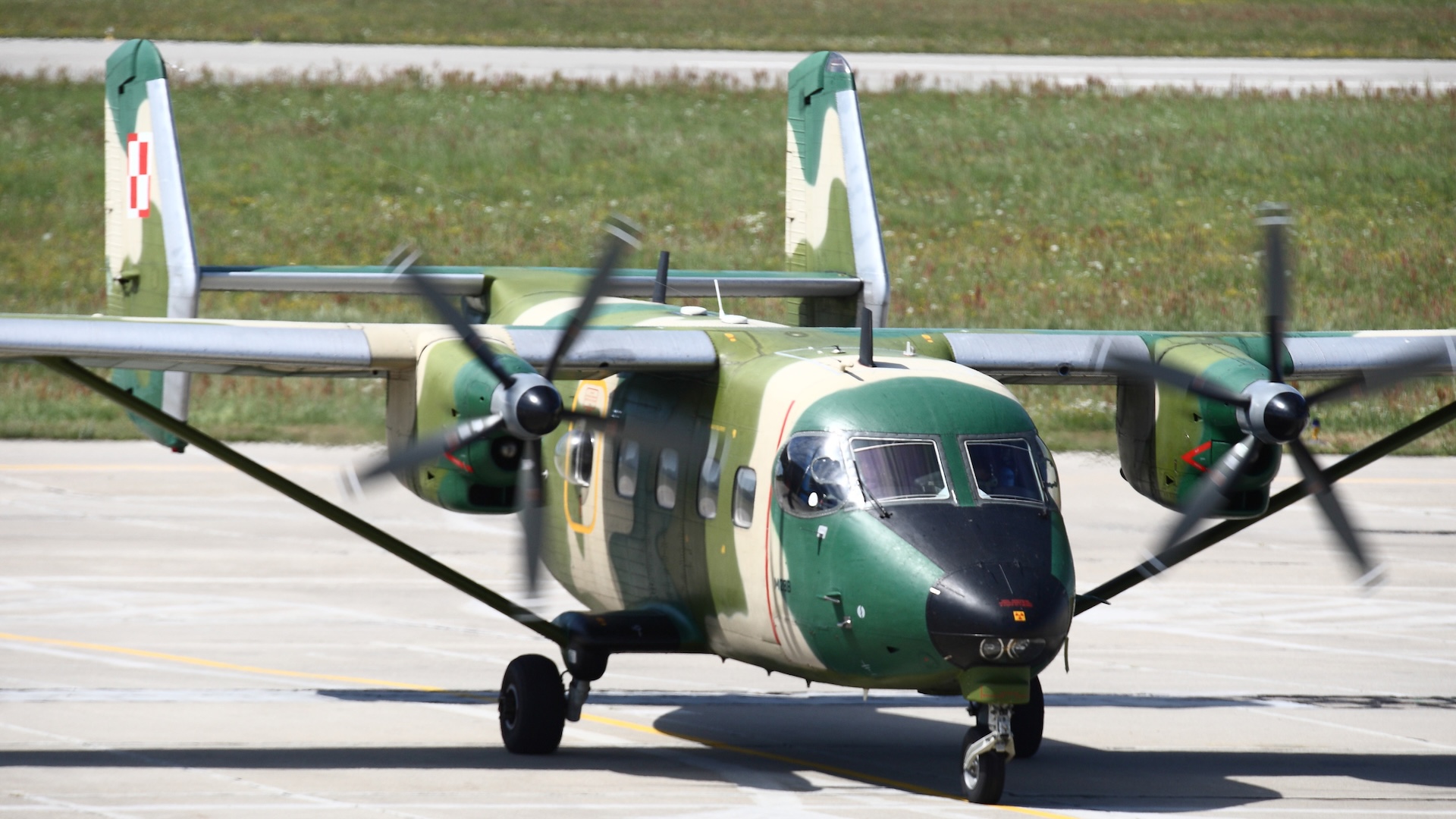
Poland has confirmed it is going to arm its M28 Skytruck twin-turboprop utility aircraft for the counter-drone role, a development that is unique for a NATO air arm. This comes after the aircraft from which the M28 was derived, the Soviet-era Antonov An-28 Cash, has found notable success in the same capacity in Ukraine. You can read more about that in our recent coverage here.
Speaking at a panel discussion on air superiority at the recent Defence24 Days event, Maj. Gen. Ireneusz Nowak, the inspector of the Polish Air Force, confirmed that work was underway to modify the M28 for the mission.

“Following the signing of the contract between the Armed Forces Support Inspectorate and the contractor, the first prototype of the armed [M28] will undergo modifications to equip the aircraft with gun armament,” Nowak said. He also referred to the success of the An-28-based solution in Ukraine.
Interestingly, Nowak added that other undisclosed aircraft will also be deployed by Poland in a similar role.
Although the An-28 was manufactured in Ukraine, the production line in that country has long since closed down, meaning that aircraft and spares are limited. On the other hand, PZL Mielec in Poland launched production of the M28 Skytruck development in the early 1990s, and limited manufacture continues to this day. Meanwhile, the Polish Air Force currently operates around two dozen M28s, primarily for transport work.
In Ukrainian hands, the An-28 was initially armed with a six-barrel Gatling-type M134 Minigun, which is pintle-mounted in the cabin door. The aircraft’s high-wing configuration provides a notably wide field of fire for the weapon, which generally fires between 3,000 and 6,000 rounds per minute, or 50 and 100 shots every second.
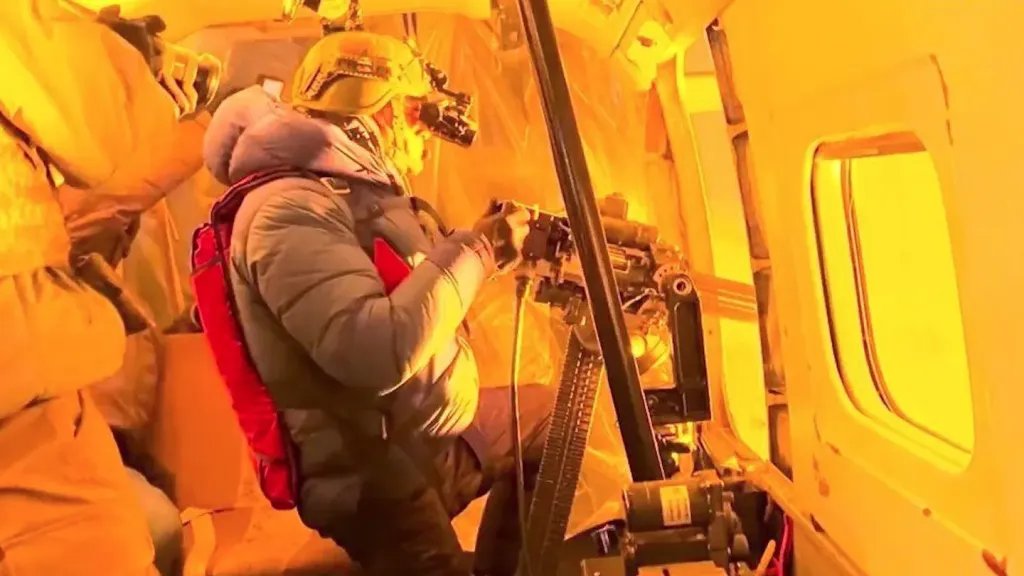
Subsequently, the Ukrainian aircraft has been adapted to launch two different types of interceptor drones, providing another means of defeating their targets. You can read about this development here.
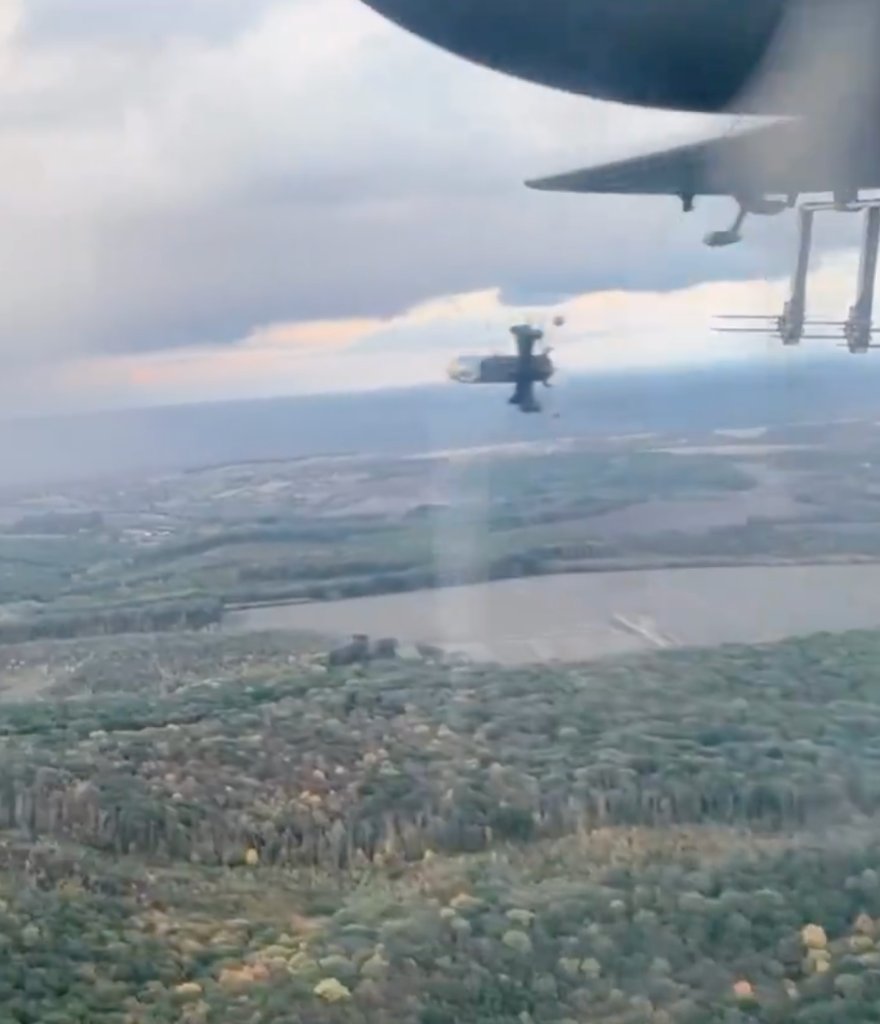
The primary targets of the Ukrainian An-28 are Shahed/Geran long-range one-way attack drones.
After being vectored to an area where the Russian drones are known to be flying, the crew uses an infrared camera, mounted externally on a turret, as well as night-vision goggles (NVGs), to help engage them.
The An-28 and M28 both offer a significant short takeoff and landing (STOL) capability, making them ideal for operating in and out of shorter and more austere forward airstrips. Ukraine has certainly made use of this capability, and Poland is likely to do the same if it formally adopts the drone-hunting M28.
At this point, it is not entirely clear if there are firm Polish plans to introduce a drone-hunting M28, most likely via conversion or potentially even new production, or if the initial focus will be on testing of the prototype.
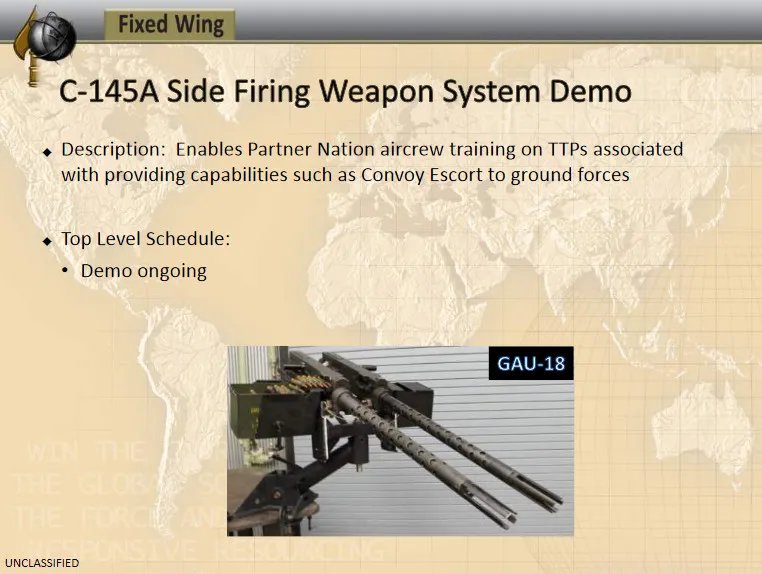
As we reported in the past, even before the armed An-28 appeared in Ukraine, Air Force Special Operations Command (AFSOC) had explored the possibility of converting an M28 derivative into a small side-firing gunship, a sort of miniature take on the AC-130 concept, to potentially be able to transfer that capability to American allies and partners. This was based on the C-145A Combat Coyote formerly used by AFSOC, and would have been armed with twin 50-caliber GAU-18 machine guns.
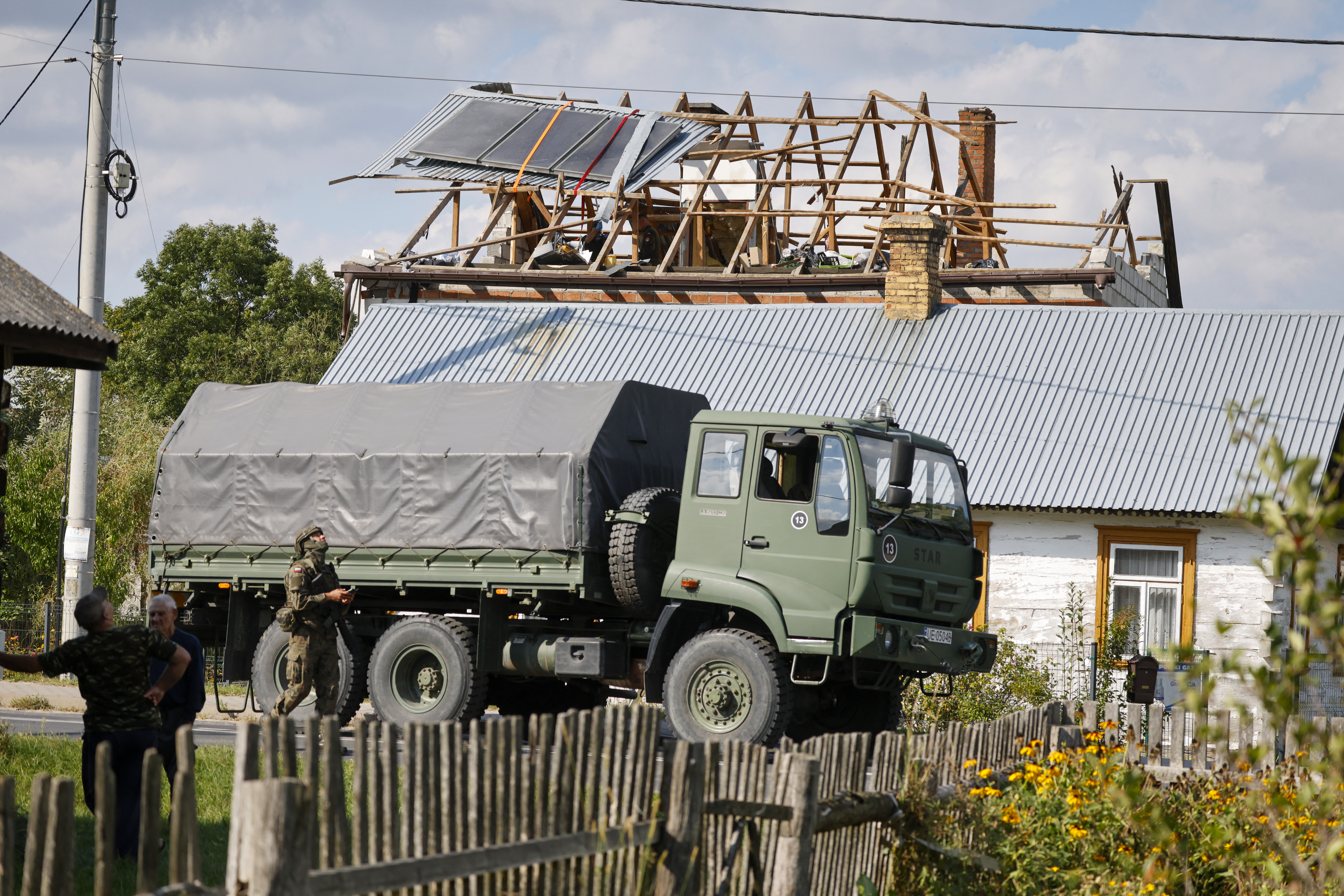
The threat posed by drones to Poland was hammered home last September, when around 20 unarmed military drones entered its airspace after allegedly being launched from Russia. The unprecedented incursion led to the Polish Air Force and other NATO militaries scrambling aircraft. Up to four drones were confirmed to have been shot down, most by the Royal Netherlands Air Force, operating from a base in Poland.
The Polish government concluded that the drone incursion was a deliberate provocation. But it also underscored the vulnerability of Poland’s military and civil infrastructure, and cities were it to come under full-scale attack by armed drones. In such a scenario, Russia would likely employ them alongside ballistic and cruise missiles and decoys, making an even greater challenge for the air defense network.
There is also the fact that fighter aircraft and surface-to-air missiles offer a very expensive, albeit high-end solution to the drone threat. Compared to missiles, a gun-armed turboprop comes with a much lower cost-per-engagement and offers greater magazine depth, and potentially a far lower chance of major collateral damage.
Of course, as in Ukraine, Polish counter-drone M28s would be operated as part of a networked air defense system.
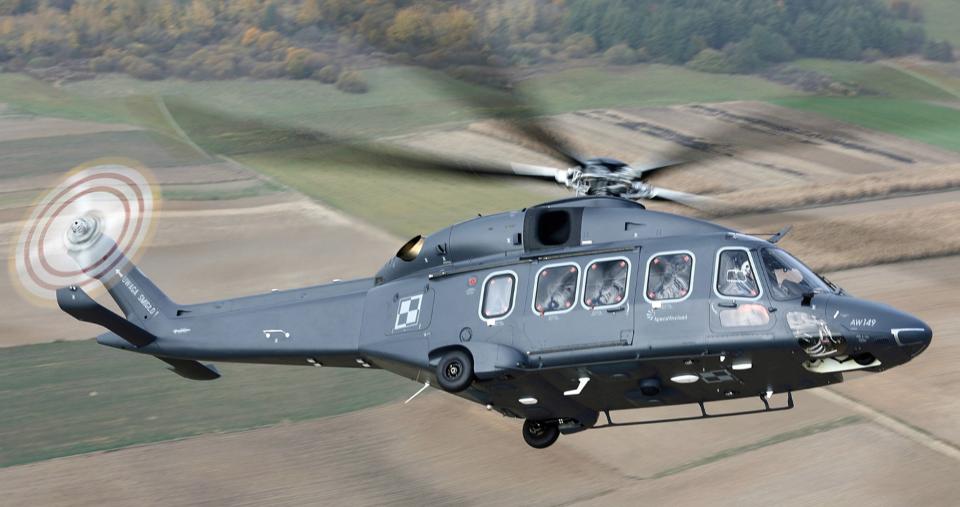
Nowak noted that the Polish Army’s forthcoming AH-64E Apache Guardian attack helicopters and its new AW149 combat support helicopters are also expected to be used to counter drones. Of these, the AW149 is already being adapted to use European 70mm rockets with laser guidance, and will also be fitted with guns. Meanwhile, the counter-drone mission is one of increasing importance for U.S. Army AH-64s, and for attack helicopter operators at large.
Nowak said that the U.S.-made laser-guided 70mm Advanced Precision Kill Weapon System (APKWS) rockets will meanwhile be integrated on Polish Air Force F-16 fighters and FA-50 light combat aircraft. The APKWS could potentially be an option for the M28, too.
Within its air defense branch, Poland plans to introduce new air and missile defense systems procured under the Narew and Wisła programs by 2032, which cover the short-range and medium-range air defense segments, respectively. Directed-energy systems will also be a focus of future planning and could be harnessed for air defense roles.
In terms of air defense sensors, Poland is also making significant investments. It acquired two Saab 340 airborne early warning & control (AEW&C) aircraft under a crash program, and is also planning to field a new airborne early warning system based on an aerostat — a type of uncrewed tethered airship. In the past, Poland has said that the main focus of the aerostat system will be detecting various tiers of drones, as well as helicopters and potentially other lower and slower-flying crewed aircraft. Of critical value here will be its persistent look-down capability that will span the border, keeping watch for incursions from the east.
Once again, while the long-term Polish plans for the counter-drone version of the M28 remain to be confirmed, the fact that a major NATO air force in Europe is taking the drone threat so seriously is worthy of note in itself.
Contact the author: thomas@thewarzone.com
Loading comments…
Comments couldn’t be loaded. Please refresh the page.