
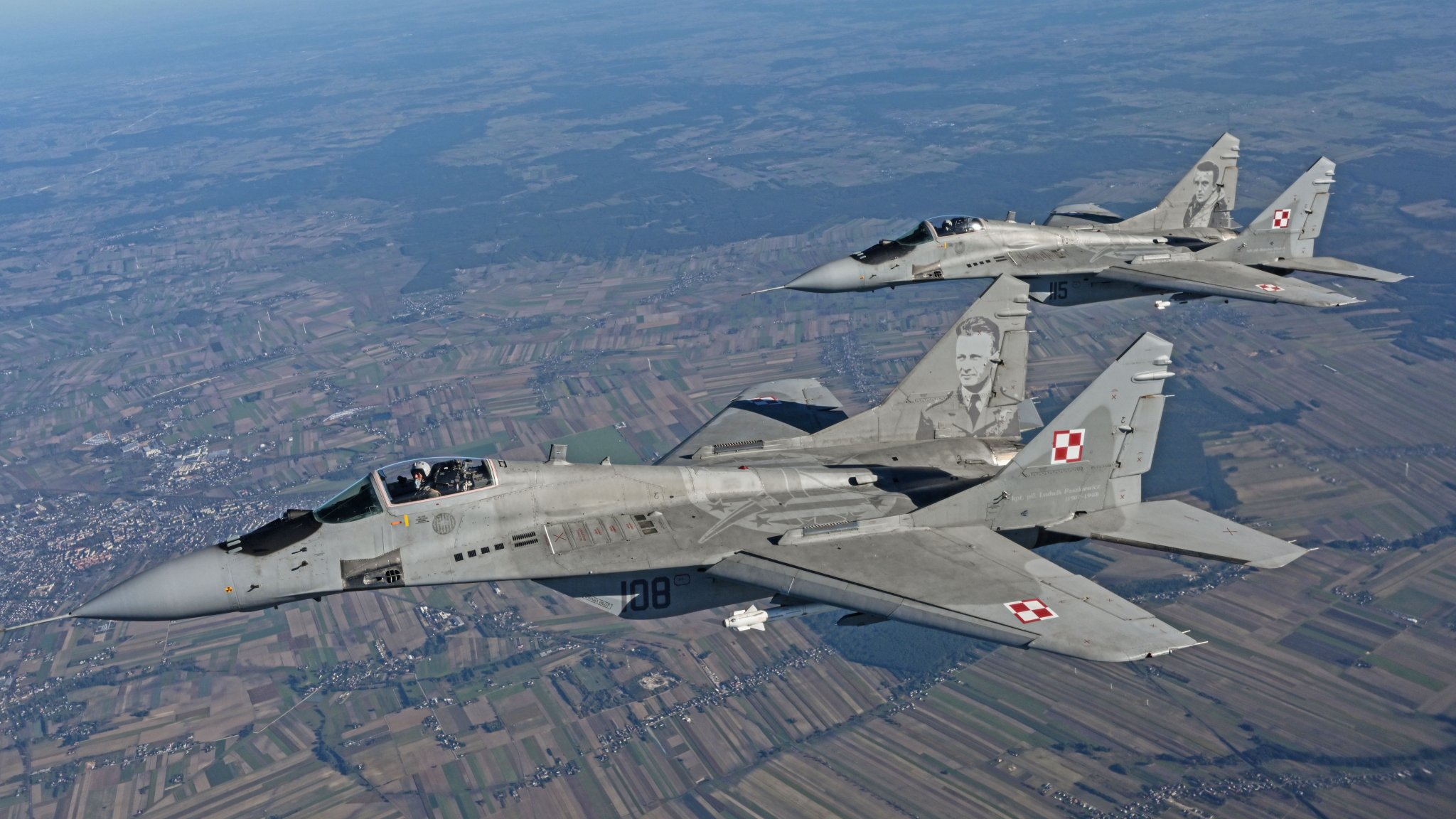
Additional much-needed MiG-29 Fulcrum fighters are likely headed to Ukraine, with Poland in talks to provide the country with its last remaining examples. Poland already donated 14 of its MiG-29s to Ukraine, after becoming the first country to commit to supplying combat jets to Kyiv. The new package should also involve the transfer of drone and missile technology from Ukraine to Poland.
In a statement on X, the General Staff of the Polish Armed Forces confirmed that talks regarding the exchange of MiG-29s are underway.
“The transfer of these aircraft is related to the fact that they have reached their target service life and there are no prospects for their further modernization in the Polish Armed Forces,” the statement says.
The General Staff states that no final decision has been made, but notes that the donation of the fighters is in line with NATO policy of supporting Ukraine and maintaining security on NATO’s eastern flank.
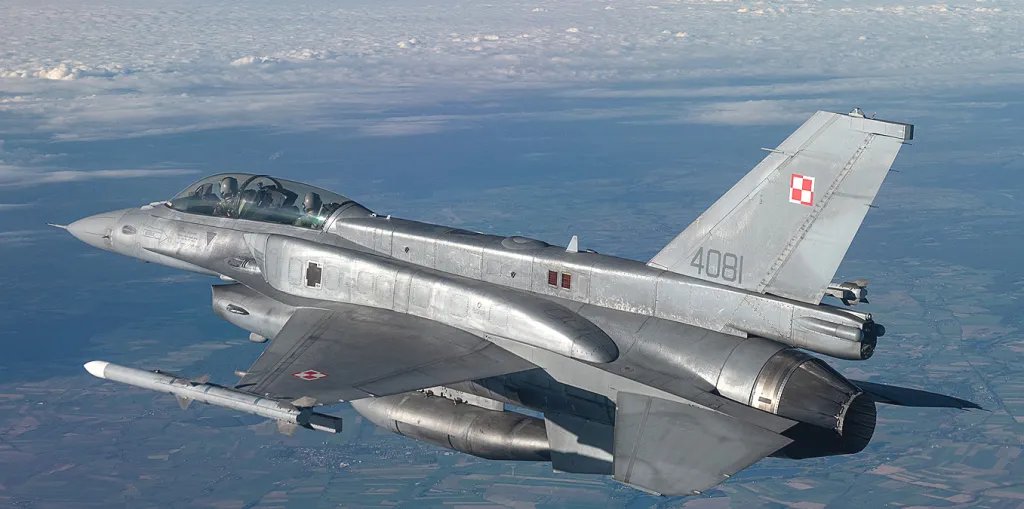
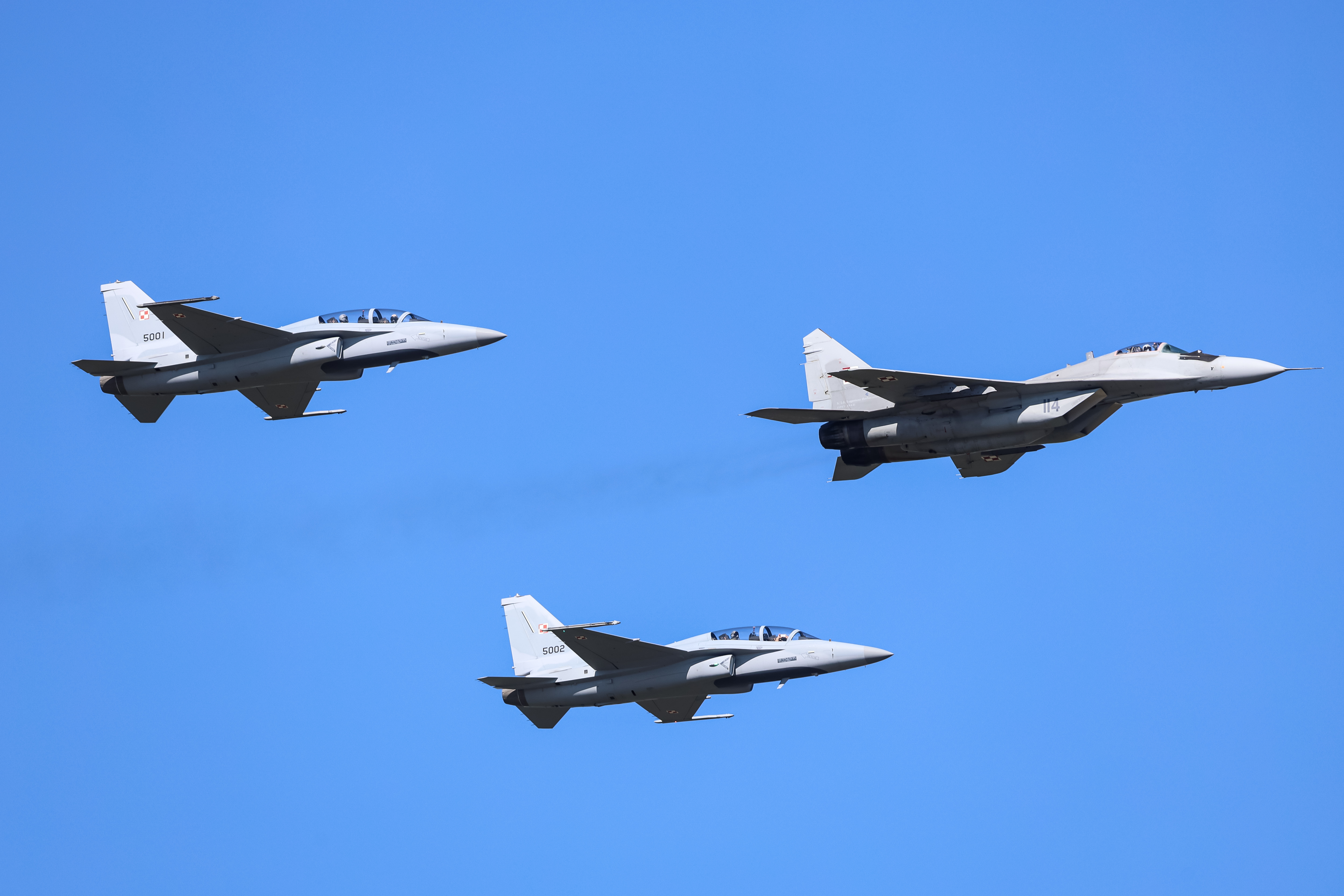
The statement adds that tasks of the MiG-29 aircraft being withdrawn from service will be carried out by Polish Air Force F-16 fighters and FA-50 light combat aircraft.
Interestingly, the talks also involve the transfer of “selected drone and missile technologies” to Poland.
“The aim is not only to compensate for the equipment, but above all to acquire and jointly develop new defense and industrial capabilities,” the General Staff emphasizes.
Discussions around the possible transfer of Poland’s last MiG-29 jets to Ukraine began back in July 2024.
As of now, the Polish Air Force has 14 Fulcrums, comprising 11 single-seat MiG-29 fighters and three two-seat MiG-29UB combat trainers.
Polish Fulcrums came from a variety of sources, as you can read about here. As well as original deliveries from the Soviet Union, Poland acquired former Czechoslovakian MiG-29s inherited by the Czech Republic, as well as upgraded examples that had previously been flown by the German Luftwaffe (and, before that, by East Germany).
The remaining Polish aircraft are very much still active on the front line and in support of NATO.
On two occasions in late October of this year, for example, Polish MiG-29s intercepted a Russian Il-20 Coot intelligence-gathering aircraft over the Baltic Sea.
In March 2023, Warsaw announced it would transfer the first batch of 14 MiG-29s to Ukraine. The first four of these MiG-29s are reported to have arrived in Ukraine the following month.
They were preceded by MiG-29s provided by Slovakia, which confirmed its donation soon after Poland. The Slovakian government approved the transfer of 13 MiG-29s to Ukraine, and the first arrived there in March 2023 — the first tactical jets to be officially supplied to Kyiv since Russia launched its full-scale invasion. Ukraine has apparently also received MiG-29 spare parts from other sources, too, with speculation that former Moldovan Fulcrums acquired by the United States might have been involved.
As far as Ukraine is concerned, additional fighters are in great demand, with steady attrition since the conflict began.
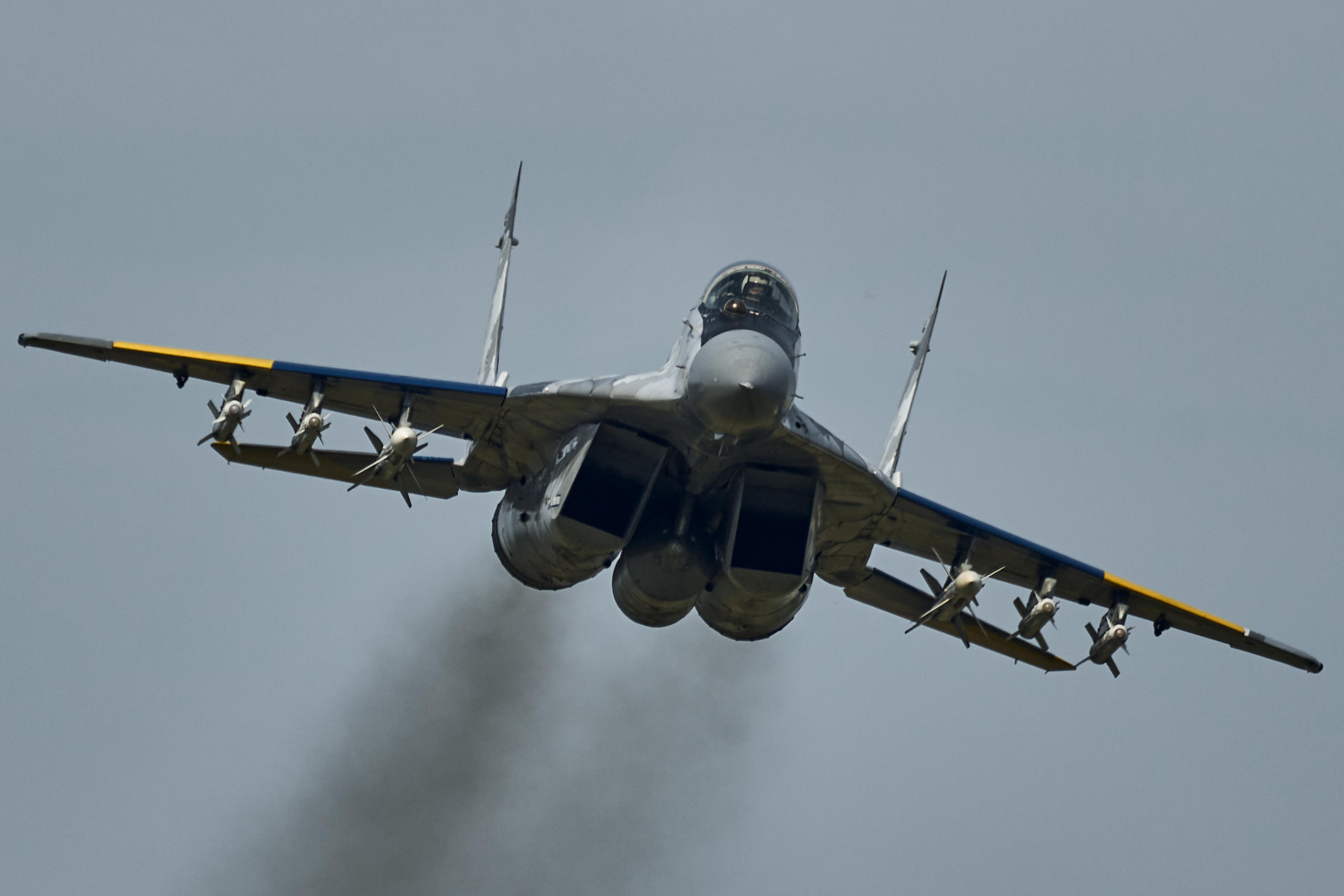
Ukraine started the war with around 50 MiG-29s in operational service, assigned to two regiments. According to the Oryx open-source tracking group, since the start of the current conflict, 33 Ukrainian MiG-29s have been confirmed destroyed, and more damaged. The actual figure is almost certainly higher, as Oryx only tallies losses that are confirmed with visual evidence.
The situation as regards the Su-27 Flanker is even more serious, with the Ukrainian Air Force having begun the war with around 32 operational examples, at least 19 of which have been confirmed as destroyed — the most recent one earlier this week. Unlike the MiG-29, there is no potential source to help replace Flanker losses.
It’s worth noting that additional examples of both these types have also been brought back to airworthiness after local overhauls. At least some of these were returned to action after long periods standing dormant or in storage.
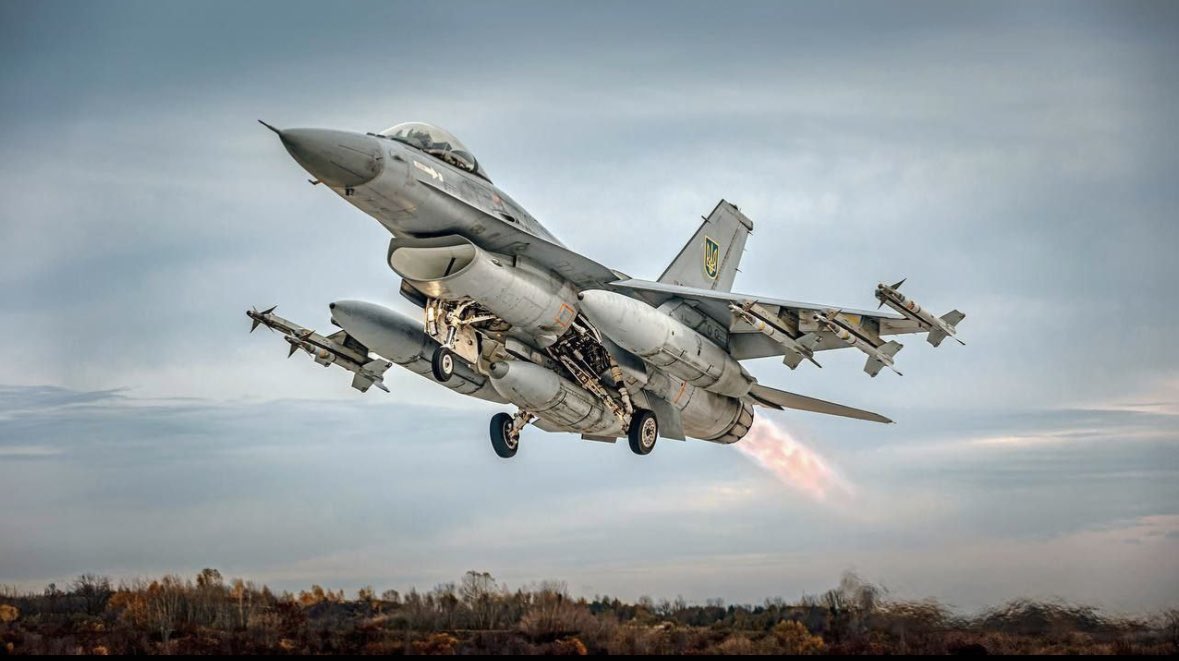
Meanwhile, Ukraine has introduced more modern and capable F-16s and Mirage 2000s, but it’s significant that the MiG-29, in particular, remains a highly prized asset. This is a fact reflected in its continued adaptation to carry new weaponry, both Western-supplied and locally developed. With significant stocks of spares, weapons, and well-trained maintenance crews, the MiG-29 is regarded as easy to maintain and adapt. It is also well-suited to more austere operations, with the Ukrainian Air Force regularly moving the jets around between different operating locations, making it harder for the Russians to target them.
Kyiv’s need for more MiG-29s, from whatever source, was underscored by the appearance of at least one former Azerbaijani example earlier this year. As you can read about here, this was likely one of three Azerbaijani MiG-29s that were undergoing repair in Ukraine and were left stranded there after the full-scale invasion began.
Should the final 14 Polish MiG-29s be supplied to Ukraine, which would appear to be a formality, the last source of NATO-owned Fulcrums is Bulgaria, which operates around a dozen examples.
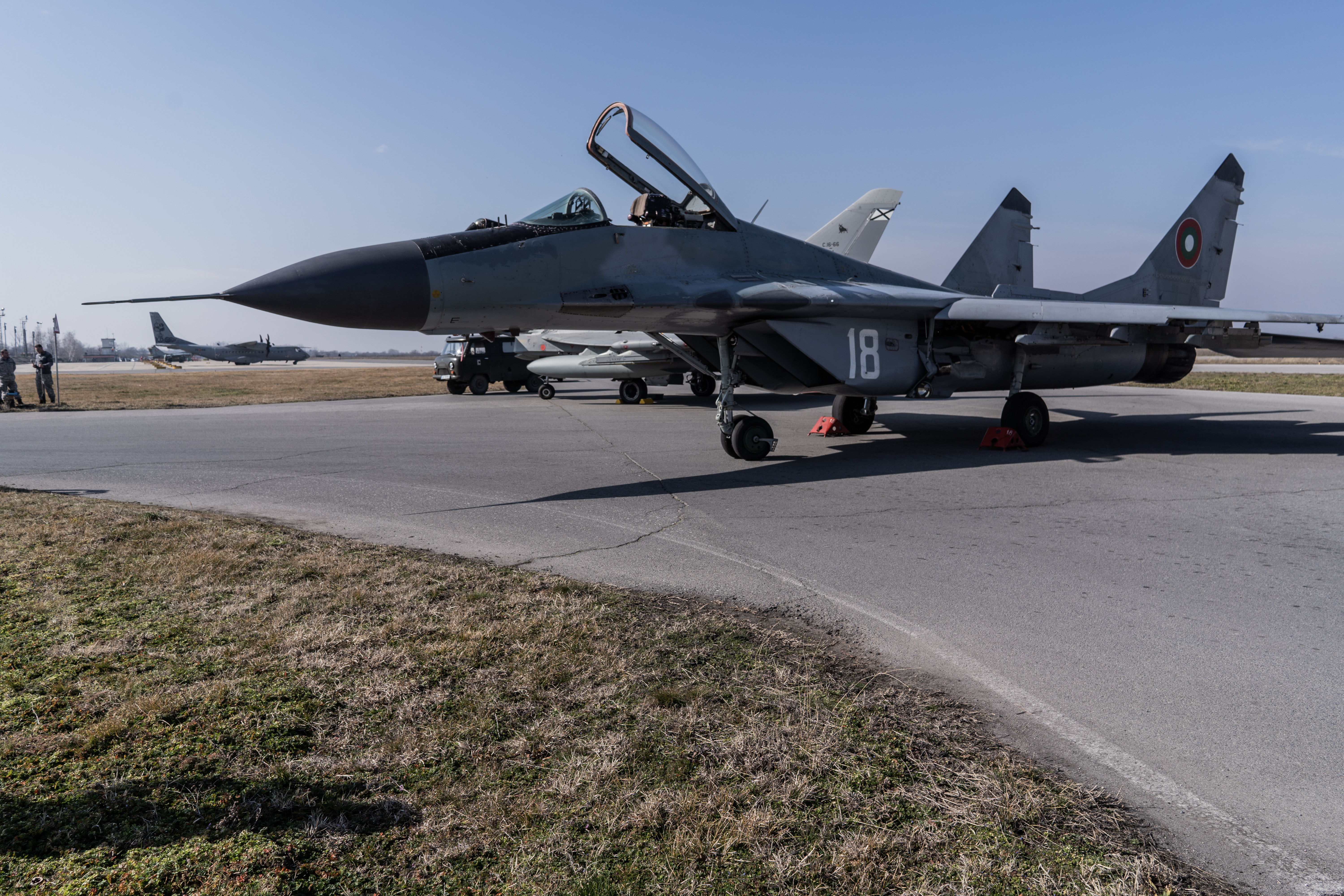
In the past, the Bulgarian Ministry of Defense ruled out a transfer of the jets to Ukraine, stating that such a move “would lead to a deficit of capabilities.”
Now that the Bulgarian Air Force has started to receive the 16 F-16C/D Block 70 fighters that it has ordered, that situation could change.
Returning to the Polish Air Force, once the last MiG-29s have gone, it will be left with a combat fleet spearheaded by 47 F-16C/D Block 52+ fighters, which will be upgraded to the F-16V configuration, as you can read about here.
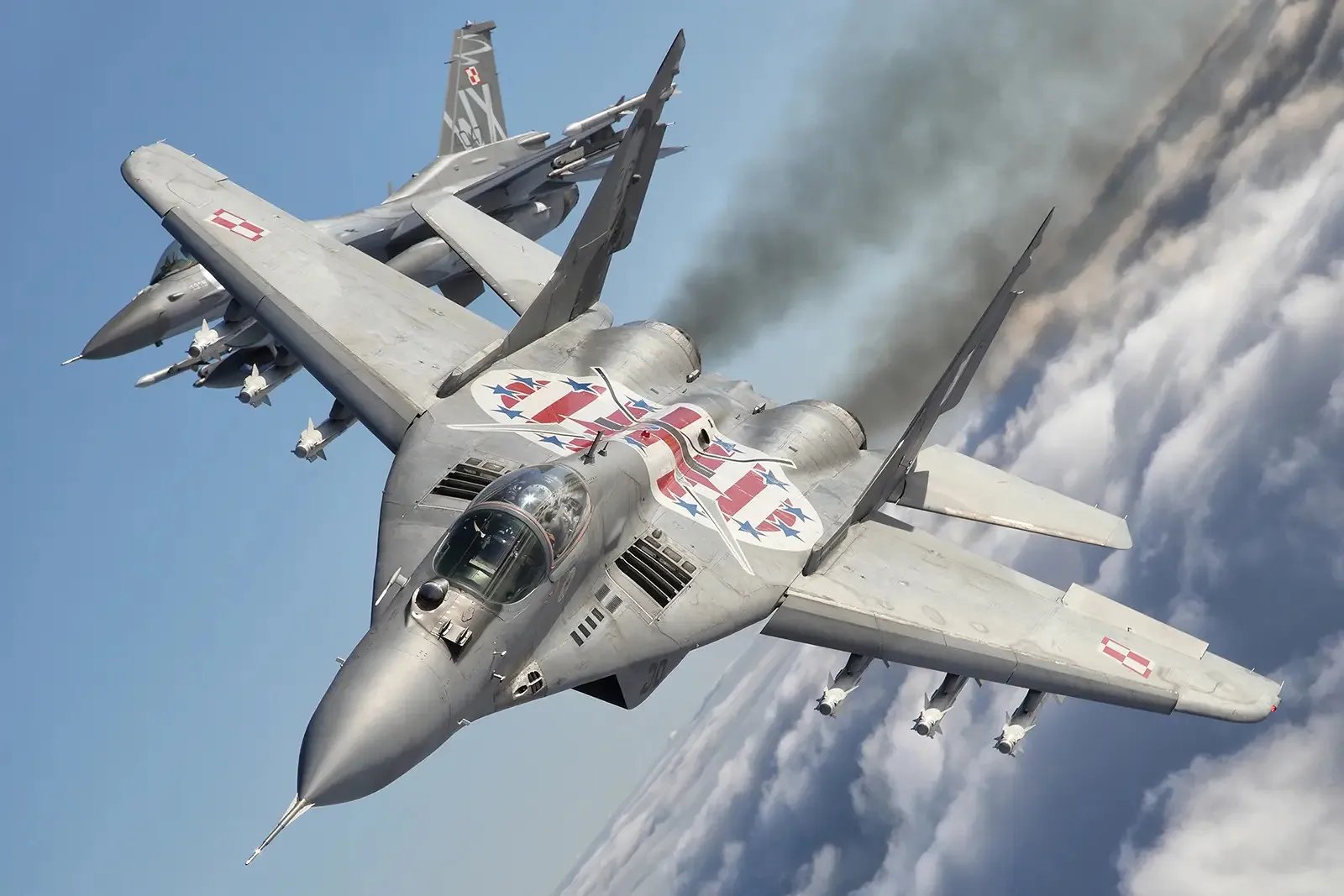
These are bolstered by 12 South Korean-made FA-50GFs that were delivered to Poland between July and December 2023. Another 36 of the more advanced FA-50PL aircraft are also on order.
Starting next year, the first operational Polish fifth-generation fighter squadron is due to be established, with 32 F-35As on order and training already underway in the United States.
There is also the possibility that Poland might further increase its fighter inventory, adding another new type in the shape of the F-15EX, the latest version of the Eagle.
Boeing made an announcement about its pitch to sell an unspecified number of F-15EXs to Poland in 2023, as we wrote about at the time.
Exactly what kinds of drone and missile technologies might find their way from Ukraine to Poland is unclear.
However, the Polish Air Force is currently on something of a drone push, introducing the Turkish-made Bayraktar TB2 uncrewed aerial system, as also used by Ukraine, and these will ultimately be joined by three MQ-9B SkyGuardian drones, providing much expanded capabilities.
As well as a wide variety of homegrown drones of different sizes and capabilities, including suicide drones and loitering munitions, Ukraine’s counter-drone expertise could be of particular interest to Poland, which has faced multiple Russian drone incursions.
Long-range cruise missile or even ballistic missile technologies could also be involved in the technology-transfer talks.
Whatever the case, the military relationship between Warsaw and Kyiv looks set to deepen further, both on a strategic level and, more immediately, with the likely transfer of badly needed MiG-29s for the Ukrainian Air Force.
Contact the author: thomas@thewarzone.com
Loading comments…
Comments couldn’t be loaded. Please refresh the page.