
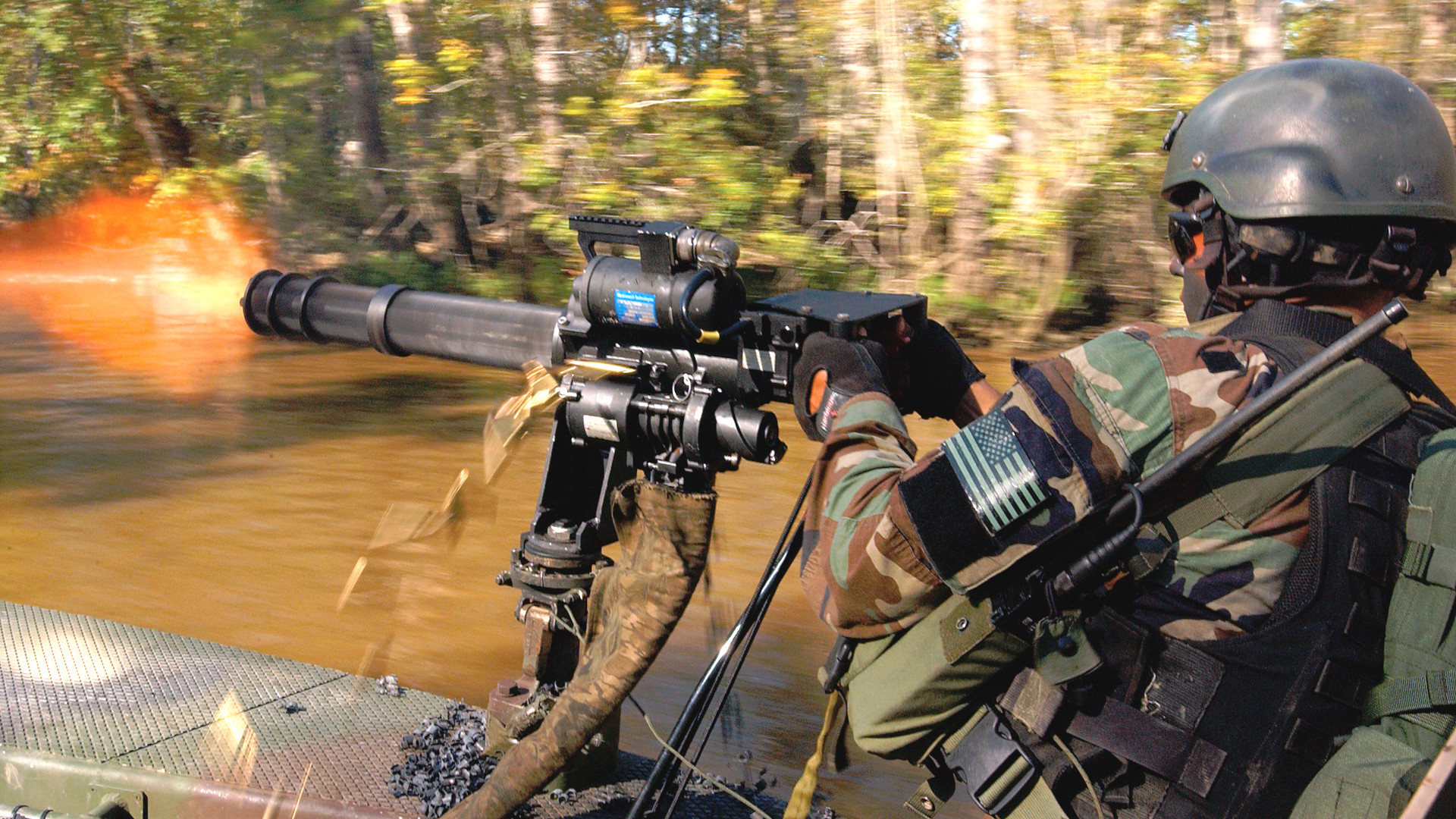
The U.S. military is looking at replacing all of the different versions of the famous Minigun in service today with a new standardized type that would be designated the GAU-24/A. The iconic six-barrel Gatling-type 7.62x51mm machine gun, capable of firing thousands of rounds per minute, first entered service in the 1960s, and America’s armed forces now have an array of variants spread across their arsenals.
The Program Executive Office for Unmanned Aviation and Strike Weapons (PEO U&W) within the U.S. Navy’s Naval Air Systems Command (NAVAIR) put out a request for information contracting notice regarding the GAU-24/A plan this week.
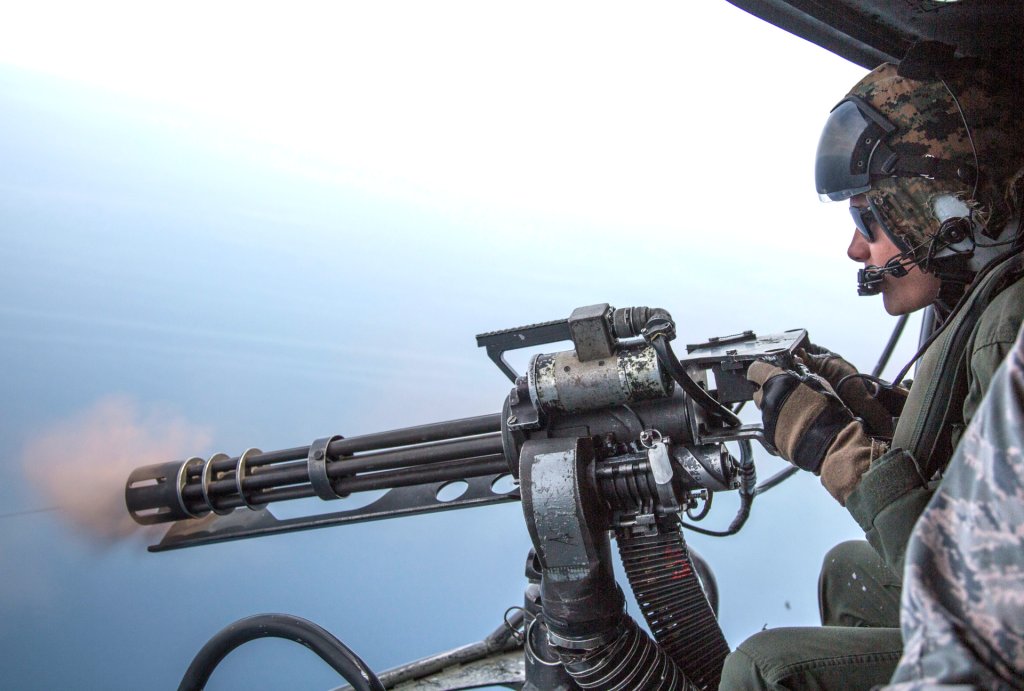
“NAVAIR is seeking to identify sources that can manufacture the GAU-24/A machine gun in accordance with a Government-owned Technical Data Package (TDP),” the notice explains. “The GAU-24/A machine gun is intended to serve as the common replacement for all other M134-based weapons, currently being used, throughout the Department of War.”
“Responses to this notice will be used by the Government to determine the appropriate acquisition strategy,” it adds.
A tentative schedule is laid out, which would see the delivery of an initial five GAU-24/As to the Naval Surface Warfare Center, Crane Division (NSWC Crane) in Indiana for testing within 12 months of a contract award. The Navy is currently eyeing the Fiscal Year 2027 timeframe for the start of that work, which could then run for anywhere between 36 and 60 months afterward, at least.
The notice does not include details about the features being sought for this new common Minigun variant or whether existing types could be converted to that standard as part of the replacement process. TWZ has reached out to NAVAIR for more information.

There are thousands of Miniguns in the U.S. military’s inventory today, and standardizing them around a common pattern would make sense. Though the different variants that have been developed over the years all look roughly the same externally, there are notable differences between various types, which means that not all components are always interchangeable. This, in turn, creates various logistical and supply chain complexities.
General Electric developed the original Minigun in the early 1960s, leveraging more than a decade of work already at that point on larger caliber Gatling-type guns like the equally famous 20mm Vulcan cannon. The U.S. Air Force and U.S. Army subsequently adopted versions under the designations GAU-2/A and M134, respectively.
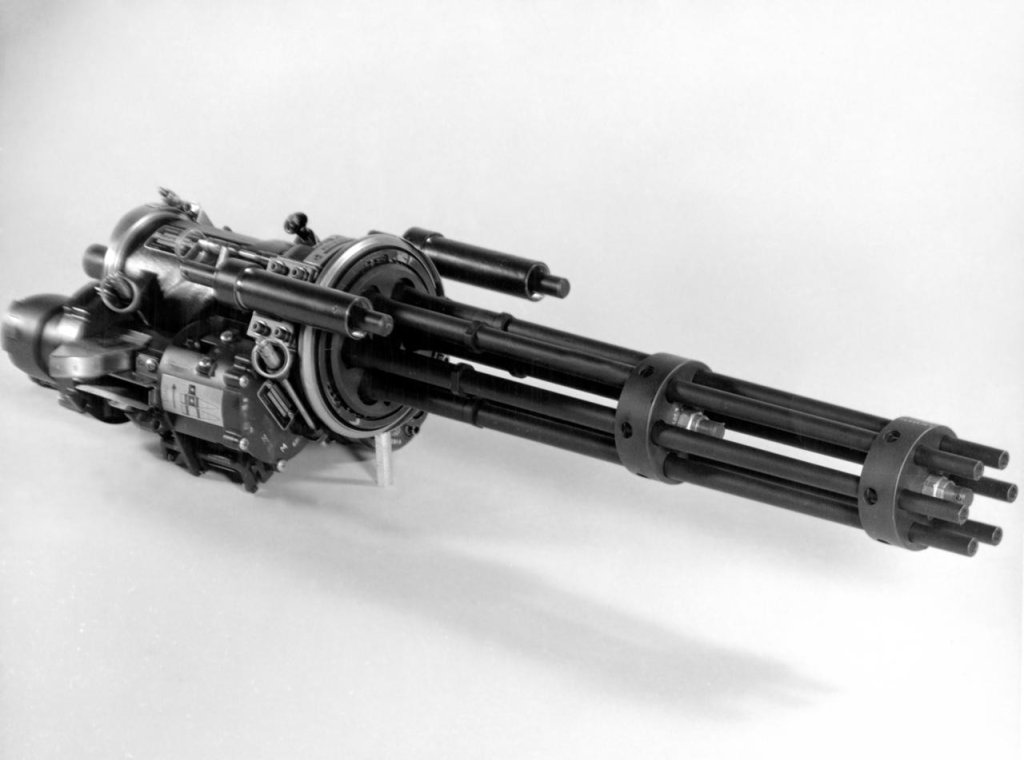
The original version of the Minigun had an overall length of around 31 and a half inches and weighed 35 pounds. However, the gun also needed an electrically-driven motor to fire. That motor, along with the different ammunition feeding systems and other components required when the gun was installed in various pods and mounts, added additional weight and bulk. Using external electric power did make it easier to set the gun’s rate of fire for specific applications and allowed for selectable fire rates in certain cases. Typical firing rates for Miniguns, even today, are generally between 3,000 and 6,000 rounds per minute, or 50 and 100 shots every second.
It is worth noting that the Army also experimented in the 1960s with a Minigun powered by propellant gas produced during firing, like many other traditional machine guns. The service did not adopt that version, which was designated the XM133.
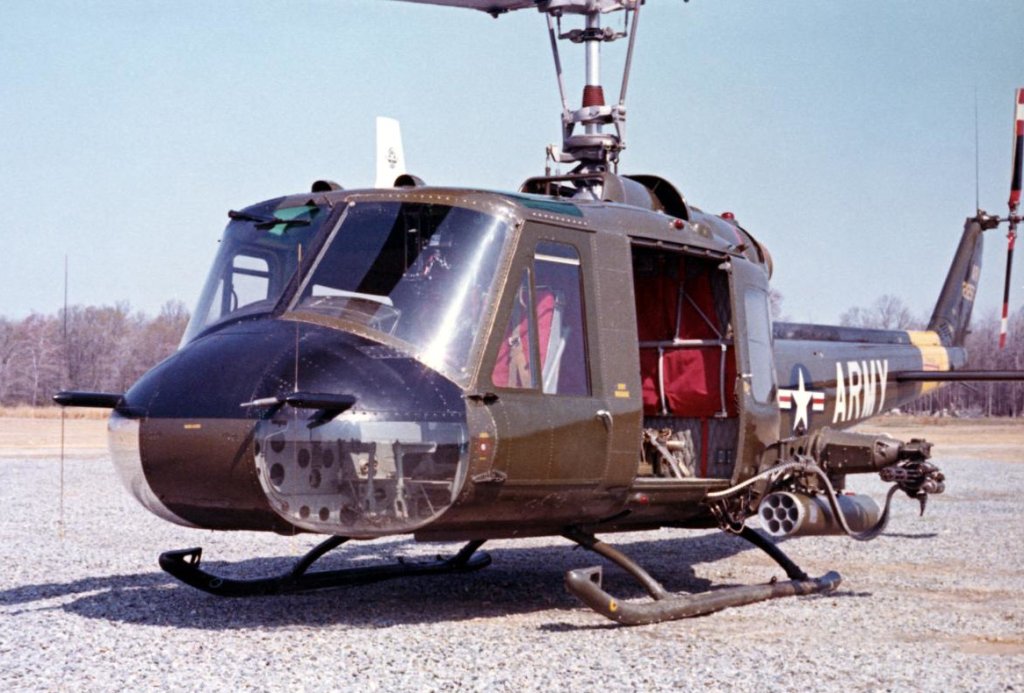
The Minigun’s first real combat outing was during the Vietnam War, where the guns were extensively used in armament packages for helicopters, such as UH-1 Huey gunships and early versions of the AH-1 Cobra attack helicopter, as well as in podded form on fixed-wing aircraft. The Minigun was a key feature in the genesis of the AC-47 and later side-firing gunships converted from cargo planes, as well. The A-37 Dragonfly light attack jet also featured a single built-in GAU-2/A. The weapons saw more limited and often non-standard use during that conflict on various ground vehicles and maritime platforms.


Various improvements were subsequently made to the baseline GAU-2/B/M134 design, particularly to the ammunition feed and drive components to improve reliability. General Electric eventually stopped producing Miniguns, and several manufacturers have built them since then.

Specialized lighter-weight versions, some with titanium components, as well as ones optimized for use in maritime environments, especially when it comes to saltwater exposure, have since been developed and fielded by U.S. and foreign forces. Over the years, a maze of designations for different Minigun variants, including GAU-17/A and Mk 49 Mod 0, compounded by related nomenclature for the complete weapon systems many of them are associated with, has emerged. This all underscores why the U.S. military would be interested now in standardizing around a common model.
Minigun variants remain in widespread service today across the U.S. military in a host of aerial, ground-based, and maritime forms. Though they can burn through a large amount of ammunition quickly, the guns offer a valuable way to suppress enemy forces or help break up sudden ambushes, or just saturate an entire area. Miniguns are heavily used on special operations helicopters, watercraft, and ground vehicles, where the benefits they offer are particularly relevant for raids and other shorter-duration direct action missions.
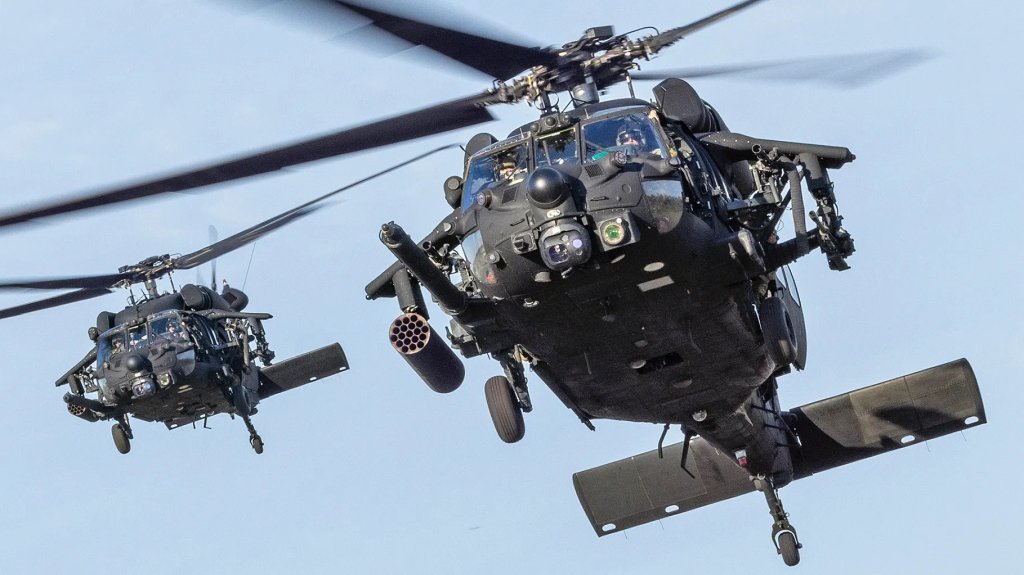


They continue to see widespread use by conventional forces, including in the context of airmobile assaults and combat search and rescue operations, as well. Last year, the Army notably tested a new Minigun mount for the M1 Abrams tank, giving it a boost in firepower for use against targets on the ground and potentially certain aerial threats like small drones.
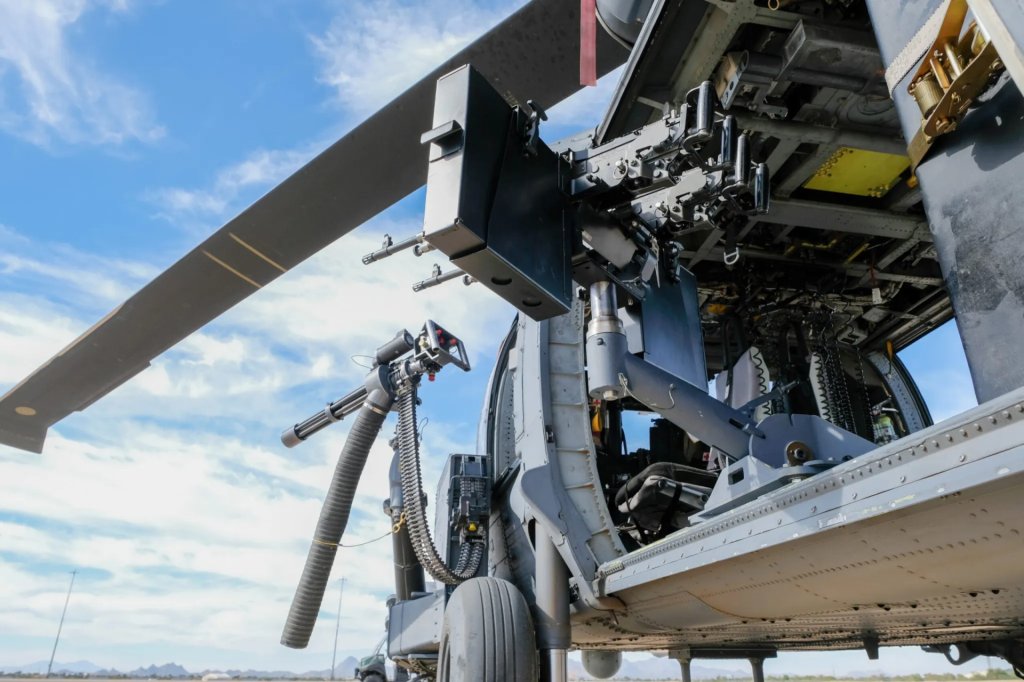
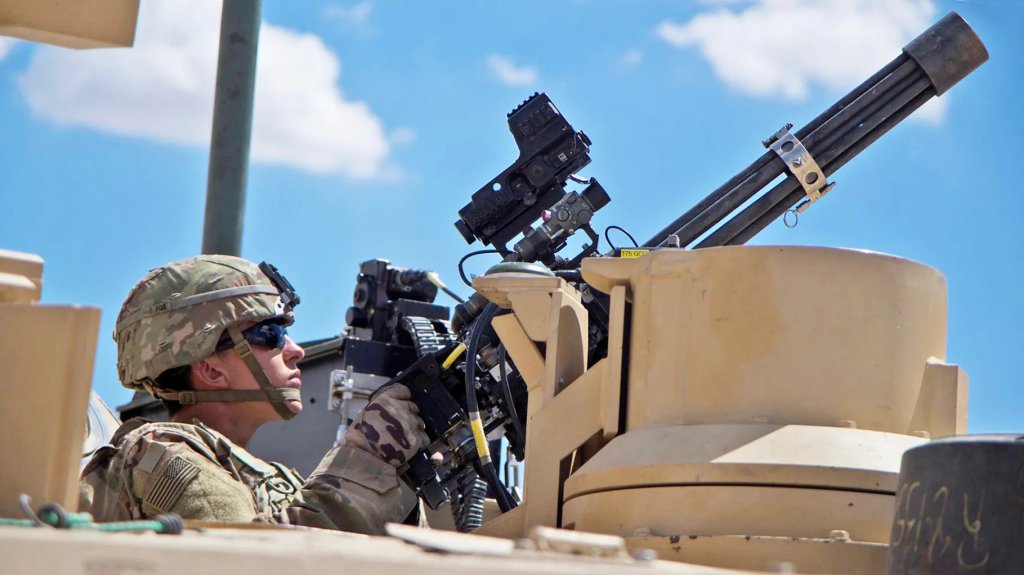
The Minigun has the additional benefit of firing the same 7.62x51mm ammunition as various machine guns and rifles in U.S. inventory. There has been talk in the past about potentially converting them to fire other rounds, such as new 6.8mm cartridges developed as part of the Army’s Next Generation Squad Weapon (NGSW) program that led to the M7 rifle and M250 light machine gun.
Miniguns look set to remain in service in the U.S. military for the foreseeable future, but the total number of variants in America’s arsenal may start to shrink down to just one in the coming years.
Contact the author: joe@twz.com
Loading comments…
Comments couldn’t be loaded. Please refresh the page.