
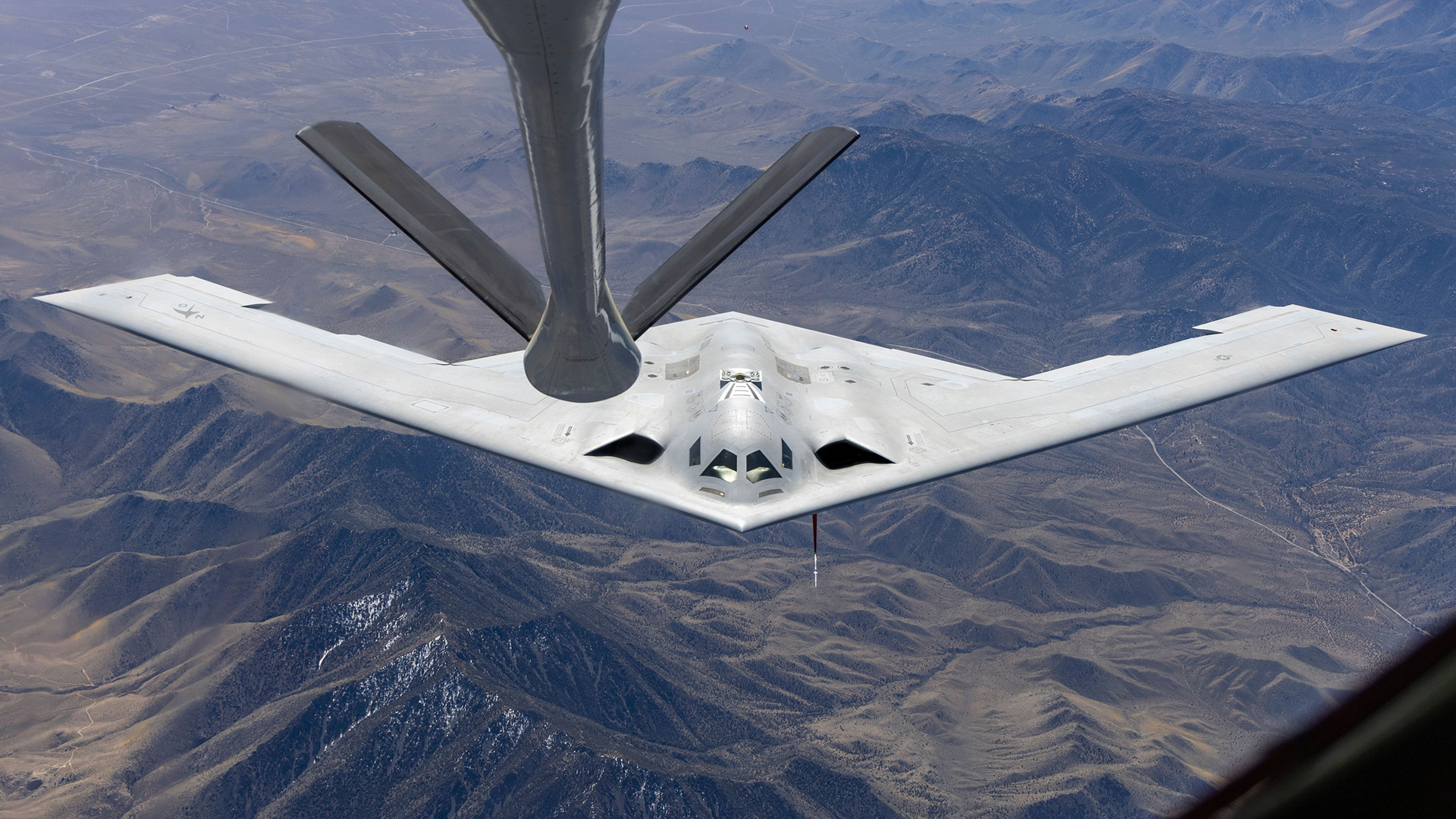
We have just gotten our first full overhead image ever of the B-21 Raider. The photo was taken during the Raider’s initial aerial refueling trials, which TWZ was first to report on. While a head-on slightly elevated image of the B-21 has been released, one showing the entire aircraft from a steep upper perspective has not. The same can be said for any image showing the next generation bomber’s exhaust, which is one of the most sensitive parts of a very low observable aircraft’s design.
The images of the first B-21 airframe, nicknamed Cerberus, undergoing testing in the pre-contact position behind the tanker were included with a release from its manufacturer, Northrop Grumman. It states, in part:
“As the most fuel-efficient bomber ever built, the B-21 consumes a fraction of the fuel used by fourth- and fifth-generation aircraft. This reduces demand for theatre tanker logistics and provides operational commanders with greater flexibility in force packaging.
With more than $5 billion invested in digital technologies and manufacturing infrastructure for the B-21 program, Northrop Grumman is accelerating its production, with the first aircraft planned to arrive at Ellsworth Air Force Base in 2027.”
The B-21’s extreme endurance is a key component of the Long-Range Strike Bomber (LRS-B) concept. The aircraft is smaller than a B-2, but will be able to fly farther, relying on a planform design that predated the B-2 Spirit and is optimized for high-altitude, highly-efficient flight. The B-21 likely relies on two engines, based on images showing the aircraft’s contrails and general design cues, not four, as found in its predecessor. The aircraft will also have a smaller weapons payload than the B-2, but will carry an extreme amount of fuel to help it reach farther from a tanker. You can learn more about the evolution of the B-21 and its B-2 roots in this past feature of ours.
The tanker that is seen in the images is Edwards AFB’s ‘Ghost’ tanker, tail number 61-0320. TWZ just spent time with this special aircraft and its crews at Edwards AFB. You can learn all about their unique mission in the feature video below that we posted to YouTube as part of our Special Access video series:

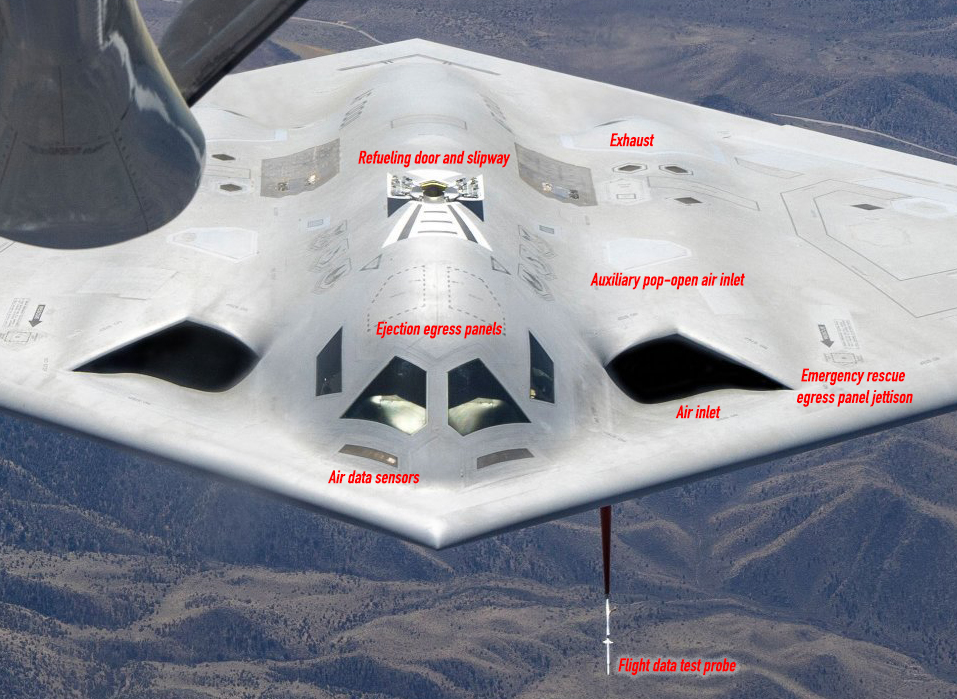
In this new overhead image, we get a good look at the Raider’s open refueling receptacle and the paint markings around it, which mirror those found on the USAF’s 5th generation stealth fighters, the F-22 and F-35. We also get a great look at the B-21’s deeply-blended air inlets, also one of the most sensitive parts of its stealth design. Above all else, we are shown Raider’s exhausts, which appear very impressive, if not a bit confounding.
We must state that the image very well could have been altered so as to not give certain features of the B-21’s exotic exhausts away. Once again, this is a very sensitive area of the bomber. Regardless, what we see is the deeply-sunk chevron-shaped (inverse direction compared to B-2) low-observable exhausts placed very far forward of the aircraft’s trailing edge to help mask its infrared signature. But what’s missing is any kind of special material that would attenuate the heat generated from the hot gasses and protect the airframe from it.
There also isn’t any planar area for active cooling, as is found on the B-2, or a trough-like section that connects the buried engine’s exhaust ducts with the upper area of the aircraft’s empennage. Exactly how all this is accomplished is unclear, but again, the image could be touched up to conceal parts of this area.
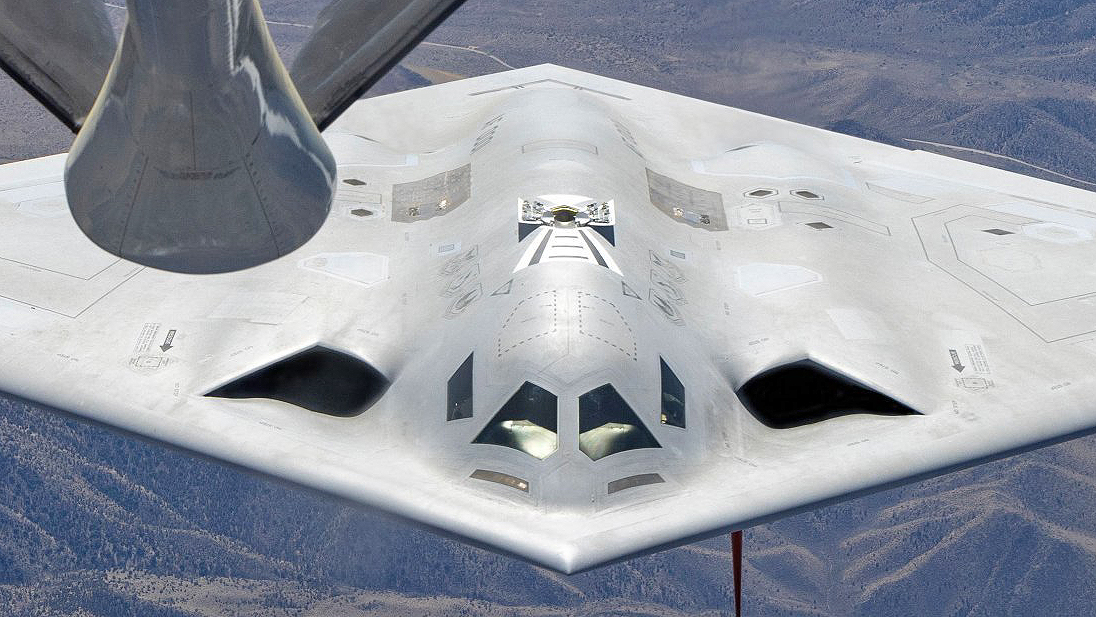
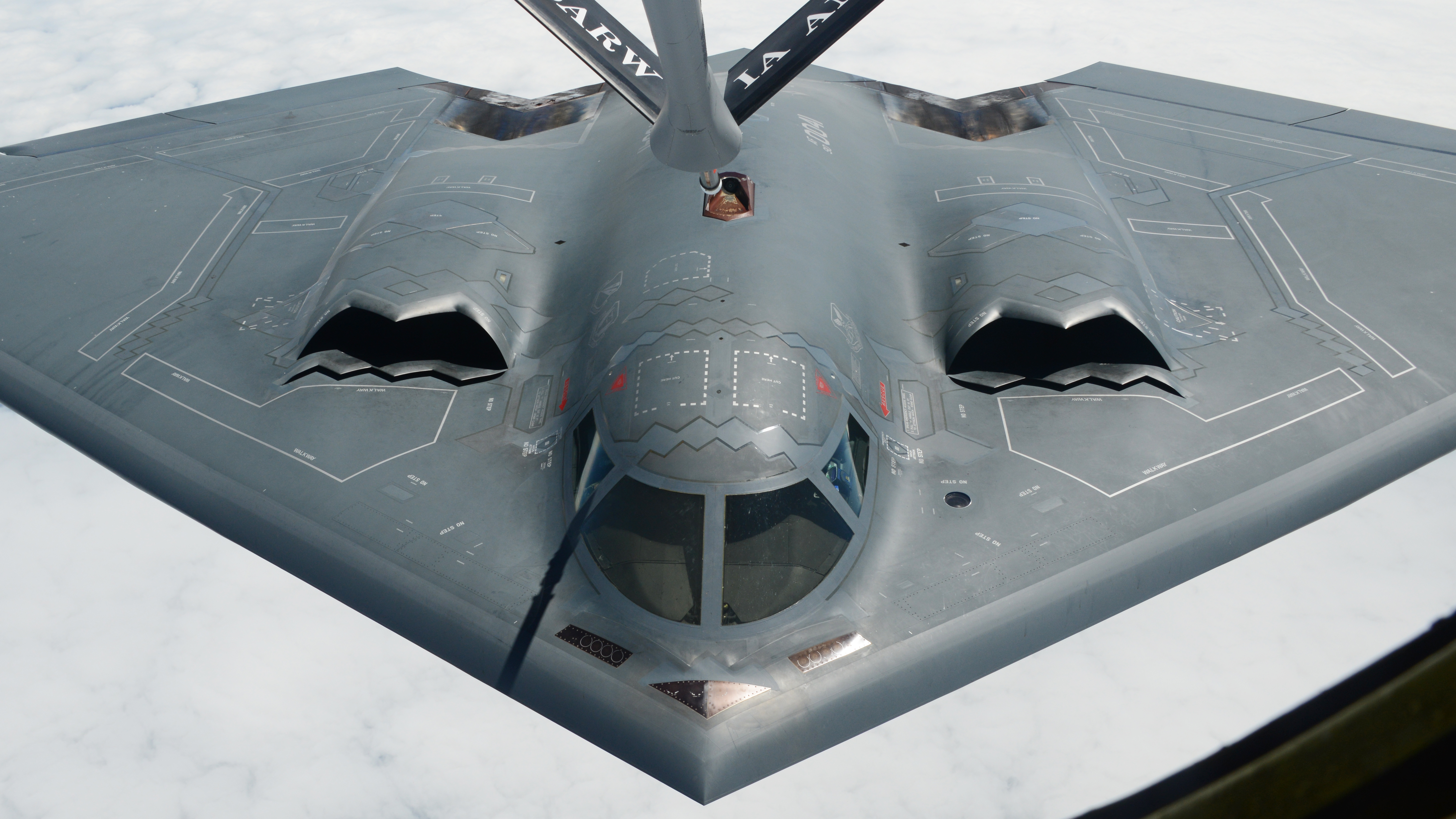
Another feature that we have pointed out since the B-21 was revealed that is really clear in this image is just how small the cockpit windows are. As we originally speculated, their unique design was likely driven by aerial refueling requirements balanced against minimizing the frontal radar cross-section of the aircraft. The B-21’s higher operating altitude should make the cockpit area less of an issue for most aerial and ground based radars, but still, it appears that minimal cockpit glazing was used to keep the Raider hard to detect as possible.
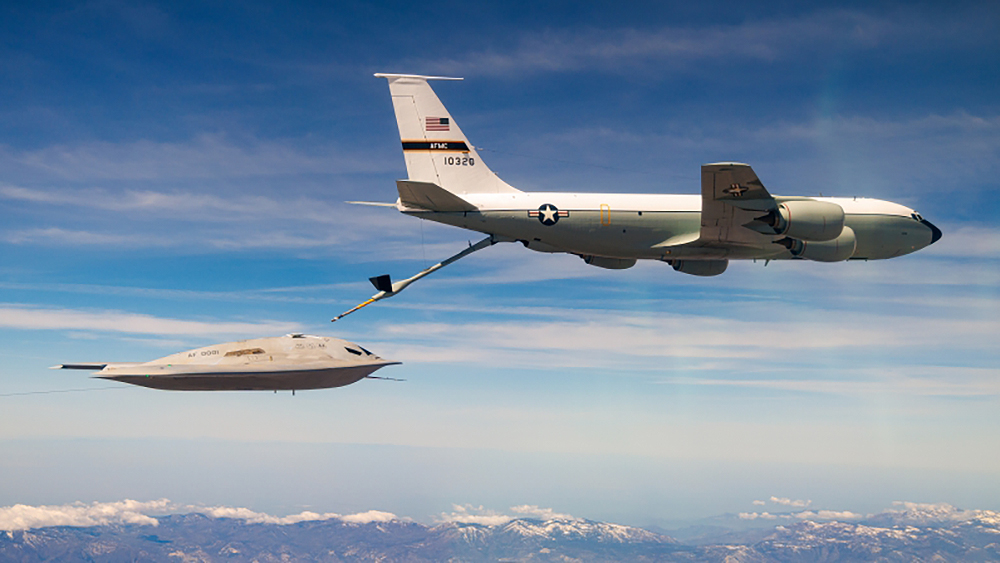
We also got a side view of the aerial refueling formation trial showing the B-21’s trailing its instrumented drogue as it cozies up behind 61-0320. This angle gives an idea of just how short the length of the B-21 is. Likely about the length of an F-15 front to back. Our estimation of its wingspan remains around 145 to 155 feet.
Overall, from what we understand about the still very secretive program is that it’s on schedule and on budget — a remarkable achievement considering the history of its progenitor. You can read all about how the B-2’s unfortunate fiscal ‘death spiral’ likely heavily influenced the B-21’s design in our previous feature linked here.
Regardless, it’s great to see new perspectives of what is the most cutting-edge manned aircraft known to the public and it is a good sign that we will be seeing a lot more imagery of the B-21 as the test program accelerates towards initial operational capability.
UPDATE:
Here is an annotated view of the B-21’s upper fuselage showing some of its main features, minus the conformal antennas and other bits:
Contact the author: Tyler@twz.com
Loading comments…
Comments couldn’t be loaded. Please refresh the page.