
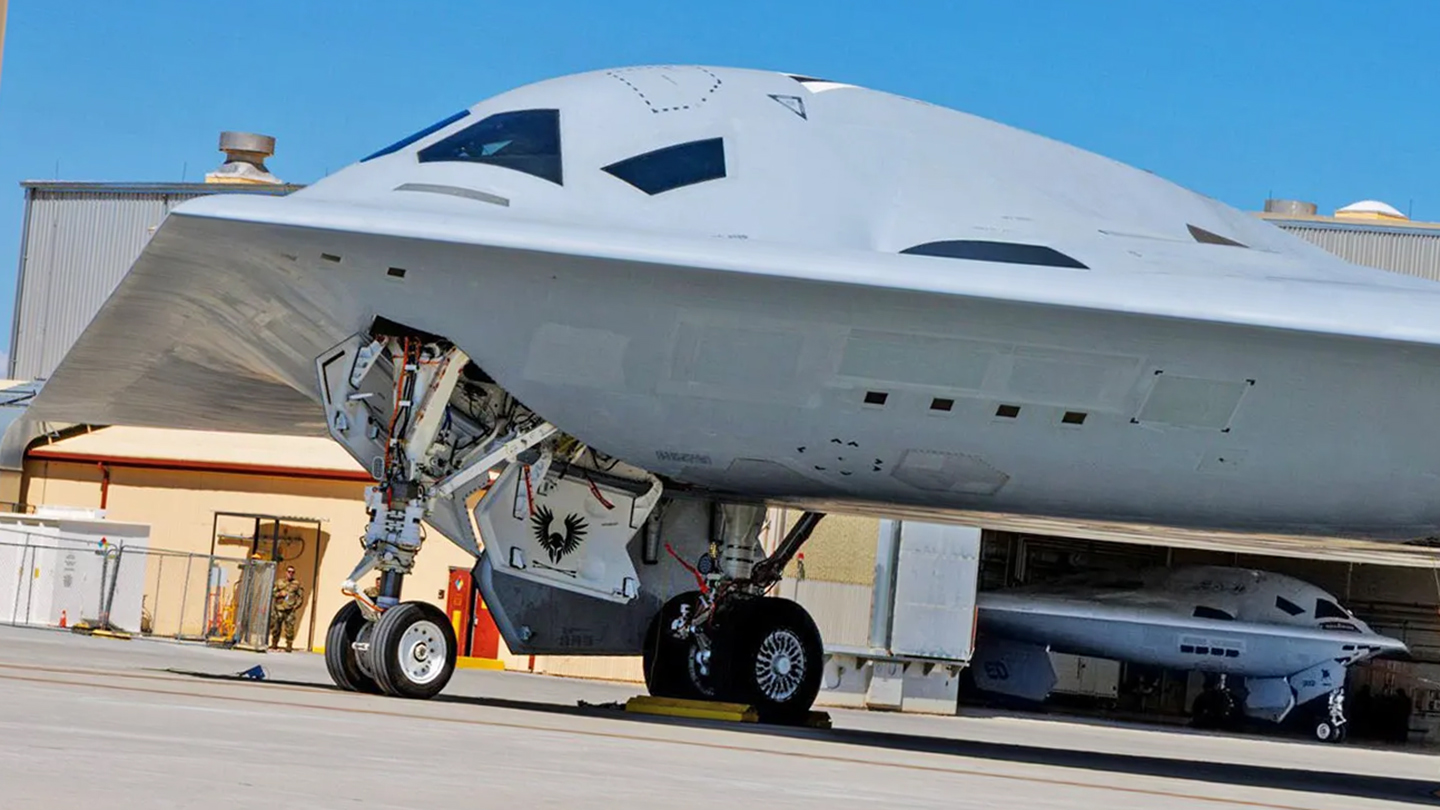
U.S. Air Force Global Strike Command (AFGSC) is recommending that the default crew for its future B-21 Raider stealth bombers include just one pilot. The other seat in the two-person cockpit would go to a weapon systems officer (WSO), or ‘wizzo,’ rather than a co-pilot. The prospect of single-pilot sorties for B-21s, something that on its face would raise safety concerns, strongly points to a high level of automation and AI-infused autonomy being present in the design now, which might one day open the door to fully uncrewed operations.
Having the B-21 designed from the start, well over a decade ago, to provide cutting edge automation, such as an AI agent as a ‘virtual co-pilot,’ for instance, would be a key groundbreaking feature. It would also support the cryptic claims the Air Force has made about how revolutionary the aircraft is, especially when it comes to what lies beneath its skin.
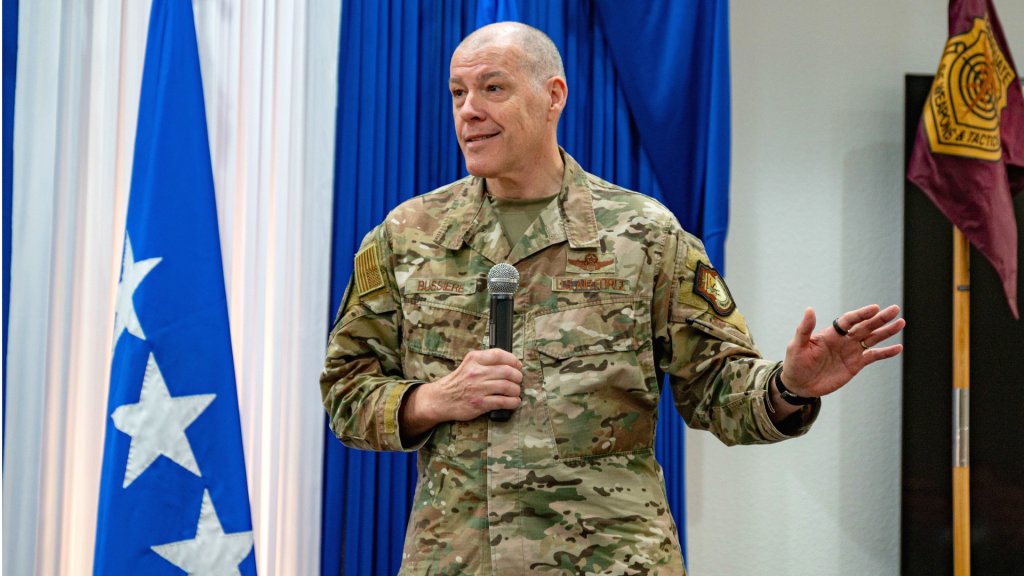
Aviation Week was first to report on the single-pilot B-21 crew recommendation, which AFGSC head Gen. Thomas Bussiere submitted in a memo to his superiors earlier this year. Last month, Bussiere announced his intention to retire “for personal and family reasons.” AFGSC is expected to get a new commander today. To date, the Air Force has received two pre-production B-21s, both of which are currently at Edwards Air Force Base in California, supporting ongoing development and test work.
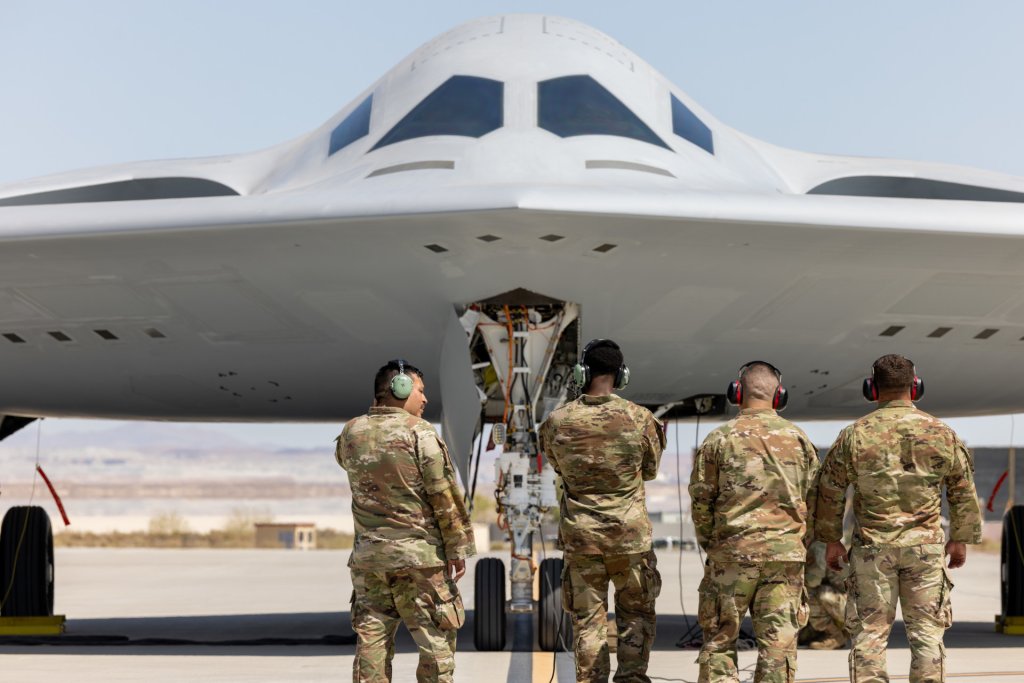
“Air Force Global Strike Command has provided their recommendation regarding B-21 crew composition to the headquarters,” Lt. Gen. Scott Pleus, director of staff of the U.S. Air Force and the service’s acting Vice Chief of Staff, told TWZ in a statement. “That document is pre-decisional. A decision has not been made.”
“The recommendation included having one pilot and one WSO,” an Air Force official also confirmed to TWZ, but provided no further details.
The Air Force said it had no comments to offer at this time when asked if there was a timeline for when a decision might be made regarding the B-21 crew recommendation. Aviation Week reported that the service had at least been waiting for a new Chief of Staff to settle on a course of action. The Senate confirmed Gen. Kenneth Wilsbach as the 24th Chief of Staff of the Air Force on October 30, and he was formally sworn in today.
“Unleashing the Raider’s full potential demands a complex blend of skills: airmanship, weaponeering, electromagnetic spectrum operations, sensor management, real-time battle management and agile replanning in combat,” Bussiere had written in his memo, which was dated August 15 and addressed to top Air Force leadership, as well as the head of U.S. Strategic Command (STRATCOM), according to Aviation Week. “For this reason, the B-21 will be crewed by one pilot and one weapon systems officer.”
Bussiere’s comments here underscore that the B-21 is far more than just a bomber, something TWZ has regularly pointed out for years. On top of their ability to carry out deep-penetrating nuclear and conventional strikes, the Raiders will have an extensive suite of networking, battle management, electronic warfare, and intelligence, surveillance, and reconnaissance (ISR) capabilities. The aircraft could also end up acting as forward aerial controllers for uncrewed platforms, among other missions.
The Air Force and Northrop Grumman also regularly tout the digital open mission system architecture forming the backbone of the B-21. This is designed to make it faster and easier to integrate new and improved capabilities and functionality down the line. The Raider is already understood to be designed to at least provide the option of a pilot-optional mode of operation in the future. The autonomous and otherwise automated capabilities necessary to enable that would also be a boon to any crew onboard, which we will come back to later on.
Overall, with the breadth of the B-21’s capabilities in mind, Bussiere’s recommendation to add a WSO, with their additional skill sets and the ability to focus on mission-specific tasks, to the Raider’s crew is understandable. Having to train pilots to be able to also manage the burdens of the Raiders’ various mission sets, which are drastically expanded over that of the B-21, would seem less than ideal, especially if the aircraft will work as a key forward node and enabler for other platforms.
The issue is that there is only space for two individuals in the B-21’s cockpit. In turn, having just one pilot onboard a Raider raises questions about safety margins, especially during extreme endurance missions that are expected to be common for the type. The Air Force’s existing B-2 Spirit stealth bombers also have two-person crews, but they consist of a pair of pilots. Furthermore, those bombers have a small cot, allowing for one individual to sleep while the other flies during portions of a sortie. The B-21 will likely feature a similar although more permanent sleeping space arrangement.

It is worth noting that standard crews for the service’s B-1 and B-52 bombers do include WSOs, but are also larger overall, and still feature a pilot and co-pilot.
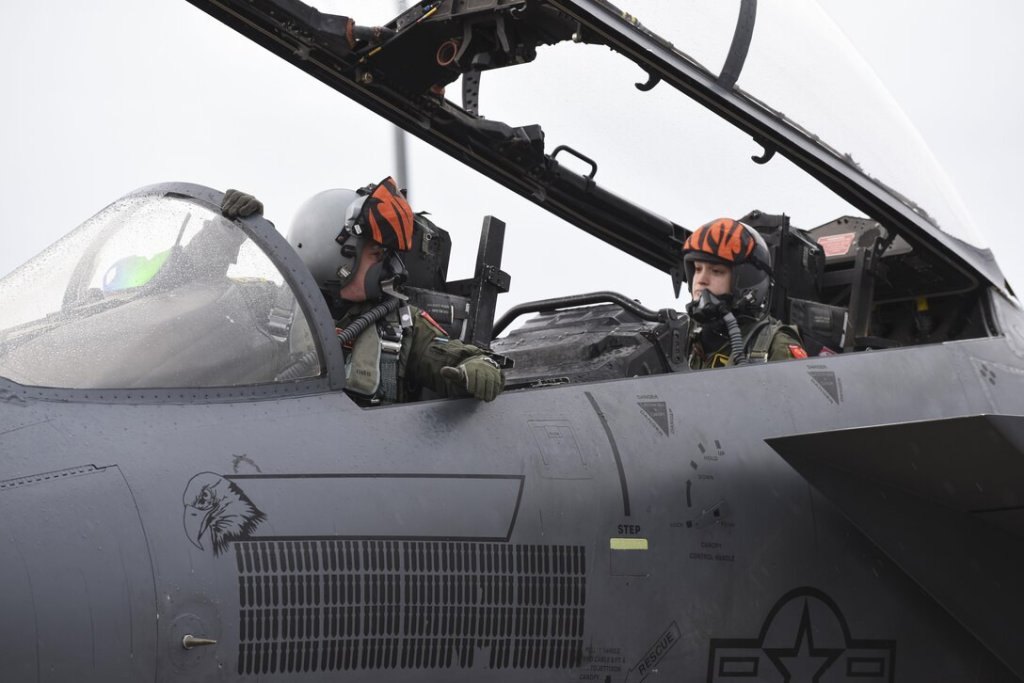
“Bussiere’s proposed approach follows the cockpit philosophy of tactical aircraft, such as the Boeing F-15E, where WSOs are trained to fly the aircraft in emergency situations while spending the rest of the time focused on operating the aircraft’s mission systems,” according to Aviation Week. “In a two-seat aircraft such as the B-21, the WSO also would likely be trained to fly the aircraft in certain scenarios. For example, the WSO would likely be able to land the aircraft if the pilot is incapacitated or injured.”
The Air Force has already faced safety concerns and criticisms in the past over plans to fly aerial refueling tankers and cargo planes with skeleton crews that include only one pilot just in certain contingency scenarios.
At the same time, the Raider is far more modern and automated than something like the F-15E, and is far more advanced than anything else currently in Air Force’s disclosed inventory. Sticking with the Strike Eagle comparison, that aircraft is now well behind the current state of aviation technology, even on the commercial side of the industry. For instance, fully autonomous emergency landing capabilities are now reliable and found on some commercially available aircraft.
With what is already known about the B-21’s capabilities and underlying system architecture, AFGSC’s new crew recommendation hints strongly at the aircraft having an extremely high degree of automation, if not some outright autonomy, in its present form. As mentioned, this could include AI-driven agents with ‘co-pilot’ capabilities that multiple companies in the United States, as well as globally, have been publicly working on for years now.
Since the early 2010s, the Defense Advanced Research Projects Agency (DARPA) has been notably supporting the development of AI ‘co-pilots’ that could be used on helicopters and fixed aircraft to help increase safety margins and reduce workload for human pilots through a program called the Aircrew Labor In-Cockpit Automation System (ALIAS). ALIAS’ work has been centered on Lockheed Martin’s MATRIX autonomy flight control software package.

Other companies, such as Shield AI and Merlin, have been developing similar autonomy packages and steadily growing their capabilities. Merlin has been notably working toward integrating its autonomy software onto an Air Force KC-135 tanker. Shield AI’s Hivemind has already been integrated onto a host of crewed and uncrewed platforms. It is also worth noting that the B-21 has been in development for more than a decade, and its capabilities in this regard would have been way ahead of its time.

An AI agent would offer a B-21 crew additional layers of redundancy and added safety margins, as well as just helping to reduce total workload, which could offset risks associated with having just one pilot. If the functions of that virtual co-pilot extend to offering well-formulated tactical advice, such as whether or not to attack, jam, or avoid a threat altogether along the B-21’s carefully calculated ‘blue line’ flight path, it could also offer an important boost in survivability and tactical flexibility.
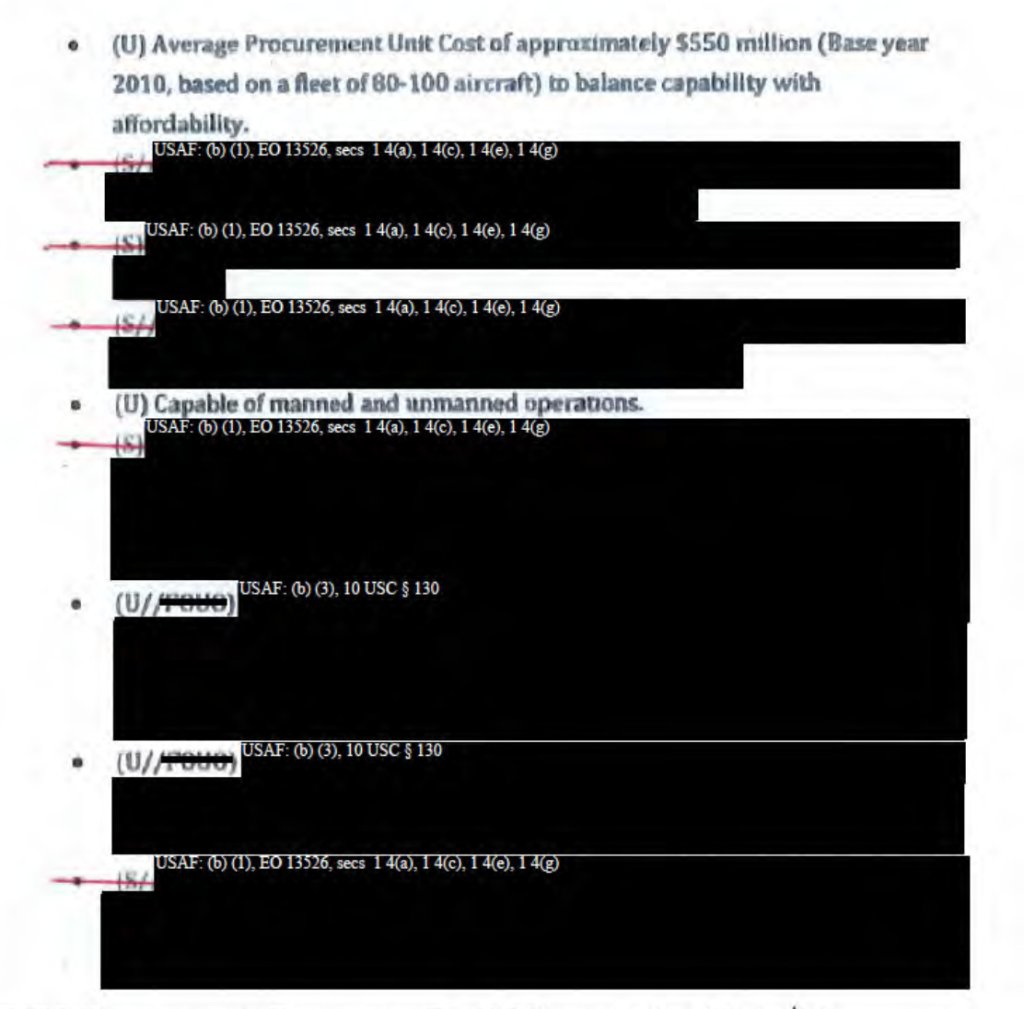
Previously stated plans for the B-21 to be able to fly crewed or uncrewed lend further credence to the aircraft having a significant degree of autonomous capability now. TWZ highlighted the Air Force’s desire for the Raider to have an optionally-piloted mode back in 2017, after obtaining a heavily redacted copy of a Department of Defense Inspector General report titled “Audit of the Acquisition of the Long Range Strike Bomber,” or LRS-B, dated September 8, 2015. Northrop Grumman was chosen as the winner of the LRS-B competition in 2015, and proceeded with the development of what is now called the B-21.
“Capable of manned and unmanned operations” is one of the few unredacted LRS-B requirements listed in the 2015 Inspector General report, as seen below.
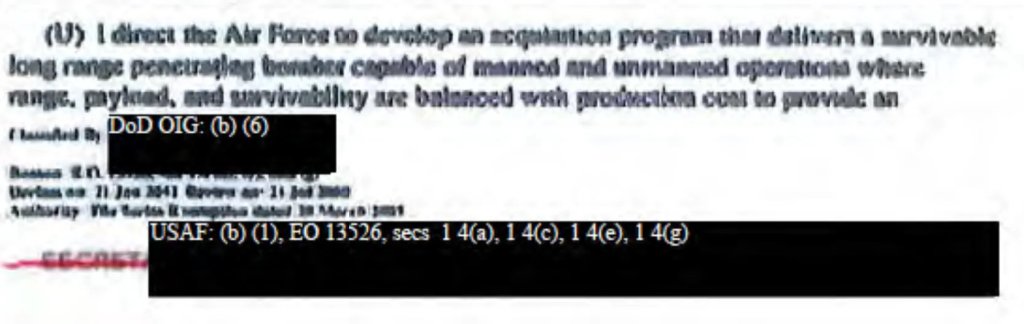
The report also includes a contemporary memo from the Office of the Secretary of Defense that includes the following partially unredacted passage:
“I direct the Air Force to develop an acquisition program that delivers a survivable long range penetrating bomber capable of manned and unmanned operations where range, payload, and survivability are balanced with production cost to provide an [redacted].”
Immediately ahead of the official rollout of the B-21 in 2022, a source with direct knowledge of the status of the program told TWZ and other reporters that development of the Raider was continuing with the option of integrating a pilotless capability.
Fully uncrewed Raider operations could be advantageous in various operational contexts, especially due to the change in the risk calculus from not having anyone onboard the aircraft. Like the current B-2s, the Air Force’s future B-21 fleet is not expected to operate in a vacuum. This is underscored by the force package required for the aforementioned Operation Midnight Hammer strikes on Iran. Dozens of fighters, tankers, and other aircraft were needed on top of the B-2s that actually dropped the huge 30,000-pound GBU-53/B Massive Ordnance Penetrator (MOP) bunker buster bombs on the nuclear sites. Even with the B-2’s high degree of survivability, combat search and rescue would still have been a key part of the mission planning due to Iranian air defense threats and other factors.
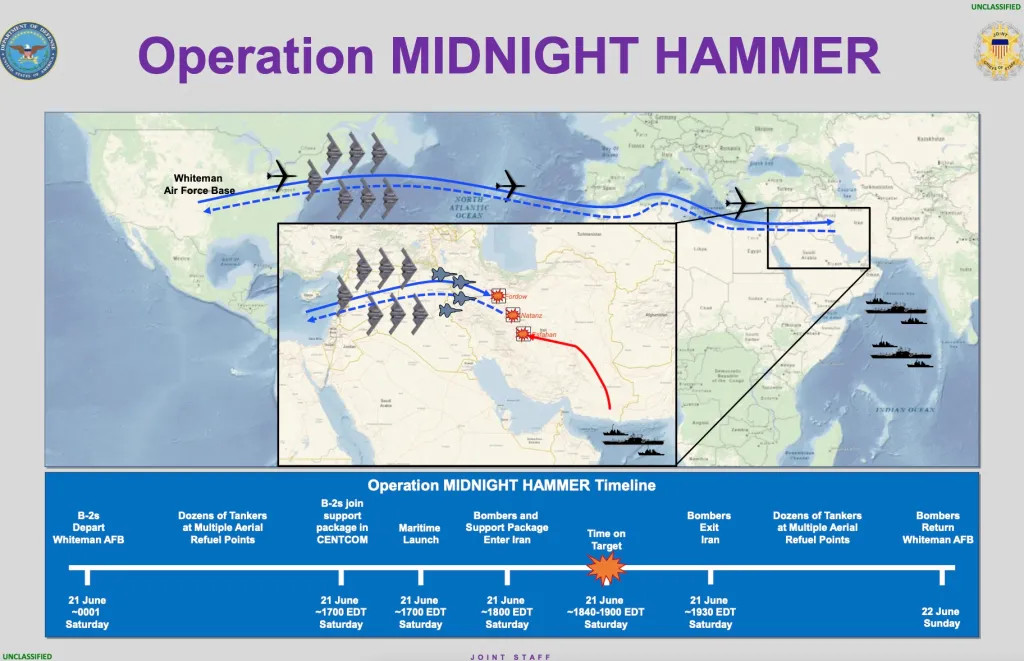
There are various other reasons why an aircraft might run into trouble and potentially go down beyond enemy action. Combat search and rescue (CSAR) operations put large numbers of personnel at risk as it is, but flying into an area where the most survivable aircraft on earth couldn’t keep from being shot down is another problem altogether. Even accessing areas where long-range penetrating aircraft can reach into at all is becoming a huge problem for CSAR planning. These factors could pave away from uncrewed B-21 operations on some sorties, at least some day in the future.
Being able to fly B-21s in an uncrewed mode could also help reduce strain on crews, whatever their composition might be in the end. Not having to rely on the availability of a crew for certain missions, or even just non-combat movements from one location to another, could open up further new operational possibilities.
All that being said, fully uncrewed B-21 operations do still seem very aspirational at this point. Though the danger to a human crew would be eliminated, there would be significant risks associated with sending out such a high-value asset full of sensitive technology, right down to its core construction, without anyone on board.
Testing of the B-21 otherwise continues apace following the delivery of a second flying pre-production example in September. At least four more pre-production bombers are in various stages of being built. The program is also making use of several non-flying ground test articles. As of January, Northrop Grumman had received two contracts for low-rate initial production of additional B-21s, as well.
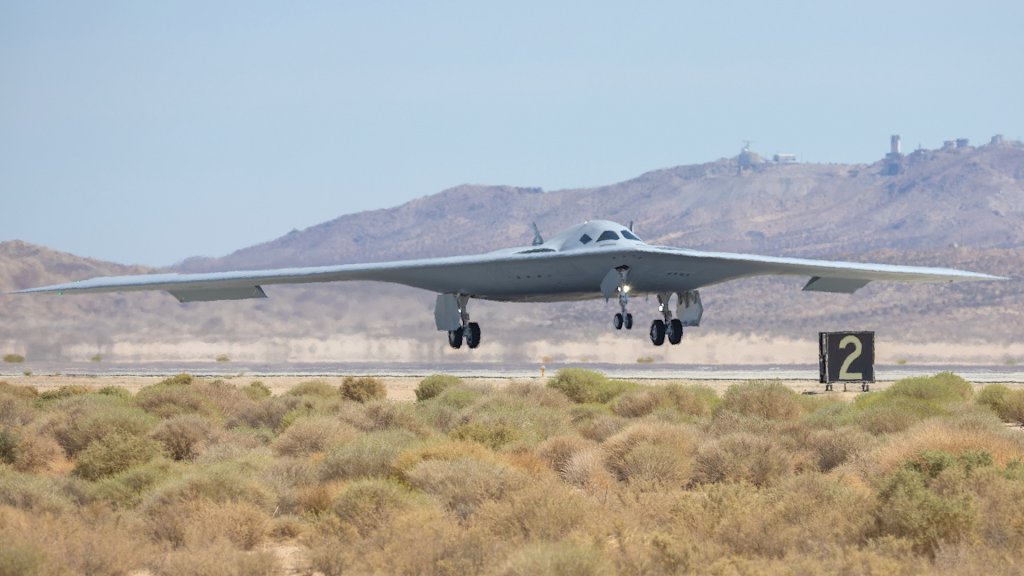
The Air Force’s stated goal remains to begin flying Raiders operationally before the end of the decade. The service expects to eventually acquire at least 100 of the bombers, but it looks increasingly likely that the final fleet size will be larger. Even just 100 aircraft would be five times larger than the current B-2 fleet, a fact that Air Force officials have said they expect to have a transformational impact on future bomber operations overall.
The B-21 is also just one part of a larger Long Range Strike (LRS) family of systems, much of which still remains classified. Beyond the Raider, the LRS ‘system of systems’ is also known to include the AGM-181 Long-Range Standoff (LRSO) nuclear-armed cruise missile. LRSO is set to be integrated onto the B-21 and the B-52, and pictures just recently emerged showing what look to be prototypes or other test articles under the wing of one of the latter bombers.
Whenever the first B-21s do start entering operational service, they may only have one pilot in the cockpit, alongside a WSO, both likely aided by the aircraft’s own autonomous systems.
Howard Altman contributed to this story.
Contact the author: joe@twz.com
Loading comments…
Comments couldn’t be loaded. Please refresh the page.