
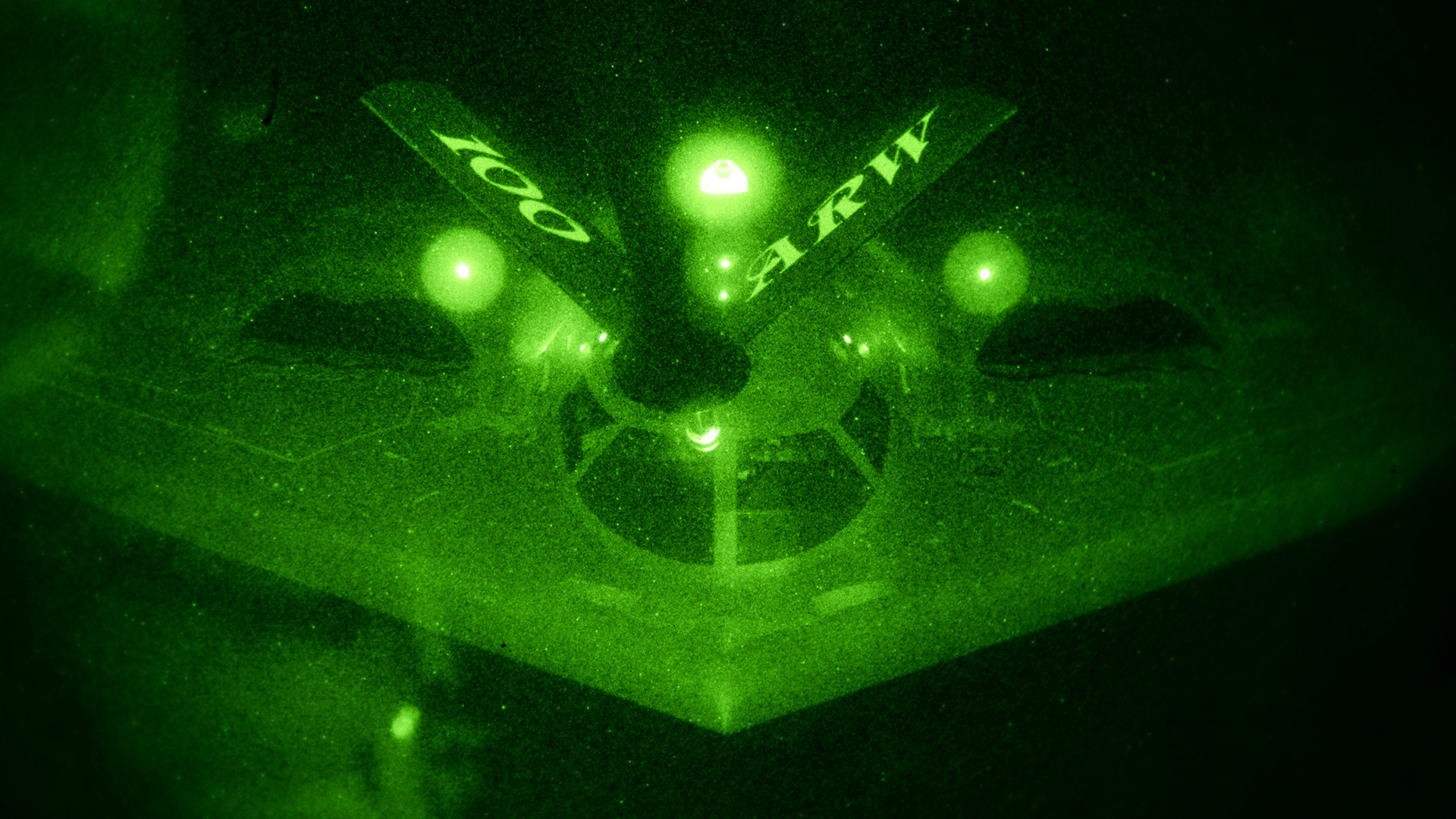
Just as we expected, B-2 Spirits have entered the air campaign against Iran last night. Flying global airpower missions from their home base in Whiteman, Missouri, America’s stealth bombers arrived over Iranian airspace in the early morning hours and targeted Iran’s missile caves. These facilities are built deep under mountains and are primarily used for storage, but some of them actually have the ability to launch ballistic missiles through fissures in their ceilings.
Yesterday, I wrote on X what was to come for the B-2 and the air war, stating:
B-2s will likely show up tonight, making direct attacks on key targets in a way no other platform can. Yes this could include MOPs, but also lots of JDAMs against less fortified targets. They can achieve massive effects in a single sortie. One B-2 can carry 80 500lb JDAMs. Entire airfield’s infrastructure gone on a single pass. They would not be employed until the night and they now have the benefit of highly degraded air defenses and disrupted command and control. This is when the air campaign will change.
There were some indications that B-2 movements were underway, including tanker sorties from the Azores that didn’t have a visible ‘customer.’
Prioritizing missile cave complexes as a target for America’s ‘silver bullet’ stealth bomber force is an obvious decision. As we have stated for years, destroying these complexes is challenging. They are made up of different chambers that can be sealed off from one another. So very complex weaponeering and a large quantity of specialized munitions would be needed to even attempt destroying them completely.

On the other hand, these facilities have a massive vulnerability. You don’t need to destroy them to put the missiles and launchers stored inside totally out of action. You just need to seal them off and keep them sealed off during a conflict. This can be done by striking near the entrances to the fortified caverns. By keeping an eye on these openings using remote sensing after initial strikes, deciding if and when further strikes are needed can be done with high confidence, as efforts to open the entrances back up can be seen and responded to.
So, just by bottling these facilities up, you make the arsenals held within them useless. In addition, some of the entrances have rock formations that climb more gradually above them, meaning penetrators can actually burrow to a depth where the tunnels themselves exist, not just entrance areas. Striking here makes reopening the caverns even more challenging.
There is one complicating factor when trying to put these facilities out of action — some of them have apertures in their ceilings that allows ballistic missiles to be launched without them leaving the facility. Some even have automated rapid-loading systems to fire the missiles off quickly. This means that missiles can still be fired from them even if the entrances are temporarily sealed. The good news is that the overhead doors that protect the launch bays can be penetrated, and the bays themselves destroyed. This would specifically be a good job for the B-2.

By going after these cave complexes, scores of launchers and missiles can be taken off the table. That means fewer missiles to hunt for in the open, which is a very challenging and resource-consuming kind of interdiction mission, to say the least. As such, these installations would be among the highest priority of targets, along with Iranian command and control capabilities. There is currently a race on when it comes to the supply of missiles and counter-missile capabilities. As we have discussed at length, interceptor stocks are not in a good place. For every missile kept out of the fight, that is one (or more) less interceptors that does not need to be expended.
The B-2 has unique conventional weapons capabilities that have become famous. A single Spirit can carry 80 500-pound JDAMs that can all fly miles from their launch point and hit individual targets with exacting precision. A single pass from one B-2 over an airfield can destroy all of the base’s non-hardened infrastructure, for instance. But it’s the B-2’s bunker-busting capabilities that get the most attention.
The Massive Ordnance Penetrators (MOP) used to attack Fordow in June are the ultimate non-nuclear bunker buster. But these 30,000-pound weapons are very few in number, and only two can be carried by each B-2. Because of the compartmentalized nature of some of the missile caves, just how effective they would be at destroying the complexes is questionable. If intelligence existed that would allow for perfect weapons placement, it’s possible they would have been used.
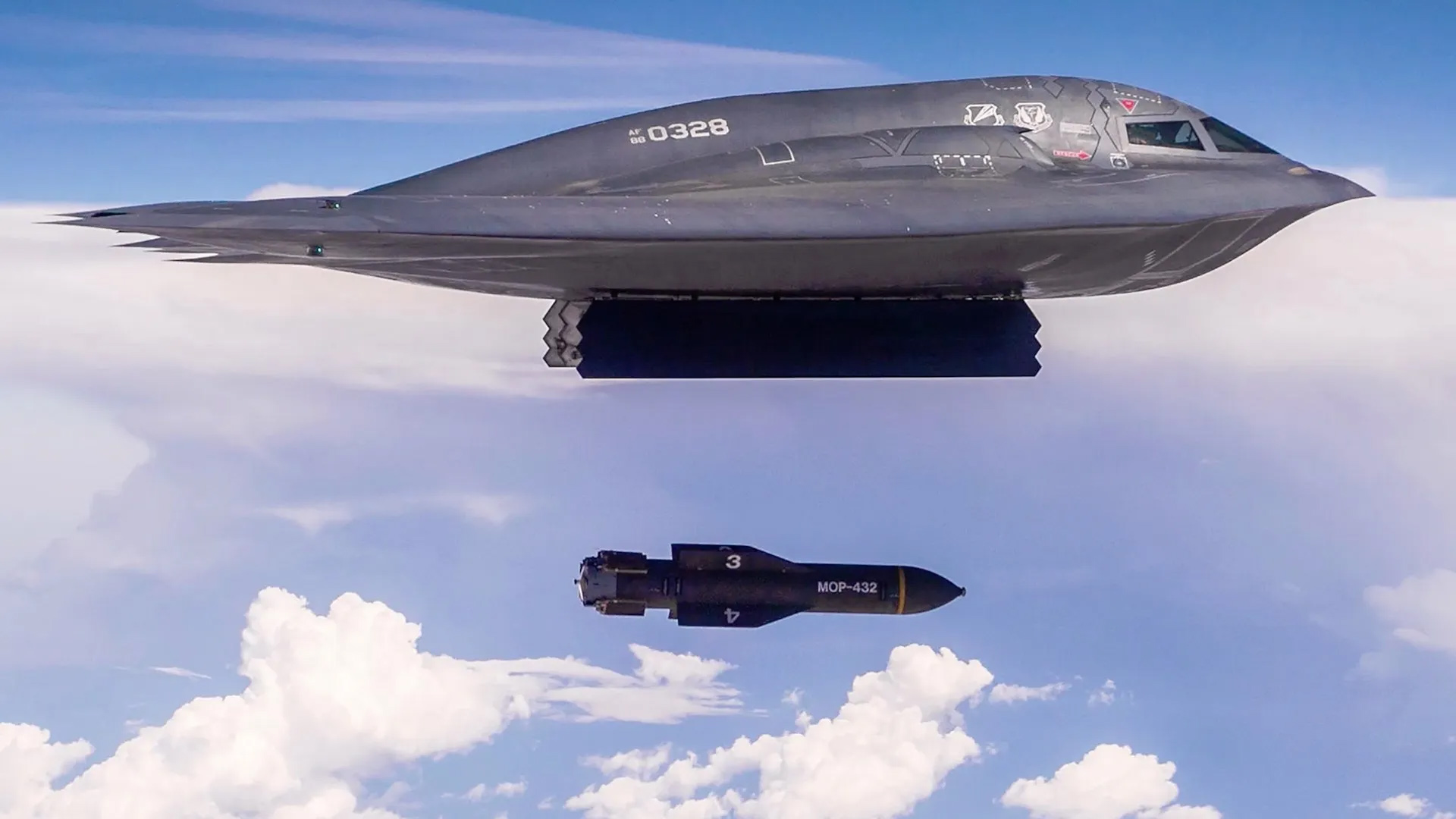
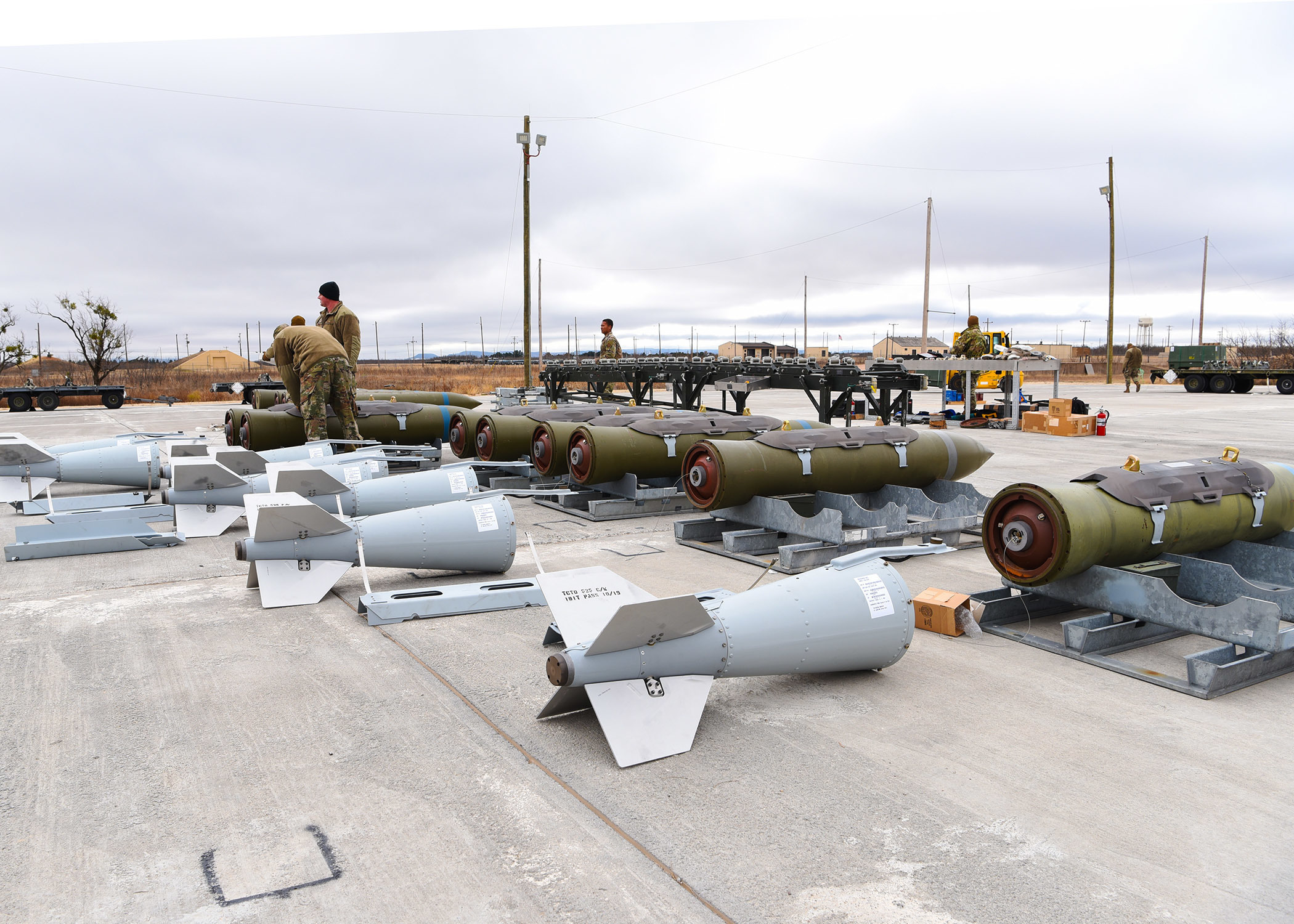
More likely, the B-2s would have used more common bunker busters for this kind of mission. These include 2,000-pound-class BLU-109-warhead equipped GBU-31 Joint Direct Attack Munitions (JDAM). The BLU-109-equipped JDAMs are common across American combat aircraft, but the B-2 can carry 16 of them, not a couple like a fighter would, on a typical mission. The B-2’s arsenal may also now include new GBU-72 5,000-pound-class bunker busters, a bomb developed to bridge some of the gap between the BLU-109 and the MOP. A mix of these weapons can be carried in order to tailor the damage to different areas of a missile cave complex.
The smaller weapons would likely have been capable of collapsing runner entrances and destroying the missile launch apertures at the limited number of sites equipped with them.
Then there is another question some are bound to ask, why use a B-2? Why not a B-52 or B-1? The answer there is multi-fold, but the biggest driver in this regard is the B-2’s stealth capabilities. The airspace over Iran is not fully secured. There are still threats, some of which are novel to Iran, and others are road mobile and can pop up at any time. Taking every advantage — careful mission planning based on the latest intelligence, electronic warfare, and cyber support, and escorts that can take out counter-air threats in real time — is still a necessity. Also, the B-2 crews train for just this type of mission and likely have familiarity with the target sets in mind. So they will be used for direct bomber attacks for the foreseeable future.

As to why the B-2s flew such a long mission instead of operating from a forward location, the answer there is relatively clear. As we reported last week, the United Kingdom has not allowed the U.S. to launch strikes from its bases against Iran. This includes two locations that are fully equipped to sustain bomber operations and are relevant in proximity to the Iranian mission — RAF Fairford in the United Kingdom and Diego Garcia in the Indian Ocean. While the B-2 community has been training to launch limited operations from other forward locations in recent years, these locales are not equipped to sustain sorties. So, flying from home, at least at this point, was clearly the best option.
We will likely be seeing more of the B-2s in the coming days, especially as the air war moves from targeting immediate threats and focuses on destroying Iran’s nuclear infrastructure and its military industrial complex — especially the parts of it that develop and construct ballistic missiles and other standoff weaponry that threaten Israel and Iran’s neighbors.
UPDATE: 4:47 Eastern –
The U.K. government has more details about the revised level of support it is willing to provide the United States in its campaign directed against Iran. The United Kingdom is now offering the U.S. military use of its bases for strikes targeting Iranian missile sites. You can read more about why this became an issue in our story about the controversy here.
In a video shared on social media Sunday, British Prime Minister Keir Starmer said: “Our partners in the Gulf have asked us to do more to defend them, and it’s my duty to protect British lives.
“We have British jets in the air as part of coordinated defensive operations which have already successfully intercepted Iranian strikes.
“But the only way to stop the threat is to destroy the missiles at source — in their storage depots or the launchers which used to fire the missiles. The United States has requested permission to use British bases for that specific and limited defensive purpose.
“We have taken the decision to accept this request — to prevent Iran firing missiles across the region, killing innocent civilians, putting British lives at risk and hitting countries that have not been involved.”
Given Starmer’s new stance, it is possible we could see movements of B-2s and other bombers to either or both of the bases at the center of the controversy. As we have already noted, the U.S. has beefed up Diego Garcia with F-16 Fighting Falcons.
However, we don’t know the timeline for Operation Epic Fury. If it only lasts a few days, it is possible that the B-2s and other bombers could continue to fly from bases in the U.S. We just don’t know yet.
A flight of four B-2 Spirit stealth bombers returning to Whiteman Air Force Base in Missouri after bombing Iran had to divert to Dyess Air Force Base in Texas. The aircraft — PETRO41, PETRO42, PETRO43 and PETRO44 — reportedly altered their course due to weather issues at Whiteman.
You can see some of the jets landing in the following video.
The Pentagon has confirmed that the B-2s used 2,000lb bunker busters on their missions. Also, bomb damage imagery collected by commercial satellites shows the entrances to some of the missile caves have been collapsed over night.
Contact the author: Tyler@twz.com
Loading comments…
Comments couldn’t be loaded. Please refresh the page.