

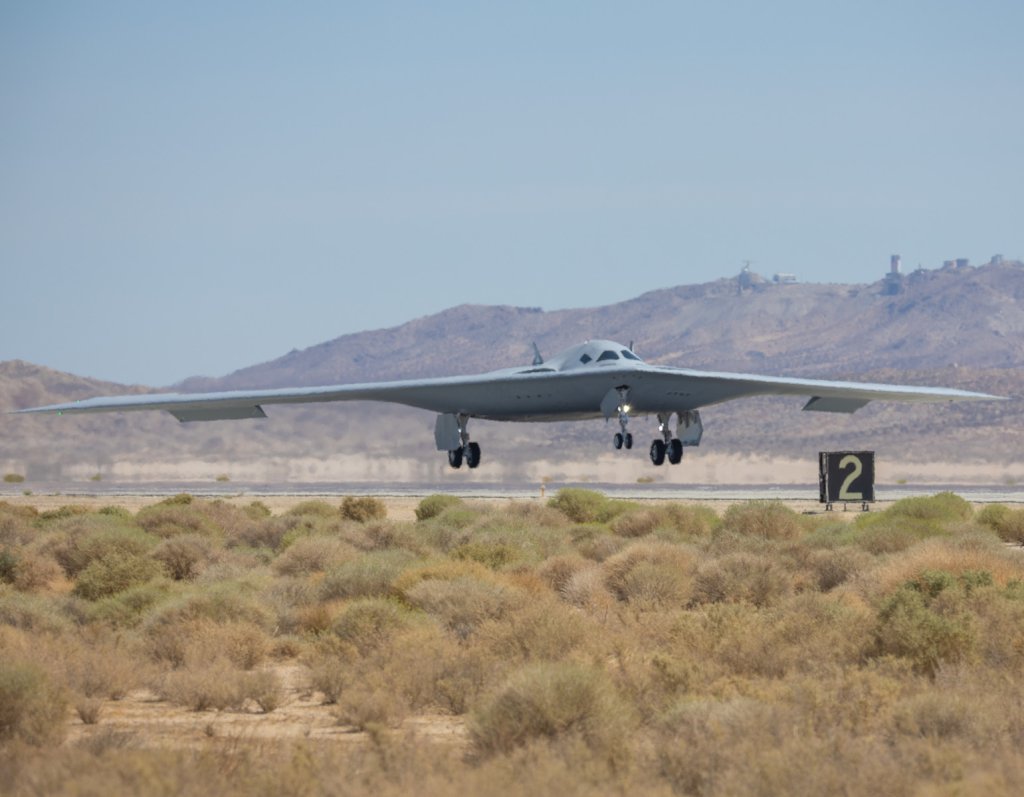
The official target size of the future B-21 Raider fleet remains 100 aircraft, despite an announcement that production of the stealth bomber is expanding, a U.S. Air Force official has confirmed to TWZ. For now, the main focus of the production boost is on accelerating fielding of the B-21, now set to begin in 2027. More production capacity could still open the door to an increase in the total planned Raider fleet size in the future.
The U.S. Air Force and prime contractor Northrop Grumman announced yesterday that they had finalized an agreement to boost annual B-21 production capacity by 25 percent. The news came on the first day of the Air & Space Forces Association’s (AFA) annual Warfare Symposium, at which TWZ is in attendance. Air Force and Northrop Grumman have been openly discussing the possibility of a production expansion for more than a year now.

Specific Raider production rate details remain classified, but Aviation Week has reported that it is “understood to be up to eight aircraft per year.” The Air Force official told TWZ that the final B-21 fleet size figure is expected to be classified, as well.
The B-21 production capacity expansion is leveraging $4.5 billion in supplemental funding provided by a reconciliation bill, commonly known as the “One Big Beautiful Bill,” passed last year. The new agreement with Northrop Grumman involves “compressing delivery timelines while preserving cost and performance discipline,” per the Air Force. For years, U.S. military officials, as well as members of Congress, have repeatedly described the B-21 program as a model acquisition effort that has remained on track despite its cost and complexity, and at least some hurdles along the way.
“This is what disciplined acquisition delivers,” Air Force Gen. Dale White, Director of Critical Major Weapon Systems and direct reporting portfolio manager to the Deputy Secretary of War, said in a statement yesterday. “This decision reflects our confidence in the program’s performance and the stability of the industrial base. By increasing production capacity now, we are responsibly accelerating delivery of a critical, combat-effective capability to the warfighter.”
“The B-21 is foundational to our long-range strike capability and to credible deterrence,” Secretary of the Air Force Troy Meink also said in a statement. “Accelerating production capacity now ensures we deliver operational capability to combatant commanders faster — strengthening our ability to outpace, deter, and, if necessary, defeat emerging threats. This is disciplined execution at the speed the security environment demands.”
“The B-21 was delivered on schedule and will be on the ramp at Ellsworth in 2027,” Air Force Chief of Staff Gen. Kenneth Wilsbach also said during a keynote address at the AFA Warfare Symposium yesterday. Ellsworth Air Force Base in South Dakota has long been slated to be the first home for operational Raiders.
“Getting the B-21 Raider into the hands of our Air Force operators and maintainers is the mission of thousands of dedicated Northrop Grumman team members,” Tom Jones, President of Northrop Grumman’s Aeronautics Systems sector, said in a statement accompanying a press release from the company yesterday, as well. “We have delivered continued outstanding performance on B-21 in ground and flight test, in partnership with the Air Force.”
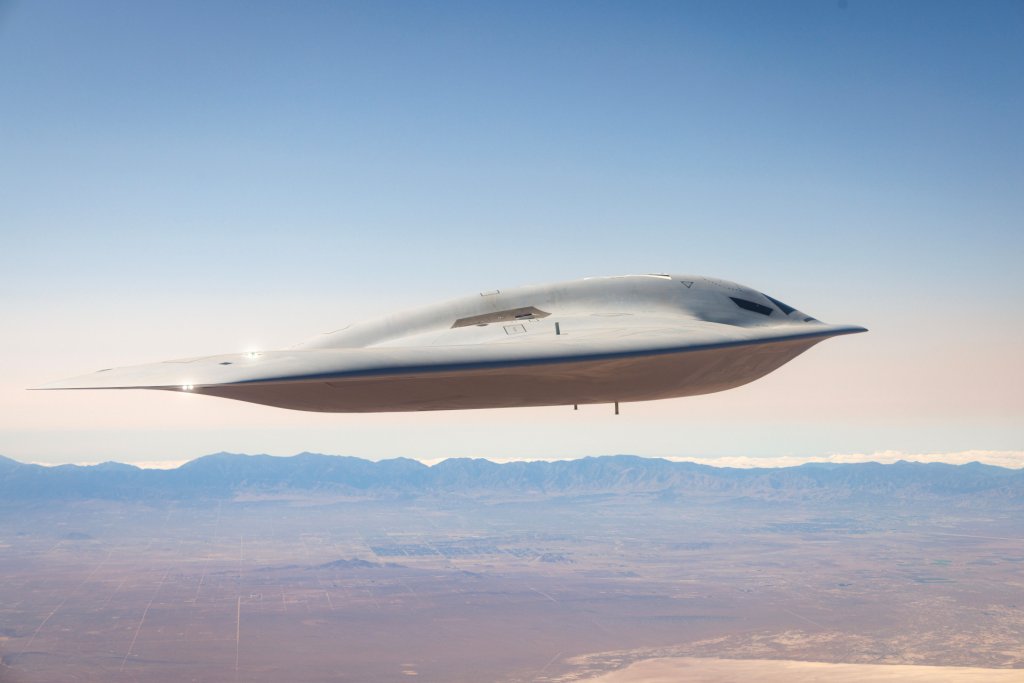
The first pre-production B-21 arrived at Edwards Air Force Base following its maiden flight in 2023. A second pre-production Raider took to the skies last year. The Air Force eventually expected to take delivery of a total of six pre-production examples of the new stealth bomber. Non-flying airframes are also being used to support ongoing testing.
Northrop Grumman has received at least three contracts now for low-rate initial production (LRIP) lots of B-21s, as well as funding to support long-lead time items for future lots. How many Raiders in total the Air Force has already ordered to date is unknown. President Donald Trump has made mention of buying between 20 and 30 new and improved B-2s on several occasions in the past year or so, but these comments are widely understood to be referencing purchases of B-21s. Whether the figures Trump has offered reflect existing LRIP contracts or prospective future lots is also not known.
Though there has been no official change in the plan yet, expanded production capacity could still create a path to increasing the total size of the B-21 fleet. U.S. officials have increasingly expressed support in recent years for a larger fleet of Raiders, possibly consisting of up to 145 bombers. It’s also worth noting here that the Air Force’s bomber fleet plans, broadly, are no longer constrained by limitations previously imposed by the New START arms control treaty with Russia, which expired earlier this month.
Air Force officials have also touted the boost in capabilities the service expects to get just with 100 stealthy B-21s, especially when contrasted with what is currently offered by the ‘silver bullet’ B-2 fleet. Though B-2s are a vital component of America’s strategic nuclear arsenal, and also provide unique conventional strike capabilities, as was demonstrated during the Operation Midnight Hammer strikes on Iran last year, there are only 19 of them in service today.

“So, the B-21, … it’s in flight test now, it’s a phenomenal capability,” then-Air Force Maj. Gen. Jason Armagost said during an online talk last year. In “the job prior to this … I was interacting with acquisition, RCO [Air Force Rapid Capabilities Office], and Northrop Grumman in how we work together to drive the concepts, drive the requirements, drive the fielding and the manufacture, actually, of this airplane, so that it can become something different when we have it in numbers.”
“That’s what I’m most excited about,” he continued. “Sixth-generation stealth brings with it, it brings its own set of pretty amazing capabilities, but what I’m most excited about is the ability to build a campaign force.”
At that time, Armagost was the commander of the Eighth Air Force, to which the Air Force’s current B-2, B-1, and B-52 bombers are all assigned. Armagost, since promoted to Lieutenant General, is now Deputy Commander of Air Force Global Strike Command (AFGSC).
“Right now, I’m focused on delivering the initial capability. And unfortunately, I can’t talk too much about the capabilities of the bomber. They are significant, and they are impressive,” AFGSC’s current commander, Gen. Stephen Davis, also told TWZ last month. “From the command’s perspective, we’re concentrating on getting everything in place up at Ellsworth Air Force Base in South Dakota to bed down that capability. Really, it’s the acquisition community that’s still delivering that plane, and I’m certainly interested in that, but I’m probably more focused on the bed down and getting those things right.”
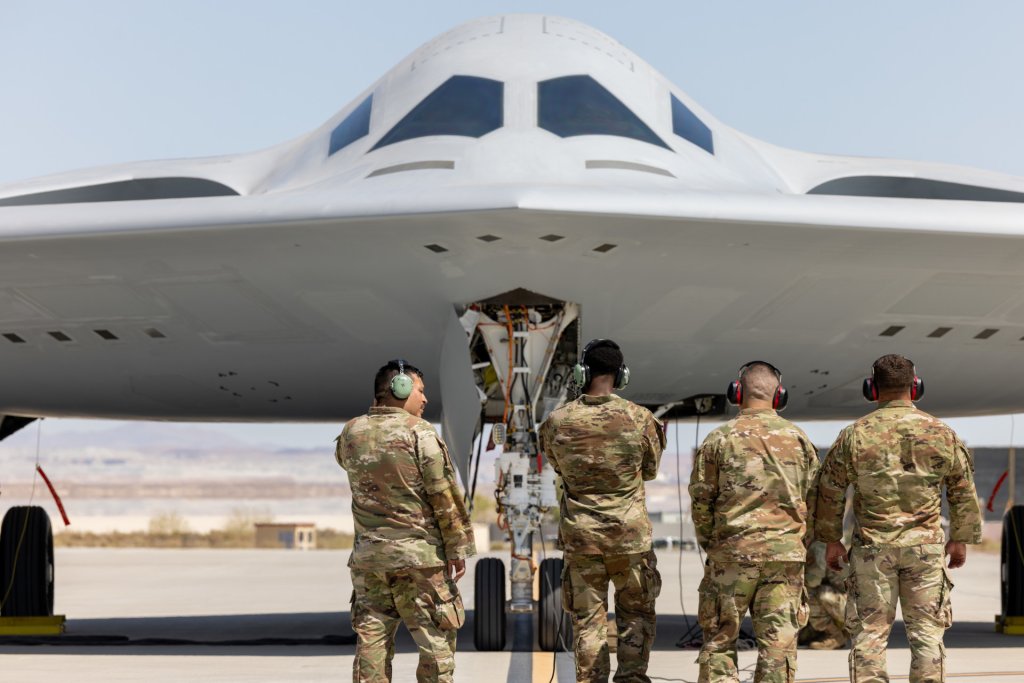
This was Davis’ first interview since he took up his current post last November. He offered additional insights about the B-21 and what capabilities it will offer, including its ability to work with future Collaborative Combat Aircraft (CCA) drones, as well as what role it could play in a future conflict in the Pacific against China. You can find his full comments about the Raider here.
If nothing else, the Air Force and Northrop Grumman have now taken important new steps to get the first operational B-21s into service faster.
Contact the author: joe@twz.com
Loading comments…
Comments couldn’t be loaded. Please refresh the page.