
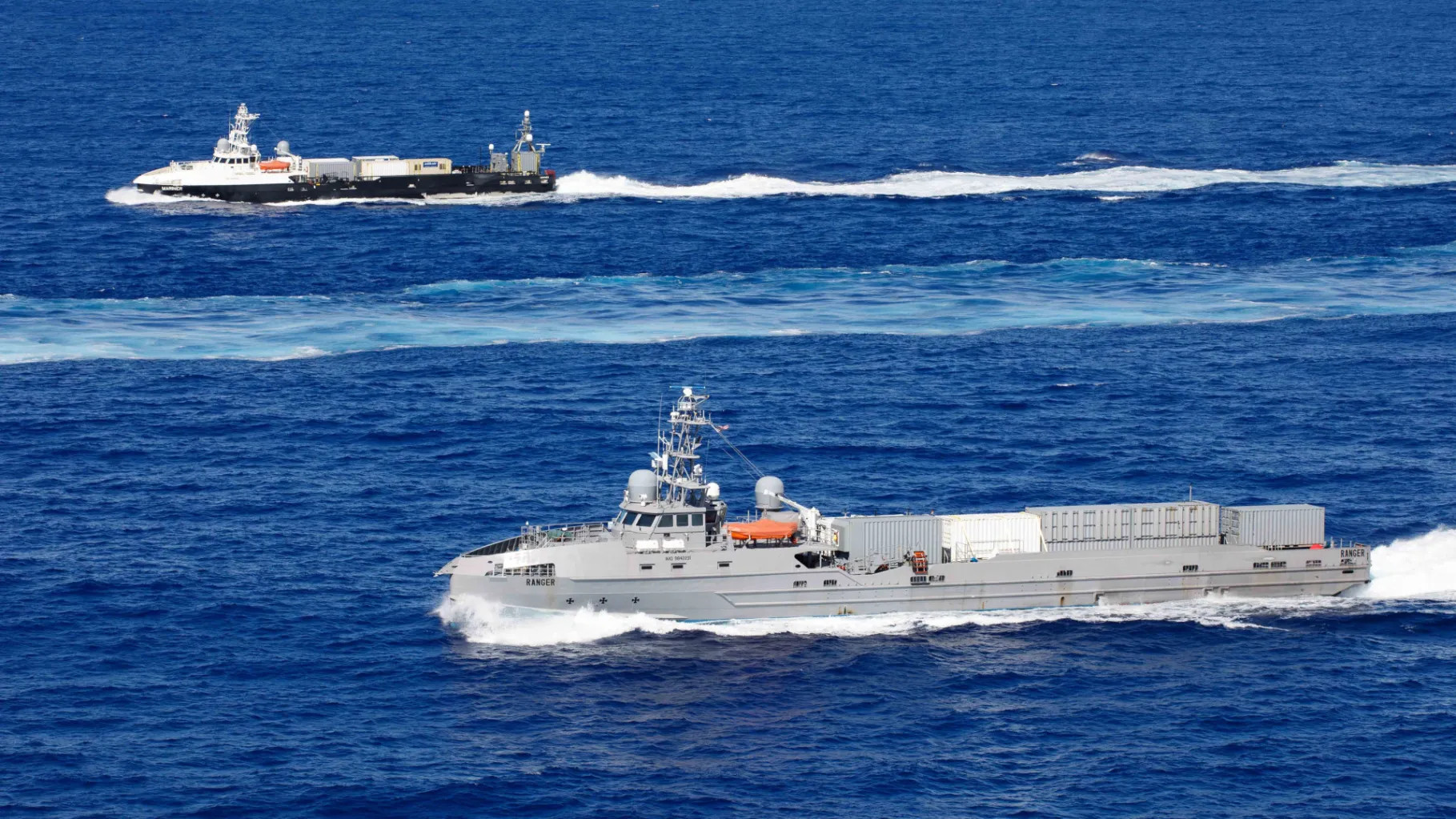
The U.S. Navy may soon be required by law to only consider designs built from the keel up to sail without a crew ever being on board for at least its first batch of Modular Surface Attack Craft (MASC). The service wants to acquire a new family of larger uncrewed surface vessels readily configurable for surveillance and reconnaissance, strike, and other missions using modular payloads through the MASC program. Being able to dispense with features necessary for even optional human operation does offer potential benefits, especially when it comes to cost and production at scale.
A provision explicitly about the MASC program is contained in the most recent draft of the annual defense policy bill, or National Defense Authorization Act, which the House Armed Services Committee released this past weekend. The legislation, which is a compromise between previous House and Senate versions of the NDAA for Fiscal Year 2026, could now be put to a vote as early as this week.
The MASC provision contained in the current version of the bill is brief but to the point. It stipulates that “the Secretary of the Navy may not enter into a contract or other agreement that includes a scope of work, including priced or unpriced options, for the construction, advance procurement, or long-lead material for Modular Attack Surface Craft Block 0 until the Secretary certifies to the congressional defense committees that such vessels will be purpose-built unmanned vessels engineered to operate without human support systems or operational requirements intended for crewed vessels.”
The Navy laid out a host of details regarding its plans for MASC this past summer, including initial requirements for a baseline design, as well as high-capacity and single-payload types, all of which you can read more about here. As mentioned, the Navy is primarily looking to configure MASC drone ships to conduct surveillance and reconnaissance and strike missions. The service has also expressed an interest in unspecified capabilities to counter adversary intelligence, surveillance, reconnaissance, and targeting activities. As TWZ has previously noted, stated power generation requirements could also be particularly relevant for any plans to integrate laser or high-power microwave directed energy weapons, as well as electronic warfare suites, onto future members of the MASC family.
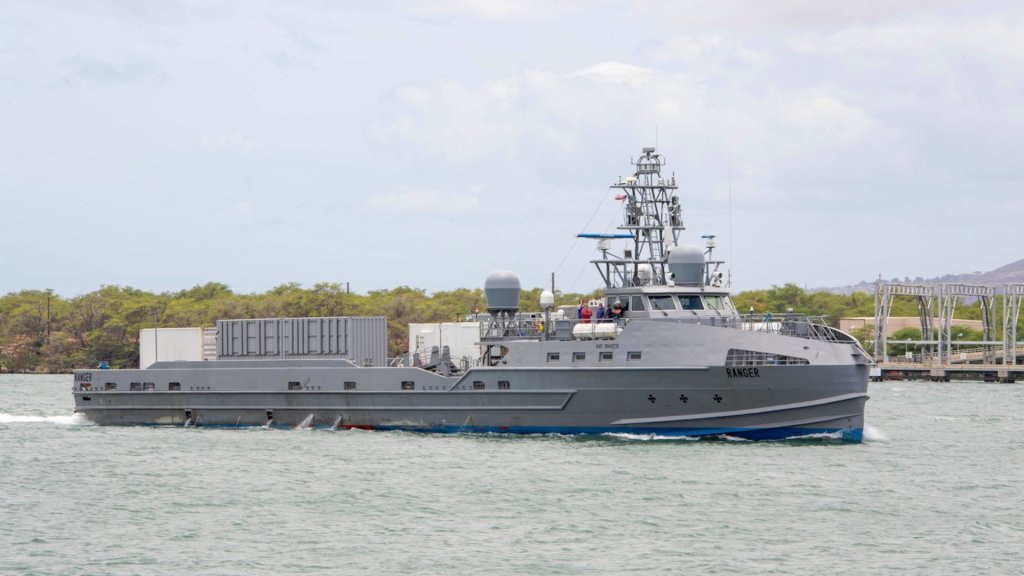
For years now, the Navy has been using optionally crewed vessels to help lay the groundwork for future fleets of medium and large uncrewed surface vessels (MUSV/LUSV). This has included the test-firing of a containerized missile launcher from one of those ships, as seen in the video below.
The MASC program reflects a larger shift in focus away from those previous efforts, which were defined primarily by very rigid length and displacement requirements. Modular, containerized payloads, rather than specific hull designs, are central to the new MASC concept.
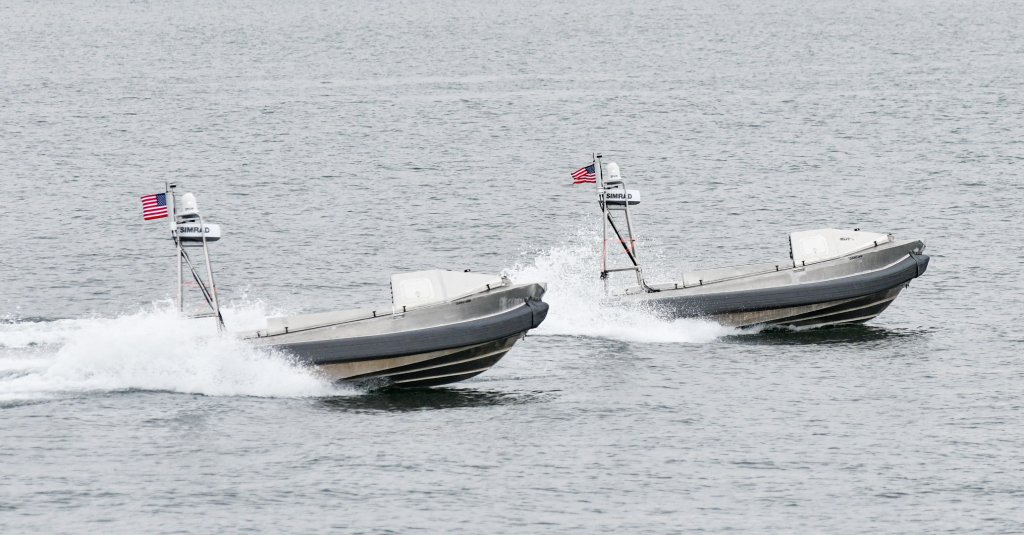
The Navy has also been fielding a growing number of speed boat and jet ski-type USV designs through programs separate from MASC.
As mentioned, USVs that are designed from the outset to only sail in an uncrewed mode offer benefits when it comes to development, production, and operational employment. They do not need berthing space, galleys, toilets, or any other features needed to support human personnel on board. All of this, in turn, can allow for more radical design decisions optimized for the performance of the missions, as well as help reduce overall complexity and cost. This can further translate into USVs that are faster and easier to produce in larger quantities.
With all this in mind, the Navy has already been openly talking about moving away from optionally-crewed designs for MASC.
“When you introduce that capability to operate with people on board, it creates a lot of other requirements and cost and complications,” Navy Capt. Matt Lewis, program manager of the Unmanned Maritime Systems program office within Naval Sea Systems Command (NAVSEA), told USNI News on the sidelines of an event back in August. “The [MASC] solicitation that went out for industry… it was open, and we are eager to get proposals as we review them, to look at the proposals that don’t have people on board.”
“We definitely want unmanned. Period. I mean, it’s that simple,” Navy Capt. Garrett Miller, commander of Surface Development Group One (SURFDEVGRU), also said at that time.
SURFDEVGRU is currently a focal point within the Navy for work on operationalizing USV capabilities and has two unmanned surface vessel squadrons assigned to it. The Group also oversees the two Zumwalt class stealth destroyers that the Navy has in service now. The third ship in that class, the future USS Lyndon B. Johnson, is also set to be assigned to the unit.
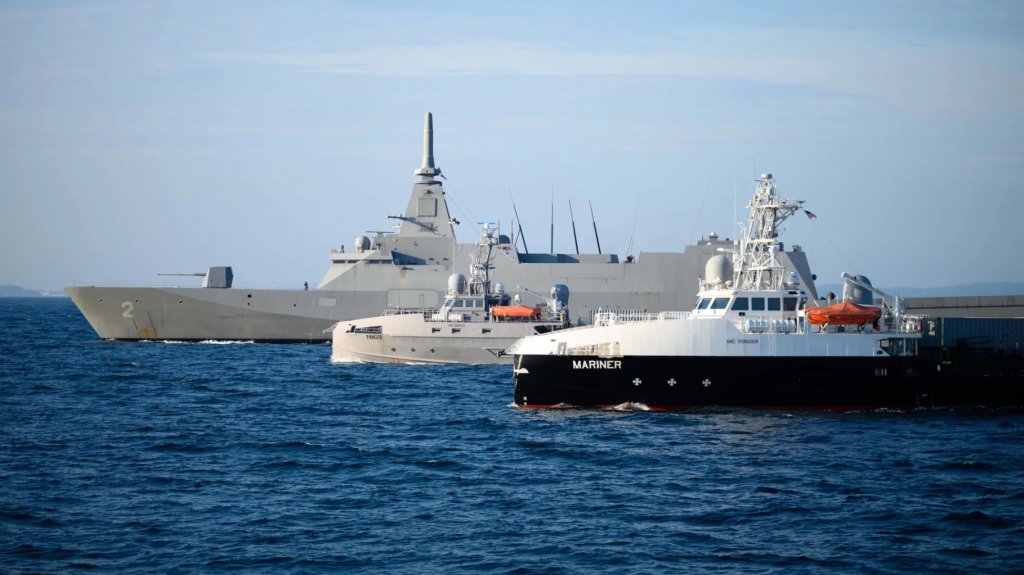
Larger USVs intended to sail for protracted periods without even a skeleton crew on board to provide immediate maintenance and other support do also present certain challenges. These vessels have to be highly reliable and be capable of at least a certain degree of safe autonomous operation in areas that could be full of other ships. How force protection might be ensured, especially during more independent operations, is an open question, too.
Underscoring all of this, the recently release draft NDAA for Fiscal Year 2026 includes a separate provision that would prevent the Secretary of the Navy from awarding “a detail design or construction contract or other agreement, or obligate funds from a procurement account, for a covered [medium and large USV] program unless such contract or other agreement includes a requirement for an operational demonstration of not less than 720 continuous hours without preventative maintenance, corrective maintenance, emergent repair, or any other form of repair or maintenance,” for a variety of key systems. It would also block the Navy from accepting delivery of any “articles” produced under any such contract or agreement before the successful conclusion of that operational demonstration.
The Navy has already been cooperating with the U.S. Defense Advanced Research Projects Agency (DARPA) on a program specifically intended to prove new USV capabilities with a demonstrator designed from the start to operate without humans ever being on board. The Defiant drone ship that was developed for DARPA’s Manning Required Ship (NOMARS) effort, also known as the USX-1, kicked off an extended at-sea trial in September that has included a demonstration of its ability to be refueled at sea using a system that does not require personnel to be present on the receiving side. You can read more about the Defiant, which prime contractor Serco also developed to be a lower-cost and readily producible design, here.


The stated plan is for Defiant to be transferred to SURFDEVGRU after DARPA’s testing with the ship wraps up. The Navy has said that it sees the vessel, which is also designed around carrying containerized mission payloads, as a key technology ‘feeder’ into the MASC effort. Prime contractor Serco has already been developing an enlarged derivative, currently called the Dauntless, as well.

Other companies are already lining up to compete for future MASC contracts, including Eureka Naval Craft with its Bengal-Module Carrier, or Bengal-MC.
U.S. shipbuilder Huntington Ingalls Industries (HII) unveiled its own plans for a new line of USVs, called ROMULUS, in September. HII says ROMULUS designs will be highly modular and capable of carrying containerized payloads, which is all in line with the Navy’s current vision for MASC.
In November, Anduril announced a partnership with HD Hyundai Heavy Industries in South Korea to develop a new family of what the company is calling Autonomous Surface Vessels (ASV), including a version explicitly intended to meet the Navy’s MASC requirements. An initial ASV prototype is set to be built in Korea, but Anduril has plans to establish its own production capacity within the United States at a revamped shipyard in Seattle, Washington.
There are other U.S. companies, especially ones like Leidos that are already very active in the USV space, which could join the race to meet the Navy’s MASC needs. The marketplace for larger USVs, and particularly designs built around readily interchangeable containerized payloads, is growing globally, as well. This includes several designs that have emerged in China in recent years.
A widening and ever more worrisome gap in U.S. shipbuilding capacity versus China has been a key driver behind the surge in the Navy’s interest in USVs in recent years, to begin with. Distributed fleets of USVs configured for a variety of missions, including strike and ISR missions, could be critical to bolstering existing fleets of traditional crewed warships, especially in a future large-scale conflict across the broad expanses of the Pacific. With a high degree of autonomy, those uncrewed vessels could operate more independently of their crewed companions, creating new operational possibilities, but also introducing new risks.
The Navy has also highlighted how MASC USVs being readily reconfigurable could create targeting challenges and other dilemmas for opponents who would not know what payloads they might be carrying at any one time. MASC drone ships could also be sent first into higher-risk areas or otherwise help reduce risks to crewed assets.
The plans for MASC are still very much evolving. However, the Navy’s vision looks increasingly set to eschew optionally-crewed designs, something Congress now looks intent on further compelling the service to do by law.
Contact the author: joe@twz.com
Loading comments…
Comments couldn’t be loaded. Please refresh the page.