
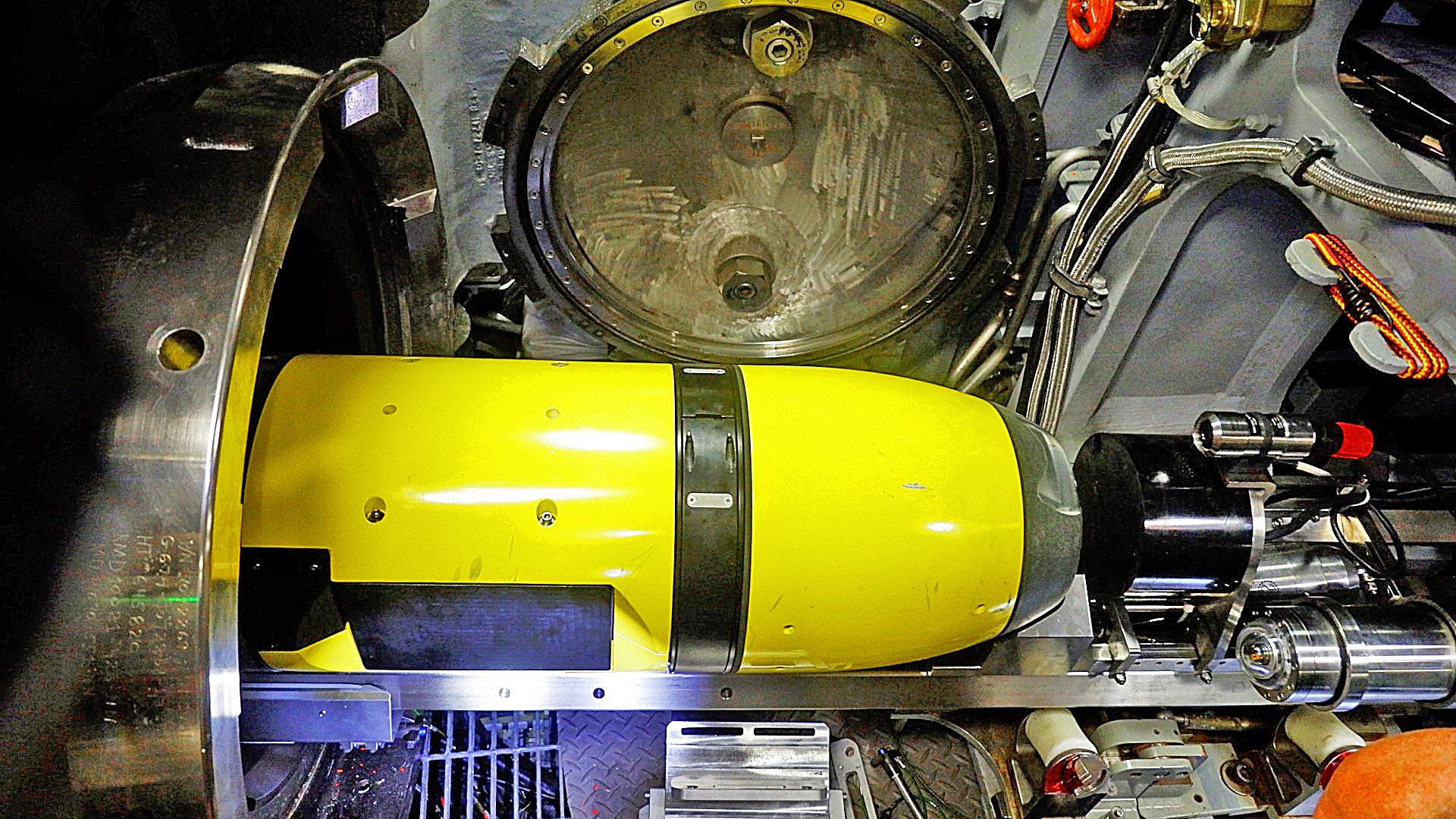
The U.S. Navy has canceled a variant of its Razorback uncrewed underwater vehicle (UUV) designed to be launched and recovered via a standard submarine torpedo tube. The decision prompts questions about work on an at least tangentially related torpedo tube-launchable and recoverable UUV called Yellow Moray, which the service has been touting steady progress on just in recent months. The Navy regularly highlights the benefits, in general, that fielding torpedo tube-launched and recovered UUVs on a widespread basis across its submarine fleets could offer.
The Navy’s proposed budget for the Fiscal Year 2026 includes updates on the overall Razorback program. At their core, all versions of the Razorback are based on the highly modular REMUS 600, a UUV with a torpedo-like shape, for which Huntington Ingalls Industries (HII) is the current prime contractor. Woods Hole’s Oceanographic Systems Lab originally developed the REMUS 600, which was then initially produced by a company called Hydroid.

In a typical configuration, the REMUS 600 is 10.6 feet long, 12.75 inches in diameter, weighs 530 pounds, and can operate down to depths of 600 feet. The stated endurance of the REMUS 600 is up to 70 hours, but this is dependent on the UUV’s exact configuration and other factors. The design is capable of semi-autonomous operation along a pre-defined route, and it can communicate with ships and other nodes via a data link connected to a small mast-mounted antenna at the rear of the body while running close to the surface.
“[The] Razorback is a medium class UUV capable of persistent, autonomous, ocean sensing and data collection in support of Navy
Intelligence Preparation of the Operational Environment (IPOE) mission,” the Navy’s 2026 Fiscal Year budget request explains. In layman’s terms, the IPOE mission set is centered on gathering information about a particular area or objective ahead of an operation, to help with planning. In general, UUVs configured for this role are often fitted with side-scan sonars, bathymetric sensors, and other systems, allowing them to help create detailed underwater maps, as well as identify potential hazards and other objects of interest.
“The Razorback has two variants, the Razorback MK19, formerly referred to as Razorback Dry Deck Shelter (DDS), and the Razorback MK20, formerly referred to as Razorback Torpedo Tube Launch and Recovery (TTL&R). The Razorback MK19 variant procurement began in FY 2017 and Fleet operational deployments began in FY 2021,” the Navy budget documents add. “Development of requirements and submarine integration efforts commenced in FY 2019 for MK20 variant, which was competitively sourced to industry in FY 2022. On 10 February 2025, the Navy decided to terminate the MK20 program due to significant schedule delays and inability to meet key requirements.”
Razorback UUVs can also be launched from surface ships and the shore. The Navy has surface-launched Mk 18 Kingfish versions of the REMUS 600 in service, which are configured to primarily support mine-clearing operations, as well.
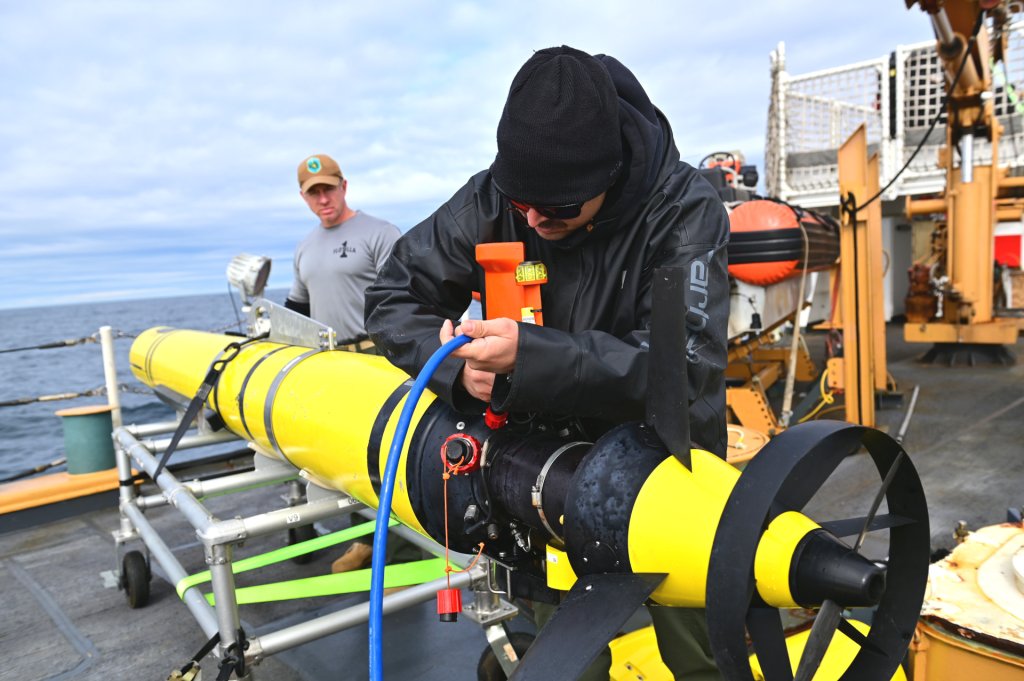
No further details about the decision to cancel the Mk 20 variant of the Razorback are provided. The Navy’s budget request for Fiscal Year 2026 also does not appear to include any explicit mention of the Yellow Moray UUV, which is also a variant of the REMUS 600. The exact relationship between the Mk 20 Razorback and Yellow Moray (and whether they are different names for the same program), and how the termination of the former might impact the latter, is unclear. TWZ has reached out to the Navy for more information.
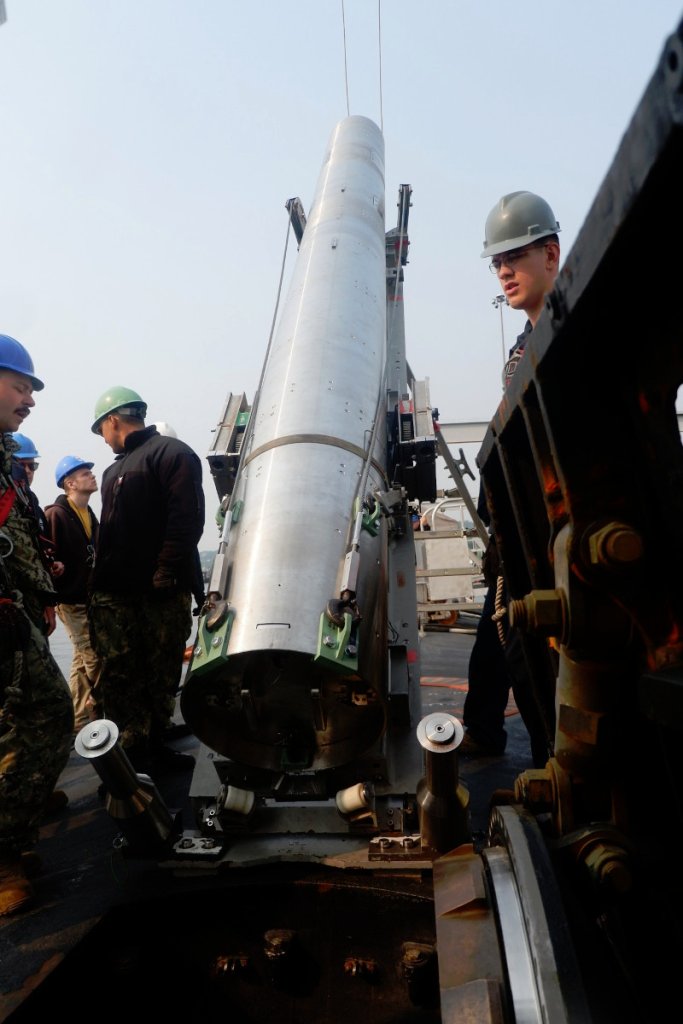
It is worth noting here that the Navy has developed other torpedo-tube-launched UUVs, as well as ones that can be deployed via dry deck shelter (DDS) and other means, but recovering them afterward has historically been challenging. In 2023, the Navy had canceled work on another UUV called Snakehead in part because that design was too big to even work with existing DDSs.
In general, being able to launch and recover UUVs via standard torpedo tubes greatly expands the total number of platforms that can act as underwater drone motherships and, by extension, the overall capacity to employ those capabilities. The Navy has a very limited number of DDSs and submarines configured to carry them. At present, only a select few of the Navy’s Virginia class nuclear-powered attack submarines, as well as its four Ohio class guided missile submarines, can be fitted with DDSs. Submarines equipped in this way are capable of performing an array of other functions, including launching and recovering special operations forces in swimmer delivery vehicles (SDV), and are in high demand as a result.
“This capability allows us to extend our reach with additional sensors at both shallower and deeper depths than a manned submarine can access,” Navy Vice Adm. Rob Gaucher, the commander of Naval Submarine Forces, said in a statement in May about the Yellow Moray UUV. “It reduces risk to the submarine by performing dull, dirty, and dangerous missions with the UUV, and the Yellow Moray system reduces risk to our divers since we can launch and recover via a torpedo tube.”
Gaucher’s comments accompanied the Navy’s announcement in May that the Virginia class submarine USS Delaware had employed Yellow Moray operationally during a deployment to the U.S. European Command (EUCOM) area of operations. This followed previous testing that Delaware had conducted with the UUV.
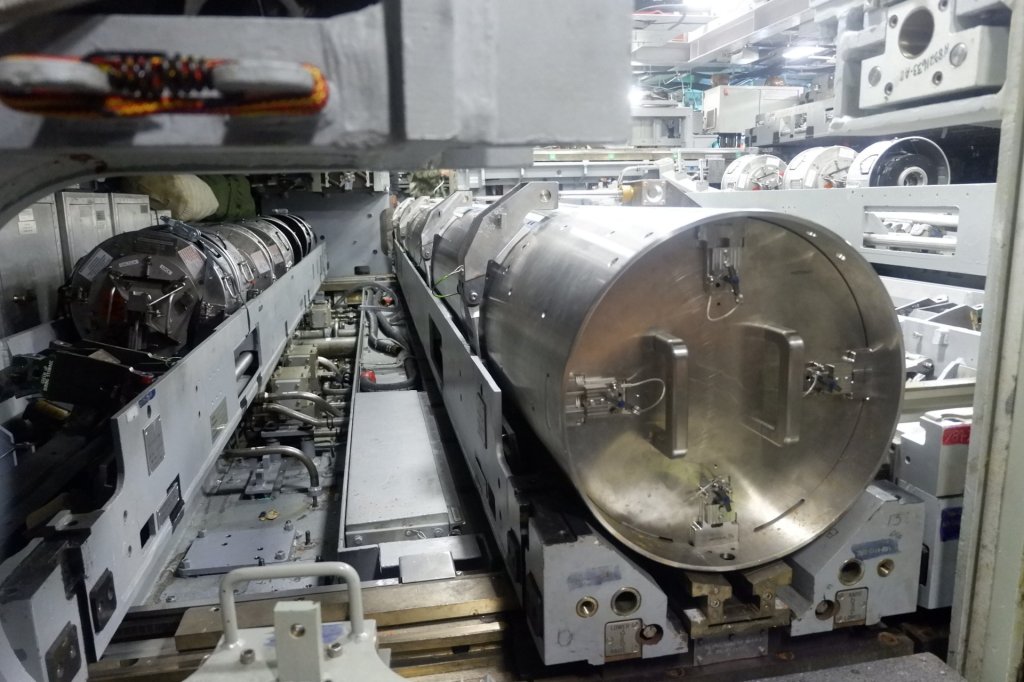
The use of Yellow Moray in European waters was the “first-ever forward deployed submarine torpedo tube launch and recovery of a UUV to complete a tactical objective,” the Navy said in a press release at the time. “The integration of Robotic and Autonomous systems with submarines allows for a wider range of missions with reduced risk to personnel. These missions include, but are not limited to, seabed mapping, mine detection, and intelligence gathering. The autonomous nature of UUVs allow them to operate in areas inaccessible or too dangerous for manned submarines and provides valuable insight and situational awareness to the operational commander.”
In past reporting on Yellow Moray, TWZ has noted that the modular nature of the REMUS 600 could open the door to other roles beyond IPOE-type missions in the future, including using the UUVs as decoys. Actively stimulating enemy sensors and observing the response could also allow for collecting useful intelligence on an opponent’s capabilities and tactics, techniques, and procedures.
When it comes to Delaware‘s recent deployment, which wrapped up just this past weekend, the Navy also acknowledged issues the crew experienced with Yellow Moray, including problems with recovery.
“During the first attempts to launch and recover in a Norwegian Fjord in February, the vehicle failed to recover to the torpedo tube after multiple attempts. After recovering the UUV to a surface support vessel technicians discovered damage to a critical part,” according to the May release. “To avoid impacts to the ship’s deployment schedule and operations, the Submarine Force (SUBFOR) shipped the UUV back to the U.S. and replaced the failed component. Knowing there was another opportunity to operate the system later in the deployment, SUBFOR returned the UUV to the theater where Delaware completed an expeditionary reload, and multiple successful UUV torpedo tube launch and recovery operations.”
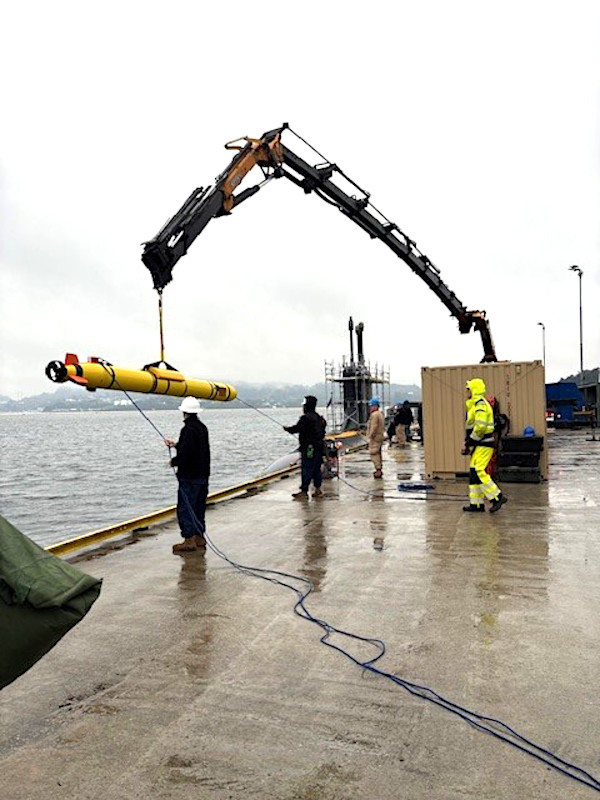
In April, at a panel discussion focused on the Australia-United Kingdom-United States (AUKUS) defense cooperation agreement, Gaucher had also highlighted work on Yellow Moray, as well as a torpedo-tubed launchable and recoverable version of the Iver4 UUV from L3Harris called Rat Trap. The Iver UUVs are also torpedo-shaped designs that are roughly similar in form and function to the REMUS 600, as you can read more about here. At that time, Gaucher said that Yellow Moray and Rat Trap, collectively, had been tested on the Navy’s Virginia and Los Angeles class nuclear attack submarines. He also said the Royal Navy in the United Kingdom had been pursuing related developments with regard to its Astute class nuclear attack submarines.
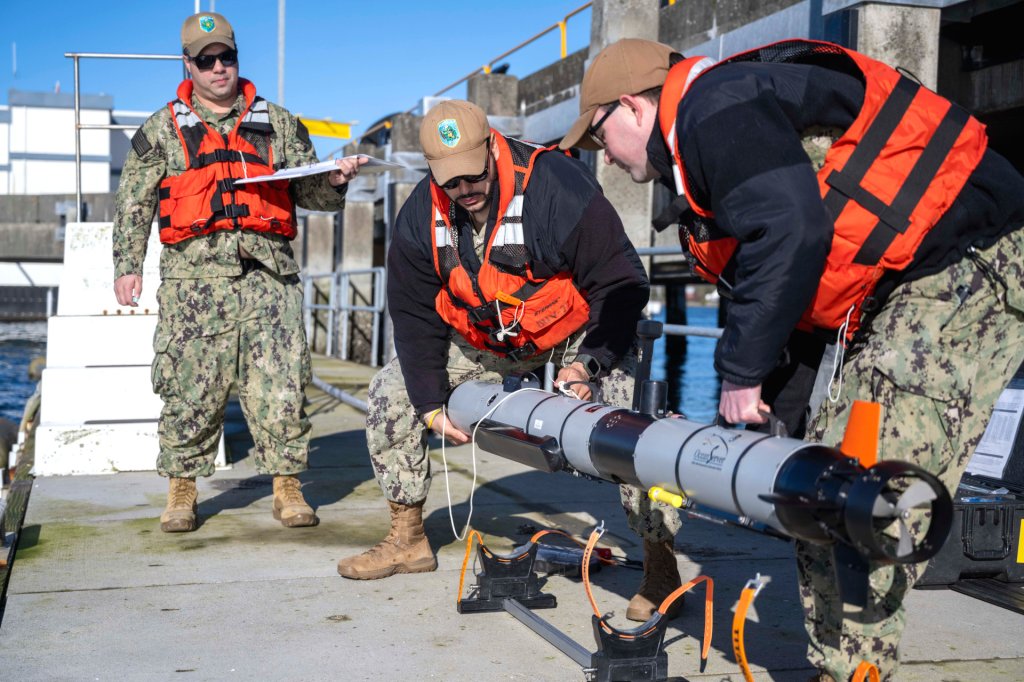
The United States and the United Kingdom “are at the hip on making sure that we push forward with our torpedo tube launch and recovery capability for unmanned underwater vehicles,” Gaucher said at that time.
Notwithstanding the decision to terminate the Mk 20 Razorback variant, and any impacts it may have on Yellow Moray (if those programs are not one and the same), the Navy clearly still has an interest in new torpedo-tube launchable and recoverable UUVs for general employment across its submarine forces. Beyond Rat Trap, further related developments could well be ongoing in the classified realm.
The Navy’s 2026 Fiscal Year budget also shows a continued commitment to the DDS-launched Mk 19 Razorback. The service is seeking nearly $4 million in funding to begin buying a new “classified payload and a Razorback variant vehicle to carry the payload” in the upcoming fiscal cycle.
Regardless of how the Navy’s plans for torpedo-tube launched and recovered UUVs continue to evolve now, they are no longer set to include the Mk 20 version of the Razorback.
Update 7/15/2025:
“Yellow Moray is not another designation for the Mk 20 Razorback. Yellow Moray is a distinct, separate platform that originated as a special project to enhance the Navy’s Medium Unmanned Underwater Vehicle (MUUV) capabilities,” a spokesperson for Naval Sea Systems Command (NAVSEA) has now told TWZ. “Both systems fall under the Medium Unmanned Underwater Vehicle (MUUV) category and share torpedo tube launch and recovery capabilities. However, the Mk 20 Razorback is a distinct variant separate from Yellow Moray. Yellow Moray originated as a specialized initiative and is now formally incorporated into the Mk 19 Program of Record as the Mk 19 Mod 1 variant.”
“The cancellation of the Mk 20 Razorback program will not directly affect the Yellow Moray program, but rather, it makes resources available that will support accelerated development of Yellow Moray. The Navy’s decision to terminate Mk 20 followed extensive technical evaluations by the Navy’s Unmanned Maritime Systems Program Office (PMS 406), the Fleet, and resource sponsors,” they added. “The cancellation of Mk 20 Razorback is due to untenable technical requirement challenges and schedule delays. Based on Fleet feedback and lessons learned, the Navy is focused on enhancing and modernizing the existing Mk 19 Razorback platform, which includes the Yellow Moray variant. This approach leverages proven technology while delivering critical torpedo tube launch and recovery capabilities to meet Fleet operational needs.”
Contact the author: joe@twz.com
Loading comments…
Comments couldn’t be loaded. Please refresh the page.