
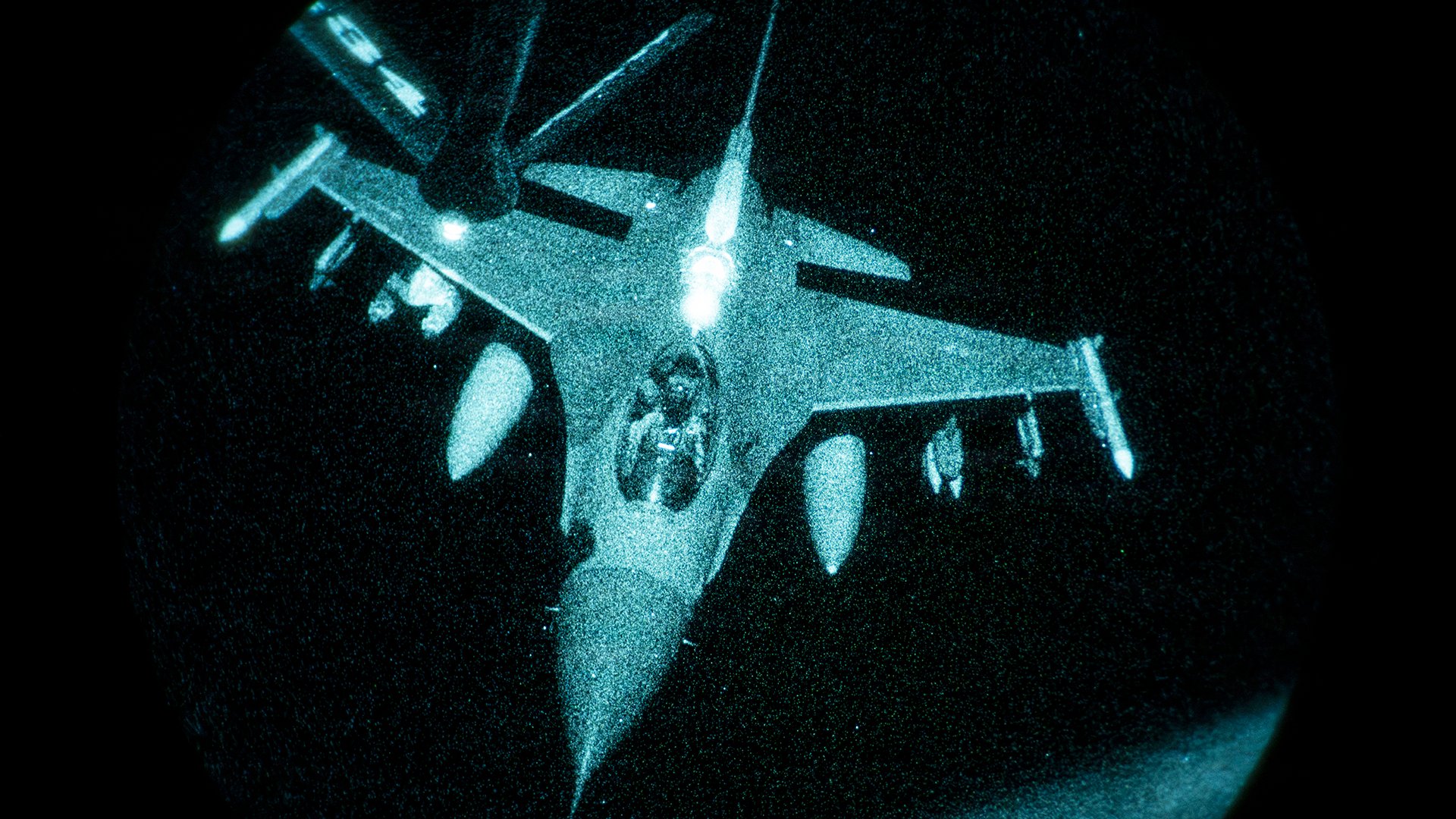
U.S. Central Command (CENTCOM) announced that its forces have launched “a series of powerful strikes against Iran to impose heavy costs for targeting and attacking commercial shipping crewed by innocent civilians in an international waterway.” The U.S. strikes “are in response to Iranian attacks on three commercial vessels that were transiting the Strait of Hormuz,” CENTCOM stated on X. “Iran’s demonstrated aggression was unwarranted, dangerous, and a clear violation of the ceasefire.”
The official Iranian state media outlet IRIB reported 13 explosions in southern Iran.
The CENTCOM attacks follow the U.S. Treasury Department revoking a general license authorizing the sale of Iranian oil. That abrogates a key part of the Memorandum of Understanding (MoU) signed by Washington and Tehran on June 18.
While the future of Iran’s nuclear ambitions and its stockpile of enriched uranium are among other key issues addressed in the document, the Strait of Hormuz continues to be a flashpoint.
The latest attacks on shipping all involved tankers.
“A LNG tanker reported being hit by an unknown projectile on the port side engine room causing a fire, whilst travelling southbound through the SOH,” UKMTO reported. That incident took place about eight nautical miles east of Limah, Oman.
Before that, a “VLCC reported being hit by an unknown projectile on the port side upon exiting the SOH” about 16 nautical miles east of Khor Fakkan, UAE, UKMTO added. “Vessel was able to proceed to NPOC [nearest point of call] and no crew injuries were reported.”
The first of the three vessels struck today was a tanker that reported being attacked six nautical miles east of Musandam Peninsula, Oman “by an unknown projectile and has sustained minor structural damage,” UKMTO stated. “No casualties or environmental impact reported and vessel is proceeding to NPOC.”
These attacks all took place along the southern-most route in the Strait, which is controlled by the U.S. and Oman. Iran controls the northern route and the mid-section of the body of water is considered too dangerous to transit due to the threat of mines.
Last Thursday, Iran’s military warned that all oil tankers moving through the Strait must use its approved routes. It also said that interference by U.S. forces in the strait “will be met with a rapid and decisive reaction.”
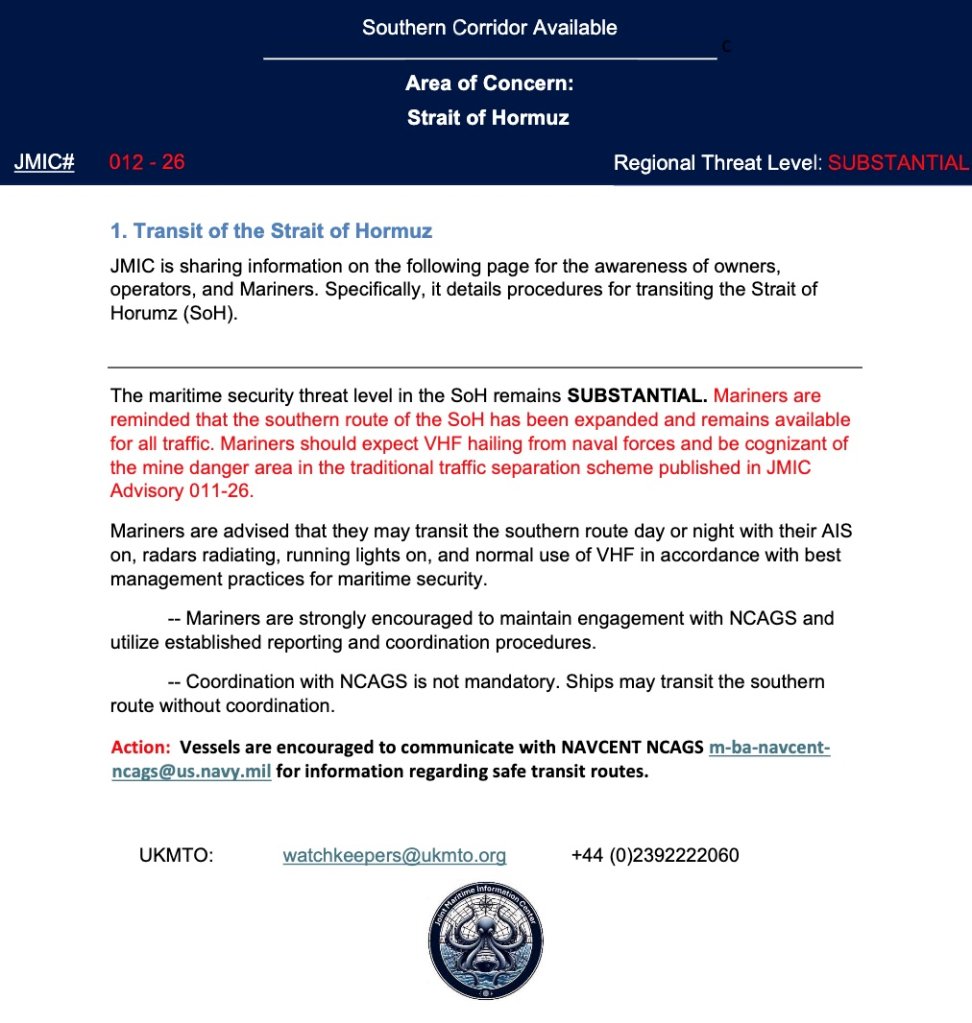
But the Joint Maritime Information Center (JMIC), a multinational body overseen by the U.S. Navy, told shippers Monday that the route around Oman “has been expanded and remains available for all traffic.”
The most recent attacks on shipping came after that JMIC notification and about a week after Iran and the U.S. promised to stop striking each other.
What happens next is unknown. The peace talks were paused while Iran holds a weeklong funeral for former Supreme Leader Ayatollah Ali Khamenei, who was killed on the first day of the war in an airstrike.
In an interview with Iranian media posted on X, Iranian Maj. Gen. Mohsen Rezaei, advisor to Iran’s supreme leader Mojtaba Khamenei, seemed to appeal to Iranian hardliners who want to resume fighting.
“Friends who oppose negotiations, be patient; the Americans themselves will derail these talks,” he posited.
This is a developing story.
UPDATE: 6:22 PM EDT –
Video and still images purporting to show the U.S. attacks on Iran are emerging on social media. Bandar Abbas, site of Iran’s key naval base on the Strait of Hormuz, appears to be one of the targets. Bandar Abbas has come under attack several times during this conflict.
In a post on X, Axios reporter Barak Ravid said the U.S. strikes on Iran today were “four or five times bigger in scope and power than the previous strikes 10 days ago.”
Authorities “have launched a search effort for K2 Airways Cargo 737 AP-BOI after the flight did not land as scheduled in Karachi,” FlightRadar24 reported. “KTA1732 was en route from Sharjah to Karachi when contact was lost with the aircraft. Preliminary ADS-B data indicate a loss of altitude, followed by a climb, and then a second, sudden and dramatic loss of altitude. The final received data point from the aircraft was at 16:21 UTC, placing the aircraft at 1,100 ft AMSL with a reported vertical rate of -22,400 feet per minute.”
According to FlightRadar24’s data, the cargo jet flew east over the Strait of Hormuz and the Gulf of Oman when it disappeared from radar screens at about 12:20 PM EDT.
The Pakistan Airports Authority reported on X that the aircraft was suffering a “navigational system issue” before contact was lost. There were five people onboard at the time.
The exact cause of this incident is unknown at this time. While there are no indications that the aircraft was lost due to hostile activity, the area is extremely tense.
UPDATE: 947 PM EDT –
CENTCOM says it has “completed its strikes against Iran, July 7, hitting over 80 targets with precision munitions as an immediate response to Iran’s latest attacks on commercial vessels transiting the Strait of Hormuz.”
“U.S. forces struck Iranian air defense systems, command and control networks, coastal radar sites, anti-ship missile capabilities, and more than 60 Islamic Revolutionary Guard Corps small boats in and near the strait to degrade Iran’s ability to continue attacking international commerce flowing through the international trade corridor,” the command said in a statement.
“Iran recently attacked three commercial vessels transiting the strait including Marshall Islands-flagged M/T Al Rekayyat, Saudi Arabia-flagged M/T Wedyan, and Liberian-flagged M/T Cyprus Prosperity,” CENTCOM added. “The unwarranted aggression by Iranian forces is a clear and dangerous violation of the ceasefire and undermines freedom of navigation. CENTCOM forces remain postured and prepared to hold Iran accountable when the agreement is not adhered to or obeyed.”
Contact the author: howard@twz.com
Loading comments…
Comments couldn’t be loaded. Please refresh the page.