
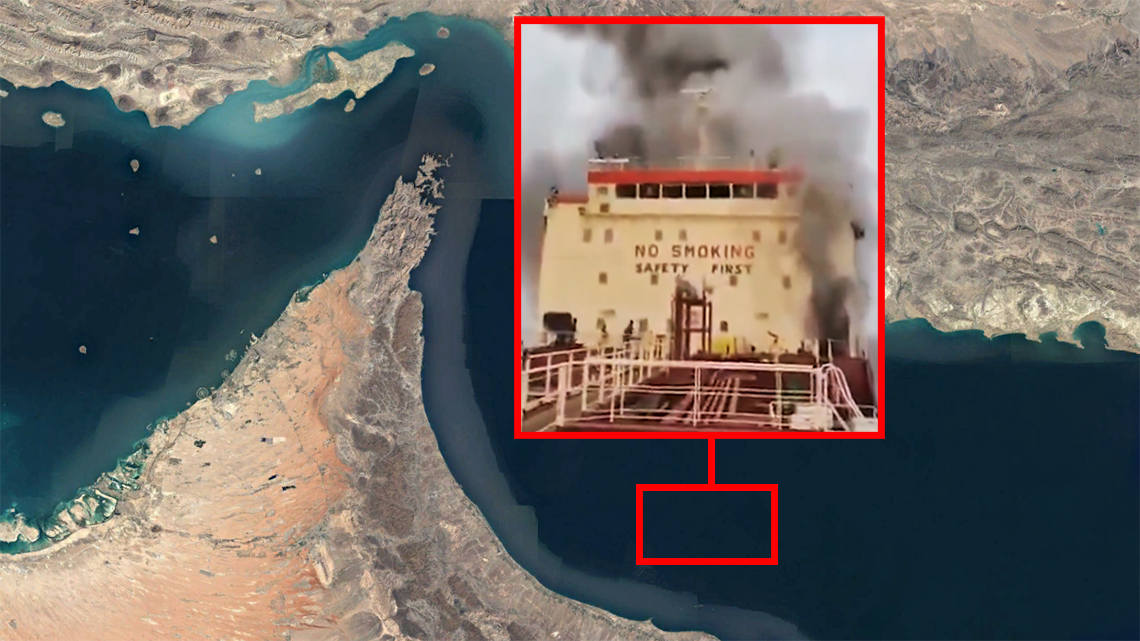
A Marshall Islands-flagged oil tanker became the first ship to be struck by an Iranian uncrewed surface vessel (USV) during this conflict, the Ambrey maritime security firm told us. As we have frequently reported, USVs have been widely used by Ukraine against Russia and, in the Middle East, by the Iranian-backed Houthi rebels against commercial shipping.
You can catch up with our latest coverage of Operation Epic Fury, the joint U.S.-Israel attack on Iran in our rolling coverage here.
The ship, the MKD VYOM, was initially thought to have been struck by a projectile on March 1, in a deadly attack about 50 nautical miles north of Muscat, Oman. However, the United Kingdom Marine Trade Operations (UKMTO) organization, which is managed by the Royal Navy in the United Kingdom, gave an updated assessment of the incident Monday morning.
“UKMTO has received confirmation that the vessel was attacked by an Uncrewed Surface Vehicle (USV), and that the crew has been evacuated to shore,” the organization stated. “Authorities are investigating. Vessels are advised to transit with caution and report any suspicious activity to UKMTO.”
“The vessel suffered an explosion and subsequent fire after being struck by a suspected projectile while off the coast of Muscat, Oman on 1 March,” MKD VYOM’s owner, V.Ships Asia said in a statement. “It is with great sadness that we confirm one crew member, who was in the engine room at the time of the incident, has died.”
While this is the first time Iran has used a USV to strike ships in the region, it should come as no surprise that it would deploy these weapons. Iran has steadily developed USVs and undersea vehicles capable of launching kamikaze attacks and added them to its arsenal. Iran, together with its Houthi allies in Yemen, has long been a pioneer in this space. As we have previously reported, the Houthis frequently used USVs in their campaign against Red Sea shipping.
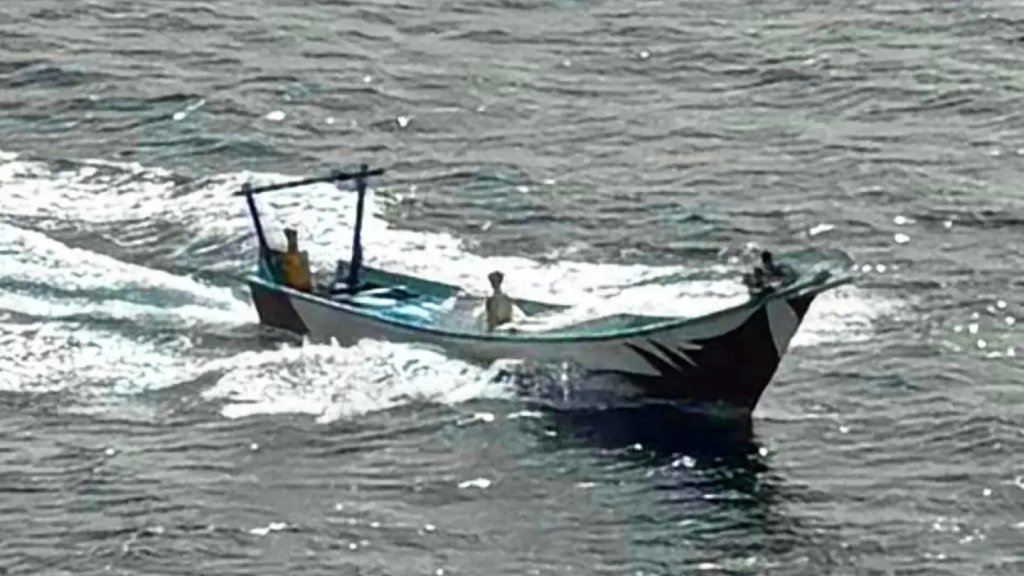
The ongoing war in Ukraine has now fully demonstrated the very real threats these capabilities present to ships and coastal targets — even aircraft.
The MKD VYOM was one of at least four ships struck by Iran since the Islamic Revolutionary Guard Corps announced it was shutting down the Strait of Hormuz some 150 nautical miles to the northwest. That warning came after the U.S. and Israel started bombing Iranian targets on Feb. 28. We have previously examined in great detail what Iran could do to shut the Strait, a major chokepoint through which about 20% of the world’s crude oil passes.
“For your information, from now on…no ship of any type is…allowed to pass from the Strait of Hormuz.. From now on, the Strait of Hormuz is banned for all ships, the Strait of Hormuz is banned for all ships,” the Islamic Revolutionary Guard Corps (IRGC) said, via a radio transmission obtained by The War Zone.
The IRGC updated that warning on Monday, saying it was shutting the Strait and any ships attempting to pass through would be set on fire.
“The strait (of Hormuz) is closed. If anyone tries to pass, the heroes of the Revolutionary Guards and the regular navy will set those ships ablaze,” Ebrahim Jabari, a senior adviser to the Guards commander-in-chief, said in remarks carried by state media.
In addition to three other tankers hit in the Gulf of Oman, the U.S.flagged oil tanker STENA IMPERATIVE suffered at least two direct hits from a suspected Iranian projectile while in the Port of Bahrain on Monday, a maritime security official confirmed to The War Zone.
It is unclear at the moment if the ship was struck by a missile or a drone, the official added.
Shortly before 5:30 a.m. Eastern, UKMTO stated that it “received a report of an incident in the Port of Bahrain. The Company Security Officer reported that the vessel had been struck by two unknown projectiles causing a fire. The fire has been extinguished and the vessel remains in port. All members of the ship’s crew are safe and have evacuated the vessel. Authorities are investigating.”
“Vessels are to remain cautious and report any suspicious activity to UKMTO,” the organization added.
It is believed that the STENA IMPERATIVE is the only U.S.-flagged vessel to be struck by Iran so far.
It has been reported that the tanker is part of the U.S. Maritime Administration’s Tanker Security Program, which “exists to enhance U.S. supply chain resiliency for liquid fuel products.” The Tanker Security Program came into effect in 2021 and empowered the Department of Transportation to create an ad-hoc 10-ship expanded U.S.-flagged tanker fleet for use in a crisis.
Weeks before the war broke out, the STENA IMPERATIVE was approached by Iranian gunboats, which threatened to board the vessel, in the Strait of Hormuz, before continuing on its way under military escort, according to CBS News.
U.S. Central Command issued a statement at the time confirming the incident, saying, “Two IRGC boats and an Iranian Mohajer drone approached M/V Stena Imperative at high speeds and threatened to board and seize the tanker.”
CENTCOM spokesman Capt. Tim Hawkins told CBS that the Arleigh Burke class guided-missile destroyer USS McFaul immediately responded to the scene and escorted the ship with defensive air support from the U.S. Air Force. “The situation de-escalated as a result, and the U.S.-flagged tanker is proceeding safely,” he said.

Since the launch of Epic Fury, shipping traffic through this vital body of water has plummeted by almost 85%, and a large number of ships have turned off their transponders to avoid being tracked.
While Iran attacks tankers, the U.S. is striking Iranian Navy vessels. U.S. President Donald Trump has said “annihilating” Iran’s naval forces is a core objective of Epic Fury and that 10 Iranian ships have been “knocked out” so far.
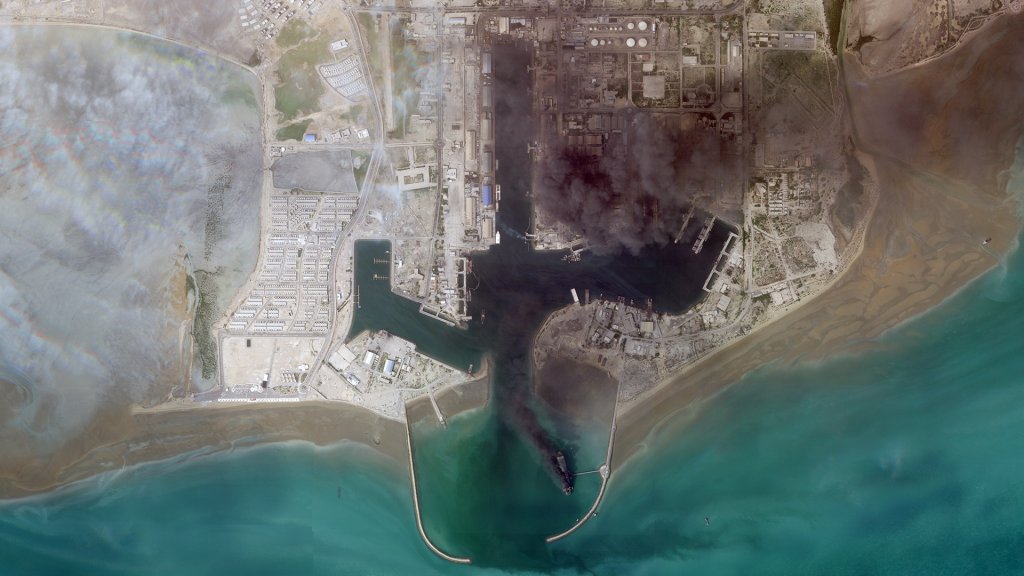
Below is a satellite image showing damage to Iran’s main naval base in Bandar Abbas, including what looks to be the IRINS Makran sea base-type ship, following strikes as part of the ongoing U.S.-Israeli campaign. You can read more about that in our story here.
While no one knows how much longer Epic Fury will last, this war will continue presenting major danger to commercial shipping.
Update: 5:51PM EST-
A U.S. official tells The War Zone that while the IRGC claims they’ve closed the Strait, U.S. monitoring of the body of water does not back that up.
Contact the author: howard@thewarzone.com
Loading comments…
Comments couldn’t be loaded. Please refresh the page.