
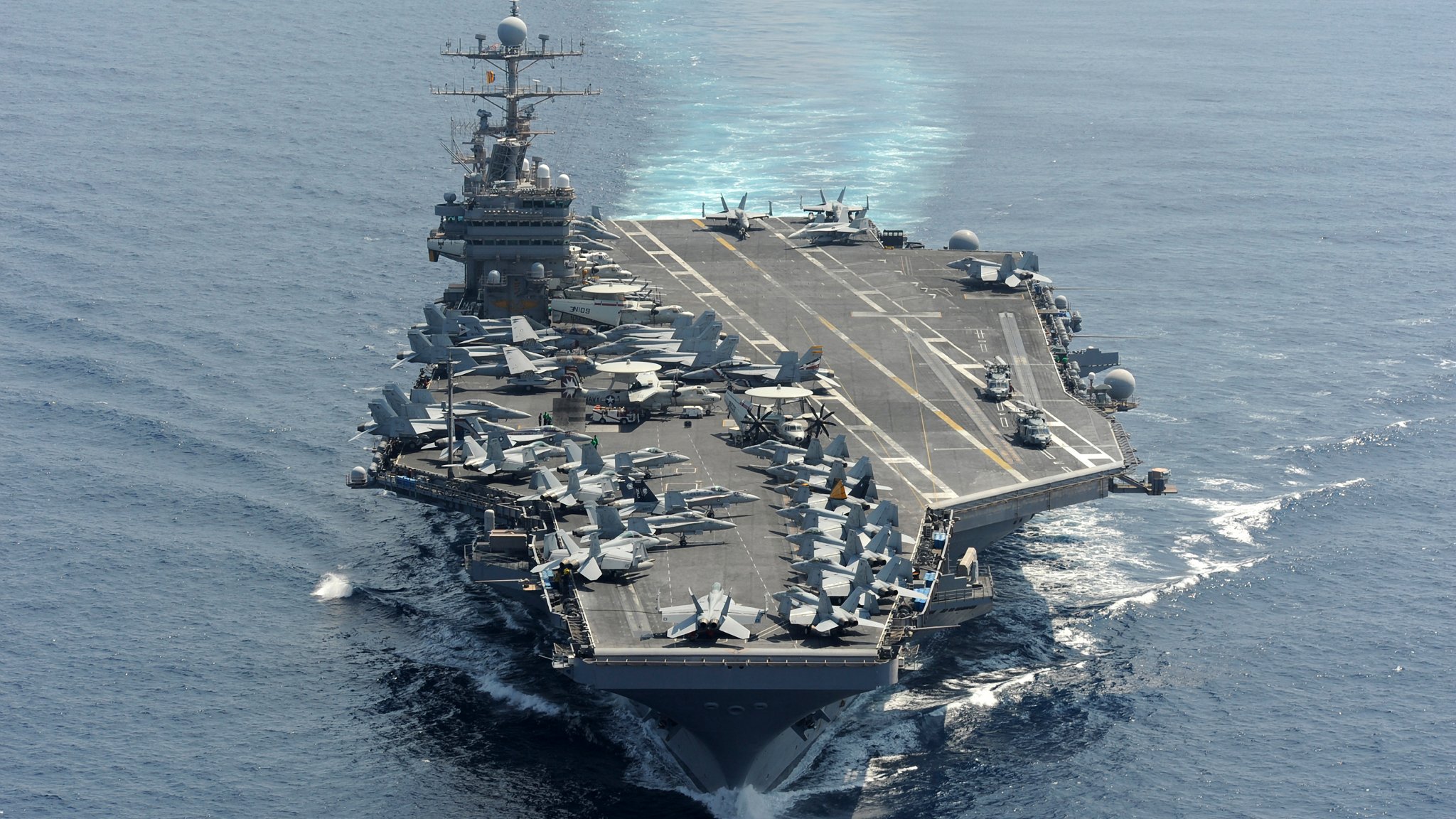
As the U.S. is reportedly moving at least one and perhaps more aircraft carrier strike groups to the Middle East ahead of a potential future attack on Iran, open-source tracking is beginning to show some U.S. Air Force assets may be heading that way as well. As we have seen in the past, large numbers of cargo flights and surging fighters into the region, as well as other aircraft, is a common occurrence when a crisis is brewing in the region, and there have been plenty of them in recent years.
You can catch up with our previous coverage of unfolding events in the Middle East here.
All this comes as President Donald Trump is mulling what to do next after reportedly calling off some kind of operation against Iran. Trump repeatedly threatened the regime over its brutal crackdown on anti-government protestors that has left thousands dead, but relented after being told the killings would stop. He also promised protesters that help was on its way. However, the administration at the moment appears to prefer a diplomatic solution. U.S. military planners have reportedly asked for more time to prepare, while Trump has come under intense pressure from Israel and the Gulf states not to attack over fears of regional instability. It should be remembered, though, that the U.S. was also negotiating with the regime ahead of last June’s Operation Midnight Hammer attack on Iran’s nuclear facilities.
The lack of forces in the region, for both effective offensive operations and especially defensive ones, likely impacted his decision to hold off.
Trump on Friday acknowledged he called off the attack, but denied anyone pressured him to.
“Nobody convinced me, I convinced myself,” he told reporters outside the White House when asked if Arab and Israeli officials convinced him not to attack Iran. “You had, yesterday, scheduled, over 800 hangings. They didn’t hang anyone. They cancelled the hangings. That had a big impact.”
A military operation may be off the table for now, but Trump has not categorically ruled out striking Iran in the future. Should he decide on a kinetic operation, his options run the gamut from surgical strikes on the Islamic Revolutionary Guard Corps (IRGC) forces and their Basij paramilitary troops killing the protestors to a decapitation strike on Ayatollah Ali Khamenei to again striking nuclear facilities. Going after Iran’s air defenses and short-range standoff weapons could be another option in order to make future operations less risky.
Iran, for its part, has threatened to attack U.S. bases in the region, potentially much more severely than the one on Al Udeid Air Base last year in response to Midnight Hammer. Israel too, is a factor. Israeli Prime Minister Benjamin Netanyahu reportedly urged Trump not to attack Iran in part because of the large expenditure of air defense munitions during the 12-Day War last June, leaving Israel vulnerable to potential Iranian barrages.
Regardless, even though the U.S. has tactical aircraft, six warships and some 30,000 troops in the region, it does not appear to be prepared for any major sustained operations against Iran that could radically alter the status quo, or the expected barrage of missiles and drones that would follow. This is a point we made last night.
“There are not enough assets in the Middle East to execute a sustained campaign that will accomplish anything of huge consequence in Iran,” TWZ editor-in-chief Tyler Rogoway posted on X. “This was never a question.
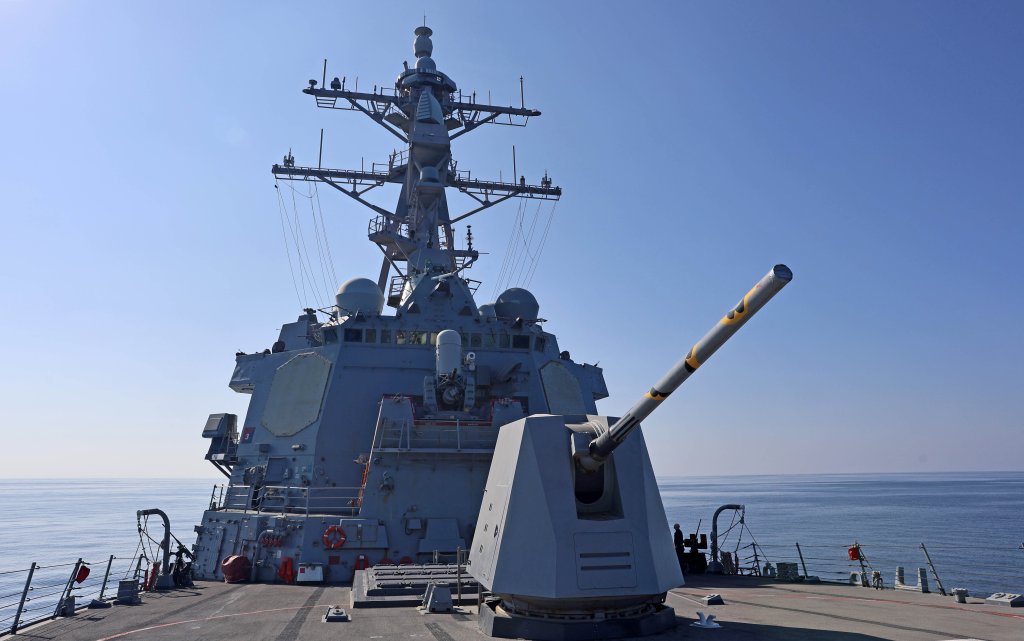
Yes, the limited U.S. tactical airpower in the region can do some damage, but you need a complete, fully packaged force in order to really get in there and make a big dent. This requires a huge array of capabilities (see what one major night over Venezuela took) to cover contingencies etc. Even TLAMs are limited in the region, with just three destroyers there and possibly a submarine. Yes, bombers flying global airpower missions could play a significant role, B-52s and B-1s with JASSMs and B-2s could potentially go after hardened regime targets, possibly to decapitate the regime, but those sorties would be very low in number. And if a decapitation strike wasn’t successful then what? Huge contingencies need to be in place for what could come after.
Above all that, there is not enough capability to robustly deal with the aftermath of U.S. strikes, which could include massive barrages of short-range ballistic missiles, cruise missiles and drones. These systems were left far more intact after the war with Israel as they did not threaten Israel. This continues to be a reality many do not realize. Additional ground based air defenses and fighters would be needed to deal with a major response, as well as naval assets.
Bottom line here is all this takes time to move and get into place in preparation for something like this. Just in order to mount a major defense, not an offensive operation, it requires a lot of movements. We saw absolutely no movements that indicated such a force was being deployed. We still don’t see those indications. So if an attack was slated to occur, it would have been very limited in nature and would have likely left Iran in a place to respond massively, which we are not ideally prepared for.
Is there room for a very surgical operation likely focused on the regime’s upper echelons, yes, but even then, you need contingencies and capabilities in place if things don’t go right. Very much balancing the risk vs reward.
Taking out some targets using cruise missiles/standoff weapons etc. is certainly doable, but what do you achieve and at what potential cost from a retaliation? What does it actually achieve in real terms on the ground?”
A former high-ranking U.S. military official confirmed our analysis.
“It would be massive,” said the official of the scale of what it would take to attack Iran. “First, we have to get forces there; then we would need to stage and employ them; then we need to sustain them … and we would have to be prepared to do all that for a long time. It would dwarf anything we have likely done in the recent past.”
Clearly, the reported movement of the Abraham Lincoln Carrier Strike Group to the region would boost U.S. striking power when it arrives, likely sometime next week. Its embarked CVW-9 Carrier Air Wing consists of eight squadrons flying F-35C Lightning II, F/A-18E/F Super Hornets, EA-18G Growlers, E-2D Hawkeyes, CMV-22B Ospreys and MH-60R/S Sea Hawks. Its escorts, Ticonderoga class guided-missile cruiser USS Mobile Bay and the Arleigh Burke class guided-missile destroyers of Destroyer Squadron (DESRON) 21 bring a large number of missile tubes that could be used to strike Iran. These vessels could also be used in the defense of U.S. targets and those of its allies during a reprisal.
There are also unconfirmed claims that the George H.W. Bush Carrier group is also headed to the region, which would add similar additional capabilities. The carrier left its homeport of Norfolk on Jan. 13. The Navy declined to comment about any ship movements while CENTCOM has declined to talk about any movements of assets to the region.
There are growing indications of aerial movements to the region. Open-source reporting shows more than a dozen cargo jets are moving toward the Middle East.
There also appears to be an influx of European military aircraft to the region. Online flight trackers show at least four Royal Air Force Eurofighter Typhoon fighters and an Airbus KC-2 Voyager aerial refueling jet possibly heading toward Bahrain. However, we don’t know for sure if this is related to any planned attack on Iran. They could be normal movements in theater.
An RAF Protector RG Mk 1 (MQ-9B) drone appeared over Muwaffaq al Salti Air Base in Jordan. The RAF declined to comment on those movements.
France and Germany appear to be sending aerial assets to the region as well. German officials declined comment and French officials have yet to respond to our request for information.
However, there does not appear to be any major change in force posture at Al Udeid, the largest U.S. base in the region.
Meanwhile, amid all the military and diplomatic maneuvering, the protests that began on Dec. 28 over rising prices, devalued currency that saw the rial crater now to basically nothing, a devastating drought, and brutal government crackdowns appear to be dissipating in the wake of the regime’s harsh response.
“A heavy police presence and deadly crackdowns on protesters appeared to have largely suppressed demonstrations in many cities and towns across Iran, according to several witnesses and a human rights group,” The New York Times reported on Friday.
“…several residents of Tehran reached by Reuters said the capital had now been comparatively quiet for four days,” Reuters reported on Friday. “Drones were flying over the city, but there had been no sign of major protests on Thursday or Friday. Another resident in a northern city on the Caspian Sea said the streets there also appeared calm. The residents declined to be identified for their safety.”
Still, Reza Pahlavi, the exiled crown prince who helped stir up the protests from afar, insists the fight for change is not over.
“The people have not retreated. Their determination has made one thing unmistakably clear: they are not merely rejecting this regime—they are demanding a credible new path forward,” he said.
Given the ongoing Iranian blackout of internet and telephone service, it is impossible to get a full picture of what is taking place there. Whether any ongoing diplomatic efforts or potential future attacks make any difference is something we will be watching to see.
Update: 4:33 PM Eastern –
Pahlavi issued a new call for continuing demonstrations.
“The criminal Islamic Republic regime and its bloodthirsty thugs are trying to deceive the world and buy time by spreading this big lie that everything in Iran is ‘normal,” he stated on X. “But between us and this murderous regime lies an ocean of the blood of Iran’s children. As long as Khamenei and his criminal gang are not thrown into the dustbin of history, and as long as the criminals are not punished, nothing in Iran is normal.”
“The blood of the best and bravest children of our homeland does not allow us to remain silent or retreat,” he added. “If they have raised the cost of the streets through massacres and martial law, then our homes are the trenches of resistance and defiance: through strikes and not going to work, through nighttime chants and cries. Therefore, I ask all of you brave compatriots across Iran to raise your voices of anger and protest on Saturday through Monday, 27 to 29 Dey (January 17–19), at exactly 8 p.m., with national slogans, and show the world that the end of these anti-Iranian and un-Iranian criminals is near. The world sees your courage and will offer clearer and more practical support to your national revolution. I assure you: together we will take Iran back and rebuild it anew.”
There are new indications of aircraft movement out of Al Udeid. The reason remains unclear.
There were also aircraft movements away from Prince Sultan Air Base in Saudi Arabia. It is not clear whether this marks an evacuation or the repositioning of assets elsewhere in the region.
Update: 5:52 PM Eastern –
The European Union’s aviation regulator is warning the bloc’s airlines to stay out of Iran’s airspace, amid simmering tensions over Tehran’s deadly crackdown on protests and U.S. threats of intervention.
“Given the ongoing situation and the potential for U.S. military action, which has placed Iranian air defense forces on a heightened state of alert, there is currently an increased likelihood of misidentification within the FIR Tehran (OIIX),” the European Union Aviation Safety Agency (EASA) said in a bulletin on Friday.
“The presence and possible use of a wide range of weapons and air-defense systems, combined with unpredictable state responses and the potential activation of SAM systems, creates a high risk to civil flights operating at all altitudes and flight levels,” the bulletin continued. “Considering the overall high level of tensions, Iran is likely to maintain elevated alert levels for its air force and air defence units nationwide.”
“In the event of a U.S. intervention, the possibility of retaliatory actions against its assets in the region cannot be excluded, which could introduce additional risks to the airspace of neighboring countries where the U.S. military bases are located,” EASA added. “EASA, the Commission and Member States, will continue to closely monitor the situation, with a view to assess whether there is an increase or decrease of the risk for EU aircraft operators due to the evolution of the threat and risk situation.”
Contact the author: howard@thewarzone.com
Loading comments…
Comments couldn’t be loaded. Please refresh the page.