

The Pentagon is continuing to rapidly add military capabilities to Operation Southern Spear, a mission that began as a counter-narcotics effort but is increasingly aimed at Venezuelan dictator Nicolas Maduro. Images emerged online today of Combat Search and Rescue (CSAR) aircraft having arrived in Puerto Rico. In addition, KC-135 Stratotanker aerial refuelers are now flying missions out of the Dominican Republic. We also found that KC-46 Pegasus tankers have been flying sorties out of the U.S. Virgin Islands for months, with a major ramp-up in activity in recent weeks. This is all on top of yesterday’s arrival of EA-18G Growler electronic attack jets in Puerto Rico and the news we broke today that USAF F-35As are being sent to the Caribbean, as well.
Clearly, the Pentagon is moving into a posture in the region that is much better equipped for tactical air combat operations over hostile territory than it was just days ago.
Despite all this movement, White House spokesperson Karoline Leavitt told reporters Thursday afternoon that U.S. President Donald Trump does not want to see a protracted conflict in Venezuela.
“A prolonged war is something the president is not interested in,” she said, adding that Trump wants to “see the end of illegal drugs trafficked into the United States.”
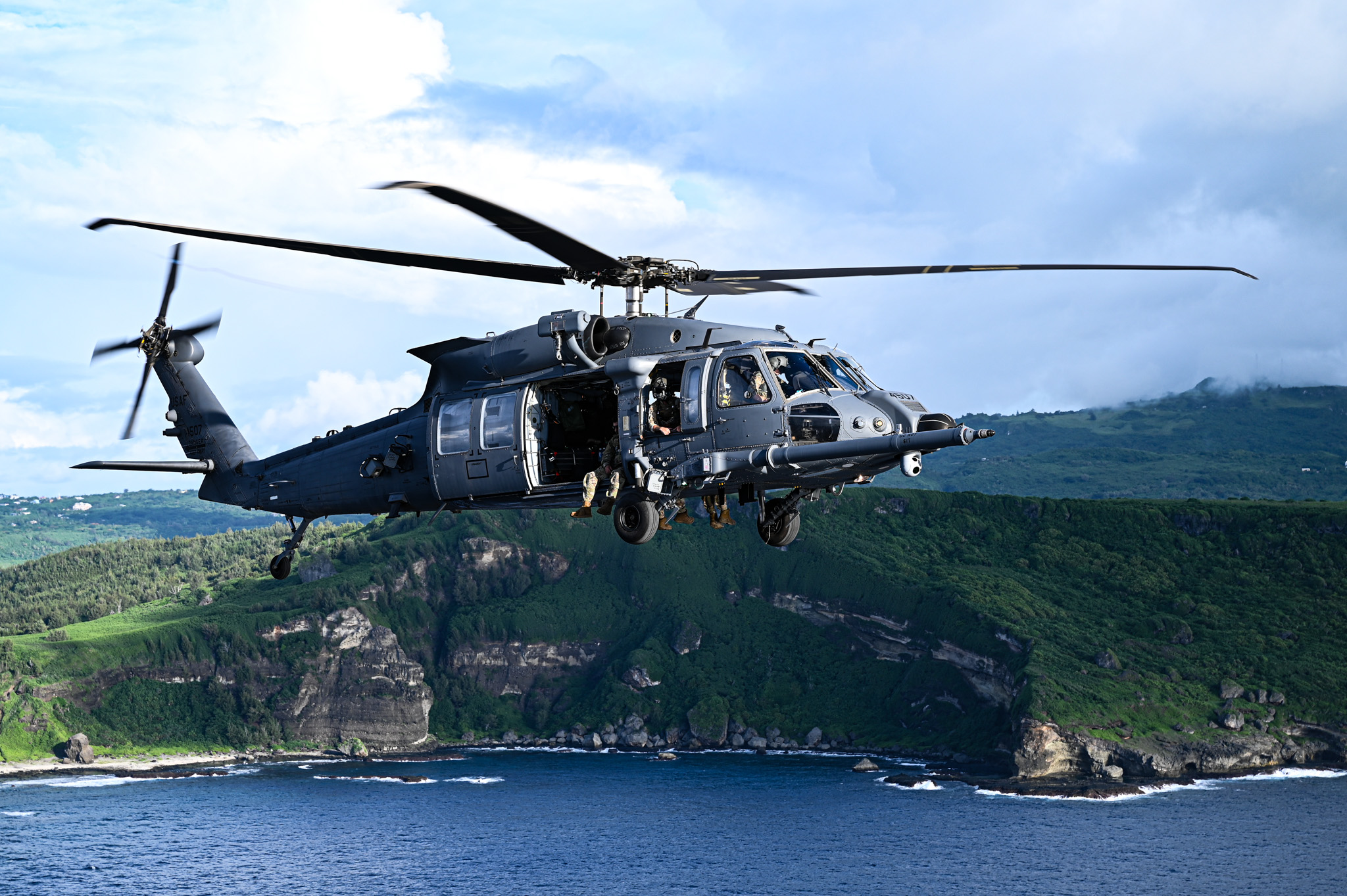
On Thursday, Reuters published photos showing HC-130J Combat King II combat search and rescue (CSAR) planes and HH-60W Jolly Green Giant II CSAR helicopters on the ramp at Roosevelt Roads, the former U.S. Navy facility in Puerto Rico. These aircraft are stationed at Moody Air Force Base in Georgia, though the helicopters reportedly arrived from deployment to Kadena Air Base in Japan.
The deployment of dedicated CSAR aircraft to the region is a sign that the Trump administration could be about to drastically increase its pressure on Maduro and go after the cartels inland with strikes. The aircraft are needed for rapid rescues of any aircrews that are lost during military operations, specifically over contested territory. While the Marine aviation force from USS Iwo Jima and its escorts are also capable of this mission, as are helicopters from the USS Gerald R. Ford, to varying degrees, the unique capabilities and the highly specialized crews the HC-130J and HH-60W bring to the table are prized. This is especially true now that USAF tactical airpower in the form of F-35As is about to arrive in-theater.
The Stratotankers arrived in the Dominican Republic sometime around Sunday or Monday, according to the @LatAmMilMovements X account, an open-source tracker who has been closely following these deployments. They are now taking up a good portion of an entire runway at the airport.
Forward deploying the tankers reduces the amount of time needed to fly to the region and thus increases time on station and sortie rates. The presence of these jets in the Dominican Republic also represents a widening of the mission’s footprint, a U.S. official told us. The bulk of U.S. land-based operations are run out of Puerto Rico, and Roosevelt Roads in particular.
“This is an expansion of Southern Spear,” the U.S. official said of the Stratotanker presence in the Dominican Republic. “This is about capabilities and location. In case of any service support needed, you want to have that in a strategic area. The Dominican Republic is not too close, not too far and they have the capabilities to support a number of aircraft.”
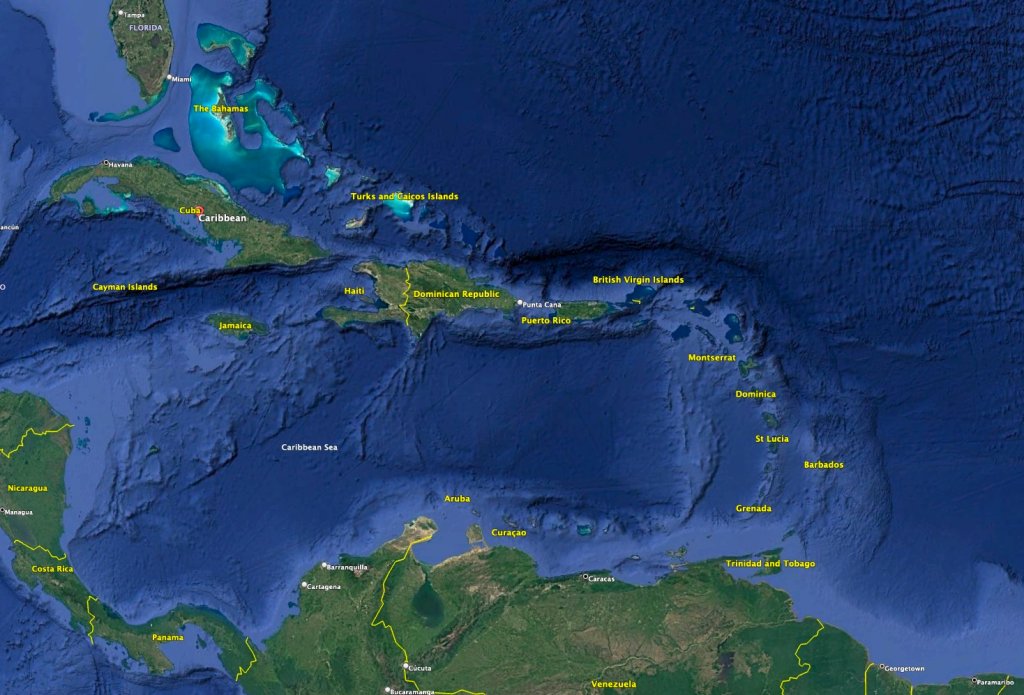
The Dominican Republic presence, however, was not the first tankers operating forward in the region. They have been operating out of the U.S. Virgin Islands for months.
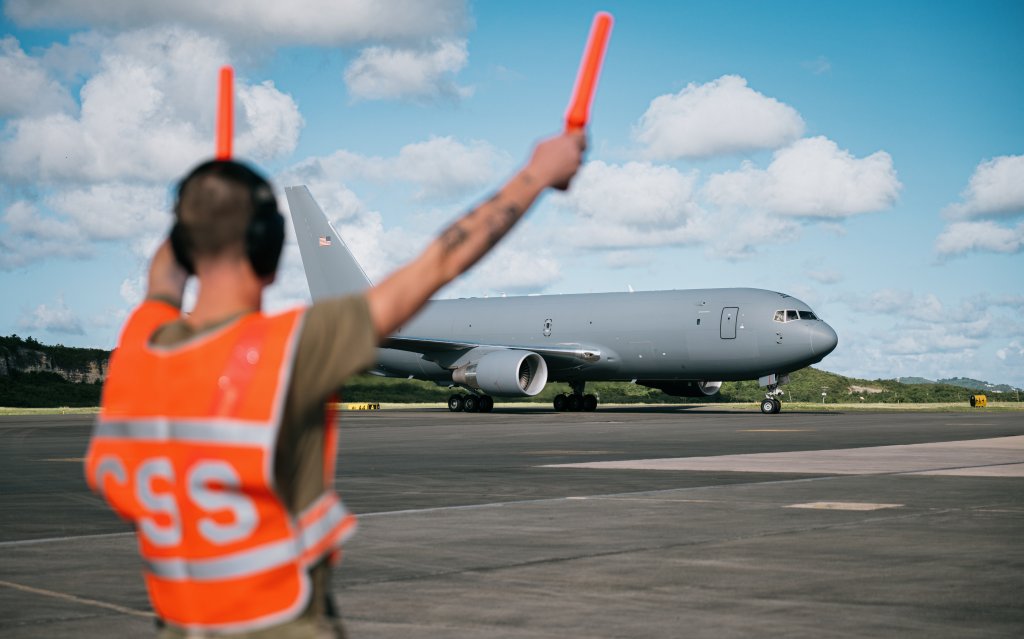
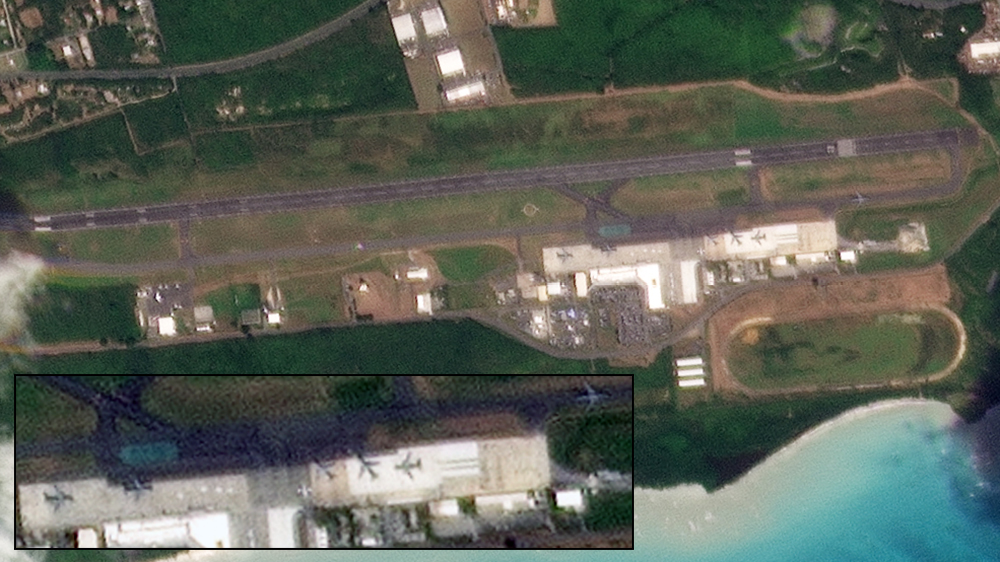
The KC-46s have been in the U.S. Virgin Islands since the middle of September, according to archived satellite imagery. This presence has grown steadily with now between five and six tankers being seen on the ramp there at any given time. The low-resolution satellite photo below was taken Dec. 9 and obtained by The War Zone via Planet Labs.
As the relatively sudden surge of assets to the Caribbean continues, the world waits to see what the Trump administration plans to do with all of it.
Contact the author: howard@thewarzone.com
Loading comments…
Comments couldn’t be loaded. Please refresh the page.