
In what appears to be the first incident of its kind, a Russian kamikaze drone strayed into Romanian airspace before striking a residential building, injuring civilians. While Russian drones flying into NATO airspace, whether accidental or deliberate, have become a feature of the war in Ukraine, this marks a notable milestone, although the nature of the repercussions remains unclear.
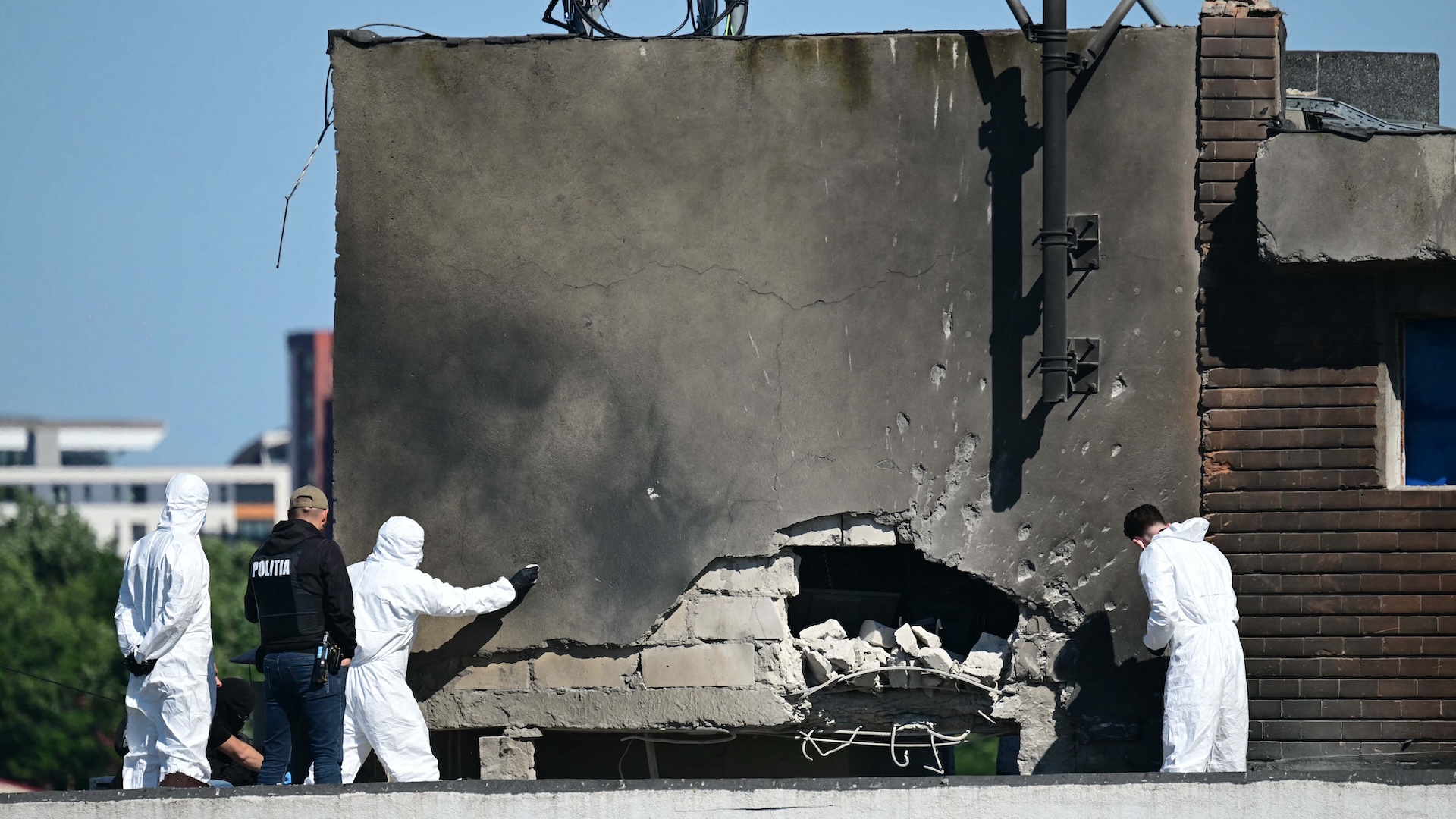
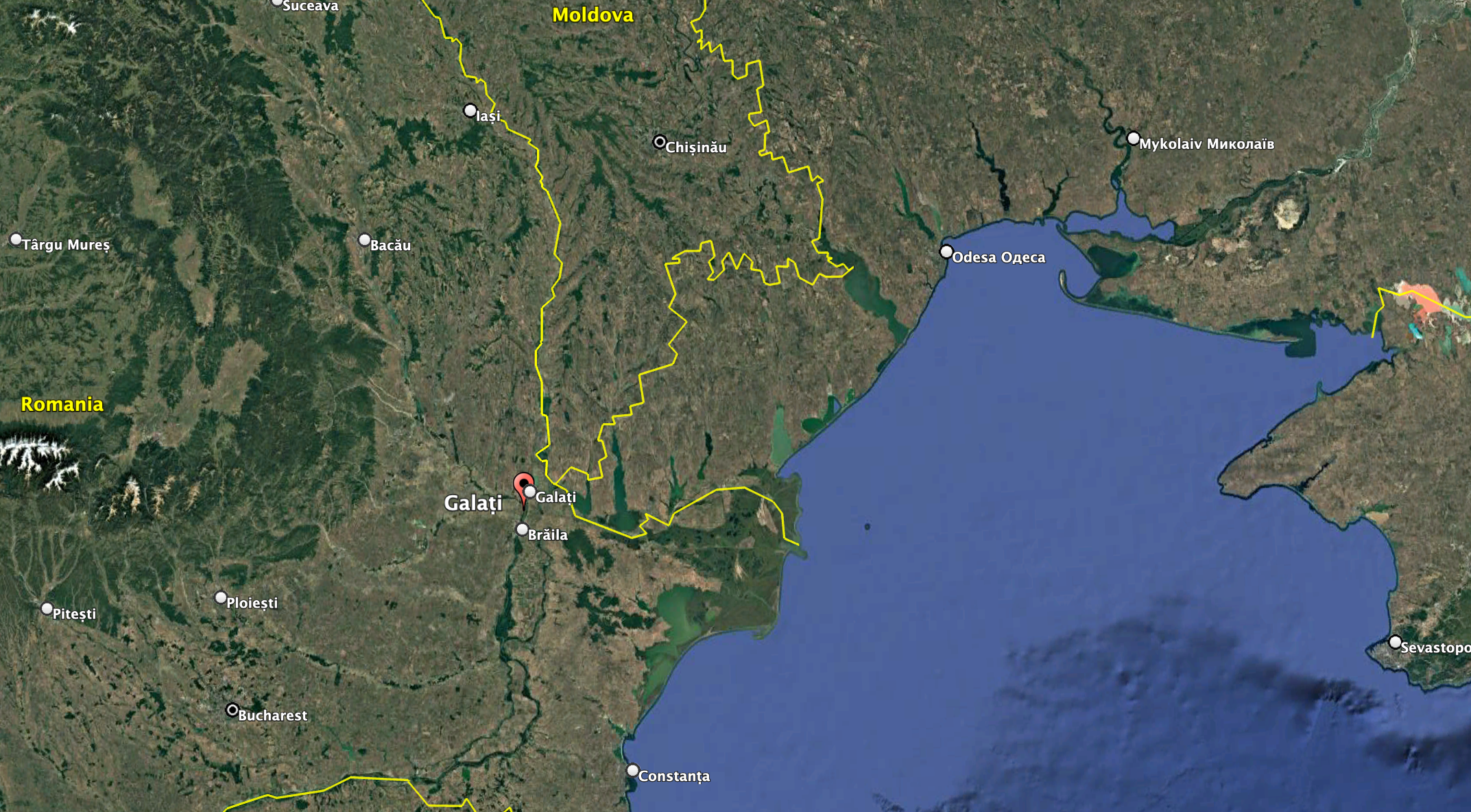
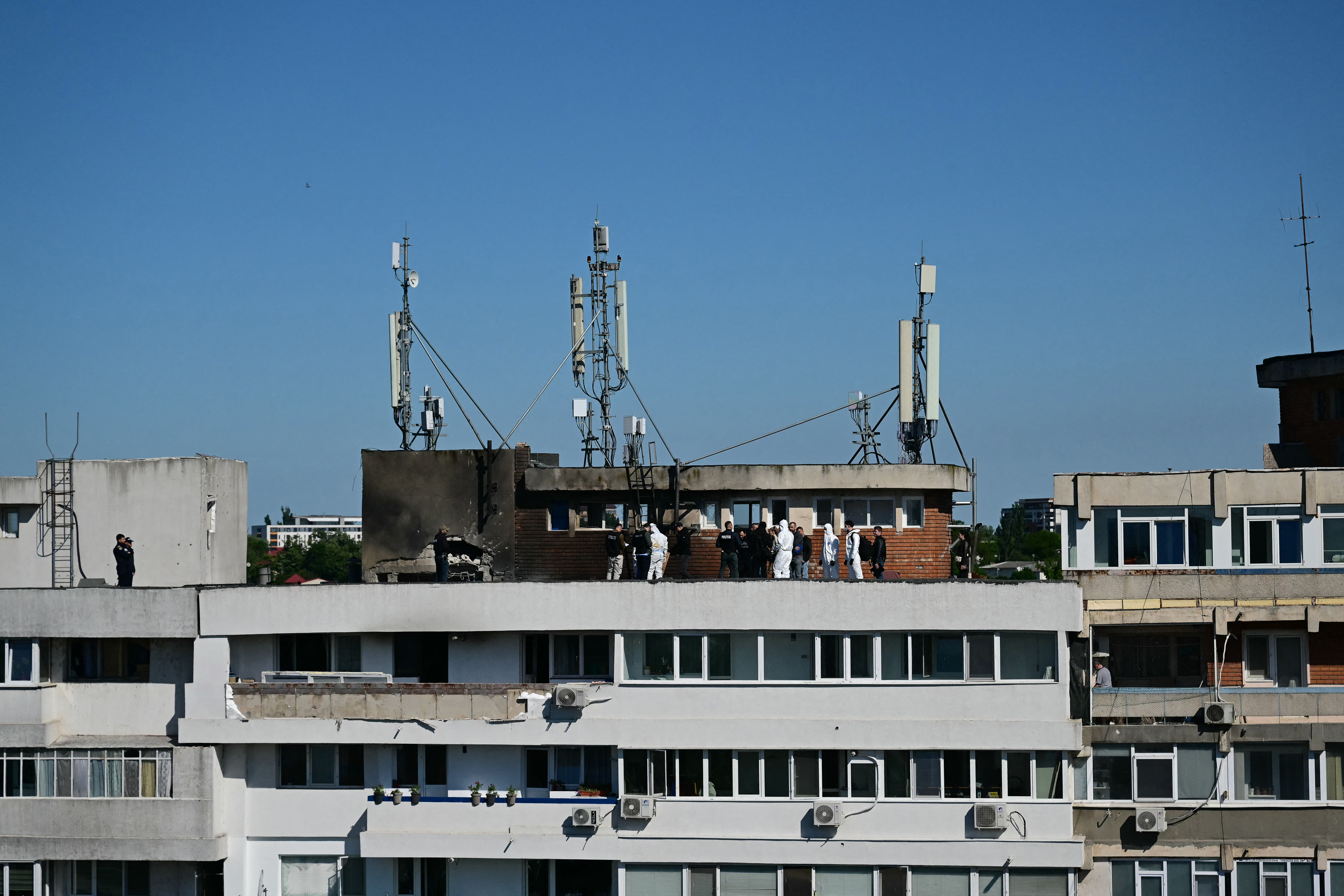
The Russian drone was part of a barrage involved in an overnight attack on Ukraine. It strayed into Romanian airspace before crashing into the roof of a residential building in Galați on the River Danube, in eastern Romania. The Romanian Ministry of Defense assesses that the drone was intended to attack one of several Ukrainian targets in the vicinity of the river border with Romania.
A senior NATO official confirmed to TWZ that it had detected and tracked the Russian drone, but it entered Romanian airspace only minutes before striking the apartment building. “To put this in context, you are talking about something that is travelling nearly 200km/h [124 miles per hour] over a populated area less than 15km [nine miles] from the border. Nonetheless, we are assessing what more can be done now to optimize Romania and NATO’s network of sensors and shooters to safely neutralize such threats,” the official added.
According to Ukrainian President Volodymyr Zelensky, the Shahed-type drone was involved in Russian strikes on the Odesa region, which borders Romania, targeting civilian container ships. Since the summer of 2023, Russia has embarked on a campaign to attack Ukrainian ports and other facilities on the Danube, with extensive use of drones. Overnight Russian strikes in the wider Black Sea region saw three foreign-flagged merchant vessels attacked, according to Kyiv, one of them being the Turkish-owned Ant, a dry cargo ship that was heading to Turkey from Odesa.
The impact sparked a fire, injured two people, and forced the evacuation of several other residents.
The Romanian Ministry of Defense said the drone had been tracked by radar in Romanian airspace.
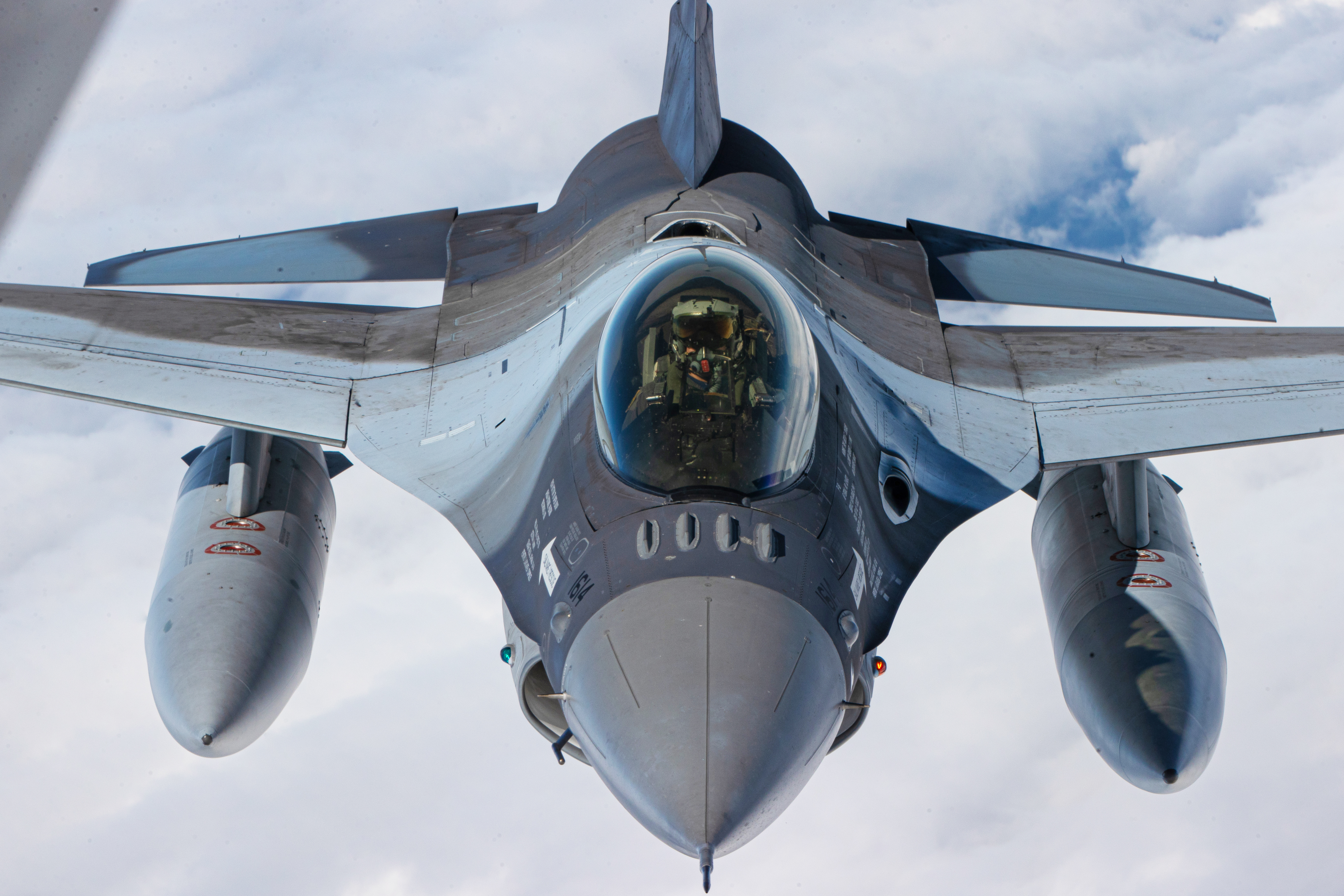
In response, two Romanian Air Force F-16 fighters and an armed IAR-330 SOCAT helicopter were scrambled.
There have been some mixed messages as to why the drone was not shot down.
The Romanian Ministry of Defense says that the pilots involved had authorization to engage targets throughout the alert.
President of Romania Nicușor Dan said that the decision not to engage the target was taken “because the conditions did not exist to destroy it without the heightened risk of endangering civilian safety.”
Other reports suggest the interceptors were simply too late on the scene, and others that the chain of command to approve the engagement took too long, although this is clearly at odds with the Romanian Ministry of Defense’s account.
Regardless, Romania summoned Russia’s ambassador today, calling out the “irresponsible escalation” by Moscow.
“We will officially communicate the consequences that this lack of responsibility on the part of the Russian Federation will have for the diplomatic relations between our countries, as well as the next steps at the European level regarding sanctions packages,” the Romanian Foreign Minister Oana Țoiu wrote on X.
Meanwhile, Romania’s president, Nicușor Dan, said he had instructed the foreign ministry to prepare a package of measures regarding Romania’s relationship with Moscow, “proportionate to this very serious situation.”
Condemnation has also come from other NATO allies.
“I want to condemn this irresponsible act by Russia,” France’s foreign minister, Jean-Noël Barrot, said, adding that the drone had struck “a country of the European Union and a NATO country.”
A NATO spokesperson condemned “Russia’s recklessness” and said the alliance would strengthen its defences against all threats, including drones.
Meanwhile, UN Secretary General António Guterres has called for greater diplomacy, immediate de-escalation and “a full and unconditional ceasefire,” warning of “unknown and unintended consequences” from the escalation and intensification of Russian drone and missile attacks against Ukraine.
Romania has also called for the beefing up of its counter-drone capabilities to help prevent similar incidents in the future.
The Romanian Foreign Ministry today said it had asked NATO to accelerate the transfer of anti-drone capabilities in response to the drone strike.
Romania already hosts several layers of NATO and NATO-linked air defense infrastructure, but most of these are designed to engage ballistic missiles and conventional aircraft, not large numbers of low, slow Shahed-type drones.
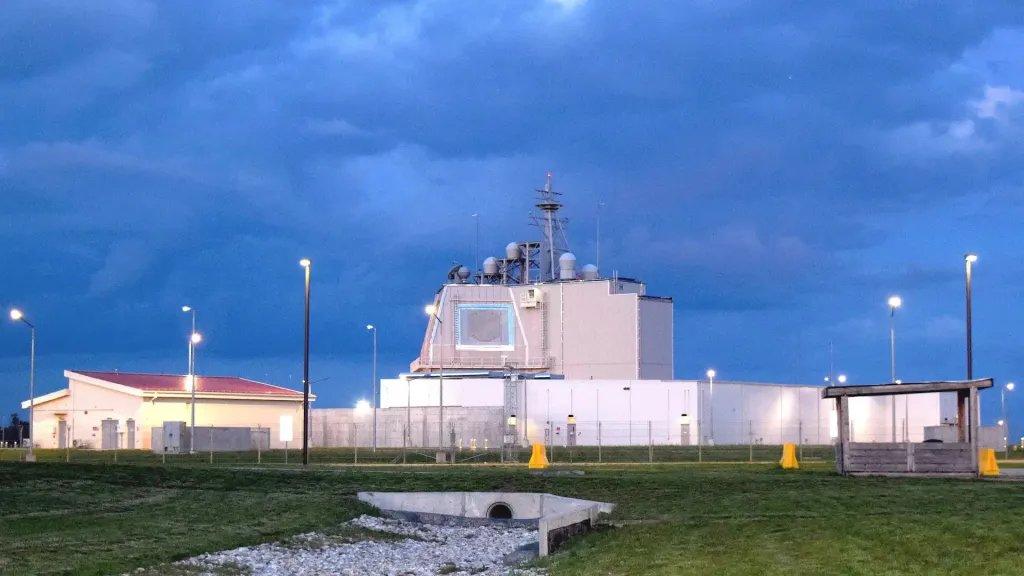
Air defense capabilities in Romania include the Aegis Ashore system at Deveselu, the most important NATO missile-defense installation in the region. It is a U.S.-operated land version of the naval Aegis ballistic missile defense system armed with SM-3 interceptors, integrated into NATO’s missile shield.
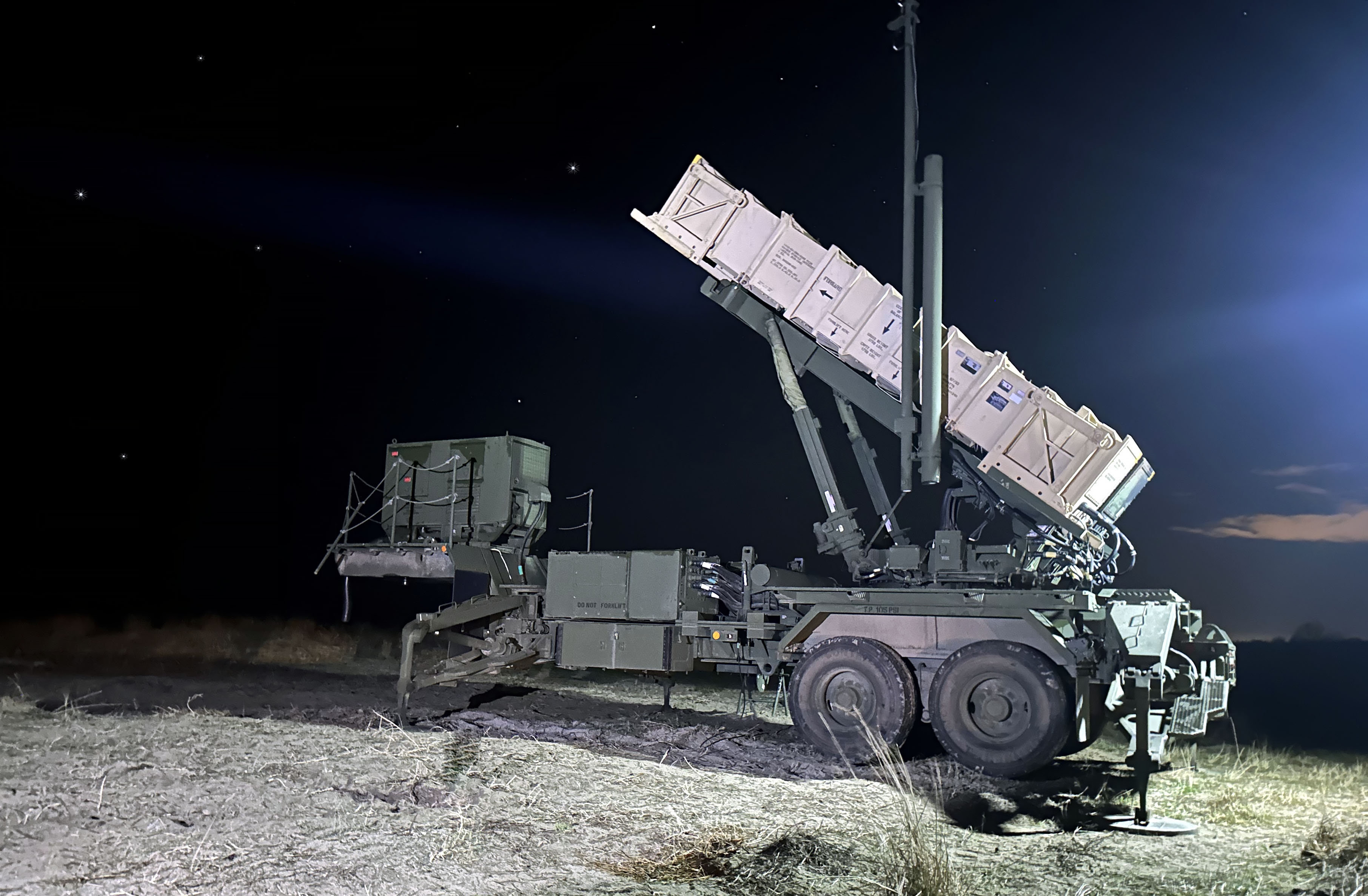
Romania also operates Patriot PAC-3 systems, which are effective against aircraft, cruise missiles, and some ballistic missiles, but are an expensive option for routine drone interception.
In addition, the country hosts rotational NATO fighter policing detachments, which provide additional air defense over the Black Sea and provide air policing patrols. Currently, a detachment of U.K. Royal Air Force Typhoons is in Romania as part of Operation Biloxi.
It should be pointed out that this is not the first incident in which a Russian drone flying from the Ukrainian side of the border has violated Romanian airspace. Drone wreckage was found in Romania, close to the border with Ukraine, in September and October of 2023, although there was no evidence that the NATO country was deliberately targeted. In December of the same year, NATO fighters deployed in Romania were scrambled to respond to a drone violation, with one of the drones exploding in Romanian territory, although it was not shot down. Since then, there have been multiple other Russian drone incursions, but no reported injuries as a result.
However, the overnight strike in Romania further underscores the potentially lethal risk of the war in Ukraine spilling over from Ukraine and into NATO territory.
It also coincides with Russian threats to step up its sustained assault on Ukraine. Moscow has continued using long-range missiles and drones to target Ukrainian cities and critical energy infrastructure, while Kyiv prepares for further waves of intense attacks.
Earlier this week, Zelensky said he was urging the United States to supply more Patriot systems to help defend against Russian ballistic missile strikes, amid an ongoing shortage of critical air defense systems. Speaking today, the Ukrainian leader said that Ukrainian intelligence has information indicating Russia is preparing a new large-scale attack on Ukraine.
As we have discussed in the past, Russian kamikaze drones heading toward population centers in NATO countries represent an entirely new level of threat to the alliance and one that NATO is currently not well-equipped to deal with.
Considering the intensity of Russian aerial bombardment of Ukraine, and the proximity of NATO borders, it was really only a matter of time until an incident like this occurred.
Already, Romania expanded its no-fly zone along a section of the border with Ukraine to up to 20 miles inside Romania and to a height of 4,000 feet. This was intended as a deterrent against Russian drones from deliberately entering Romanian airspace to reach enemy targets.
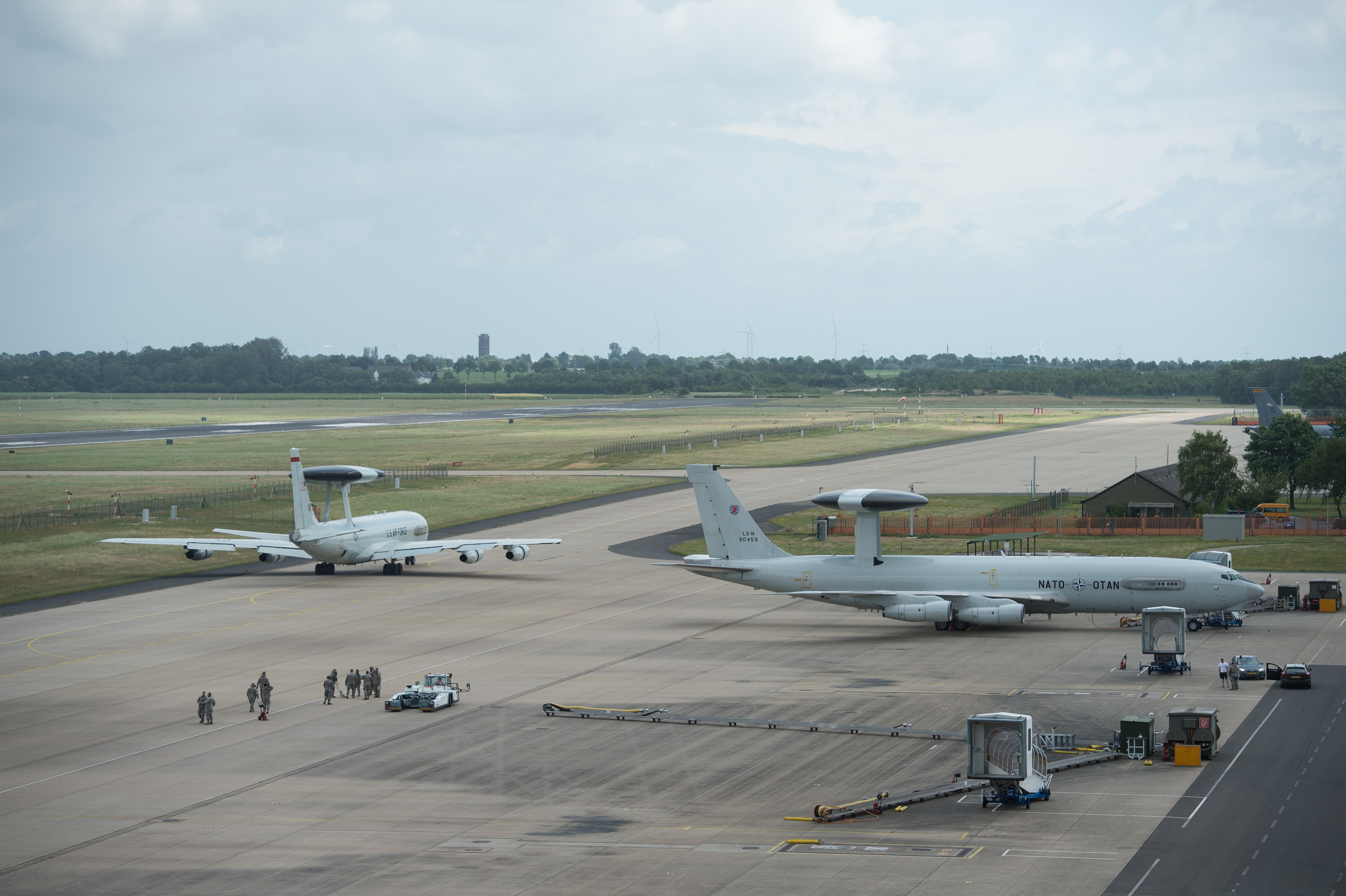
TWZ reached out to NATO for details of potential posture changes, and a senior official from the alliance confirmed that a NATO E-3A Sentry Airborne Warning and Control System (AWACS) aircraft was launched today to increase air-domain awareness.
The same NATO official told us that one way to avoid similar incidents in the future would be to bring the MEROPS counter-drone system to Romania under NATO command and control.
“Another way is for Romania and other allies to continue the acquisition of more capabilities as part of the Eastern Flank Deterrence Initiative, which integrates sensing, decision-making and precision effects into a resilient, defense-in-depth concept,” the official added.
As you can read about here, MEROPS counter-drone systems, initially used in Ukraine, have also been deployed to protect U.S. troops from Iranian Shahed-136 munitions. The MEROPS is a small, relatively inexpensive drone built specifically to intercept long-range one-way attack drones.

Now that a Romanian residential building has been hit and people injured, this may push the needle further and lead to the more comprehensive deployment of counter-drone capabilities in this country and elsewhere on NATO’s eastern flank.
Contact the author: thomas@thewarzone.com
Loading comments…
Comments couldn’t be loaded. Please refresh the page.