
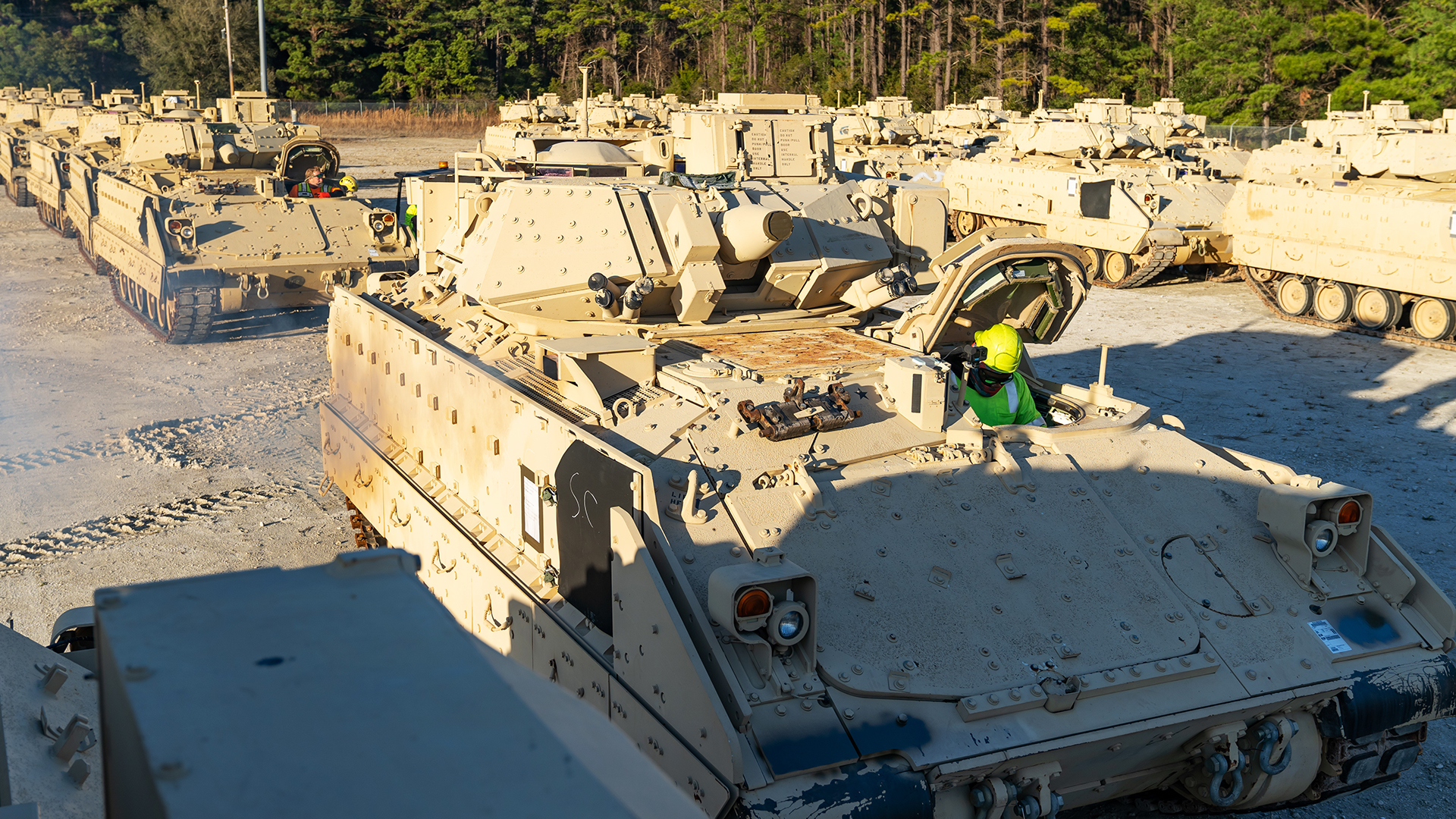
The new National Defense Authorization Act (NDAA) bill released by Congress Sunday night calls for maintaining funding of arms purchases for Ukraine, though at a rate drastically less than in the past, and support, albeit with caveats, to European allies. The legislation, which still must be approved separately by both the House and Senate, comes days after the White House released its National Security Strategy that distances America from support for Ukraine and Europe. It was also released as U.S President Donald Trump is seeking to end the war and Ukraine continues to lose ground to Russia.
Given that under the Biden administration the U.S. provided nearly $70 billion in direct military aid to Ukraine, the NDAA’s allocations could even be considered something of a symbolic measure aimed at reassuring Kyiv that the U.S. has not completely abandoned it. It continues the Trump administration’s efforts to put the onus of support for Ukraine on European NATO members.
On Monday afternoon, a White House official told The War Zone that the administration supports the $900 billion policy measure, “and has been working diligently to formulate a plan that will bring a durable, enforceable peace to the war in Ukraine.” The Pentagon declined comment because it does not speak about pending legislation.
The bill calls for the Pentagon to include $400 million in both Fiscal Year 2026 and Fiscal Year 2027 for the Ukraine Security Assistance Initiative (USAI). That’s a pool of money that Ukraine can use to obtain arms from U.S. defense contractors. In the past, the money has been used to allow Ukraine to purchase ammunition, air defense interceptors and other war materiel.

The NDAA’s call for continued USAI funding for Ukraine is a far cry from the nearly $33 billion allocated for the program under the Biden administration and will provide a very limited amount of weapons.
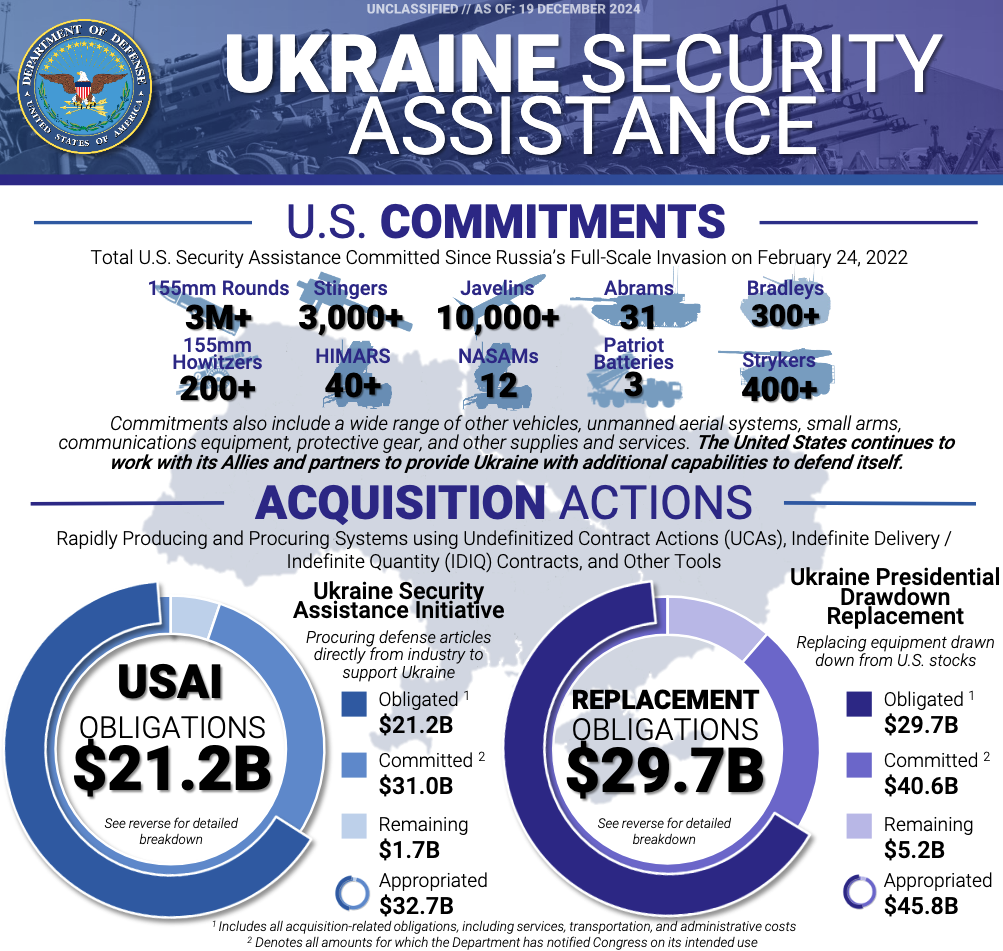
Earlier this year, the White House announced the creation of the Prioritized Ukraine Requirements List (PURL), designed to sell weapons from U.S. stocks to NATO nations, which would then turn them over to Ukraine in $500 million tranches. In addition, the Trump administration has yet to authorize any arms for Ukraine under the Presidential Drawdown Authority (PDA), which funds the replacement of arms shipped to allies directly from U.S. stocks. The Biden administration allocated more than $33 billion in PDA funding to Ukraine, but it does not appear likely Trump will use this authority to help Ukraine.
The NDAA also calls for the Pentagon to notify Congress within 48 hours if it plans to stop providing intelligence support to Ukraine, something that happened earlier this year. That notification would include justifying the cut-off, its planned duration and how it would impact “the ability of Ukraine to conduct effective military operations.”
The cutoff of U.S. intelligence “significantly impacts Ukrainian force protection of High Value Equipment’s shoot, move and scoot timelines, indications and warning of high-threat aircraft,” a retired high-ranking Ukrainian officer told us in March. “It significantly hampers the ability to target Russian forces and conduct long-range strikes against critical, mobile high-value targets.”
The lack of satellite imagery over Kursk also played a role in Russia’s ability to end Ukraine’s invasion of that region, the retired officer added.
However, as we noted in October, the United States agreed to provide Ukraine with targeting intelligence for its long-range strikes against Russian energy infrastructure.
The bill also calls for “an accounting” of military aid to Ukraine provided by the U.S. and allies, including under the PURL and USAI programs.
Beyond Ukraine, the NDAA seeks to continue support for NATO allies. It calls on the Secretary of Defense in coordination with the commander of U.S. European Command to establish a $175 million ‘‘Baltic Security Initiative,” aimed at “deepening security cooperation with the military forces of the Baltic countries” (Estonia, Latvia and Lithuania).
(The current head of the Pentagon, Pete Hegseth, has replaced the word Defense with War when it comes to the name of the department he oversees. The NDAA, meanwhile, continues to use the terms Department of Defense and Secretary of Defense).
The goal, according to the document, is to “achieve United States national security objectives by deterring aggression by the Russian Federation; and implementing NATO’s Strategic Concept, which seeks to strengthen the Alliance’s deterrence and defense posture by denying potential adversaries any possible opportunities for aggression.”
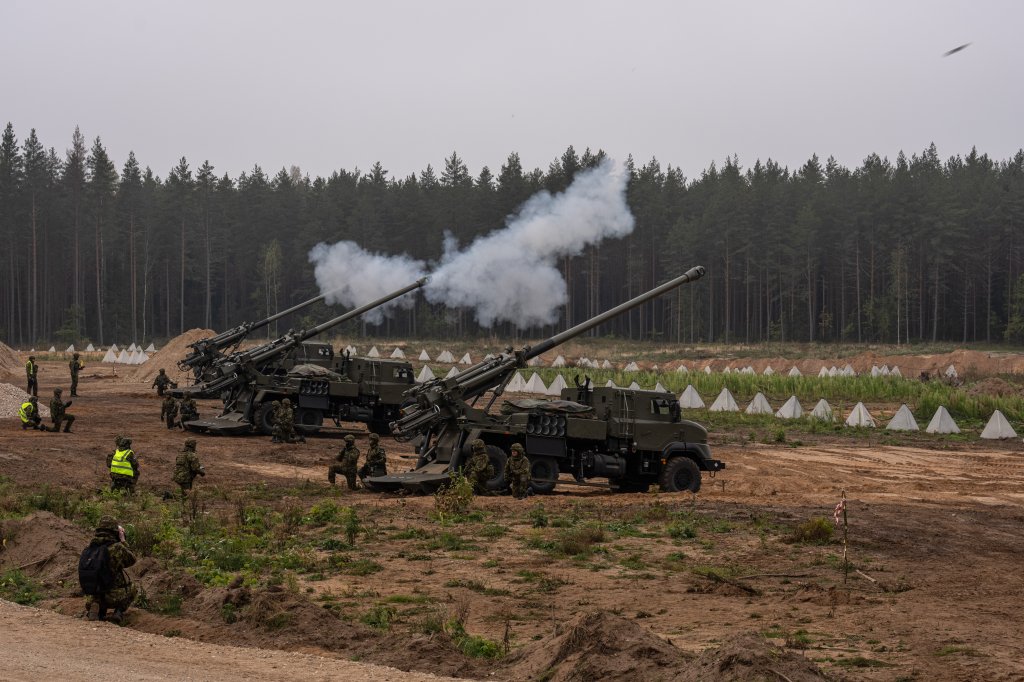
In addition, the initiative seeks to enhance regional planning and cooperation among the military forces of the Baltic nations, particularly when it comes to long-range precision fires, integrated air and missile defense, maritime domain awareness, stockpiling large caliber ammunition, command and control, intelligence gathering and improving “resilience to hybrid threats.”
However, while calling for support for the Baltics, the spending measure also says it is the “sense of Congress” that these three countries match the spending by the U.S. on this initiative.
The bill also seeks protection against signficant cuts to U.S. forces in Europe. It requires the Pentagon, EUCOM and other relevant agencies to obtain Congressional approval before cutting the U.S. troop levels in Europe to less than 76,000 troops.
The move comes after the U.S. began pulling forces out of the continent, where there are currently about 85,000 troops stationed. Earlier this year, the U.S. Army sent about 800 troops from Romania back stateside.
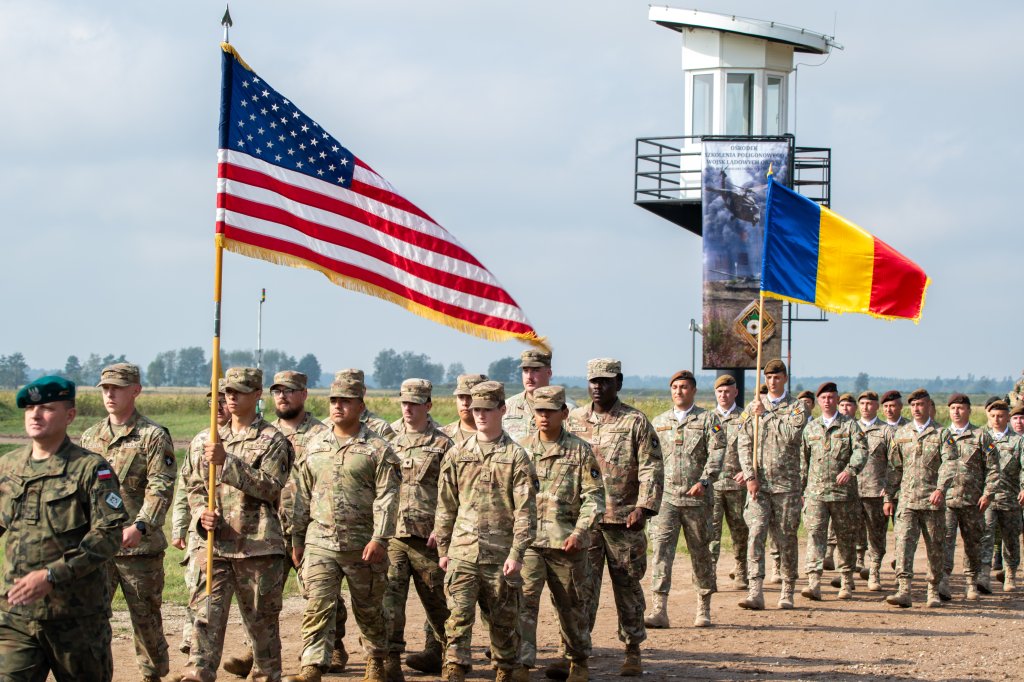
While the spending measure signals an enduring, if somewhat symbolic commitment to Ukraine, it also states that NATO allies must pay for the cost of the U.S. troop presence on the continent and for the Secretary of War to “take into account a NATO ally’s progress toward meeting the alliance’s commitment to defense spending at 5% of GDP when making decisions related to military basing and training.”
Meanwhile, the 33-page White House National Security Strategy document released by the White House last week seeks a speedy end to the nearly four-year-old full on war and better relations with Russia. It says Europe is facing “civilizational erasure” and does not cast Russia as a threat to the U.S.
“It is a core interest of the United States to negotiate an expeditious cessation of hostilities in Ukraine,” the NSS states. The goal is to “stabilize European economies, prevent unintended escalation or expansion of the war, and reestablish strategic stability with Russia, as well as to enable the post-hostilities reconstruction of Ukraine to enable its survival as a viable state.”
European leaders have pushed back against the NSS while Russia seems to support it.
“The adjustments we’re seeing… are largely consistent with our vision,” Kremlin spokesperson Dmitry Peskov said on Sunday. “We consider this a positive step.”
Amid all this, Trump’s diplomatic efforts to end the conflict continue to drag on with little progress while Russia continues to chew up Ukrainian territory.
The latest development is that Ukrainian President Volodymyr Zelensky is meeting with European leaders in London “to discuss peace talks that have languished because of clashing views about how to end his country’s nearly four-year-old war with Russia,” The New York Times noted.
“Very important things for today are the unity between Europe and Ukraine, as well as the unity between Europe, Ukraine, and the United States,” Zelensky said Monday in a post on X. “Grateful to the leaders of Great Britain, Keir Starmer, France – Emmanuel Macron, and Germany – Friedrich Merz for organizing the meeting and the personal contribution of each on the path to establishing peace. We discussed in detail today our joint diplomatic work with the American side, agreed on a common position regarding the importance of security guarantees, reconstruction, and next steps. Separately, we talked about further defense support for Ukraine.”
Though the NDAA calls for only a tiny fraction of the Pentagon’s budget to be earmarked for Ukraine, there is still a tremendous amount of debate ahead before it becomes law. The state of play on the battlefield will likely have a role in the future of this legislation.
Contact the author: howard@thewarzone.com
Loading comments…
Comments couldn’t be loaded. Please refresh the page.