
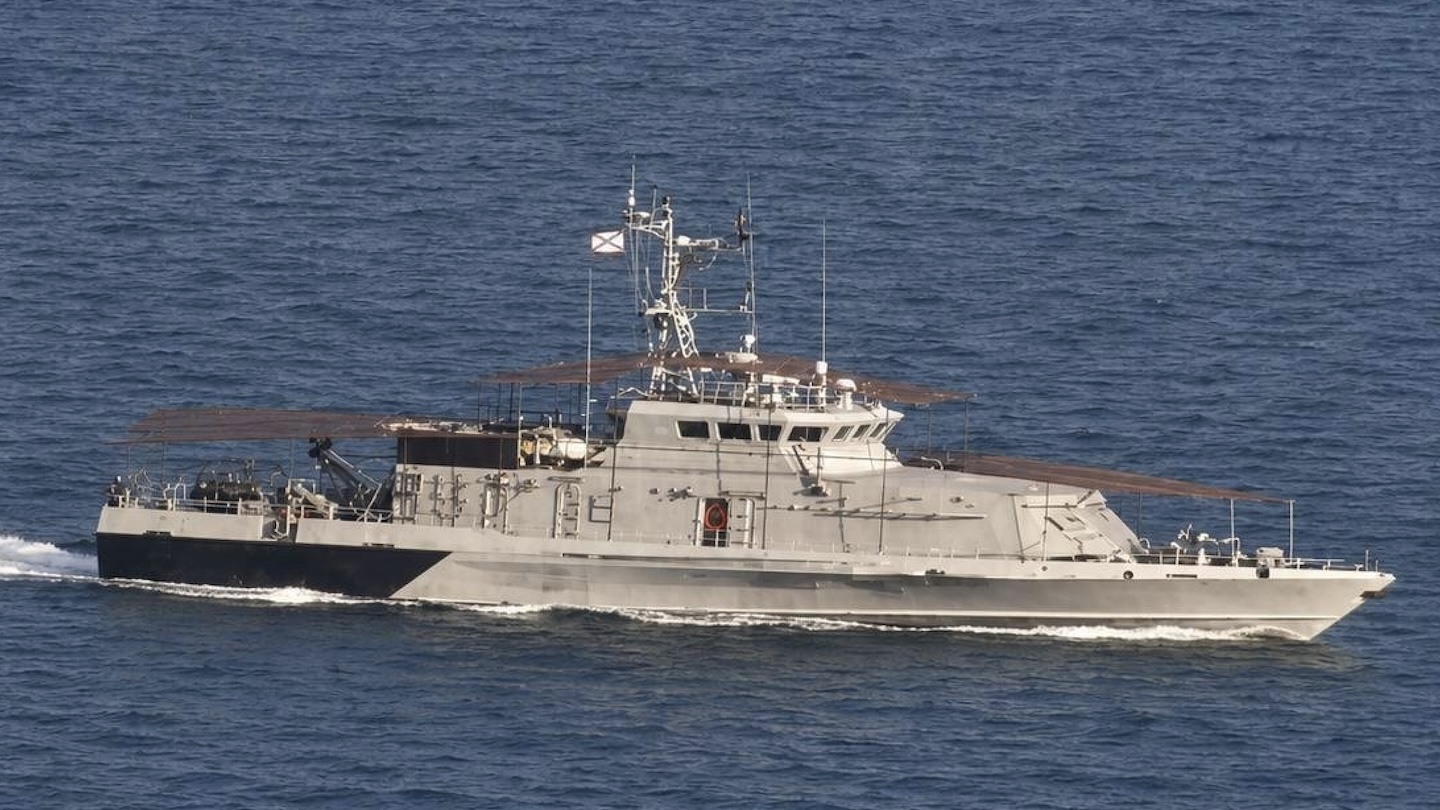
A recent development in the Black Sea drone war has seen a Russian Navy patrol boat appear with a screen, commonly known as a “cope cage,” on top of its superstructure to help protect against drones. Whether the modification is a one-off or part of a broader plan, it emphasizes the growing ubiquity of drone threats, a reality that the U.S. Navy is also increasingly having to contend with.
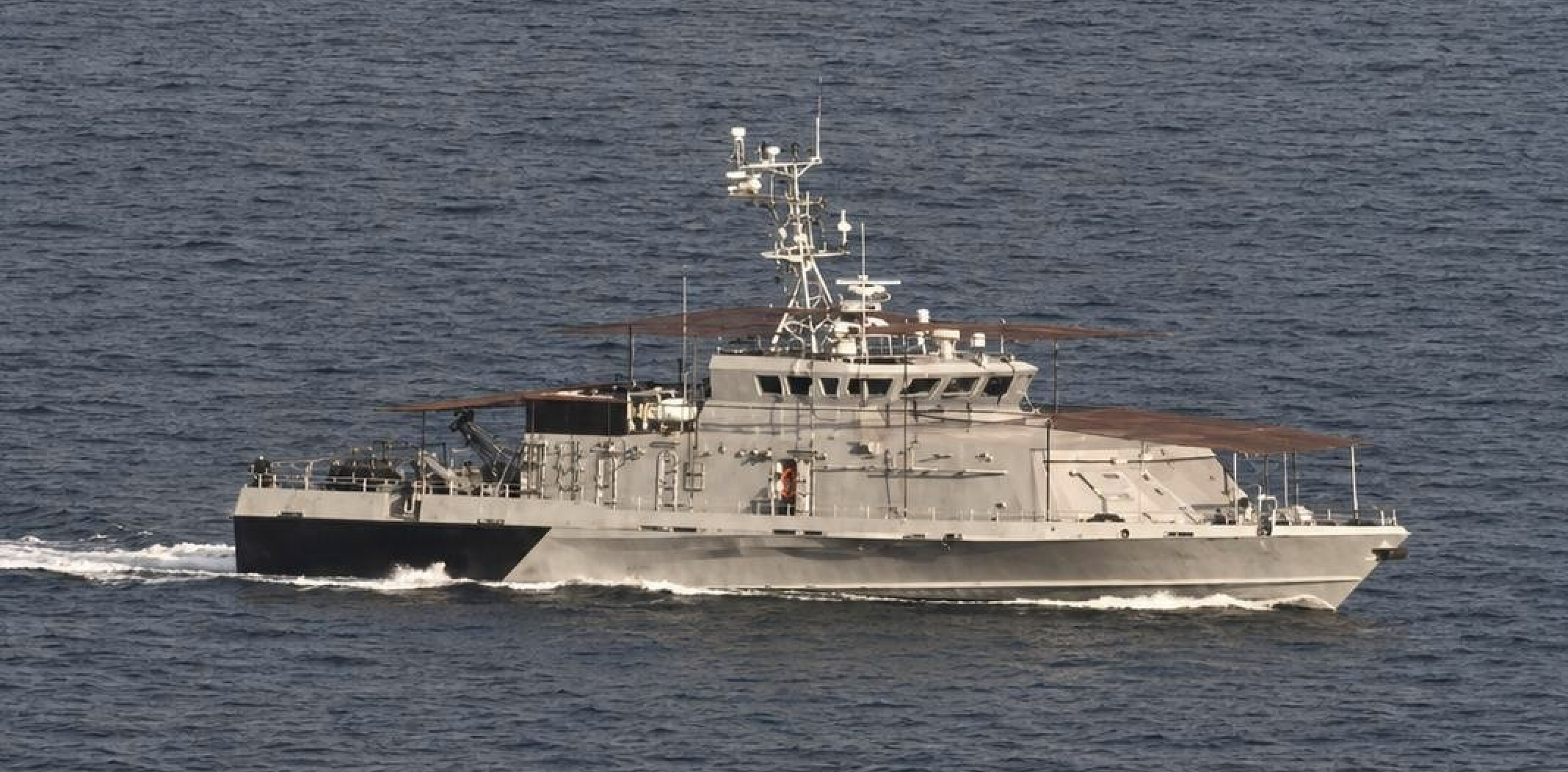
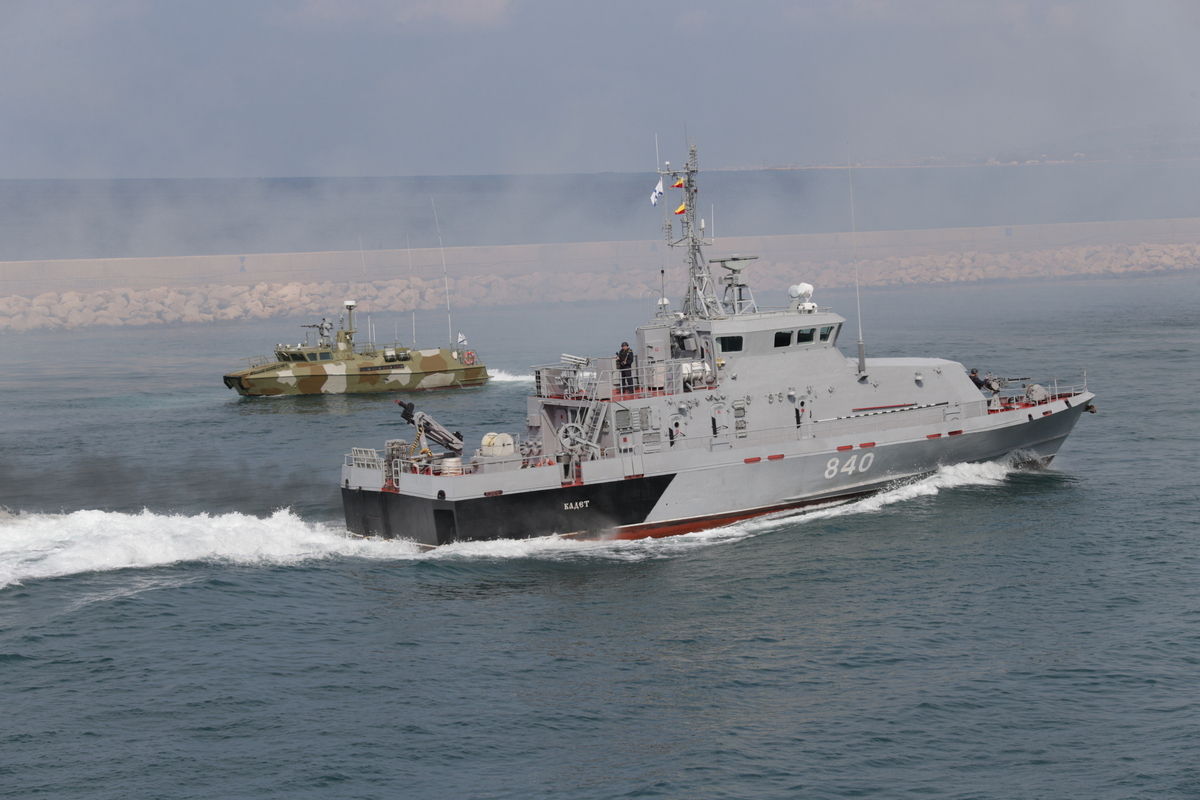
Two photos showing Russian Navy Project 21980 Grachonok class patrol boats underway in the Black Sea were published by Ukrainian defense adviser Serhii Sternenko. The photos were reportedly taken this month, but it’s not clear if they show the same vessel (in one photo, the Russian Navy flag is flying from a mast, and in the other, it is not).
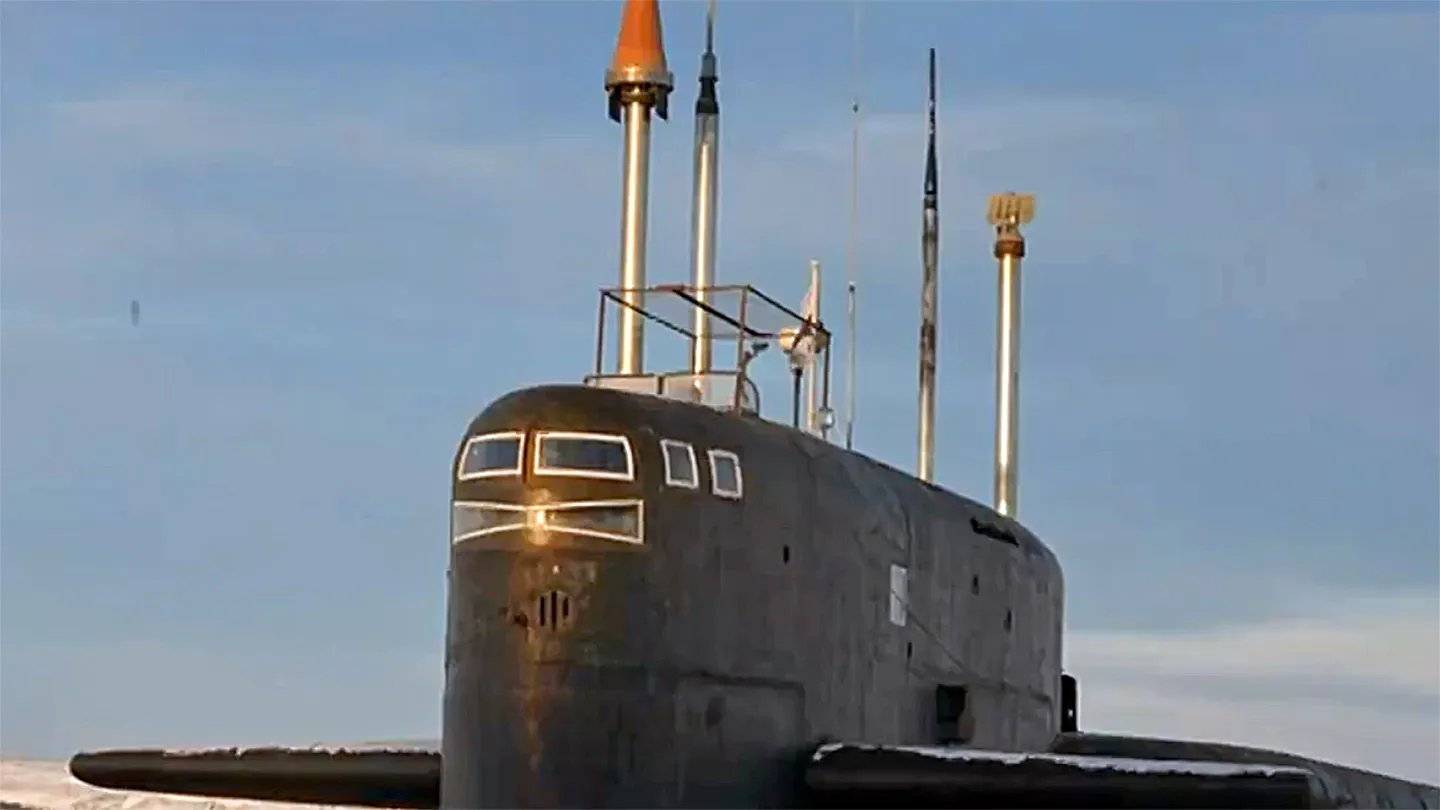
This may well be the first instance of this kind of add-on protection, which is now routinely used by both sides of the conflict in Ukraine on tanks and other fighting vehicles, being installed on a surface vessel. However, as we reported in the past, a cope cage has also appeared on at least one Russian Navy ballistic missile submarine, the Tula.
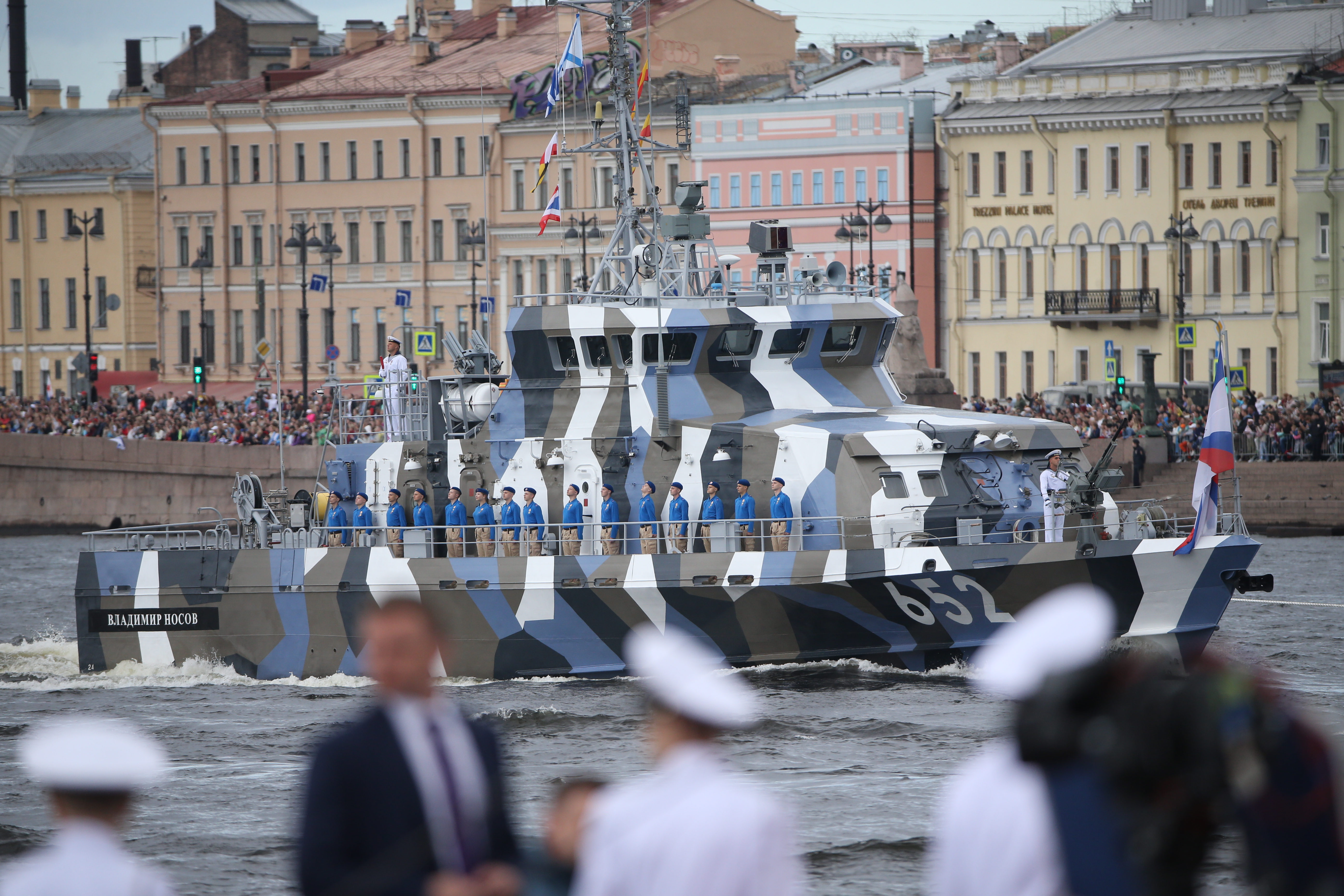
The Project 21980 vessel is described by Russia as a multi-purpose anti-saboteur boat. Primarily designed to protect ports and other naval installations, they are used by the Russian Navy as well as the Border Service. Around 30 of the vessels have been completed since 2008.
According to Ukrainian sources, Russia’s Black Sea Fleet operates nine Project 21980 boats, while another four are assigned to the Border Service.
Displacing around 150 tons, the Project 21980 is a little over 100 feet long and can be armed with a 14.5 mm machine gun, anti-sabotage grenade launchers, and an Igla-series man-portable air defense system (MANPADS). Ironically, the Russian media has, in the past, heralded the success of the Grachonok class during exercises in which the vessel was used to detect and destroy uncrewed aerial vehicles (as well as uncrewed surface vessels and other small-sized surface targets).
The cope cage covers most of the surface area of the vessel, with three distinct levels: a first section protecting the area above the stern; a second section mounted above the bridge and projecting aft of it, but below the antenna array; and a third section aft of the main superstructure. The sides of the vessel appear entirely unprotected; this may well be to allow normal operations such as docking. Furthermore, access here is required to operate the weapons, as well as the rigid-hull inflatable boat (RHIB) that is typically stowed at the stern, and which is deployed and recovered by crane.
Considering the normal mounting of the machine gun on the bow and the grenade launchers firing aft from the rear of the superstructure, it’s not clear how these weapons function after the cope cage is fitted. At the very least, the additional protection screens would appear to significantly reduce their fields of fire, limiting them to a very depressed trajectory.
Moreover, while the cope cage provides a degree of overhead protection against drone-delivered munitions, it can be easily seen how a skilled drone operator would be able to find a gap in the protection. FPV drones, in particular, are highly maneuverable and have already demonstrated their ability to penetrate inside armored vehicles through open hatches and into buildings through whatever openings might be available. In this case, flying a drone around the static cope cages would not appear to be too difficult.
At the same time, the protection doesn’t address the threat posed by uncrewed surface vessels (USVs, ‘drone boats’) and uncrewed underwater vessels (UUVs) that have repeatedly been used to attack Russian targets in and around the Black Sea.
The threat of Ukrainian naval drones was most recently underscored in an incident on the night of April 30, when, according to reports, a Border Service PSKA-300 class patrol boat was struck, close to the Kerch Bridge. A photograph subsequently published on a Telegram channel showed a memorial plaque indicating that nine members of the Russian crew were killed in the strike. Ukrainian reports suggest that, as well as the PSKA-300, a Project 21980 Grachonok class patrol boat was also hit in the same raid.
The PSKA-300 and Project 21980 are both regularly used to patrol the waters around the Kerch Bridge, linking mainland Russia with occupied Crimea, which is a regular target of Ukrainian strikes.
At the same time, equipping surface vessels with these kinds of add-on protection is a logical extension of the drone war. Russian forces began installing top protection on their tanks in the build-up to the full-scale invasion of Ukraine in 2022. Armor of this type has since become a common feature on Russian and Ukrainian tanks and other armored vehicles, primarily as a defense against FPV and other types of weaponized commercial drones.
As the war has progressed, the threat of Ukrainian aerial drones has been extended into the Black Sea.
Last summer, we reported on how Ukraine had begun using so-called bomber drones launched from USVs to attack targets in Crimea. The occupied peninsula is especially target-rich, hosting high-value Russian radar and air defense systems, as well as military aircraft. In that context, Ukraine using similar weapons to target Russian surface vessels in the Black Sea should come as no surprise.
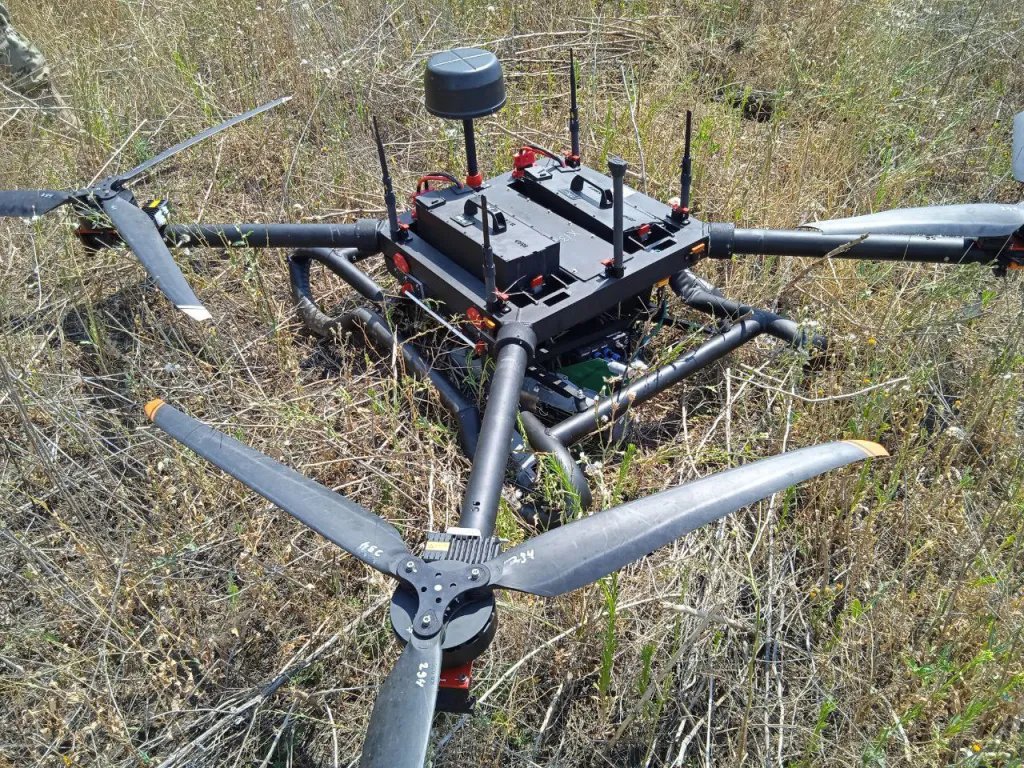
Bomber drones launched from drone boats offer various advantages. They give Ukrainian operators the ability to strike more than one target per drone with heavier warheads than typical FPV drones usually carry. They can also travel farther while maintaining their connection, as they don’t have to dive to the ground to hit their targets. As we have reported in the past, Ukraine also has bomber drones that can launch guided munitions with a heavier punch. All of these would offer a significant threat to Russian vessels in the Black Sea.
Already, Ukrainian actions have effectively forced the Black Sea Fleet to vacate Crimea and instead operate from Novorossiysk, although this hasn’t removed the Ukrainian threat entirely.
As well as heavier and more capable bomber drones, Ukrainian drone boats are also increasingly being used as platforms for launching FPV drones. Back in 2024, the first evidence emerged that Ukraine was using a capability like this, with aerial drones being launched from USVs as part of its campaign of attacks on Russian offshore platforms.
Meanwhile, it was reported recently that the HX-2 strike drone, from German manufacturer Helsing, has been adapted for launch from small boats. The company states that the HX-2s feature standoff range and artificial intelligence (AI) enabled capabilities that make them resistant to electronic warfare systems, and can be employed in networked swarms.
Further proliferation of FPV drones and new missions for these types include a growing emphasis on using them in a coastal defense capacity. Here, again, patrol boats like the Project 21980 would be exposed to additional threats.
Overall, questions remain about how effective the drone protection on the Project 21980 patrol boat might be in practice. However, the emergence of the fixture again underscores Russia’s concerns about the dangers posed by Ukrainian weaponized drones. This is a threat that is now very real across all domains and one that is steadily growing worldwide.
Contact the author: thomas@thewarzone.com
Loading comments…
Comments couldn’t be loaded. Please refresh the page.