

Switzerland will cut back its order for 36 Lockheed Martin F-35A Lightning II fighters in response to the program’s ballooning costs. The announcement puts a question mark over the future of the procurement. It also comes at a time when other customers are also looking at the stealth jet in terms of the value it gives for the considerable investment, not just in terms of upfront costs, but especially sustainment throughout the aircraft’s service life.
Following a cabinet meeting, the Swiss government today said it had instructed the defense ministry to buy the highest possible number of F-35As within the previously agreed budget of six billion Swiss francs ($7.54 billion). Reports suggest that, while the Swiss government viewed this as a fixed price, the United States later refuted that and claimed it was a misunderstanding.
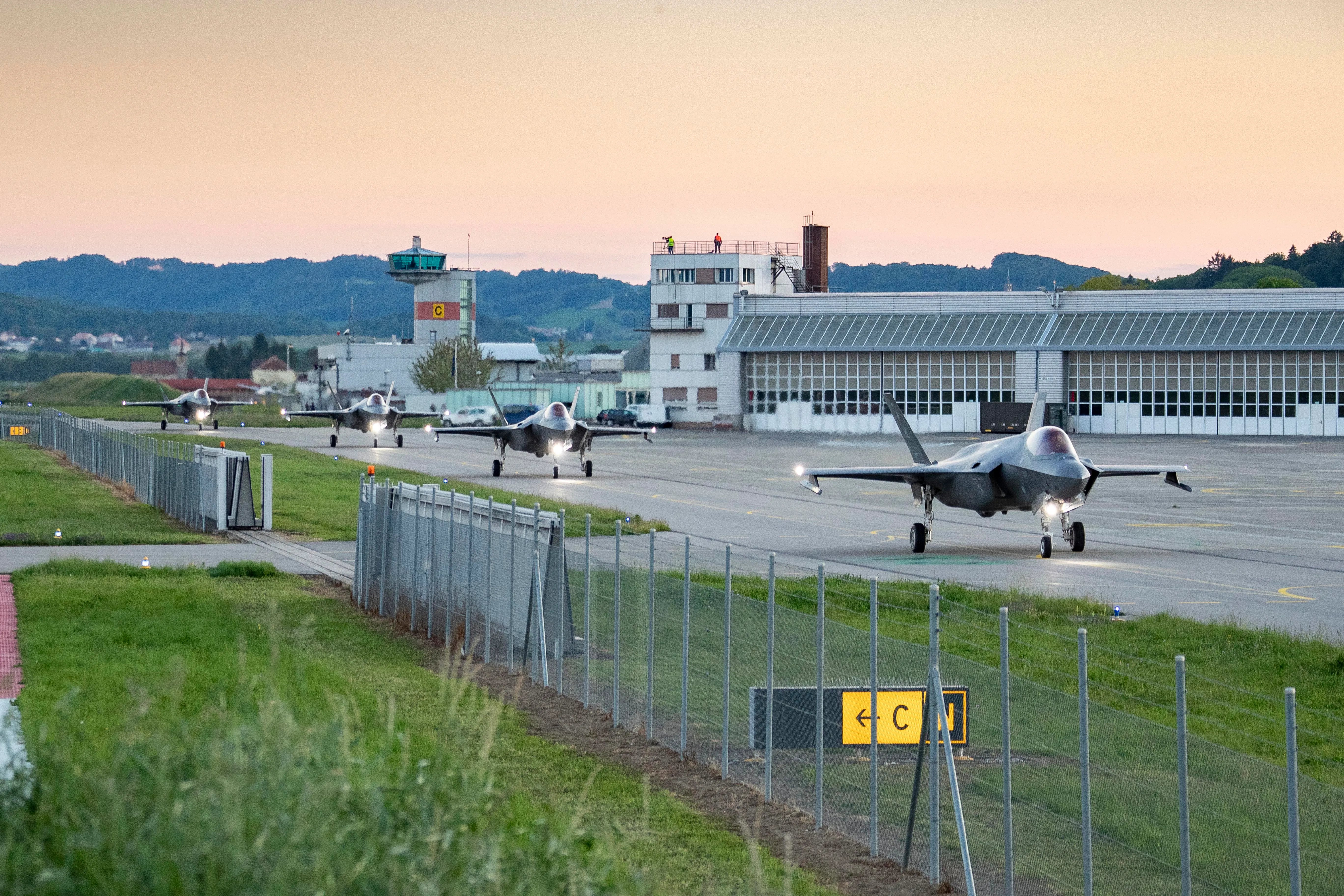
“Due to foreseeable cost overruns, maintaining the originally planned number of 36 F-35As is not financially feasible,” the government said in a statement.
It’s presently unclear how many jets the Swiss budget will cover, but it’s worth noting that Finland’s order for 64 F-35As, budgeted at $9.4 billion, worked out with an equivalent cost-per-jet of around $82 million. However, additional costs of infrastructure, weapons, maintenance equipment, spare parts, training, and other systems and services need to be factored in. In the case of the F-35, in particular, these costs are uniquely high.
The original Swiss budget for a new fighter was narrowly approved by the public in a 2020 referendum.
A referendum is an unusual quirk of Swiss procurement, with the most expensive arms purchases first having to win the backing of the country’s voters. In this way, the maximum spend of six billion Swiss francs was approved before the type had been selected.
The F-35 fought off competition from the Boeing F/A-18E/F Super Hornet, Dassault Rafale, and Eurofighter Typhoon.
After what was described as a “comprehensive technical evaluation,” Switzerland’s Federal Council announced in 2021 that it planned to recommend to the country’s parliament that it procure 36 F-35As as part of the Air2030 program. The package also includes five Patriot air defense systems from Raytheon, which will provide the Alpine nation with a new long-range ground-based air defense capability.
“An evaluation has revealed that these two systems [F-35A and Patriot] offer the highest overall benefit at the lowest overall cost,” the Federal Council explained in a statement. “The Federal Council is confident that these two systems are the most suitable for protecting the Swiss population from air threats in the future.”
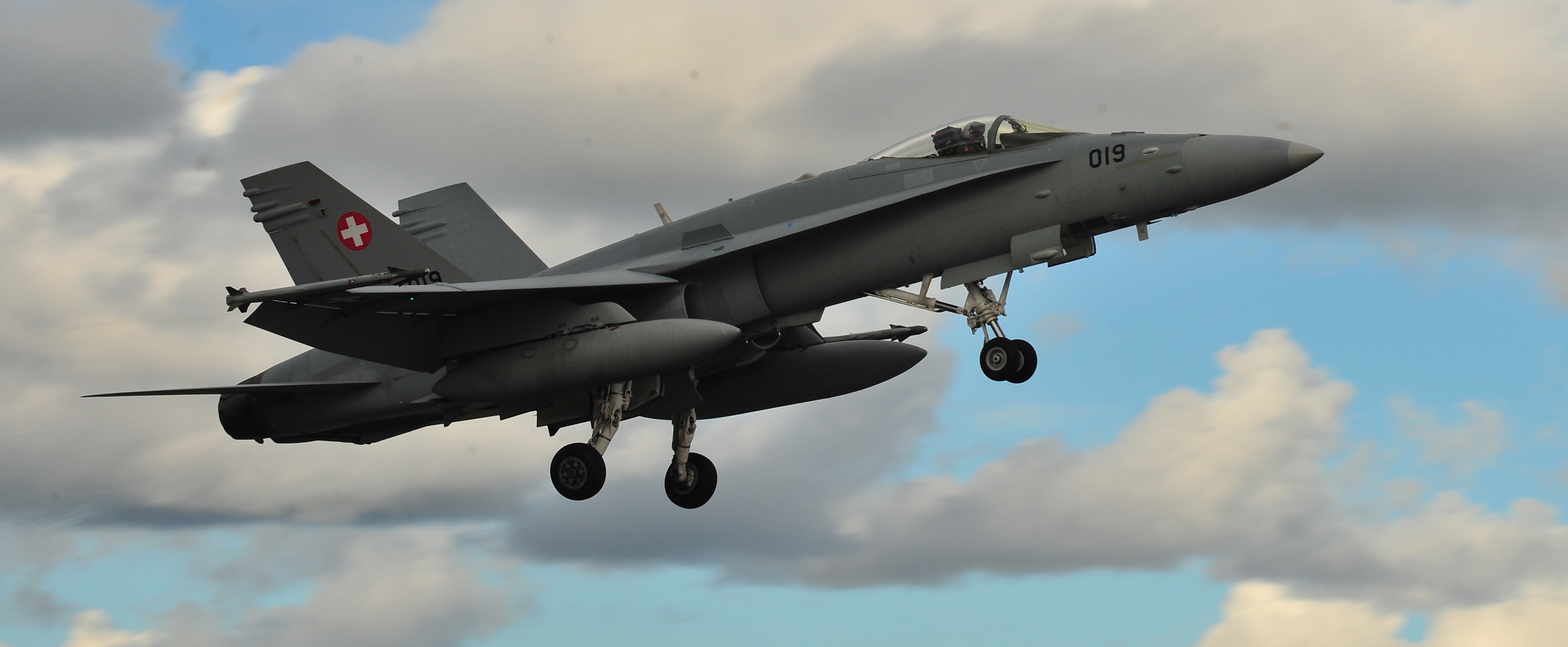
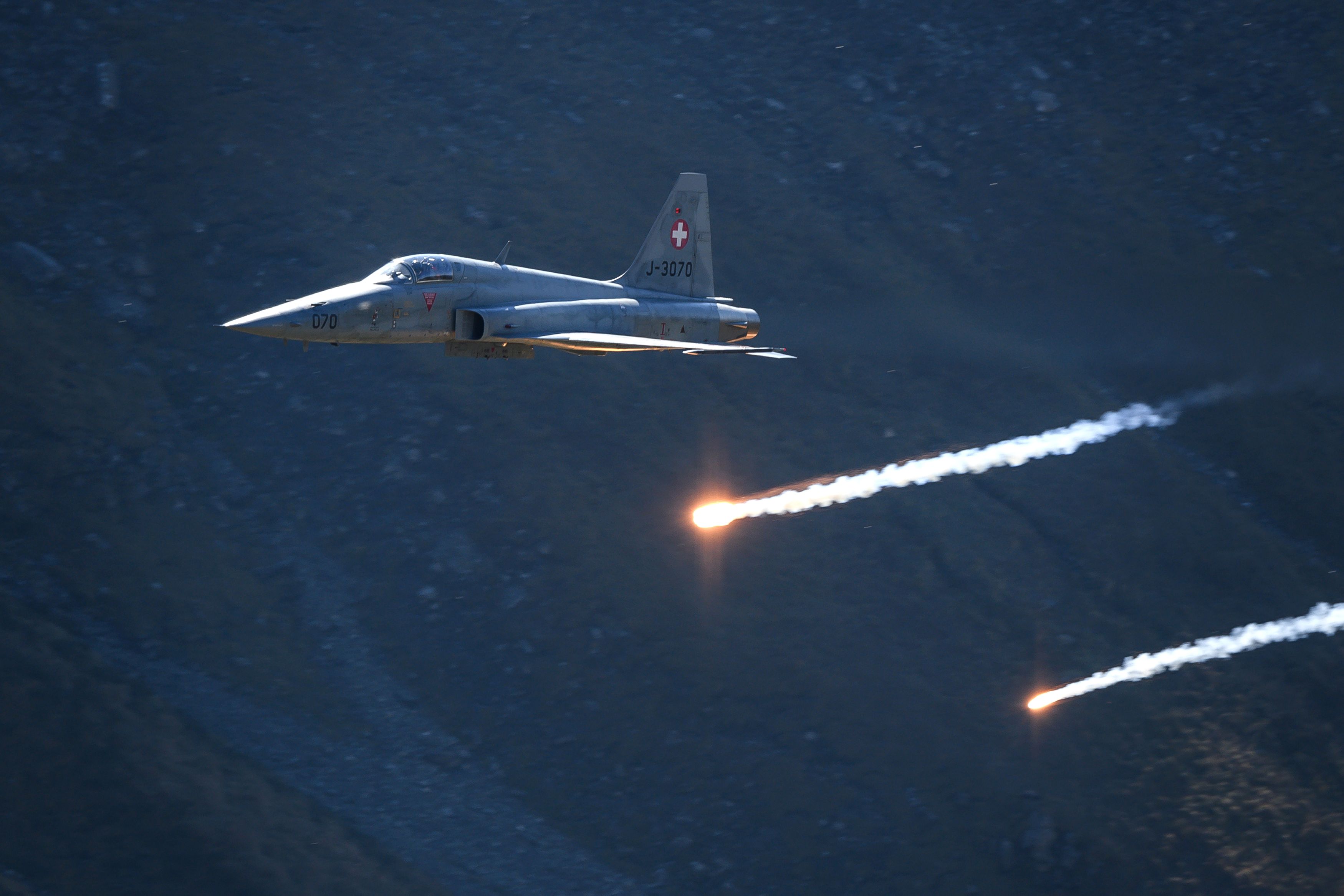
The F-35 will replace the Swiss Air Force’s existing fleet of 30 ‘legacy’ F/A-18C/D Hornets, scheduled to be withdrawn in 2030, as well as its aging F-5E/F Tiger II jets, which are slated for retirement in 2027. The first new F-35As were once expected to arrive in the country from 2025, a date that has already been pushed back.
Ironically, Swiss media reports at the time suggested that the F-35 was selected as it offered the best value for money.
“According to insiders, Switzerland can buy a larger number of F-35s with the budgeted six billion Swiss francs [$6.53 billion] than would be the case with the three competitors,” Swiss broadcaster SRF reported, citing anonymous sources.
According to the Federal Council’s findings, as of 2021, the fleet of 36 F-35As would cost around $5.48 billion, well within the price cap.
Now, at the current exchange rate, the budget cap stands at 7.54 billion, which is no longer sufficient for 36 of the stealth jets.
Meanwhile, regardless of unit price, the cost of actually sustaining the jets once in service has long been a cause for concern.
There’s also the issue of the delayed Block 4 upgrade and the lack of clarity around how much customers will actually pay for this. Block 4 supports a brand-new radar and a host of other capabilities. Among them are increased missile capacity, new weaponry, advanced electronic warfare capabilities, and improved target recognition.
As we pointed out in the past, Block 4 might only start to become available after the Swiss begin receiving their jets, which would require them to either upgrade or decide against getting that capability boost.
It’s also far from clear what will happen next in Switzerland’s F-35 procurement; a lot will depend on how many of the jets can actually be obtained within the stipulated budget.
In the past, Switzerland has not been averse to walking away from fighter procurements entirely.
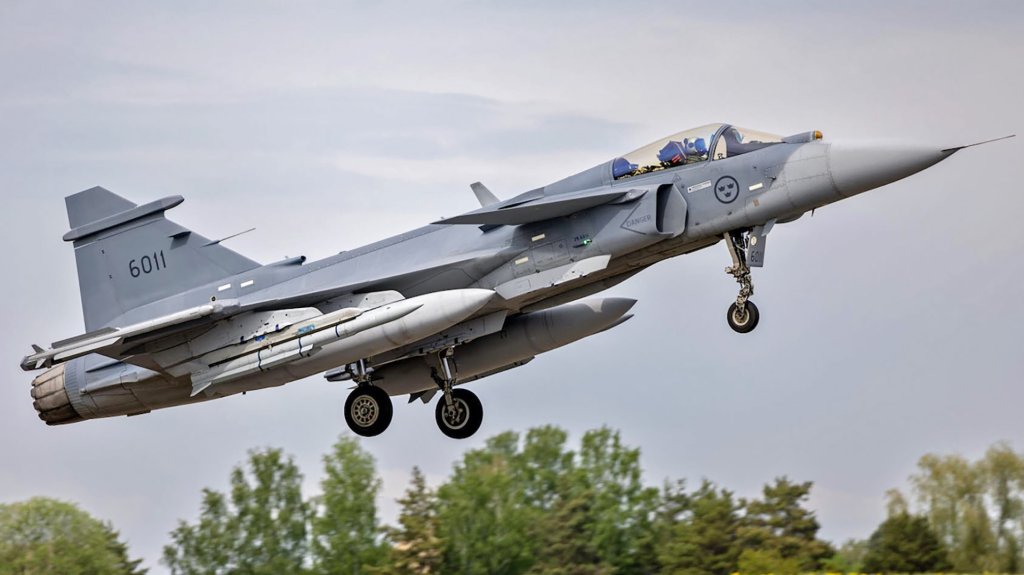
A previous fighter competition that sought a partial replacement for the F-5 fleet saw the Saab Gripen E/F being chosen, with a decision to buy 22 examples, before the entire project was rejected by a referendum in 2014.
At the same time, it’s likely that at least some Swiss Cabinet members would prefer a European fighter, and critics of the F-35 have previously suggested another referendum to potentially overturn the decision to buy American. This issue has only become magnified since the Swiss decision, with European countries increasingly uncertain about buying U.S. defense products.
There’s also a big question over whether Switzerland needs such a sophisticated, low-observable multirole fighter, since its primary responsibility will be day-to-day air policing. The Swiss Air Force also sits outside of NATO, so it doesn’t make operational deployments outside of its borders.
Another option could see a push for a cheaper ‘complementary’ fighter, or light combat aircraft, to provide additional combat (and advanced training) ‘mass’ alongside a reduced fleet of F-35s. This would parallel the existing order of battle in which F-5s operate alongside F/A-18s.
There is also the possibility that Switzerland determines that it needs the full 36 F-35s. The Swiss government also recently said that the deteriorating security situation in Europe means that the Swiss Air Force could need between 55 and 70 new fighter jets.
If that becomes policy, another referendum might be required on the total budget. The question could be put to the Swiss public, with a decision again to be made independent of aircraft type.
Contact the author: thomas@thewarzone.com
Loading comments…
Comments couldn’t be loaded. Please refresh the page.