
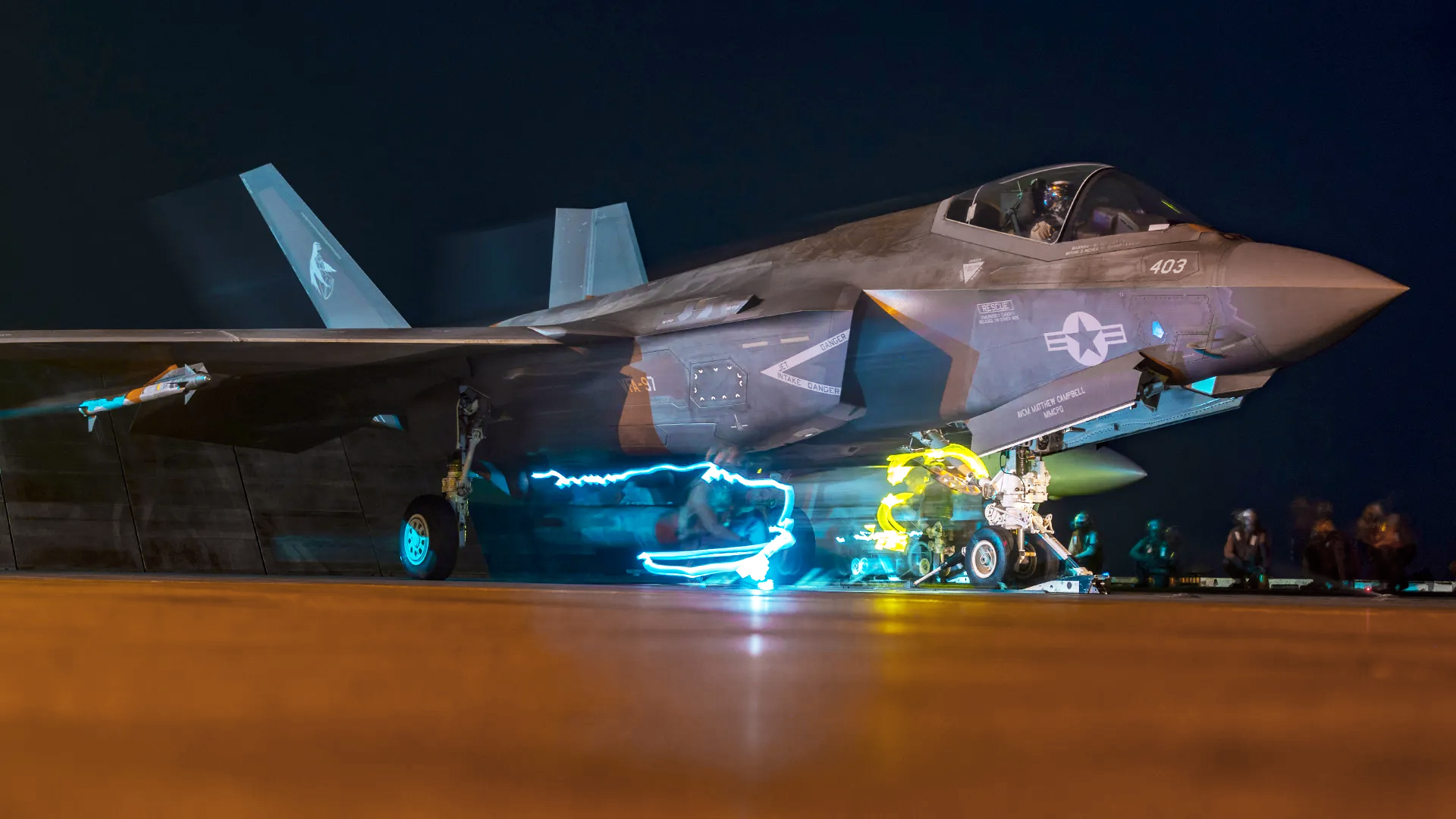
F-35 Joint Strike Fighters have flown critical missions at the heart of a spate of recent headline-grabbing operations. These significant military engagements have leveraged the stealth fighter’s multi-role versatility; from nullifying high priority ground targets with precision to time-critical air-to-air missile “kills.” Such missions are likely to become increasingly complex in the future, and the F-35 is evolving via near- and long-term upgrade programs that are designed to meet the air combat challenges of tomorrow.

F-35s in action
A flight of F-35s slips into Iranian airspace in the dead of night, the stealth fighters going undetected by air defenses. The F-35s are spearheading a support package that’s blazing a trail for B-2 bombers as they discreetly ingress to strike Iran’s most heavily defended nuclear facilities. Operation Midnight Hammer is in full motion.
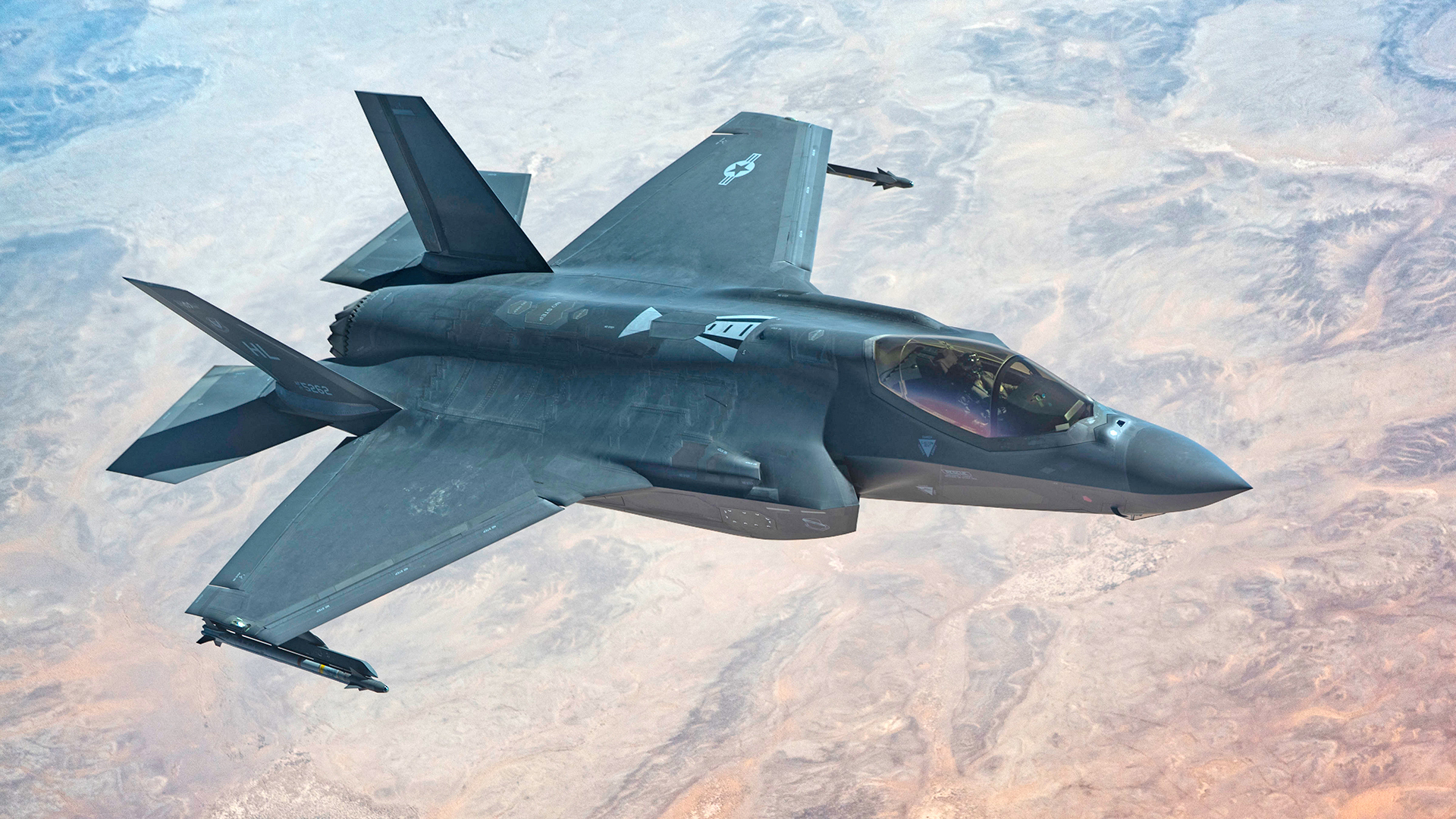
This is just one example of these high-profile combat operations that have been facilitated by the F-35. Additional examples of Joint Strike Fighters in action of late are numerous. From early April 2025, U.S. Navy F-35Cs were downing Houthi drones over the Red Sea while the supercarrier USS Carl Vinson was operating in Middle Eastern waters. Israel’s “Rising Lion” campaign, primarily against Iran’s nuclear facilities in June, also involved F-35s operating in a number of extremely important roles. Just a few weeks ago, F-35As deployed on quick reaction alert duty to help protect NATO’s eastern flank were called upon to intercept, and in some cases shoot down, Russian drones that entered Polish airspace on September 10.
NATO unveiled Operation Eastern Sentry two days later on September 12, 2025, to bolster Poland’s air defenses against further Russian incursions, with the mission designed to expand and cover the regions between the Arctic and the Black Sea, providing a strong deterrent against potential further Russian drone incursions. Eastern Sentry currently includes F-35As from Italy and the Netherlands, forward-deployed in Estonia and Poland, respectively, under the alliance’s Baltic Air Policing mission.
A week after the establishment of Eastern Sentry, F-35s were again in action – scrambled to investigate unwanted Russian intruders that busted Estonian airspace on September 19. On this occasion, three Russian MiG-31 Foxhound interceptors were met by Italian Air Force F-35s responding to the incident, according to NATO.
The power of interoperability
As previously detailed by TWZ, an interoperable fleet of F-35s carries significant benefits to air arms around the globe. The Joint Strike Fighter family’s ability to securely communicate amongst themselves via a proprietary data link that is very difficult to intercept and jam is also a critical advantage. All of this combined with common training and a universal tactical playbook, work as massive force multipliers for a highly formidable F-35 team that is truly more than the sum of its parts.
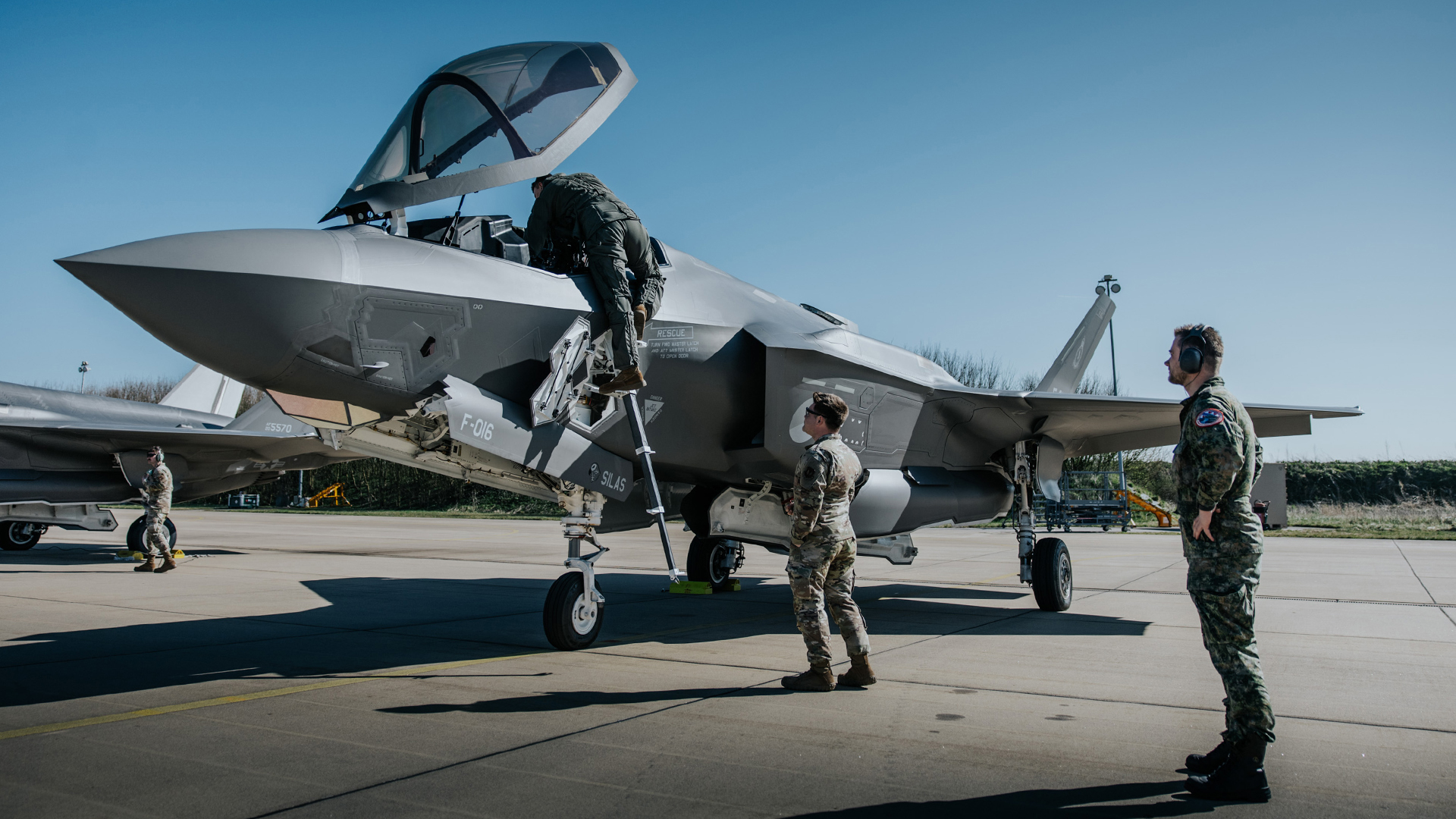
Operators are constantly evolving how they use F-35s, and are now able to securely feed data into different national command and control ecosystems. Recent exercises in Europe led by the Lockheed Martin Skunk Works® team demonstrated the F-35’s ability to integrate with different national systems on a whole new level via the Skunk Works®’ Open Systems Gateway. During Exercise Ramstein Flag in April 2025, Dutch F-35s provided targeting information to rocket artillery. This connectivity is designed to make the F-35 a force multiplier that’s able to provide improved decision making in detecting and defeating threats across air, land, and maritime domains.
“Interoperability is actually a lot of what we work on [at the Skunk Works],” OJ Sanchez, vice president and general manager of the Skunk Works®, explained at the Air & Space Forces Association’s Air, Space, and Cyber Conference in September 2025. “It really is about solving problems that close the kill chain and do it faster. Throughout the summer […] several different integration of data streams [were seen] internationally, in this case using the F-35 and the open systems gateway architecture that the Skunk Works® developed years ago. Whether it was with Denmark or with the Netherlands or through Ramstein Flag, all those underpin this idea of how we connect both platforms – teamed/unteamed or manned/unmanned – and do it with high quality data through sovereign systems.”
Tech Refresh 3 and Block 4
The F-35 that’s now joining air arms around the world is a very different beast compared to early variants that first entered frontline service a decade ago. The latest jets rolling off Lockheed Martin’s production lines sport Tech Refresh 3 (TR3) modifications that will enable the critical suite of improvements included in Block 4.
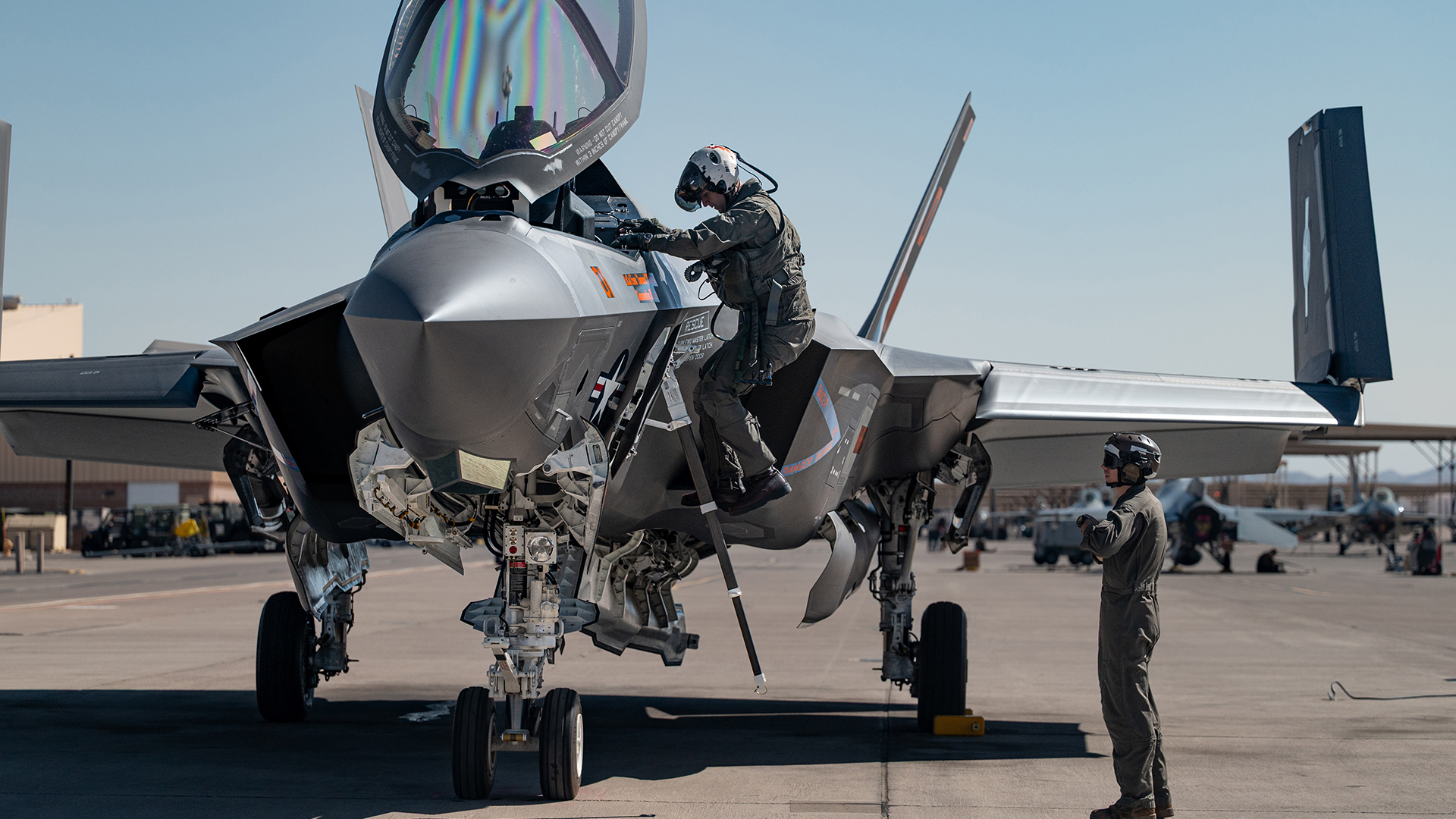
“Block 4 modernization is the most significant evolution of F-35 capabilities to date,” Lockheed Martin told TWZ. “It includes increased missile capacity, advanced electronic warfare capabilities and improved target recognition. Block 4 capability upgrades benefit F-35s across all variants and nations in the F-35 program – and this represents allied deterrence in action across Europe, the Indo-Pacific and everywhere in between.”
The first flight of an F-35 test jet with a version of the TR3 architecture took place in January 2023. Production jets then began to be completed with TR3 processors and related hardware, which are of fundamental importance to the F-35 enterprise’s future. TR3 is needed to support the forthcoming capability enhancements for the F-35, collectively known as Block 4, and it has been described as the F-35’s new ‘computer backbone,’ since it promises to provide 25 times more computing power than the existing TR2 computing system.
“Block 4 modernization includes 75 major upgrades — the most significant evolution of F-35 capabilities to date — across all variants and nations in the F-35 program,” explains Lockheed Martin F-35 test pilot Tony “Brick” Wilson. “Block 4 F-35 is a completely different beast — it sees more, shares more, and survives longer.”
In addition to the features mentioned above, Block 4 will also give the F-35 new cockpit displays, enhanced cooling, new EOTS and DAS electro-optical sensors, a new radar, new beyond line-of-sight comms, a wide range of additional weapons and expanded weapons carriage that will greatly help the aircraft meet its full potential.
The F-35 has experienced its share of developmental challenges throughout the program, and the TR3 and associated Block 4 upgrades that are now embedded into new production aircraft have been no exception. Deliveries of new F-35s were put on hold between July 2023 and July 2024 due to delays associated with new TR3 hardware testing. Deliveries resumed from July 3, 2024.
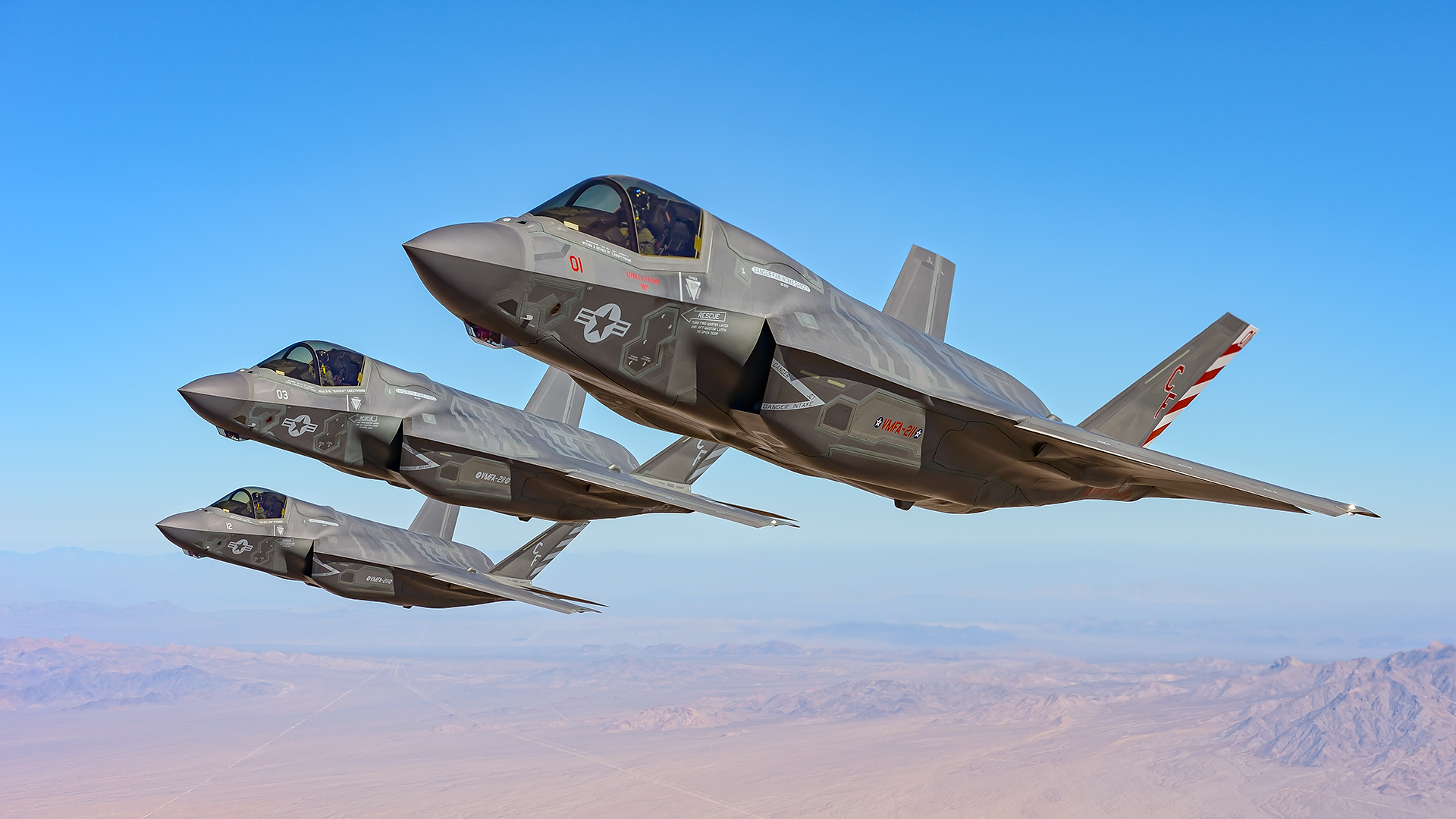
“TR3 is complete and we are laser-focused on delivering Block 4 capabilities for F-35 in the near-term,” Lockheed Martin told TWZ. “We have a hot production line with a consistent rate of 156 F-35s per year, and we are on track to deliver between 171 and 191 aircraft this year. We were already at over 125 jets at the end of August 2025.”
“From a pilot’s perspective, TR3/Block 4 provides for added situational awareness and increased interoperability without an increase in pilot workload, thereby greatly increasing our mission effectiveness,” added Wilson. “The Electro Optical Targeting System is the first sensor to combine forward-looking and infrared and infrared search and track functionality. This provides extended range detection, precision targeting against ground targets, and long-range detection of air-to-air threats.”
“Advanced EOTS, an evolutionary electro-optical targeting system, is available for F-35 Block 4 development. EOTS provides a level of protection against passive weapons that tactical aviators have not had in the past — continuing to provide a level of survivability that was lacking — to ensure the pilot comes home safely after the mission is complete.”
F-35’s continued evolution
When Boeing was awarded the contract to develop and build the U.S. Air Force’s F-47 Next-Generation Air Dominance (NGAD) fighter on March 21, 2025, Lockheed Martin suggested ways to effectively leverage the extensive development work it had ploughed into its own NGAD proposal. It is now seeking to port some of those bleeding-edge technologies into existing fighters in its stable, including the F-35 in a possible “5th generation plus” configuration.
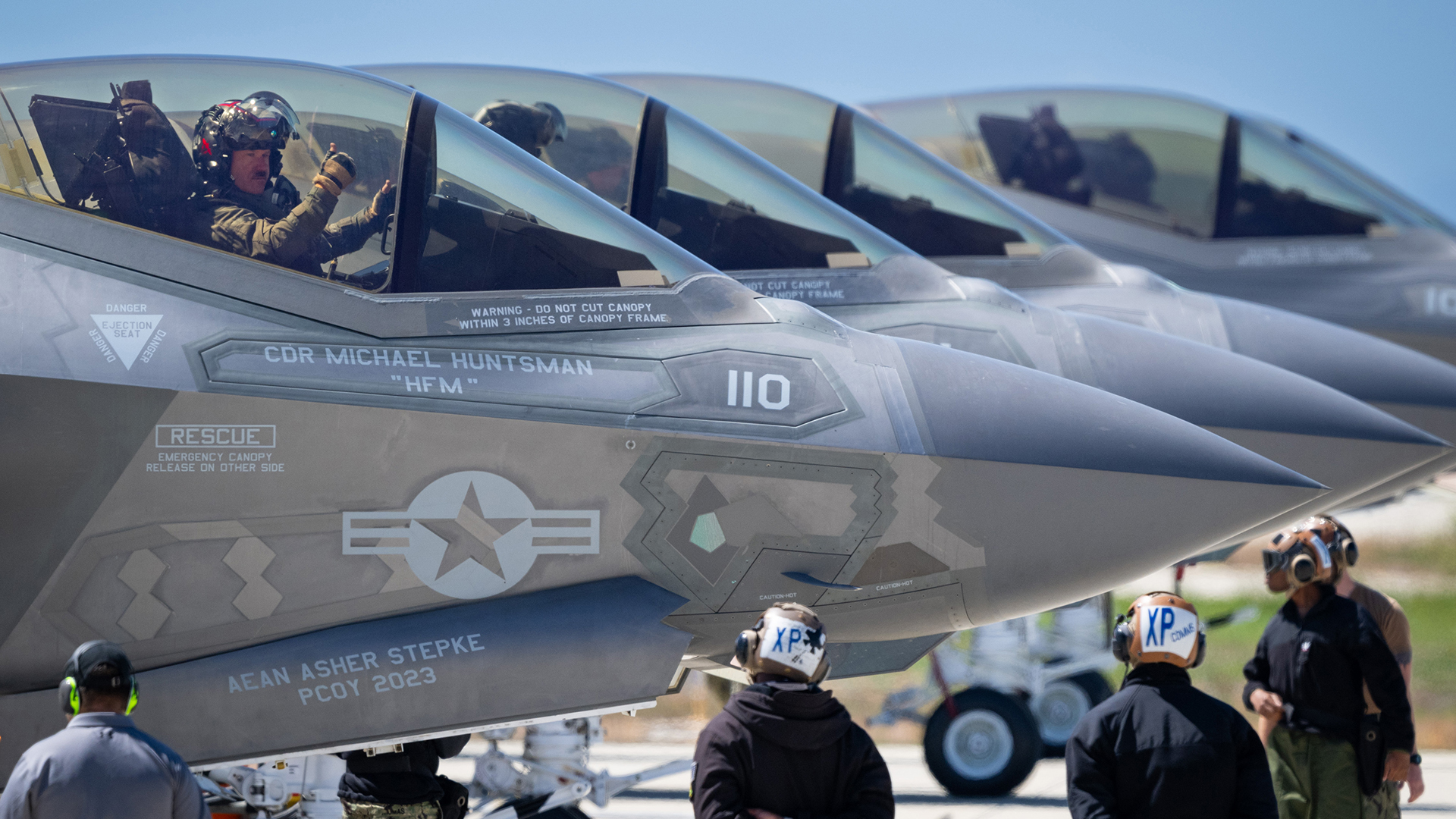
In a company earnings call on April 22, 2025, Lockheed Martin CEO Jim Taiclet said: “We plan on applying those [NGAD] technologies to our current systems, making our already proven products even more relevant to the future, as well as enhancing the capabilities we provide in ongoing and future development.” Taiclet added: “I feel that we can have […] 80% of the capability [of NGAD] potentially at 50% of the cost per unit aircraft by taking the F-35 chassis and applying numerous advanced technologies, some of which are already in process in Block 4 and F-35, but others that we can apply and we are going to offer fairly rapidly to the Department of Defense to really take that chassis and supercharge it for the future. And that’s kind of a 5th generation-plus concept for the F-35. And that investment in NGAD technologies that we made over the last few years is going to be applied directly to that chassis.”
“We always lean into taking technologies from the future, so the next generation of capabilities, pulling those back into our existing platforms,” said Skunk Works®’ OJ Sanchez, when he spoke to the media at the Air & Space Forces Association’s 2025 Air, Space, and Cyber Conference. “Whether that’s evolving the F-22 to get it to see and shoot and go farther, or whether it’s continuing to take the F-35 and evolve it to meet tomorrow’s threat, that’s what we’re working on inside Skunk Works®.”
“At Lockheed Martin, we are focused on delivering the F-35 capability, both in its current form as well as continuing to modernize and make it affordable and effective. And that’s our Block 4 program. Every day the F-35 program is working to deliver, on schedule, on costs with the capabilities required on the main program, and at the same time what we all have seen is the evolution of capabilities is important in order to be able to keep pace with the threats,” he explained.
“With 97% of the [Skunk Works] portfolio classified, I get to talk about some things. We know a lot about what we’ve designed and developed in the next generation of air dominance capabilities, both in the how, like integrated digital environments that affect the full life cycle, and in the what, capabilities that can change. So we’ll continue to evolve inside of Skunk Works® on those capabilities and then find ways, as customers will allow, to implement those into existing programs […] extending the survivability and capability of our platforms.”
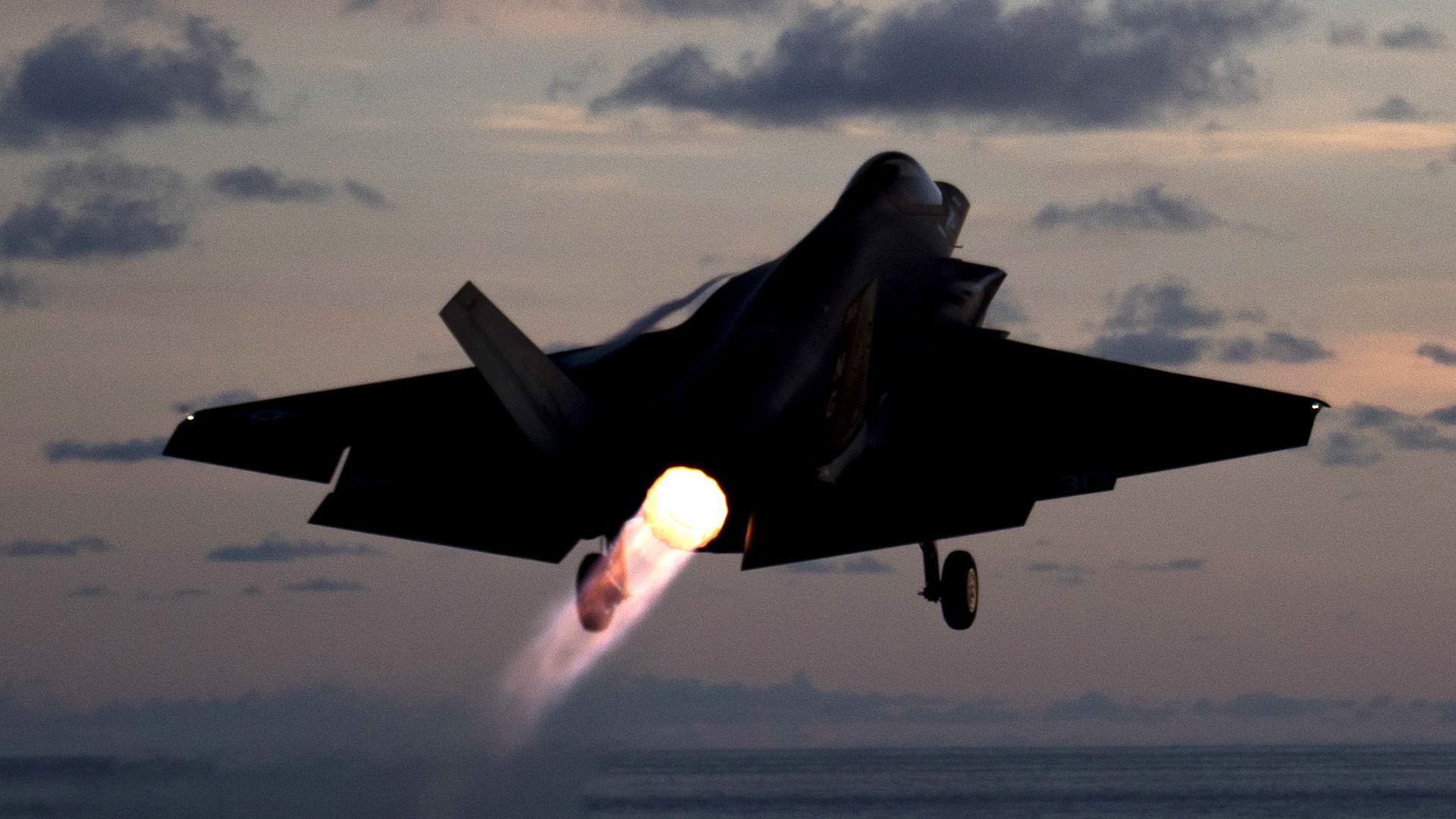
The role of the F-35 in manned/unmanned teams is a major element of Lockheed Martin’s plans to maintain relevance well into the future. A Lockheed Martin spokesperson said: “We have put particular focus on integrating Collaborative Combat Aircraft [CCA] with F-35 and F-22, to enable near term experimentation, learning and rapid testing. For example, two F-35As paired up with an XQ-58A Valkyrie uncrewed combat aerial system for a recent test, showcasing the seamless connectivity of the F-35 with an autonomous platform – creating a team that’s even smarter and faster.”
In a series of flight tests, the Skunk Works® simulated an offensive counter air mission where an airborne human “battle manager” aboard an L-39 Albatros assigned targets to two AI-controlled L-29 Delfin jets, which then worked together to defeat two mock enemy jets using simulated mission systems and weapons.
“Lockheed Martin and its industry partners have also demonstrated end-to-end connectivity including command and control of a drone in flight utilizing the same hardware and software architectures that it has built for future F-35 flight-testing,” the company explained. These architectures allow Lockheed Martin to not only prove out pilot and drone teaming capabilities, but also incrementally develop and improve them. “The F-35 has proven its capabilities as part of a distributed team, demonstrating the key role it will play to ensure American air dominance for decades to come,” the company said.
Lockheed Martin revealed a new, stealthy, survivable, Collaborative Combat Aircraft-type drone named Vectis on September 21, 2025. Vectis is expected to fly within two years and it has been described as being a product of a broader development philosophy it has adopted called the Agile Drone Framework. The framework prioritizes modularity and open mission systems, as well as interoperability in areas like command and control architectures, over any specific hardware.
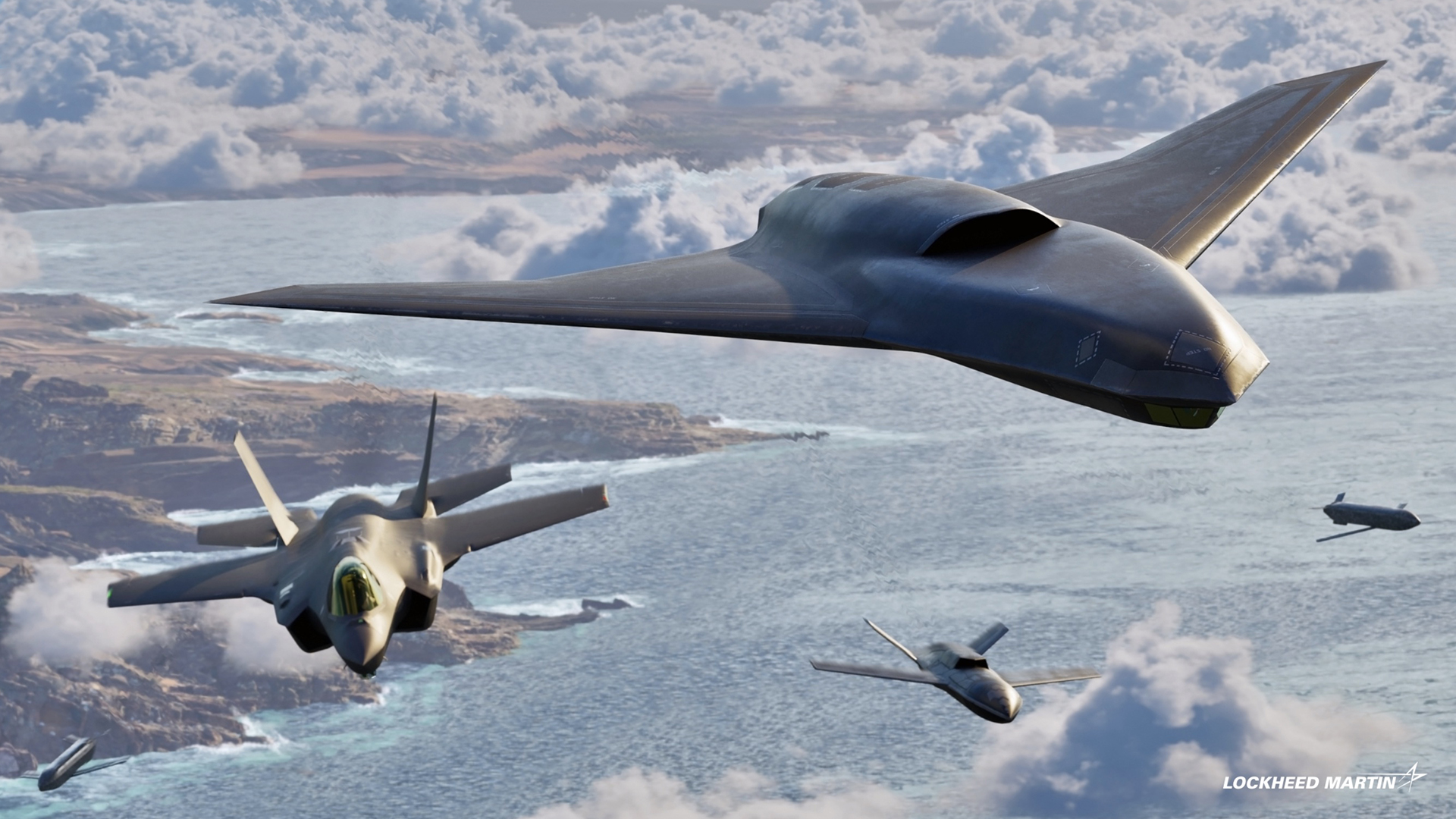
Sanchez spoke about the Vectis’ ability to persist even in extremely challenging combat environments. “The survivability aspect […] in some cases, is really going to matter. If you put [weapons] on a CCA you need to get those munitions off and into the fight, so being able to survive and protect the weapons and deliver the weapons, […] then Vectis will be multi-role, whether it be air-to-air or surface or in an ISR [intelligence, surveillance, and reconnaissance] persistent targeting role. We need to be able to do that. So that would be a reusable concept.”
Combat capability now and relevance for the future
Lockheed Martin and the F-35 Joint Program Office (JPO) reached final agreement on September 29 for Lot 18 and 19 Joint Strike Fighter production, which amounts to 296 jets at a combined cost of $24.29 billion. This equates to an average cost of the airframe across all variants at $82.4 million, which doesn’t include the F135 engine. As an indicator on the engine cost, in a 2023 media release engine maker Pratt & Whitney said: “The total contract value for lots 15-17, with exercised options, is approximately $8 billion and will fund over 418 F135 engines.” Deliveries of the first lot 18 F-35s will commence in 2026.
According to Lockheed Martin, the price settled on with the JPO compared to previous lots is less than the rate of inflation. Chauncey McIntosh, Lockheed’s vice president and general manager of the F-35 program, said the new production contract “represents continued confidence in the most affordable and capable fighter aircraft in production today.”
“We are committed to continuing to provide the greatest capability at the best value to ensure America and our allies maintain air dominance,” Lockheed Martin told TWZ. “The F-35 is designed for continuous upgrades, and through ongoing software and hardware updates and efficiencies, it continues to add capabilities to meet evolving threats.”

“Maintaining a sizable lead in air dominance requires significant and continuous investment. Lockheed Martin reinvests hundreds of millions of dollars into developing more capabilities and driving efficiency for the F-35, alongside investments from the U.S. military and its allied partners.”
While current TR3/Block 4 efforts and the associated sub-programs represent an impressive coordinated suite of upgrades for the F-35, complementing these with classified elements from Lockheed Martin’s NGAD work should add to the JSF’s lethality. Pairing F-35s with CCAs aims to provide another massive leap in combat effectiveness, as well as provide a host of new tactical possibilities. Taken together, all of this will help the F-35 to remain equipped to come out on top during future combat operations.
When it comes to the more ambitious “F-35 next-gen” initiative that is now in the Skunk Works®’ hands, what the next leap in F-35 capabilities could look like remains to be seen. But suffice it to say that Lockheed Martin knows there is plenty potential left in the F-35 even after its highly anticipated Block 4 evolution.
Contact the editor: Tyler@twz.com
Loading comments…
Comments couldn’t be loaded. Please refresh the page.