
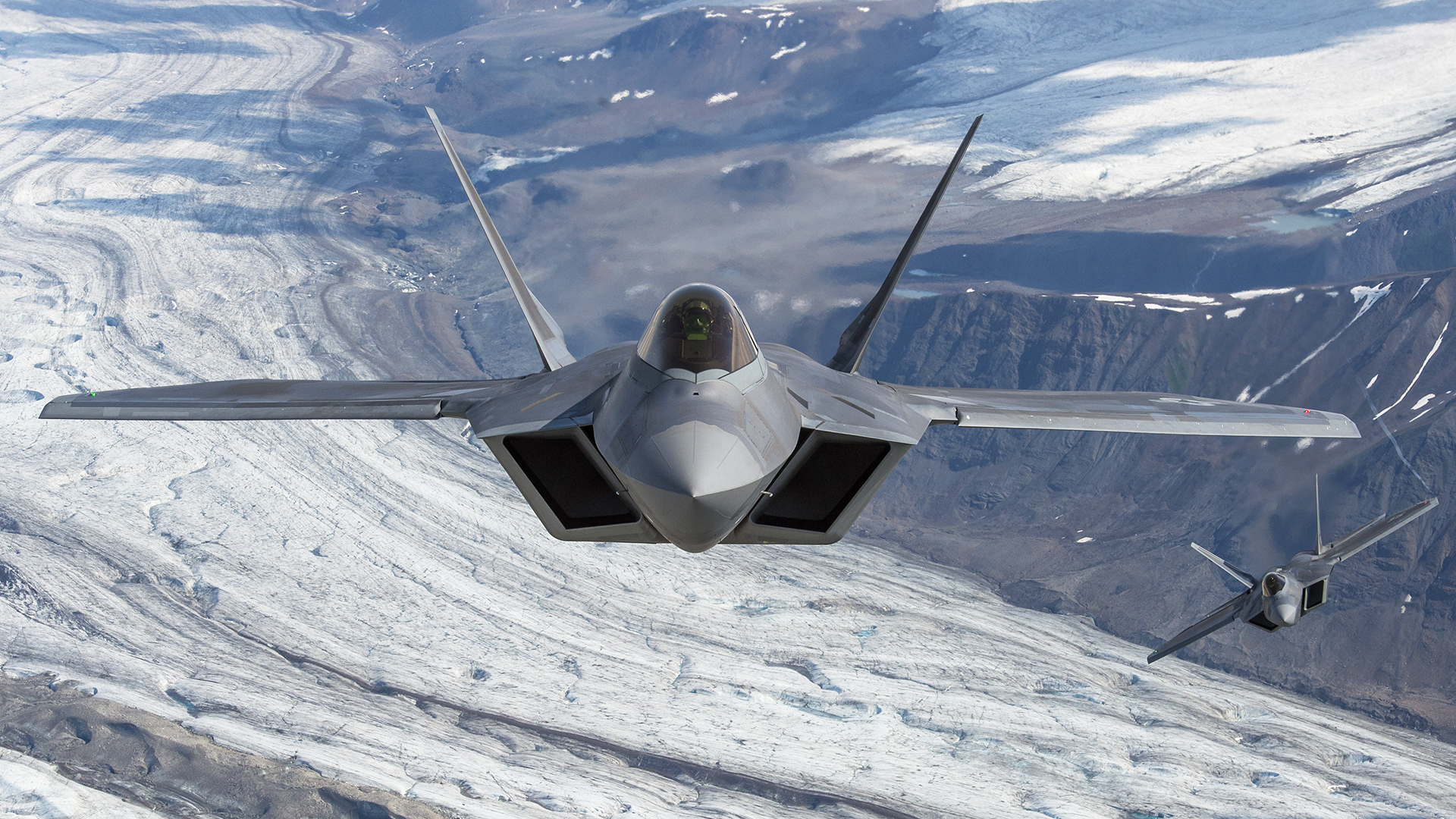
The former commander of U.S. Northern Command (NORTHCOM) and North American Aerospace Defense Command (NORAD) urged the U.S. to become more resilient when it comes to protecting the homeland. America’s expansive global military commitments are placing tremendous pressure on that effort, he said.
“We need to be able to take a punch in the nose, whether it’s a cyber attack or a conventional kinetic attack, and get back up and come out swinging,” retired Air Force Gen. Glen D. VanHerck, who led the two commands from 2020 to 2024, said during a Mitchell Institute webinar on Thursday. “What I believe is if any potential adversary looks at us and sees a nation so resilient that they believe they could never achieve their objectives without a large nuclear attack on us, then they’re most likely not to attack in the first place, because they know what comes back is a mutually assured destruction. That is strategic stability by definition, and that’s where we need to put ourselves. Unfortunately, we’re not there from a resilience perspective.”

Chief among the reasons for U.S. vulnerability is that although protecting the homeland is the Defense Department’s top priority, U.S. forces and resources are spread out around the globe, VanHerck pointed out. There are hundreds of thousands of troops in dozens of countries, with often competing resource requirements of the military’s regional commanders.
“Candidly, the policy outstrips the capacity of the joint force right now,” VanHerck proffered. “What I mean by that is our expectations in policy exceed the capacity for the forces that we have, and that forces the tough decisions to be made.”
VanHerck warned that “we’ll be adjudicating resources across the globe in the middle of a crisis. And so you have combat commanders today that plan to consume large portions, if not 100% of the joint force in certain force offerings, if you will. And they assume they’re going to get them, when in reality, in crisis, they won’t get them based on a global perspective. And so you end up with an [operational plan] that is now not executable in a time of crisis. And so I’m not satisfied with it at all.”
VanHerck and retired Air Force Brig. Houston Cantwell, a senior fellow at the institute, touched on a number of other subjects during the hour-long webinar.
Arctic Surveillance
Though the U.S. and Canada have spent billions on building radar systems in the far north to provide early warning of impending attacks, huge gaps remain in that coverage. There is also a major challenge to digest the massive amounts of data that is available, as the Chinese spy balloon incident of 2023 clearly showed. Data from sensors that might have picked up the balloon earlier had been filtered out so as not to overwhelm the analysis process.
When it comes to protecting the homeland, this inability to sufficiently detect and respond to threats from the north leaves the nation at great risk, said Cantwell, who authored a new white paper on the topic. As a result, America and Canada need to deploy more and better sensors, both on the surface and in space. There also has to be a better way to process the data that is collected.
“Simply put, the U.S. has insufficient Arctic domain awareness now,” Cantwell posited. “This leaves us vulnerable through the most likely avenue of attack, through the Arctic.”
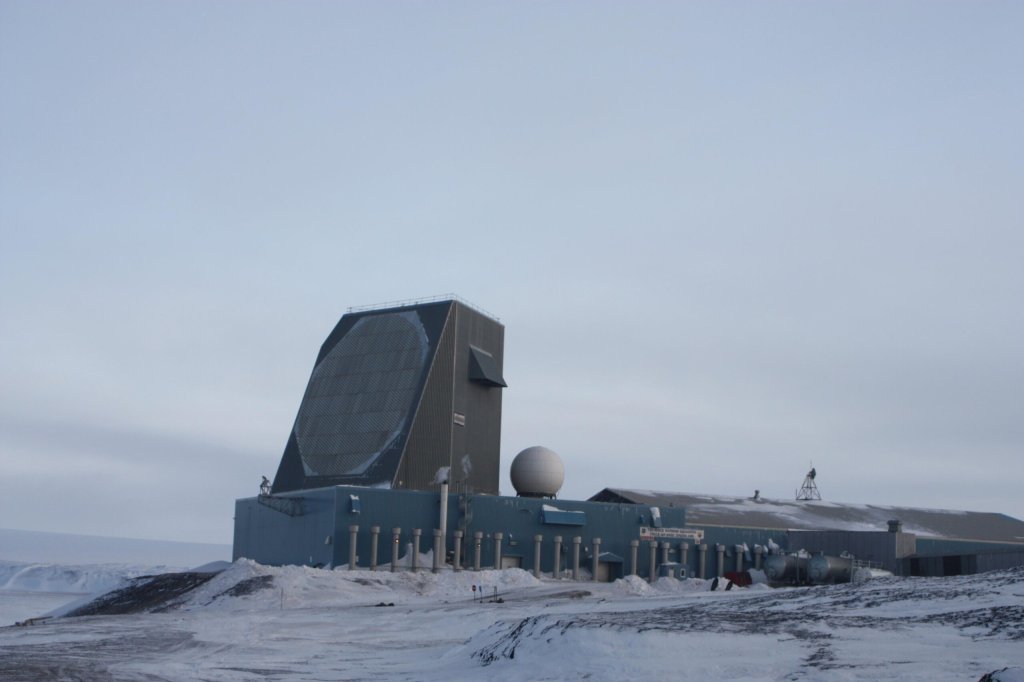
“Advanced and precise cruise missiles, unmanned aerial vehicles, hold vital American interests at risk, and our existing radar systems simply are unable to detect many of the inbound threats,” warned Cantwell. “In many cases, we wouldn’t know of an aerial attack until the missiles impacted the targets.“
Lessons From The Wars In Ukraine And The Middle East
For more than three-and-a-half years, Russia has been pummeling Ukraine with constant missile and drone attacks. Meanwhile, in the Middle East, Israel has fought Iran and its proxies the Houthi rebels of Yemen and Hezbollah of Lebanon, as well as Hamas.
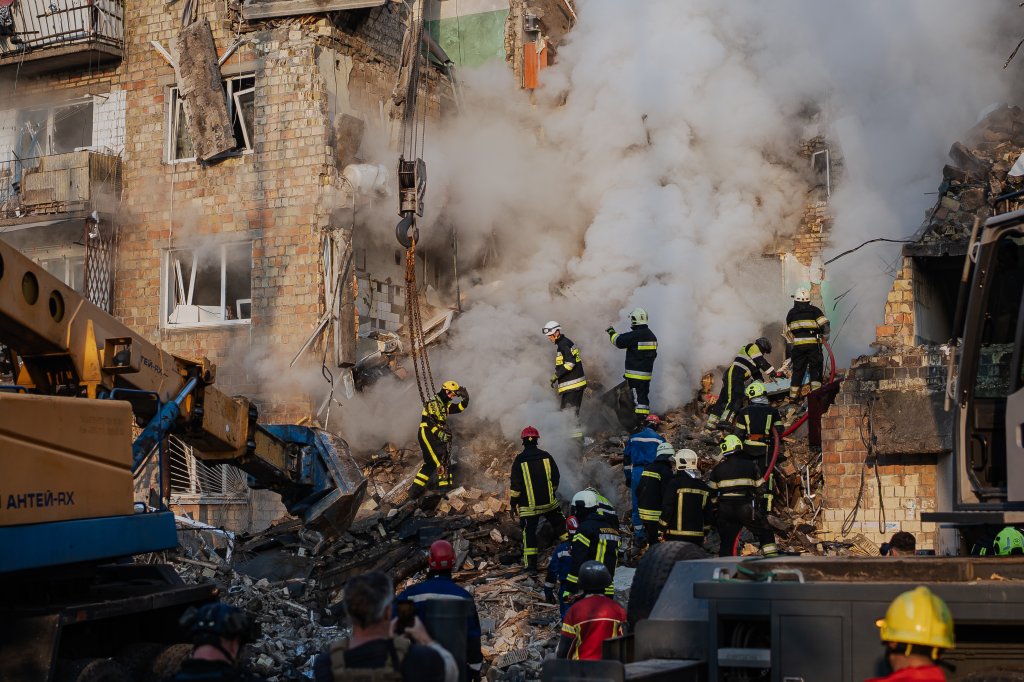
“Candidly, we don’t want to be Kyiv,” Cantwell explained. “We see in the news all the time that Kyiv is being bombarded by these conventional and precise missiles and and their use is only growing. So in the first few years in Ukraine, Ukraine was only absorbing about 5,000 missiles a year. Now you have Russia manufacturing 5,000 of their Shahed drones every month. So the use of these long-range and precise conventional weapons is only going to increase, and we have to prepare the homeland to be aware of when we’re under attack.”
“Some people are getting this right,” Cantwell stated. “Israel demonstrates the importance of domain awareness regularly.”
During conflicts with Iran, “domain awareness was front and center” during attacks in April and October 2024.
In each case, “the Israelis detected and then intercepted hundreds of missiles and UAVs during unrelenting aerial attacks,” Cantwell explained. “A layered array of sensors was key. Rapid information sharing was also critical that allowed the Israelis to pre-position air interceptors and to ensure adequate radar coverage at expected avenues of attack. But modern radars were foundational to success, because you can’t respond to what you can’t see.”
Making Tough Choices On What To Protect
Though Israel has one of the world’s best layered air defense systems, it is not impenetrable, as attacks from Iran in particular have shown.
“I use the example of the Israeli Iron Dome, at my own peril, because that is a very small piece of real estate, and so we have to manage expectations here in the United States,” Cantwell noted. During attacks from Iran, Israel allowed several missiles “to get through because they just don’t have enough interceptors, and they have to pick and choose depending on the strategic value of what they think the targets are. And so a similar conversation, I think, is going to have to go on here across America, of what are the strategic priorities that we need to defend across the nation, and then emphasize those areas.”
“But additionally, I want to re-emphasize the point that General VanHerck brought up, which was, we need to become a more resilient country when it comes to looking at being able to take, quote, a punch in the face,” Cantwell added. “You know, one attack shouldn’t put the country down completely. We have to be able to take that punch in the face, be resilient and be able to get back up and defend ourselves.”
On Funding Priorities For Golden Dome
U.S. President Donald Trump said his Golden Dome missile defense system will cost about $175 billion and be operational “in less than three years” with “a success rate close to 100%.” VanHerck was asked about the best investments for this ambitious program.
“Today’s missile defense system, along with additional capabilities such as an Aegis Ashore to go after hypersonics and cruise missiles, those are feasible, achievable within the time frame the President would like to see this fielded,” VanHerck said. “The space-based capabilities? There’s technology still to be developed. [It] certainly will be expensive, but I do think it’s realistic, and the space-based capabilities are going to be required to enable other layers of a homeland defense architecture, such as Golden Dome. With that said, it starts with policy. As General Cantwell talked about, what are we going to defend from? Who? How many threats? What capacity of threats? You can’t defend against 4,000 inbound nuclear missiles. So there needs to be some tough decisions on policy, and that’s where we must start.”
The E-7 Wedgetail Should Be Saved From The Budget Axe
While Golden Dome is Trump’s main line of effort at protecting America’s skies, there are other systems that need to be folded in as well, said Cantwell. That includes restoring funding for the E-7 Wedgetail airborne early warning & control jet to replace some of the E-3s. The Pentagon wants to kill the E-7 over concerns of mounting costs, production delays and survivability, as well as competing priorities.
The Pentagon eventually wants to push most of its airborne moving target indicator sensor capabilities into space. So it has laid out plans to buy more of the Navy’s E-2D Hawkeye airborne early warning and control planes to mitigate capability gaps in the interim.

“This program requires ongoing support in the air,” he suggested. “The E-7 Wedgetail will provide essential targeting and command and control relay capabilities. The aircraft flexibility can allow responsiveness to our volume threat or degraded land systems. It plays an essential role and must be placed back in the Air Force budget.”
Contact the author: howard@thewarzone.com
Loading comments…
Comments couldn’t be loaded. Please refresh the page.