
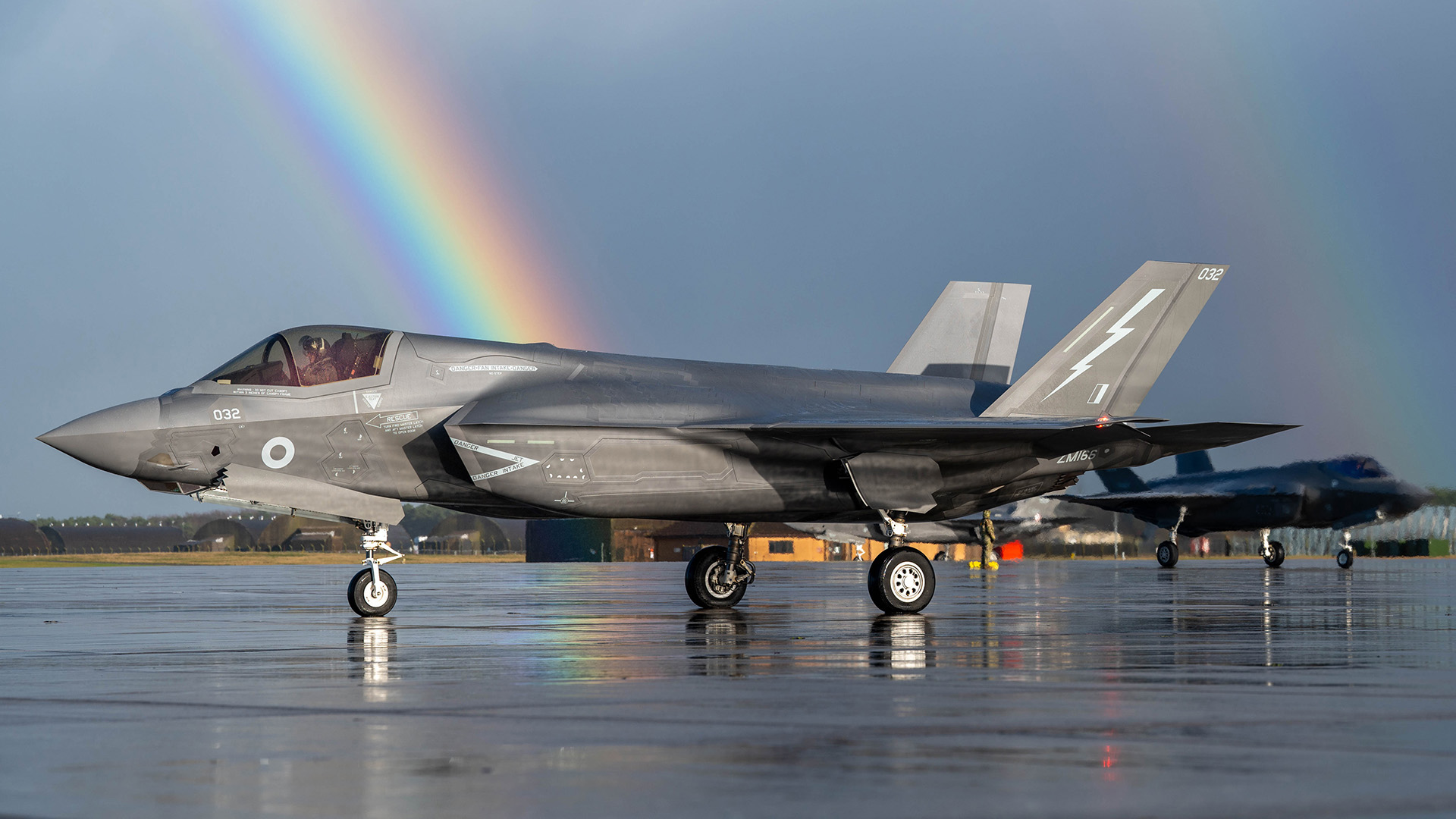
The United Kingdom announced in June 2025 that it intends to buy an initial batch of a dozen conventional take-off and landing F-35A Lightning IIs from Lockheed Martin to operate alongside its currently in-service force of short take off and vertical landing (STOVL) F-35Bs. While the F-35As are being purchased primarily to fulfil a training role, a major increase in British capability is presented by the F-35A’s ability to join the NATO nuclear weapons sharing mission, as the F-35A can carry U.S.-owned B61-12 nuclear bombs. The development writes the latest chapter in the story of unprecedented interoperability between a growing pool of F-35 users in Europe.

“The UK will purchase 12 new F-35A fighter jets and join NATO’s dual-capable aircraft nuclear mission in a major boost for national security,” the UK Ministry of Defense announced. The ministry described this as the “biggest strengthening of the UK’s nuclear posture in a generation, complementing the UK’s existing sea-borne deterrent.” You can read our full story on the acquisition here.
An interoperable fleet of F-35s across Europe carries significant benefits to the United Kingdom, NATO and its constituent air arms, and not just in a nuclear role. The UK, Italy, the Netherlands, Norway, Denmark and the United States, all currently operate F-35s in the European theater. Germany, Belgium, the Czech Republic, Finland, Switzerland, Greece, and Poland have also selected the F-35.
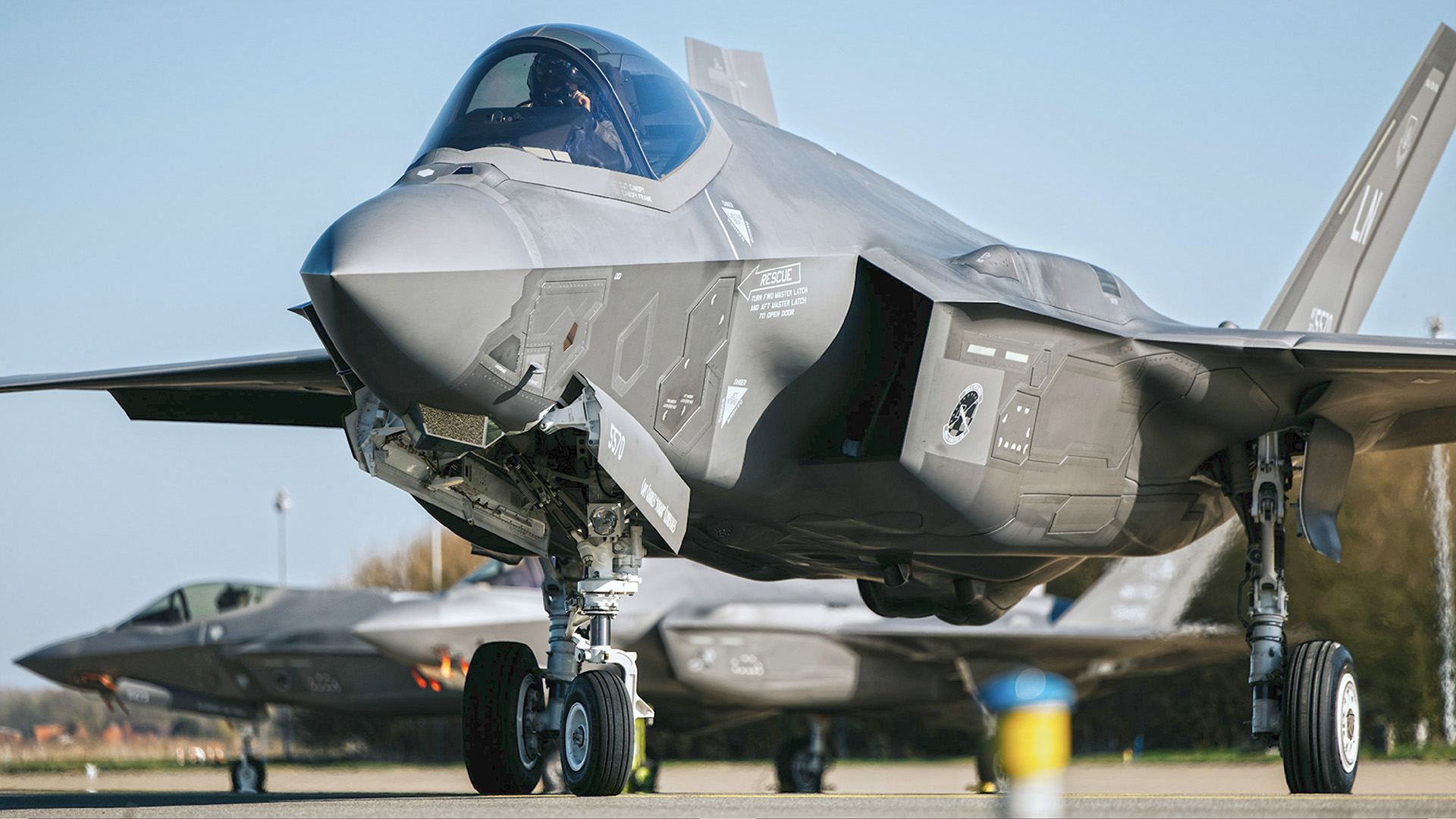
Accompanying this expanding fleet of F-35s is a supply chain and maintenance network that’s spreading across Europe. Cameri in Italy is a European depot-level maintenance and upgrade facility, as well as being the sole European final assembly line for the aircraft. Front-line maintenance for individual users and a joint supply chain across operators means the entire program benefits from a dispersed, common and robust support network across Europe, which would be hugely beneficial in a wartime scenario.
According to Lockheed Martin, when you include U.S. aircraft, by the 2030s more than 700 F-35s will be stationed on the European continent, with an overarching aspiration for these aircraft to present a potent deterrent, primed to assemble as a cohesive warfighting team if needed.
Each Lightning II is effectively an advanced electronic intelligence collection platform, able to soak up swathes of valuable emissions data from around the battlespace and across multiple domains. The value of F-35s collecting and sharing that intelligence data within the aircraft’s cloud-based support system cannot be understated. This is especially true in a coalition environment, when this information can be rapidly distributed and exploited across the joint F-35 force.
The Joint Strike Fighter family’s ability to securely communicate amongst themselves via a proprietary data link that is very difficult to intercept and jam is also a critical advantage. All this combined with common training and a universal tactical playbook, work as massive force multipliers for an already formidable European F-35 cadre.
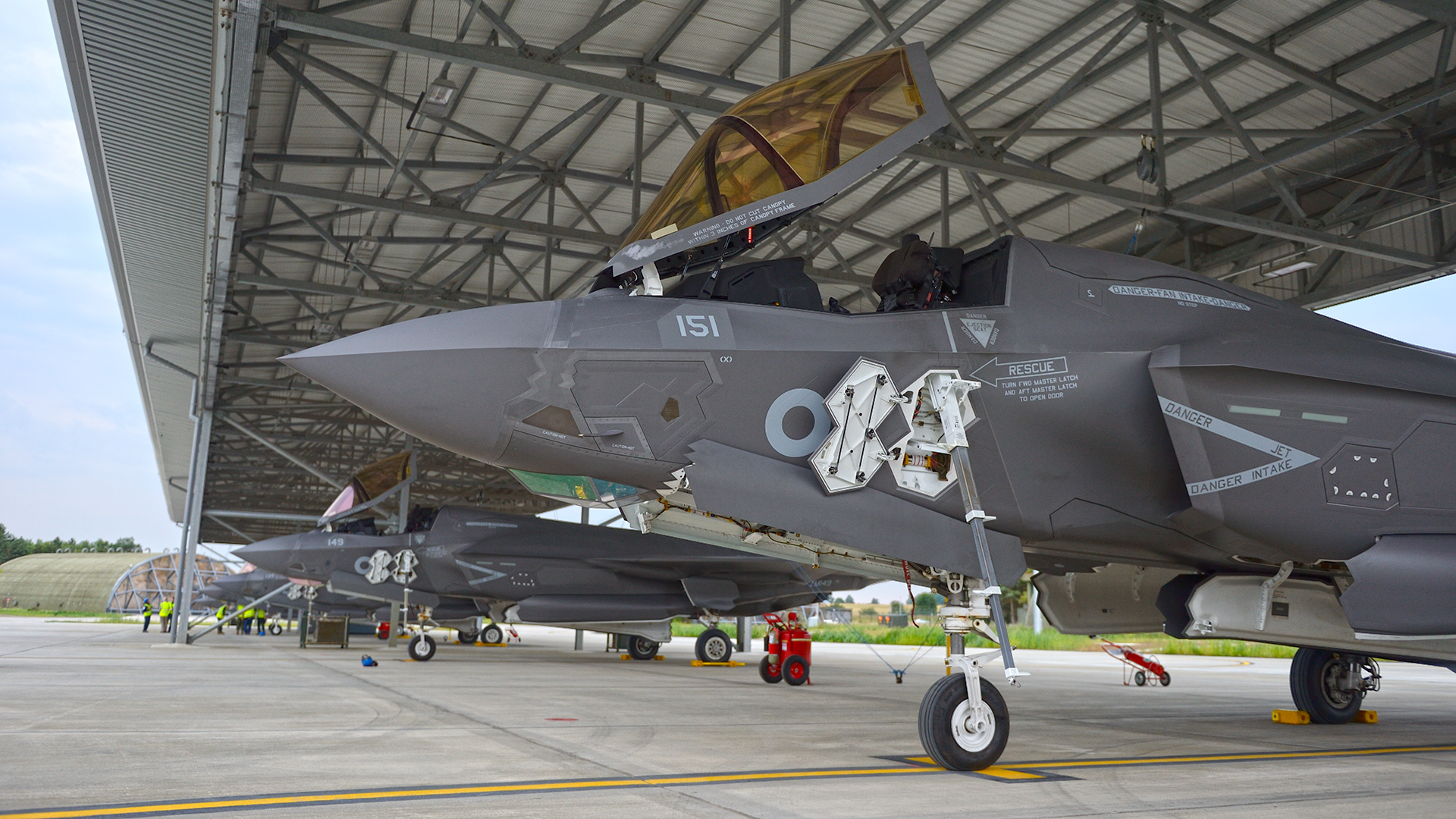
“The F-35 is built to be interoperable and that’s through the advanced data links and the fusion technology. So for me, as more countries get F-35s, what that does is exponentially increase our combat mass,” retired former Royal Air Force F-35 Wing Commander Stew Campbell told TWZ. “Being truly interoperable, seeing each other on the same screens, sharing information across the formation, all trained to the exact same tactics, is something we haven’t seen before.”
Campbell commanded the famous No 617 Squadron “Dambusters” until he retired in 2024.
“The F-35 gives the UK that night one [combat mission] capability with an advanced 5th-generation multi-role fighter with its amazing array of sensors and capabilities. The two things that really stand head and shoulders above anything else fielded is the stealth capability and that sensor fusion. The ability to interoperate with all the other F-35 nations means that we can increase our combat mass on night one of a conflict.”
“The key element that I utterly loved about operating the F-35 is the AN/APG-81 AESA radar, which is incredibly simple to operate to the point that you can just point the jet and the radar does its thing, very, very well. There’s a phenomenal array of sensors in the F-35 that can manage the battlespace, and target and direct the fight.”
Expanding on the benefit of the interoperable fleet of NATO F-35s in Europe using standardized tactics, Campbell said: “I flew a mission from RAF Marham where I briefed in a completely unclassified environment with a Norwegian F-35 pilot. We flew our F-35Bs up from Marham with an air-to-air refueling tanker, met the wingmen from Norway, didn’t go into any sort of marshal, we just turned into a wall formation of Norwegian and UK F-35s together and flowed straight into a simulated aerial fight. That’s what an F-35 team can do! With increasing numbers of F-35s in Europe, we will all fight together. Nations could easily slot an eight-ship of F-35s into a huge overall F-35 package.”
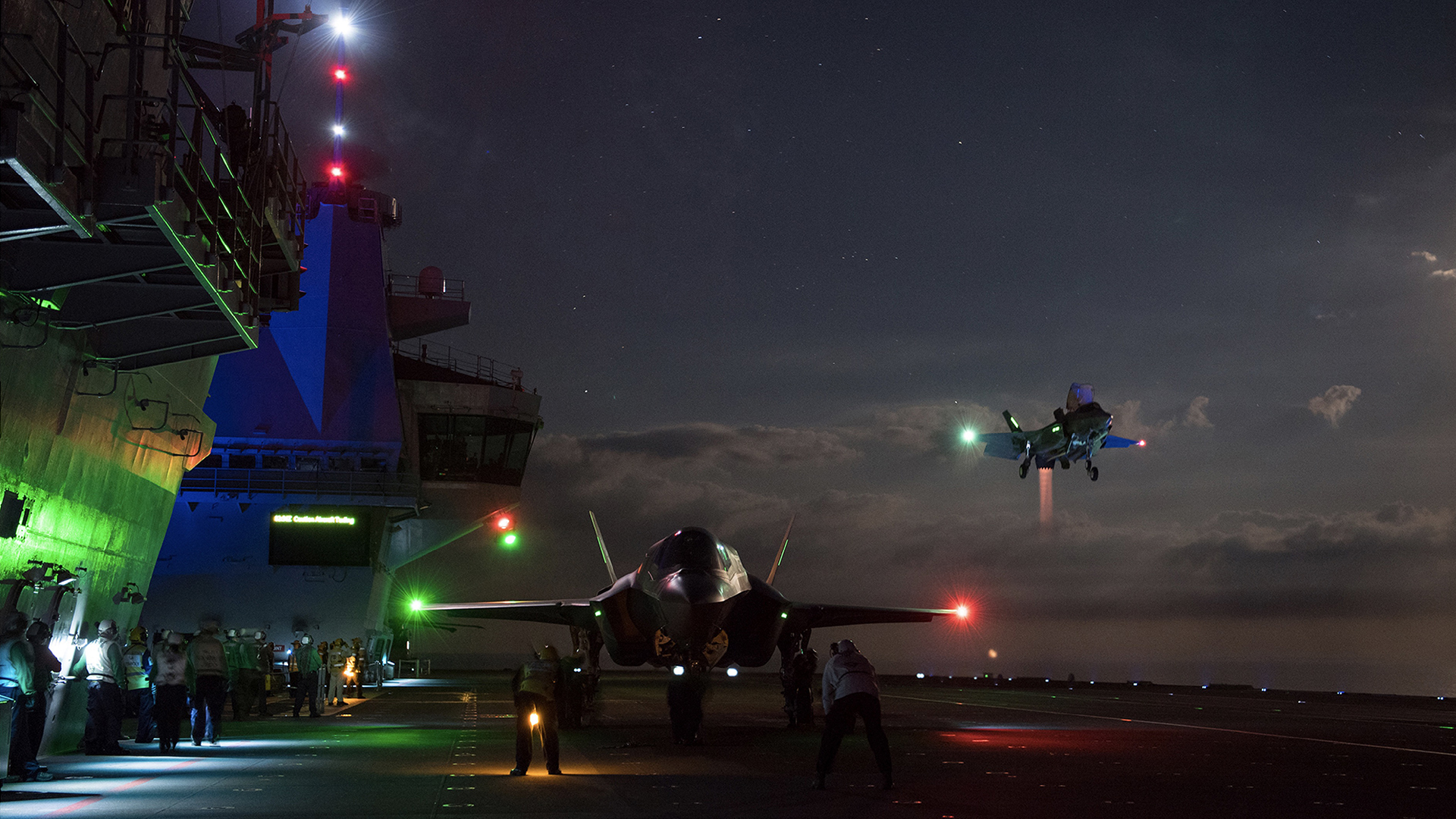
Exercising these partnering opportunities between F-35 nations has expanded beyond Europe and onto the global stage. “A byproduct of the British Carrier Strike Group that not many people realize and indeed surprised me is that it has allowed us to fly joint missions with Norwegian, Italian, Dutch, U.S. Air Force, U.S. Navy, U.S. Marine Corps, Japanese, Australian, and Israeli F-35s,” says Campbell. “I have seen partner nation F-35s work seamlessly together, and over time we are getting better and better at integrating.”
The F-35Bs of the Royal Air Force’s No 617 Squadron and 809 Naval Air Squadron are the operational figureheads of the British Carrier Strike Group, which can fly from the HMS Queen Elizabeth and HMS Prince of Wales aircraft carriers. “With regard to the aircraft carriers and the carrier strike group, in autumn 2023 we deployed on Operation Firedrake, which marked the first time we fully operated the F-35 in the high north with a carrier, and the strike group was passed over to NATO command. It reflected the kind of maturity of the strike group – being handed over to NATO to dictate what we did – and illustrated our overt commitment to NATO since the Russian invasion of Ukraine,” Campbell explains.
“Probably the capstone event during my time on No 617 Squadron was the participation in Exercise Northern Edge in Alaska in 2023. That was the first time non-U.S. combat air was invited to take part in that exercise, and it was almost entirely 5th-generation based. From a UK point of view, it demonstrated our position within the program and the partner nations, alongside the U.S. and Australia.”
“The exercise demonstrated the reach of the Royal Air Force. We took eight F-35s, two Voyager tankers, and an A400M support aircraft, over 8,000 miles from home base as we deployed to Eielson AFB, and the exercise was utterly invaluable in terms of exposure for the British F-35 team. We flew in that huge Alaskan airspace, flying on what is one of the USAF’s most important exercises for operational testing.”
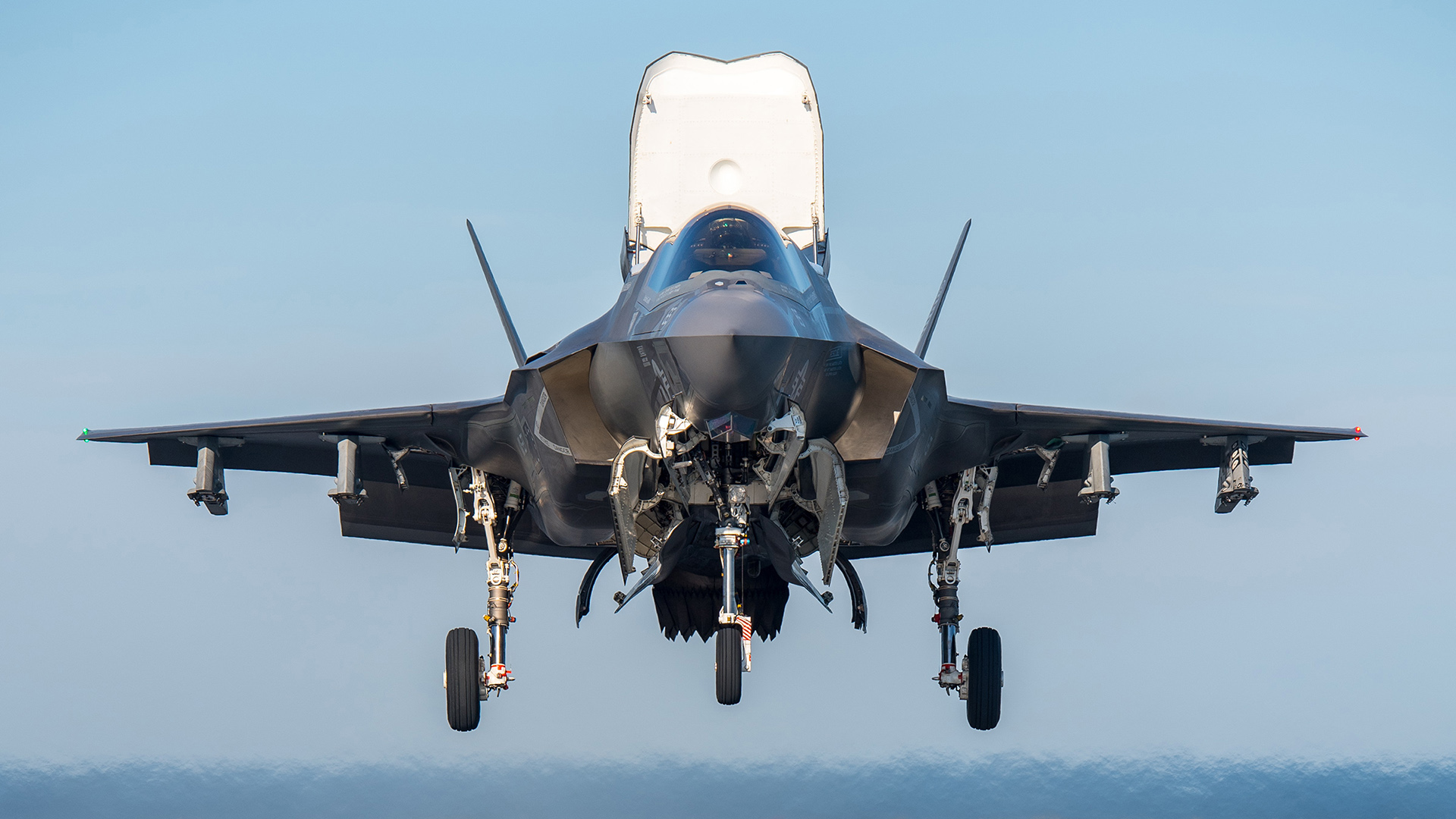
In the final part of Campbell’s command, the “Dambusters” took part in Operation Masterer, the UK’s contribution to the quick reaction alert (QRA) mission at Keflavik in Iceland, again under the authority of NATO. “It marked the first time the UK had ever used the F-35B for QRA,” explains Campbell. “This effectively unlocked an option for defense in the UK where we do not plan to routinely use the F-35 for QRA in the short and medium term, but we proved we could do it.”
“We smashed every timeline and NATO accredited us a day earlier than expected. Iceland is the one country in NATO that doesn’t have a standing defense force, but strategically it’s a very important part of the world. So you know, I think you’re flexing the F-35 to do that, another string to your bow and unlocking the capability for the UK.”
European operators are constantly evolving how they use F-35s, and are now able to securely feed data into different national command and control ecosystems. Recent exercises in Europe led by the Lockheed Martin Skunk Works® team demonstrated the F-35’s ability to integrate with different national systems on a whole new level via the Skunk Works’ Open Systems Gateway. This connectivity is designed to make the F-35 a force multiplier that’s able to provide improved decision making in detecting and defeating threats across air, land, and maritime domains.
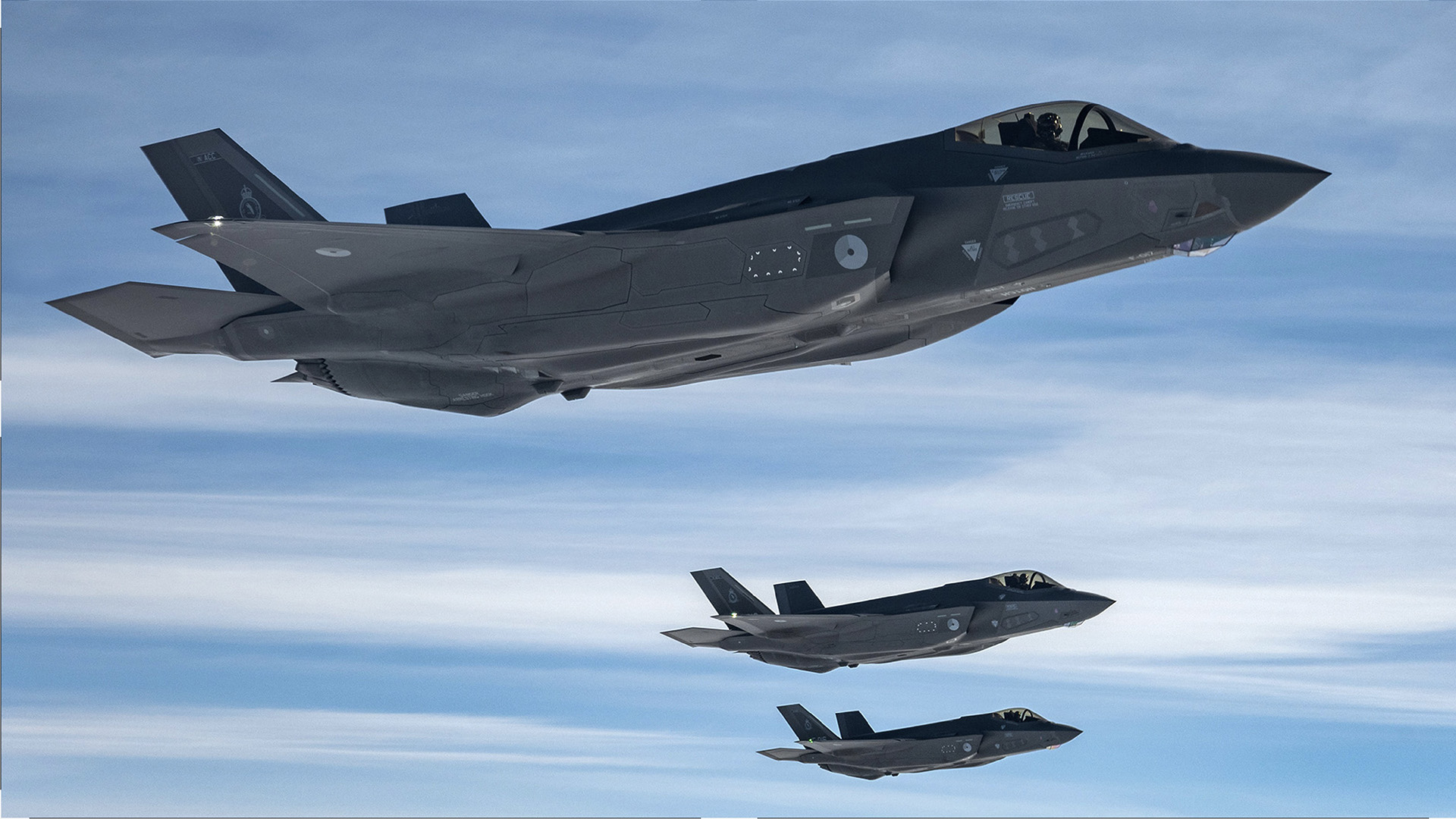
The RAF conducted a demonstration in December 2024 under an effort known as Project DEIMOS, where an F-35 shared data with a non-U.S. command and control system. This effort was followed by the huge pan-European NATO exercise Ramstein Flag in April 2025, where live classified data-sharing was conducted between a Dutch F-35 in flight and a Dutch command and control system. In this example, targeting data was transmitted from an F-35 to a ground-based rocket artillery unit, which then engaged that ground target and simulated a successful engagement.
This kind of data sharing between airborne and ground-based platforms is a significant evolution of aircraft being used to identify targets on the ground, in this case with a seamless sensor-to-shooter relationship that can be scaled across ground and naval units. The advanced passive sensors of the F-35 allow them to spot, categorize, and geolocate all sorts of emitters, including air defense and artillery radar systems. They can also use their radars and electro-optical systems to detect, investigate and target objects of interest, as well. The aircraft can swiftly send that information to other aircraft and units on the ground or at sea to enhance their picture of the battlespace and identify potential threats, and then cue remote fires if required.
Beyond combat capabilities, industrial involvement in this global program is distributed amongst partners. The particularly strong British links with the F-35 program stems from the UK being the only Tier 1 partner in the system design and development stage for the aircraft. That status means that the UK has the largest industrial participation of any partner nation in the global F-35 program. According to data supplied by Lockheed Martin, 835 British companies support the F-35, with over 100 of them being Tier 1 suppliers including BAE Systems, which Lockheed Martin says is “an essential part of the F-35 partner team, working alongside Northrop Grumman and RTX.” Lockheed Martin states that at its peak in the 2030s, the F-35 program will sustain more than 20,000 jobs in the UK and by 2046, the F-35 program will have created an estimated £45.2 billion of value to the UK economy.
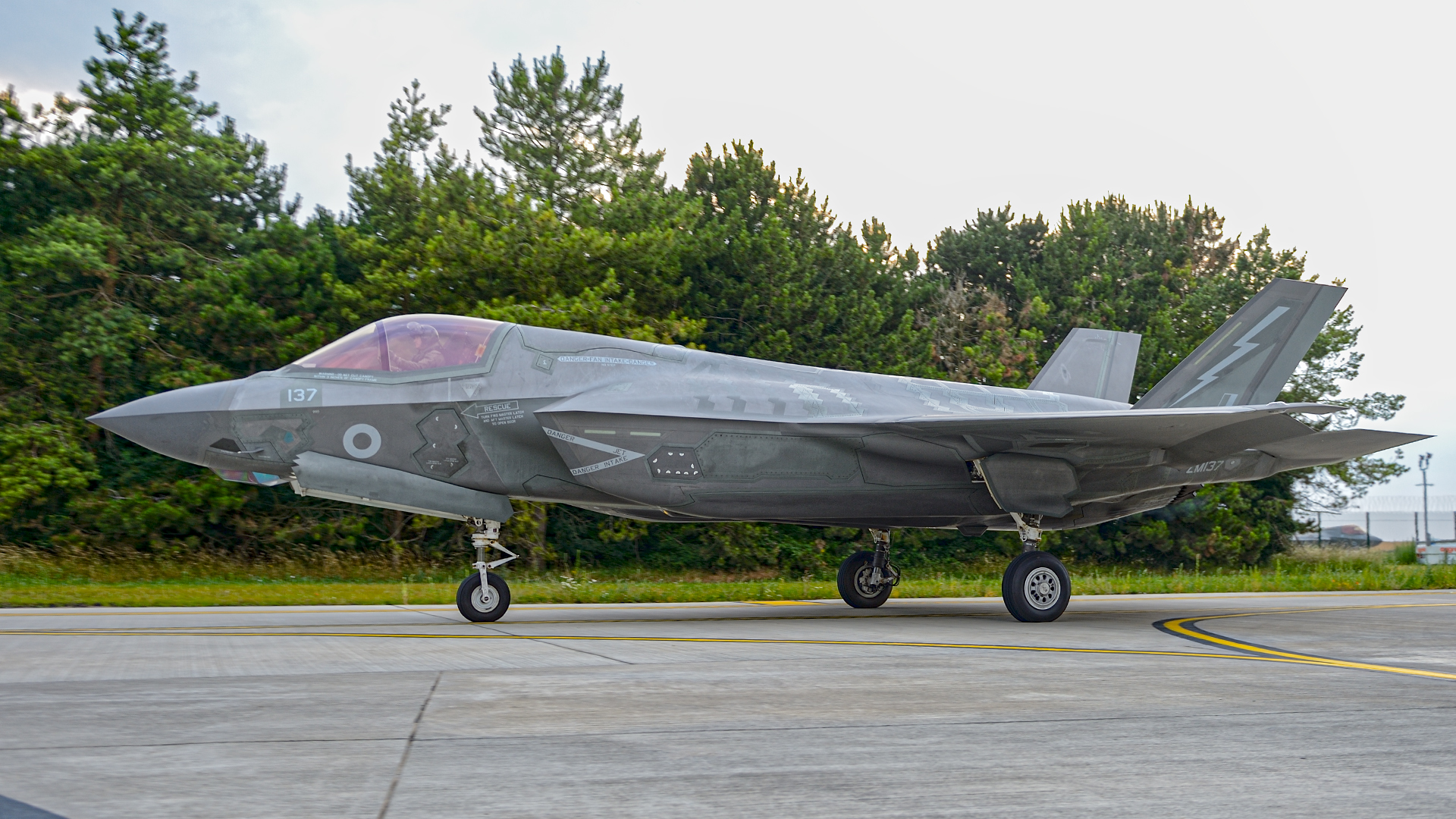
“That initial investment was, for me, a phenomenal decision,” says Campbell. “It secured long-lasting manufacturing partnerships with the U.S. and having that relationship from the start led to our participation in exercises like Red Flag that we did in January 2020, right through to Northern Edge in the spring of 2023. Without these invites, we would struggle to train to that same high level in Europe or to expose our pilots and senior leadership to where we need to go with this aircraft.”
Campbell also cites benefits such as exchange postings with U.S. forces that have enabled the British F-35 team to learn faster with a free flow of information and experience between the various services. “No 617 Squadron has had a U.S. Marine Corps exchange pilot, Royal Australian Air Force exchange pilot, and our Operational Conversion Unit has had Marine Corps and USAF F-35 pilots.”
“There’s also enormous benefit with our guys going out on exchange posts in Australia and America, then bringing that experience back to the UK. Our relationship with the U.S. gives us access to range airspace and exercises. Moreover, our Operational Evaluation Unit at Edwards AFB in California enables our aircraft to be tested at the highest level. This means the UK can be at the forefront of upgrades to the F-35, giving us clear sight of the future path for this aircraft.”
Contact the editor: Tyler@twz.com
Loading comments…
Comments couldn’t be loaded. Please refresh the page.