
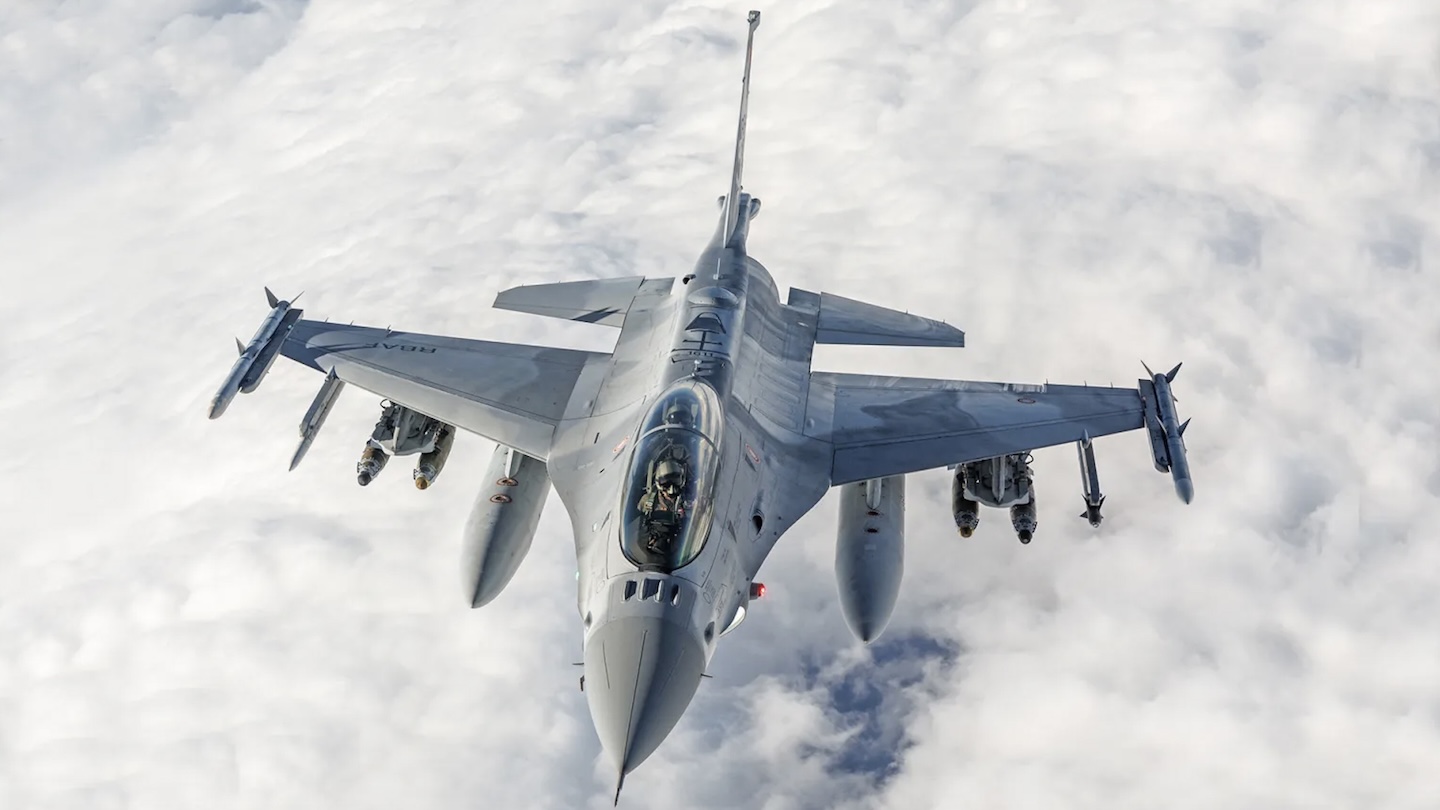
Bahrain has scored the first air-to-air kills by the latest Block 70 variant of the iconic F-16 Viper, taking down two Iranian drones during the conflict in the Middle East earlier this month. The incident comes as air forces around the world grapple with the emerging aerial drone threat and as interest in the advanced version of the Viper remains undiminished.
In a social media post, below a photo of a Royal Bahrani Air Force (RBAF) F-16D Block 70, Lockheed Martin stated: “Proven in combat. Two hostile unmanned aerial vehicles eliminated.”
In another post on X, Lockheed Martin linked to an article from Aviation Week, which provides more details of the landmark air-to-air kill.
On April 1, the RBAF F-16 brought down a pair of Iranian drones after these had evaded intercept attempts by ground-based air defenses in the pre-dawn hours. The fact that the jet was scrambled to respond to drones that had leaked through ground-based air defenses points to the flexibility and rapid response time offered by crewed fighters in this kind of scenario.
The pilot fired single examples of the AIM-120 Advanced Medium-Range Air-to-Air Missiles (AMRAAM) and AIM-9X Sidewinder to take down the drones. For counter-drone work, the pilot can also call upon an internal 30mm M61 Vulcan rotary cannon, although safely engaging slow-flying drones with the gun is notoriously challenging.
It should be noted that using missile-armed fighters to shoot down low-cost drones has raised repeated concerns about the mismatch in cost between the target and the interceptor. For example, the latest variants of the AMRAAM cost around $1 million each, while current-generation AIM-9X Sidewinders each have a price tag of around $450,000. Air-to-air-optimized laser-guided rockets that are already equipping U.S. Air Force F-16s will help bring down this cost dramatically, although the capability is still young, and few F-16 operators have been equipped with it yet.
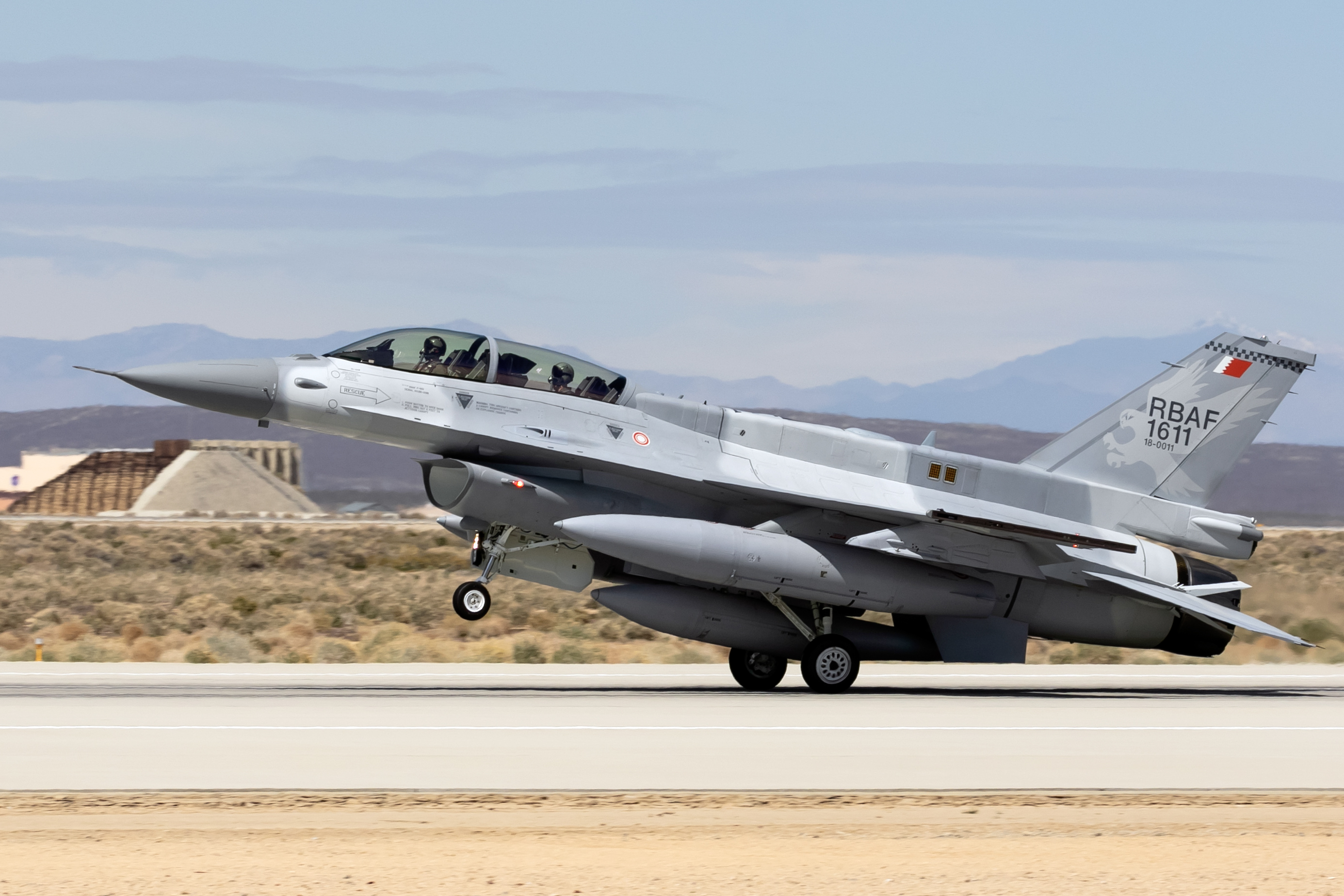
Regardless, the Block 70 version of the F-16 is especially well-equipped to tackle drones.
Its Northrop Grumman AN/APG-83 radar, also known as the Scalable Agile Beam Radar (SABR), uses an active electronically scanned array (AESA), which makes it especially suitable for working against drones and cruise missiles. These typically fly at low levels, which, combined with their small size, radar cross-section, and infrared signature, makes them inherently difficult for traditional mechanically scanned fighter radars to spot.
The jets also carry an AN/AAQ-33 Sniper Advanced Targeting Pod, which can also be used to detect and identify aerial threats.
Bahrain was on the receiving end of constant barrages of Iranian missiles and drones after the conflict began on February 28.
According to the Bahrain Defense Force, its units intercepted 194 missiles and 515 drones headed toward the small island kingdom between the start of the conflict and the temporary ceasefire that was announced earlier this week.
Fittingly, for the first operator to claim an aerial kill with the F-16 Block 70, Bahrain was also the launch customer for this version of the jet. It placed an order for 16 examples in 2019, and the first of these arrived at Isa Air Base in Bahrain in 2024.
It is worth noting that, in addition to their air defense role, the Bahraini Block 70s are well equipped for offensive missions.
During weapons tests in the United States, we have seen the jets carrying 500-pound-class Joint Direct Attack Munition (JDAM) precision-guided bombs, including dual-mode GBU-54/B Laser JDAMs (LJDAM).
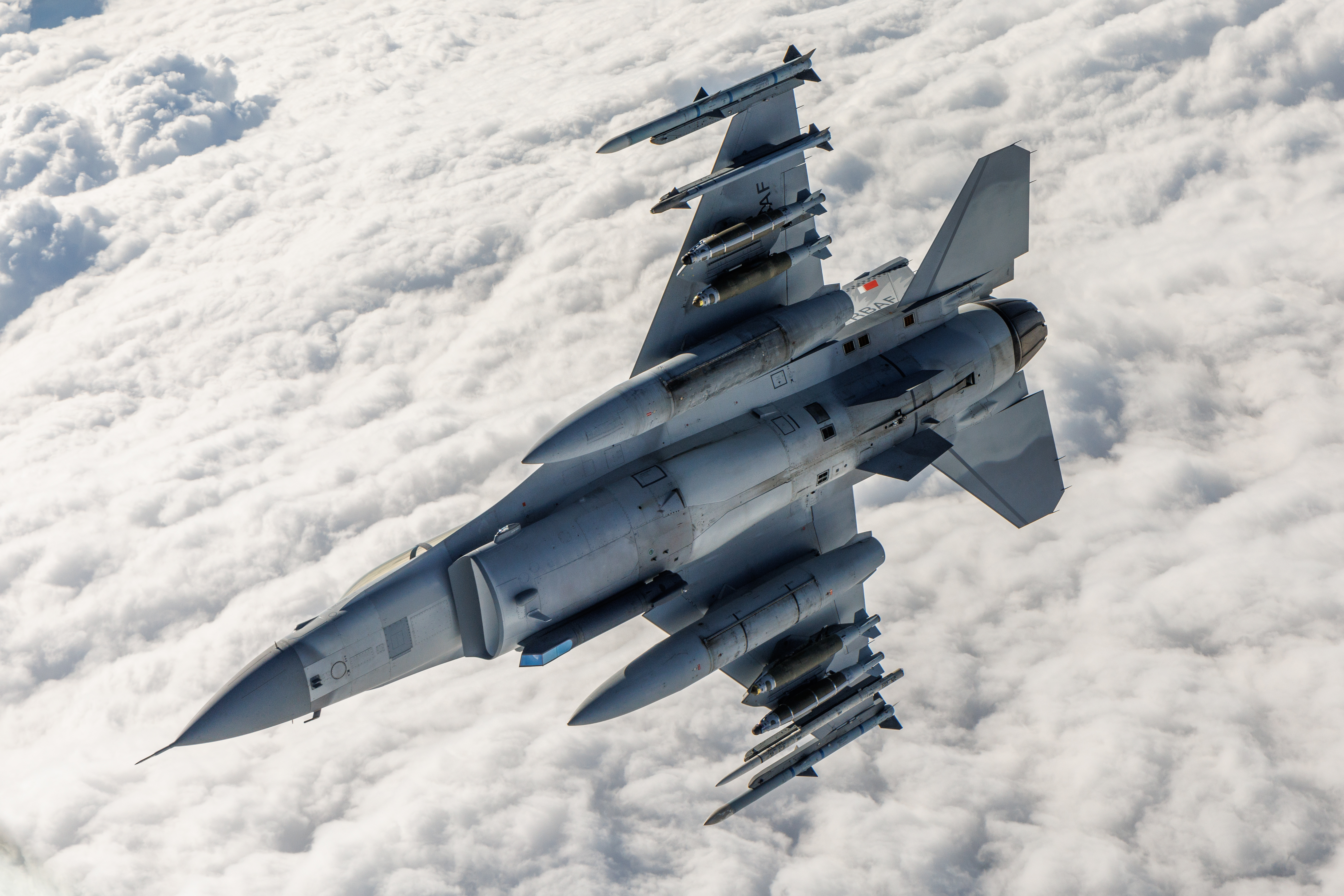
The U.S. government also approved the potential sale to Bahrain of a slew of other weapons to arm these jets. These included AGM-84 Harpoon anti-ship missiles, AGM-88 High-Speed Anti-Radiation Missiles (HARM), AGM-154 Joint Stand-off Weapon (JSOW) glide bombs, 250-pound-class GBU-39/B Small Diameter Bombs (SDB), 2,000-pound class JDAMs (including LJDAMs), and Paveway-series precision-guided bombs.
While the RBAF has not revealed further details of its recent combat missions, the Block 70 is clearly a significant part of the service’s capabilities.
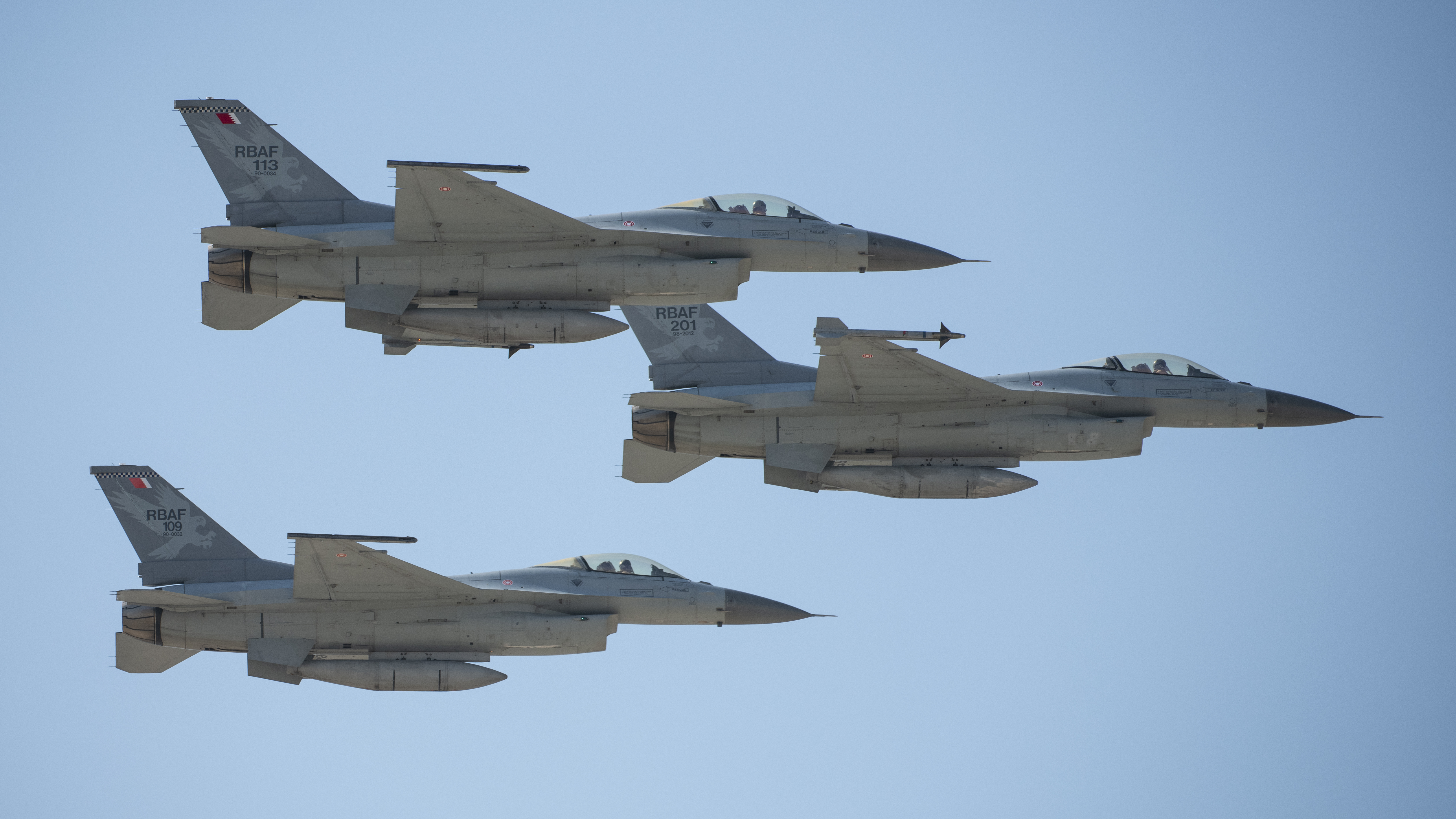
The new Vipers are far more capable than the Block 40 versions that Bahrain originally acquired in the 1990s.
Under the Peace Crown I and II Foreign Military Sales (FMS) programs, Bahrain received 22 F-16C/D Block 40 aircraft in two tranches. Survivors remain in service today.
As well as an AESA radar and the aforementioned advanced weapons, the Block 70 has a 12,000-hour airframe life and a host of other major upgrades over older F-16s, such as cockpits with wide-panel digital displays and conformal fuel tanks. They also have improved mission computers that give the jets a new ‘digital backbone,” and more, as you can read about in detail here.
Since Bahrain ordered it, five more countries have signed up for the Block 70, creating an order book for 148 aircraft. These aircraft are being built at a new assembly line in Greenville, South Carolina, after production was relocated from Fort Worth, Texas, to make room for F-35 expansion.
Already, the new Block 70 versions have seen a surge in demand in recent years, providing the F-16 with a new lease of life. The fact that the type has now proven itself in aerial combat, against Iranian drones, is another significant milestone in the Viper story.
Contact the author: thomas@thewarzone.com
Loading comments…
Comments couldn’t be loaded. Please refresh the page.