
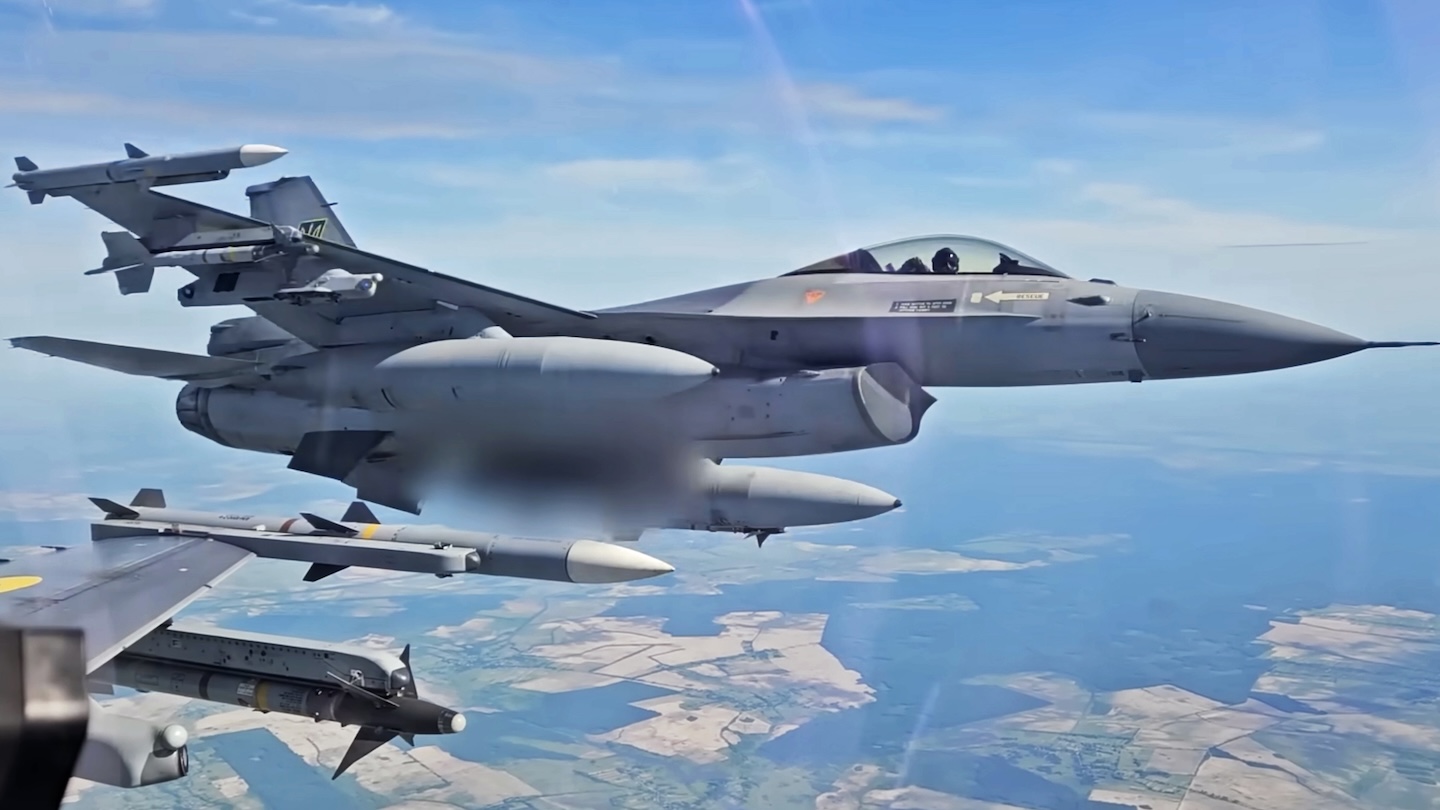
A newly published video interview with a Ukrainian Air Force fighter pilot sheds more light on the operations of the country’s F-16 fleet in its war with Russia. The interview with the pilot, whose name is not provided, is a rare first-hand opportunity to hear about how the Ukrainian Air Force has gone about introducing its first Western fighter jet. The Viper is now heavily engaged on various fronts, combating cruise missiles and drones, as well as striking ground targets, including in close proximity to friendly troops.
You can read past Ukrainian Air Force pilot accounts in exclusive interviews here and here.

What the video shows
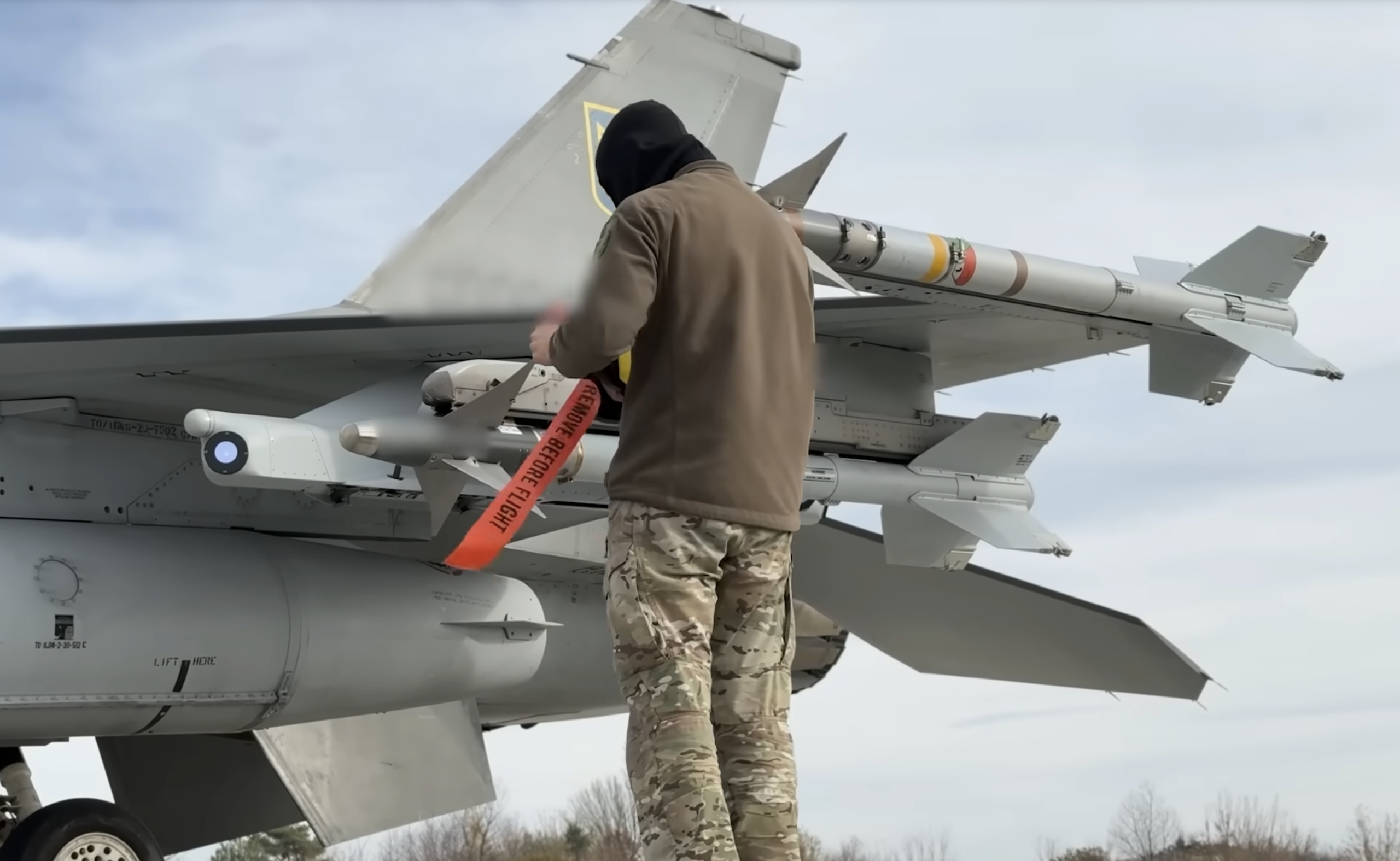
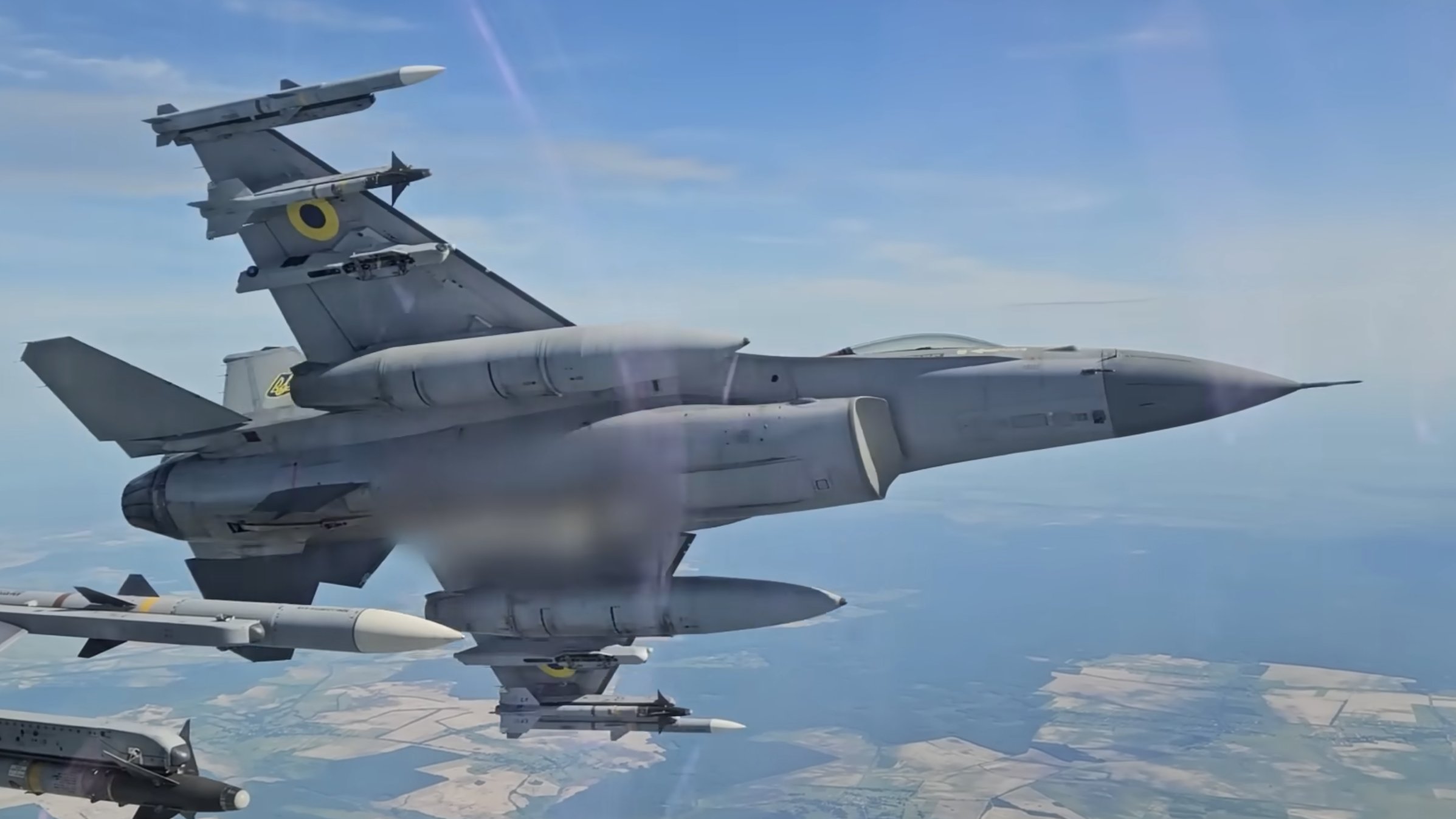
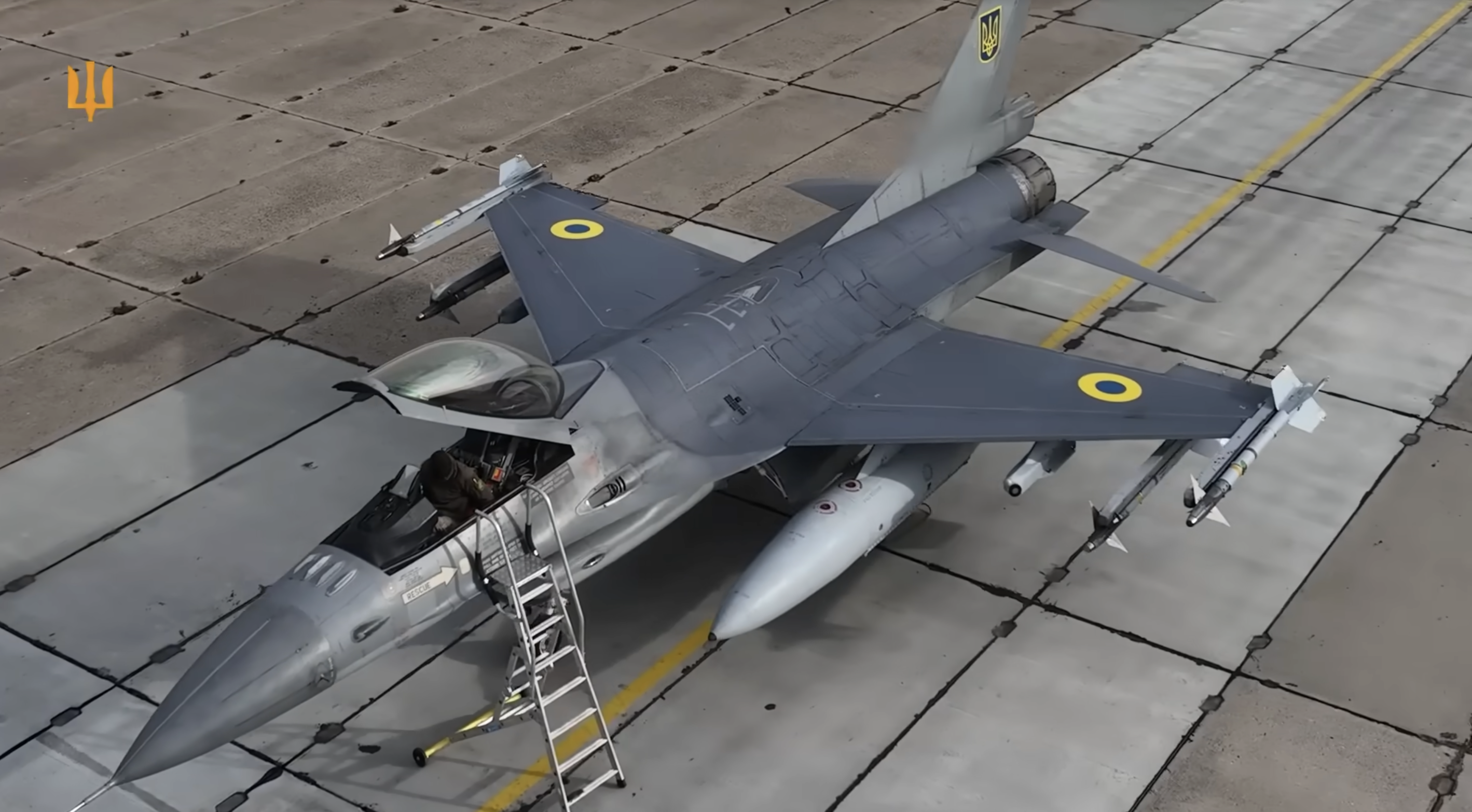
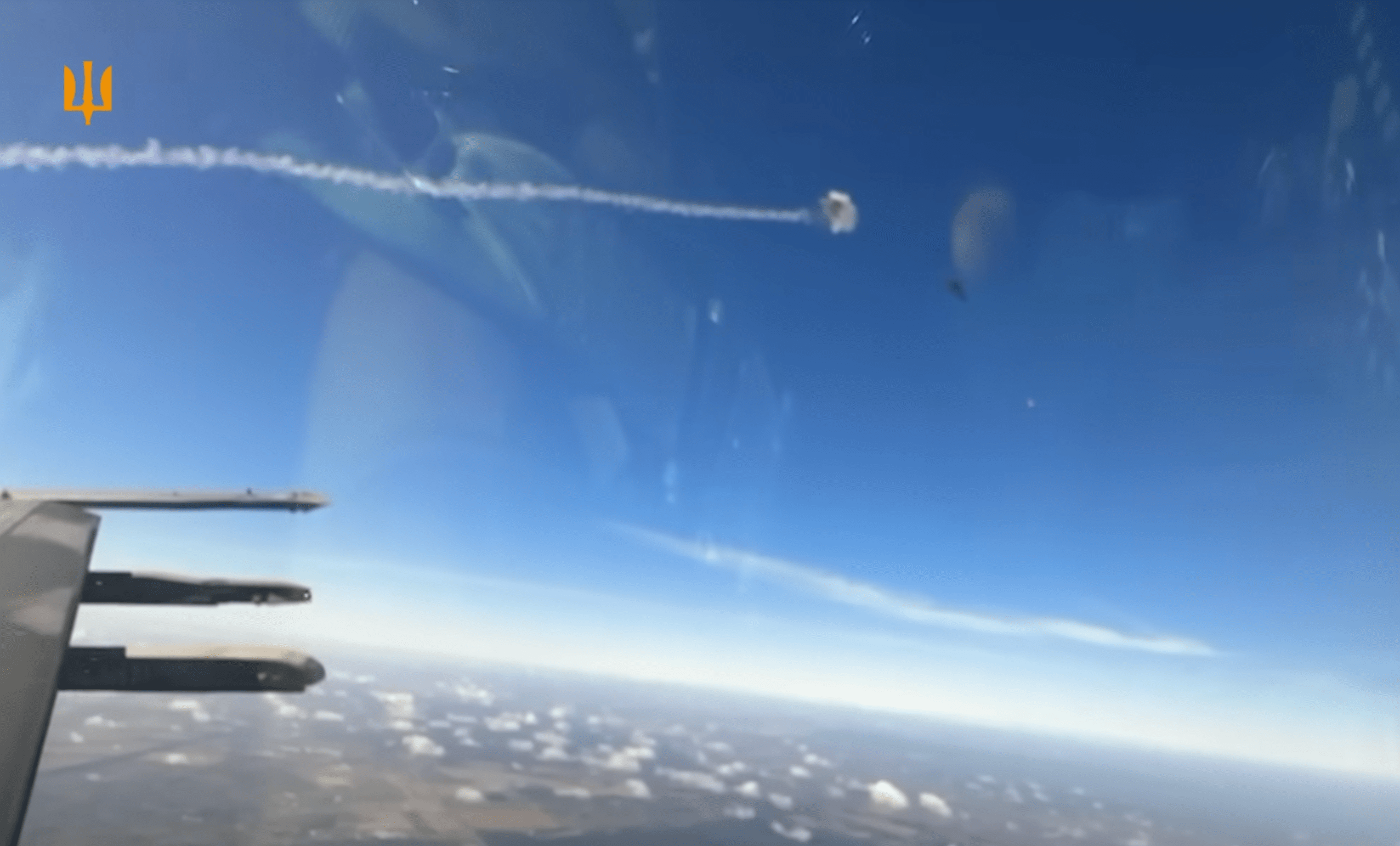
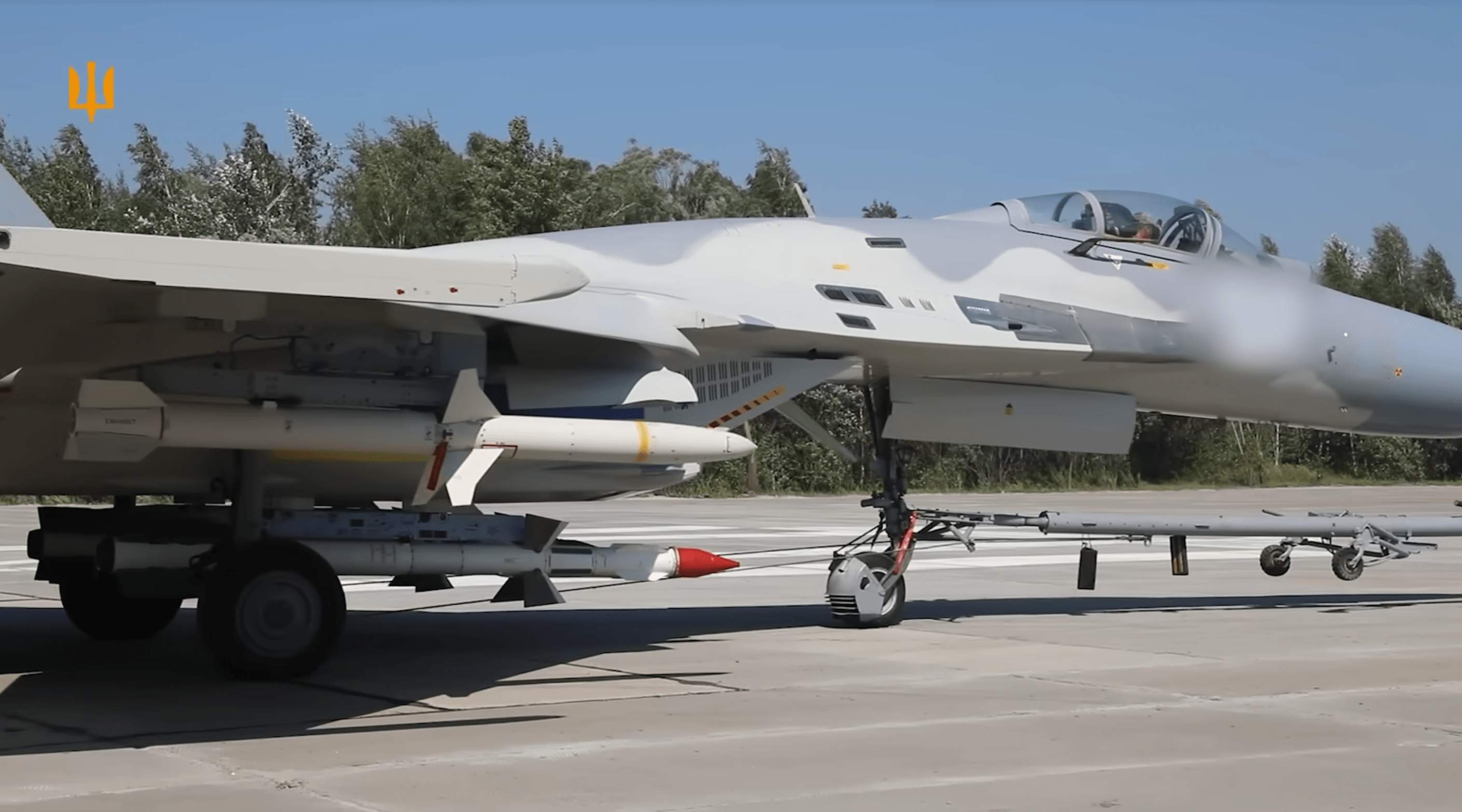
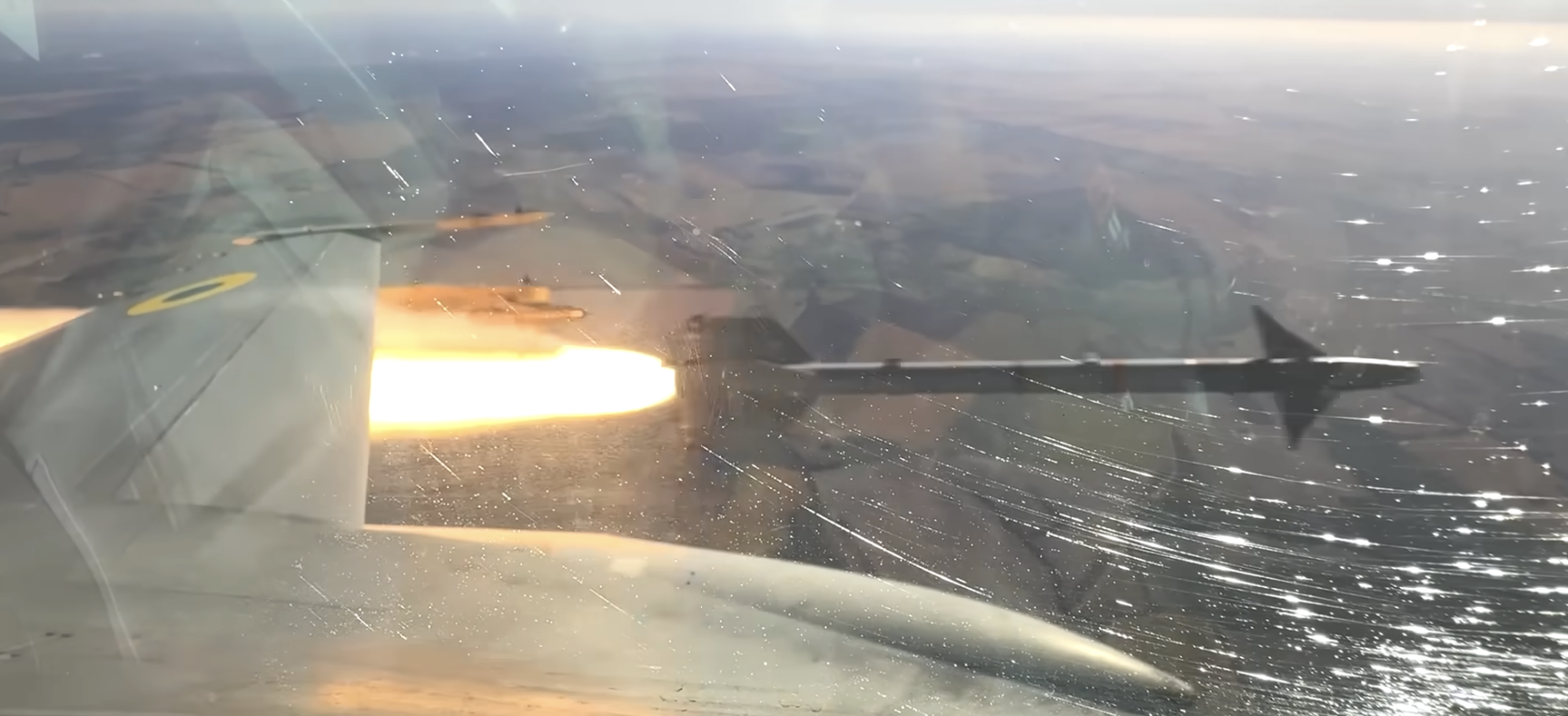
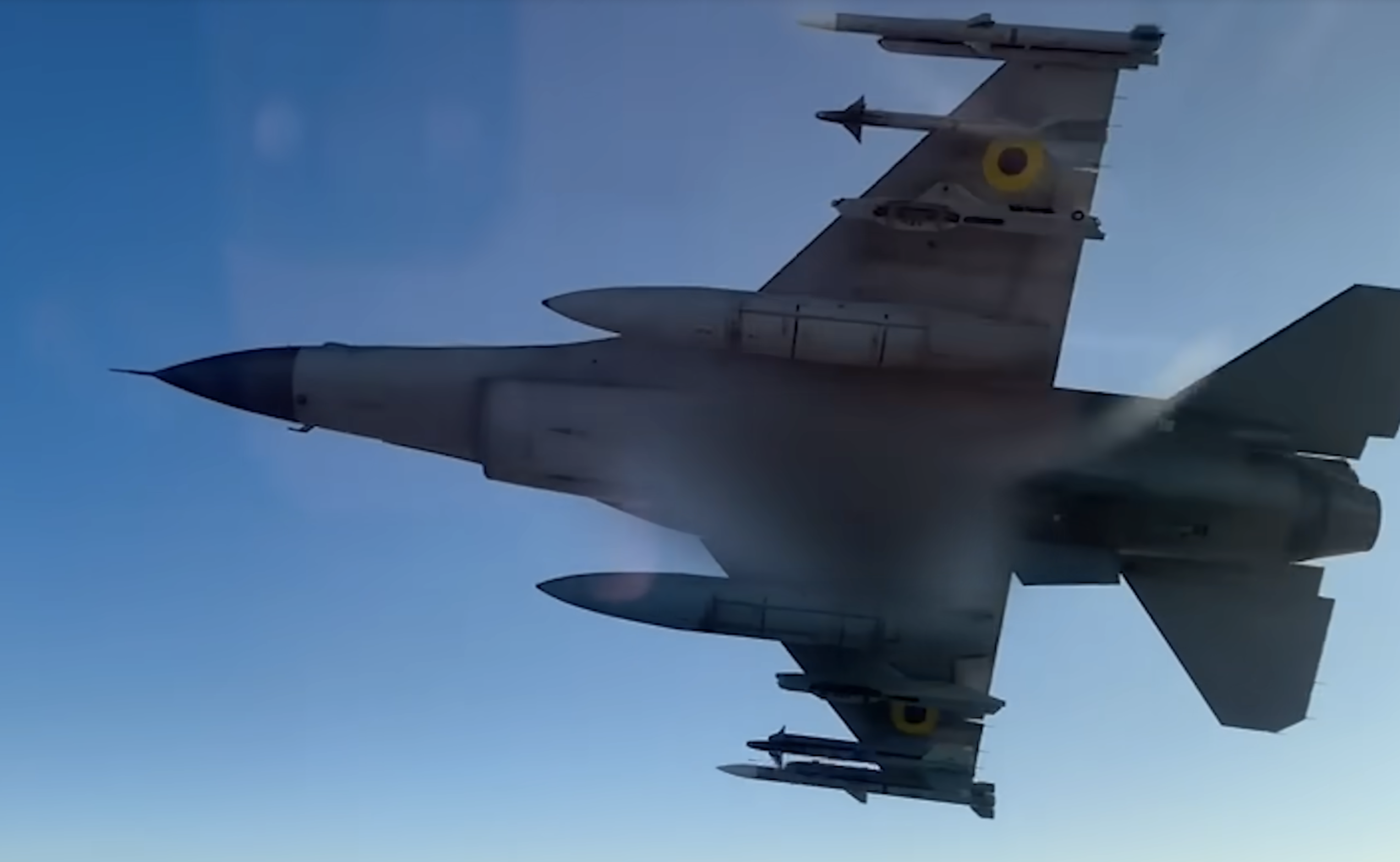
The official video shows, in some detail, Ukrainian Air Force F-16s, both single-seaters and two-seaters, on the ground and in the air. Weapons loads seen in the footage include live AIM-9L/M Sidewinders, with either four or six carried, among them examples seen being launched from the wingtip rails.

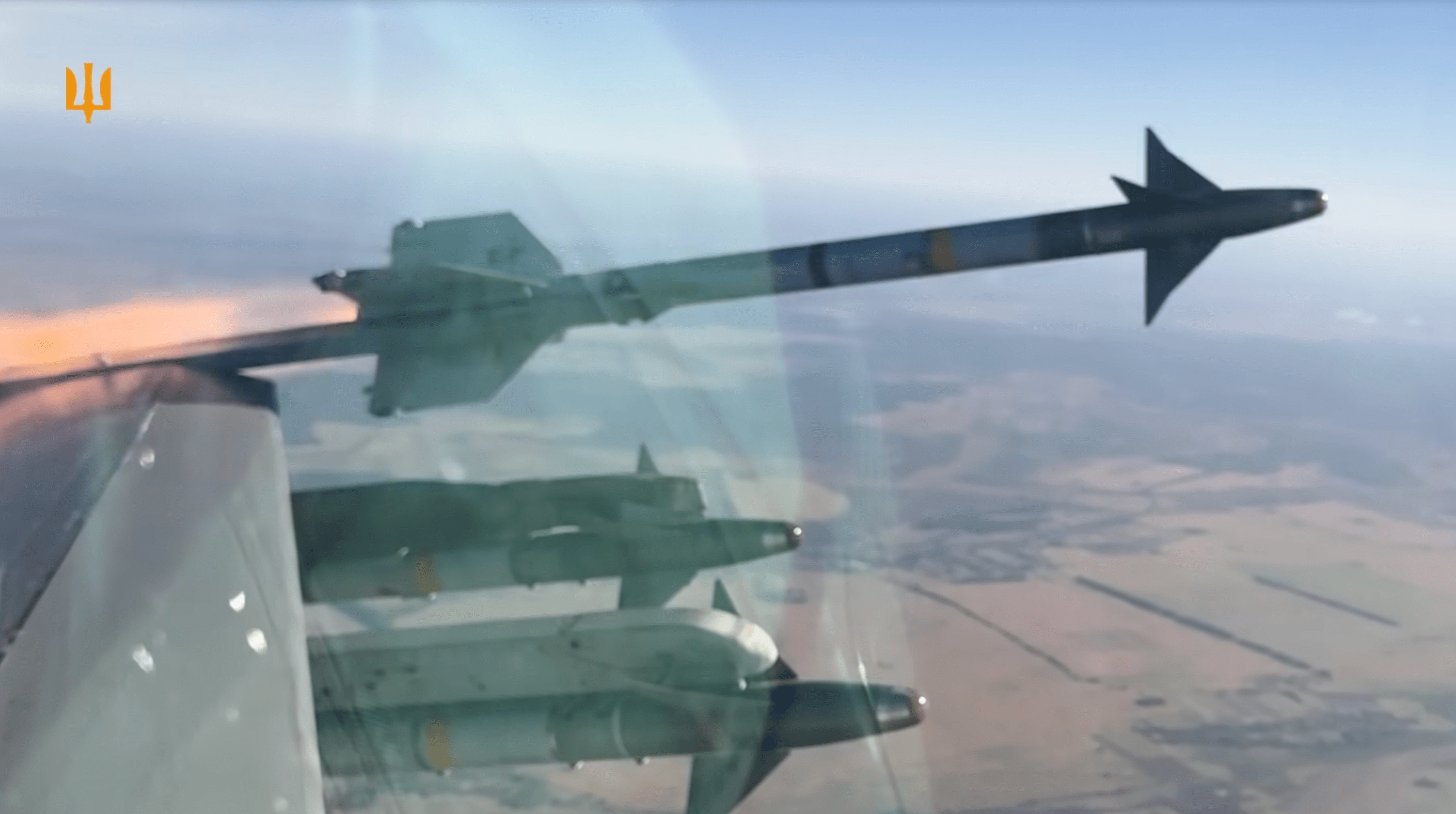
One sequence, filmed from the back seat of an F-16BM, shows a Sidewinder streaking away to destroy a drone, although it’s unclear if this is a Russian example or a target during a training sortie.
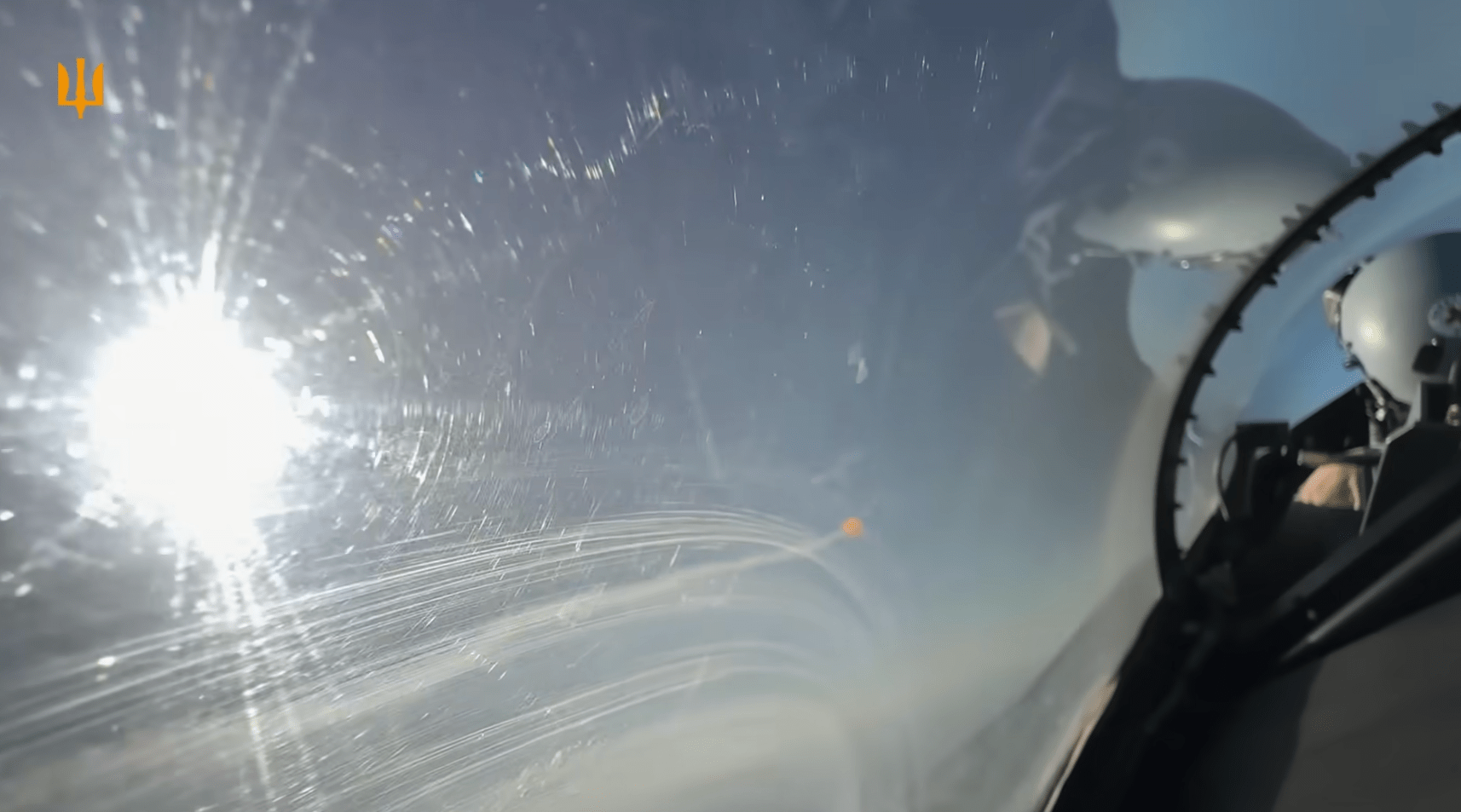
Other air-to-air loadouts include a combination of AIM-9L/Ms underwing with AIM-120 AMRAAMs on the wingtips.

The footage also provides a brief look at the targeting pod, which has only recently begun to appear on one of the intake stations of Ukrainian F-16s. This is understood to be the AN/AAQ-33 Sniper Advanced Targeting Pod (ATP), a store that was apparently introduced in conjunction with the laser-guided 70mm Advanced Precision Kill Weapon System II (APKWS II) rockets that you can read more about here.
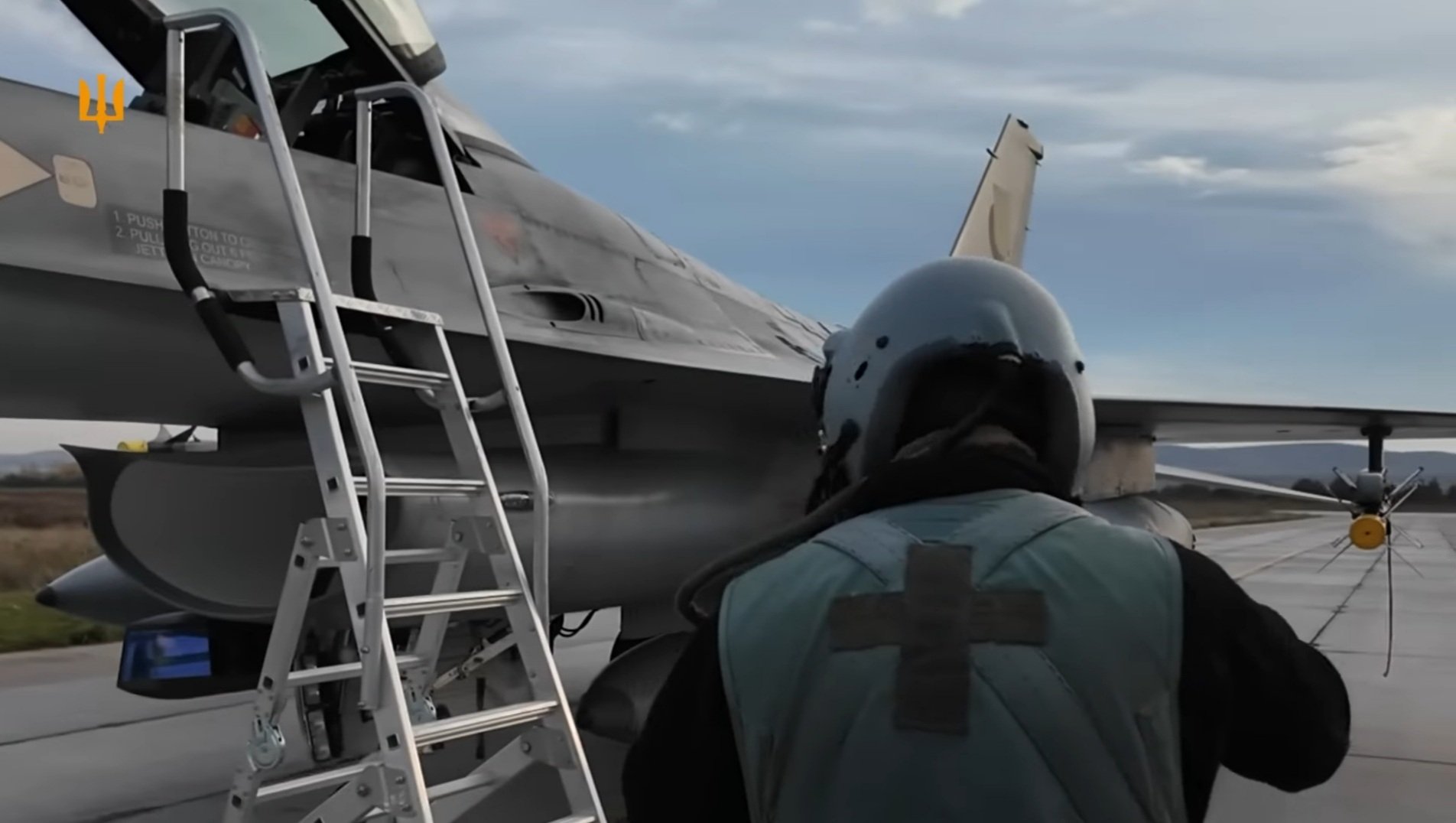
Another item that we have seen more regularly in the past is the Terma self-protection pylon, under the wing. These pylons have built-in approach warning sensors and can be fitted with electronic warfare jammers, as well as dispensers for decoy flares and chaff. The pylons are tied to the jet’s internal self-protection suite to provide synergistic effects.
Finally, various parts of the video showing the centerline under-fuselage station are censored. This is likely to obscure the AN/ALQ-131 electronic countermeasures pod that has been noted in this position. It could also be another type of store, but a podded electronic warfare capability like the AN/ALQ-131 gives the F-16 a valuable extra layer of survivability, especially important when flying air-to-ground missions in close proximity to the battlefield and its ever-present ground-based air defense threat.
The video only shows F-16s configured for air-to-air missions, although we have had previous confirmation, on regular occasions, that the jets are also striking ground targets with GBU-39/B Small Diameter Bombs (SDBs), carried on quad BRU-61 racks, as you can read about here.
What we learn in the interview
The Ukrainian Air Force’s path to F-16 operations is one of the focuses of the video, but it has had its challenges. The pilot appears to be one of the older-generation Ukrainian Air Force aviators, and he also reflects on the earliest days of the full-scale invasion when, as he puts it, the air force “was the first to take the brunt of the attack.”
“We gave our lives, we fought, no one believed in us. Everyone thought that such a large and powerful army, as the Russians claimed at the time, would be able to capture our country. In a few days, pilots would get into the cockpit, go out on patrol, find these columns, and destroy them. It was something beyond reality, even for our partners, when we were able to do such things in our old Soviet planes, stopping entire columns that were coming to capture our land. Of course, we had considerable losses, but we didn’t stop; we kept fighting and used the weapons we had, because we had no other choice. We proved that we are worth more and that we will not give up.”
In the pilot’s opinion, this early showing was critical in convincing Ukraine’s Western allies that it should receive F-16s, although the process was still a fairly long and winding one. When the prospect of getting Western-made jets emerged, Ukrainian pilots still flying Soviet-era jets spent as much time as they could learning English to help with their future transition.
The pilot continues: “Those pilots who are now performing tasks on Western-style F-16s and Mirage 2000s, when they were sitting in Soviet planes, found time between combat missions to improve their knowledge of English. It was very difficult, because after a combat mission, as a rule, a pilot has to rest, because he doesn’t know when he’ll next have to fly again.”

He describes the first cadre of pilots that went to study abroad, doing so under “really difficult conditions,” and having to rapidly learn an entirely new set of fundamentally different procedures. As well as mastering the new equipment, the pilots had to understand different rules of flying, including in civilian airspace. “Plus, in the rear cockpit, there was an instructor who did not understand a word of Ukrainian. Communication was in English and an unusual, special aviation English.”
“It was very exhausting, to be honest… But we had a goal, we understood that they were waiting for us at home, that the enemy was shelling our cities, killing our people, capturing our territory. So we gritted our teeth to the last and continued on this path.”
The pilot also explains that the original tactics that were taught during early foreign F-16 training courses “were not entirely suitable.” The tactics they had learned were instead “based on wars in which our partners participated previously. And this war is fundamentally different.”
“We had to sit down and come up with tactics for how we would destroy cruise missiles and strike drones, how we would fight the enemy near the line of contact,” he explains.
Nevertheless, the Ukrainian Air Force was ready to fly its first F-16 combat sorties against aerial targets in August of 2024, less than a month after the type was first confirmed as being present in the country.
As of the beginning of this year, Ukrainian F-16s have destroyed “more than a thousand” aerial targets, the pilot claims. Typical targets include Shahed-type long-range one-way attack drones, jet-powered drones, and cruise missiles.
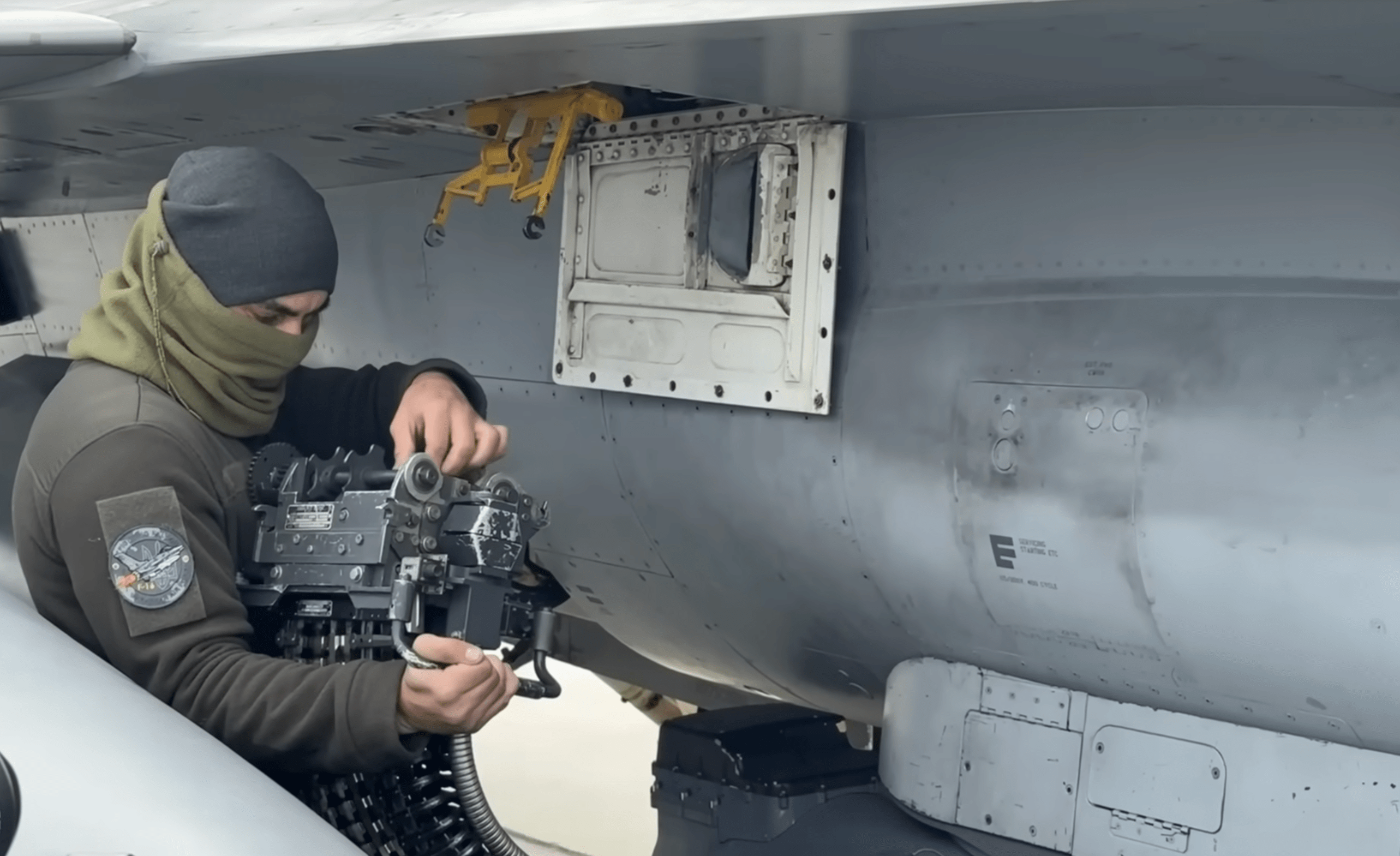
The pilot claims that, on one occasion, an F-16 pilot destroyed six cruise missiles and seven attack drones in a single sortie. This is a remarkable tally, by any measure, and would have required extremely precise use of the gun, even if all available missiles were successfully expended.
“We have also already launched more than 1,600 strikes on ground targets,” the pilot continues. “That is, a colossal amount of work has been done.”
The aviator draws attention to one particular mission flown on the day of the interview over the Donbas region in the east of Ukraine, close to the front lines. On this occasion, they were challenged by both Russian combat aircraft and ground-based air defense systems.
“The main factor for us was the air component, which did not give us the opportunity to approach the target.” On this mission, the F-16s were flying as a three-ship.
“We drew out two missiles from the enemy, because there were two launches from different directions, and this gave our strike aircraft the opportunity to destroy the target. And the whole group safely returned to the airfield to our families, to our squadron,” the pilot recalls.
The pilot noted that almost every sortie includes the enemy launching missiles at their formations. The biggest threat is apparently posed by Russian air-to-air missiles. “The front line is very saturated with anti-aircraft missile systems and, of course, air assets.”
Although the adversary’s missile types are not named, the late Andrii Pilshchykov, better known by his callsign “Juice,” a Ukrainian MiG-29 Fulcrum pilot, had told TWZ that the R-37M, typically fired from within Russian airspace, was “limiting our capabilities to conduct our missions. Of course, if you’re maneuvering, we are not able to provide an airstrike or something else, so the game is still very, very, very tough in the air and very, very risky. If you’re not aware of the launch of a missile, you’re dead.”
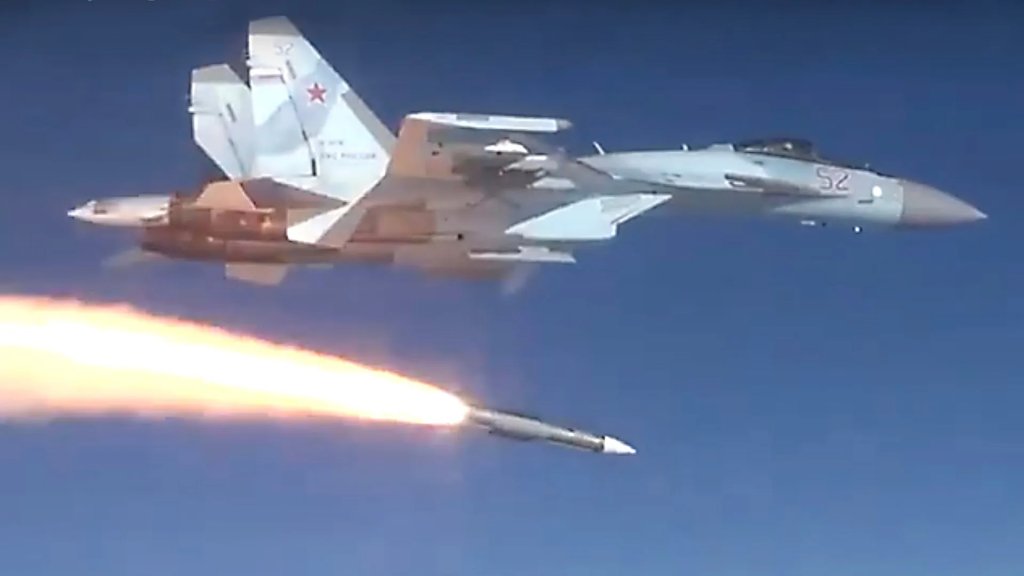
The F-16 pilot highlights the threat posed by Russian fighter-interceptor aircraft such as the MiG-31 Foxhound, Su-35 Flanker, and the Su-57 Felon, the latter being its most advanced in-service combat jet, with a degree of stealth capability.
“They have the ability to be in the combat zone, at high altitudes, waiting for our groups to strike. And unfortunately, we do not have such an opportunity,” he says of the mismatch with the Russian Aerospace Forces.
To counter the threat of enemy missiles, the F-16s are forced to fly lower. “And we also have to use maneuver tactics when enemy aircraft come at us, lock us up, and launch air-to-air missiles at our planes. But regardless of this, with these limited capabilities, we carry out the task. We know that we are taking a risk.”
“When we go to strike targets on the ground, we understand that the guys are sitting in the trenches, it’s hard for them there, and they need our help, and aviation must support them,” the F-16 pilot explains. “Therefore, this is one of the main tasks for us.”
Since its introduction to service, Ukraine has lost four F-16s in different incidents.
Meanwhile, Kyiv has been promised 87 F-16s from four different European nations. These F-16s comprise 24 from the Netherlands, 30 from Belgium, 19 from Denmark, and 14 from Norway.
To help prevent losses on the ground, Ukraine regularly moves its active F-16s to different locations, also making use of secondary airstrips and likely highways.
“Thanks to our professionalism, our flexibility, and ingenuity, we have the opportunity to withdraw from the battle and keep our equipment in places where the enemy does not expect it. We are able to complete tasks from one airfield and moments later redeploy to another. In this way, it is difficult for the enemy to determine the location of our aircraft.”
Overall, the pilot rates the F-16 as “very effective,” with particular praise for its weapons and targeting systems. Now, he says, the foreign partners who helped train him and other pilots on the jets are learning from the Ukrainian experience.
“When our partners see our effectiveness, they understand how we can perform flights with such effectiveness in our challenging conditions. I would even say they are learning from us, adjusting the tactics that they taught us.”
With the F-16 now an important tool for Ukraine, including in the defense of its cities and critical infrastructure against relentless cruise missile and drone strikes, the pilot observes that the Ukrainian Air Force would be even more effective if equipped with more capable aircraft, such as the Block 70/72 version of the F-16, the latest production version, you can read more about here.
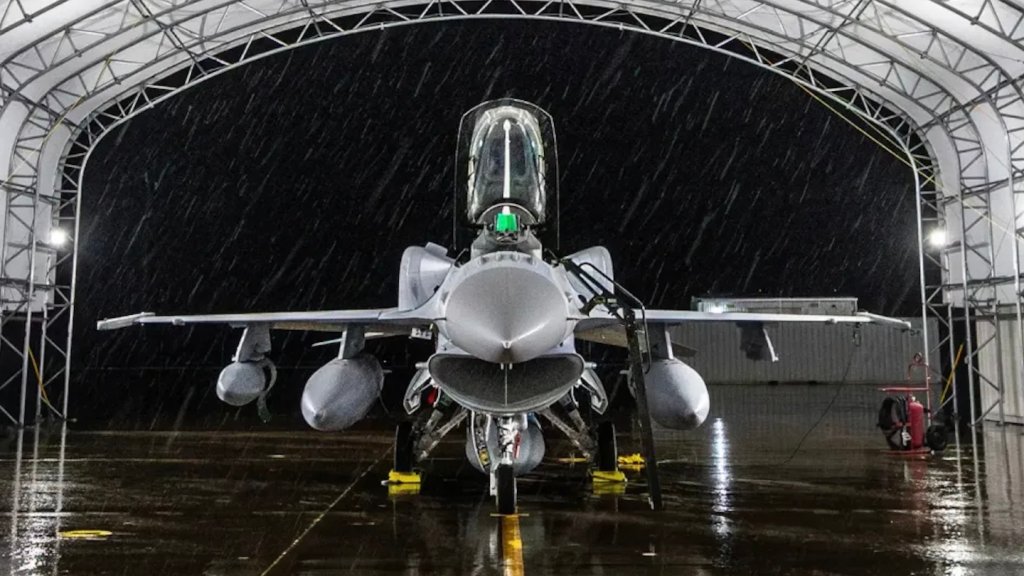
With the Block 70/72, he contends, the Ukrainian Air Force would not only be regularly destroying Russian drones and cruise missiles, but also enemy aircraft. This point suggests that, so far, Ukrainian F-16 pilots have yet to score air-to-air kills against crewed aircraft. Ultimately, the long backlog of F-16 orders makes it unlikely that Ukraine would get Block 70/72 jets anytime soon, although an upgrade for its existing aircraft, perhaps including active electronically scanned array (AESA) radar, might be more realistic.
The pilot concludes his interview by thanking the various partners that have supported the Ukrainian military, especially in providing F-16s. His final message to them? “Don’t slow down, because we can do more.”
Contact the author: thomas@thewarzone.com
Loading comments…
Comments couldn’t be loaded. Please refresh the page.