
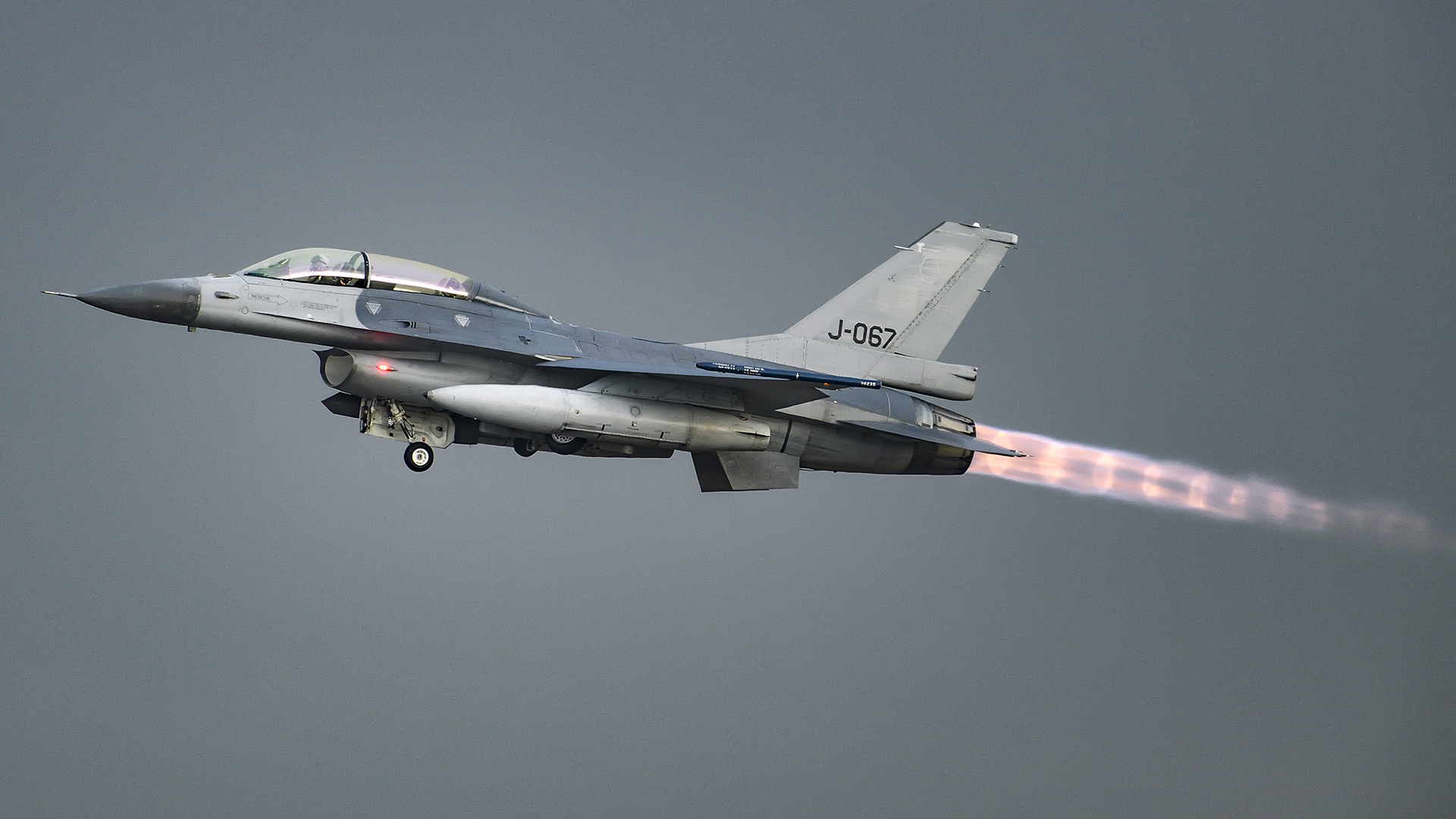
F-16 Fighting Falcon operations in Europe are in the midst of a major evolution. Long known to pilots by the nickname “Viper,” a new training center is up and running in Eastern Romania, upgrades are underway for in-service jets that are now being enhanced to a modern F-16V specification, and deliveries of brand-new Block 70/72 F-16C/D variants to first-time Eastern European customers are in full-swing. All told, this activity heralds something of a second-coming for F-16 operations in Europe.

The F-16 has enjoyed prolific status in Europe for almost 50 years as U.S. Air Force and European air forces have collectively operated the Viper in large numbers. Four European Participating Air Force (EPAF) nations became the first international customers to buy the Fighting Falcon, ordering over 500 F-16A/Bs from 1975 – built locally under license – primarily to replace aging fighter stables of F-104 Starfighters. Today, a second-generation of Viper operators are realising the value of the F-16 by operating transferred EPAF jets.
Early model F-16A/Bs entered service from 1979 with the four original EPAF nations shortly before similar variants started joining American squadrons under the U.S. Air Forces in Europe. Portugal became a fifth EPAF member from 1994 as it received surplus USAF Vipers. Greece received batches of new-build Block 30s, 50s and 52s from 1988 onwards, Türkiye received Block 30/40/50s in four batches from 1987, and then Poland getting factory-fresh Block 52+ versions, as the sprawling European F-16 family grew.
The overwhelmingly positive experience of the EPAF nations with the F-16 was a factor that helped influence the four founding partners – Belgium, Denmark, the Netherlands, and Norway – to acquire Lockheed Martin’s F-35 as a successor to the F-16. But the story doesn’t end there. A new generation of European F-16 operators is building. Romania and Ukraine are today operating some of those original EPAF jets. The newer Block 52+ models such as those in Greece and Poland are being upgraded to the latest F-16V standard, with brand new customers in Bulgaria and Slovakia receiving the latest Block 70/72 variants fresh off the hot production line in South Carolina.
Helping to underpin this new-generation of Viper operators, a new European F-16 Training Center (EFTC) has been established under a partnership between Lockheed Martin, the Netherlands, and Romania, to train combat aviators for the transferred EPAF aircraft. Originally designed to support the Romanian Air Force’s transition from the MiG-21 LanceR to the F-16, it also now trains new Ukrainian pilots, who come there to learn how to fly and fight the Viper in combat. And the lessons they learn cannot come with any more weight, as these pilots will be thrust directly into combat when they join their squadrons in their home country.
A European F-16 center of excellence
“Romania has stepped up when it comes to operating the F-16 in Europe, just as the Dutch did when the EPAF nations started operating the jet. The Royal Netherlands Air Force led the way in terms of introducing the F-16 in Europe. They have now passed the torch to Romania in the east of Europe,” says Bill “Sluggo” Thomas, a highly experienced F-16 pilot who today leads the EFTC for Lockheed Martin, located at the 86th Air Base in Fetești, Romania.
Thomas has an abundance of Viper experience. He started flying the F-16 in 1987 with the USAF and undertook an exchange post in the Netherlands where he was attached to the Dutch F-16 Fighter Weapons School at Leeuwarden. He sat down with TWZ in his office at the EFTC to explain how the school was triggered by the rapid increase in size of the Romanian F-16 fleet, and how it became fully operational in 2023 as the only dedicated F-16 school of its kind in Europe.
Romania initially acquired 12 F-16s from Portuguese stocks, followed by another five from the same source, before agreeing to buy a further 32 from Norway in 2023. When purchasing brand new F-16s through the Foreign Military Sales (FMS) program, there is typically an accompanying support package that includes access to USAF F-16 training squadrons, such as those located at Holloman Air Force Base in New Mexico, the Air National Guard’s 162nd Wing at Morris Air National Guard Base in Tucson, Arizona, or the 149th Fighter Wing at Joint Base San Antonio-Lackland, in Texas.
However, with a third-party transfer of assets, such as with Romania, that access isn’t readily available. As F-35s have replaced Vipers in USAF service, the demand for F-16 training in the U.S. has dwindled, and so have available slots for students. Units such as those at Luke AFB, Arizona, that previously focused on F-16 training, are now dedicated to the F-35. Therefore, Romania had a burgeoning need to train new F-16 pilots and maintainers.
Initially, it was able to make use of training in Portugal for its first batch of transferred Vipers. However, the rapid increase in fleet size through the acquisition of the Norwegian jets required a more substantial and enduring solution.
“I think the important thing to note here is the Romanian leadership role on the eastern flank of NATO and their willingness to work with neighbouring countries,” says Thomas. “Romania is somewhat late to the game with the F-16, but now they are leading the way in supporting European F-16 operations. That takes vision and leadership to set up a training center and engage with partner nations in the region to be part of the team.”
Thomas worked closely with the Romanian Air Force to curate the EFTC and furnish it with the requisite training assets, including sourcing a fleet of F-16s. Coincidentally, this came in the form of a dozen F-16s that had been retired by a Dutch training squadron located in Tucson, Arizona, in August 2022. These aircraft were originally slated to be sold to Draken, however, when that deal was canceled, the aircraft presented a solution for Romanian training and Lockheed Martin proposed to the Royal Netherlands Air Force that the jets could be used for this purpose.
“In less than a year we got a contract together and on October 18, 2023, I drove onto the base here,” says Thomas. On November 7, 2023, the first five jets from the Netherlands arrived at Fetești and the first Romanian pilot training course began six days later.
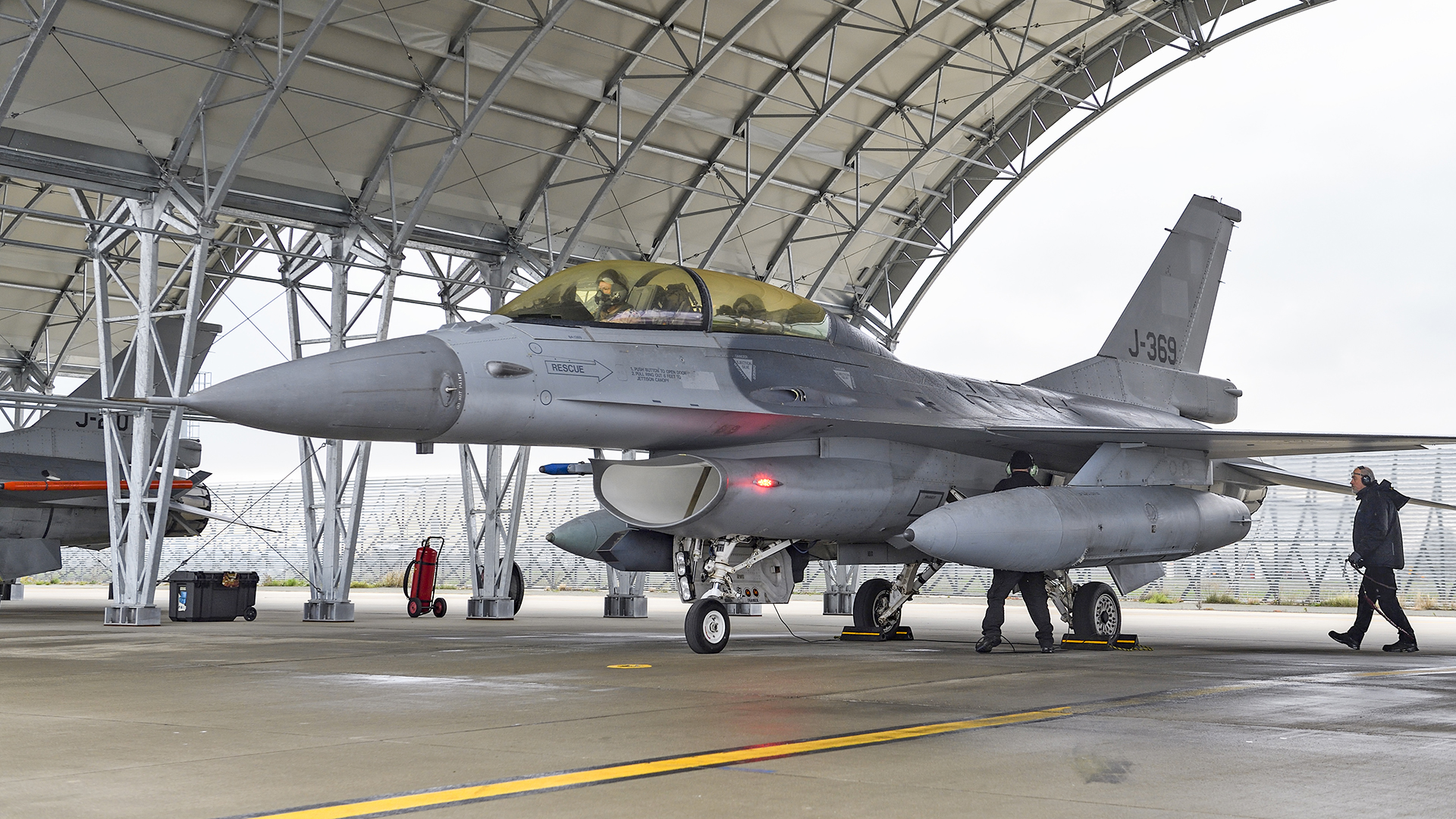
Fetești is located in a sparsely populated area about two hours east of the Romanian capital Bucharest by car. The air base has undergone significant infrastructure upgrades to accommodate both operational Romanian F-16s and those assigned to the EFTC, with the latter operating from weather shelters adjacent to an operations block. While the base features a raft of modern buildings, echoes of the past are never far away, with a line of derelict, rusting MiG-21 hulks sitting forlornly in full view of new Viper pilots going about their daily routine.
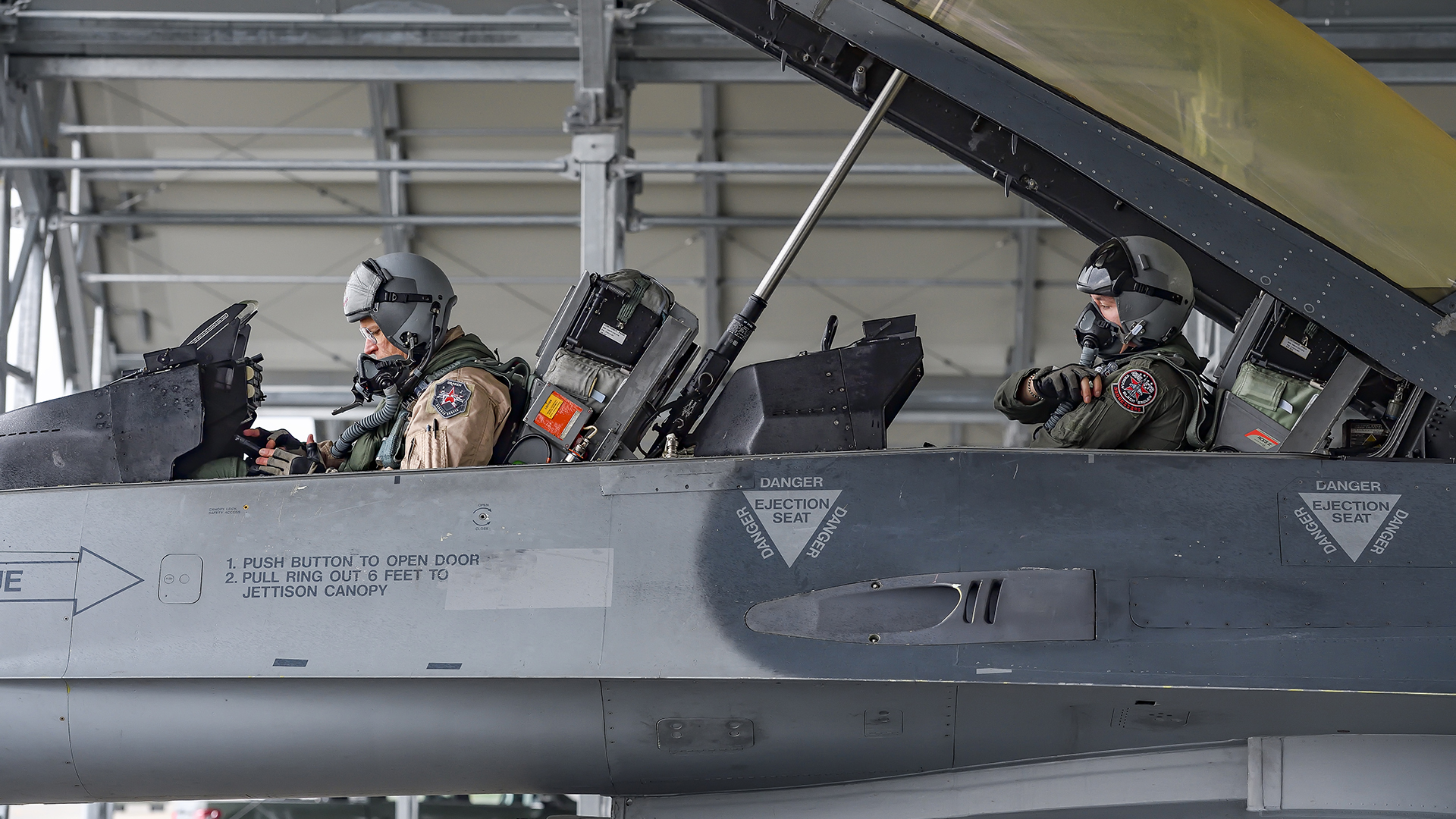
A varied contractor team was assembled under the EFTC to service the Romanian Air Force contract, working to European Military Airworthiness Requirements (EMAR) under the leadership of Lockheed Martin. GFD, a subsidiary of Airbus, provides former Royal Netherlands Air Force F-16 instructor pilots (IPs) and Draken fulfills the same role with ex-USAF instructors for a cadre of 12 IPs. BGI provides academic and simulator instructors supporting the EFTC syllabus. Maintenance of the training fleet is provided by Daedalus with former EPAF staff, and ILIAS provides logistics management software.
The F-16 training fleet was soon expanded to 18 aircraft, comprising 11 single-seat F-16AMs and seven two-seat F-16BMs, which are all in Block 15 Mid-Life Upgrade standard, which emulates many of the features found on the F-16C/D. The additional six jets came directly from retired stocks in the Netherlands and linked to Dutch support for the EFTC to train pilots from Ukraine, with an expanded fleet becoming sufficiently large to train aviators to fly the F-16. All of the ex-Dutch aircraft were recently formally transferred to Romania. On October 18, 2024, a contract was signed to begin training Ukraine pilots at the EFTC.
Comprehensive training at the EFTC
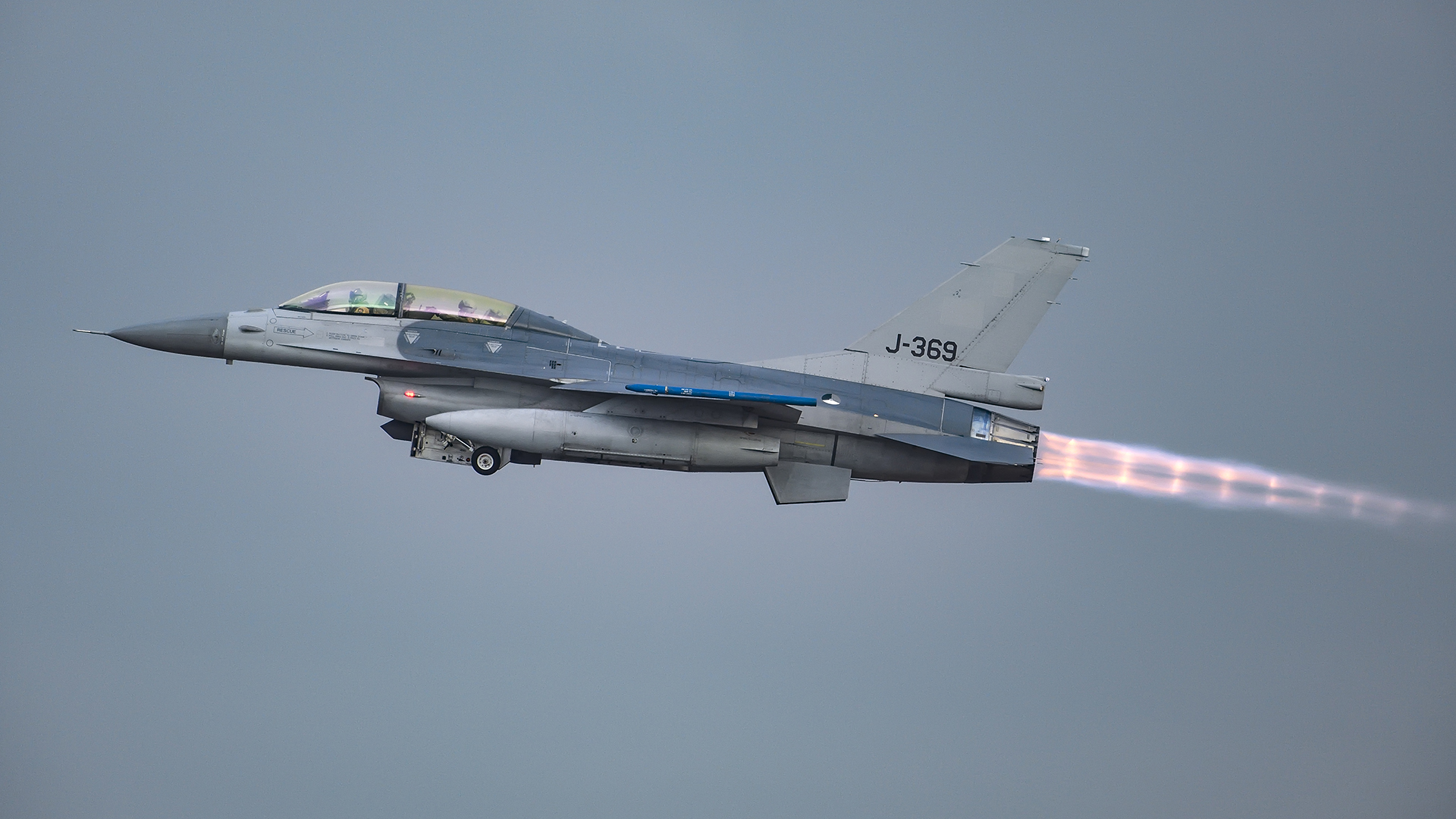
At first light, and with leaden gray cloud cover, the first wave of the day’s EFTC F-16 missions launches. Pairs of two-seat F-16Bs break the silence around Romania’s 86th Air Base as student and instructor teams blaze off the runway in full afterburner and quickly disappear into the thick scudding clouds as their undercarriages tuck away. Above the undercast they are quickly engaged in their respective training tasks, with most of the allocated airspace being just a short hop from the base.
The F-16 course in Romania lasts roughly six months and is broadly based on the USAF Basic Course (B-Course). As is commonplace with modern fighter pilot training, this begins with academic classes, and includes judicious use of the EFTC’s two full motion dome simulators, two fixed cockpit simulators, and live flying of 10-12 sorties that teach the new aviators how to actually fly the F-16 safely. A student is expected to solo on their fifth flight.
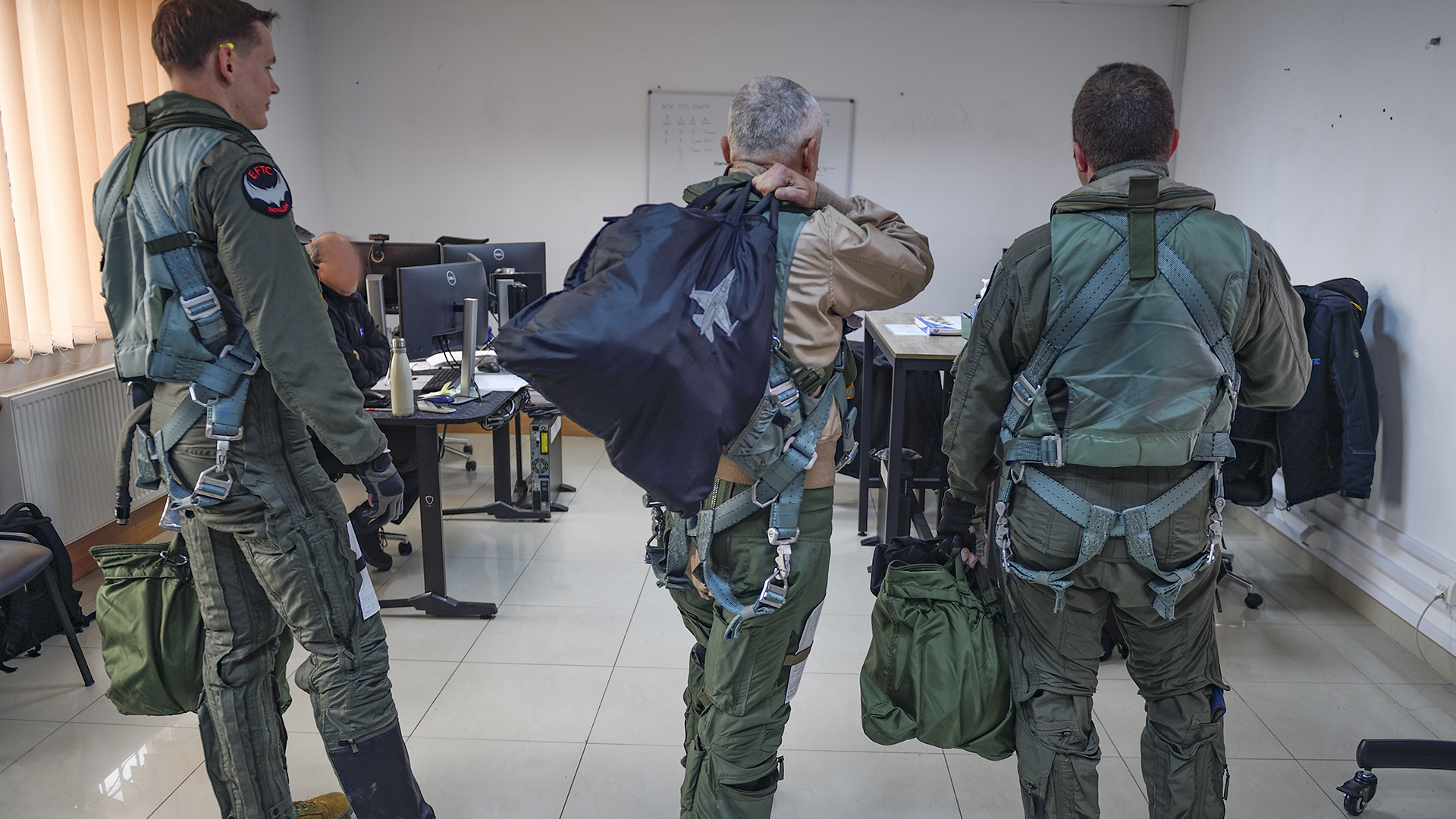
Unlike a typical B-Course, a tailored mission qualification training (MQT) phase follows, which covers fighter maneuvering, air-to-air and surface attack tactics, and weapons employment. Elements such as flying with the Joint Helmet-Mounted Cueing System (JHMCS), night vision goggles (NVGs), using the Sniper targeting pod, threat reaction techniques, ‘slow mover’ intercepts, and lots of flying on instruments in bad weather are also included. This mission qualification phase is being updated regularly to include new weapons and new tactics.
“The traditional training method for the F-16 in the U.S. would be to do a basic course, then move to your allocated operational unit for local area orientation and your specific mission qualifications,” explains Thomas. “Here, we are training in the environment where these pilots will be flying operationally, so we have combined it all together into a single, streamlined, qualification course. They leave here as a wingman, but they are a full-up round.” Thomas’ comment underscores how some of these pilots will be going directly into combat, so they have to be fully-capable F-16 warfighters that bring immediate value to their squadrons.
F-16 courses at the EFTC began with crossover training for experienced Romanian pilots coming from other fighters, but they are now geared towards ab initio students coming out of basic and lead-in fighter training. “On that very first class we ran here, they were all experienced Romanian MiG-21 LanceR pilots, because they had just shut down the last squadron,” says Thomas.
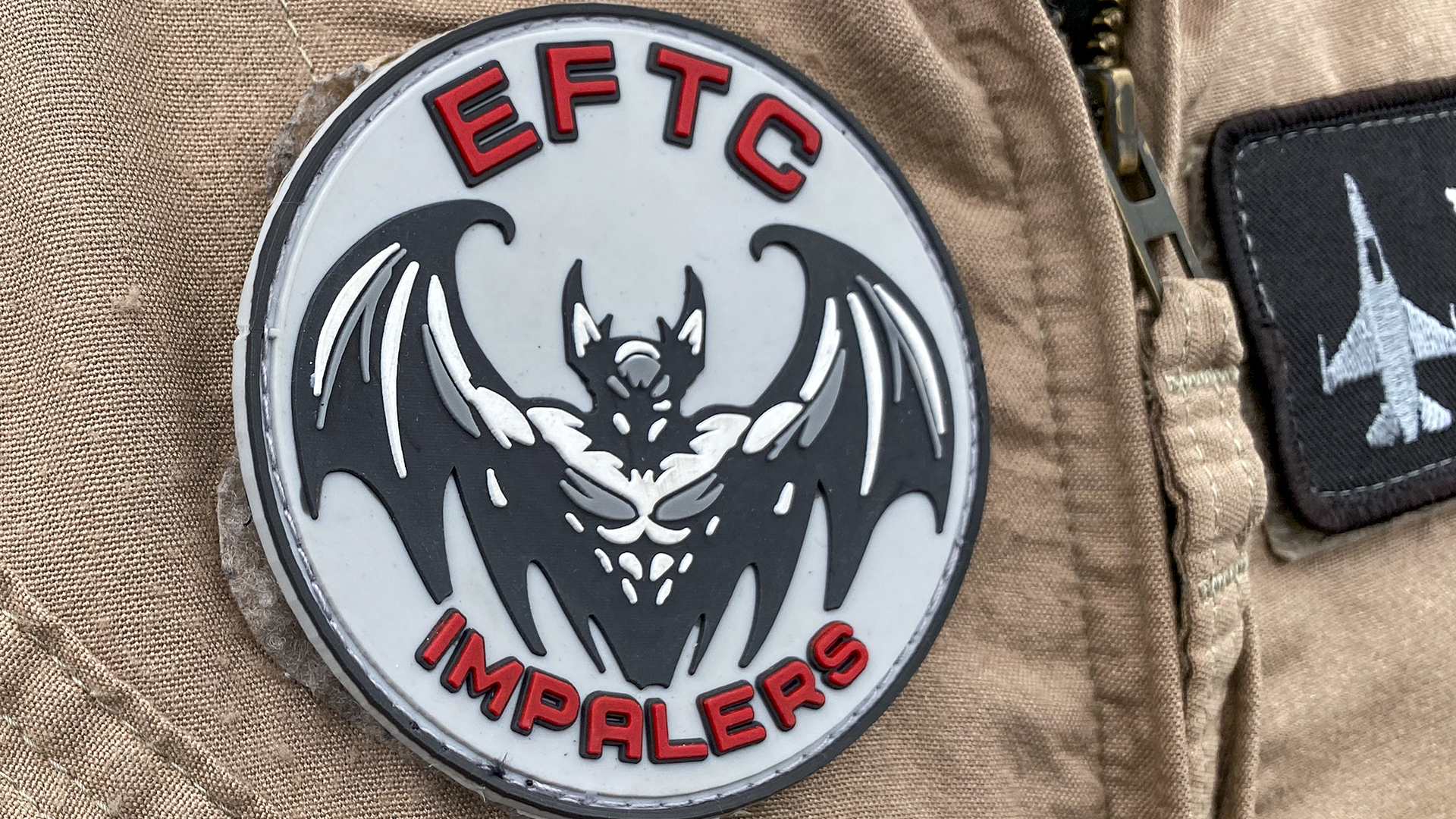
“Three of those guys were already flight leads in the MiG. They all did a full B-Course and the mission course, and the three existing flight leads became two-ship flight leads on the F-16 ready to go back and pick up where they left off with the LanceR. The Romanian MiGs were pretty sophisticated, but it was still a big transition to the F-16.”
“The challenge of taking guys who are experienced in a MiG, for example, is that they are used to wrestling with the controls. They bring that with them and try to wrestle the F-16. You don’t wrestle the F-16. There’s certain habits that you have to break, that’s why it’s really nice to have brand new guys, because they aren’t in any of those habits.”
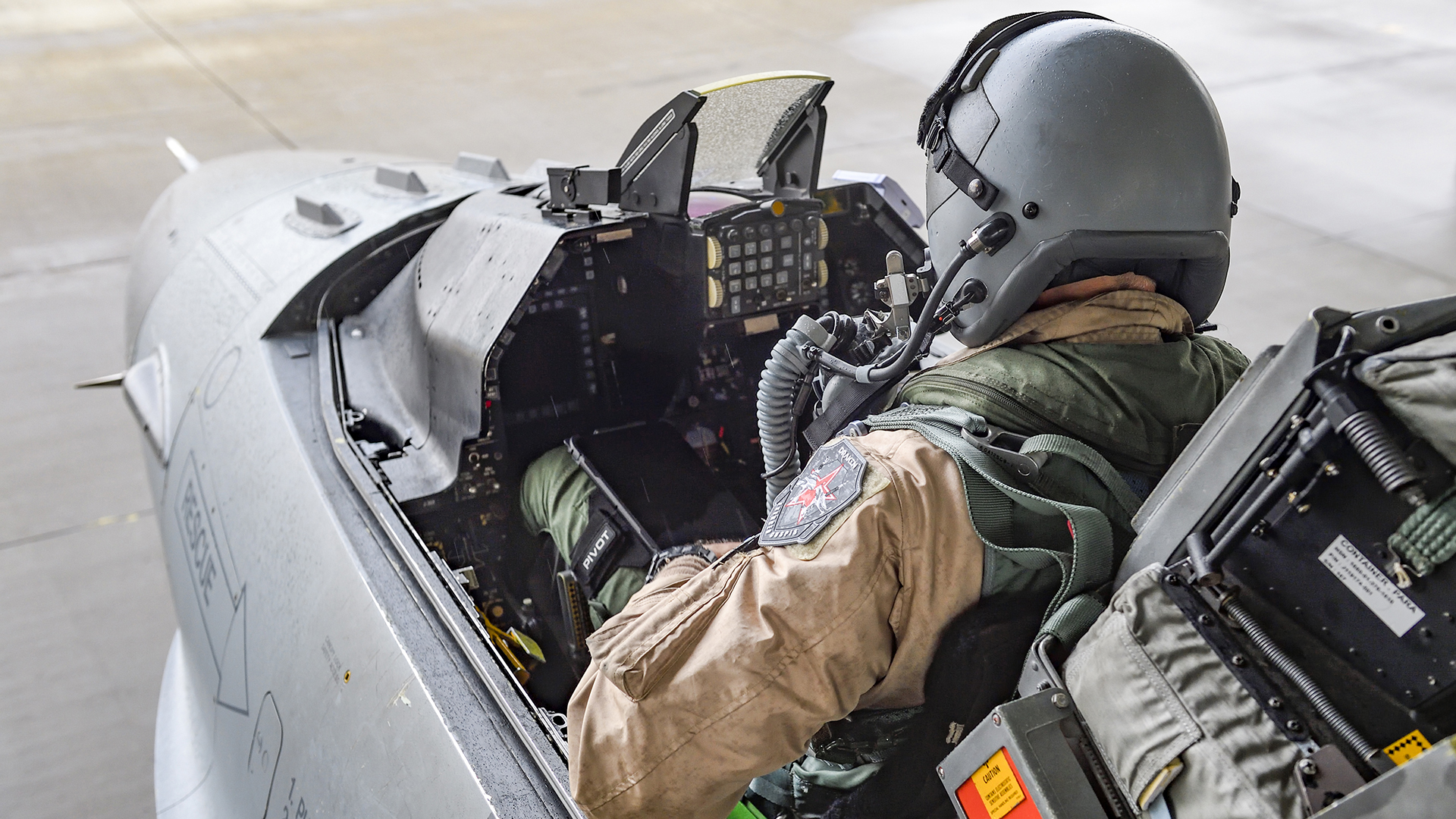
Unlike the old Russian jets that some of the more experienced Romanian pilots were accustomed to, the F-16 features a computerised fly-by-wire control system rather than direct mechanical linkages. The F-16’s sidestick control column in the cockpit is famous for its lack of movement, with only around one quarter of an inch of deflection. A light touch is a necessary skill for a Viper driver.
When Ukraine first received F-16s from Denmark and the Netherlands, it had to move quickly to train an initial core of pilots. These were all experienced MiG and Sukhoi aviators, and they learned how to operate the Viper on hastily-arranged crossover courses in the U.S. and in Denmark. Ukraine is now expanding its F-16 pilot cadre through brand new students that are coming through a diverse training pipeline.
These new flyers are typically trained in Grob Tutors, Alpha Jets, and L-39s, before coming to the EFTC. To date, two classes of Ukrainian F-16 pilots have graduated from the EFTC, and there continue to be Ukrainian pilots in various phases of training, plus, new Ukrainian F-16 pilots are also being trained by the Air National Guard in Arizona.
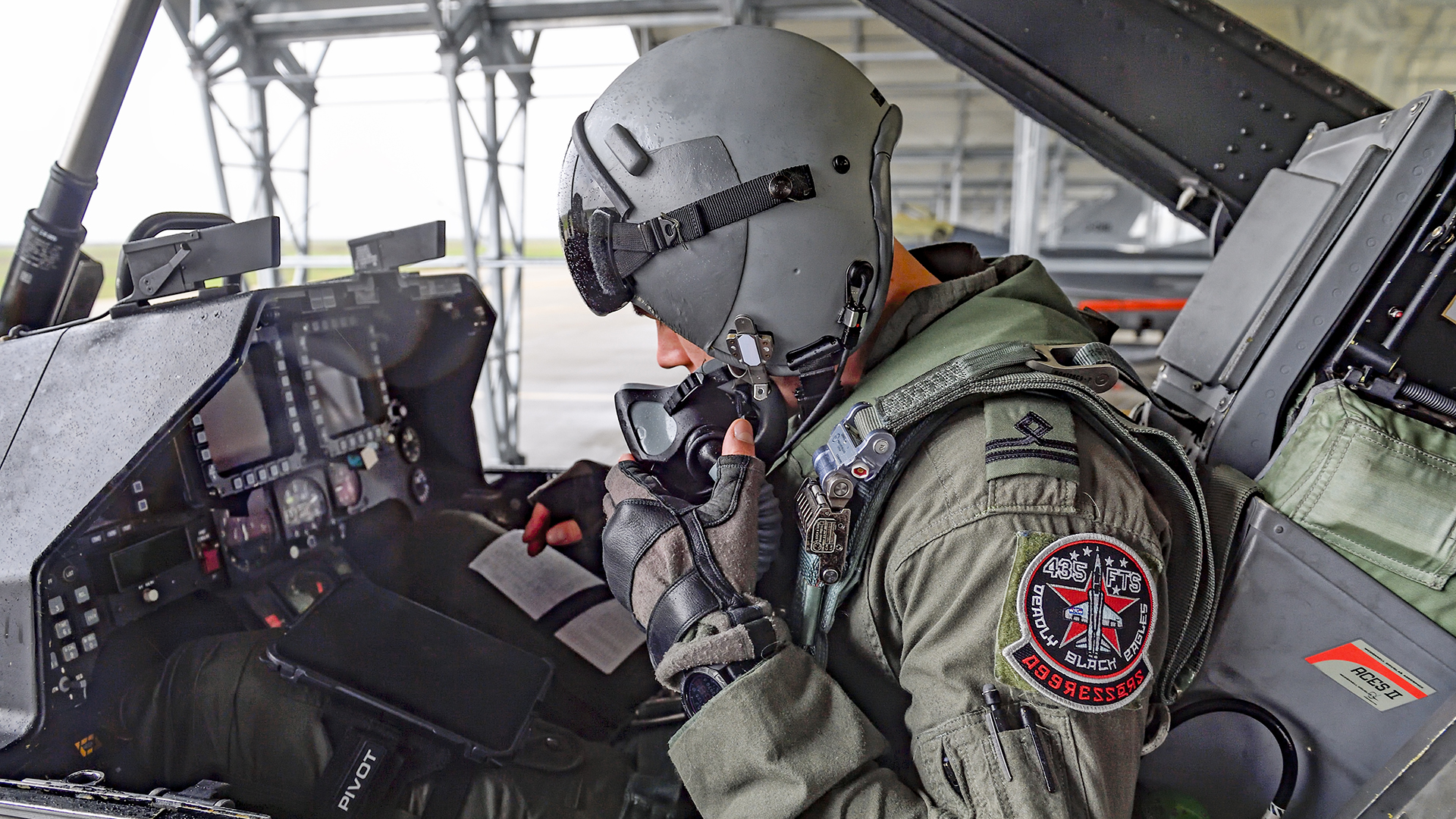
“We are currently maxed-out here,” comments Thomas. “We have 25 students on six courses right now, I’ve never seen a training squadron like that. The course has already evolved through four major syllabus updates and now we are executing our first class of new Romanian crew chiefs, who are on a course run by Daedalus.”
“Romania and Ukraine have different pilot training syllabi, but a lot of the elements are exactly the same. In mission qualification, for example, we run some counter-drone missions. In some cases it might be a wingman counter drone qualification, in others it might be a single-ship. You don’t want to teach people in ways that they aren’t going to operate. We look at how the pilots will be expected to operate, we don’t want to do any negative training that they will need to unlearn. When they get to their units they must be ready to go.”
Simulator rides are scattered throughout the course as a means to learn new skills and rehearse missions before they are flown live. There is also a safety factor of using the two-seat B-models to fly particularly tricky missions with an instructor before they are flown solo, such as some elements of air combat and low level missions. “We do as many as we can solo,” says Thomas. “They may have three offensive basic fighter maneuvers [BFM or dogfighting] rides. The first one would be a dual with an IP and then the next two would be single-seat. The same goes for defensive and high-aspect BFM.”
“Having 18 jets here is sufficient for the task, but the big thing for me was having those seven two-seaters. It actually allows us better sortie completion rates, because if the weather is terrible on the deck but it’s clear above, I can put an instructor in the back with the student in the front as a safety measure, and still go complete that ride.”
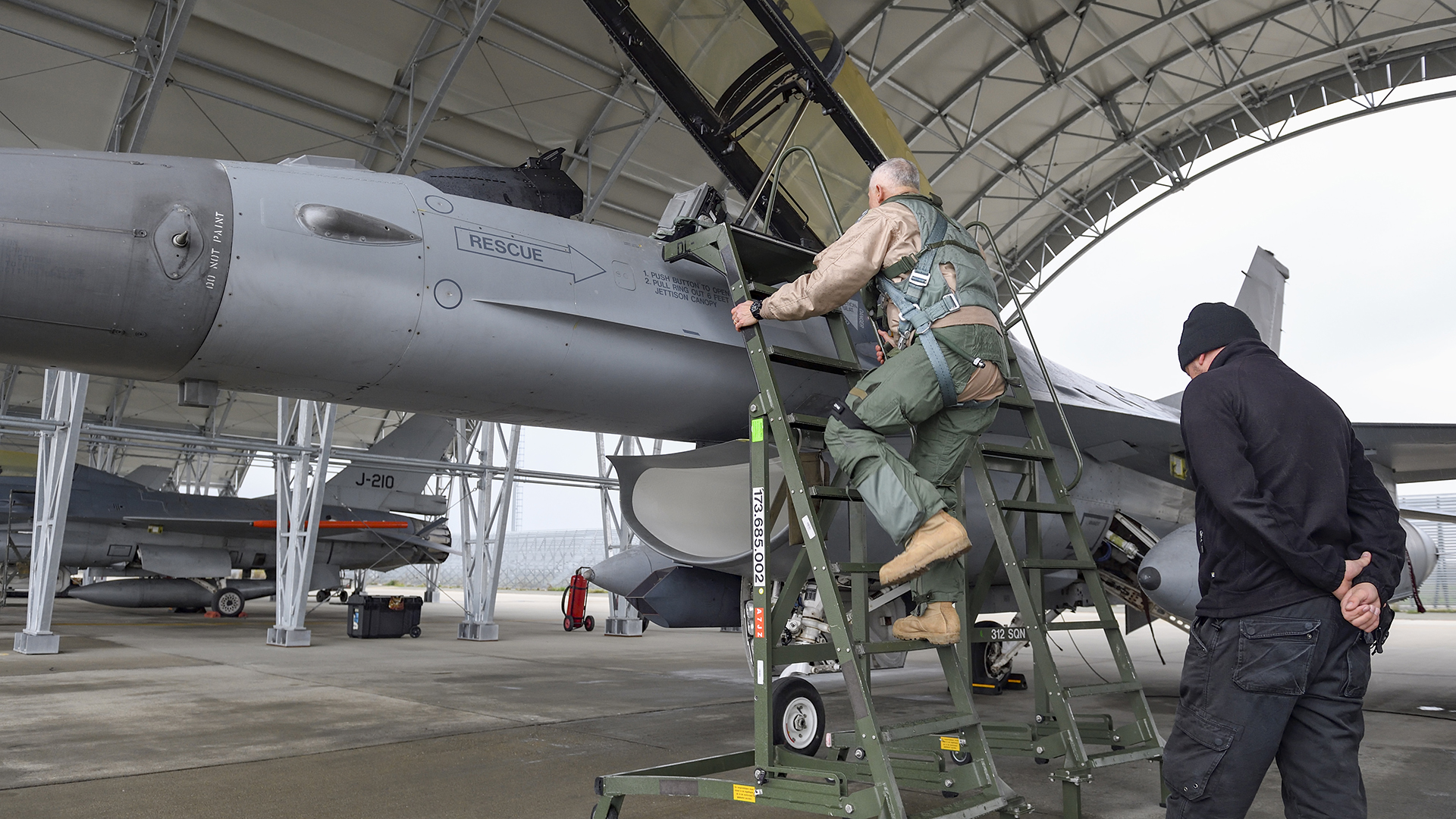
“Our simulators are critically important. You can ‘die’ in the simulator as many times as you like, but in the real world you only get one chance,” says Thomas. Reflecting the value placed on the simulators and of feedback from the front line, the EFTC course has already doubled the number of simulator rides for each student to over 50. “Live flying is very important, but what the simulator does is help you understand the consequences of your decisions. They let you become used to the pace of the mission and make decisions at that pace.”
“The most crippling thing a student can do is make a mistake and dwell on it. So you made a mistake. Boom, you must stop thinking about that. Think about how you solve the situation and don’t freeze up. Deal with flying the airplane and working out the next problem rather than worrying about what just happened. The simulator can help break some of that mindset, and as an instructor you must be on top of the students during this process, because being in the air as a single-ship is not a good time to have mindset issues.”
The training mindset at the EFTC is extremely operations-focused. This is no ordinary training squadron. The young Ukrainian pilots here learning how to fly and fight in the F-16 will graduate from the course and go straight to war.

TWZ was able to gain some insight from a student perspective, including the value of having the F-16 in service in Ukraine. “Before we got the F-16 in Ukraine, we could do some missions, but not the really big missions like we do now,” says “Dave,” a Ukrainian student at the EFTC. “We need these aircraft because every night Russia strikes with cruise missiles, and we need to protect our people in Ukraine. There’s also missions like air support, then you can switch easily to air-to-ground. The IPs at the EFTC are preparing us for this, so at the end of the course we will be ready for war. When we graduate from this course we won’t stop improving our knowledge and ourselves in this job.”
“Here you see the landscape, the ground, and it’s the same as in Ukraine. We do low level route flying because the threat would drive us down there. Every time you are thinking about everything in the war, how we’re preparing for that in the EFTC like doing air-to-ground and then switching to air-to-air threat reactions – you’re doing those kinds of things in the course.”
“The students may not even know what we have planned for them on a particular mission,” Thomas explains. “They will be flying in the airspace and suddenly get a simulated surface-to-air missile launch coming at them and they need to fly certain maneuvers to defeat it. We have embedded synthetic training in the aircraft’s electronic warfare system for this.”
“Baja” is a Romanian student on the cusp of graduating and heading to an operational squadron. “The Romanian pilot screening started with the Yak-52, and then I flew the IAR-99 SOIM. After that I went to Sheppard Air Force Base in Texas to fly the T-6 Texan II and the T-38 Talon through Undergraduate Pilot Training and IFF [Introduction to Fighter Fundamentals]. When you come here the first part of the course is just learning the jet, getting the basic qualification as a wingman. At the start you can get some what we call “sandbags,” flying in the back seat of the two-seater and assisting the IP. Most of the program here is based on solo flying. You only fly dual where it’s needed to make sure you are capable of doing it solo.”
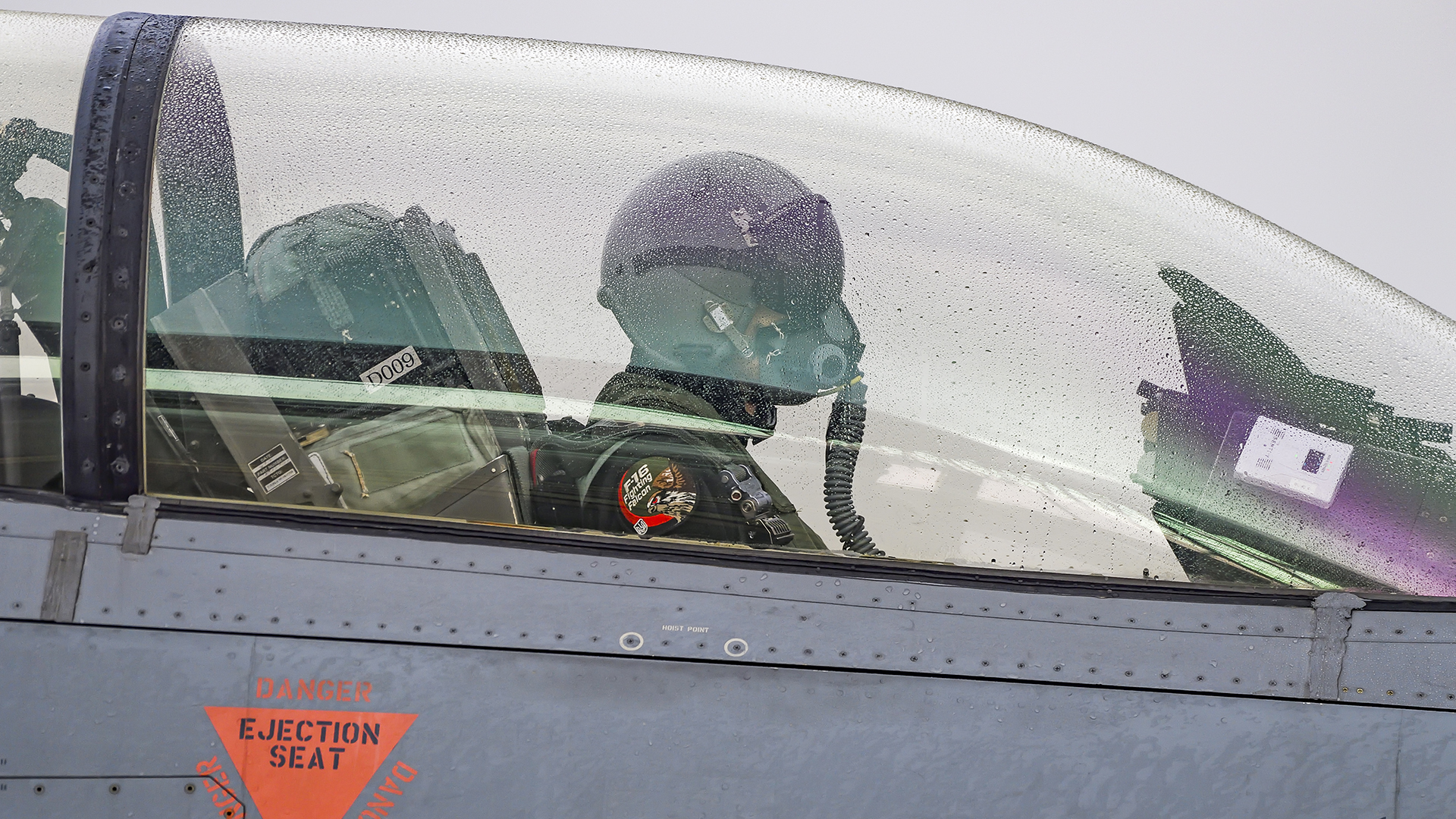
“For sure, flying here is more of a challenge than it was in Texas. It was always hot and sunny there, but here we’ve got some weather, but it’s great training. In autumn and winter basically you usually take off and land through the weather, and so most sorties involve some bad weather training,” adds “Baja.”
Upgrades and new-builds
In addition to training, another key feature of the F-16 evolution in Europe is modernization through both upgrades and the supply of new aircraft. Lockheed Martin’s F-16V upgrade for existing F-16s of any block brings them bang up to date and to a broadly similar standard as the Block 70/72 current production model.
The F-16V upgrade adds critical new systems to existing F-16s that are in-line with new build Block 70/72s, including the addition of the potent Northrop Grumman AN/APG-83 Scalable Agile Beam Radar (SABR) that features an active electronically scanned array (AESA), a Raytheon Modular Mission Computer, a remodeled cockpit with a large Center Pedestal Display (CPD), and Link 16 data link. Improved interoperability with the F-35 was also an important factor in the development of the F-16V configuration.
The SABR radar is a standard F-16V feature, and it offers significant benefits compared to the mechanically-scanned AN/APG-66/68 predecessors. This includes being able to scan far faster, acquiring more targets and at longer ranges, as well as the ability to produce more precise and higher fidelity tracks, even when it comes to smaller and stealthier objects. The radar is also far more reliable than its predecessor and more resistant to electronic countermeasures. AESAs, in general, have secondary electronic warfare and communications potential, as well.
A new electronic warfare package is also part of the F-16V and Block 70/72, with an option for either the L3Harris’ AN/ALQ-254(V)1 Viper Shield or Northrop Grumman’s AN/ALQ-257 Integrated Viper Electronic Warfare Suite (IVEWS).
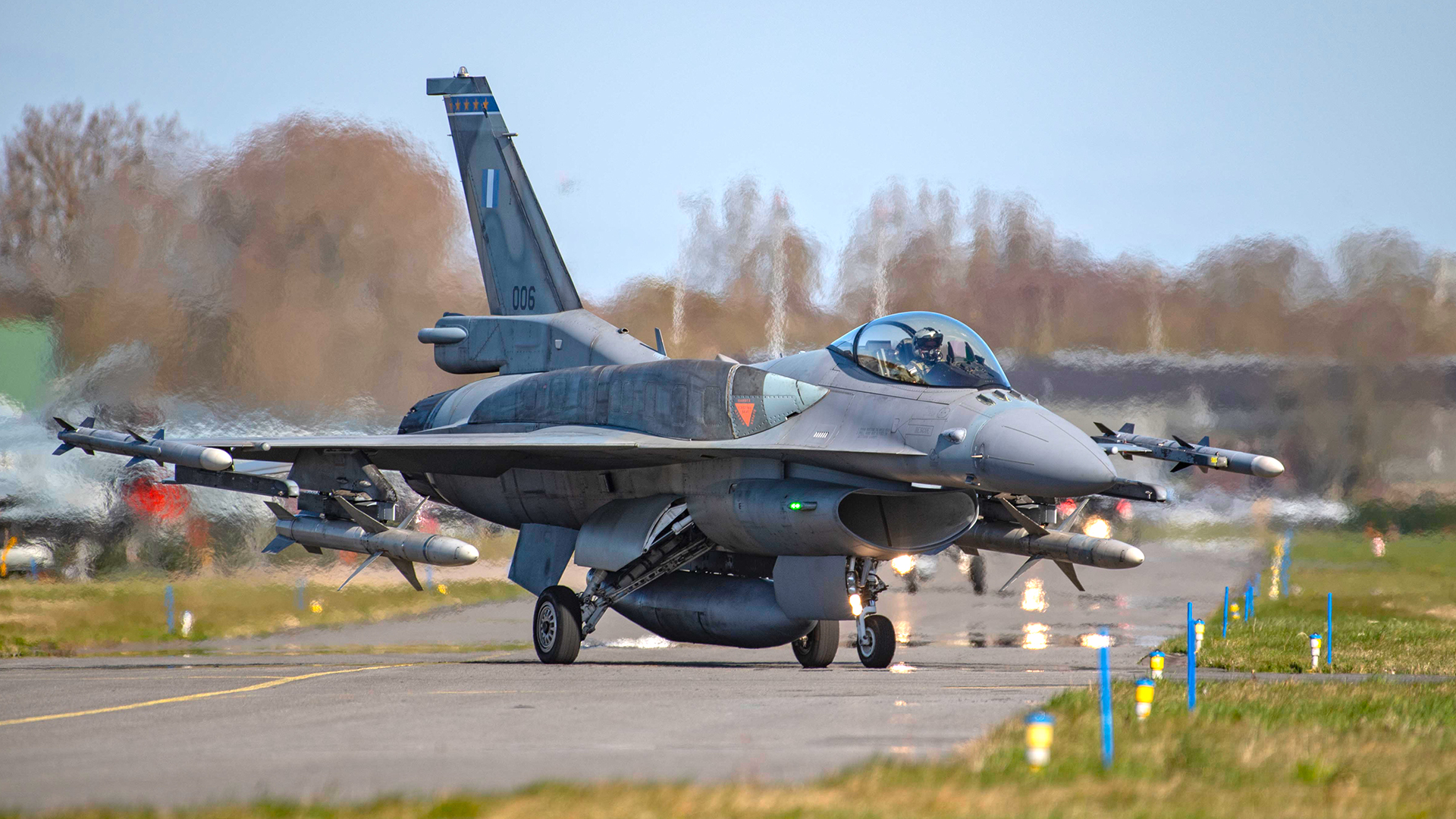
Greece’s F-16V modernization includes 84 Block 52+ jets, with work being undertaken locally by Hellenic Aerospace Industry (HAI). Speaking at Exercise Ramstein Flag in April 2025, Hellenic Air Force F-16V pilot “RAF” commented: “The AESA radar, APG-83, is what makes it stand out in the new field of battle. It gives us a high capability of tracking multiple targets at very long-ranges. We can do air-to-air and air-to-ground, it just gives us overall [situational awareness] much higher [than] we are used to.”
“I’m really, really pleased with the F-16V upgrade, it’s made it into a much more modern jet. For the F-16V and its interoperability in NATO exercises, so first of all what it gives us is […] common hardware [so] that we can connect, we’re all together on a single Link 16, we can share information between us real-time, all together, which boosts our situational awareness and we can then move on to performing things that require common language [and] procedures in order to be as lethal as possible.”
The Polish Ministry of Defense has followed, signing a $3.8-billion contract to upgrade the country’s full fleet of F-16C/D Block 52+ fighters to F-16V standard. The state-run Wojskowe Zakłady Lotnicze No. 2 S.A. (Military Aviation Works No. 2), which has a formal relationship with the manufacturer of the jets, Lockheed Martin, will perform the upgrade work.
In 44 years of F-16 manufacturing at Lockheed Martin’s Fort Worth plant in Texas, some 3,620 F-16s were built, initially by General Dynamics and then by Lockheed when it acquired General Dynamics’ Fort Worth Convair division in 1993. The F-16s built under license by the European partner nations in the 1970s and 1980s were in addition to these, with other examples assembled in South Korea and Türkiye. A total of 4,588 F-16s were manufactured globally before F-16 production was moved to Greenville, South Carolina, in 2019.
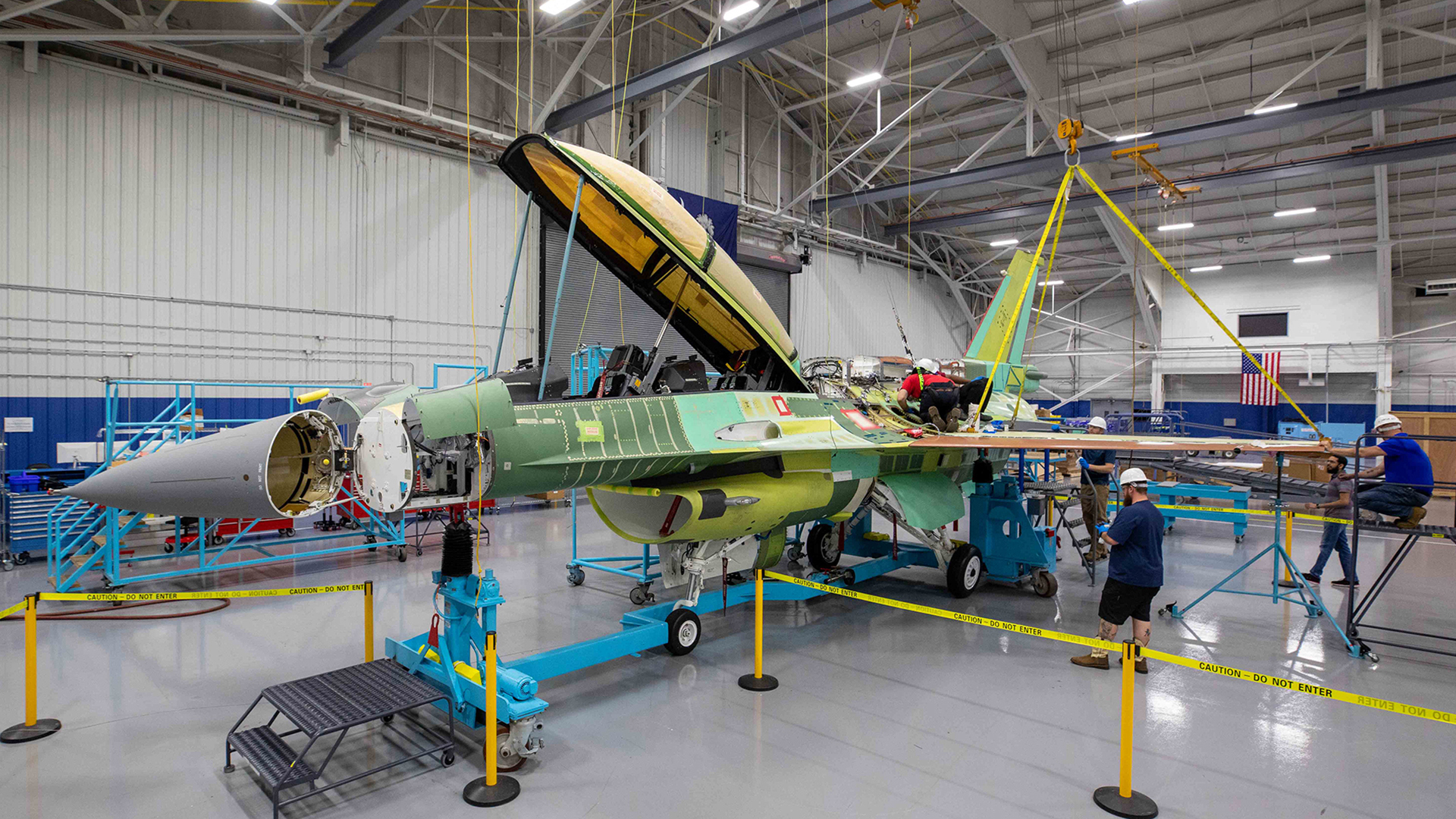
The plant at Donaldson Field in Greenville is now the center of Lockheed Martin’s F-16 production effort. Here, the company is building brand new Block 70/72 variants for new and returning F-16 customers, including Bahrain, Bulgaria, Jordan, Slovakia, and Taiwan. The Block 70/72 variant of the F-16 builds on years of incremental development work, facilitated by Lockheed Martin’s multitude of customers, and as already mentioned, it is similar to the F-16V in terms of onboard systems, including the SABR radar.
While the Block 70/72 draws heavily on the F-16V, its new-build airframe offers a service life that’s been increased from 8,000 to 12,000-hours. Some 70 percent of the airframe has been modified compared to the early F-16A/Bs, building on years of historic technical data and learning from structural enhancement programs such as Falcon STAR and Falcon UP, which reinforced certain critical areas of the F-16’s airframe that were susceptible to fatigue. The new build F-16s also come with the choice of engine — the Block 70 has the General Electric F110-GE-129 that offers 29,000 pounds of thrust and the Block 72 has the Pratt & Whitney F100-PW-229 with 29,160 pounds of thrust.
“The current backlog is 111 jets. We’ve delivered a total of 37 F-16 Block 70 aircraft, including 14 for Slovakia and eight for Bulgaria,” a Lockheed Martin spokesperson told TWZ. “The official backlog now includes a second tranche of eight jets for Bulgaria.”
“Bulgaria’s last new combat jets were acquired over 30 years ago. Despite several attempts to date, Bulgaria faced repeated difficulties in modernizing its fighter fleet,” explains Lieutenant General Krasimir Kanev, Bulgaria’s Deputy Chief of Defense. “The long-awaited shift to modern air power became a fact with the contracts for the acquisition of F-16 Block 70 aircraft from the U.S. providing the technological leap needed for 21st-century air defense challenges. This acquisition signifies a major upgrade in capability allowing Bulgaria to continue without interruption, with its own forces and assets, to ensure both its contribution to NATINAMDS and the protection of national air sovereignty.”
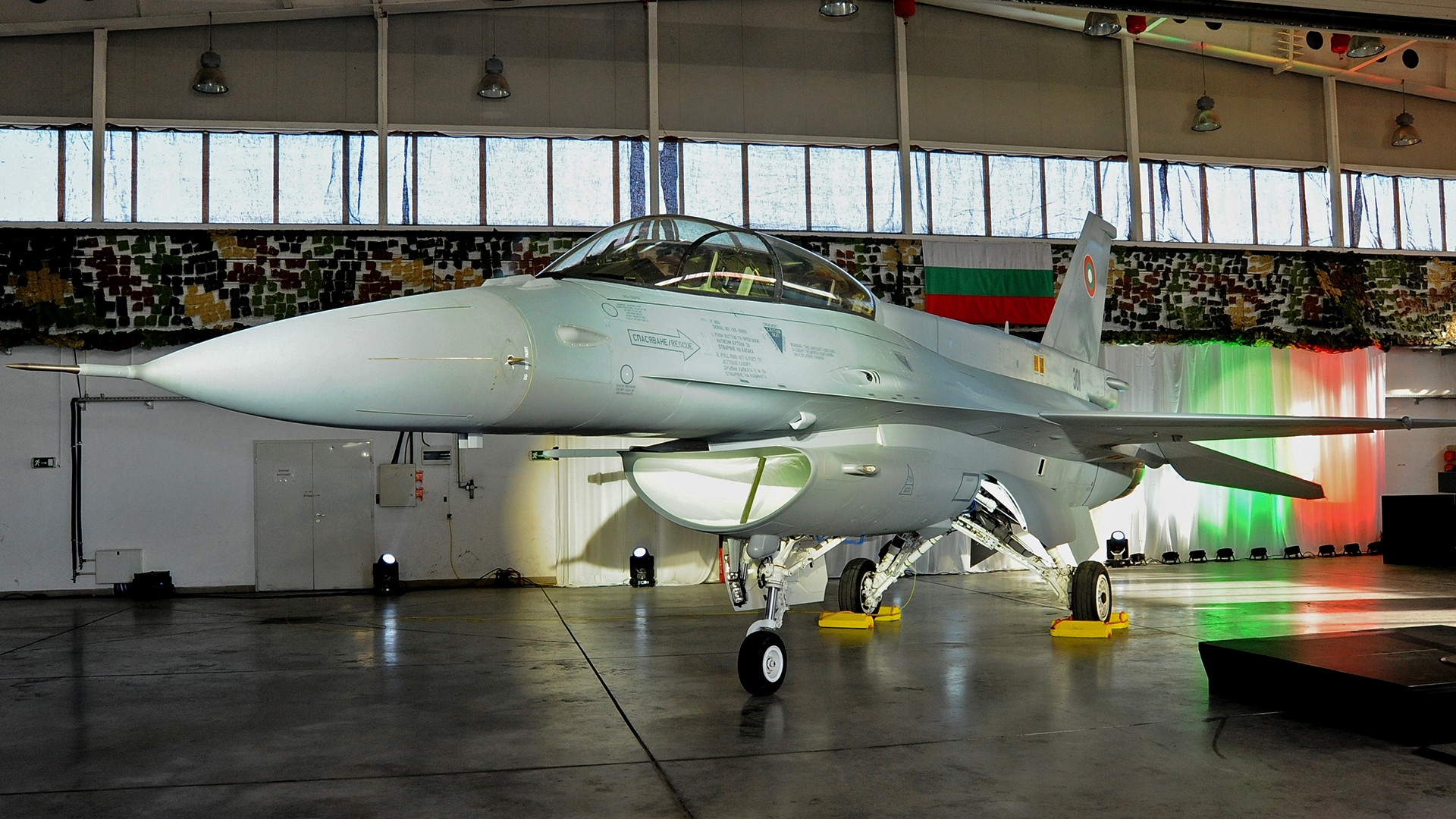
“Bulgaria’s F-16 training program has evolved beyond initial air-to-air focus, with pilots now certified for complex air-to-surface missions, including virtual reality simulators and intensive flight training, enhancing their multi-mission capabilities for national defense and NATO interoperability,” Kanev adds. “Our pilots, trained in the U.S., are virtually receiving the highest level of training to ensure the use of F-16 Block 70 aircraft in their full range of capabilities. Some of the Bulgarian pilots will be trained to the level of instructor pilot, verifying that the Bulgarian Air Force can fully operate and maintain its F-16 fleet independently and meet NATO defense commitments. Additional training in Europe would provide opportunities for Bulgarian pilots, but we are not currently participating in such programs.”
Kanev explains that production of Bulgaria’s first F-16s in South Carolina coincided with the COVID-19 pandemic, which created difficulties for Lockheed Martin and customer, while also conceding that Bulgaria has also encountered difficulties in selecting and training personnel, organizing the acceptance of the aircraft, and building the necessary infrastructure for the new fighters. “These challenges were interrelated, and the acceptance of the aircraft depended on their successful resolution.” Despite these issues, in 2025, Bulgaria received and began operating its first batch of six aircraft.
“The acquisition of F-16 Block 70 aircraft will contribute significantly to the compatibility of the Bulgarian Air Force with allied formations. Interoperability can be considered in various aspects, such as infrastructure, communication and navigation equipment, the ability to share information and use of compatible communication and encrypted channels by all allied air forces allowing seamless information exchange, shared situational awareness and coordinated operations. Each of the above key aspects of interoperability will be enhanced to such an extent as to enable the Bulgarian Air Force to participate seamlessly and fully in both joint exercises and NATO missions and operations.”
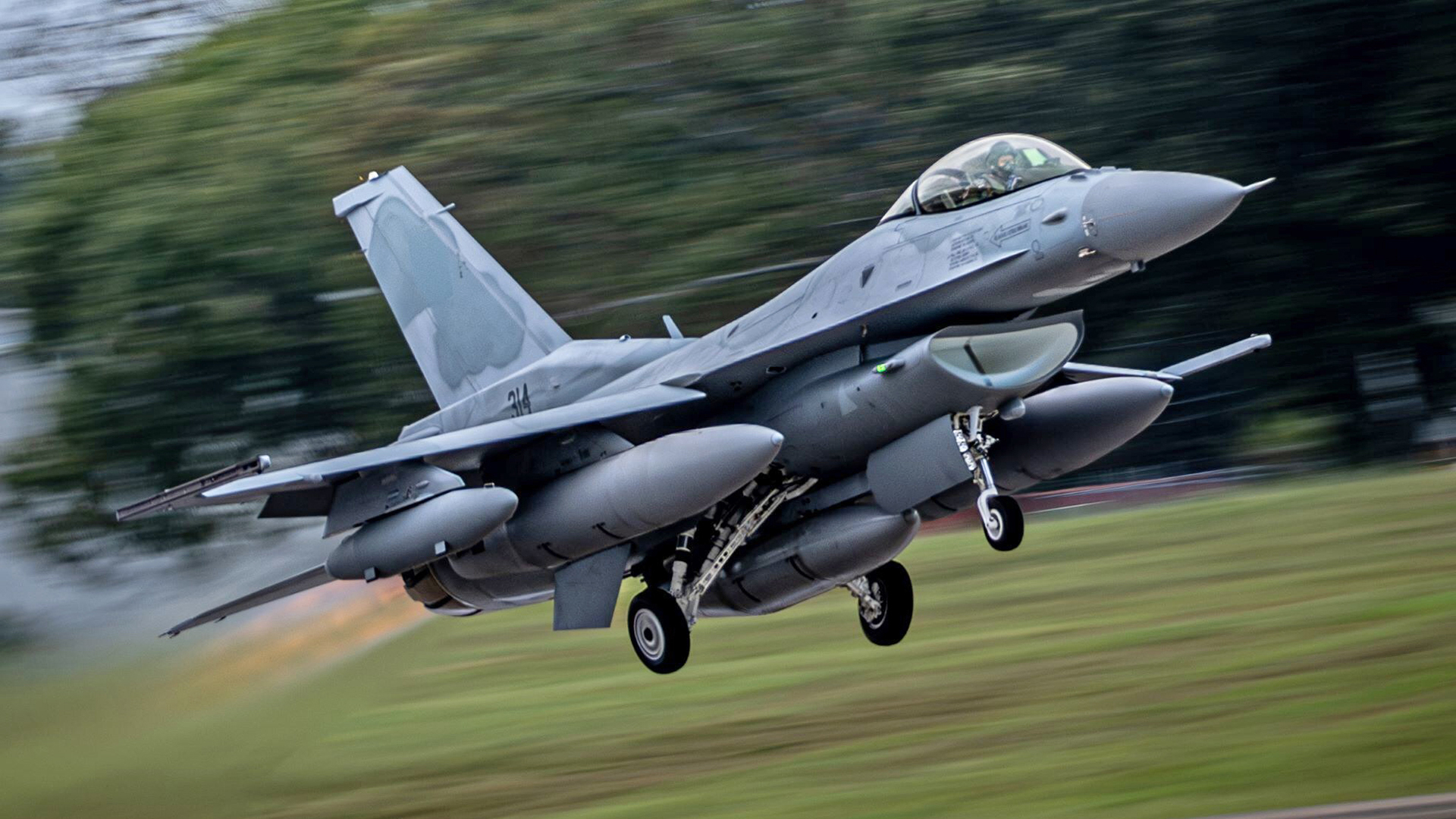
The current F-16 production process continues to draw upon European manufacturing partnerships. PZL Mielec, a Lockheed Martin subsidiary in Poland, produces the aft and center fuselage, cockpit structure, cockpit side panels and the forward equipment bay. HAI builds drop tanks, the forward fuselage engine inlet and aft fuselage airframe components.
“PZL Mielec currently manufactures major fuselage structures for the newest-generation F-16 Block 70/72, and our production scope continues to expand,” comments Janusz Zakręcki, PZL’s president and general director. “This positions PZL Mielec as one of the key European contributors to the global F-16 program. Looking ahead, we see strong potential for PZL Mielec to support not only production, but also sustainment activities for the F-16 fleet.”
This new generation of European F-16 operations could yield developments for the EFTC. “The training for the new Block 70/72 jets isn’t necessarily being carried out in those airplanes. A lot of the new Viper pilots are actually being trained in older model F-16s, and then they do a top-off at the end in the Block 70/72s,” says Thomas. “The airplane flies pretty much identically – it’s an F-16, it flies like an F-16.”
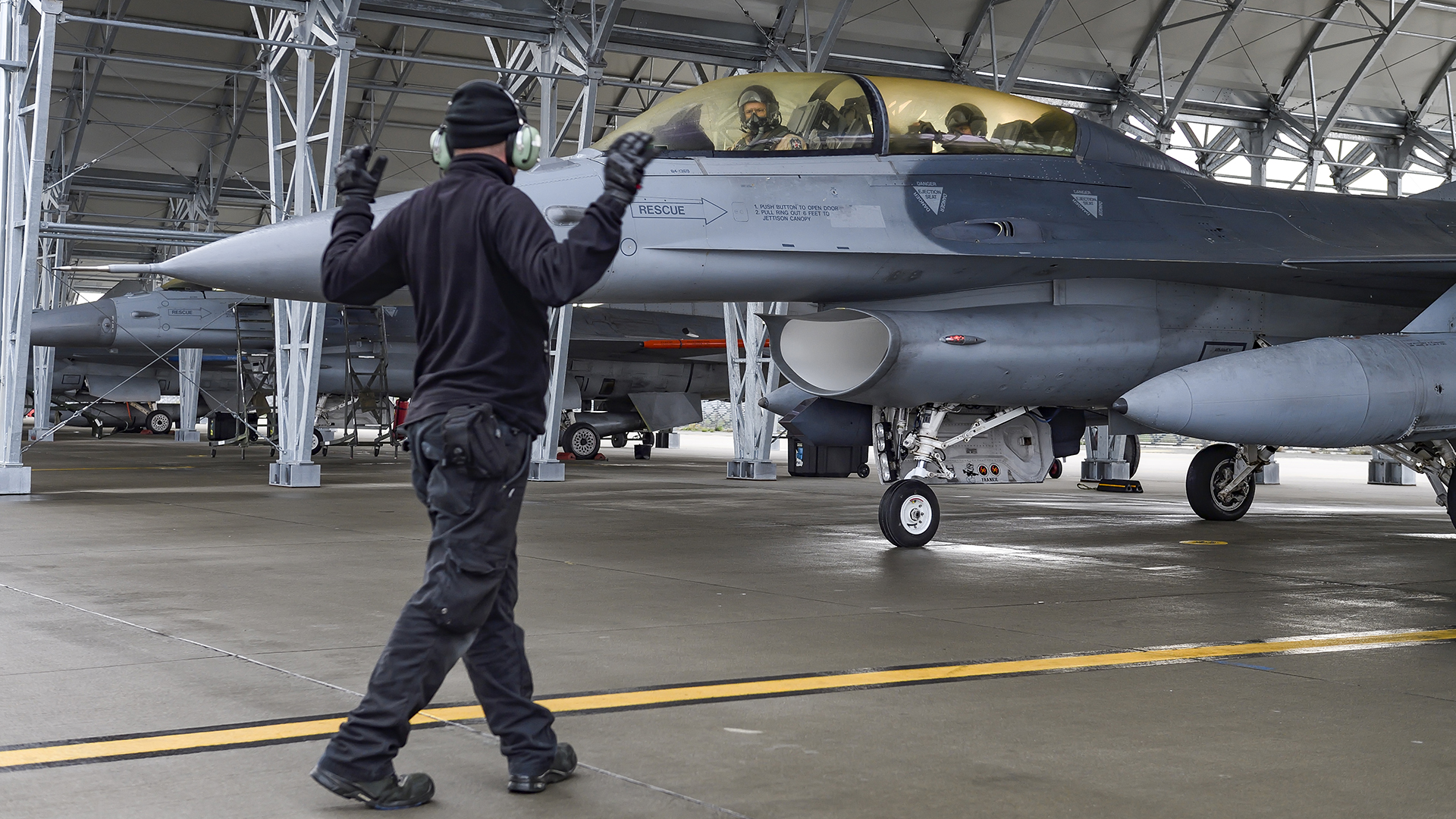
“A unit that has Block 70s could get their basic training here at the EFTC for sure. They could also do the flight lead work here, how do I keep track of my wingman, how do we keep the situational awareness going, employ weapons as a team, that kind of stuff. If there’s a special system on the airplane, that can only really be taught on that airplane or in the simulator for that airplane. So, it reads across that, in [the] future, we could maybe do that kind of work here, we could train any NATO F-16 driver.”
Collectively, the EFTC, the F-16V upgrade program, and new build Block 70/72 F-16s represent a second-generation of European support for the Viper. Following initial bed-down of new F-16s in Bulgaria and Slovakia, the EFTC appears to present a logical solution for these nations to train some of its pilots and maintainers locally in the future.
The pedigree of the EFTC may also present an appealing option for other more seasoned European operators of the type to make use of this tailored and highly-efficient F-16 training center, designed to become a center of excellence for the second-generation of Viper operators in Europe.
Loading comments…
Comments couldn’t be loaded. Please refresh the page.