
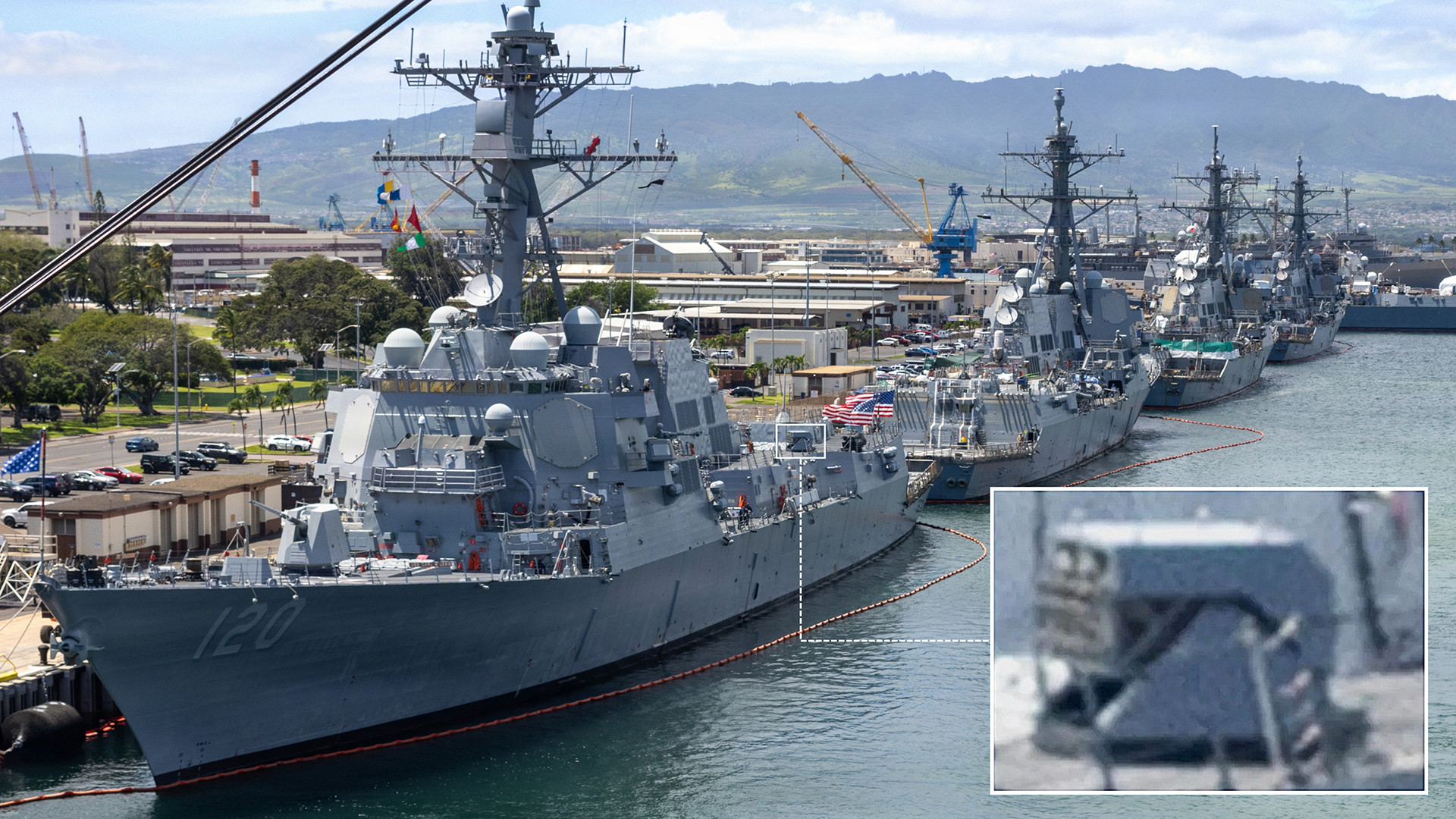
A new and not immediately recognizable launcher has emerged on the U.S. Navy’s Arleigh Burke class destroyer USS Carl M. Levin. Last year, launchers for Coyote counter-drone interceptors appeared in the same general location on two other Burkes, the USS Bainbridge and the USS Winston S. Churchill. The Navy is currently known to be exploring several other options for integrating lower-cost anti-drone interceptors on various warships to bolster their defenses against this ever-growing threat. The new launcher could also be for deploying other kinds of munitions, drones, and/or decoys.
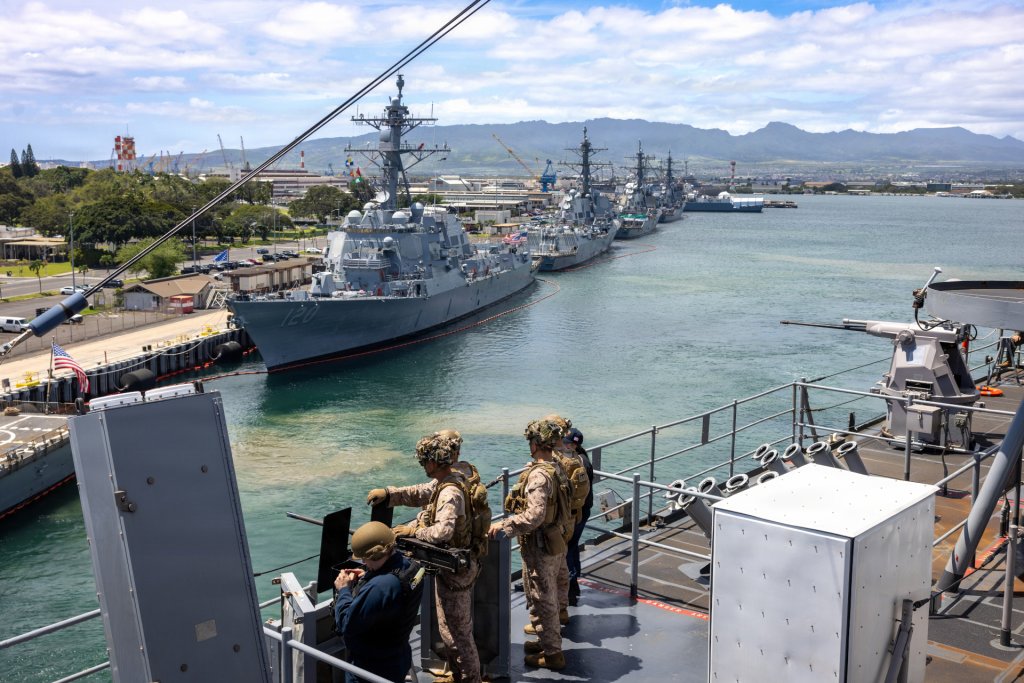
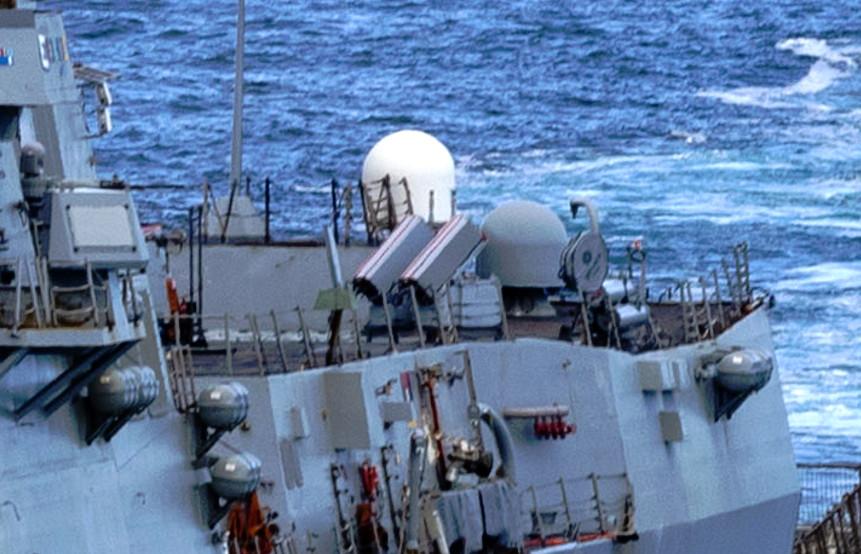
The Carl M. Levin and its new launcher can be seen in the background of a picture that the U.S. Marine Corps released on April 8, which is seen in parts throughout this story. The image was taken on March 29 at Pearl Harbor in Hawaii. The Levin, also known by the hull number DDG-120, is homeported there. A Japanese-language blog called OSINFO was the first to notice the launcher in the image and posted it to social media.
The new launcher is seen installed on the deck at the aft end of the Levin’s superstructure, between the destroyer’s port-side torpedo tubes and its rear Mk 41 Vertical Launch System (VLS) array. From what we can see of the launcher itself, it appears to have multiple cells. Whether or not it can rotate or is fixed in place is not perfectly clear, but the latter seems likely, especially given what appears to be a circular mount. It looks like it would swivel upwards for firing.
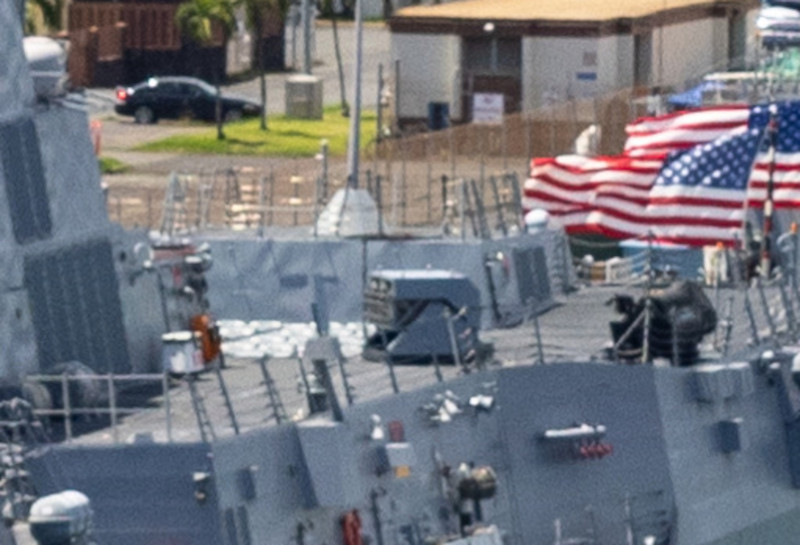

What the launcher fires and what purpose it serves are unknown. It was not seen on Levin at least as of December 2025. A cursory search at the time of writing does not now show it on any other Burkes, and it is not known whether the Navy currently plans to field it more widely on that class or any others. TWZ has reached out to the Navy for more information.
One distinct possibility is that this is a launcher for the White Spike counter-drone interceptor from Zone 5 Technologies. The launcher that Zone 5 has shown so far for White Spike is a four-cell design that is different from the one now installed on the USS Carl M. Levin. At the same time, it is also very similar in many respects, both in terms of form and likely function. The trapezoidal shape of its front is an especially prominent similarity as well as its overall configuration.
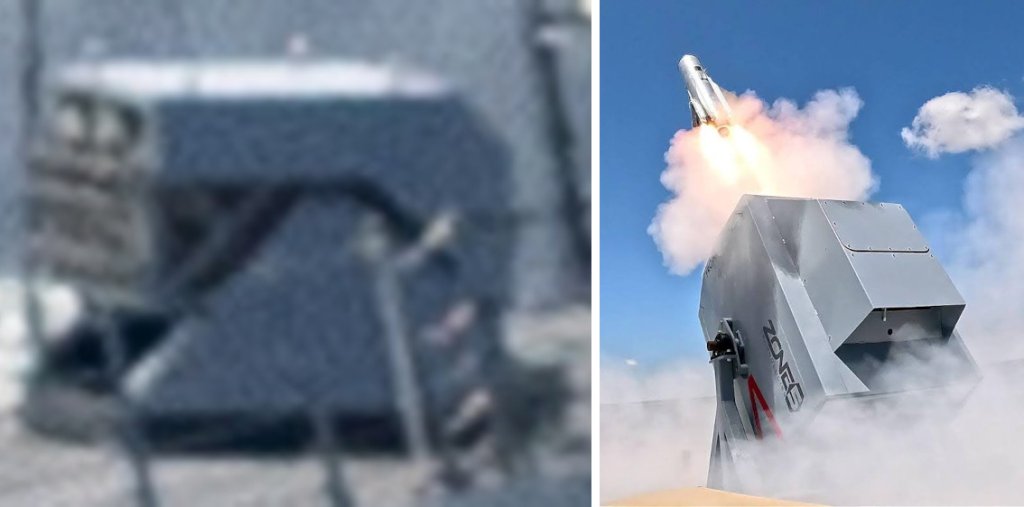

White Spike has been under evaluation as part of a project called Counter Unmanned Aerial Systems – NEXT, or Counter-NEXT, which the Pentagon’s Defense Innovation Unit (DIU) has been running since 2024. Its appearance on a Navy destroyer now would make sense given that Counter-NEXT has had a particular eye toward naval applications.
Anduril’s Roadrunner-M counter-drone interceptor has also been under evaluation as part of Counter-NEXT. However, the launchers that Anduril has publicly shown so far for those interceptors do not align with what is seen on the Levin. Furthermore, Roadrunner-M is designed to be launched vertically and recovered in the same way for reuse if it does not actually prosecute a target in the course of a mission, as you can read more about here.
Last year, the U.S. Navy had said that it planned to integrate launchers for Anduril’s Roadrunner-M counter-drone interceptors, as well as Raytheon’s Coyote, on an unspecified number of Arleigh Burke class destroyers. As already noted, the launcher on Levin is in the same general spot as the Coyote launchers that have been installed on the USS Bainbridge and the USS Winston S. Churchill.
There is certainly demand from the Navy for more counter-drone capabilities for its ships, in general, which grew substantially in the wake of the service’s experiences during operations in and around the Red Sea in recent years. The latest conflict with Iran has only further underscored the still-expanding scope and scale of uncrewed aerial threats.
Lockheed Martin has also previously shown a concept for installing four-cell launchers capable of firing AGM-179 Joint Air-to-Ground Missiles (JAGM) in the same general location at the aft end of an Arleigh Burke class destroyer. As its name indicates, JAGM was originally developed for use against surface targets, but Lockheed Martin has been looking to evolve it into the counter-drone space. JAGM is derived from the AGM-114 Hellfire. The millimeter-wave radar-guided AGM-114L variant, in particular, has already emerged as a counter-drone weapon in recent years, including for shipboard use. JAGMs fired from warships could also be used for close-in defense against other targets, including swarms of small crewed or uncrewed boats.
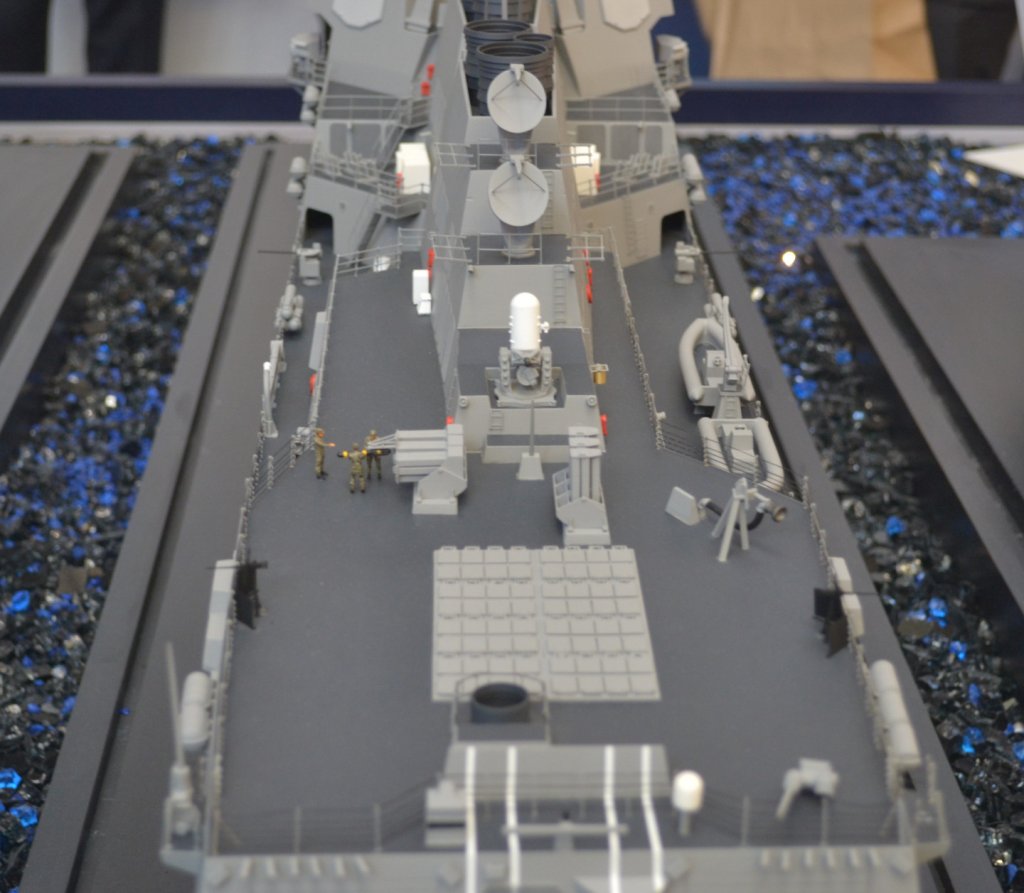
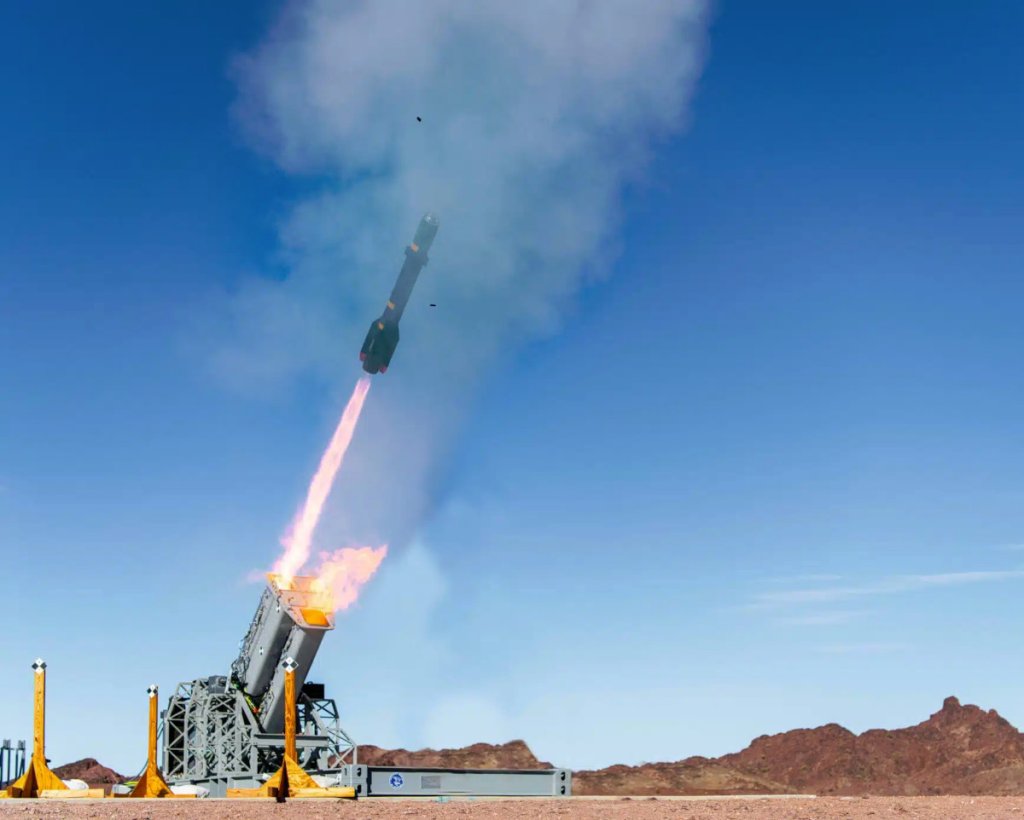
There is still a possibility that the launcher now integrated on the USS Carl M. Levin could have other purposes beyond the counter-drone role.
A launcher for drones, including types configured as loitering munitions or decoys, could be another possibility. In recent years, the Navy has notably been experimenting with long-endurance drone-like decoys to help lure incoming anti-ship cruise missiles away from friendly ships and otherwise confuse opponents. In February, DIU put out a call for containerized drone launcher designs that could be employed at sea or on land. TWZ has previously laid out a detailed case for the many benefits that could come along with integrating launchers for swarms of drones configured to perform a variety of different tasks onto Navy ships.
Levin‘s new launcher could be used to fire shorter-range decoys and/or other kinds of countermeasures, as well.
Broadly speaking, the Navy has a long history of integrating new and improved capabilities, including weapon systems and countermeasures, on small numbers of Burkes. In some cases, those modifications have then begun to make their way onto more ships of the class, or have otherwise informed larger upgrade programs. The Arleigh Burke class is set to be the workhorse of the Navy’s surface fleets for years to come, and the ships will require continual updating as new threats and other developments emerge.
Whatever its purpose, the new launcher at the aft end of the USS Carl M. Levin is the latest example of how the capabilities of the Navy’s Burkes continue to evolve.
Contact the author: joe@twz.com
Loading comments…
Comments couldn’t be loaded. Please refresh the page.