
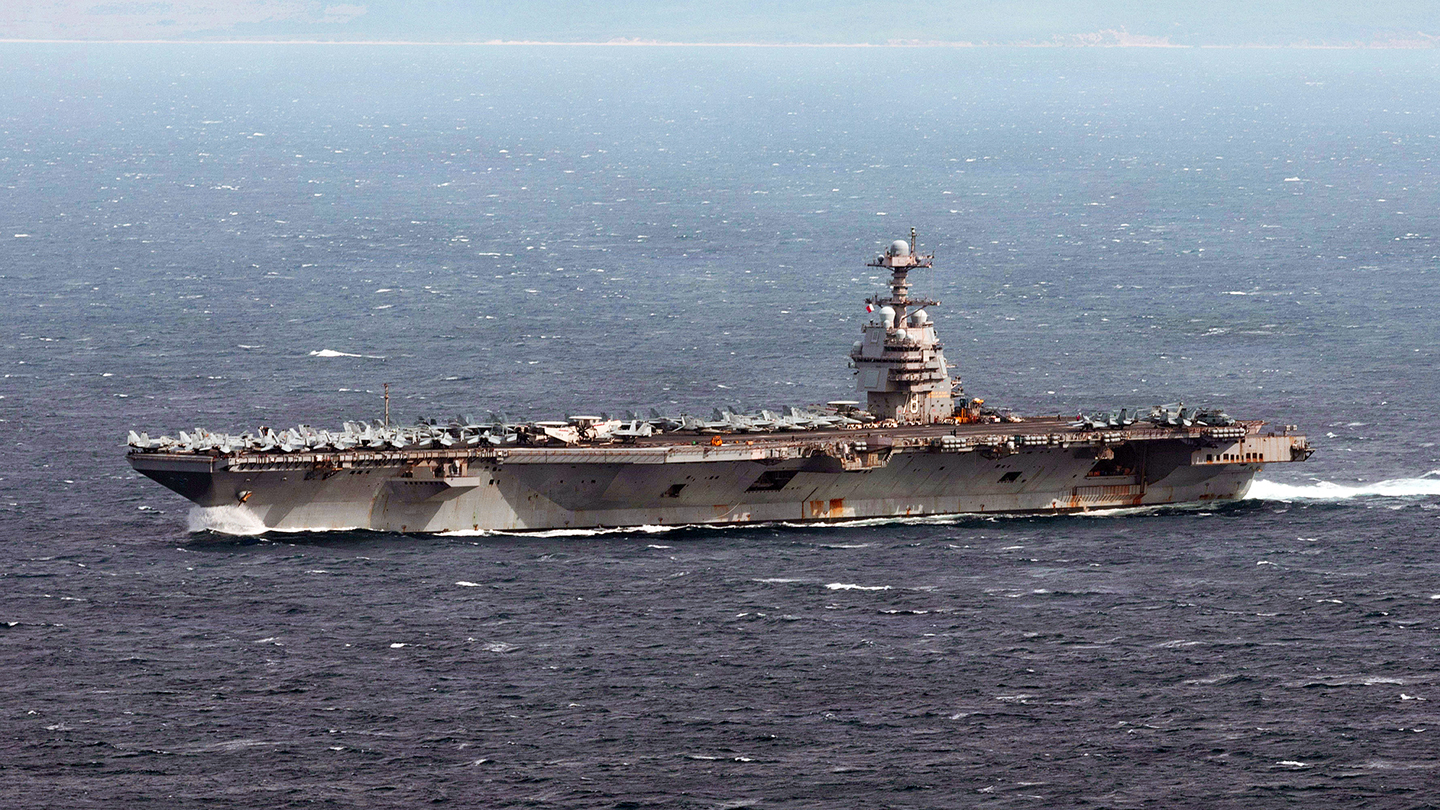
Though there are currently no aircraft carriers in the U.S. Central Command (CENTCOM) region, the Navy’s top admiral said he would seek alternatives to extending the deployment of the USS Gerald R. Ford Carrier Strike Group (CSG) for any potential operation against Iran. The strike group, which most recently took part in the Operation Absolute Resolve mission to capture Venezuelan dictator Nicolas Maduro, is currently in the U.S. Southern Command (SOUTHCOM) region. It has been away from home since leaving its homeport of Norfolk on June 24, 2025. Extending deployments has a cascading effect on the ability to maintain ships and on the lives of the sailors who operate them.
Adm. Daryl Caudle, the Chief of Naval Operations (CNO), discussed the status of Ford and her escorts with a small group of reporters, including from The War Zone, today at the Surface Navy Association’s annual symposium.
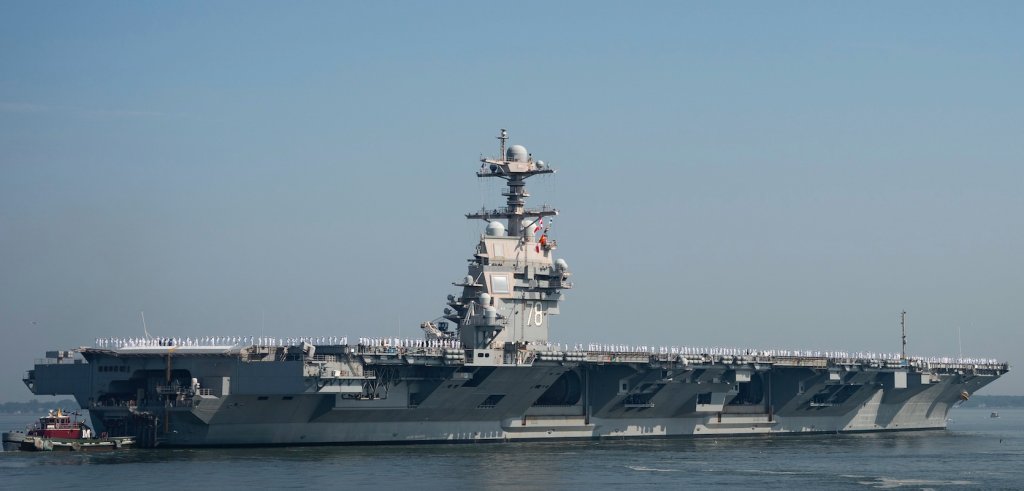
“I think the Ford, from its capability perspective, would be an invaluable option for any military thing the president wants to do,” Caudle explained. “But if it requires an extension, it’s going to get some push back from the CNO. And I will see if there is something else I can do.”
Caudle did not provide specific options, but emphasized that there is a price to be paid for the strike group after being away from homeport for more than 200 days under often intense conditions.
As for what is in the CENTCOM area of operations today, six U.S. Navy warships including three Arleigh Burke class destroyers, USS McFaul, USS Mitscher and USS Roosevelt are present, as well as three Littoral Combat Ships, the USS Tulsa, USS Santa Barbara and USS Canberra. This is a much smaller array of vessels than what was present during the war between Israel and Iran in June. If a carrier is requested, the USS Abraham Lincoln and its strike group would be the one that would likely respond.
Lincoln is currently operating in the South China Sea. There are no other carriers on cruise at the moment. But it’s also worth noting that a carrier is not a prerequisite for dealing with contingencies or even offensive operations in the region. The U.S. can fold in other resources to help make up for the naval presence gap. Where it may be felt most is in missile and drone defense, especially considering multiple Aegis-equipped surface combatants were tasked with defending Israel during the war. This was in addition to the need to defend U.S. and other allies’ facilities in the region.
As for the Ford, its strike group left Norfolk for a “regularly scheduled deployment” to the Mediterranean 11 days before the start of the 12-Day War between Israel and Iran and two days before the U.S. Operation Midnight Hammer attack on Iran’s nuclear facilities. Last October, the strike group was ordered by President Donald Trump to move to the SOUTHCOM region in response to the growing tensions with Venezuela, which you can read more about here. Arleigh Burke class destroyers USS Winston S. Churchill, USS Bainbridge and USS Mahan remain on station with the Ford to continue operations under Operation Southern Spear, the effort to counter drug trafficking in the region and maintain pressure on Venezuela.
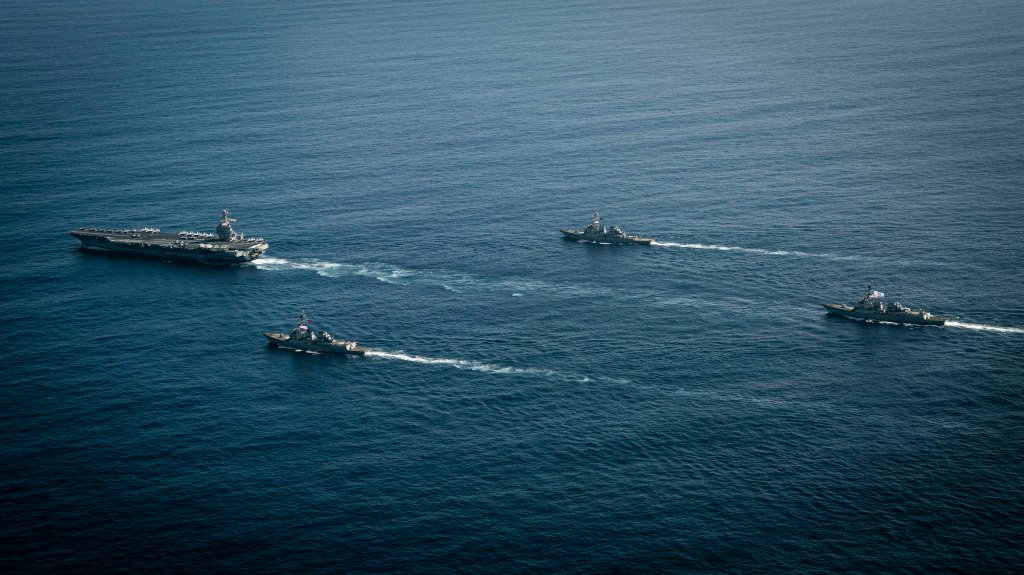
“The fact that the Ford is currently operating in the Southern Command’s area of operations is fine with me,” Caudle posited. “It is the extensions that bother.”
“I am a big non-fan of extensions, and because they do have significant impact,” Caudle explained. “Number one, I’m a sailors-first CNO. People want to have some type of certainty that they’re going to do a seven-month deployment.”
“When it goes past that, that disrupts lives,” Caudle added. “It disrupts things like funerals that were planned, marriages that were planned, okay, babies that were planned, you know, so the human element of extension, I’m not a big fan of obviously.”
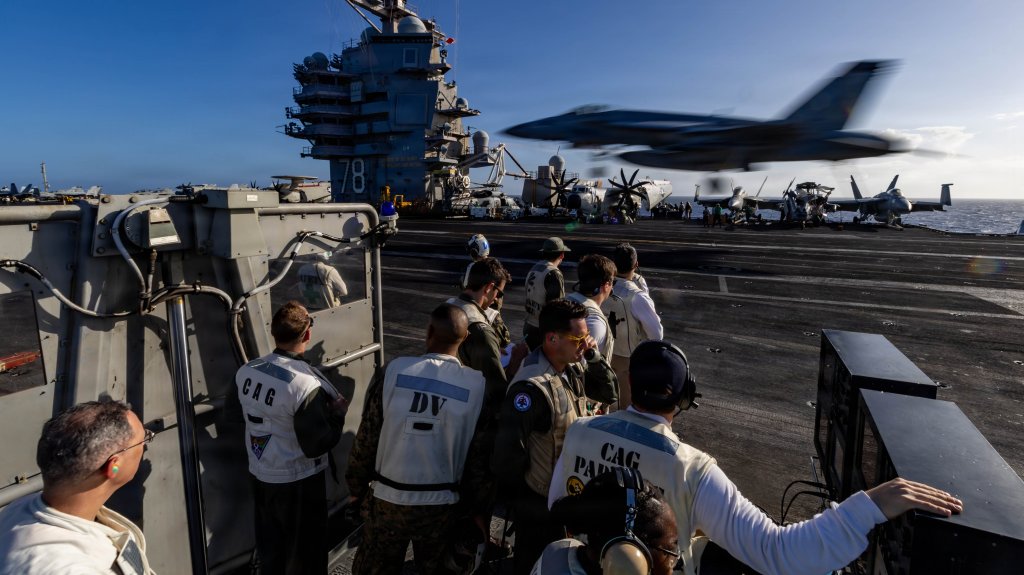
Beyond affecting people, extensions also have a detrimental impact on the ships.
“To the financial and readiness aspects, we have maintenance agreements and contracts that have been made with yards that are going to repair the ships that are in that strike group, including the carrier itself,” Caudle explained. “And so when those are tied to a specific time, the yard is expecting it to be there. All that is highly disruptive.”
Extending the deployment of the Ford and its carrier group would also add stress “to the workforce, to the balance on that yard, and to how we actually conduct that maintenance, even more so if it goes into the next fiscal year,” Caudle said. “The financial aspects of an extension can be quite disruptive when we burn the ships hotter – more than planned. That does have detrimental effects on the work package.”
“So now, when the ship comes back, we expected the ship to be in this level of state in which it was used during that seven-month deployment, when it goes eight, nine-plus months, those critical components that we weren’t expecting to repair are now on the table,” Caudle pointed out. “The work package grows, so that’s disruptive.”
Yesterday, the Navy highlighted concerns about how heavy work loads interfere with one aspect of ship maintenance, rust, but there is a much larger scope of work that needs to be done to keep a carrier strike group operational.
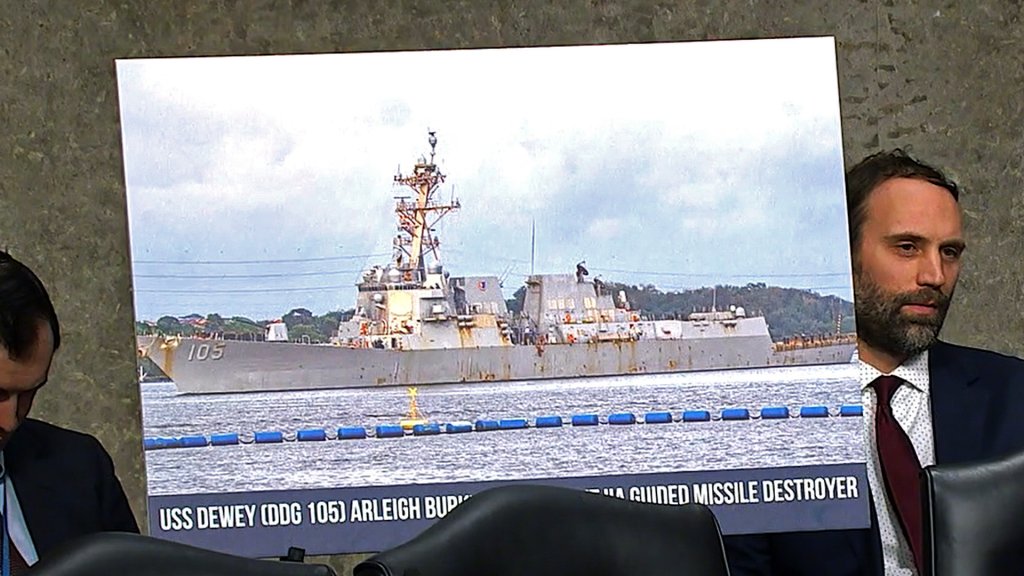
Extending ships’ cruises repeatedly can cause cascading effects that deeply impact the future readiness of the force. This can result in critical power projection capabilities not being available in the future. It’s very much a steal from Peter to pay Paul kind of scenario.
You can read all about these issues and how they can manifest across the fleet in this past special feature of ours.
The constant presence needed in the Red Sea, and multiple other contingencies in the Middle East over the last few years, have also taken their toll on the fleet.
Though on a voyage approaching an eighth month, the Ford strike group’s current deployment is still far shorter than the one undertaken by the USS Nimitz strike group in 2020. Amid the COVID-19 pandemic, the Nimitz embarked what would become a 341-day deployment, returning home in March 2021. It marked the longest such deployment since the Vietnam War, Navy Times noted.
Regardless of any concerns about what it would mean to the ships and crews of the Ford CSG, Caudle said they will be ready for whatever mission Trump orders.
“I like to tell people the Navy can be anywhere in two weeks,” Caudle proffered. “We are, by our very nature, mobile, expeditionary, quick response option available. And so if the president needs options in the Middle East, you know, we can go build out what that looks like for him. And with the right planning and coordination with the, you know, the respective combatant commanders the Navy will be ready to provide options.”
Contact the author: howard@thewarzone.com
Loading comments…
Comments couldn’t be loaded. Please refresh the page.