
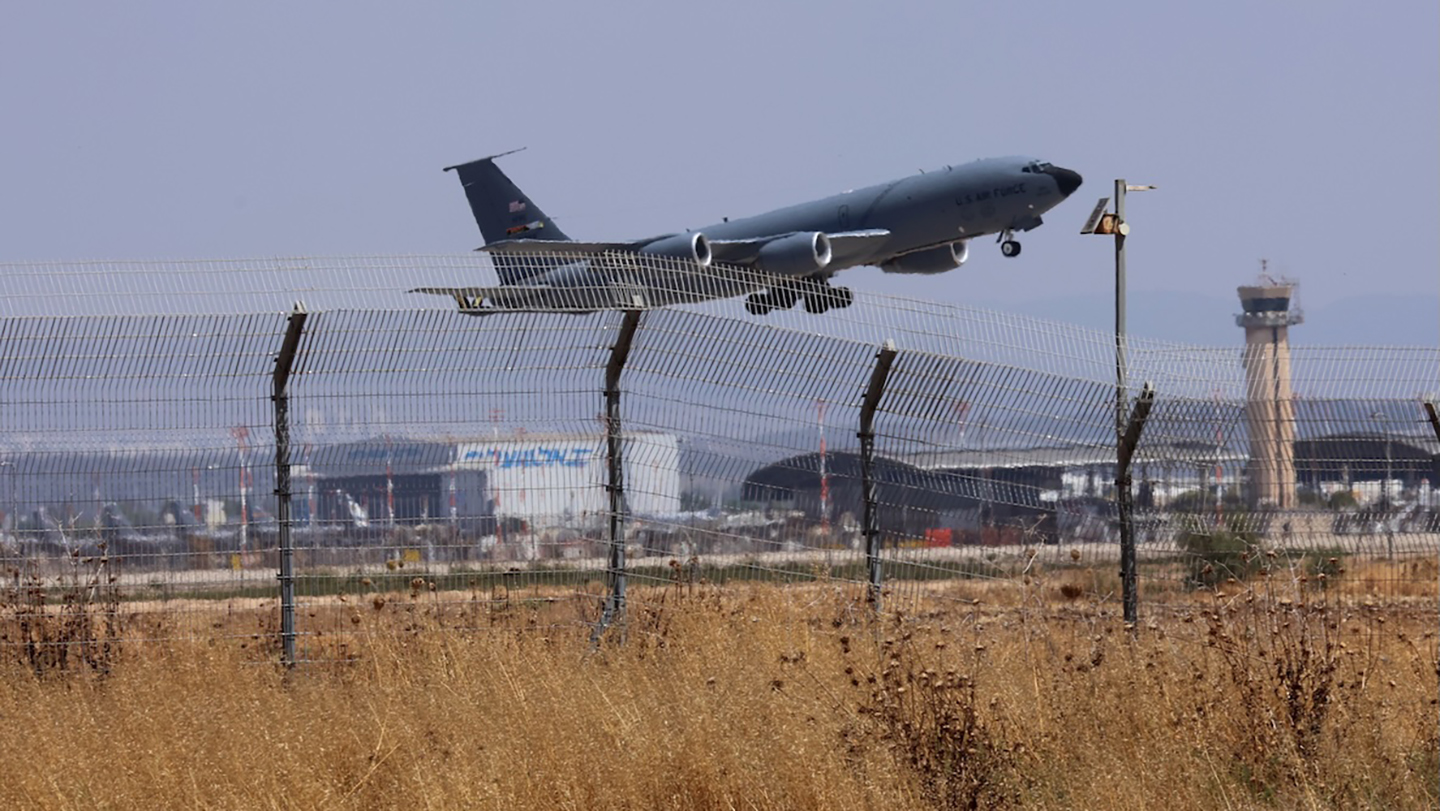
For several months, Israel’s Ben Gurion Airport was so packed with U.S. Air Force aerial refueling tankers deployed for the fight against Iran that officials in Jerusalem complained about the toll that presence was taking on airport operations. The issue came to a head on Tuesday, when Israel’s Transportation Minister placed a limit on how many of these jets can land at Ben Gurion Airport. The move comes despite an increase in fighting between the U.S. and Iran and with several Arab nations coming under fire from the Islamic Republic. Tuesday afternoon, U.S. Central Command (CENTCOM) announced a new round of strikes against Iranian targets as the naval blockade on that nation’s ports is being restored.
While an anonymously sourced Israeli news story stated that U.S. and Israeli officials are irate about this decision, three experts we spoke with suggest that despite ratcheted-up kinetic actions, the restrictions on tanker operations at Ben Gurion will be more of an inconvenience to U.S. forces than a major problem.
At issue is the tension faced by a very busy international airport operating at the peak of summer travel season, while also having to host dozens of American tankers deployed for high-tempo combat operations that are currently not happening.
“Hundreds of thousands of plane tickets were bought by Israelis to fly and enjoy their summer vacation,” Miri Regev said earlier on Tuesday. “We promised that we will enable commercial flights and we will not cancel a single ticket because of American refueling planes.”
“Therefore I have given instructions that we will not allow any U.S. refueling tankers to land at Ben Gurion Airport beyond the agreed number of 20 planes, and the remaining planes will land at Air Force bases.”
As we reported in the past, the U.S. Air Force began sending tankers to Ben Gurion in the lead-up to the U.S.-Israeli war on Iran that began Feb. 28.
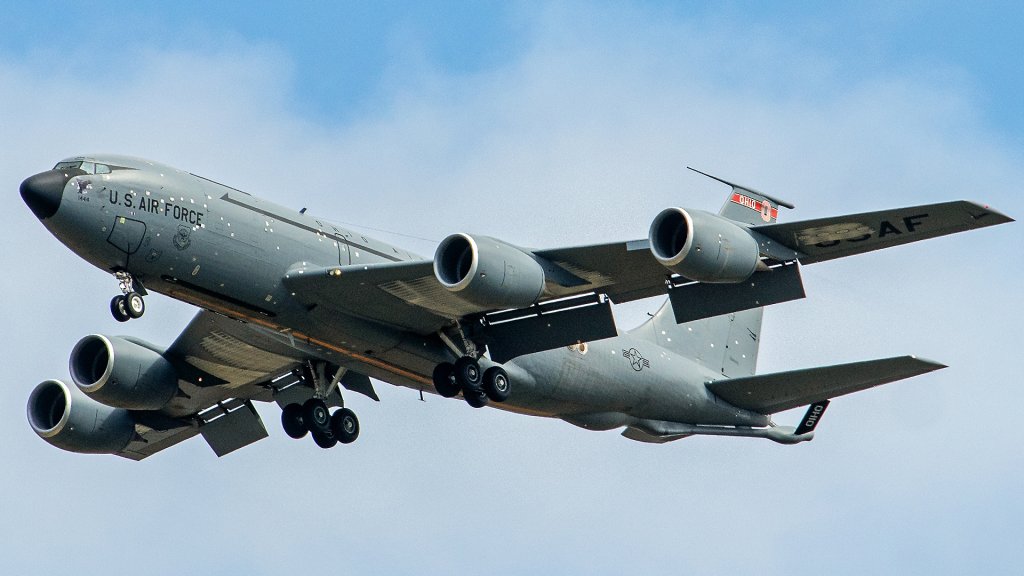
Nine KC-46 Pegasus and five KC-135 Stratotanker aerial refueling jets arrived at Ben Gurion in the days before hostilities began. The number of U.S. Air Force tankers, as well as the service’s cargo jets, at the airport has grown tremendously since then.
“A fleet of about 75 U.S. refuelers and cargo planes had parked at Ben Gurion Airport for many months, as part of the US military buildup in the region prior to the war,” the Times of Israel reported on Tuesday. “Following the partial removal of the tankers in recent weeks, more than 30 US refueling planes are estimated to be stationed at Ben Gurion Airport, crowding out civilian aircraft and creating a shortage of parking spaces.”
In our previous reporting, we noted that dozens of U.S. Air Force refueling aircraft deployed to Ben Gurion Airport had been expected to stay in Israel at least until the end of this year, though those plans now appear to be in flux.
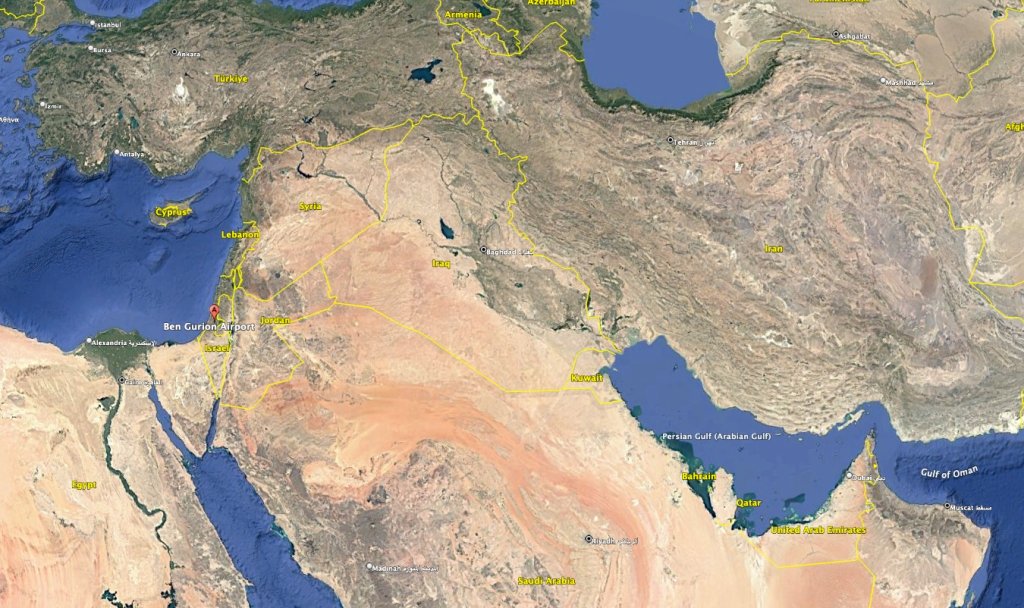
Meanwhile, there are alternatives for the dozen or so KC-135s and KC-46s that now need a new home. The Air Force can operate tankers from several other bases in Israel as well as across the region. However, bases closer to Iran have come under dense Iranian fire and five tankers were reportedly damaged in an Iranian long-range strike on Prince Sultan Air Base in Saudi Arabia in March. Operating far forward during war time, such as at the traditional hub for these operations, Al Udeid Air Base in Qatar, isn’t possible due to the extreme risk posed by Iranian standoff weapons. Other bases, like Muwaffaq Salti Air Base in Jordan is already packed with aircraft with little room for dozens of tankers.
As we noted earlier in this piece, the tanker limit reportedly upset U.S. and Israeli officials alike.
“Senior officials at U.S. Central Command have contacted the IDF’s top brass and Israel’s defense establishment in recent hours following the Transportation Ministry’s decision Tuesday not to allow additional American refueling aircraft to land at Ben-Gurion Airport,” according to Israel’s Ynet news outlet. “According to sources familiar with the details, the Americans were angered by the decision and made clear that it directly harms the operational needs of U.S. forces operating in the region amid the escalation with Iran. They said the refueling aircraft are a vital component of the regional deterrence and defense array.”
TWZ cannot independently confirm Ynet‘s reporting. Earlier in the day, Navy Capt. Tim Hawkins, CENTCOM’s spokesman, told us that the command “will continue working with our Israeli partners to best position U.S. aircraft to support operations.”
Hawkins declined to elaborate.
“Israel is a strong military ally, and we appreciate the warm hospitality for American forces as we work shoulder to shoulder in promoting regional security and stability,” Hawkins stated.
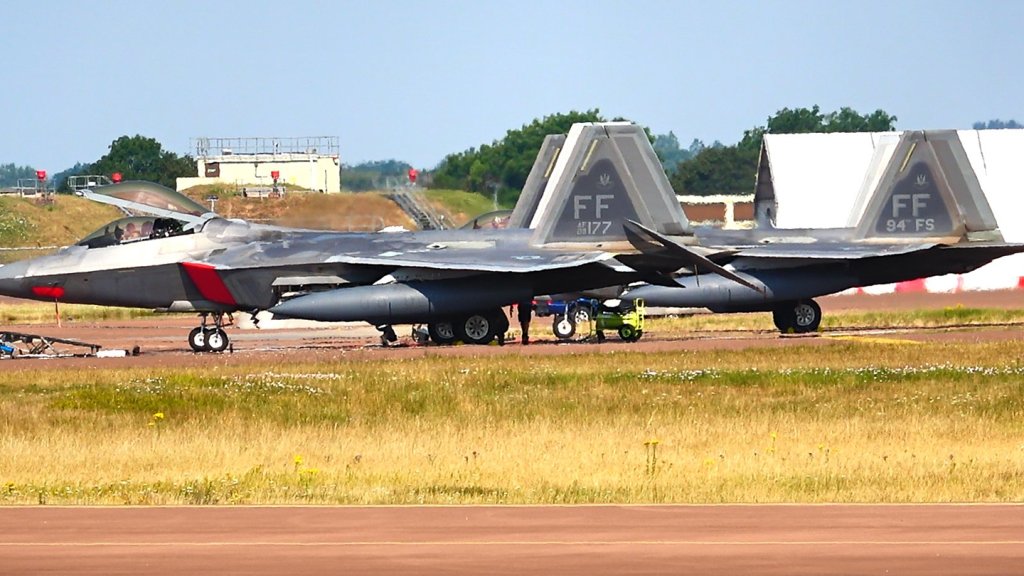
Meanwhile, as we have noted in earlier reporting, the U.S. has already returned F-22 Raptors that were flying out of Ovda Air Base in Israel back to the United States. Other aircraft, such as A-10s and F-15Es, have also returned home from or have been replaced in the CENTCOM region. So clearly there is a lot of shifting of aviation assets taking place even amid current operations.
A former senior U.S. Air Force leader acknowledged the tensions inherent in operating military aircraft for combat operations out of a civilian airport. However, Ben Gurion is considered one of the most important airfields in the region, the former official told us.
Ben Gurion’s location, situated just to the southeast of Tel Aviv, roughly in the center of the country, is a big factor, both in terms of geography and Israel’s vaunted integrated air defense system (IADS), the former leader added.
Still, he suggested that the new limits at Ben Gurion don’t automatically mean a restriction in U.S. air operations against Iran or in support of partner forces.
Given the existing options in the region, CENTCOM and the Air Force will be looking at what runway, ramp space, and equipment availability there is elsewhere.
“Flow control is something we’re always concerned about during combat operations,” he explained, adding that planners will consider distance to where the tankers have to orbit, proximity to potential threats, and the capacity to launch sorties.
“They really work in advance to create the best mix of protection, survivability, and an operational envelope,” the former senior leader noted.
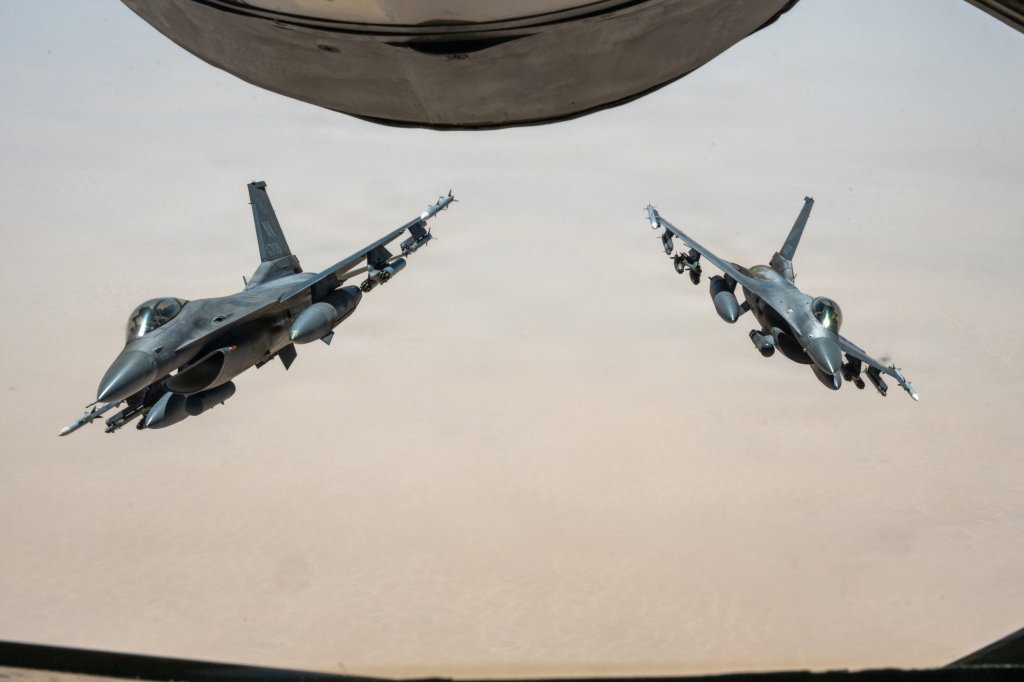
Retired Air Force Col. Troy Pananon, who once commanded Mildenhall Air Base, a tanker installation in the U.K., surmised that the Ben Gurion restrictions will have limited effects.
“I would say the base has an impact on the overall plan, but it doesn’t limit the ability to execute,” said Pananon, who was quick to point out he has no inside information about current operations. “Tanker planners can and should modify the plan to ensure there is enough fuel airborne in the AOR to accommodate the requirements for the receivers servicing the designated targets for the day. In other words, if they are limited in capacity at base A, they can or will supplement from base B, or adjust loiter times or targets.”
“Air campaigns by nature are a fluid event and stresses the importance of planners, leadership and C2 [command and control,” he added.
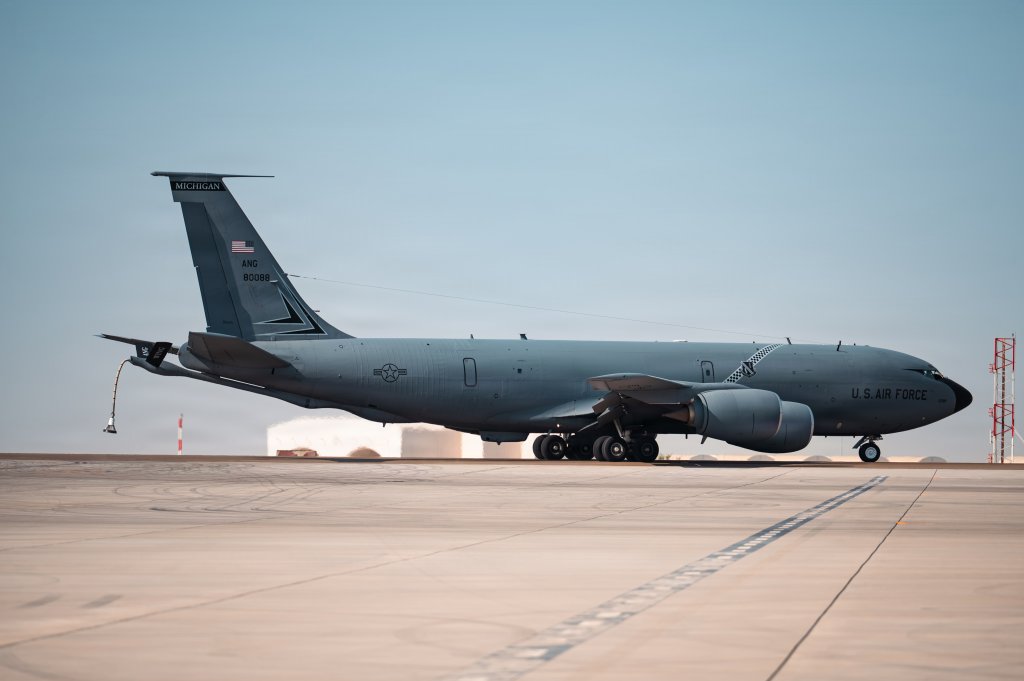
Israel is carrying out a balancing act when it comes to Ben Gurion, a high-ranking IDF official told us.
The airport “is effectively Israel’s only major international civilian airport,” he noted. “Haifa and Ramon handle only a very small fraction of Israel’s civilian air traffic. Operationally, Ben Gurion can accommodate roughly 20 U.S. Air Force refueling tankers. Beyond that number, the impact on civilian aviation becomes significant.”
However, “at the same time, Ben Gurion is arguably the safest airport in the region for U.S. aircraft,” the IDF official pointed out. “That is why discussions are currently focused on finding the right balance between parking tankers at Ben Gurion and dispersing them among Israeli Air Force bases. In my view, this is fundamentally an operational, economic and civil aviation issue, not a political one.”
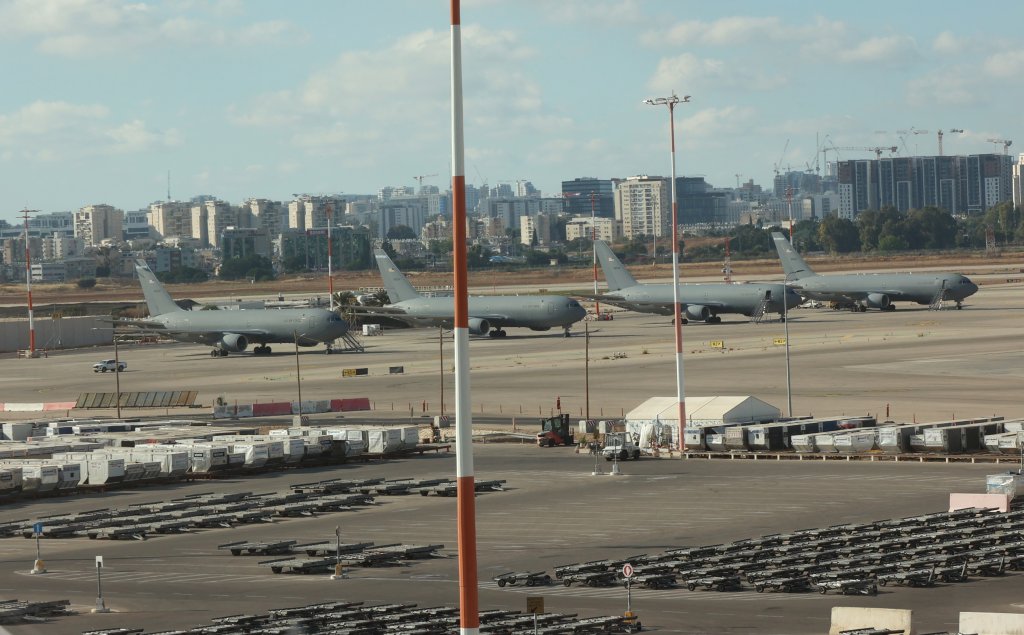
The issue of U.S. Air Force tankers at Ben Gurion interfering with civil aviation is not new.
“The presence of the aircraft—not the U.S. military—is causing significant operational difficulties at Ben Gurion Airport, as they are parked almost everywhere possible at the airport,” Israel’s N12 News reported on X back in May.
How long the limitations at Ben Gurion last remains an open question, especially should Israel find itself at war again with Iran.
As we pointed out in previous reporting, the KC-46s and KC-135s now at Ben Gurion alone are a tanker force far larger than what the Israeli Air Force (IAF) has in its inventory today. Each KC-46 also carries more fuel to offload to receivers than a KC-707 or a KC-135. During Epic Fury, when both the U.S. and Israel were attacking Iran, U.S. tankers gassed up IAF jets.
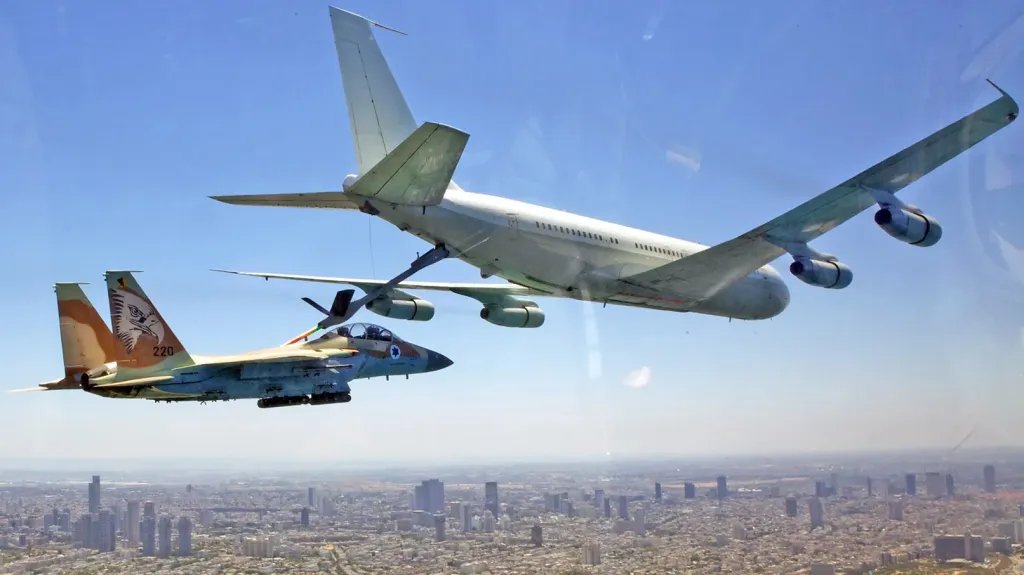
All this being said, in a time of war, these restrictions would be quickly lifted and civilian flights would decline. While moving aircraft around to other bases and still providing the majority of the refueling capacity available before the tankers’ exodus from Tel Aviv will certainly be possible, sortie rates and durations for receiver aircraft could still suffer in a sudden crisis. Seeing as these are tankers, their availability and proximity to their ‘customers’ has downstream effects. It comes down to how much gas is available in the sky at any given time versus the needs of the air operation. Luckily, America’s tanker crews and planners are masters at juggling their assets to make sure any changes in basing has a minimal impact on commanders’ needs.
The Israeli Transportation Minister’s decision comes as the prospects for a diplomatic settlement of the tensions between the U.S. and Iran seem dimmer than at any point since a ceasefire was agreed to on April 8.
As we noted earlier in this piece, CENTCOM forces “began launching an additional round of strikes on Iran to continue degrading Iranian capabilities used to attack commercial shipping in the Strait of Hormuz,” the command stated on X. “The strikes are taking place as American forces prepare to resume the naval blockade against Iranian ports and coastal areas. The blockade goes into effect at 4 p.m. ET.”
Meanwhile, Israeli Prime Minister Benjamin Netanyahu “warned Iran on Tuesday against launching future attacks on Israel, saying Tehran would face a far harsher response than in previous confrontations,” the Jerusalem Post reported on Tuesday.
“Do not count on it being quiet if you attack us,” Netanyahu said while speaking at the Negev Conference in Dimona. “Do not count on a rerun; this will be a different event, much more powerful.”
Given all this, it does not appear there will be much of a reduction in the need for U.S. Air Force aerial refueling tankers in the Middle East. However, where they will be based remains in flux.
Contact the author: howard@twz.com
Loading comments…
Comments couldn’t be loaded. Please refresh the page.