
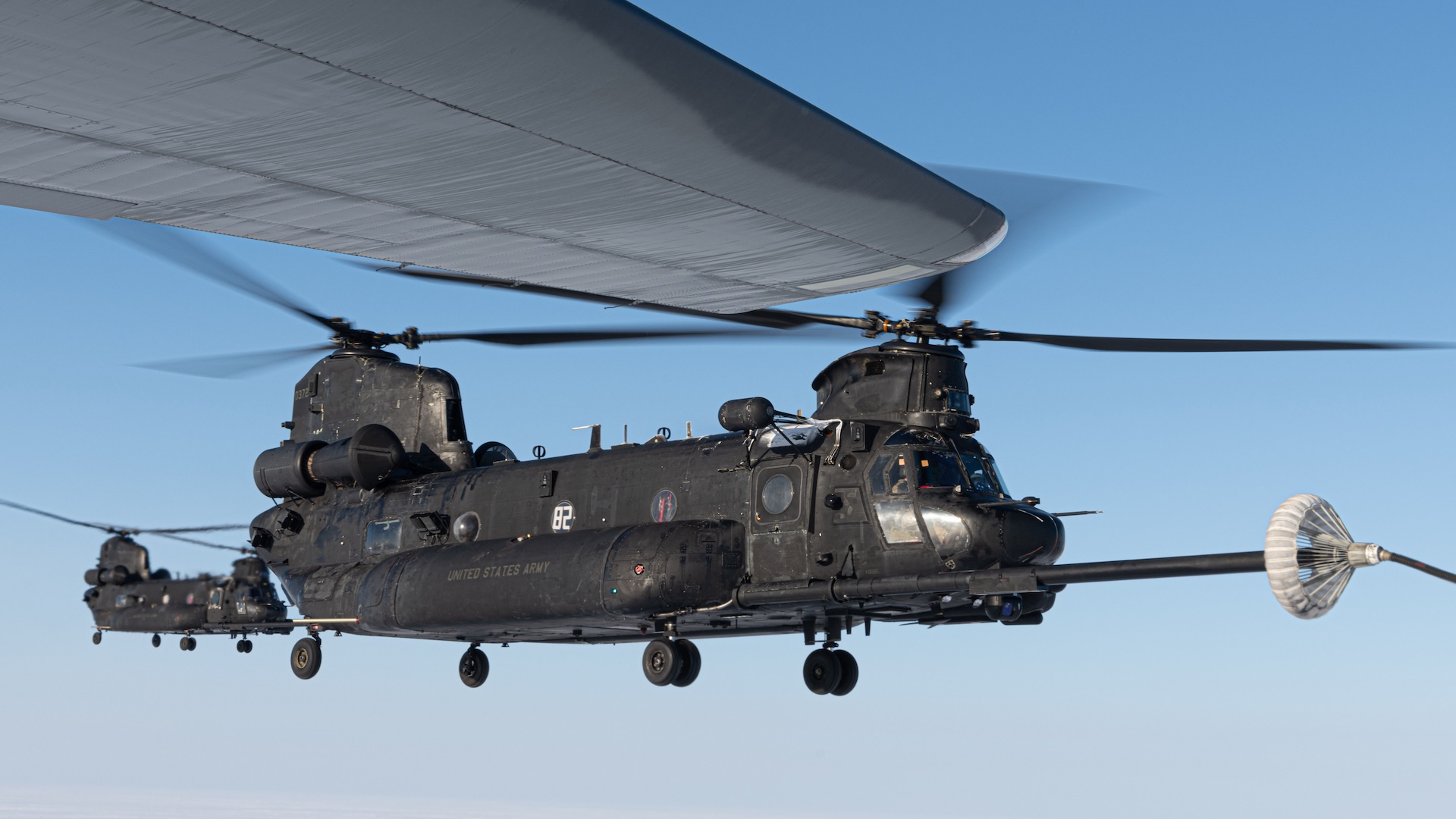
Special operations MH-47 Chinooks offloading fuel to other aircraft in the air is one possible future scenario that U.S. Army Special Operations Command (SOCOM) is eyeing as it begins to work out what the future Block III iteration of the twin-rotor helicopter might look like. While hypothetical at this stage, a Chinook capable of operating as an aerial refueling tanker could help address the command’s lack of organic tanker capacity and support its future air assault strategies.
Speaking at the annual SOF Week conference, senior SOCOM officers provided updates on the current status of the highly modified MH-47Gs that provide the heavy-lift muscle for the 160th Special Operations Aviation Regiment, or 160th SOAR, the famous Night Stalkers. As we have reported in the past on multiple occasions, these highly capable aircraft are frequently noted with different modifications cropping up around their airframes.
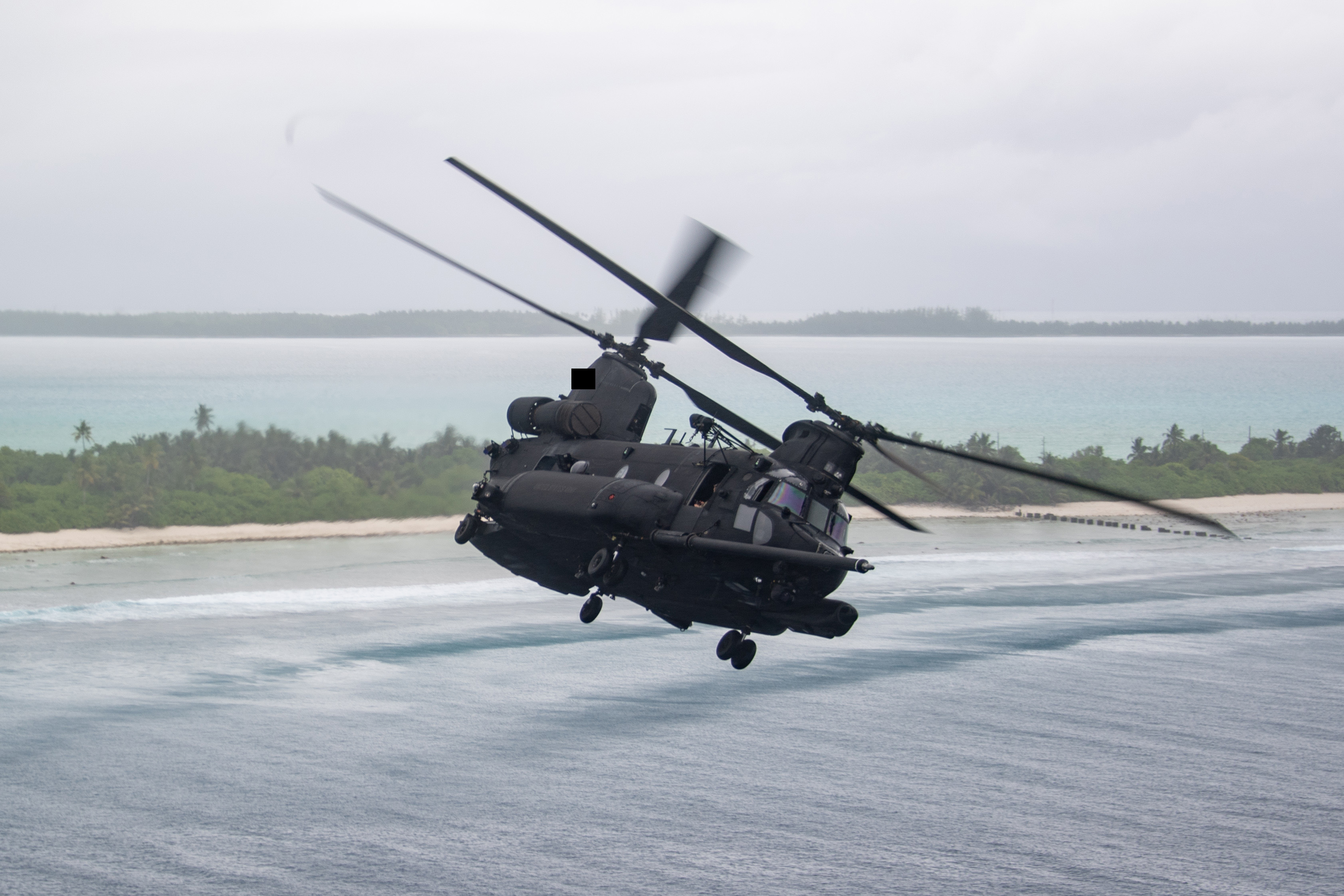
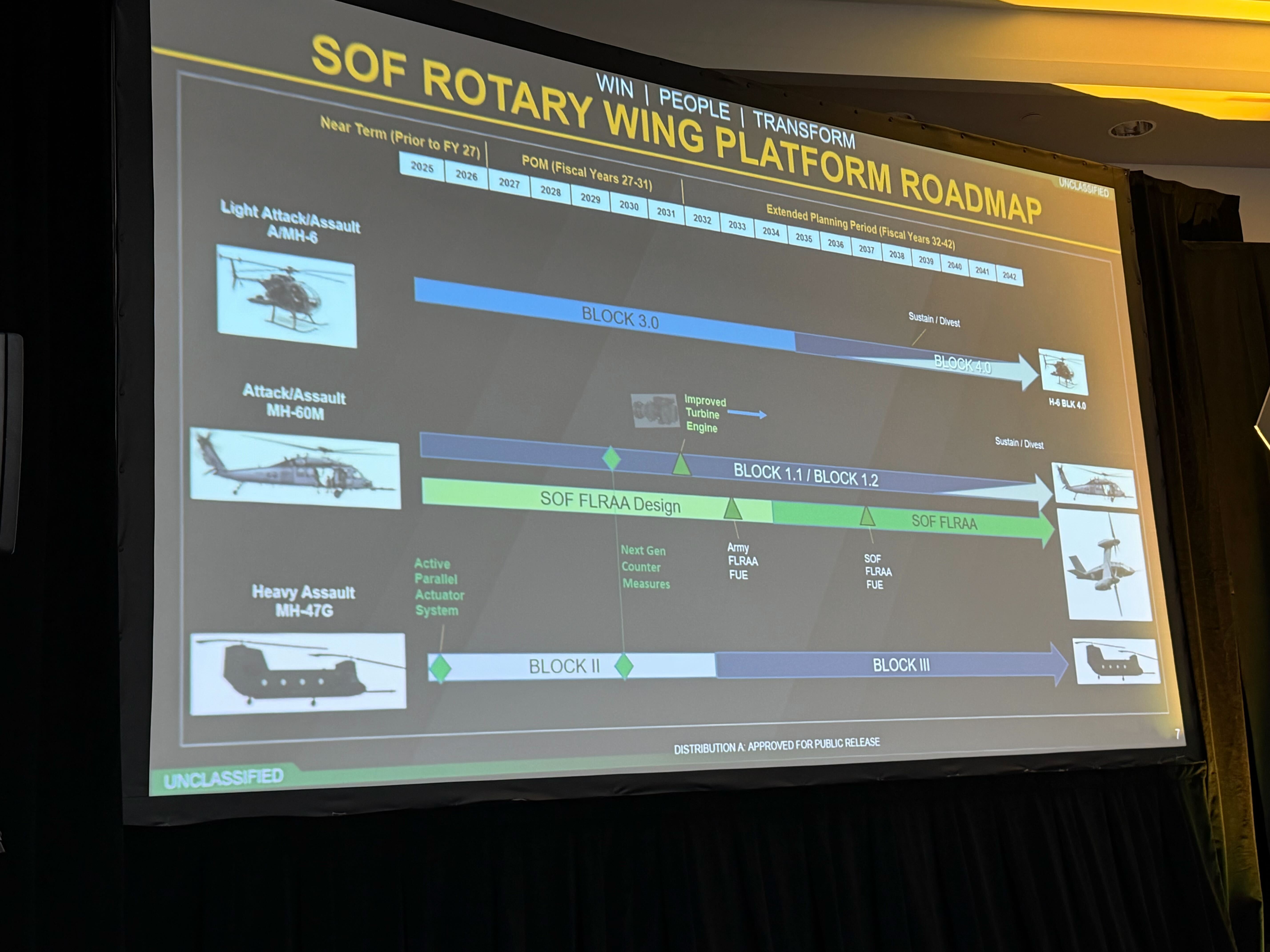
At this stage, however, SOCOM is beginning to draft possible requirements for the next iteration of special operations MH-47G — the Block III — expected to come online starting around 2032.
“Currently, we’re in Block II,” explained Sean Godfrey, product manager for the MH-47 at Army Special Operations Aviation Command. “We do not currently have what the Block III looks like, but that aircraft’s not going anywhere. It’s going to have to get upgraded over time.”
“Those next big things that we have to figure out would be how to get more out of the system,” Godfrey continued. “That would have to be enabling the aircraft to go further into more environments.” Another area of interest is increasing options for putting modular equipment on and off the aircraft, he added.
“That increased modularity to be able to rapidly take things on and off the aircraft to reconfigure it very quickly, to meet our mission requirements, is something that we’re always looking at,” added Dr. Steve Smith, SOCOM’s program executive officer for Rotary Wing.
“Anything that we do going forward, we’re going to try to make it as modular as possible. We want to go plug things in when we need them, unplug them, and take them off the aircraft when we don’t need them.”
Even with an aircraft offering the performance and capacity of the MH-47, preserving the allowable combat load is always at a premium. Increased modularity might include removing certain protection systems for operations in more-permissive environments, to give operators additional load. The same could be said for navigational systems, as well.
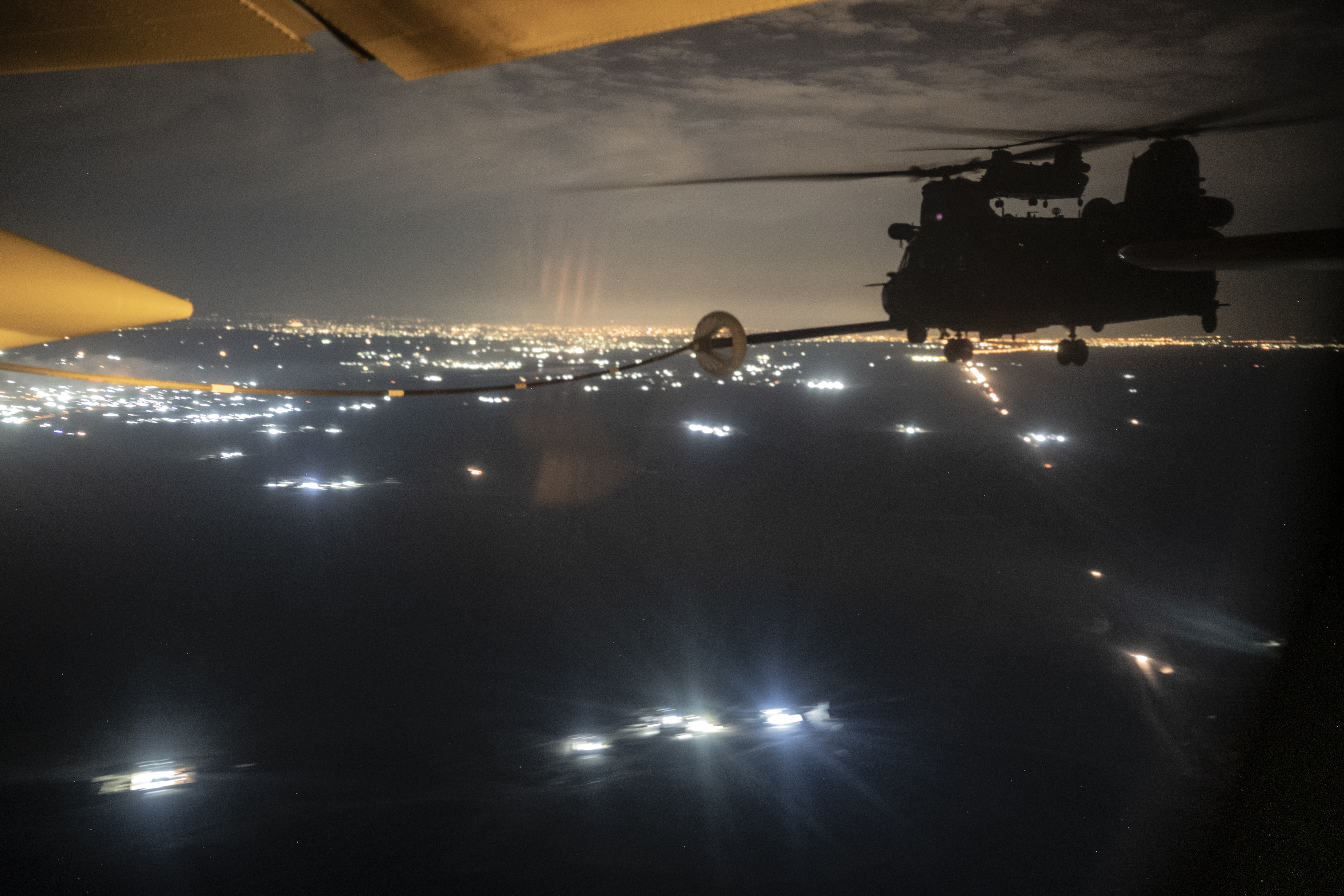
Smith continued: “There might be cases where I want to fill that aircraft with as much fuel as possible, and maybe that MH-47 becomes a flying FARP, and I put it somewhere, and we refuel other aircraft off of them.”
A FARP, or Forward Arming and Refueling Point, is essential for operating from austere forward bases along (or beyond) the battle lines.
This is already a key mission for the MH-47, with the 160th using these aircraft in “Fat Cow” configuration. Filled with extra tanks, the Chinook then serves as a gas station on the ground for other rotary-wing aircraft. This was a tactic famously used in the Bin Laden raid.
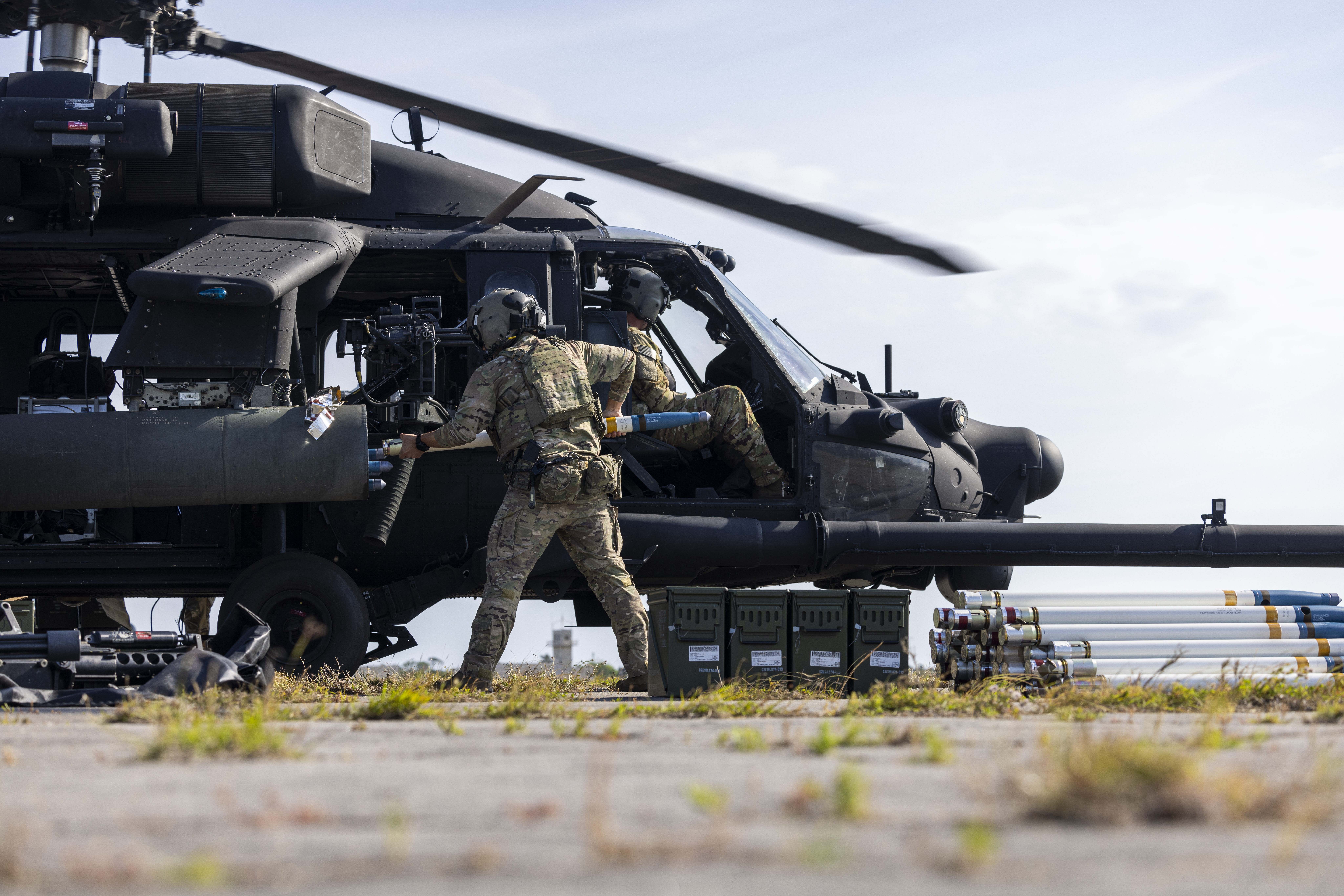
At a FARP, aircraft can quickly receive fuel and weapons, even without shutting down their engines. As a result, they can accelerate the fight by dramatically increasing sortie rates, or FARPs can extend the combat range of an aircraft. When it comes to just adding fuel, refueling in mid-air is an even more efficient way of doing this.
“Maybe, maybe we can do in-air refueling off of an MH-47,” Smith mused.
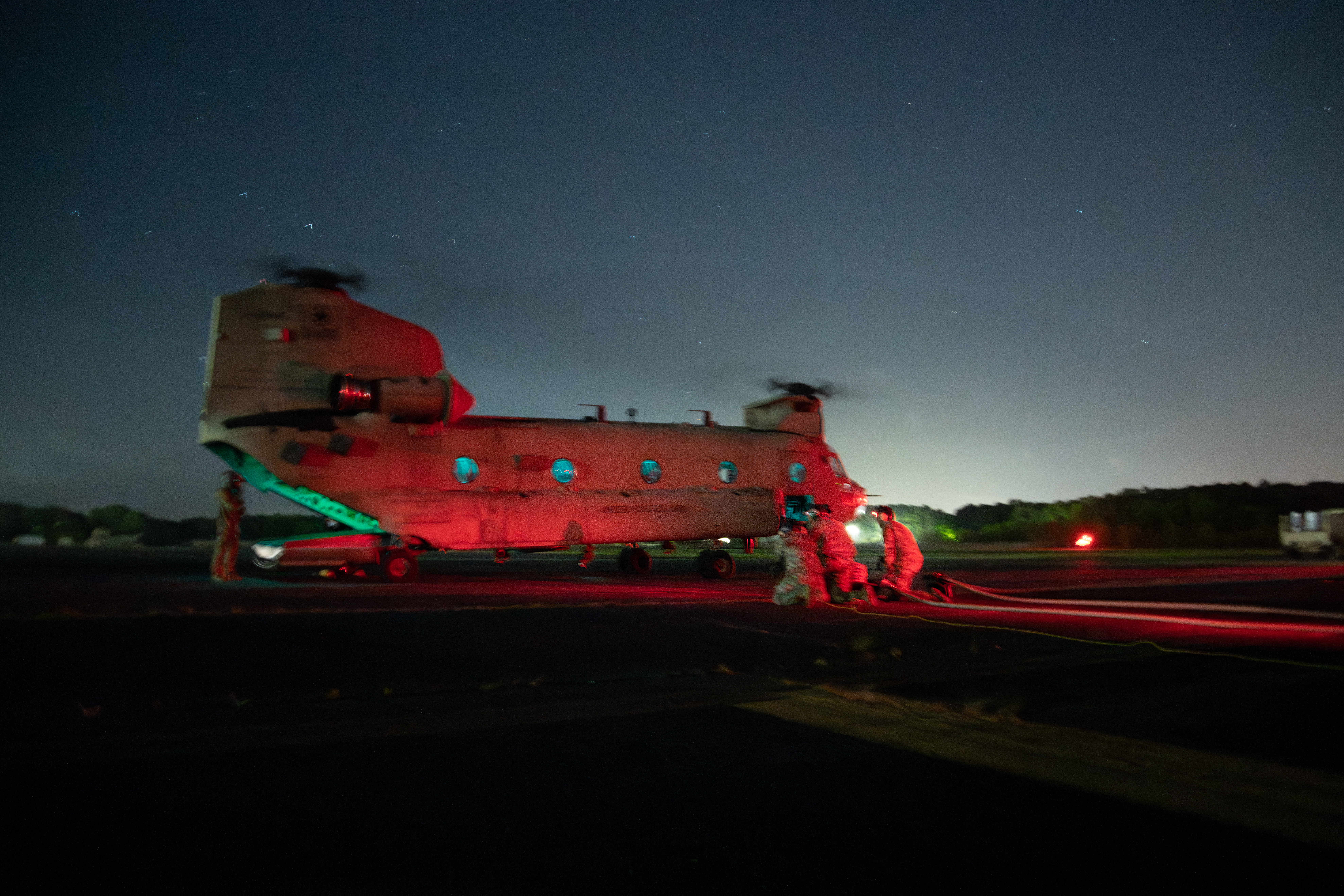
While he admitted that he was “just throwing stuff up against a wall,” at this point, Smith also acknowledged that having more modular systems could make that possible.
“Aerial refueling is an amazing capability,” Smith continued. “It allows us to do a lot of things, but that affects your allowable combat load, right? So, is there a way to do something modular for aerial refueling, so that the system could come on and off quickly, so that would allow us to get maybe something in country, rapidly reconfigured, and then do something else.”
For the Army, the demands for greater range and ability that cover those distances faster are seen as critical capabilities, particularly in the context of any future fight against China across the sprawling expanses of the Pacific.
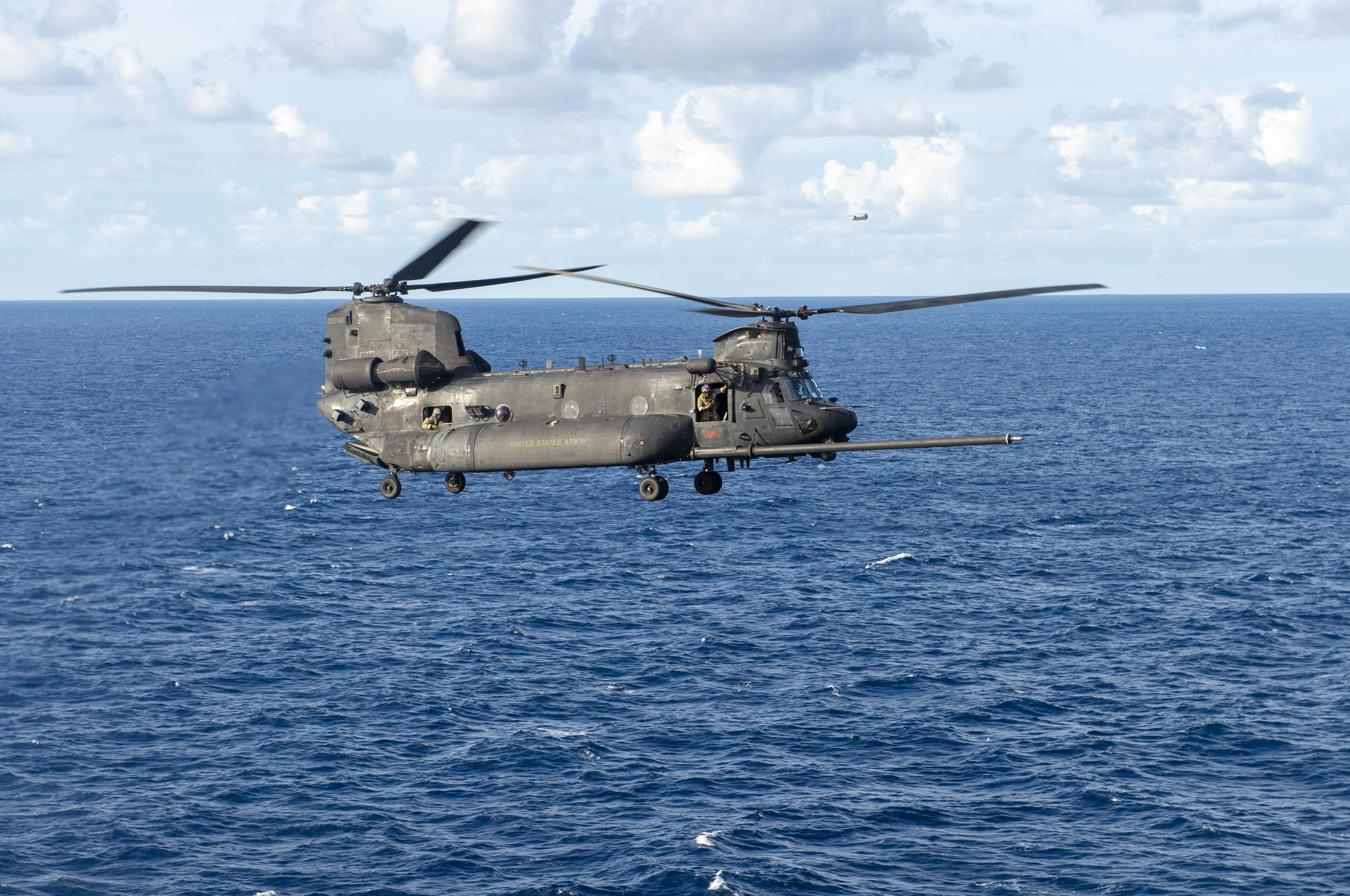
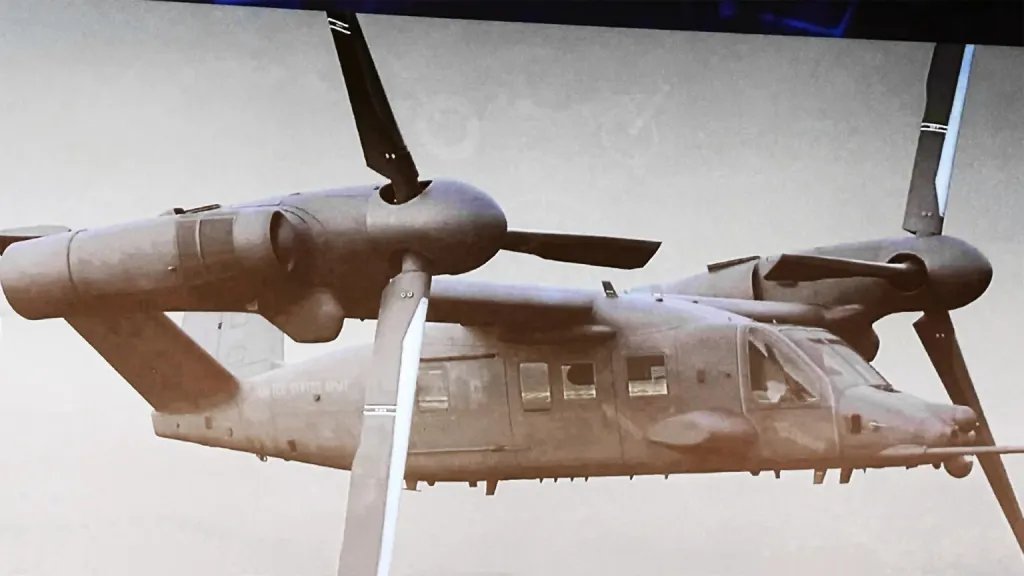
According to Smith, SOCOM is already looking at the possibility of porting mission equipment from its forthcoming MV-75A Cheyenne II tiltrotors onto the MH-47 Block III, and potentially even the Block II or Block III MH-60 fleets. However, he admitted that, at this stage, there is no funding appropriated for this, or even a formal requirement.
When it comes to making Block III a reality for the MH-47, this would likely follow the same procedure that is currently used to produce special operations Chinooks.
For the MH-47G Block II, specifically, Godfrey explained that the procedure starts with selecting a legacy aircraft, some of which are now more than 60 years old. SOCOM then removes all the mission equipment and software equipment, Godfrey continued, and flies the aircraft to Delaware. Here, the aircraft is essentially torn apart, and the parts to be used are recapitalized and returned to the Boeing production line. After a multi-year process, the Chinook re-emerges as a black-painted MH-47 and then goes to have all its mission equipment fitted. Then it is delivered to the unit.
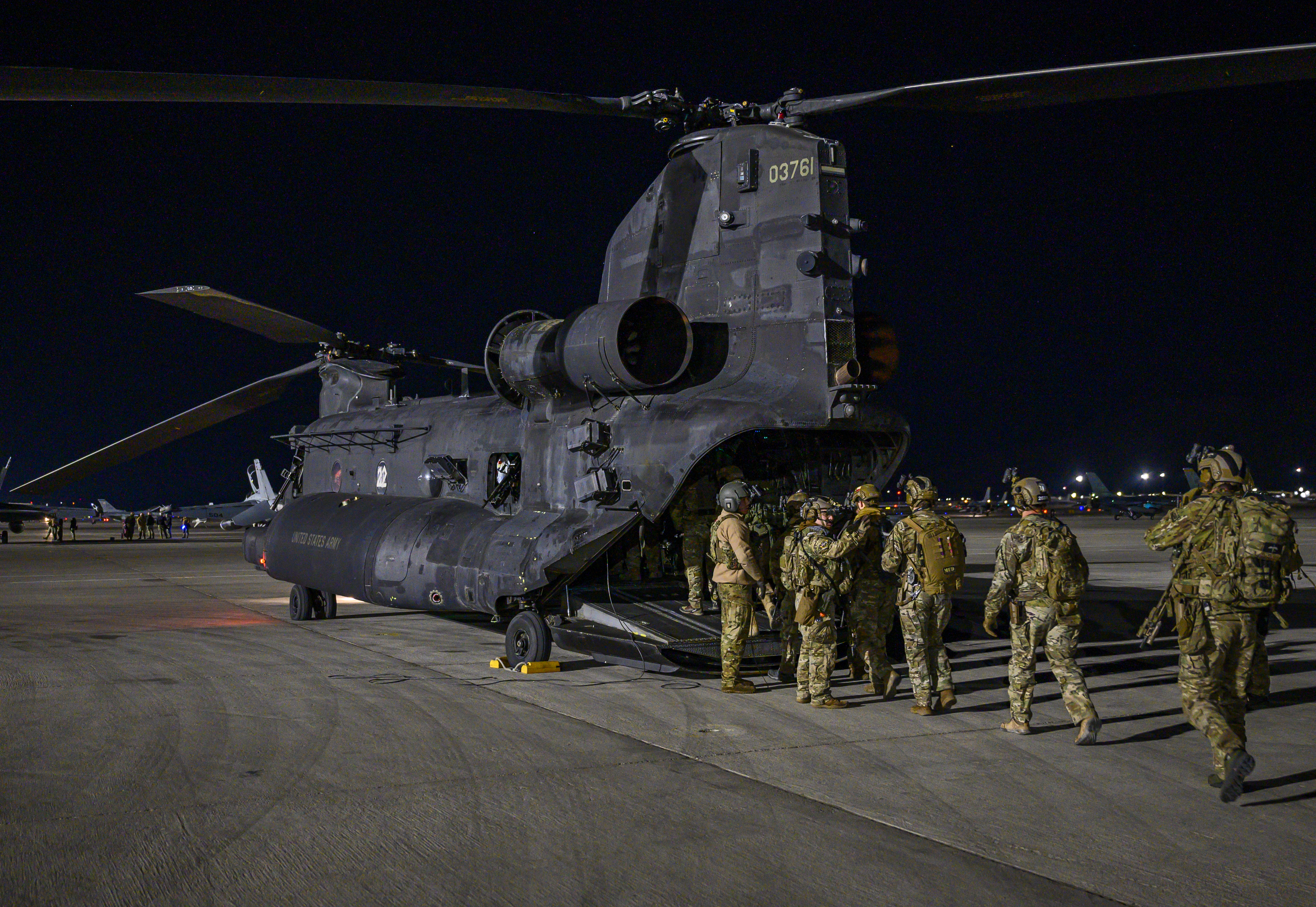
Once in SOCOM service, Smith explains that “We’re constantly trying to figure out the best ways to increase range, increase payload, increase speed, reduce weight, all while somehow holding flight-hour costs low. And all these things aren’t rolling in the same direction.”
The MH-47’s need for range is an enduring one and is reflected in its regular use of in-flight refueling itself, using the probe-and-drogue method, as also employed by SOCOM MH-60s. Already, the MH-47 features massive sponson fuel tanks compared to the standard Chinook, making them the longest-range assets of the 160th.
But whether or not some kind of palletized or modular aerial refueling capacity comes to the Chinook remains to be seen.
Expanding the “Fat Cow” role and taking the MH-47 tanker to the air would be very enticing for SOCOM. It would give them their own air-to-air refueling assets, rather than relying totally on the Air Force MC-130/HC-130 fleets. As it is, providing fuel at FARPs can be a very high-risk mission for SOCOM, considering they are often working in contested territory. If the same aircraft could be adapted to refuel MH-60s and MH-47s in the air, they would not have to land in some scenarios, and the Army wouldn’t need to call upon external refueling assets, which might not be available or cannot be risked.
It is also worth noting that questions have also emerged about how the Army will ensure there is adequate tanker capacity to support its aerial-refueling-capable MV-75s. As delivered, all Cheyenne IIs will have the capacity to have a probe fitted, the Army has confirmed, even those in non-SOCOM units, although the exact mix of how many ‘big Army’ MV-75s will get the probe and how many won’t is yet to be determined. Bell, the MV-75’s prime contractor, and the Army have both suggested that tanker drones like the U.S. Navy’s forthcoming MQ-25 Stingray could help extend the Cheyenne II’s reach. An adapted MH-47 could provide another answer, although one with drastically different performance.
Recent operations in South America and in the Middle East have underscored the need for long-range missions by Special Operations Aviation Command. The prospect of a potential conflict with China across the vast expanses of the Pacific means that longer-range platforms, of all kinds, are an increasing area of interest, and the 160th’s heavy-lifting, far-flying Chinooks are no exception.
Contact the author: thomas@thewarzone.com
Loading comments…
Comments couldn’t be loaded. Please refresh the page.