
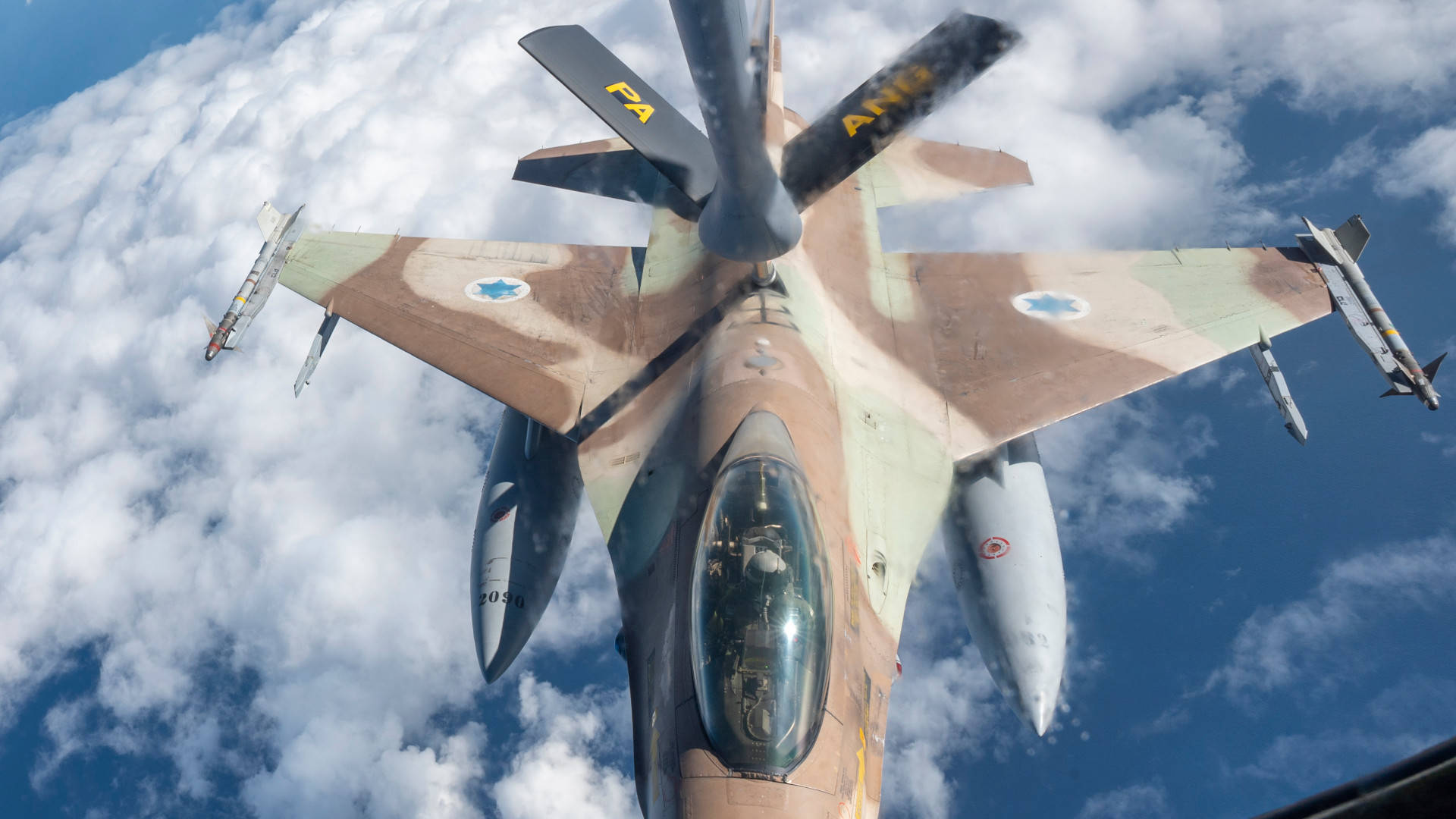
The U.S. Air Force now has at least 14 aerial refueling tankers forward-deployed in Israel ahead of potential strikes on Iran. Beyond supporting U.S. aircraft, an equally important role the tankers — and those spread across the region — could play is refueling Israeli fighters joining in the fight. The Israeli Air Force’s (IAF) entire tanker fleet consists of just seven nearly antique KC-707s, which imposes inherent limits on range, loiter time, sortie rates, loadout options, and other aspects of tactical air operations. Giving the IAF the full tanking resources of the U.S. would unlock its full combat potential.
Nine KC-46s and five KC-135s have arrived at Ben Gurion Airport since the start of this week. Ben Gurion is Israel’s main international airport, and is situated just to the southeast of Tel Aviv, roughly in the center of the country.
At least 11 U.S. Air Force F-22 Raptors are also now forward-deployed to the IAF’s Ovda Air Base in the southern tip of Israel. The F-22s had flown there after making a stop at RAF Lakenheath in the United Kingdom. A 12th Raptor reportedly had to return to Lakenheath due to a technical issue, but whether it may now have made its way to Israel is unclear.
The tankers at Ben Gurion and the F-22s at Ovda are relatively small parts of the massive buildup of U.S. military forces across the Middle East in recent weeks. The large influx of U.S. airpower has caused crowding at other available bases in the region that sit outside the range of Iran’s short-range ballistic missiles and other standoff weaponry, which clearly played a part in deciding to utilize Israeli facilities for the deployment of additional aircraft. Israel would also be under threat of heavy retaliation in the event of any new U.S. operation targeting Iran. U.S. aircraft in Israel would be well-positioned to help provide more immediate defense against incoming Iranian threats, but those assets could also contribute heavily to strikes on Iran.
At the same time, as TWZ has previously noted, there are very strong signs that Israeli forces will be fully integrated into the defensive and offensive components of any potential new U.S. operation against Iran. The KC-46s and KC-135s now at Ben Gurion are a tanker force twice as big as what the IAF has in its inventory today. Each KC-46 also carries more fuel to offload to receivers than a KC-707 or a KC-135. All of this could offer a major boost in aerial refueling capacity, and the operational benefits that come along with that, to Israeli forces.
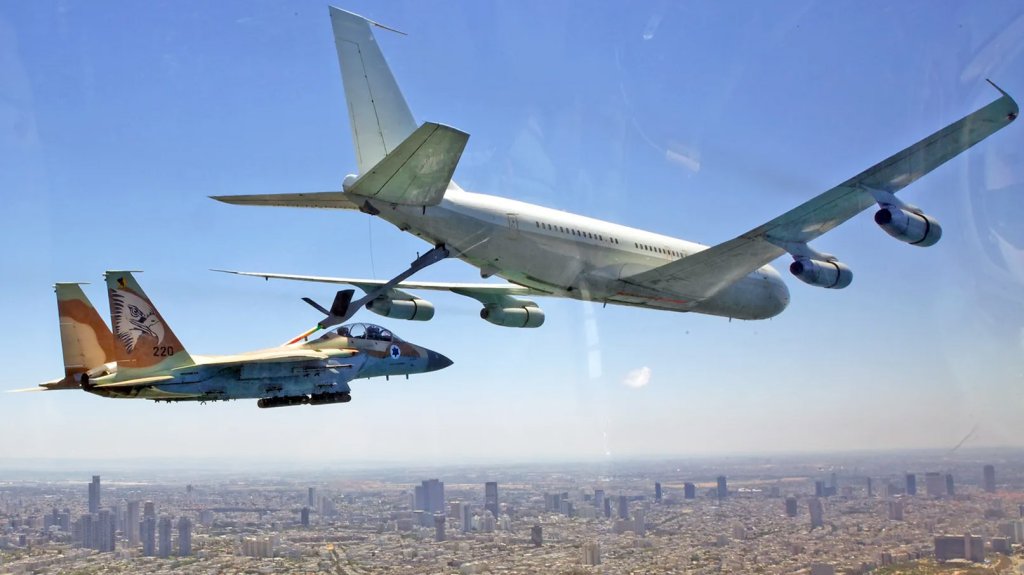
From the very start of what became the 12 Day War between Israel and Iran, TWZ pointed out that committing U.S. tankers to the fight could have massive force multiplying impacts for the IAF. In the weeks that followed, there were reports that the United States had done just this, but clandestinely and to a very limited degree, to help sustain the Israeli air campaign. The U.S. Air Force subsequently denied that this had been the case, after which we delved deep into what Israel would have otherwise had to have done to keep up the operational tempo.
As we wrote:
“Fitting as much external fuel on the fighters – the IAF’s F-15 fleets and F-16Is are all notably fitted with conformal fuel tanks and have the ability to carry drop tanks – was clearly necessary. Even dropping external tanks once they are empty to maximize range appears to have been part of the plan during the initial high-volume strikes. While drop tanks are expendable, they are not cheap and are usually retained unless performance has to be regained due to enemy threats or an in-flight emergency occurs. Dropping them to maximize an aircraft’s range is also an established tactic, but not a very sustainable one over the long term. It’s also one that is not needed if tanker support is readily available, nor is equipping the jets with maximum external fuel in the first place, in many circumstances.”
“Flying very carefully planned flight profiles to squeeze every bit of efficiency out of the range of IAF tactical jets was also clearly a tactic employed, although it leaves very little margin for error or combat contingencies. In addition, we know that Israel’s F-35Is have been tweaked to provide extra range. We don’t know exactly what this entails, and it could be a cocktail of measures, from software tweaks to internal or external fuel tanks. Regardless, it was reported that many IAF fighters landed on fumes after their initial sorties.”
“Regardless, maximizing Israel’s fighter force of close to 300 aircraft (total inventory, not what is actually available at any given time) in the opening waves of the war with just seven tankers may have been a feat that can be explained by careful planning, drop tanks, and the use of long-range standoff weaponry, at least early on. As the war continued, the magnitude of the sorties may have dropped, but the geographical depth and power of their strikes increased. These operations were sustained for nearly two weeks.”
“During the conflict, TWZ discussed how, at a certain point, Israel would have to drastically reduce its cadence of operations or wrap up the war. If the U.S. had not struck Fordow with B-2s, it’s possible the war would not have ended until the IDF was able to deal with that very hardened target, which would have likely required a ground operation very deep into a highly-defended area of Iran. Strikes would have eventually slowed as the IAF’s sortie rates degraded, and especially those of its overworked and geriatric tankers.”
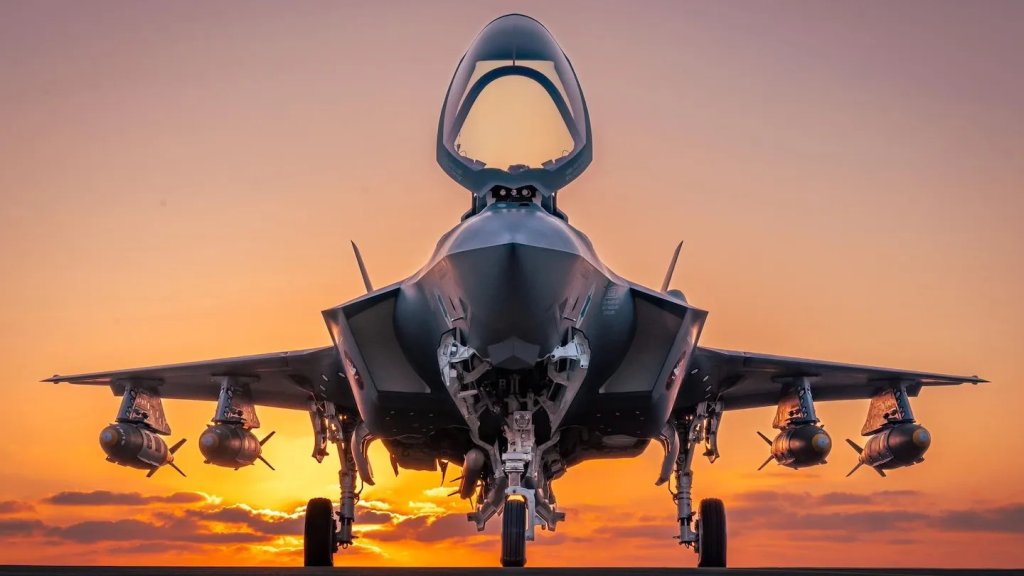
As an aside, Israeli Ambassador to the United States Yechiel Leiter offered what looks to be the first official confirmation that range-extending fuel tanks for the F-35I are in service in an interview earlier this month. “We developed fuel tanks that extend the aircraft’s range without compromising stealth,” Leiter told the Israel Hayom newspaper.
Questions remain about these tanks, including whether they are internally or externally mounted. To date, no pictures have emerged that definitively show them fitted to an F-35I.
Regardless, truly robust tanker support would fundamentally change the IAF’s planning processes and operational possibilities. Access to the USAF’s tanker ‘bridge’ that will cover large swathes of the Middle East, keeping combat aircraft in the fight, will be an unprecedented operational reality for the IAF. More aerial refueling capacity would enable tactical jets to fly further, loitering over areas of the battlespace longer, and carry heavier ordnance loads. Greater reach and time on station could be extremely valuable when hunting for mobile high-value targets, like Iranian ballistic missile launchers. More range and loiter time could be equally important for responding to large waves of incoming Iranian missiles and drones in retaliation.
Far greater tanker support would also provide much higher safety margins for aircraft returning low on fuel from longer-range and/or long-duration missions. As noted earlier, it was reported that IAF fighters often landed on fumes after their initial sorties during the 12 Day War. It is somewhat shocking that aircraft were not lost to fuel starvation alone considering how closely they were operating to the edge of their endurance. Tankers forward-deployed in Israel could be similarly critical for providing recovery tanking, giving IAF aviators an extra margin of flight time, especially if everything doesn’t go as planned. The same can be said for U.S. fighter aircraft operating out of Israel. The F-22 has a notoriously short combat radius, for instance. Fuel starvation was an issue even in the mission to capture Maduro, for instance.
All around, U.S. tankers refueling Israeli jets during a future operation against Iran could only help greatly magnify the contributions of the latter, which would already be substantial in this scenario. IAF involvement would add hundreds of fighter aircraft, unique munitions, and more to the equation. On top of materiel aspects, Israeli pilots would bring immense experience about operations over Iran gained during the 12 Day War, as well as the benefits of analysis of lessons learned from the conflict. The rest of the Israel Defense Forces (IDF) and the Israeli intelligence apparatus would be able to provide other kinds of critical support.

All of this also underscores the importance of Israel’s effort now to acquire a new fleet of six KC-46 tankers to replace its aging KC-707s. At least as of 2022, Boeing was expected to deliver the first KC-46s to the IAF before the end of this year.
It is still to be seen whether the U.S. will launch a new operation against Iran, and what role Israel will play if that decision is ultimately made. Many other questions remain to be answered, as well, as TWZ just recently explored in detail.
“It’d be nice if we could do it without, but sometimes you have to do it with,” U.S. President Donald Trump told reporters as he left the White House earlier today in response to a question about possible strikes on Iran. “We have the greatest military anywhere in the world. There’s nothing close. I’d love not to use it, but sometimes you have to.”
“They should make a deal, but they don’t want to quite go far enough. It’s too bad,” Trump also said today. “We’re not happy with the negotiation.”
“I met Vice President J.D. Vance today and shared details of the ongoing negotiation between the United States and Iran and the progress achieved so far,” Omani Foreign Minister Badr Albusaidi also wrote in a post on X today. “I am grateful for their engagement and look forward to further and decisive progress in the coming days. Peace is within our reach.”
U.S. and Iranian officials met in Oman yesterday for a second round of talks aimed at avoiding a conflict, and focused on Iran’s nuclear ambitions. The results of that engagement were inconclusive, though there are publicly stated plans for another round of talks next week.
If the U.S. government does decide to take action against Iran, the tankers at Ben Gurion are among the forces now in place to swing into action, and could easily find themselves refueling Israeli jets, as well as American ones. U.S. Air Force tanker support would be a massive force multiplier for the IAF that would allow it to have an even greater impact than it had in the 12 Day War.
Contact the author: joe@twz.com
Loading comments…
Comments couldn’t be loaded. Please refresh the page.